8 Key Differences Between Pocket Carry and Holster
Many people struggle with finding the right way to carry a firearm comfortably and discreetly every day.
Whether you’re new to concealed carry or just exploring options, it can feel overwhelming to choose between pocket carry and holsters. You’re not alone in wondering which method best fits your lifestyle.
Pocket carry offers high concealment and quick access in casual settings, but can be bulkier and less secure.
Holsters provide better retention, support, and discreetness with proper clothing, but may take longer to draw from.
Comfort varies based on your daily routine and clothing style.
Choosing the right method depends on your needs for convenience, security, and comfort.
To examine the specific advantages and challenges of each, keep investigating how they differ.
Key Takeaways
- Pocket carry offers quick access and high concealment. However, it can be slower to draw if your clothing shifts.
- Holsters provide a more secure, consistent draw with retention features. Pocket carry, on the other hand, depends on the size and depth of your pocket.
- Concealment really depends on your clothing choices. Pockets can hide firearms pretty well, but with the right positioning, holsters can be even more discreet.
- Pocket carry is often more comfortable for minimal setups. Holsters, meanwhile, distribute weight evenly, making them better for extended wear.
- Safety is better with holsters that fully cover the trigger. With pocket carry, you need to handle your firearm carefully to avoid accidental discharges.
What Are Pocket Carry and Holsters?
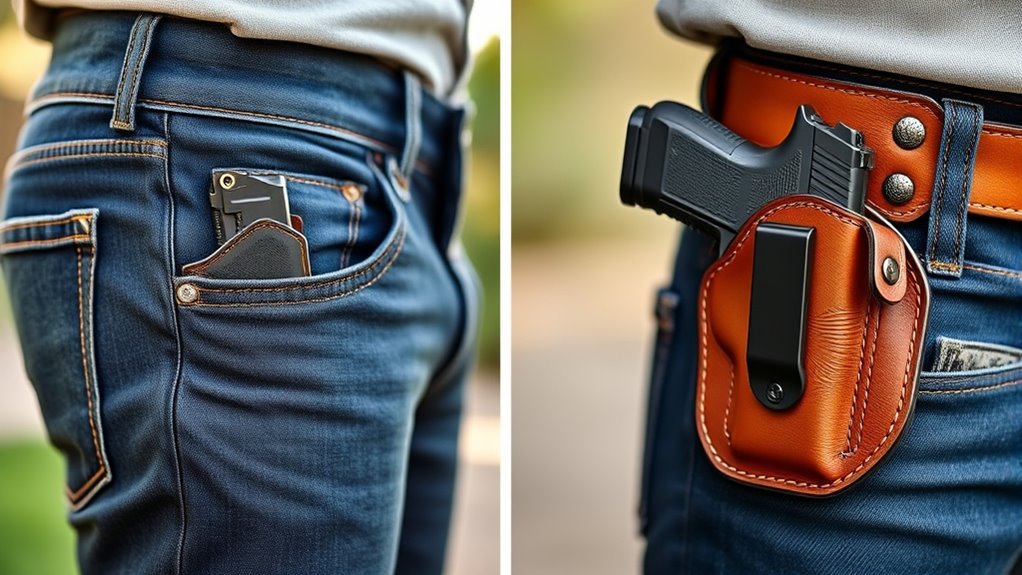
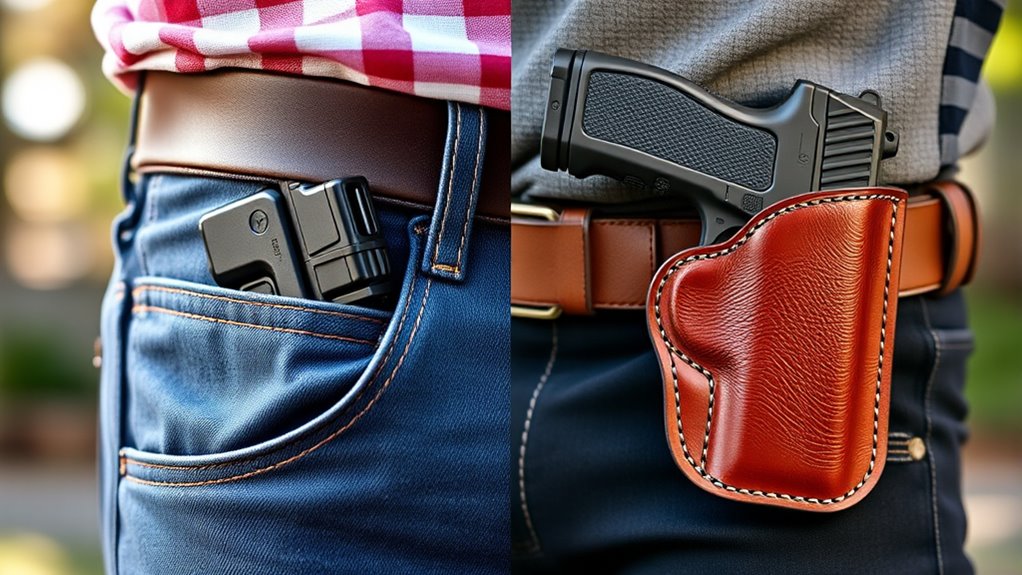
Pocket carry and holsters are two common ways to carry a firearm, each with its own benefits and things to consider.
Pocket carry means slipping a small gun directly into your pocket, making it quick and easy to access. It’s great for discreet carry, especially with compact firearms.
Holsters are specially designed accessories that hold your gun securely on your body, usually attached to your belt or clothing.
They come in different styles like ankle, waist, or shoulder holsters, depending on your preference and needs.
Holsters offer better retention and help protect your firearm, reducing the chance of accidental discharge or losing it.
Both options have their pros, and choosing one depends on what feels comfortable, your lifestyle, and how you plan to use it.
Which Carry Method Is More Accessible?
When considering accessibility, pocket carry often offers a quicker and more straightforward method to draw your firearm in urgent situations. You can simply reach into your pocket, grasp the firearm, and draw without needing to adjust or manipulate additional gear. This can be essential when seconds count.
Holsters, on the other hand, may require you to unbutton or lift clothing to access your weapon, which can slow your response time. Pocket carry is especially convenient if you’re already wearing clothing with deep pockets or loose-fitting pants.
While holsters often provide better retention and security, pocket carry’s simplicity makes it more accessible for quick draws. Ultimately, your choice depends on your comfort with speed versus security, but pocket carry tends to be more immediately accessible.
How Concealed Are Pocket Carry and Holsters?
In terms of concealment, pocket carry usually stays more discreet because the firearm is tucked away in your pocket, making it less visible under clothing.
Holsters can vary a lot in how well they hide your gun, depending on their size and how you wear them. They might draw more attention than pocket carry.
Think about your clothing choices and how easily your firearm can be seen under everyday attire. That way, you can decide which method offers better concealment for you.
Accessibility and Ease of Draw
Accessibility and ease of draw are key factors to consider when choosing between pocket carry and holsters. Pocket carry offers quick access because your hand naturally reaches the pocket, but retrieving the firearm can be slower if the pocket isn’t designed well.
Holsters usually provide a smoother draw, especially with retention features that secure the gun but still allow quick access. Your comfort and familiarity also play a big role in how easily you can draw your firearm.
Take a look at the table below:
| Feature | Pocket Carry | Holster |
|---|---|---|
| Draw Speed | Moderate, depends on pocket setup | Fast, guided by holster design |
| Accessibility | High for casual, quick draw | High with proper placement |
| Retention | Usually minimal | Usually includes retention features |
| Ease of Draw | Slightly more awkward if bulky | Generally smoother and easier |
| Concealment | Very concealed and easy to reach | Varies but generally accessible |
Visibility Under Clothing
Pocket carry usually offers great concealment because the firearm stays hidden inside your pocket, making it tough for others to notice.
But how well it’s concealed really depends on a few things.
Thinner clothing might show the outline or bump of the gun, especially if it’s bigger.
Deep, flat pockets hide the gun better than shallow or bulky ones.
Moving around, sitting, or bending can shift the pocket and possibly expose the firearm.
Using a pocket holster helps keep the gun in place and reduces printing, so it stays more concealed.
Profile and Concealment
The level of concealment you get from pocket carry and holsters mainly depends on their profile—how much they show through your clothing. Pocket carry usually offers a slim profile, which makes it easier to hide your firearm in casual outfits.
However, the outline of the gun might still be visible in tight pockets or thin fabrics. Holsters, especially inside-the-waistband (IWB) models, can vary in profile.
A well-designed holster minimizes printing, helping your firearm stay concealed even with tighter clothing. Larger or bulkier holsters may create more noticeable bulges, making concealment harder.
Ultimately, your choice depends on your clothing style and comfort preferences. Both options can be highly concealable if you pick a low-profile design that works with your wardrobe.
Are Pocket Carry and Holsters Safe to Use?
Are pocket carry and holsters safe options for carrying your firearm? Generally, yes, but safety really depends on how you use and choose them. Here’s what to look out for:
- Secure retention: Good holsters and pocket carriers keep your firearm in place and help prevent accidental discharges.
- Trigger coverage: Quality holsters cover the trigger completely, which reduces the risk of unintended firing.
- Material quality: Using durable materials prevents wear and tear that could compromise safety over time.
- Proper fit: A firearm that fits snugly reduces movement and the chance of accidental exposure.
Both options can be safe as long as you pick high-quality gear, keep it well maintained, and practice safe handling habits. Always put safety first, even if it means sacrificing a bit of convenience.
Which Is More Comfortable for Daily Carry?
Choosing between pocket carry and a holster often comes down to comfort, especially for daily use. Pocket carry is usually more comfortable if you prefer a minimal setup. It keeps your firearm out of sight and feels lightweight.
But it can sometimes be bulky in tight pockets or when sitting for long periods. Holsters, on the other hand, distribute the weight of your firearm more evenly and provide better support. This reduces discomfort during extended wear.
They also keep your gun securely in place and prevent shifting. Your choice depends on your daily activities and clothing styles. If you value simplicity and quick access, pocket carry might be more comfortable.
But if you prioritize stability and long-term comfort, a well-designed holster could be your better option.
Can You Wear Pocket Carry and Holsters With Different Clothes?
Have you ever wondered if your clothing choices can affect how well pocket carry or holsters work for you? The answer is yes, your wardrobe can play a big role.
For pocket carry, thinner, tighter clothing can make it easier to conceal and access your firearm. For holsters, looser clothes give more room for comfortable carry and quick draws.
Consider these points:
- Slim jeans or chinos work better for pocket carry.
- Baggy or layered clothing can hide holsters more effectively.
- Formal wear with tight suits may limit holster options.
- Casual, loose-fitting shirts allow for more flexibility with holsters.
Choosing the right outfit depends on your carry style, but both options can work with different clothes if you plan accordingly.
What Are the Pros and Cons of Pocket Carry and Holsters?
When choosing between pocket carry and a holster, consider how quickly and easily you can access your firearm. Quick access can be crucial in a self-defense situation, so think about which option allows you to draw faster.
Concealment is also important because you want to keep your firearm discreet. Different options provide different levels of concealment, so pick what works best for your daily attire and environment.
Knowing the pros and cons of each method helps you decide which one fits your lifestyle and needs better. Ultimately, the right choice depends on your comfort, ease of access, and how well you can hide your firearm.
Ease of Access
Ever wondered which option offers quicker access in a pinch—pocket carry or a holster? Pocket carry is simple and immediate: you can reach in and draw quickly, especially if the gun is already in hand. A holster, however, often provides a more consistent and faster draw because it secures the firearm in a designated position.
Consider these points:
- Pocket carry allows quick access with minimal movement but can be slower if you need to maneuver clothing.
- Holsters often require you to undo clothing or adjust your grip, adding steps.
- Holsters with retention features might slow down access but prevent accidental discharges.
- Overall, pocket carry tends to be faster for rapid, instinctive draws, while holsters offer controlled, reliable access in various situations.
Concealment Effectiveness
Concealment is a key factor when choosing between pocket carry and holsters, as each method offers different levels of discretion. Pocket carry is highly effective because your firearm stays hidden inside your pocket, especially if you wear loose clothing.
It’s quick to hide and less likely to print through your clothing. However, it can be obvious if someone notices your pocket bulge. Holsters, on the other hand, provide more discreet concealment when worn correctly, especially with appendix or AIWB setups.
They keep the firearm close to your body and help prevent printing. But if your clothing is tight or thin, the outline might still be visible. Overall, pocket carry offers simplicity and concealment, while holsters provide a more secure, discreet solution with proper attachment.
How Do Holsters Keep Your Gun Secure and Retained?
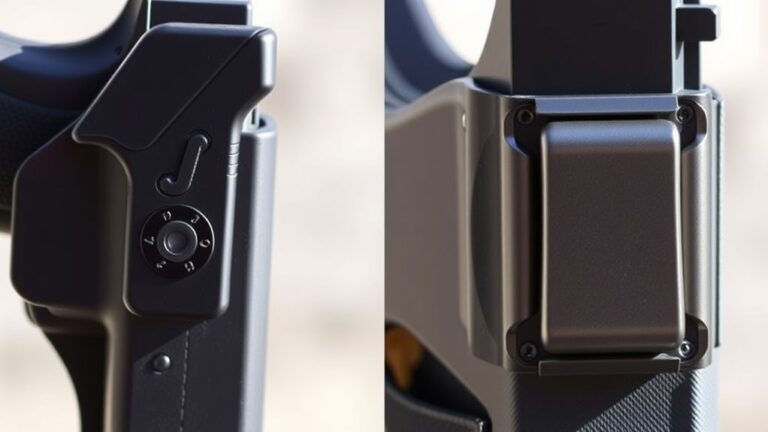
Holsters keep your gun secure and retained through a mix of smart features that grip the firearm tightly. These help prevent accidental discharges and make sure you can access your gun quickly when needed.
First, retention screws let you tighten or loosen the fit, so the hold feels just right. Second, friction retention relies on the material’s grip to hold the gun securely in place.
Third, trigger guards and molded shapes fit the contours of your firearm, stopping it from moving around. Fourth, retention straps or thumb breaks add extra security, especially if you’re active or moving a lot.
All these elements work together to keep your gun stable, reduce the risk of drops, and allow for quick retrieval when necessary. Plus, they help you carry comfortably and confidently.
Frequently Asked Questions
Can Pocket Carry Be Used With All Types of Guns?
Not all guns are ideal for pocket carry. Small, lightweight firearms like subcompact pistols work best because they fit comfortably and won’t print through your pocket.
Larger guns can be bulky and tough to hide, making pocket carry impractical and uncomfortable. Always think about the size, weight, and shape of your firearm.
If it’s too big or heavy, you might want to look into holsters for safer, more comfortable concealment.
Are There Legal Restrictions on Pocket Carry Versus Holsters?
Yes, there can be legal restrictions on pocket carry versus holsters, depending on where you are. Some areas have laws about concealed carry, open carry, or specific rules about certain weapons or how you carry them.
It’s important to check local, state, and federal regulations before carrying a firearm in your pocket or using a holster. Staying informed helps you stay compliant with the law and avoid legal issues.
How Quickly Can You Access the Firearm in an Emergency?
In a rush, you can usually access a firearm in pocket carry faster than from a holster, as long as you’ve practiced. Pocket carry lets you get a grip and draw quickly, like grabbing your favorite snack.
Holsters, especially those with retention, tend to slow you down a bit—think of it like waiting in line at the DMV.
Ultimately, your speed depends on how familiar you are with your setup. Practice makes perfect, or at least quicker than fumbling.
Do Pocket Carry Holsters Provide Adequate Trigger Protection?
Yes, pocket carry holsters do provide adequate trigger protection when used correctly. They cover the trigger area completely, preventing accidental discharges if the firearm shifts or if you accidentally bump the trigger.
Quality pocket holsters are designed to keep the firearm secure and shield the trigger from debris or accidental contact. This helps ensure safe and reliable carry.
Just make sure the holster fits well and is made of durable, high-quality materials.
How Does Climate Affect the Choice Between Pocket Carry and Holsters?
Imagine a scorching summer day, your sweat-soaked palms making a traditional holster uncomfortable. In hot climates, pocket carry becomes appealing because it keeps your gun close without adding bulk or overheating.
Conversely, in colder weather, a holster offers more protection against the elements and keeps your firearm secure. Climate influences your choice, making pocket carry ideal in heat and holsters better suited for cooler conditions and varied environments.
Conclusion
Ultimately, choosing between pocket carry and holsters comes down to what feels most comfortable, convenient, and confident for you.
Whether you prefer the simplicity of pocket carry or the added security of a holster, understanding their differences helps you pick what suits your style best.
By weighing the benefits and limits of each option, you can carry concealed with confidence and stay safe.
So, make your choice smartly, stay secure, and carry comfortably—because your safety and style should always come first with pocket carry and holsters.