Top 12 Best Vortex Scope for Coyote Hunting You Need Now
Hunters know the frustration of a scope that fogs up or shakes when trying to get a clean shot that the best vortex scope for coyote hunting can often solve. A poor-quality scope can blur targets at dawn or dusk when coyotes are most active, missing crucial details like ear shape or tail positioning that can differentiate a coyote from other animals.
Clear, reliable optics make the difference between a missed opportunity and a clean hit in those low-light moments.
Durability stands out as a key factor for these scopes, ensuring they can withstand rough handling and weather conditions without losing zero. A typical coyote hunting scope offers magnification between 3x and 9x, balancing field of view with the detail needed at distances of 100 to 300 yards.
A reliable scope should also have lenses with multi-coating to reduce glare and improve light transmission, plus a reticle suited for quick target acquisition, as coyotes rarely stay still long.
Need a Quick Check?
| Image | Product | Price |
|---|---|---|
Our Top Picks 1  | SIG SAUER Tango-MSR 1-8×24 | Check Price |
Our Top Picks 2  | Vortex Venom FFP | Check Price |
Our Top Picks 3  | Vortex Strike Eagle SFP | Check Price |
Our Selected Top 12 Vortex Scope for Coyote Hunting for Different Needs
This list features a variety of vortex scopes designed for different coyote hunting needs, highlighting their performance, suitability, strengths, and weaknesses. Each review provides clear insights to help readers choose the right scope based on their specific preferences and hunting conditions.
1. SIG SAUER Tango-MSR 1-8x24mm LPVO Riflescope
Feeling solid and reliable on your rifle, the SIG SAUER Tango-MSR 1-8x24mm is built for close to mid-range hunting, especially when spotting coyotes. Its greatest strength lies in the clear, bright view it offers through the lens, making quick shots and precise aiming a natural part of the experience.
Setting up the scope is straightforward with the cantilever mount fitting most rifles easily. Switching magnification between 1x and 8x lets you adapt on the fly, whether you’re scanning open fields or focusing on a single target.
The illuminated MSR BDC-8 reticle is bright but not overpowering, helping you track your prey in varying light without fuss. Compact and lightweight, it doesn’t add extra burden during long hunts.
The optical clarity stands out, giving a crisp and bright image thanks to its excellent light transmission. The 30mm maintube’s construction is rugged, waterproof, shockproof, and fog-proof, which ensures it holds up under harsh weather and rough handling. Most users appreciate its durability, though a few mention the small objective lens size could limit some low-light performance.
The scope delivers sharp, detailed views at various distances with dependable durability in tough conditions. Users often praise the clarity and toughness, yet some feel the smaller lens size restricts performance in dim light scenarios. The illuminated reticle works well but can feel a bit constrained for brightness control.
Hunters seeking a lightweight, tough scope with quick zoom options will find this scope well-suited for coyote hunting. Those prioritizing large lenses for very low-light or deep dusk use might want to consider alternatives with bigger objectives.
Pros
- Clear, bright image with excellent light transmission
- Compact and lightweight design for easy handling
- Durable waterproof, fog-proof, and shockproof build
- Versatile 1-8x magnification for multiple ranges
Cons
- 24mm objective lens may limit low-light use
- Some find the reticle brightness adjustment limited
| Specification | Details |
|---|---|
| Magnification Maximum | 8 x |
| Objective Lens Diameter | 24 millimeters |
| Magnification Minimum | 1 x |
| Mounting Type | Cantilever Mount |
| Reticle Type | Illuminated MSR BDC-8 |
| Field Of View | 124.8 feet |
2. Vortex Venom First Focal Plane Riflescope
Great for long-range coyote hunting, the Venom 5-25×56 offers zoom flexibility and sharp optics in a compact 34mm tube. It excels in clear, detailed sighting, especially when tracking distant targets. Hunters needing precise adjustments and reliable clarity will appreciate how it handles tough conditions.
Setting it up is straightforward with its cantilever mount and side parallax knob, making range adjustments quick and visible through the reticle. The 5 to 25x magnification power handles close to long distances, and the eye relief stays comfortable at 9.1 centimeters.
Switching focus and zeroing in require little effort thanks to the RevStop Zero System, which keeps settings locked in place during movement.
Performance is sharp with the XD Optical System reducing chromatic aberration and brightening low-light shots. Constructed for a lot of turret travel (85 MOA max elevation and windage), it supports significant adjustments without fuss. Many note the clarity edge-to-edge, though some mention the 34mm tube size may require specific mounts and adds slight weight to lighter rifles.
The Venom’s best feature is its sharp, clear imaging combined with a wide magnification range that supports careful long-distance shots. The most common downside is the scope’s tube size, which may not fit every mounting system without extra considerations and adds some extra weight.
This scope suits serious coyote hunters who need detailed long-range sighting and quick adjustments. Those wanting a lighter setup or a more universal mount may want to explore other options better suited for smaller rifle platforms.
Pros
- High magnification range from 5 to 25x
- Excellent low-light and edge-to-edge clarity
- Easy to adjust RevStop Zero System for quick zeroing
- Side knob parallax with visible range markings
Cons
- 34mm tube requires specific mounts for some rifles
- Relatively heavier compared to smaller tube scopes
| Specification | Details |
|---|---|
| Magnification Minimum | 5 x |
| Magnification Maximum | 25 x |
| Objective Lens Diameter | 5.6 centimeters |
| Eye Relief | 9.1 centimeters |
| Reticle Type | EBR-7C |
| Mounting Type | Cantilever Mount |
3. Vortex Strike Eagle Second Focal Plane Riflescope
Built with versatility and speed in mind, the Strike Eagle Second Focal Plane riflescope fits well for hunters who need quick target acquisition from short to long range. Its true 1x setting stands out, making fast shifts between close shots and extended distances straightforward and reliable.
Setting it up is straightforward thanks to the updated magnification ring, which now includes a thread-in throw lever, making zooming quick and precise without taking your eyes off the target. The fast focus dial on the eyepiece ensures the reticle is always crisp, while the illuminated BDC3 reticle helps you lock in on targets more quickly, especially when estimating shot placement at varying distances.
It performs solidly in coyote hunting scenarios, letting you hold over for shots out to 650 yards with ease. The construction feels sturdy and dependable under field conditions, with a Weaver thread type for mounting stability.
Some users mention a minor learning curve with the reticle illumination settings, but the sharp image and consistent focus are commonly praised.
The easiest part is how fast you can switch magnification and get on target quickly thanks to the ring and throw lever, while the illumination of the reticle really helps in low light conditions. A common drawback is the smaller 24mm objective lens, which might affect clarity in very dim environments or twilight.
Those who move between close and longer shots will appreciate the adaptability and features, especially in a variety of lighting situations. People primarily hunting in extremely low light or needing maximum light transmission may want to explore scopes with larger objective lenses.
Pros
- True 1x magnification for versatility
- Illuminated BDC3 reticle for quick target focus
- Updated magnification ring with throw lever
- Fast focus dial for sharp reticle adjustments
Cons
- Reticle illumination settings can take time to master
- Limited objective lens size may reduce light gathering
| Specification | Details |
|---|---|
| Magnification Minimum | 1 x |
| Magnification Maximum | 8 x |
| Objective Lens Diameter | 24 millimeters |
| Reticle Type | BDC3 |
| Mounting Type | Plane Mount |
| Thread Type | Weaver |
4. SIG SAUER Tango-MSR 1-10x28mm LPVO Riflescope
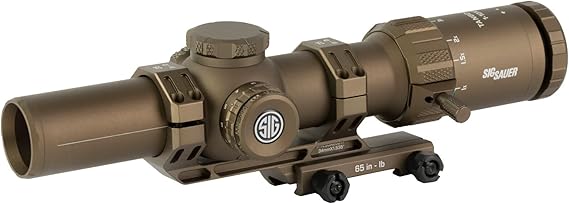
Quick target acquisition stands out immediately with its 1-10x magnification range, making it ideal for coyote hunting at varying distances. Designed for hunters and shooting enthusiasts, the scope’s optical clarity and light transmission help spot coyotes fast, especially in low-light conditions.
Its single biggest strength lies in blending versatility and precision for dynamic field situations.
Setting it up feels straightforward thanks to the cantilever mount, which securely attaches to your rifle. Daily use benefits from the wide 28mm objective lens offering a broad field of view and sharp edge-to-edge clarity.
The generous eye relief of 8.6 centimeters ensures comfortable viewing without strain. Adjusting the magnification from 1x to 10x happens quickly, making it easy to switch between close and long shots while on the move.
Performance excels with low dispersion glass pushing optical clarity to deliver precise shots at different ranges. The scope’s build feels solid, with a 34mm main tube providing durability without adding bulk.
Reviews highlight its impressive brightness and reliable reticle but note the 28mm lens might let in less light than larger scopes in very dim settings. Some mention weight could be lighter for extended carry.
Brightness and sharpness come through clearly with the high-performance optical system, making it easy to spot targets fast. The most common complaint involves the 28mm objective lens, which some find less effective in extremely low light compared to larger lenses.
Hunters needing rapid magnification changes and good precision at different ranges will appreciate this scope. Those often hunting in very dark conditions or preferring lighter gear might consider other options with larger lenses or reduced weight.
Pros
- Wide 1-10x magnification for varied shooting distances
- 28mm objective lens offering clear, bright images
- Comfortable 8.6 cm eye relief reduces eye strain
- Reliable MSR BDC-10 reticle aids quick target acquisition
Cons
- 28mm lens may limit low-light performance
- Scope could feel heavy when carried long periods
| Specification | Details |
|---|---|
| Magnification Minimum | 1 x |
| Magnification Maximum | 10 x |
| Objective Lens Diameter | 28 millimeters |
| Eye Relief | 8.6 centimeters |
| Field Of View | 110 feet |
| Reticle Type | MSR BDC-10 |
5. Vortex Crossfire II 2-7×32 Crossbow Scope

Precision and clarity stand out with the Vortex Crossfire II 2-7×32 Crossbow Scope, built for coyote hunters needing dependable accuracy from first to last light. Its dedicated reticle and dual illumination help you spot and shoot coyotes quickly in various light conditions.
The setup includes 30mm rings, flip caps, and a neoprene cover for protection during daily use. The scope’s magnification ranges from 2x to 7x, offering a wide field of view at 57.5 feet that suits different hunting distances. The illuminated XBR-2 reticle is tuned for crossbows and quickly adjusts for holdovers between 20 and 100 yards, making it simple to adapt on the fly.
Performance stays consistent, with clear optics that support fast target acquisition and precise shot placement. The scope’s build is solid and dependable, designed to handle the rigors of hunting.
The illumination feature earns praise for low light visibility, while one noted downside is the limited maximum magnification compared to more powerful scopes.
The scope provides excellent clarity and useful illumination, making it reliable for day and dusk hunts. Common feedback points to the limited maximum magnification as a drawback for longer-range targeting.
Hunters who prioritize an illuminated reticle tailored for crossbows will find the scope a solid choice. Those needing higher magnification or more light-gathering might want to consider other options.
Pros
- Dual illumination in red or green for low light
- Wide field of view helpful at varying distances
- Crossbow-specific reticle for accurate holdovers
- Comes with rings, flip caps, and neoprene cover
Cons
- Magnification capped at 7x, less than some scopes
- Objective lens diameter only 1 inch, less light gather
| Specification | Details |
|---|---|
| Magnification Minimum | 2x |
| Magnification Maximum | 7x |
| Objective Lens Diameter | 1 inch |
| Field Of View | 57.5 feet |
| Reticle Type | Illuminated, Second Focal Plane |
6. SIG SAUER Tango-MSR 1-10x26mm LPVO Riflescope

Getting a clear and reliable sight on coyotes at varying distances can be tough, especially in unpredictable conditions. Designed for those who need both quick target acquisition and precise shots, this riflescope shines with its wide magnification range, making it versatile for close to mid-range hunting.
Setting up involves a straightforward cantilever mount that fits most rifles well. The 1-10x magnification lets you adjust quickly, aided by a thread-in throw lever for smooth changes. Its compact size and durable waterproof design mean it stays reliable in rough weather, which is crucial for daily hunts.
The optical clarity stands out thanks to low dispersion glass, providing a bright and sharp image across all zoom levels. The 34mm main tube adds durability without bulk. The reticle suits long shots effectively, though some find the small 26mm objective lens limits light gathering in very low-light conditions.
Praise centers on its excellent optical clarity and fast target acquisition thanks to the wide zoom range and smooth magnification adjustment. The most frequent complaint concerns the smaller objective lens size, which can reduce brightness in dim lighting conditions compared to larger scopes.
Hunters who need a flexible scope for both close and mid-range engagements in varying light will appreciate this model. Those prioritizing low-light performance or preferring a simpler reticle might benefit from looking at other options.
Pros
- Wide 1-10x magnification for versatile ranges
- Quick magnification adjustments with thread-in lever
- Durable waterproof design for tough conditions
- Clear optics with good light transmission
Cons
- Smaller 26mm objective lens limits low-light performance
- Some find reticle complex for fast close-range shots
| Specification | Details |
|---|---|
| Magnification Maximum | 10 x |
| Objective Lens Diameter | 26 millimeters |
| Magnification Minimum | 1 x |
| Mounting Type | Cantilever Mount |
| Field Of View | 120 feet |
| Reticle Type | BDC10 |
7. Vortex Crossfire HD Second Focal Plane Riflescope

Zooming in up to 18x magnification, the Vortex Crossfire HD Second Focal Plane Riflescope suits hunters who need sharp detail on coyote targets at varied distances. Its clear optics and adjustable illumination shine brightest in low light conditions.
Setup involves straightforward mounting on a rifle, followed by dialing in magnification between 6x and 18x depending on the distance. The fully multi-coated lenses reduce glare, allowing reliable sight even near dawn or dusk.
The illuminated reticle’s floating center dot helps with quick aiming during low-light moments, making holdover and windage adjustments intuitive.
Optical clarity stays consistent from center to edge, thanks to selected glass elements minimizing chromatic aberrations. It performs well for pinpoint shots with its Dead-Hold BDC reticle tailored for holdover guidance.
The scope is built solidly to withstand field conditions. Frequent praise notes its clear resolution, while a common gripe centers on the reticle illumination battery life.
Sharp resolution and reliable holdover guidance stand out positively in reviews, especially for elevated accuracy. The most common concern regards the illuminated reticle’s battery lifespan, which some find shorter than expected for extended outings.
Hunters wanting clear images at varied distances and comfort using holdover reticles will appreciate this scope. Those prioritizing long battery life or the lightest possible setup might want to consider alternatives.
Pros
- Sharp resolution with edge-to-edge clarity
- Illuminated reticle for low-light precision
- Fully multi-coated lenses reduce glare
- Wide magnification range from 6x to 18x
Cons
- Reticle illumination battery life limited
- Scope weight may feel heavy for some users
| Specification | Details |
|---|---|
| Magnification Minimum | 6 x |
| Magnification Maximum | 18 x |
| Objective Lens Diameter | 50 millimeters |
| Reticle Type | Illuminated Dead-Hold 2A BDC (MOA) |
| Compatible Devices | Rifle |
8. Vortex Crossfire II Second Focal Plane Riflescope

Hunters targeting coyotes will appreciate the Vortex Crossfire II 3-9×50 riflescope for its versatility and clear sight picture. It’s especially suited for those needing an adjustable magnification with a reliable holdover reticle to handle varying distances effectively.
Setting up the scope on a rifle is straightforward with its O-ring mounting and generous eye relief that lets you quickly acquire your target without struggling to find the right position. The fast-focus eyepiece allows easy reticle adjustment, which is great when lighting conditions or shooting distances change during a day in the field.
Performance-wise, the anti-reflective fully multi-coated lenses deliver bright and sharp images, making target identification easier across the hunting range. The aircraft-grade aluminum tube offers a sturdy feel and the scope resists shock, water, and fog, which is especially important in unpredictable outdoor conditions.
The most common feedback highlights its clear optics, while some mention its limited maximum magnification as a downside in long-range scenarios.
Bright optics and weather-resistant construction earn solid praise from users who depend on clear views and durability during hunts. The most common critique centers on its capped magnification, which might limit precision at extended ranges.
Those hunting in varied terrain and distances will find the scope reliable and easy to use. Shooters needing extremely high magnification or specialized reticles might prefer a different model better suited for long-range precision shooting.
Pros
- Easy to adjust magnification from 3x to 9x
- Long eye relief facilitates quick target acquisition
- Waterproof and fogproof for harsh conditions
- Bright, clear views with multi-coated lenses
Cons
- Maximum 9x magnification may be low for distant shots
- Reticle focusing can require careful adjustment
| Specification | Details |
|---|---|
| Magnification Minimum | 3 x |
| Magnification Maximum | 9 x |
| Objective Lens Diameter | 50 millimeters |
| Reticle Type | Dead-Hold BDC |
| Mounting Type | Oring |
| Compatible Devices | Rifle |
9. Vortex Copperhead Second Focal Plane Riflescope

Designed specifically for hunters, the Copperhead riflescope fits well for coyote hunting with its Dead-Hold BDC reticle. Its single biggest strength is reliable performance across varied ranges thanks to precise hold-over adjustments and solid construction.
Setting up the scope on a rifle is straightforward with the cantilever Picatinny mount and a generous eye relief that gives comfort during quick shots. The locking diopter helps maintain clear focus, while the fully multi-coated lenses bring brightness to low-light moments that matter most during early mornings or late evenings.
Optically sharp with up to 12x magnification, this scope delivers clear images and accurate hold points aided by the Dead-Hold BDC. Built from aircraft-grade aluminum, it handles tough weather with waterproof, fogproof, and weatherproof protection. Users appreciate its solid feel, though some note the 44mm objective lens could gather more light on ultra-dim days.
The scope’s highest praise centers on dependable optical clarity paired with the user-friendly Dead-Hold BDC for hold-over corrections. Most common complaints concern the 44mm objective lens’s moderate light gathering, which affects visibility in extremely low light.
Hunters focusing on coyote hunting in varied lighting and distance conditions will find it very capable. Shooters needing brighter optics for very dim settings might want to explore scopes with larger objective lenses or wider magnification options.
Pros
- Dead-Hold BDC reticle adjusts for varied ranges
- Fully multi-coated lenses enhance brightness
- Long eye relief suited for fast target acquisition
- Durable, weatherproof aluminum construction
Cons
- Objective lens size limits low-light performance
- Magnification range could feel narrow for some
| Specification | Details |
|---|---|
| Magnification Maximum | 12 x |
| Magnification Minimum | 4 x |
| Objective Lens Diameter | 44 millimeters |
| Reticle Type | Dead-Hold BDC |
| Mounting Type | Cantilever Picatinny Scope Mount |
10. Vortex Viper Parallax Adjustment Riflescope

Vortex Viper Parallax Adjustment Riflescope excels as a reliable optic for coyote hunting, offering sharp clarity and precise range adjustments. Ideal for hunters who need strong magnification and easy parallax control, it handles varying distances with confidence thanks to its 6.5-20x magnification and Mil-Dot reticle for range estimation.
Setting up the scope on a rifle is straightforward, especially with the 30mm tube and cantilever mount compatibility. The side knob parallax adjust lets you fine-tune focus quickly during hunts, with range numbers clearly visible. Capped reset turrets simplify re-indexing after zeroing, making daily use less fiddly and faster in the field.
Performance meets durability with a hard anodized finish that stands up to rough conditions. The scope delivers excellent resolution aided by multi-coated, extra-low dispersion lenses and XR light-gathering coatings.
Most praise centers on optical clarity, while some mention the turrets’ stiffness under cold conditions as a drawback.
Clear optics and accurate range estimation stand out as the best features, supported by durable construction. Users often notice the initial stiffness of the turrets, which might slow adjustments in colder environments. The scope suits hunters focusing on precision at long ranges but may feel bulky or slow to adjust for fast, close-range shots.
Hunters aiming for detailed long-distance work and those appreciative of rugged design will find this scope fitting. People who need rapid turret adjustments or prefer wider field views for quick target acquisition might want to explore other options more tailored to those needs.
Pros
- High 20x magnification for distant shots
- Side knob parallax for quick adjustments
- Fully multi-coated lenses improve light gathering
- Durable hard anodized finish resists wear
Cons
- Turrets can be stiff in cold weather
- Field of view is somewhat narrow at high zoom
| Specification | Details |
|---|---|
| Magnification Maximum | 20 x |
| Objective Lens Diameter | 50 millimeters |
| Magnification Minimum | 6.5 |
| Reticle Type | Mil Dot |
| Mounting Type | Cantilever Mount |
11. Vortex Viper PST Gen I Second Focal Plane Riflescope

Using this scope brings clarity and confidence to long-range coyote hunting, thanks to its sharp optics and precise adjustments. Perfect for hunters who demand accuracy when dialing in shots at varying distances.
Its standout feature is the easy-to-use, matching reticle and turret system that simplifies quick elevation changes without losing zero.
Setting up involves mounting on a rifle with the 30mm cantilever mount, which feels solid and stable. The one-piece tube made from aircraft-grade aluminum is tough enough to take hunting bumps. Adjustments are smooth thanks to the precision-force spring system, and the customizable rotational stop helps you quickly return to zero after making elevation corrections during a hunt.
The scope performs well in staying on target with fast, reliable windage and elevation adjustments. Its build quality is strong, shockproof, and designed for repeated use. Most users appreciate the accurate MOA-based EBR-1 reticle for ranging and holdovers.
Some mention the objective lens size limits maximum light transmission at lower lighting, which might be a factor at dawn or dusk.
The scope’s precision in windage and elevation adjustment stands out, making quick shot corrections reliable. The most reported issue is the relatively small 30mm objective lens limiting light in low-light conditions common during coyote hunting.
Hunters who prioritize exact shot placement and durability will appreciate this scope. Those needing better low-light performance or wider field of view may want to explore options with larger objective lenses or different reticle styles.
Pros
- Strong, aircraft-grade aluminum tube
- Precise MOA reticle for fast ranging
- Easy-to-use elevation dialing with CRS
- Shockproof and durable construction
Cons
- 30mm objective limits low light visibility
- Field of view narrower at max magnification
| Specification | Details |
|---|---|
| Magnification Maximum | 24 x |
| Objective Lens Diameter | 30 millimeters |
| Magnification Minimum | 6 x |
| Mounting Type | Cantilever Mount |
| Reticle Type | EBR-1 (MOA) |
12. Vortex Razor HD Gen II First Focal Plane Riflescope

High magnification and precise adjustments make the Razor HD Gen II ideal for detailed coyote hunting at long range. It suits serious hunters who need accurate shooting and reliable windage corrections.
The L-TEC Turret System with a locking mechanism stands out by preventing accidental changes during critical moments.
Setup is straightforward, especially with the fast focus eyepiece bringing the EBR-7C reticle into crisp view quickly. The 4.5-27x zoom covers most distances, helping to adapt swiftly from medium to long-range shots in the field.
Tracking turret rotations through the visual indicator helps maintain awareness of adjustments without stopping your hunt.
Performance excels with sharp clarity and precise elevation and windage corrections using the windage tree. The scope is built solidly, featuring a cantilever mount and a 34mm thread type that secure it firmly on compatible rifles. Praise often highlights the turret locking mechanism, while the most common complaint concerns the weight, which can feel heavy during extended use.
Users appreciate the locking mechanism on the turrets as it keeps settings consistent, critical for precise shots. The ability to track turret rotations visually is a practical feature rarely found elsewhere. Despite its strengths, the relatively heavy weight is a drawback for some during extended periods in the field.
Anyone needing detailed, accurate windage and elevation adjustments at varied long ranges will find this scope useful. It fits those with some experience using MRAD reticles. Hunters who prioritize a lighter or simpler setup might want to explore other options.
Pros
- Locking turret system prevents accidental adjustments
- Visual rotation indicator tracks turret revolutions
- Wide zoom range from 4.5x to 27x magnification
- Windage tree designed for fast corrections
Cons
- Relatively heavy, noticeable during long hunts
- Complex reticle may require practice for quick use
| Specification | Details |
|---|---|
| Magnification Minimum | 4.5 x |
| Magnification Maximum | 27 x |
| Objective Lens Diameter | 56 mm |
| Reticle Type | EBR-7C (MRAD) |
| Thread Type | 34 mm |
Best Vortex Scopes for Coyote Hunting Compared
| Product | Max Magnification | Objective Lens Diameter | Reticle Type | Field Of View |
|---|---|---|---|---|
| SIG SAUER Tango-MSR 1-8×24 | 8x | 24mm | Illuminated MSR BDC-8 | 124.8 feet |
| Vortex Venom FFP | 5x | 56mm | EBR-7C | 21.2 feet |
| Vortex Strike Eagle SFP | 8x | 24mm | BDC3 | 1.98 degrees |
| SIG SAUER Tango-MSR 1-10×28 | 10x | 28mm | MSR BDC-10 | 110 feet |
| Vortex Crossfire II Crossbow | 7x | – | Illuminated, Second Focal Plane | 57.5 |
| SIG SAUER Tango-MSR 1-10×26 | 10x | 26mm | BDC10 | 120 feet |
| Vortex Crossfire HD SFP | 18x | 50mm | Illuminated Dead-Hold 2A BDC | – |
| Vortex Crossfire II SFP | 9x | 50mm | Dead-Hold BDC | – |
| Vortex Copperhead SFP | 12x | 44mm | Dead-Hold BDC | 24.7 feet |
| Vortex Viper Parallax | 20x | 50mm | Mil Dot | 17.4 feet |
| Vortex Viper PST Gen I | 24x | 30mm | EBR-1 (MOA) | 2.18 degrees |
| Vortex Razor HD Gen II | 4.5x | – | EBR-7C (MRAD) | – |
- Max Magnification8x
- Objective Lens Diameter24mm
- Reticle TypeIlluminated MSR BDC-8
- Field Of View124.8 feet
- Max Magnification5x
- Objective Lens Diameter56mm
- Reticle TypeEBR-7C
- Field Of View21.2 feet
- Max Magnification8x
- Objective Lens Diameter24mm
- Reticle TypeBDC3
- Field Of View1.98 degrees
- Max Magnification10x
- Objective Lens Diameter28mm
- Reticle TypeMSR BDC-10
- Field Of View110 feet
- Max Magnification7x
- Objective Lens Diameter–
- Reticle TypeIlluminated, Second Focal Plane
- Field Of View57.5
- Max Magnification10x
- Objective Lens Diameter26mm
- Reticle TypeBDC10
- Field Of View120 feet
- Max Magnification18x
- Objective Lens Diameter50mm
- Reticle TypeIlluminated Dead-Hold 2A BDC
- Field Of View–
- Max Magnification9x
- Objective Lens Diameter50mm
- Reticle TypeDead-Hold BDC
- Field Of View–
- Max Magnification12x
- Objective Lens Diameter44mm
- Reticle TypeDead-Hold BDC
- Field Of View24.7 feet
- Max Magnification20x
- Objective Lens Diameter50mm
- Reticle TypeMil Dot
- Field Of View17.4 feet
- Max Magnification24x
- Objective Lens Diameter30mm
- Reticle TypeEBR-1 (MOA)
- Field Of View2.18 degrees
- Max Magnification4.5x
- Objective Lens Diameter–
- Reticle TypeEBR-7C (MRAD)
- Field Of View–
How to Choose the Right Vortex Scope
Choosing the right vortex scope involves considering clarity, durability, and appropriate magnification to match hunting conditions. Prioritizing these features ensures accurate shots and reduces the need for replacement or repairs, ultimately saving money and avoiding frustration during hunts.
Magnification and Reticle
Clear target identification requires the right magnification, especially since coyote hunting often happens between 100 and 300 yards. Scopes with variable magnification in the 3- to 9-power range offer flexibility without sacrificing image clarity.
Higher magnification can make quick shots more difficult, so balancing zoom with field of view matters. Reticles designed for fast target acquisition, like duplex or circle-dot types, simplify aiming in low light or when quick reaction is needed. A first focal plane reticle helps keep holdover marks accurate across different zoom levels.
Brightness settings should have several levels to adjust for dawn, dusk, or overcast conditions. Being able to switch reticle illumination easily means less time fumbling and more focus on the target.
Durability and Weather Resistance
Scopes made from aircraft-grade aluminum stand up better to the bumps and drops that happen during field use. Exposure to humidity can cause internal fogging, so scopes with nitrogen or argon purging and quality seals make a noticeable difference.
Waterproof ratings like IPX7 or scopes rated to survive rainfall keep lenses clear even in wet weather. Shockproof design matters during recoil; a sturdy tube construction resists shifting zero and damage. Protective coatings on lenses reduce glare and scratches, guaranteeing a sharper sight picture across many hunts.
A durable scope feels less like delicate gear and more like another part of your rifle.
Battery Life and Illumination Controls
Hunting over long days means battery life must last through dawn to dusk without replacement. Scopes rated for hundreds of hours, 100 to 200+ on mid to low brightness, reduce interruptions or carrying extra batteries. Illumination controls that are easy to find and adjust by touch or feel add convenience in the dark.
Some models include a low battery indicator or automatic shutoff to save power when idle, extending usable time. Smooth dimming from bright to very low lets you match lighting conditions without losing sight of the reticle or ruining night vision.
Mount Compatibility and Weight
A scope that fits a common Picatinny or Weaver rail installs and removes securely without tools or adapters. Swap compatibility avoids guesswork and extra expense. Weight affects how balanced your rifle feels, especially when carrying over uneven terrain.
Scopes under 20 ounces keep the setup manageable without sacrificing sturdiness. A slim profile helps avoid catching on brush or gear when moving through dense cover.
Something bulky adds unnecessary hassle and gets in the way during quick movements or tight shots. A streamlined design lets you stay agile and focused on the hunt.
Tips for Optimizing Your Vortex Scope Setup for Effective Coyote Hunting
Stability plays a crucial role in making the most out of a Vortex scope during coyote hunting. Securing the scope firmly to your rifle mount prevents zero shifts after repeated shots. Choose the right reticle that suits low-light and moving target situations, often a mildot or tactical reticle works well for tracking coyotes at variable distances.
Zero the scope at the distance you expect to encounter most coyotes, typically between 100 and 200 yards, to reduce holdover guesswork. Adjust the brightness of the illuminated reticle carefully; too bright can cause glare, too dim makes aiming difficult when light fades.
Use lens covers to keep the glass clean from dust, moisture, and scratches while moving through rough terrain. Practicing quick target acquisition under different lighting conditions helps, as coyotes are often active at dawn or dusk.
Regularly clean the lenses with a microfiber cloth to maintain clarity and prevent obscured vision during the hunt.
Comparing Vortex Scopes to Other Popular Brands for Coyote Hunting
Vortex scopes offer solid build quality and reliable optics without going too heavy on price, compared to some popular brands. They provide consistent image clarity and good light transmission, which is critical for spotting coyotes in low-light conditions.
Many Vortex models feature durable, waterproof construction, making them dependable in tough weather typical for coyote hunting. While other brands might offer specialized reticles or advanced electronic features, Vortex tends to focus on straightforward, practical designs that are user-friendly in the field. A reason hunters prefer Vortex is the fast adjustment turrets that allow quick zero changes without losing accuracy.
Some competitors provide lighter or more compact scopes, but Vortex balances size and optics quality well. Warranty coverage on Vortex scopes is another consideration; the unconditional guarantee can be reassuring, especially with demanding hunting conditions.
Common Mistakes to Avoid When Using a Vortex Scope in the Field
Placing too much trust in the factory zero without confirmation can lead to missed shots. Taking the time to verify and fine-tune your scope’s zero at your chosen hunting distance is essential.
Overlooking parallax adjustment causes image blur or incorrect point of aim, which affects accuracy with coyotes at varying ranges. Forgetting to adjust the reticle illumination brightness based on ambient light can make aiming either too distracting or ineffective. Another common mistake is poor scope mounting; loose rings or improper alignment cause inconsistent shot placement.
Skipping regular maintenance on lenses leads to smudges or debris blocking the view at critical moments. Not practicing with your specific Vortex scope setup in realistic conditions means struggling to react quickly during a hunt.
Avoid these problems by careful setup, routine checks, and practice under field-like conditions well before the hunting season.
People Also Asked
How Do I Properly Zero a Vortex Scope for Coyote Hunting?
Zero a Vortex scope by setting it up on a stable rest and aiming at a target 100 yards away. Adjust the turrets until the crosshairs align with the bullet impact point. Double-check the zero by firing groups and confirming the point of impact matches the reticle.
What Is the Ideal Magnification Size for Coyote Hunting Scopes?
A magnification of 3-9x or 4-12x works well for coyote hunting. It allows you to clearly see coyotes at varying distances without losing a wide enough field of view for tracking movement. Avoid too high magnification, which can make locating targets harder.
How Long Do Vortex Scopes Typically Last with Regular Use?
Vortex scopes generally last many years with regular use if handled carefully. They use quality materials and sealed optics to resist wear. Avoid dropping or hitting the scope hard, and keep the lenses protected to maintain clarity over time.
Are There Common Issues to Watch for with Vortex Scopes?
Some Vortex scopes may develop minor issues like turret adjustments becoming stiff or slight fogging if seals are compromised. Inspect your scope regularly for smooth operation and keep lens covers on. Address any unusual behavior early to avoid bigger problems.
What’s the Best Way to Clean and Maintain a Vortex Scope?
Use a soft lens cloth or lens pen with a small amount of lens cleaner to clean the glass. Avoid rough fabric or household cleaners that can scratch or damage coatings. Store the scope in a dry, padded case and check for dust or moisture after use.
Conclusion
Choosing the right scope for coyote hunting boils down to clarity, durability, and appropriate magnification. A clear sight picture at varying distances helps spot and track coyotes efficiently.
The scope must stand up to rough conditions since hunts often happen in challenging environments. Suitable magnification is essential to balance between a wide field of view and the ability to see details at longer ranges.
Consider your typical hunting locations and budget before making a decision. A scope that fits your usual shooting distances and frequency of use will provide the best value. For a quick review of features and options, check the comparison table and detailed descriptions above to find the scope that fits your needs.