
Top 12 Best Blast Furnacr Scopes That Will Blow Your Mind!
Choosing the best blast furnace scopes is crucial for anyone working with high-temperature metal processing. A common issue with cheap or ill-fitting scopes is their inability to provide a clear view during critical moments, which can lead to misjudgments and even safety hazards. Many scopes fog up or warp under intense heat, disrupting the operator’s line of sight just when accuracy is most needed.
Durability and heat resistance are the main factors that separate good blast furnace scopes from poor ones. The lenses should be made from high-quality, heat-treated glass or quartz, capable of withstanding temperatures exceeding 1200 degrees Celsius without distorting.
Proper fit and comfort are equally important since scopes are often worn for extended periods, so adjustable straps and padding help reduce strain. Finally, ease of cleaning matters because blast furnace environments generate soot and residue that can quickly cloud the optics.
Need a Quick Check?
| Image | Product | Price |
|---|---|---|
Our Top Picks 1 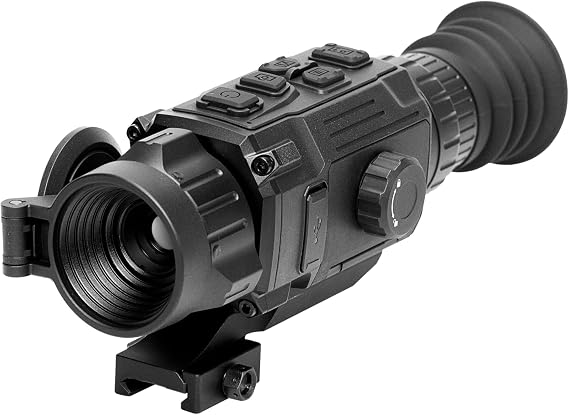 | AGM Rattler V2 | Check Price |
Our Top Picks 2  | RIX Storm-S3 | Check Price |
Our Top Picks 3  | DNT ThermNight Scope | Check Price |
Our Selected Top 12 Blast Furnacr Scopes for Every Budget
This list features a variety of blast furnace scopes suitable for different needs and budgets. Each review covers performance, ideal users, and key advantages and disadvantages, helping readers make an informed choice based on their specific requirements and preferences.
1. AGM Global Vision Rattler V2 Thermal Imaging Scope
Fast targeting and a wide field of view make this thermal scope a solid pick for close- to mid-range hunting. Ideal for spotting fast-moving targets like hogs or predators in dense brush, it stands out with quick response times and reliable tracking.
Setting up takes just a few minutes thanks to the Picatinny mount, which fits most rifles securely. The eye relief of 45 millimeters provides comfortable viewing during long sessions.
Two rechargeable batteries mean you won’t be left off-guard in extended hunts, as the scope lasts up to 11.5 hours on a single charge.
Performance is strong with a 20x maximum magnification and a 9.3-degree field of view that helps keep moving targets visible. The 19-millimeter objective lens handles thermal imaging well for its size. Build quality feels solid and dependable, but some mention the base magnification of 2.5x might be limiting for long-range spotting.
The scope’s fast targeting and long battery life receive the most praise, making it reliable for all-night hunts. Some users find the minimum magnification of 2.5x less suited for detailed long-range scanning, which could be a drawback in open areas.
Hunters focusing on mid-range targets in thick brush will appreciate its features and durability. Those needing higher base magnification or a larger lens for extended distance shots might want to explore other options.
Pros
- Wide field of view for quick target acquisition
- Long battery life with dual rechargeable batteries
- Comfortable eye relief of 45 millimeters
- Easy mounting on Picatinny rails
Cons
- Base magnification may feel low for distant targets
- Limited objective lens size restricts light gathering
| Specification | Details |
|---|---|
| Magnification Minimum | 2.5 x |
| Magnification Maximum | 20 x |
| Objective Lens Diameter | 19 millimeters |
| Field Of View | 9.3 degrees |
| Mounting Type | Picatinny Mount |
2. RIX STORM-S3 Thermal Scope
Spotting targets at extreme distances can be tricky, especially in low light or total darkness. Suitable for long-range hunters who need clear thermal vision, this scope stands out with its strong detection range.
It simplifies viewing objects nearly 2000 yards away with solid clarity.
Setting up is straightforward thanks to the Picatinny mount, fitting most rifles without fuss. The base magnification starts at 3.5x, adjustable up to 14x, allowing you to zoom in on targets far off. The 35mm objective lens gathers good detail while the eye relief of 48mm helps maintain comfort during extended use.
Its field of view offers a wide enough picture for easier tracking on the move.
Performance is impressive with a 384×288 thermal sensor that detects heat signatures clearly in various conditions. RIX’s RET technology improves image sharpness, bringing it close to the quality of pricier sensors.
The build feels solid, designed for rough outdoor conditions. Users praise its image clarity and distance, though some find the magnification range could feel limited against higher-end scopes.
The image clarity is notably sharp thanks to the RET technology, nearly matching the quality of more costly detectors. The most common drawback involves the magnification range, which some find insufficient when needing close inspection of small details.
Hunters focusing on long-range thermal spotting will appreciate its balance of clarity and zoom. Those requiring a bigger lens or broader magnification flexibility might consider other options better suited for varying light conditions or closer targets.
Pros
- Clear target detection up to 1969 yards
- Flexible magnification from 3.5x to 14.0x
- Improved image with RET algorithm
- Easy rifle mounting with Picatinny rail
Cons
- Magnification may feel limited for extreme close-ups
- Some users desire a larger lens for better brightness
| Specification | Details |
|---|---|
| Magnification Minimum | 3.5 x |
| Magnification Maximum | 14 x |
| Objective Lens Diameter | 35 millimeters |
| Field Of View | 5907 feet |
| Eye Relief | 48 millimeters |
| Mounting Type | Picatinny Mount |
3. DNT Optics ThermNight Thermal & Night Vision Scope
Offering up to 12x magnification with combined thermal and digital night vision, this scope is perfect for those needing clear target identification in low-light or night conditions. Its high-sensitivity 12um pixel detector ensures you can spot things at a distance with reliability and clarity.
Setup involves mounting on a standard Picatinny rail, which feels secure and straightforward. Day-to-day, the scope’s 3x to 12x zoom adjusts smoothly for varied distances.
Eye relief at 6.5 centimeters allows comfortable viewing without straining. The digital reticle helps keep the target in focus whether using thermal or night vision modes, making quick adjustments easy while on the move.
On the performance front, the thermal imaging offers excellent range for night detections, backed by a low NETD rating that means sharp image clarity. Build quality is sturdy, designed for rifles with a 25mm objective lens diameter to keep the size manageable. Most praise centers on how well it works in very low light, though some find the weight adds bulk during extended use.
The strongest praise highlights the thermal imaging’s ability to deliver clear and detailed sightings in very low light, making it valuable for night use. Common feedback points out that the scope’s weight can add noticeable bulk, which some find tiring during long sessions.
People prioritizing clear night vision and thermal detection will appreciate its capabilities. Those needing something compact and ultralight for extended carries may want to explore other options better suited for weight-sensitive use.
Pros
- Clear target identification in darkness
- Easy Picatinny mounting
- Smooth magnification adjustment
- Comfortable 6.5 cm eye relief
Cons
- Heavier than some similar scopes
- Can feel bulky on lighter rifles
| Specification | Details |
|---|---|
| Magnification Maximum | 12 x |
| Magnification Minimum | 3 x |
| Objective Lens Diameter | 25 millimeters |
| Mounting Type | PMS – Picatinny 0 MOA Short |
| Eye Relief | 6.5 centimeters |
| Reticle Type | Digital |
4. ATN BlazeSeeker 6 Thermal Monocular

Designed for outdoor enthusiasts who need to spot heat signatures clearly, this monocular excels at detecting distant targets. Its 6th gen thermal sensor offers detailed images that work best in open fields, making it ideal for wildlife watchers and security professionals who need sharp target identification over longer distances.
Setup is quick with a fixed focus lens and a straightforward interface. The battery-powered device is compact and lightweight, making it easy to carry around all day.
Multiple viewing modes and color palettes let you adjust the display for comfortable viewing in various environments, while the diopter adjustment ensures the image stays crisp without constant fiddling.
Image clarity is impressive thanks to the SharpIR AI enhancement, which improves edge detection and contrast to help distinguish hidden shapes against cluttered backgrounds. The build feels solid and the germanium lens adds to its precise heat detection at ranges up to 460 meters. Some find the narrower field of view a bit limiting when scanning wide-open spaces, but its detection range and thermal sensitivity remain standout features.
Strong thermal sensitivity and sharp image contrast help reveal hidden targets even in complex environments. Common feedback mentions the narrow viewing angle as a drawback when scanning broad areas quickly. The solid build and compact design meet expectations for rugged outdoor use.
Anyone needing detailed thermal detection for open terrain will appreciate these features. People who require wider views or prefer standard batteries for easier replacements might want to look at different options.
Pros
- Clear heat signature detection up to 460 m
- Compact and lightweight for easy carrying
- Multiple color palettes for comfortable viewing
- Video record and photo functions included
Cons
- Narrower 17.3° field of view limits wide scanning
- Uses a nonstandard battery that may be harder to replace
| Specification | Details |
|---|---|
| Sensor Resolution | 256×192 |
| Pixel Pitch | 12 μm |
| Field Of View | 17.3 degrees |
| Zoom Ratio | 1.7–13.6X |
| Power Source | 1 Nonstandard Battery (included) |
| Display | 800×600 OLED |
5. RIX Storm S2 Thermal Scope

High sensitivity and magnification make the RIX Storm S2 Thermal Scope a solid choice for spotting distant targets clearly. Best suited for long-range hunting, it excels in delivering crisp thermal images up to 1422 yards away, giving an edge in challenging visibility conditions.
Setup is straightforward with a Picatinny mount that fits most rifles well. The 25mm lens and adjustable magnification from 3.5x to 14x give you flexibility in the field. Eye relief is comfortable at 48 millimeters, and the horizontal field of view covers a wide area, so tracking targets doesn’t feel cramped or limited.
Image quality benefits from RIX’s RET technology, which sharpens the image beyond what the 256×192 sensor normally provides, almost like having a higher resolution detector. The build is rugged enough for regular use outdoors. Some users mention the clarity at maximum zoom could be better, but most agree the scope reliably detects heat signatures at long distances.
The scope’s image enhancement technology improves viewing beyond its sensor specs, making distant targets easier to spot. Common feedback highlights a slight decrease in detail at the highest zoom level, which can impact fine target identification. Everyday use involves balancing magnification for clarity and field of view depending on the hunt.
Hunters needing reliable thermal detection at long distances will appreciate the combination of magnification and image processing. Those prioritizing ultra-high resolution thermal imaging might find alternatives with a higher sensor resolution more suitable for their needs.
Pros
- Clear imaging up to 1422 yards
- Adjustable magnification from 3.5x to 14x
- Comfortable eye relief at 48 mm
- Reticle designed for precise aiming
Cons
- Image clarity drops at highest magnification
- Limited detector resolution at 256×192
| Specification | Details |
|---|---|
| Magnification Minimum | 3.5 x |
| Magnification Maximum | 14 x |
| Objective Lens Diameter | 25 millimeters |
| Eye Relief | 48 millimeters |
| Field Of View | 4266 feet |
| Mounting Type | Picatinny Mount |
6. Vortex Triumph HD 3-9×40 Riflescope

Vortex Triumph HD 3-9×40 Riflescope offers quality optics aimed at newer hunters wanting clear views without fuss. Its biggest strength lies in delivering sharp images with good color accuracy while staying straightforward to set up.
Setting it up involves attaching the 1 Hunter Rings included in the kit, which sit low (0.90 height) and keep the scope secure. Daily handling benefits from fully multi-coated lenses that improve light clarity and reduce glare, making it easier to spot targets early or late in the day.
The neoprene case helps protect the scope when not in use.
The optical system provides excellent edge-to-edge sharpness and color fidelity, making the sight picture crisp under various lighting conditions. It’s built with selected glass elements that keep chromatic aberration low, so images are clean. Most praise centers on its clarity, while some users mention the magnification range might feel limited for longer distances.
The Vortex Triumph HD 3-9×40 riflescope delivers clear images with good brightness and sharpness, even in low light. Its simple setup removes complications for hunters who want straightforward gear. Some find the 1″ Hunter Rings a bit low in height, limiting compatibility with certain mounts or rifles.
Hunters new to scoped rifles or those wanting reliable optics without fuss will appreciate this scope. Those needing high magnification or specialized features may prefer scopes with more advanced or customizable options. The scope works well for everyday hunting scenarios with mid-range power and clear views.
Pros
- Clear, sharp images with vibrant color fidelity
- Fully multi-coated lenses for better light transmission
- Includes low-height 1″ Hunter Rings for easy mounting
- Neoprene case offers good protection during transport
Cons
- Magnification tops out at 9x, limiting long-range use
- Setup options somewhat basic for advanced shooters
| Specification | Details |
|---|---|
| Magnification Minimum | 3 x |
| Magnification Maximum | 9 x |
| Objective Lens Diameter | 40 millimeters |
| Mounting Type | Ring Mount |
| Reticle Type | Dead-Hold BDC |
7. Triton StarStrike Gen II Night Vision Rifle Scope

Bringing clarity to night hunting, the Triton StarStrike Gen II Night Vision Rifle Scope is a solid pick for anyone needing sharp vision in darkness. It shines brightest in offering a broader field of view than typical fixed magnifiers, helping you spot and track targets more naturally in low-light conditions.
Setting up the scope on a Picatinny mount is straightforward, and the 5x to 20x magnification range adjusts easily for both close and distant targets. Thanks to a 50-millimeter objective lens, the scope captures ample light, making target acquisition faster.
The crosshair duplex reticle is clear, helping you stay on target without clutter.
Clarity at night stands out, with a military-grade sensor that handles complete darkness exceptionally well. Daytime colors appear improved compared to earlier scopes of similar quality. The build feels solid and durable, meant to withstand regular use.
On the downside, some mention the field of view, though wider than others, still requires time to adapt for tracking moving targets smoothly.
It offers unparalleled clarity in total darkness and improved color rendition during daylight, making early dawn and dusk shoots more productive. The slightly narrow field of view, even though expanded from usual magnifiers, is a frequent adjustment challenge noted during target tracking.
Hunters and shooters who need solid night vision across varied lighting and a reliable mount will appreciate this scope. Those wanting an ultra-lightweight setup or wider instantaneous field of view might look elsewhere for more specialized needs.
Pros
- Wide objective lens for better situational awareness
- Strong night vision clarity with military-grade sensor
- Simple Picatinny mount setup
- Clear crosshair reticle for precise aiming
Cons
- Field of view still takes getting used to tracking targets
- Heavier than some lightweight scopes
| Specification | Details |
|---|---|
| Magnification Minimum | 5 x |
| Magnification Maximum | 20 x |
| Objective Lens Diameter | 50 millimeters |
| Field Of View | 4.91 degrees |
| Mounting Type | Picatinny Mount |
| Reticle Type | Crosshair/Duplex |
8. Vortex Crossfire HD Riflescope

Great for shooters needing clear, reliable optics at various distances, the Vortex Crossfire HD offers sharp imaging and useful holdover features. Its biggest strength lies in delivering sharp resolution without color distortion through select glass elements, making it a solid choice for mid-range target shooting or hunting.
Setting it up is straightforward with the Dead-Hold BDC reticle, which helps with holdover and windage. The illuminated center dot aids quick aiming in low light, while the fully multi-coated lenses improve visibility during dawn or dusk sessions.
Adjusting magnification between 6x and 18x is smooth, letting you tailor the view based on distance and conditions.
Performance stands out with crisp, edge-to-edge clarity that minimizes chromatic aberration. It feels sturdy on the rifle, built to handle regular use without losing zero. The main praise revolves around its excellent optical clarity, while some note the illumination could be brighter in very dark environments.
The optical system is praised for sharp, clear images without unwanted color fringes, which holds up well during regular shooting sessions. Some users mention that the illuminated dot doesn’t shine strong enough in very dark settings, meaning additional ambient light helps.
Shooters looking for solid clarity and reliable reticle guidance over mid to long distances will appreciate this scope. Those needing very bright illumination or extensive customization options might want to explore other models.
Pros
- Sharp resolution with reduced chromatic aberration
- Fully multi-coated lenses improve clarity in low-light conditions
- Illuminated center dot assists quick aiming
- Effective holdover and windage guidance
Cons
- Illumination not bright enough in complete darkness
- Lacks advanced adjustments found in higher-end scopes
| Specification | Details |
|---|---|
| Magnification Minimum | 6 x |
| Magnification Maximum | 18 x |
| Objective Lens Diameter | 50 millimeters |
| Reticle Type | Illuminated Dead-Hold 2A BDC (MOA) |
| Compatible Devices | Rifle |
9. Vortex Crossfire II Riflescope

Aircraft grade aluminum forms a single piece tube giving the Crossfire II Riflescope strength and shock resistance. Designed for rifles, it suits those who need a no-magnification scope that offers clear, bright views without compromising durability.
Its standout feature is the 1x fixed magnification that complies with no magnification muzzleloader rules.
Setting up involves mounting it on a cantilever mount, which holds it securely in place. The capped reset turrets are finger adjustable, allowing you to zero your shots precisely with MOA clicks.
The fast focus eyepiece lets you quickly sharpen the reticle view, and the generous 3.8-inch eye relief means comfortable positioning even in various shooting stances.
The bright, fully multi-coated optics work well in low light, providing a wide 95-foot view at 100 yards that helps track fast-moving targets. Its V-Plex reticle aids in accurate shot placement without the clutter of extra markings.
Most praise highlights the optical clarity and rugged build, while some users note the limited magnification as a constraint for longer-range shots.
Optical clarity and ruggedness receive the most praise, making the scope reliable in various hunting conditions. The main drawback is the single magnification level, which some find too limiting beyond close to mid-range targets.
Hunters seeking a clear, durable no-magnification scope will appreciate this model. Those needing zoom or better light gathering for long distances might want to look elsewhere.
Pros
- Strong, shockproof aircraft grade aluminum tube
- Fast focus eyepiece for easy reticle adjustment
- Wide 95-foot field of view at 100 yards
- Capped reset turrets with MOA clicks
Cons
- Fixed 1x magnification limits versatility
- Small objective lens affects some long-range light gathering
| Specification | Details |
|---|---|
| Magnification Maximum | 1 |
| Objective Lens Diameter | 24 millimeters |
| Field Of View | 95 feet |
| Reticle Type | V-Plex |
| Mounting Type | Cantilever Mount |
10. Burris Scout Scope

Sharp focus at a fixed 2.75x magnification stands out with this scope, aimed at users who need quick shots at close to medium distances, particularly with scout rifles. Its generous eye relief makes it comfortable to use, especially for active or tactical scenarios.
Setting it up takes a moment because it mounts forward, matching the style of scout rifles. The fixed magnification means you don’t have to fiddle with zoom levels, which helps keep your eyes on the target. Eye relief between 8.5 and 14 inches allows you to shoot with both eyes open, maintaining awareness of your surroundings.
The built-in Heavy Plex reticle has a clean layout that supports accurate shots without distractions. The solid 20mm objective lens is compact but enough for its intended range. The scope handles its job well by providing a consistent view and quick target acquisition.
Most praise focuses on how easy it is to use, while some notes mention the fixed magnification limits flexibility at longer distances.
The scope provides fast target acquisition with its fixed magnification and generous eye relief, helping maintain situational awareness during use. Users appreciate the straightforward reticle design, although many mention that the zoom level doesn’t suit longer-distance shots well.
Ideal for those focused on quick shots with scout rifles at medium close ranges. People needing variable zoom or longer-range precision should look for scopes offering adjustable magnification instead.
Pros
- Generous eye relief for quick sighting
- Fixed 2.75x magnification fits scout-style shooting
- Clean Heavy Plex reticle aids accuracy
- Compact 20mm objective lens size
Cons
- Fixed magnification limits use at longer ranges
- Forward mounting may not suit all rifle setups
| Specification | Details |
|---|---|
| Magnification Maximum | 2.75 |
| Objective Lens Diameter | 20 millimeters |
| Eye Relief | 21.6 centimeters |
| Field Of View | 15 feet |
| Reticle Type | Heavy Plex |
| Mounting Type | Forward |
11. Burris Fullfield II Hunting Scope

Choosing a hunting scope that offers bright, clear optics without breaking the bank is important for serious outdoors enthusiasts. Ideal for long-range hunting, it features a sharp 20x magnification and a large 50mm objective lens that gathers plenty of light to deliver a bright and detailed view.
Setting it up is straightforward with a cantilever mount that fits well on handguns, making it versatile for different hunting gear. The 6.5 to 20x zoom range allows easy adjustment depending on your target distance. The Ballistic Mil-Dot reticle helps with accurate aiming, especially in varied terrain and lighting conditions.
Day-to-day use shows that it holds zero reliably through repeated shots.
Performing at the expected level for precision targeting, the glass quality stands out for clarity and brightness. It handles outdoor conditions with lasting durability, making it dependable over time. Commonly praised for its brightness and sharp image, some mention that the eye relief could be better.
The solid build feels reassuring without being heavy or bulky.
Brightness and clarity are standout features that make aiming easier in low light, thanks to the 50mm objective lens and quality glass. Some users find the eye relief a bit tight, especially when using different firearms or adjusting their hold. Durability ensures it holds up, but eye comfort may need work.
Hunters looking for a bright, versatile scope with dependable precision will find value here. Those needing broader eye relief or wider field of view at high magnification might want to explore alternatives better suited to rapid target acquisition or varied shooting styles.
Pros
- Bright, clear view through high-grade optical glass
- Large 50mm lens collects more light
- Ballistic Mil-Dot reticle aids accurate aiming
- Durable build suitable for outdoor use
Cons
- Eye relief could be more forgiving
- Field of view narrows at higher magnification
| Specification | Details |
|---|---|
| Magnification Minimum | 6.5 |
| Magnification Maximum | 20 |
| Objective Lens Diameter | 50 millimeters |
| Reticle Type | Ballistic Mil-Dot |
| Field Of View | 17 feet |
| Mounting Type | Cantilever Mount |
12. Swampfox Blade 1×25 Prism Scope
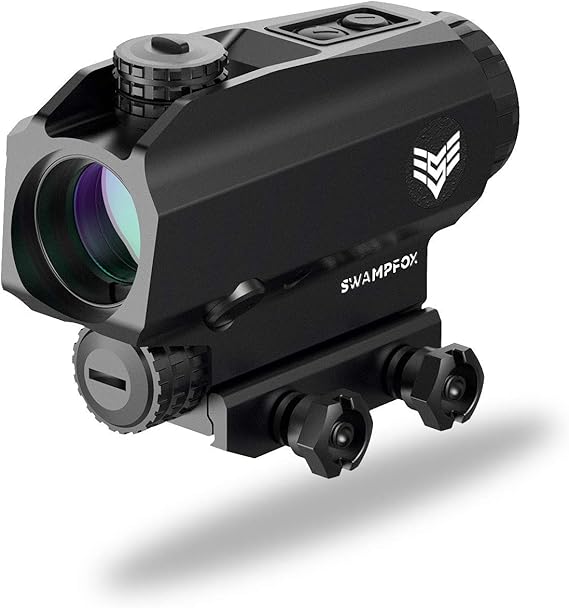
Aiming at close range targets can be tricky when your scope doesn’t account for bullet rise. This 1x prism scope fits rifles well and shines for shooters who want precise holds at very short distances. Its standout feature is the bullet rise compensating reticle that helps match the point of aim with where the bullet actually hits.
Setting up is straightforward, especially with the offset mount that keeps the optic properly aligned above the barrel. The Shake N’ Wake technology switches off illumination when the scope is still for a few minutes, then turns it back on instantly once movement is detected. This feature helps save battery life during long waits but keeps the reticle visible right when you need it.
The main job of clearly showing holds for 5, 10, and 15 yards gets handled well thanks to the reticle designed for height over bore offsets. Build feels solid for field use with a 25 mm objective lens giving a clear view. The most praised feature is the bullet rise compensation, while some note that having only 1x magnification limits longer range use.
The scope gets the most praise for its bullet rise compensating reticle that helps shooters hit targets accurately at very close range. A common point raised is the single 1x magnification, which means it’s not suitable for longer-range shooting scenarios. The Shake N’ Wake illumination saves power but sometimes turns off at inconvenient moments.
Anyone looking for a sight that makes short-distance aiming easier with quick reticle illumination will be pleased. Those needing higher magnification or use at more extended ranges should consider other optics designed for longer-distance shooting.
Pros
- Reticle compensates for bullet rise at close ranges
- Shake N’ Wake tech saves battery on illumination
- Offset mount suits rifles with bore height
- Clear view with 25 mm objective lens
Cons
- 1x magnification limits use beyond short distances
- Illumination turns off after inactivity, may delay quick shots
| Specification | Details |
|---|---|
| Magnification Minimum | 1 x |
| Magnification Maximum | 1 x |
| Objective Lens Diameter | 25 millimeters |
| Mounting Type | offset mount |
| Reticle Type | Bullet Rise Compensating Reticle |
| Compatible Devices | Rifle |
Best Blast Furnace Scopes Comparison Table
| Product | Max Magnification | Objective Lens Diameter | Compatible Device | Reticle Type |
|---|---|---|---|---|
| AGM Rattler V2 | 20x | 19 mm | Rifle | Mil Dot |
| RIX Storm-S3 | 14x | 35 mm | Rifle | – |
| DNT ThermNight Scope | 12x | 25 mm | Rifle | Digital |
| ATN BlazeSeeker 6 | 13.6x | – | Smartphone | – |
| RIX Storm S2 | 14x | 25 mm | Rifle | RIX Reticle |
| Vortex Triumph HD | 9x | 40 mm | Rifle | Dead-Hold BDC |
| Triton StarStrike Gen II | 20x | 50 mm | Rifle | Crosshair/Duplex |
| Vortex Crossfire HD | 18x | 50 mm | Rifle | Illuminated Dead-Hold |
| Vortex Crossfire II | 1x | 24 mm | Rifle | V-Plex |
| Burris Scout Scope | 2.75x | 20 mm | Rifle | Heavy Plex |
| Burris Fullfield II | 20x | 50 mm | Handgun | Ballistic Mil-Dot |
| Swampfox Blade Prism | 1x | 25 mm | Rifle | Bullet Rise Compensate |
- Max Magnification20x
- Objective Lens Diameter19 mm
- Compatible DeviceRifle
- Reticle TypeMil Dot
- Max Magnification14x
- Objective Lens Diameter35 mm
- Compatible DeviceRifle
- Reticle Type–
- Max Magnification12x
- Objective Lens Diameter25 mm
- Compatible DeviceRifle
- Reticle TypeDigital
- Max Magnification13.6x
- Objective Lens Diameter–
- Compatible DeviceSmartphone
- Reticle Type–
- Max Magnification14x
- Objective Lens Diameter25 mm
- Compatible DeviceRifle
- Reticle TypeRIX Reticle
- Max Magnification9x
- Objective Lens Diameter40 mm
- Compatible DeviceRifle
- Reticle TypeDead-Hold BDC
- Max Magnification20x
- Objective Lens Diameter50 mm
- Compatible DeviceRifle
- Reticle TypeCrosshair/Duplex
- Max Magnification18x
- Objective Lens Diameter50 mm
- Compatible DeviceRifle
- Reticle TypeIlluminated Dead-Hold
- Max Magnification1x
- Objective Lens Diameter24 mm
- Compatible DeviceRifle
- Reticle TypeV-Plex
- Max Magnification2.75x
- Objective Lens Diameter20 mm
- Compatible DeviceRifle
- Reticle TypeHeavy Plex
- Max Magnification20x
- Objective Lens Diameter50 mm
- Compatible DeviceHandgun
- Reticle TypeBallistic Mil-Dot
- Max Magnification1x
- Objective Lens Diameter25 mm
- Compatible DeviceRifle
- Reticle TypeBullet Rise Compensate
How to Choose the Right Blast Furnace Scope
Choosing the right blast furnace scope depends on durability, heat resistance, and precise measurement capabilities, as these factors ensure accurate monitoring and long-lasting use in extreme conditions. Selecting the right features prevents costly repairs and downtime, ultimately saving money and avoiding operational issues.
Optical Clarity and Magnification
Using a scope with poor lens quality indoors or near industrial heat sources makes spotting defects frustrating. Everyday experience shows that lenses with scratched coatings or low clarity blur critical details. The coating on lenses reduces glare and improves image brightness, which is crucial when inspecting surfaces inside a blast furnace.
A magnification range of 6x to 12x typically provides enough zoom without shaking hands making the image unstable during quick inspections. Overly high magnification narrows the field of view and makes it harder to find issues fast.
The field of view is another important factor. With about 6 to 8 degrees of vision, users can scan areas faster than with scopes focused solely on high zoom.
A good scope maintains sharpness across the lens and uses multi-coated glass to avoid distortion, so users see real detail instead of smudges or false shadows.
Durability and Build Quality
Heat and dust are constant in industrial environments, so scopes made from heat-resistant materials like aluminum alloy or reinforced polymer hold up better over time. Scopes that develop cracks or lose seal integrity soon become unreliable.
Metal bodies usually withstand impacts and drops better than plastic ones, which is important when moving quickly around a busy plant.
Corrosion resistance matters due to moisture and chemical exposure. Models rated at least IP65 tend to resist dust and sprays effectively. While full waterproofing might not be needed, water-resistant coatings and sealed joints ensure no internal fogging or rust develops after exposure to moisture or cleaning processes.
Ergonomics and Handling
Inspecting a furnace for extended periods quickly reveals problematic scopes that are heavy or awkward to hold. A lightweight design under 500 grams reduces arm fatigue, helping maintain steady viewing.
Grips textured with rubber or soft materials improve handling, especially with gloves on in hot environments.
Adjustable focus rings let users sharpen the image precisely regardless of their vision or protective eyewear. Variable eye relief distances accommodate different face shapes and helmets, preventing uncomfortable pressure or loss of sight. Smooth adjustment controls speed up inspections when conditions change suddenly.
Compatibility and Mounting Options
Some scopes allow simple attachment to helmets or safety glasses, significantly freeing up hands during inspections. Secure clipping mechanisms or modular mounts reduce the risk of the scope slipping or wobbling while leaning close to surfaces.
Compatibility with inspection cameras provides the option to document or share findings quickly.
Versatile mounting points, including side rails or standard threads, enable positioning the scope overhead or at various angles. This flexibility proves useful in confined furnace spaces where maintaining a direct line of sight can be difficult and repositioning tools frequently is needed.
Lighting and Visibility Features
Furnace inspection often happens in dim or smoky conditions where external light is minimal. Scopes built with built-in LED illumination assist in clearly viewing problem areas.
Adjustable brightness settings allow users to dial in the right light intensity without washing out the image or causing eye strain.
Reliable battery life is essential because losing power mid-inspection means delays and safety risks. Scopes powered by common AA or AAA batteries make replacement easier on-site. Rechargeable options work too but should support quick charging or swapping to avoid downtime during critical maintenance.
Optimizing Blast Furnace Scope Performance with Proper Calibration
Calibration directly impacts the accuracy of blast furnace scopes. A scope that isn’t properly calibrated may deliver misleading readings, which can affect furnace performance and safety.
Regular calibration ensures temperature measurements and other readings reflect real conditions inside the furnace.
Most blast furnace scopes require calibration against known standards or reference points. This process should be done after installation, any repairs, or if the device has been stored for an extended period.
Calibration intervals vary, but it is good practice to follow manufacturer guidelines strictly.
Ignoring calibration can lead to inefficient furnace operation and increased maintenance costs. Using built-in adjustment features allows operators to fine-tune the scope for environmental factors such as changes in ambient temperature or atmospheric pressure.
Key calibration practices include:
- Using certified calibration tools
- Documenting each calibration session
- Training personnel on calibration procedures
- Verifying scope measurements with physical inspections periodically
Essential Safety Practices When Operating Blast Furnace Scopes
Blast furnace scopes operate in extreme conditions where high heat and toxic gases are present. Wearing appropriate personal protective equipment (PPE) is vital, including heat-resistant gloves, face shields, and flame-retardant clothing.
The scope itself should be rated for the furnace environment to avoid damage or failure.
Operators must ensure the scope is securely mounted to prevent accidental drops or misalignments, which can cause inaccurate readings or injury. Electrical connections should be checked regularly for signs of wear or corrosion to prevent electrical hazards.
Setting up a perimeter with clear warning signs keeps unauthorized personnel away from the inspection area. Adequate ventilation reduces gas buildup, which can affect both measurement accuracy and operator health. Training in emergency response protocols prepares staff for unexpected furnace conditions.
Following these safety steps minimizes the risk of accidents and contributes to reliable data collection during furnace operation.
Comparing Blast Furnace Scopes with Alternative Industrial Inspection Tools
Blast furnace scopes provide visual and thermal insight inside high-temperature industrial furnaces, but several other tools offer different capabilities. Infrared thermometers give quick spot temperature readings but lack the comprehensive view a scope provides. Thermal imaging cameras produce detailed heat maps but often require more complex setup and interpretation.
Borescopes help inspect narrow furnace areas but do not handle extreme heat levels as well as specialized blast furnace scopes. Ultrasonic thickness gauges measure furnace wall thickness and structural integrity but cannot visualize internal temperature distribution.
Comparing these tools depends on the inspection goal. For real-time visual monitoring under furnace conditions, blast furnace scopes remain practical. Alternative devices can complement this information, particularly for structural assessments or quick temperature checks outside direct visual zones.
Using a combination of inspection tools designed for specific furnace maintenance tasks improves overall operational understanding and safety.
People Also Asked
How Do I Properly Care for My Blast Furnace Scope?
Clean the lens regularly with a soft cloth to maintain clear visibility and prevent buildup from dust or soot. Store the scope in a dry place to avoid moisture damage which can fog up lenses or corrode metal parts.
What Size Blast Furnace Scope Do I Need for My Setup?
Choose a scope size that matches your furnace access ports and suits the range you need to observe. Larger scopes can provide better viewing angles but might be bulkier to handle if you need quick adjustments or limited space.
Are Blast Furnace Scopes Safe to Use Around High Temperatures?
Blast furnace scopes are made from heat-resistant materials suitable for high-temperature environments. Avoid direct contact with flames or extremely hot surfaces for extended periods to prevent warping or damage to the scope housing.
How Long Does a Typical Blast Furnace Scope Last with Regular Use?
A blast furnace scope usually lasts several years if maintained properly, especially when lenses and seals are kept clean and intact. Frequent exposure to harsh conditions may shorten its lifespan, so inspect for wear regularly.
What Are Common Problems When Using a Blast Furnace Scope?
Common issues include lens fogging from temperature differences and scratches from debris. Sometimes the scope can become loose due to vibrations, so check and tighten mounts before starting work.
Conclusion
Choosing the right blast furnace scope comes down to clarity, durability, and ease of mounting. The lens quality directly affects how well you can see details, while a sturdy build ensures it can handle rough conditions.
Also, check how simple it is to attach and adjust, as this will save time during setup and use.
Consider the size of your furnace area, your budget, and how often you plan to check your blast. Matching the scope to these factors helps avoid overspending or buying something that won’t fit.
Review the comparison table and earlier picks to find the option that fits your needs best.