
Top 12 Best Spotting Scope for Moon That Will Astound You
Trying to enjoy the moon’s details through a cheap or ill-suited spotting scope often leads to frustration with blurry images or unstable views. The best spotting scope for moon viewing cuts through these issues by offering clear magnification without too much shake or distortion, making those craters and lunar features sharp and easy to observe.
A good spotting scope for moon observation typically needs a solid build with fully multi-coated optics to reduce glare and improve clarity. Magnification between 20x and 60x strikes the right balance; too much power can make the image shaky unless paired with a stable tripod. Also, a weather-resistant design helps protect the scope during cold or damp nights, while an easy-to-clean lens coating keeps the view bright without complicated maintenance.
Need a Quick Check?
| Image | Product | Price |
|---|---|---|
Our Top Picks 1  | SVBONY SV28 Scope | Check Price |
Our Top Picks 2  | HD 20-60×80 Tripod Scope | Check Price |
Our Top Picks 3  | HD 20-60×80 Tripod Scope II | Check Price |
Our Selected Top 12 Spotting Scope for Moon You Can Trust
This list features carefully chosen spotting scopes ideal for moon observation, highlighting their performance, optimal users, and key strengths and weaknesses. Each review provides clear insights to help you find the best scope that matches your viewing needs and experience level.
1. SVBONY SV28 Spotting Scope
SVBONY SV28 Spotting Scope comes with a 70mm large objective lens and a waterproof, non-slip design ideal for beginners and novices wanting a clear, bright view of the moon and other distant objects. Its biggest strength is the easy-to-adjust 25-75x zoom, which lets you switch magnification smoothly.
Setup is straightforward, with a manual focus that quickly sharpens the image. Changing between zoom levels feels natural, thanks to the zoom eyepiece. The built-in extendable sunshade helps cut glare, improving visibility under different lighting conditions.
The scope fits securely on tripods and is compatible with cameras, making it useful for both observation and casual photography.
Viewing the moon through the scope offers a bright, detailed image thanks to the 70mm lens gathering plenty of light. Its waterproof design keeps it safe during sudden weather changes.
Reviews highlight its solid build and ease of use, while the most frequent complaint involves manual focusing being a bit slow or requiring steady hands for best results.
The scope gets praised for its clear, bright views and durable, weather-safe build, but manual focusing proves challenging for some users who want quicker adjustments. Switching zoom levels remains smooth despite this.
Those new to spotting scopes or seeking a versatile zoom should find this model a solid match. More experienced users wanting rapid focus changes or simple mounts might consider other options.
Pros
- Large 70mm lens gathers ample light
- Wide 25-75x zoom range
- Waterproof and non-slip finish
- Compatible with cameras and tripods
Cons
- Manual focus can be tricky to steady
- Equatorial mount adds setup complexity
| Specification | Details |
|---|---|
| Zoom Ratio | 3:1 |
| Focal Length | 380 millimeters |
| Field Of View | 64 feet |
| Mount | Equatorial Mount |
| Coating | FMC |
2. HD 20-60×80 Spotting Scope with Tripod
A spotting scope with a 20–60x adjustable magnification suits those wanting clear, detailed moon views without fuss. Its biggest strength lies in the smooth switch from wide-field scanning at 20x to detailed close-ups at 60x, making it perfect for moon watching and observing distant landscapes.
Setting up is straightforward with the included tripod, allowing steady viewing without wobble. Fast focusing helps locate the moon or any target quickly, while the fine focus ensures crisp details come through after zooming in. The 8-centimeter lens brings enough light for clear images, and the field of view lets you track the moon’s movement with ease during a session.
It performs well by providing a flexible zoom range from 20x to 60x, offering precise detail at high magnifications without excessive distortion. Constructed solidly enough for regular outdoor use, it feels durable but not too bulky.
The most praised feature is sharp clarity even at maximum power; common complaints mention eye relief being somewhat tight during long viewing sessions.
It offers sharp views at all magnifications, making detailed moon observation easy, though the short eye relief might cause some discomfort during extended sessions. Tripod helps steady images but can sometimes feel less stable on rough terrain.
Those interested in lunar details and terrain scanning will appreciate its flexible zoom and clear optics. Anyone needing longer eye relief or ultra-portable gear might want to consider alternatives.
Pros
- Variable magnification from 20x to 60x
- Dual focusing for quick and precise adjustment
- Includes tripod for stable viewing
- Wide 86.4 feet field of view at 1,000 yards
Cons
- Eye relief of 4.5 millimeters can feel tight
- Tripod stability may vary on uneven ground
| Specification | Details |
|---|---|
| Magnification Minimum | 20 x |
| Magnification Maximum | 60 x |
| Objective Lens Diameter | 8 centimeters |
| Eye Relief | 4.5 millimeters |
| Field Of View | 86.4 feet |
3. HD 20-60×80 Spotting Scope with Tripod
Powerful magnification and precise dual focusing make it ideal for moon spotting and detailed outdoor observation. Perfect for anyone who wants a closer look at distant objects, whether on a mountain hike or bird watching early morning.
Its main strength lies in its wide 20-60x zoom combined with a sturdy 80mm lens.
Setting up is straightforward thanks to the included tripod and phone adapter, which make it easier to stabilize views and capture images. The aluminum body keeps the weight manageable at just over a kilo, so carrying it around won’t feel like a burden.
Quick adjustments with dual focus knobs allow you to lock in sharp details up close or far away without much hassle.
It delivers sharp images even at the highest magnification, showing clear textures on distant mountains and wildlife. Built with solid aluminum, the scope feels well-made and quite durable. Most users appreciate the smooth focusing system, though some find the zoom range a bit tricky to balance without a steady tripod on uneven terrain.
Sharp image quality and a very effective focusing system stand out as strong points, helping to capture clear details of faraway subjects. The most noted drawback is the difficulty in maintaining steady views at higher magnifications without a tripod, especially on rough ground.
This scope suits outdoor enthusiasts who want a blend of power and portability, especially useful for moon observation or bird watching with stable support. Those needing something lighter or simpler for quick spotting might want to explore lighter or lower zoom options.
Pros
- Wide zoom range from 20x to 60x
- Comes with tripod and phone adapter
- Durable aluminum construction
- Smooth dual focusing system
Cons
- Zoom can be hard to stabilize without tripod
- Weight might feel heavy for long hikes
| Specification | Details |
|---|---|
| Magnification | 20-60x |
| Objective Lens Diameter | 80 mm |
| Item Weight | 1.18 kg |
| Item Dimensions (LxWxH) | 14.96 x 3.54 x 6.5 inches |
| Included Components | Spotting Scope, Carrying Case, Tripod, Phone Adapter |
| Material | Aluminum |
4. Athlon Optics Forerunner 20-60×80 Spotting Scope

Using a spotting scope for moon observation calls for sharp clarity and reliable magnification. The Athlon Optics Forerunner 20-60×80 fits those who want versatile zoom capabilities paired with durable design. Its biggest strength lies in delivering crisp detail at long distances, making it ideal for viewing the moon’s surface.
Setting up the scope is straightforward, thanks to the included tripod that adds stability essential for night use. Daily adjustments are easy using dual focus knobs that help you refine the view precisely. The zoom range from 20x to 60x lets you quickly switch between broader lunar landscapes and close-up details.
The weatherproof aluminum body ensures comfort using it outdoors during clear or damp nights without worrying about damage or fogging.
The scope performs well in magnification and image clarity due to fully multi-coated lenses that boost brightness and true colors in your view. Its argon-purged, fog-proof sealing contributes to uninterrupted use through various weather conditions.
Users appreciate the precision focus system, although some mention the weight making it less ideal for long carries. The solid construction feels durable but adds a bit of heft at 2.47 kg.
The scope’s strongest praise lies in excellent image quality and reliable weatherproofing, allowing clear moon viewing under various conditions. The most frequent complaint centers on its 2.47 kg weight, which can feel heavy during travel or prolonged use without a stable base.
Anyone looking for crisp lunar details and strong outdoor durability will find this scope satisfying. Those seeking a lightweight or ultra-compact option for frequent mobility might consider smaller, lighter alternatives instead.
Pros
- Powerful 20-60x zoom for detailed moon viewing
- Fully multi-coated lenses for bright, clear images
- Waterproof, fog-proof design for reliable outdoor use
- Dual focus system for quick, precise adjustments
Cons
- Heavier weight may be cumbersome for extended carrying
- Bulkiness can limit easy transport and storage
| Specification | Details |
|---|---|
| Magnification | 20-60x |
| Objective Lens Diameter | 80mm |
| Weight | 2.47 kg |
| Material | Aluminum |
| Dimensions (L x W x H) | 19.9 x 8 x 4.6 inches |
5. Flagship 20-60×80 Spotting Scope

Boasting a variable 20x to 60x magnification, the Flagship 20-60×80 Spotting Scope is perfect for anyone wanting detailed long-range views of the moon or wildlife. Its biggest strength lies in the combination of powerful zoom and smooth, precise focusing that makes switching views simple and effective.
Setting up the scope is straightforward with the manual focus and altazimuth mount allowing comfortable adjustments for any angle. The finderscope helps in quickly locating targets, while the smartphone adapter makes capturing views easy.
Its water resistance adds reliability when using it outdoors for extended periods.
It delivers sharp, bright images thanks to the 80mm fully multi-coated green film lens and the high-quality BAK4 Porro prism. Most appreciate the clarity even at 60x zoom, but some find the manual focus requires patience to get perfectly sharp. The build feels solid without being overly heavy, suited for trips and stargazing sessions alike.
The scope is praised for its bright and sharp images even at high magnification levels, while the manual focus is often mentioned as requiring some getting used to. It takes time to find the exact focus point, especially for quick target viewing.
Anyone looking for detailed moon or distant wildlife observation with the option to record images will appreciate this. Those wanting an ultra-lightweight or autofocus scope might prefer to look elsewhere.
Pros
- Wide zoom range for detailed long-distance viewing
- Bright, clear images with BAK4 Porro prism
- Water resistant for outdoor use
- Includes smartphone adapter for easy photo capture
Cons
- Manual focus can be tricky for beginners
- Heavier than some compact scopes
| Specification | Details |
|---|---|
| Magnification | 20-60x |
| Objective Lens Diameter | 80mm |
| Field of View | 82.9–48ft/1000 yards |
| Focus Type | Manual Focus |
| Mount | Altazimuth Mount |
| Coating | Fully Multi-Coated |
6. 25-75×80 Spotting Scope with Desktop Tripod

Anyone wanting a powerful spotting scope for moon observation will appreciate the 25-75×80 Spotting Scope with Desktop Tripod. It suits beginners and intermediate stargazers looking for clear, bright views.
Its biggest strength lies in the wide 25–75x magnification paired with an 80mm objective lens, which makes lunar details stand out sharply.
Setting up is straightforward with the included desktop tripod and manual focus, letting you adjust precisely without fuss. A larger 23mm eyepiece means the view feels broad and bright, while multi-coated optics ensure colors remain true.
The integrated phone holder lets you easily snap photos of your lunar observations, perfect for sharing or reviewing later on your smartphone.
Optical performance stands out for its clarity and color accuracy, benefiting from Bak4 prism and FMC coatings. The scope’s durable build handles regular outdoor use well. Most praise highlights its bright, detailed images and smooth zoom, while some users find manual focusing a bit tricky at higher magnifications.
It’s a balanced setup that performs solidly for the price.
The scope’s standout feature is its bright and clear images thanks to an 80mm objective and quality Bak4 prism optics. Many users note occasional difficulty in fine-tuning focus when using the highest magnification, which requires patience. The integrated phone holder also adds convenience for capturing moon shots.
Those enjoying stable, high-zoom observations with easy photo sharing will appreciate this option. Anyone needing a more portable setup or motorized focus could look for an alternative better suited to those demands.
Pros
- Wide 25-75x zoom range for detailed moon views
- Large 80mm objective lens brings bright images
- Multi-coated optics improve color accuracy
- Phone holder for easy moon photography
Cons
- Manual focus can be challenging at high zoom levels
- Desktop tripod limits mobility
| Specification | Details |
|---|---|
| Eye Piece Lens Description | Bak4 Prism System |
| Power Source | Unpowered |
| Focal Length Description | 25-75x Magnification With 80mm Objective Lens |
| Coating | Multi-coated Bak4 Prism System |
| Additional Features | Upgraded Flagship with Integrated Phone Holder |
| Mount | Tripod Mount Compatible |
7. Athlon Optics Argos HD 20-60×85 Spotting Scope

Zooming between 20x and 60x with an 85mm objective lens makes this spotting scope ideal for moon viewing and long-distance observation. Its standout feature is the clear, bright image quality delivered by advanced HD glass and fully multi-coated lenses, catering well to serious hobbyists who want crisp detail and true color in any light.
Setting up is straightforward with the included rotating tripod ring and 45° angled eyepiece, which lets you find comfortable positions during extended viewing sessions. The rubber-armored body feels durable yet lightweight, making it easy to carry in the soft case. The waterproof and fogproof design means you can use it outdoors without worrying about moisture or bad weather interfering.
For performance, the zoom range and HD optics make it a strong contender for detailed views of the moon’s surface. The focus stays sharp even at maximum magnification.
Constructed for rugged use, the scope resists fogging and moisture very well. Users praise the clarity and weather sealing most, though some have mentioned the weight can be a bit much for handheld use over longer stretches.
The clarity and color accuracy stand out most during nighttime moon viewing, with optics designed to resist fog and moisture working very well in different climates. The most frequent criticism is about the weight, which some find challenging to hold steady without a tripod over time.
This scope suits those wanting detailed, reliable views under various weather conditions and who don’t mind using a tripod for longer sessions. Casual users looking for something lighter or with faster zoom adjustments might want to explore lighter alternatives.
Pros
- Sharp, bright images with true color accuracy
- Waterproof, fogproof, and argon-purged for weatherproof use
- Comfortable 45° angled eyepiece with rotating tripod ring
- Durable rubber-armored body with soft carrying case
Cons
- Relatively heavy for extended handheld sessions
- Zooming can feel a bit stiff for quick adjustments
| Specification | Details |
|---|---|
| Zoom Ratio | 20–60x |
| Objective Lens Diameter | 85mm |
| Eye Piece Lens Description | Plössl |
| Field Of View | 45 degrees |
| Mount | Altazimuth Mount |
| Focal Length Description | 4.25mm to 1.42mm |
8. HD 20-60×80 Waterproof Spotting Scope
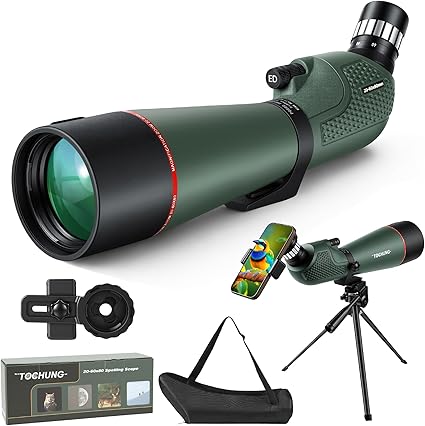
HD 20-60×80 Waterproof Spotting Scope shines when you need clear, detailed views of the moon or distant objects. It suits anyone looking for powerful zoom and bright images in varying outdoor conditions, with its large 80mm objective lens delivering exceptional brightness and contrast.
Setting up the scope on a tripod makes it stable and easy to handle. Manual focus lets you refine views precisely, while the zoom range from 20x to 60x adjusts smoothly, helping you catch fine lunar details. The waterproof and fogproof design means it works well even on damp or chilly nights.
Attaching a smartphone for quick snaps is straightforward with the included universal adapter.
Performance in spotting distant objects, including the moon, is sharp and bright, thanks to the fully multi-coated optics. The build feels solid, ready for outdoor use without worry about weather damage. High praise comes for the clarity and zoom flexibility.
Common feedback points to the manual focus requiring patience to lock onto distant details smoothly.
Zooming from 20x to 60x reveals crisp details on the moon’s surface, with brightness staying consistent thanks to the fully multi-coated optics. The biggest challenge lies in manual focusing, which calls for steady hands or practice to avoid frustrating hunts for sharp imagery.
Ideal for anyone wanting detailed lunar views during varying weather thanks to its waterproof body. Those needing rapid auto-focusing or lighter, handheld options may look elsewhere, but this works well for careful observers who appreciate optical quality and durability.
Pros
- Large 80mm lens for bright, clear views
- Continuous 20x to 60x zoom for precise magnification
- Waterproof and fogproof for reliable outdoor use
- Universal smartphone adapter included
Cons
- Manual focus can be tricky to lock on quickly
- Requires tripod for stable, steady observations
| Specification | Details |
|---|---|
| Objective Lens Diameter | 80mm |
| Zoom Ratio | 20x-60x |
| Mount | Tripod Mount |
| Focus Type | Manual Focus |
| Additional Features | Fully Multi-Coated Optics, Waterproof & Fogproof, Universal Smartphone Adapter |
9. 25-75×80 Spotting Scope with Tripod

Using a spotting scope that offers such a wide range of magnification feels like having a powerful telescope on demand. Suited for someone wanting clear and precise views of the moon or distant wildlife, the standout feature is its sharp images even when light isn’t perfect.
It’s a solid choice for serious stargazers and hunters alike.
Setting it up is straightforward, thanks to the included tripod that keeps the scope steady. The smooth zoom knob lets you glide between 25x and 75x magnification, so you can zoom in tightly without losing focus.
The quick-focus system helps you zero in on details quickly, while the built-in sunshade cuts down on unwanted glare, making long viewing sessions comfortable.
The 80mm objective lens combined with a BAK4 prism ensures clear, high-contrast images. The twist-up eyecup adjusts for glasses wearers and provides comfort during extended use. Praise often goes to the sharpness and clarity at high magnifications.
Some mention the weight as a drawback, which can make carrying and adjusting the scope a bit tiring over time.
Its ability to deliver clear details of targets or moon features stands out, even in low light. The most common gripe relates to the weight, which makes long-term handheld use tiring without the tripod.
Those wanting crisp focus and versatility in magnification will find this scope a good fit. It suits stargazers and shooters who need precision but might not be ideal for casual users seeking a lightweight option.
Pros
- Sharp, high-contrast images at various magnifications
- Quick-focus system for fast, precise adjustments
- Built-in sunshade reduces glare effectively
- Comfortable twist-up eyecup suitable for glasses wearers
Cons
- Heavier than some similar spotting scopes
- Can be awkward to carry for long periods
| Specification | Details |
|---|---|
| Magnification Minimum | 25 x |
| Magnification Maximum | 75 x |
| Objective Lens Diameter | 8 centimeters |
| Field Of View | 82.9 feet |
10. Athlon Optics Talos 20-60×80 Spotting Scope

Great for night sky viewing, this spotting scope suits anyone wanting bright, clear lunar images. Its biggest strength lies in delivering vivid visuals through K9 glass prisms with silver coating, making moon observation detailed and enjoyable.
Setup involves mounting the tripod and adjusting the rotating ring for the right viewing angle. Manual focus gives control over fine details, while the fully multi-coated lenses ensure good light transmission.
Nitrogen purging keeps moisture out, so it stays fog proof and performs reliably, even in changing weather.
It offers a sharp image at magnifications up to 60x, ideal for moon spotting. The 8 cm objective lens gathers plenty of light, helping in low-light conditions. Solidly built with waterproof features and a porro prism design, it handles rough outdoor use well.
Some find the manual focus a bit slow when tracking fast objects.
The scope consistently delivers bright and detailed images thanks to its high-quality coatings and large objective lens. Most users mention the manual focus requires patience when adjusting, especially on moving targets or quick setups.
Great for those who prize image clarity and durability in outdoor conditions. People seeking faster focus or wider views might want to explore other scopes better suited to dynamic or broad panorama observation.
Pros
- Bright images with K9 silver-coated prisms
- Fog proof and waterproof for harsh conditions
- Rotating ring for comfortable viewing angles
- Manual focus allows precise adjustments
Cons
- Manual focus can be slow for moving subjects
- Narrow field of view at 0.13 degrees
| Specification | Details |
|---|---|
| Objective Lens Diameter | 8 centimeters |
| Magnification Maximum | 60 x |
| Focus Type | manual |
| Coating | Fully Multi-Coated |
| Water Resistance Level | Waterproof |
| Prism Type | Porro Prism |
11. SVBONY SV28 Plus Spotting Scope

Featuring a solid BAK4 prism and fully multi-coated lenses, this spotting scope suits those who want a reliable view of the moon and other distant scenes. Its variable 25x to 75x zoom is the biggest strength, letting you switch from wide to detailed views with ease.
Setup is straightforward thanks to the included standard tripod and manual focus. Switching magnification between 25x and 75x is smooth, allowing clear adjustments for different viewing distances. The universal phone adapter lets you capture what you see, making it easier to share or save images.
IP65 waterproof and fog-proof design means occasional bad weather won’t interrupt your observation plans.
The scope delivers sharp and detailed images of the moon, performing well under varying zoom levels. Its rugged build stands up well to outdoor conditions.
Strong praise often highlights its good image clarity and zoom flexibility. The most common complaint concerns the manual focusing, which can be a bit slow or sensitive for fine adjustments during quick observation moments.
The spotting scope offers impressive clarity and a wide range of magnification, ideal for moon viewing. Its waterproof and fog-proof features allow use in various weather conditions, though the manual focusing system can slow down quick adjustments.
People who enjoy detailed moon observation and want to easily capture images with a phone will find it a good choice. Those needing rapid focusing or a broader view at high magnification might want to explore other options.
Pros
- Variable zoom from 25x to 75x
- Waterproof and fog-proof design
- Includes universal phone adapter
- Comes with a standard tripod
Cons
- Manual focus can be fiddly to adjust precisely
- Relatively narrow field of view at higher zoom
| Specification | Details |
|---|---|
| Zoom Magnification | 25x to 75x |
| Field Of View | 64-43 ft/1000yds |
| Focus Type | manual focus |
| Coating | Fully Multi-Coated |
| Waterproof Rating | IP65 |
| Mount | Tripod |
12. Professional Auto-Focus Digital Refractor Telescope
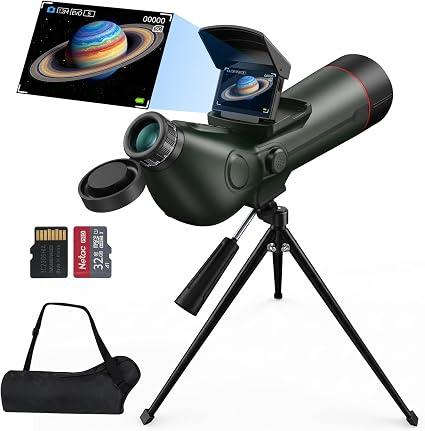
An 80mm large-aperture lens combined with a 4K digital camera makes this scope ideal for anyone wanting crisp, detailed moon views and astrophotography. Its biggest strength lies in its auto-focus feature, which simplifies capturing sharp lunar images without constant manual adjustments.
Setup is straightforward with its reflex finderscope helping to aim quickly, and the dual screens make it easy to see what you’re capturing or observing in real time. The battery requirement is nonstandard, so keeping spares on hand is wise. Day-to-day use benefits from the 300mm focal length and 350X zoom, which bring distant lunar features and planets clearly into view.
Performance impresses through the clear, bright imagery even in low light, with the starlight-level CMOS sensor enhancing astrophotography. Build quality feels solid but not heavy, making it manageable for casual or semi-serious moon viewing sessions.
The best reviews highlight wonderful photo and video quality, while complaints often mention the need for specific batteries that aren’t always easy to find.
Users praise sharp, bright images and easy focusing that brings lunar craters into remarkable detail. Most complaints focus on the need for specific nonstandard batteries, which can complicate continuous use during nights of observation.
Ideal for those wanting high-quality moon and planet views paired with astrophotography features. People seeking a simpler, more battery-friendly scope might consider other options better suited to extended outdoor use.
Pros
- Auto-focus removes manual adjustments
- 4K photo and video quality
- Dual screens for real-time viewing
- High 350X zoom for detailed observations
Cons
- Requires nonstandard batteries
- Battery availability can be challenging
| Specification | Details |
|---|---|
| Focus Type | Auto Focus |
| Finderscope | Reflex |
| Number of Batteries | Nonstandard Battery batteries required |
| Focal Length Description | 300mm |
| Zoom Ratio | 350 |
| Additional Features | 4K Astrophotography Camera, Auto-focus, Dual Screens, Photo & Video Modes |
Best Spotting Scopes for Moon Comparison Table
| Product | Magnification Range | Objective Lens Diameter | Focus Type | Special Features |
|---|---|---|---|---|
| SVBONY SV28 Scope | 3:1 zoom ratio | – | Manual | Waterproof, 45 degree |
| HD 20-60×80 Tripod Scope | 20-60x | 80mm | – | – |
| HD 20-60×80 Tripod Scope II | 20-60x | 80mm | – | 2 years warranty |
| Athlon Forerunner 20-60×80 | 20-60x | 80mm | – | Lifetime warranty |
| Flagship 20-60×80 Scope | 60x | – | Manual | Smartphone compatible |
| 25-75×80 Desktop Scope | 25-75x | 80mm | Manual | Camera, smartphone compatible |
| Athlon Argos HD 20-60×85 | 20-60x | – | – | Camera compatible |
| HD 20-60×80 Waterproof Scope | 20-60x | – | Manual | Waterproof, smartphone adapter |
| 25-75×80 Tripod Scope | 25-75x | 80mm | – | – |
| Athlon Talos 20-60×80 | 20-60x | 80mm | – | Waterproof, fog proof |
| SVBONY SV28 Plus Scope | 25-75x | – | Manual | Smartphone compatible |
| Professional Auto-Focus Telescope | 350x | – | Auto Focus | 4K astrophotography camera |
- Magnification Range3:1 zoom ratio
- Objective Lens Diameter–
- Focus TypeManual
- Special FeaturesWaterproof, 45 degree
- Magnification Range20-60x
- Objective Lens Diameter80mm
- Focus Type–
- Special Features–
- Magnification Range20-60x
- Objective Lens Diameter80mm
- Focus Type–
- Special Features2 years warranty
- Magnification Range20-60x
- Objective Lens Diameter80mm
- Focus Type–
- Special FeaturesLifetime warranty
- Magnification Range60x
- Objective Lens Diameter–
- Focus TypeManual
- Special FeaturesSmartphone compatible
- Magnification Range25-75x
- Objective Lens Diameter80mm
- Focus TypeManual
- Special FeaturesCamera, smartphone compatible
- Magnification Range20-60x
- Objective Lens Diameter–
- Focus Type–
- Special FeaturesCamera compatible
- Magnification Range20-60x
- Objective Lens Diameter–
- Focus TypeManual
- Special FeaturesWaterproof, smartphone adapter
- Magnification Range25-75x
- Objective Lens Diameter80mm
- Focus Type–
- Special Features–
- Magnification Range20-60x
- Objective Lens Diameter80mm
- Focus Type–
- Special FeaturesWaterproof, fog proof
- Magnification Range25-75x
- Objective Lens Diameter–
- Focus TypeManual
- Special FeaturesSmartphone compatible
- Magnification Range350x
- Objective Lens Diameter–
- Focus TypeAuto Focus
- Special Features4K astrophotography camera
How to Choose the Best Spotting Scope for Moon Viewing
Choosing the right spotting scope for moon viewing depends on factors like magnification, lens quality, and light-gathering ability, which ensure clear, detailed images. Getting these aspects right avoids frustration and saves money by preventing the need for frequent replacements or upgrades.
Optical Quality
Observing lunar details depends heavily on the quality of the lenses and coatings inside the scope. Glass lenses, especially those made from high-quality ED (extra-low dispersion) glass, reduce chromatic aberrations and deliver sharper images.
Fully multi-coated lenses boost brightness by minimizing light loss, making it easier to spot surface features on the moon. Lower quality lenses often cause blurry edges or dull images that are frustrating during long observation sessions.
Magnification is another key factor. A range starting around 20x up to 60x works well for detailed views without compromising stability or brightness. Aperture size controls how much light enters the scope; sizes between 60mm and 80mm strike a balance between gathering enough light for clear night images and keeping the scope manageable in size.
Smaller apertures struggle in low light, while much larger ones become bulky.
Stability and Mounting
Tripod stability can make or break your experience with lunar observation. A good mount connects firmly to the scope and holds position without wobbling, especially crucial at higher magnifications where even minor shake blurs details.
Tripod compatibility with standard screws is common, but some scopes include proprietary mounts that may limit options.
Weight and balance affect setup speed and steadiness. Heavy scopes can be tough to handle and prone to shaking when not properly balanced on the tripod. A solid build with metal components in the mounting system guarantees robustness and longevity, preventing loosening or drift during extended use.
Cheaper plastic mounts might loosen quickly, causing constant readjustments.
Portability and Size
Bringing the scope to dark observation locations is easier when it is compact and light enough to carry without strain. Scopes weighing under 4 pounds are generally transport-friendly while still offering good image quality.
Bulky or awkward shapes slow down setup and can make outdoor excursions tiring.
Assembly and breakdown should be straightforward. Designs with fewer detachable parts and quick-lock mechanisms speed up the process.
Compactness must not interfere with comfortable viewing angles or the size of the eyepiece, as cramped setups cause discomfort during longer sessions outdoors.
Durability and Weather Resistance
Durable construction with materials like aluminum or magnesium alloy helps the scope endure rough outdoor use. Plastic bodies tend to wear or crack over time, especially with frequent travel. Water resistance through sealed joints prevents moisture from entering and fogging the lenses, which is critical for clear nighttime viewing.
Scopes rated IPX4 and above protect against splashes and light rain. Fog-proofing achieved by nitrogen or argon purging inside the scope keeps internal lenses clear.
Resistance to temperature swings ensures focus and alignment stay consistent despite cold or warm conditions, avoiding blurred images caused by internal expansion or contraction.
Focusing Mechanism
Focusing at night requires controls that move smoothly without stiffness or jerky jumps. A fine focus knob lets you dial in small adjustments to sharpen lunar details precisely, which is impossible with coarse or loose focus systems.
Focus controls illuminated subtly or with easy tactile feedback help in dark environments.
Quality scopes use metal gears and well-machined components for focus mechanisms, maintaining calibration over time. Cheaper models with plastic parts may loosen or wear out, forcing frequent refocusing and impairing the overall viewing experience. Durable focus mechanisms also retain effectiveness after transport or wind vibrations.
Using a Spotting Scope for Moon Observation: Tips and Techniques
Mount the spotting scope on a sturdy tripod to reduce shakes and get a steady view of the moon’s surface. Use a low to medium magnification first to locate the moon, then increase the zoom for detailed observation.
The moon’s brightness can cause glare, so consider using a neutral density filter to reduce strain on your eyes and reveal more surface features. Let your eyes adjust to the darkness beforehand and avoid using bright lights nearby. Focus carefully, taking small adjustments to bring craters and maria sharply into view.
Observing during a waxing or waning crescent phase allows for better contrast on the lunar surface due to shadows enhancing the texture. Don’t forget to check weather conditions; clear skies without atmospheric turbulence produce the best images.
Proper Maintenance and Care for Your Spotting Scope
Keep the spotting scope’s lenses clean by gently wiping with a microfiber cloth designed for optics. Avoid touching the lenses with fingers as natural oils can cause smudges that are hard to remove. Store the scope in a protective case away from dust and moisture when not in use.
After outdoor use, especially in humid or sandy environments, wipe down the body and dry it thoroughly. Lubricate any focusing mechanisms only if the manufacturer recommends it, using appropriate products to prevent damage.
Regularly inspect the lens covers and tripod mounting points to ensure they remain secure. Proper care extends the life of your equipment and maintains image clarity over time.
Comparing Spotting Scopes with Telescopes for Lunar Viewing
Spotting scopes offer portability and multi-use functionality, making them convenient for lunar observation as well as terrestrial viewing. They typically have shorter focal lengths and lower magnifications compared to telescopes, which limits the level of detail visible on the moon’s surface. Telescopes provide higher magnification and larger apertures, allowing clearer and more detailed lunar views, but tend to be bulkier and less versatile for general use.
Spotting scopes generally have angled eyepieces, which can be more comfortable for casual viewing, whereas telescopes often require more setup and fine-tuning. For those prioritizing portability and moderate lunar detail, a spotting scope serves well; serious moon watchers aiming for intricate surface detail usually prefer a telescope.
People Also Asked
How Do I Properly Care for My Spotting Scope After Moon Viewing?
Clean the lens gently with a microfiber cloth and store the scope in a protective case to avoid dust or moisture. Avoid touching the glass surfaces directly with fingers to keep the optics clear for the next use.
What Size Spotting Scope Is Ideal for Moon Observation?
A spotting scope with a 60mm to 80mm objective lens works well for moon observation, balancing portability and clear image quality. Larger lenses can gather more light but may be heavier to handle during extended viewing sessions.
Is It Safe to Use a Spotting Scope for Moon Spotting at Night?
Using a spotting scope for moon viewing at night is safe because the moon’s reflected light is not intense enough to damage your eyes. Avoid pointing the scope at the sun or other bright sources meanwhile, as that can be harmful.
How Compatible Is My Spotting Scope with Smartphone Adapters for Moon Photos?
Many spotting scopes accept smartphone adapters, but compatibility depends on the eyepiece diameter and adapter size. Ensure you have an adjustable clamp so your phone’s camera aligns properly with the eyepiece for sharp pictures.
What Common Problems Should I Watch for When Using a Moon Spotting Scope?
Common issues include shaky images due to inadequate tripod stability and fogging caused by sudden temperature changes. Make sure the tripod is solid and keep the scope dry and at room temperature before use to prevent condensation.
Conclusion
Choosing the right spotting scope for moon observation comes down to a few key points. Focus on clear optics with good magnification to see lunar details. A durable build helps if you plan to use it outdoors regularly.
Also, consider ease of use, like simple focus adjustments, since steady images matter when looking at the moon.
Think about where and how often the scope will be set up before making a choice. Limited space or a tighter budget might call for a more compact or affordable model. Take another look at the comparison table and the options above to find one that fits your needs best.


