
Top 12 Best Long Range Rifle Scope with Rangefinder Revealed!
Waiting for the perfect shot at long distance can quickly become frustrating when your gear does not deliver. The best long range rifle scope with rangefinder helps avoid missed opportunities by providing accurate distance measurements and clear targeting.
Cheap or poorly constructed scopes often suffer from fogging, shaky reticles, or imprecise rangefinding, making them unreliable in critical moments.
Durability and optical clarity are key factors for these scopes, with lenses typically made from fully multi-coated glass to maintain brightness and reduce glare. A magnification range around 4-16x or higher offers versatility for various distances, while accurate rangefinders that measure up to 1000 yards or more provide essential data for long-range shots.
Adjustments for elevation and windage need to be precise and easy to operate under field conditions to ensure safety and accuracy.
Need a Quick Check?
| Image | Product | Price |
|---|---|---|
Our Top Picks 1  | Leupold RX-1400I Rangefinder | Check Price |
Our Top Picks 2  | RIX LEAP Thermal Scope | Check Price |
Our Top Picks 3 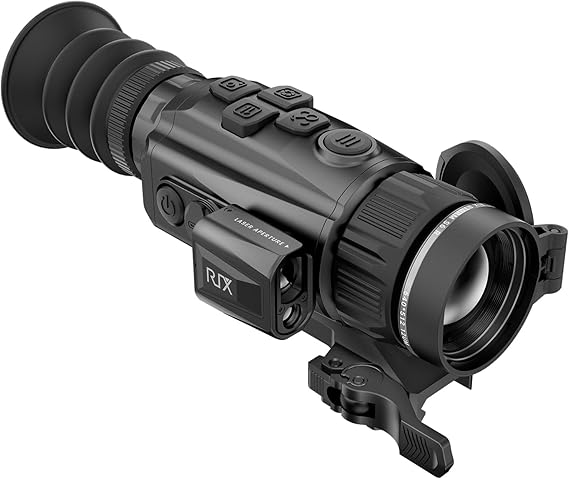 | RIX Storm S6 Thermal | Check Price |
Our Selected Top 12 Long Range Rifle Scope with Rangefinder You Can Trust
This list features carefully chosen long range rifle scopes with built-in rangefinders, highlighting their performance, suitability for different users, and key strengths and weaknesses. Each review provides clear insights to help identify the best option for specific shooting needs and preferences.
1. Leupold RX-1400I TBR/W Gen 2 Rangefinder
Designed for hunters and outdoor enthusiasts needing precise long-distance measurements, it stands out with its True Ballistic Range / Wind (TBR/W) technology. Ideal for making accurate shots at steep angles and long ranges, the sight offers tailored ballistic data combined with wind hold points, making it more than just a simple rangefinder.
Setting it up is straightforward, with selectable modes like Bow mode and customizable TOLED displays that show bright red numbers for optimum visibility. Adjusting brightness suits changing light conditions well.
Daily use reveals the convenience of getting quick, ballistically calculated ranges out to 1,400 yards on reflective targets and reliable data for tree range at 1,200 yards. The Flightpath feature helps spot arrow obstructions, a clear benefit for archers.
Performance on distance spotting and targeting feels very dependable, especially with accurate hold points against a 10-mph wind at 90 degrees out to 800 yards. Construction quality is solid, backed by Leupold’s lifetime guarantee without requiring proof of ownership. Most praise highlights its long distance accuracy and easy readability; some find operating the multiple modes slightly complicated at first.
The rangefinder earns praise for its accurate long-distance measurements and wind hold calculations, which make targeted shots more reliable. The ability to vary brightness on the display helps in diverse light conditions. Common criticisms mention a learning curve due to multiple selectable modes, which might slow immediate use.
Hunters seeking a precise engineered ballistic solution with long-range capability will appreciate the detailed features. Archers also benefit from Bow mode and Flightpath alerts. Those wanting simpler, more straightforward operation might look for a device with fewer settings to manage.
Pros
- Accurate ballistic ranging for steep angles
- Long distance capability up to 1,400 yards
- Adjustable brightness TOLED display
- Bow mode with obstruction detection
Cons
- Multiple modes can be confusing to operate
- Wind hold point limited to 10-mph at 90 degrees
| Specification | Details |
|---|---|
| Model Number | 183727 |
| Ranging Distance | 1,400 yards on reflective objects |
| Range on Trees | 1,200 yards |
| Selectable Displays | Bright red TOLED with adjustable brightness |
| Ballistic Technology | True Ballistic Range / Wind (TBR/W) with Flightpath |
| Warranty | Guaranteed for life, no proof required |
2. RIX LEAP LRF Thermal Riflescope
RIX LEAP LRF Thermal Riflescope offers impressive precision and built-in rangefinding, ideal for serious long-range shooters. Its standout feature is the 0.35 MOA accuracy paired with an integrated laser rangefinder, making distance calculation and shot placement sharp and trustworthy.
Setting it up is straightforward, especially since the laser rangefinder aligns perfectly with the lens, reducing guesswork on distances up to 1,312 yards. Day-to-day use benefits from the AI processor delivering detailed images and a ballistic calculator that provides immediate shooting data. Having a fixed 3x magnification keeps things simple but may limit versatility.
Performance lives up to expectations with sharp reticle precision aiding consistent shooting accuracy. The scope feels solid and well-built, though some users wish for variable magnification beyond 3x. The integrated rangefinder saves time and effort, but its maximum distance might restrict very long-range hunters.
Precision and real-time ballistics help maintain confidence in the field.
The most praised feature is the laser rangefinder’s accuracy combined with the sharp, detailed imaging. The most common complaint focuses on the fixed 3x magnification, which some find limits flexibility in varying terrain or target distance.
Ideal for shooters who prioritize precision and quick range readings within moderate long-range distances. Anyone needing more zoom or extreme range capability would benefit from exploring other models with variable magnification or longer rangefinders.
Pros
- 0.35 MOA reticle for precise aiming
- Built-in laser rangefinder up to 1,312 yards
- AI-enhanced imaging processor for clarity
- Integrated ballistic calculator provides real-time data
Cons
- Fixed 3x magnification limits zoom versatility
- Rangefinder max distance might not suit extreme long-range shooters
| Specification | Details |
|---|---|
| Magnification Maximum | 3 x |
| Magnification Minimum | 3 x |
| Thread Type | 1/4″-20 UNC |
| Reticle Type | Duplex |
3. RIX Storm S6 R 12um 640 Thermal Scope
Using the RIX Storm S6 R 12um 640 Thermal Scope feels like bringing night vision into your day-to-day shooting. It suits hunters and shooting enthusiasts who need a clear thermal image combined with precise distance measurement. Its biggest strength lies in the sharp thermal imaging paired with a built-in laser rangefinder that doesn’t weigh you down.
Setup is straightforward thanks to a quick detach mount, making it easy to switch onto your rifle and go. The duplex reticle is easy to read through the 10x magnification, and the 35mm objective lens offers a bright view. Having a compact laser rangefinder built right in means you don’t need extra devices cluttering the setup.
The free ballistic calculator adds a smart edge for long-range shots.
Performance lives up to what the specs promise, with thermal images showing minimal noise even when the weather is humid. The scope’s solid build feels durable without extra bulk. Most users appreciate how clearly it detects targets up to 1,312 yards with ±1.09 yards accuracy.
On the downside, some find the 10x max magnification a bit limiting for extremely long distances.
Crisp, clear thermal imagery stands out as the scope’s strongest feature, especially with reduced noise even in humid environments. High precision laser rangefinding with an integrated ballistic calculator rounds out its capabilities. The main complaint revolves around the magnification cap, which some find inadequate for extreme long-range viewing.
Anyone needing reliable thermal imaging combined with rangefinding at mid-to-long distances will find this scope useful. Those requiring higher magnification for extreme long-range shooting might want to look for models with greater zoom capabilities.
Pros
- Crisp thermal images with low noise
- Compact, lightweight integrated laser rangefinder
- Quick detach mount for easy setup
- Includes free ballistic calculator for accuracy
Cons
- Maximum 10x magnification might feel limited
- Smaller objective lens may affect brightness in some conditions
| Specification | Details |
|---|---|
| Magnification Maximum | 10 x |
| Objective Lens Diameter | 35 millimeters |
| Reticle Type | Duplex |
| Mounting Type | Quick Detach Mount |
| Detection Range (Laser Rangefinder) | Up to 1,312 yards ±1.09 yards |
4. ATN X-Sight II HD 5-20 Smart Rifle Scope

Excellent for shooters who need clear long-range vision both day and night, this scope combines smart features with solid optics. Its main strength lies in the built-in rangefinder and ballistic calculator, making precise shots easier even at extended distances.
Setting up the scope is straightforward with its Weaver mount, and it adjusts from 5x to 20x magnification depending on the situation. The ballistics calculator quickly changes point of impact, which helps on the fly in different shooting conditions. Two clicks on the rangefinder identify target distances, keeping the process fast and efficient.
Vision clarity stands out, with HD resolution delivering millions of colors during day or night use. The 50 mm objective lens and 240-foot field of view at 1000 yards provide a wide, sharp picture.
Most users praise how well the smart features integrate, though some note the initial zero range at 100 yards might require adjustment for longer shots.
The built-in ballistic calculator and rangefinder simplify distance and angle shoots, delivering clarity with HD color day or night. Common feedback highlights the zero range set to 100 yards, which some consider limiting without manual recalibration.
Ideal for hunters and shooters wanting a mix of technology and optics in one unit, especially those comfortable managing zero adjustments. Those seeking simpler setup without recalibration might look for scopes with factory zero settings beyond 100 yards.
Pros
- Clear HD vision during day and night
- Smart rangefinder with two-click operation
- Ballistic calculator adjusts point of impact
- Wide field of view for target tracking
Cons
- Zero range fixed at 100 yards initially
- May need frequent adjustments for varied conditions
| Specification | Details |
|---|---|
| Magnification Minimum | 5 x |
| Magnification Maximum | 20 x |
| Objective Lens Diameter | 50 millimeters |
| Field Of View | 240 feet |
| Reticle Type | Mil-Dot / MOA |
| Mounting Type | Weaver Mount |
5. AGM Rattler V2 Thermal Imaging Scope

Crafted with a sturdy 25mm Germanium lens, the AGM Rattler V2 Thermal Imaging Scope suits hunters and tactical shooters aiming to spot heat signatures far beyond typical distances. Its biggest strength lies in detecting targets up to 1,250 yards away, making it ideal for long-range engagements.
Setting up involves mounting it on a Picatinny rail and pairing the removable power system, which offers up to 11.5 hours of runtime per rechargeable battery. The scope’s 3.5x base magnification with digital zoom up to 8x makes adjusting clear and quick during day-to-day use. Multiple reticle options allow you to fine-tune your shot to various environments without hassle.
Performance is solid for spotting and ranging targets from dusk till dawn, thanks to its thermal imaging and built-in stadiametric rangefinder. The build is rugged enough for extended use but some users note the lens size limits light gathering in low-light conditions. Strong suits include reliable battery life and crisp thermal imaging; downsides mention occasional digital zoom clarity loss.
Strong praise goes to the extended battery life and impressive thermal detection at long ranges, giving plenty of use from dusk till dawn. The common complaint is the reduced image quality when zooming digitally at the maximum setting, which can affect fine detail spotting.
Hunters spending long hours tracking in varying light conditions will appreciate this scope’s endurance and range. Those frequently requiring very sharp detail at maximum zoom might want to explore alternatives with larger objective lenses or higher-quality digital zoom.
Pros
- Long 1,250-yard detection range
- Up to 11.5 hours runtime per battery
- Ten reticle options for versatility
- Removable power system with two rechargeable batteries
Cons
- Smaller 25mm lens limits low-light brightness
- Image clarity drops at highest digital zoom levels
| Specification | Details |
|---|---|
| Magnification Minimum | 3.5 x |
| Magnification Maximum | 28 x |
| Objective Lens Diameter | 25 millimeters |
| Field of View | 37 |
| Mounting Type | Picatinny Mount |
| Reticle Type | Multiple |
6. BURRIS Eliminator 6 4-20x52mm Rifle Scope

Built-in rangefinding ability up to 2,000 yards makes the BURRIS Eliminator 6 4-20x52mm ideal for long-range hunters and shooters needing precise data quickly. Its biggest strength is how it combines a rifle scope with a heads-up display that shows multiple data points without moving your eyes off target.
Setting up involves pairing the scope with the BurrisConnect app, where you can upload custom ballistic profiles. Day-to-day use benefits from the integrated Bluetooth remote, making adjustments easy without touching the scope. The HUD can be customized to show preferred data zones like range or wind hold, making every shot more informed without extra hassle.
Performance excels with clear ranging on reflective targets at significant distances, while the reticle and magnification range fit long-range precision well. The scope is solidly built and mounts via integral, dovetail, or Weaver options. Common praise highlights its useful data and connectivity.
The usual complaint involves some users finding the app setup and data management a bit complex.
Many appreciate the clear, quick distance reading combined with ballistic data directly in the optic, making long shots more accurate. The complexity of the app and HUD settings sometimes slows down the adjustment process, which can frustrate users new to digital scopes.
Hunters and shooters who want instant range and ballistic information on target will find this scope fits well. Those who prefer a simpler, traditional scope might want to look elsewhere due to the technology involved in setup and customization.
Pros
- Long-distance rangefinding up to 2,000 yards
- Customizable heads-up display via app
- Bluetooth remote for easy adjustments
- Multiple mounting options included
Cons
- App setup and management can be complicated
- Heads-up display may take time to fully customize
| Specification | Details |
|---|---|
| Magnification Maximum | 20 |
| Objective Lens Diameter | 5.2 centimeters |
| Magnification Minimum | 4 x |
| Reticle Type | X177 |
| Field Of View | 30.5 feet |
| Mounting Type | Integral Mount or Dovetail Mount or Weaver Mount |
7. RIX Storm S2 256×192 Thermal Scope

Powerful long-range viewing with thermal detection suits hunters and shooters needing clarity beyond standard optics. Its standout feature is a high-sensitivity 256×192 thermal sensor combined with 3.5x to 14x magnification, making it easier to spot targets up to 1422 yards away, even in low light or obscured conditions.
Setting up on a Picatinny mount feels straightforward with solid fit and 48mm eye relief for comfortable use. The 25mm objective lens gathers enough detail, and day-to-day handling benefits from RIX’s RET image enhancement, sharpening the thermal image close to a higher resolution sensor.
Adjusting magnification is smooth, helping to tailor the view from moderate to long distance without losing clarity.
Performance hits a reliable mark, showing distant targets clearly thanks to the RET technology that improves the base thermal sensor’s output. Build quality stands out for ruggedness suited to tough field conditions. The main praise focuses on the sharp and clear view at maximum range.
A common gripe mentions the basic 25mm lens could limit light intake in very dark environments compared to larger lenses.
The image enhancement using algorithms sharpens the thermal sensor’s view close to that of higher resolution models, which users find greatly improves clarity and long-range visibility. The smaller 25mm objective lens does restrict the amount of thermal light captured, which some find limiting during the darkest times or dense cover.
Hunters and shooters focused on long-range engagements and need a solid thermal scope for finding targets in complicated environments will find this model fits well. Those requiring maximum low-light sensitivity or larger lenses for more visual information might want to look at other options offering bigger sensors or lenses.
Pros
- Clear target detection up to 1422 yards
- Good eye relief at 48 millimeters
- Range of magnification from 3.5x to 14x
- Effective image enhancement technology
Cons
- 25mm lens limits low-light performance
- Thermal resolution lower than some higher-end models
| Specification | Details |
|---|---|
| Magnification Minimum | 3.5 x |
| Magnification Maximum | 14 x |
| Objective Lens Diameter | 25 millimeters |
| Field Of View | 4266 feet |
| Reticle Type | RIX Reticle |
8. REVASRI Hunting Laser Rangefinder

Getting accurate distance and height measurements in hunting or golf can be a challenge, especially while on the move. Designed for those needing detailed range data along with easy recall of modes, the REVASRI Hunting Laser Rangefinder shines with its ability to remember the last mode used and handle multiple measurements continuously.
Setting up is straightforward with included battery power. Switching between seven different modes like ranging, scanning, speed measurement, and golf distance compensation feels intuitive. The memory function saves you from toggling settings each time, which makes daily use more efficient.
Measuring multiple targets continuously in scan mode helps quickly gather all needed info in challenging outdoor situations.
Accuracy in distance and angle measurements is reliable across modes, meeting the primary job well. The build is solid enough for regular hunting and archery use. The clearest praise comes from the convenience of mode memory and continuous scanning.
The most frequent complaint mentioned involves the limited warranty period of one year, which may feel short to some.
The mode memory is very helpful for jumping right back into the previous setting without hassle, which speeds up usage significantly. The one-year warranty is the shortest some expect for outdoor gear, which could cause concern.
Great for hunters and golfers who want versatile functions and quick mode switching. Those needing longer warranty coverage or more extensive packs might look elsewhere.
Pros
- Memory function recalls last mode used
- Measures multiple targets continuously
- Seven versatile measurement modes
- Includes battery for immediate use
Cons
- Warranty period only one year
- Limited number of items in pack
| Specification | Details |
|---|---|
| Brand Name | REVASRI |
| Model Number | HK-600H-3 |
| Sport Type | Hunting, Archery, Golf |
| Number of Modes | 7 (including scanning and speed measurement) |
| Warranty Description | 1 Year |
9. Vortex Venom First Focal Plane Riflescope

Boasting an impressive 5-25x magnification range and a 34mm tube, the Venom First Focal Plane riflescope is tailored for serious long-range shooting and competition. Its biggest strength lies in the massive amount of turret travel, offering up to 85 MOA of elevation and windage, giving you plenty of adjustment room for precision shots.
Setting up the scope involves using the RevStop Zero System, which makes returning to zero fast and reliable after adjustments. Day-to-day operation is smooth thanks to the side knob parallax adjustment, which displays range numbers so you can quickly dial in without guessing.
The eye relief of 9.1 centimeters offers a comfortable shooting position, while the cantilever mount helps in stable mounting on your rifle.
The optical performance excels with the XD Optical System, providing sharp images with reduced color fringing even at the edges, and the fully multi-coated lenses ensure strong clarity, especially in low-light situations. The build feels solid and practical for rugged use, though some mention that adjusting the high magnifications requires patience.
The RevStop Zero jumps out as a highly praised feature, while a few find the scope’s weight noticeable on lighter rifles.
The scope is widely praised for its reliable zeroing system and sharp optics aiding precision long shots. Some users find the higher magnification settings a bit tricky to adjust smoothly, and the physical weight requires sturdier rifle setups.
Sharpshooters needing wide adjustment and clear images will appreciate this scope’s features. Those prioritizing lightweight gear or quicker zoom changes might want to consider alternatives.
Pros
- 85 MOA turret travel allows wide adjustment range
- RevStop Zero for quick, reliable zero returns
- Excellent clarity with reduced chromatic aberration
- Easy parallax adjustment with visible range numbers
Cons
- Can feel heavy on lightweight rifles
- High magnification adjustments need careful handling
| Specification | Details |
|---|---|
| Magnification Minimum | 5 x |
| Magnification Maximum | 25 x |
| Objective Lens Diameter | 5.6 centimeters |
| Field Of View | 21.2 feet |
| Eye Relief | 9.1 centimeters |
| Reticle Type | EBR-7C |
10. DNT Optics Zulus HD V2 Digital Night Vision Scope

Hunters and marksmen looking for a versatile long-range scope with night vision capabilities will appreciate the rich detail and clarity. It suits those who need reliable performance in varied lighting conditions, especially low light, with its digital enhancements setting it apart.
Setting up the scope on a Picatinny mount is straightforward and stable. The zoom range of 3x to 12x feels smooth to adjust, and the digital reticle stays clear through the Micro-OLED display.
Day-to-day, it handles shifts from bright daylight to total darkness without losing sharpness, thanks to the combination of ED glass lenses and advanced AI image algorithms.
Performance shines with sharp images at any time of day. The digital night vision keeps targets crisp even in total darkness. Constructed for durability, the scope feels solid on the rifle, though a common complaint is about the limited zoom range maxing out at 12x.
The bright 1800 nit screen makes viewing easy, even in strong sunlight.
The scope receives praise for delivering exceptional clarity whether in bright daylight or pitch-black night, largely due to its advanced sensor and bright Micro-OLED display. Battery consumption during extended use of night vision is the most frequently mentioned drawback. Users point out the balance of visibility and power demands in real-world surroundings.
Those who need a durable, bright display and consistent image quality for dawn, dusk, and night will be very satisfied with this model. Individuals requiring higher magnification for extreme long-range shooting might want to consider other scopes with stronger zoom options.
Pros
- Clear imagery from bright to dark conditions
- Strong 1800 nits display brightness
- Simple Picatinny mounting system
- Sharp digital reticle precision
Cons
- Maximum magnification capped at 12x
- Digital night vision may drain battery faster
| Specification | Details |
|---|---|
| Magnification Maximum | 12 x |
| Magnification Minimum | 3 x |
| Mounting Type | Picatinny Mount |
| Reticle Type | Digital |
| Display | 60Hz 1920×1080 Micro-OLED |
11. RIX Storm S2R 12um 256×192 Thermal Scope
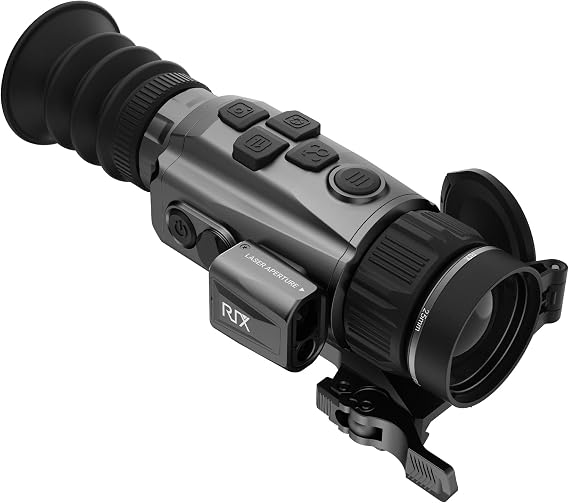
Designed for precision and lightweight use, this thermal scope with an integrated rangefinder suits shooters who need both thermal imaging and distance measurement under one pound. Its biggest strength is managing long-range detection and rangefinding without adding unnecessary bulk to your setup.
Setting up the scope is straightforward, especially with the intuitive button layout that lights up corresponding functions on the user interface. Controls remain easy to identify and operate even when wearing gloves. The magnification range from 3.5x to 14x provides clear viewing options for various distances, while the Picatinny mount helps to attach it securely to compatible rifles.
Eye relief at 48mm adds comfort during extended use.
Performance on target detection reaches out to 1422 yards, while the built-in laser rangefinder measures up to 1312 yards, making it reliable for long-range precision. The unit is compact and weighs just under a pound, making it easy to carry without tiring the user.
Praise often centers on its lightweight design and clear UI, while one common complaint involves only the 256×192 resolution, which some find less detailed compared to higher-resolution scopes.
Many find the light weight and straightforward UI extremely helpful in extended field use, especially when wearing gloves. The main frustration is that the thermal resolution at 256×192 can seem a bit low for users expecting sharper image clarity.
Shooters needing a lightweight, dual-purpose thermal scope with an integrated laser rangefinder will appreciate this unit. Those requiring higher resolution imaging or a larger objective lens might look for alternatives better aligned with those needs.
Pros
- Compact and lightweight at just 0.9lb
- Intuitive button layout for easy control
- Built-in laser rangefinder up to 1312 yards
- Magnification range from 3.5x to 14x
Cons
- Resolution of 256×192 may lack detail for some users
- Objective lens diameter limited to 25mm
| Specification | Details |
|---|---|
| Magnification Minimum | 3.5 x |
| Magnification Maximum | 14 |
| Objective Lens Diameter | 25 |
| Mounting Type | Picatinny Mount |
| Eye Relief | 48 |
12. Pulsar Trail 3 LRF Thermal Riflescope

Pulsar Trail 3 LRF Thermal Riflescope pairs thermal imaging with a built-in laser rangefinder, ideal for serious long-range shooters who demand accurate distance readings and clear heat signatures. Its standout feature is combining thermal detection with quick ranging up to 1,312 yards without extra devices.
Setting up takes just a few moments thanks to the integrated rangefinder and intuitive controls. Using the 3.5–14x magnification, you can scan wide areas at low power and zoom in precisely.
The cross reticle aids target alignment, and the thermal sensor helps spot deer-sized animals even in total darkness or poor visibility conditions.
Performance shines when spotting heat signatures up to 1,800 meters, allowing confident target acquisition at long distances. The construction feels solid and built for the outdoors, but some users mention the learning curve with the thermal interface.
Most praise ease of ranging without extra gear, while a few note it’s not the lightest option for extended carry.
Quick and accurate distance measurement without separate devices is a major plus. Most find the thermal imaging reliable for spotting game, though mastering the interface can be tricky initially. Build quality supports rugged use, but weight is a downside during long hunts.
Hunters needing integrated ranging with solid thermal imaging will appreciate this scope. Those looking for a lighter option or simpler controls may want to consider other models better suited for extended treks or beginners.
Pros
- Built-in laser rangefinder up to 1,312 yards
- Thermal sensor detects heat signatures at 1,800 meters
- Flexible 3.5–14x magnification range
- Cross reticle for precise aiming
Cons
- Heavier than some alternatives
- Thermal interface requires time to learn
| Specification | Details |
|---|---|
| Magnification Minimum | 3.5 x |
| Magnification Maximum | 14 x |
| Field Of View | 50 |
| Reticle Type | Cross |
Best Long Range Rifle Scopes with Rangefinders Compared
| Product | Magnification Max | Objective Lens Diameter | Mount Type | Reticle Type |
|---|---|---|---|---|
| Leupold RX-1400I Rangefinder | – | – | – | – |
| RIX LEAP Thermal Scope | 3x | – | – | Duplex |
| RIX Storm S6 Thermal | 10x | 35 mm | Quick Detach | Duplex |
| ATN X-Sight II HD | 20x | 50 mm | Weaver Mount | Mil-Dot / MOA |
| AGM Rattler V2 Thermal | 28x | 25 mm | Picatinny Mount | Multiple |
| BURRIS Eliminator 6 Scope | 20x | 52 mm | Integral/Dovetail/Weaver | X177 |
| RIX Storm S2 Thermal | 14x | 25 mm | Picatinny Mount | RIX Reticle |
| REVASRI Hunting Rangefinder | – | – | – | – |
| Vortex Venom FFP Scope | 1x | 56 mm | Cantilever Mount | EBR-7C |
| DNT Zulus HD V2 NV | 12x | – | Picatinny Mount | Digital |
| RIX Storm S2R Thermal | 14x | 25 mm | Picatinny Mount | – |
| Pulsar Trail 3 LRF Scope | 14x | – | – | Cross |
- Magnification Max–
- Objective Lens Diameter–
- Mount Type–
- Reticle Type–
- Magnification Max3x
- Objective Lens Diameter–
- Mount Type–
- Reticle TypeDuplex
- Magnification Max10x
- Objective Lens Diameter35 mm
- Mount TypeQuick Detach
- Reticle TypeDuplex
- Magnification Max20x
- Objective Lens Diameter50 mm
- Mount TypeWeaver Mount
- Reticle TypeMil-Dot / MOA
- Magnification Max28x
- Objective Lens Diameter25 mm
- Mount TypePicatinny Mount
- Reticle TypeMultiple
- Magnification Max20x
- Objective Lens Diameter52 mm
- Mount TypeIntegral/Dovetail/Weaver
- Reticle TypeX177
- Magnification Max14x
- Objective Lens Diameter25 mm
- Mount TypePicatinny Mount
- Reticle TypeRIX Reticle
- Magnification Max–
- Objective Lens Diameter–
- Mount Type–
- Reticle Type–
- Magnification Max1x
- Objective Lens Diameter56 mm
- Mount TypeCantilever Mount
- Reticle TypeEBR-7C
- Magnification Max12x
- Objective Lens Diameter–
- Mount TypePicatinny Mount
- Reticle TypeDigital
- Magnification Max14x
- Objective Lens Diameter25 mm
- Mount TypePicatinny Mount
- Reticle Type–
- Magnification Max14x
- Objective Lens Diameter–
- Mount Type–
- Reticle TypeCross
How to Choose the Best Long Range Rifle Scope with Rangefinder
Choosing the right long range rifle scope with rangefinder involves considering clarity, accuracy, and durability to ensure reliable performance in various conditions. Prioritizing these factors helps avoid costly upgrades and frustrations, making your investment both practical and effective for precision shooting.
Optical Clarity and Magnification
Shots beyond several hundred yards demand clear optics to identify and engage targets accurately. Lens quality directly affects sharpness and brightness, especially in low light or changing weather. Lower quality glass often results in blurry images and color distortions, making it harder to judge bullet drop and wind effects.
Quality scopes typically have fully multi-coated lenses to reduce glare and improve light transmission. Magnification plays a key role as well; something in the 5-25x range usually balances detail and field of view.
Scopes with too high magnification can become shaky and harder to keep on target without a stable rest.
Reticle precision is often overlooked but critical. Fine crosshairs or mil-dot patterns with easy, tactile adjustment knobs help dial in exact holdover without guesswork.
Smooth, repeatable turret caps that click crisply make real-world ranging and correcting shots much faster and more reliable.
Rangefinder Accuracy and Features
Accurate distance measurement is not just about having a laser but making sure it covers the necessary range reliably. Many integrated rangefinders offer max ranges from 1000 to 1500 yards, but practical accuracy tends to drop at longer distances, especially on reflective or uneven targets. The speed at which distance data appears on the display affects how quickly you can adjust your shot, delays create frustration and missed opportunities.
A good device incorporates ballistic calculators that compensate for angles, atmospheric pressure, and temperature. This reduces the guesswork, allowing for more precise aiming without manual adjustments after each measurement. Some models even include holdover points integrated with the reticle for quick reference.
Durability and Weather Resistance
Long-range rifles generate significant recoil that can loosen or damage cheaper scopes. Look for models built with aircraft-grade aluminum or similar materials that maintain zero despite heavy use.
Weatherproofing is essential; most durable scopes come with at least IP67 rating or similar standards ensuring waterproof and fogproof performance.
Shockproof features protect internal components during rough transport or sudden impacts. Lens coatings also matter here, preventing scratches and corrosion from moisture or dirt. Some versions add laminated glass or protective lens caps which may seem minor but save money and frustration over time.
Battery Life and Power Management
Different scopes use various battery types such as CR123, AA, or proprietary lithium-ion packs. Availability of standard batteries is a practical feature when traveling or hunting remote areas where specialized power sources are scarce. Typical runtime varies but a well-designed unit will last 20 hours or more on continuous use and offer power-saving modes.
Convenient battery access without needing tools is common on reliable models, speeding up swaps in the field. Rechargeable scopes are handy but consider charging options; USB ports or detachable batteries that can charge outside the scope add flexibility during multi-day outings.
Mounting Compatibility and Ergonomics
Compatibility with standard mounts like 30mm or 34mm tubes makes installation straightforward across most rifles. Weight is easy to underestimate; overly heavy scopes affect balance and increase fatigue, particularly for extended shooting sessions or hunting trips. Compact but solid builds keep the rifle manageable.
User-friendly features include turrets for zeroing that have clear tactile clicks and minimal play, allowing fast, repeatable adjustments. Rangefinder controls integrated ergonomically avoid fumbling; buttons or dials should be reachable without shifting your grip dramatically. The overall design should encourage smooth operation under stressful conditions.
Maximizing Accuracy: Tips for Zeroing Your Long Range Rifle Scope with Rangefinder
Zeroing a long range rifle scope with a built-in rangefinder requires a step-by-step approach to ensure precision. Begin by mounting your rifle securely on a stable rest to minimize movement. Use a known-distance target, typically starting at 100 yards, to establish your initial zero.
Make adjustments based on where your shots land relative to the point of aim. Because rangefinders provide exact distance data, use this information to fine-tune elevation and windage settings as you move to longer distances.
Practical tips to remember:
- Confirm the rangefinder reading for your target before taking a shot to adjust accordingly.
- Account for atmospheric conditions like wind and humidity, which can affect bullet trajectory over distance.
- Repeat the process at multiple distances to create reliable ballistic profiles for future use.
Regular practice of these steps makes your scope’s rangefinder data translate more effectively into accurate shot placement.
Essential Maintenance Practices to Extend the Life of Your Scope with Rangefinder
Regular maintenance keeps your rifle scope and integrated rangefinder functioning well over time. Start by cleaning the lenses with a microfiber cloth to remove dust and smudges without scratching. Avoid using paper products or household cleaners that can damage lens coatings.
Check the battery compartment frequently to prevent corrosion and replace batteries before they run low, ensuring consistent rangefinder performance.
Other maintenance points:
- Store the scope in a cool, dry place to reduce moisture buildup internally.
- Inspect mounting screws regularly and tighten them to prevent shifts in zero.
- Keep electronic components protected from extreme temperatures and impacts.
Routine maintenance not only preserves optical clarity but also prevents malfunctioning of the rangefinder during critical moments.
Comparing Laser Rangefinders vs. Reticle-Based Range Estimation in Long Range Scopes
Laser rangefinders and reticle-based range estimation each offer unique advantages in long range scopes. Laser rangefinders provide direct distance measurements by emitting a beam that reflects off the target, displaying an exact yardage quickly and with minimal guesswork. This helps shooters make precise elevation adjustments based on accurate data.
Reticle-based range estimation relies on measuring the target size against known markings in the scope’s reticle. This method does not require batteries or electronics and can be a useful backup in situations where technology might fail. However, it demands more experience and calculations to use accurately.
Considerations for choosing between the two:
- Laser rangefinders tend to be faster and easier for beginners.
- Reticle estimation is more reliable in adverse weather or when battery power is unavailable.
- Some scopes combine both, giving flexibility depending on conditions.
Both methods have practical roles depending on the shooter’s preferences and environmental factors.
People Also Asked
How Do I Properly Zero a Long Range Rifle Scope with Rangefinder?
Zero a long range rifle scope with rangefinder by first setting up a target at a known distance, like 100 yards, then adjusting the scope’s windage and elevation until your shots consistently hit the bullseye. Remember to use stable shooting rests and mark your adjustments for different distances.
What Maintenance Is Required for a Rifle Scope with Rangefinder?
Keep a rifle scope with rangefinder clean by wiping lenses gently with a microfiber cloth and checking battery life regularly. Avoid soaking the scope in water or using harsh chemicals, as electronic parts can be damaged. Store the rifle in a dry place to prevent moisture buildup.
Are Long Range Rifle Scopes with Rangefinders Compatible with All Rifles?
Most long range rifle scopes with rangefinders can fit standard rifle mounts, but compatibility varies by model and rifle type. Confirm the mounting system and tube diameter before purchase. Some scopes may require adapters or specific mounting rings depending on the rifle.
How Long Do Rifle Scopes with Built-In Rangefinders Typically Last?
Rifle scopes with built-in rangefinders typically last several years with proper care and avoiding heavy impacts. Battery life varies but can usually be extended by turning the rangefinder off when not in use. Mechanical parts like adjustment knobs may wear over time and need occasional tightening.
What Safety Precautions Should I Take When Using a Rangefinder Scope?
Always keep the rifle pointed in a safe direction when using a rangefinder scope and ensure the firearm is unloaded while adjusting settings. Avoid looking directly into the laser beam and never use the rangefinder near people or animals to prevent eye injuries. Keep your finger off the trigger until ready to shoot.
Conclusion
Choosing a long range rifle scope with a rangefinder depends largely on clarity of the optic, the accuracy and speed of the rangefinder, and the durability of the whole unit. These factors influence how easily you can spot targets and make quick, correct shots over long distances.
Battery life is also important, especially if you plan on extended use outdoors.
Consider how you will use the scope most often and the environments where you will shoot before making a final decision. Your needs and budget should guide your choice to avoid spending on features you won’t use.
The comparison table and detailed reviews above can help you find the right balance between performance and cost.

