Top 12 Best Vortex Scope for Long Range 22LR You Need Now
Spending a day out trying to dial in a shot on a 22lr only to be frustrated by a blurry, shaky view is a common experience. Picking the best vortex scope for long range 22lr can make a huge difference because many scopes struggle with the low recoil and specific ballistics of these small calibers.
A poorly chosen scope often lacks the clarity or proper reticle to adjust accurately at the distances where a 22lr excels.
Good scopes for long range 22lr tend to have clear glass with reliable 10x or higher magnification to see targets clearly at 100 yards or more. Durable construction that can handle outdoor conditions and steady mounting options matter just as much as fine adjustment dials calibrated in quarter or half-minute increments.
A scope that is easy to zero and maintain, with a simple reticle that doesn’t clutter the sight picture, will save time and frustration on the range.
Need a Quick Check?
| Image | Product | Price |
|---|---|---|
Our Top Picks 1  | Vortex Triumph HD | Check Price |
Our Top Picks 2  | Vortex Venom FFP | Check Price |
Our Top Picks 3  | Vortex Diamondback Tactical | Check Price |
Our Selected Top 12 Vortex Scope for Long Range 22lr for Different Needs
This list features carefully chosen scopes designed for long-range shooting with .22 LR rifles, covering a variety of needs and preferences. Each review explains how well the scope performs, who it is best suited for, and highlights its main advantages and limitations.
1. Vortex Triumph HD 3-9×40 Riflescope
Excellent value for newer hunters needing straightforward, reliable optics. Suited for anyone wanting quality without complicated setup.
The single biggest strength lies in clear, bright optics with easy mounting that gets you ready quickly.
Setting up involves using the included 1 Hunter Rings with a low height of 0.90 inches, making installation simple on most rifles. Daily use benefits from fully multi-coated lenses that improve clarity and performance in low light, so sight picture stays sharp through changing conditions. The Dead-Hold BDC reticle supports quick range holdovers without extra fuss.
It delivers sharp images across the entire field of view, thanks to high-quality glass minimizing color fringing. You get a durable build that feels solid on the rifle, standing up well in regular field use.
Praise often highlights the bright, clear sight picture, while some users mention limited maximum magnification for very long-range shots.
Sharpness and brightness stand out, making sight picture crisp even in dim light. Most common drawback is the limited top magnification, which restricts detailed views at very long distances.
Hunters who prefer straightforward gear with good optics will appreciate this scope. Those needing higher zoom or specialized reticles might want to look elsewhere for more advanced options.
Pros
- Clear, bright optics with edge-to-edge sharpness
- Easy and low-profile mounting included
- Effective anti-reflective coatings for low-light use
- Simple reticle design aids quick aiming
Cons
- Maximum 9x magnification limits extreme distance views
- Reticle may not suit those wanting more advanced features
| Specification | Details |
|---|---|
| Magnification Minimum | 3 x |
| Magnification Maximum | 9 x |
| Objective Lens Diameter | 40 millimeters |
| Reticle Type | Dead-Hold BDC |
| Mounting Type | Ring Mount |
2. Vortex Venom First Focal Plane Riflescope
Constructed around a sturdy 34mm tube, it’s designed to give plenty of turret travel for fine adjustments during long-range shooting. Perfect for those looking to push the limits of a 22LR rifle in competition or precision practice.
Its standout feature is the wide 5-25x magnification, allowing accurate shots at distances usually tricky for this caliber.
Setting it up is straightforward with the cantilever mount designed to fit most rifles. Adjusting the parallax happens smoothly through the side knob with clear range numbers, making target acquisition quicker.
The RevStop Zero System helps dial zero once and return to it reliably, which simplifies repeated shooting sessions. Eyepiece focus and eye relief keep things comfortable during extended use.
Optically, it hits well above its weight with the XD Optical System providing sharp views edge-to-edge, while suppressing chromatic aberration. Clarity stays solid even in low light thanks to fully multi-coated lenses. The strong build means it can handle routine handling without hiccups.
Most praise revolves around its clarity and adjustable power, but a noted downside is the relatively heavy cantilever mount that adds bulk.
Clarity and high magnification range stand out as its best features, making it fit for precision 22LR shooting at extended ranges. Parallax adjustment is user-friendly and helpful for accuracy. Most users find the mount weight to be the main drawback, as it affects the overall balance on smaller rifles.
Ideal for shooters focused on long-distance accuracy who want a scope that can handle extensive elevation adjustment. Those preferring a lightweight setup for casual plinking or hunting may want to consider lighter alternatives, as the scope leans more towards specialized target shooting applications.
Pros
- Wide 85 MOA turret adjustment for long-range corrections
- Excellent edge-to-edge sharpness with low chromatic aberration
- Quick parallax adjustments visible during use
- Solid eye relief for comfortable shooting
Cons
- Cantilever mount adds notable weight and bulk
- Relatively large objective lens makes scope heavier
| Specification | Details |
|---|---|
| Magnification Minimum | 5 x |
| Magnification Maximum | 25 x |
| Objective Lens Diameter | 5.6 centimeters |
| Eye Relief | 9.1 centimeters |
| Reticle Type | EBR-7C |
3. Vortex Diamondback Tactical First Focal Plane Riflescope
Precision stands out right away with this scope, designed for shooters who want reliable performance on long-range .22LR targets. It suits those needing clear sight picture and accurate reticle measurements from low to high zoom levels, especially for tactical-style setups.
Setting it up is straightforward thanks to exposed turrets and a side parallax knob that help fine-tune for different distances. The smooth magnification dial makes switching from 6x to 24x easy, and the fast focus eyepiece lets you quickly sharpen the reticle. The wide 50mm objective lens keeps the image bright even at higher powers, which matters a lot during changing light conditions.
The scope nails precision with its first focal plane reticle, keeping holdover marks true throughout the zoom range. It is built solidly, using quality optics and a precision-glide erector system that stays dependable under rough use.
Reviews often highlight the crisp clarity of the glass, while some mention the turrets could feel a bit stiff at times.
Sharp clarity and bright images from the glass stand out as key strengths in handling varied lighting conditions. Stiff turrets are mentioned often as a minor drawback, particularly when quick changes are needed.
Precision shooters who want a durable scope with solid optics for extended zoom use will find it fitting their needs well. Those seeking extremely fast turret adjustments or a wider field of view might want to consider other options.
Pros
- Crisp, bright sight picture with multi-coated lenses
- Accurate first focal plane reticle across zoom range
- Smooth magnification adjustments via precision-glide erector
- Useful exposed turrets and side parallax knob
Cons
- Turrets can feel somewhat stiff when adjusting
- Field of view narrows significantly at top magnification
| Specification | Details |
|---|---|
| Magnification Minimum | 6 x |
| Magnification Maximum | 24 x |
| Objective Lens Diameter | 50 millimeters |
| Reticle Type | EBR2C MOA |
| Field Of View | 4.5 feet |
| Mounting Type | Cantilever Mount |
4. SIG SAUER Tango-SPR 6-24×52 Tactical Riflescope

Long-range shooters looking for a clear, adaptable scope will appreciate the SIG SAUER Tango-SPR 6-24×52 Tactical Riflescope. Its highest strength lies in pin-point accuracy coupled with fast, reliable adjustments thanks to the locking zero-stop elevation turret. It suits precision shooters who need dependable performance out to 24x magnification on a 22LR platform.
Setting up the scope on a Picatinny mount is straightforward, and the removable magnification throw lever makes zooming from 6x to 24x quick and intuitive. Day-to-day use benefits from dedicated side focus and capped windage turrets that feel solid but are easy to adjust without guessing. The zero-stop feature ensures returns to your base elevation are consistent shot after shot.
Performance when shooting at long range is exceptionally precise, letting you dial in minute-of-angle corrections fast. The build quality is solid, featuring a 30mm main tube that holds zero firmly and resists flex or wobble. Common praise highlights the sharp, bright image and accurate adjustments, while a few mention the windage turret could be more tactile.
The most frequent compliment is about the crisp image and reliable accuracy at 24x, making precise shots much easier. On the downside, some users find the windage turret adjustments less satisfying compared to the elevation controls, which could slow fine-tuning in the field.
Shooters who value sharp clarity and solid, repeatable adjustments at various distances will appreciate this scope. Those wanting a lighter or simpler setup for casual plinking might prefer a more lightweight or budget-friendly option with fewer tactical features.
Pros
- Clear and bright optics through full magnification range
- Locking zero-stop elevation turret for fast adjustments
- Removable magnification throw lever for quick zoom changes
- Durable 30mm maintube construction holds zero well
Cons
- Windage turret can feel less tactile during adjustments
- Heavier compared to some other 22LR-specific scopes
| Specification | Details |
|---|---|
| Magnification Maximum | 24 x |
| Objective Lens Diameter | 5.2 centimeters |
| Magnification Minimum | 6 x |
| Mounting Type | Picatinny Mount |
| Reticle Type | MOA BDC-1 |
5. Vortex Viper HS-T Second Focal Plane Riflescope

Long-range shooting with a 22LR demands precision and clarity, and the Vortex Viper HS-T Second Focal Plane Riflescope fits the bill for hunters and tactical shooters alike. Its standout feature is a versatile 6-24x magnification paired with a sharp VMR-1 MOA reticle perfect for fine holds over distance.
Setting up the scope is straightforward, especially mounting it on a Picatinny rail. The exposed turrets provide tactile, repeatable adjustments by feel, making in-field tweaks simple.
The 50mm objective lens gathers plenty of light, and the multi-coated lenses deliver crisp images that help spot targets clearly during daily use. Once sighted in, the zero stop on the elevation turret assures you can dial back to zero safely after changing settings for different ranges.
Performance-wise, the high magnification and precise MOA reticle give accurate shot placement at long range on a 15.5-inch barrel. Lens coatings contribute to exceptional clarity and color accuracy even in low light.
Build quality feels solid with durable turret construction and an Armortek lens coating that resists scratches. The most praised feature is the reliable zero stop, while some note the turrets might feel a bit stiff when adjusting frequently.
The zero stop feature is praised for dependable return to zero after corrections, making target reacquisition straightforward. However, the turret stiffness is frequently mentioned as a minor annoyance during frequent range adjustments. Lens clarity and color fidelity are firm highlights, enhancing overall sight picture quality under varied light conditions.
Shooters focused on precision long-range 22LR work will find this scope rewarding. Those seeking faster turret adjustment or simpler magnification ranges might prefer lighter options. Ideal for those who value accuracy and lens quality in tactical or hunting setups on a mid-length barrel rifle.
Pros
- Clear and sharp image thanks to premium lenses
- Easy to operate turrets with repeatable clicks
- CRS Zero Stop reliably returns to zero
- Suitable magnification range for 22LR long shots
Cons
- Turrets can feel stiff when dialing adjustments
- High magnification may be more than needed for some
| Specification | Details |
|---|---|
| Magnification Minimum | 6 |
| Magnification Maximum | 24 |
| Objective Lens Diameter | 50 millimeters |
| Reticle Type | VMR-1 MOA |
| Mounting Type | Picatinny Mount |
| Field Of View | 17.8 feet |
6. Vortex Crossfire HD Second Focal Plane Riflescope

With a magnification range of 4-12x and a 44mm objective lens, this scope fits well for long-range 22LR shooting where clarity and precision matter most. Its Dead-Hold BDC reticle simplifies holdover and windage, making it an easy choice for shooters who want confident aiming out to varying distances.
Setup is straightforward thanks to standard UNC or UNF threading, and the fully multi-coated lenses reduce glare while improving visibility in low light. The sharp HD optical system keeps the image crisp edge-to-edge, so details don’t fuzz out toward the edges during extended use. Adjusting magnification smoothly from 4 to 12x lets you zero in on targets with good flexibility for neat shot placement.
Performance-wise, the riflescope handles long-range 22LR shooting with excellent clarity and solid color fidelity. The build feels sturdy though not overly heavy, and the reticle design genuinely helps take the guesswork out of holdover adjustments. Some find the field of view somewhat narrow at higher magnifications, but it remains clear and responsive under typical conditions.
Strong praise centers on clear, sharp imagery combined with an intuitive holdover reticle that minimizes range guessing. The most common complaint relates to a narrower field of view which can feel limiting when zoomed in completely, making target acquisition slower for some.
Ideal for shooters focused on precision at varying distances in 22LR applications who appreciate clear optics and practical reticle design. Those wanting a wider field of view or first focal plane reticle should explore other options better suited to quick range adjustments.
Pros
- Sharp HD optics reduce chromatic aberration
- Dead-Hold BDC reticle eases holdover accuracy
- Multi-coated lenses improve clarity in low light
- Good magnification range for varied mid-to-long distances
Cons
- Field of view can feel tight at maximum magnification
- Some users may prefer a first focal plane reticle for range estimation
| Specification | Details |
|---|---|
| Magnification Minimum | 4 x |
| Magnification Maximum | 12 x |
| Objective Lens Diameter | 44 millimeters |
| Field Of View | 24.7 feet |
| Reticle Type | Dead-Hold BDC (MOA) |
| Thread Type | UNC or UNF |
7. Vortex Viper PST Gen II Second Focal Plane Riflescope
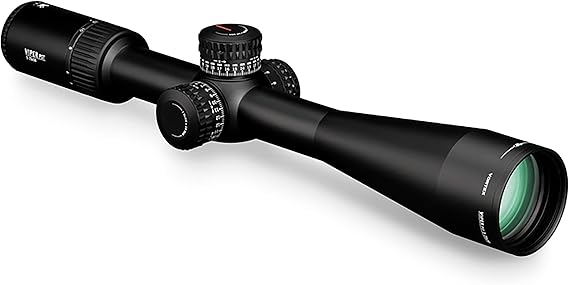
Anyone serious about long-range shooting with a .22LR will find the Viper PST Gen II an excellent choice. It suits shooters looking for a versatile scope that performs well from close to long distances, delivering reliable power with its 5-25x magnification range.
Its standout feature is the precise turret system for quick and accurate adjustments.
Setting up involves mounting on a Picatinny rail, which is straightforward with most rifles. The laser-etched turrets make dialing for bullet drop and wind straightforward, while the RZR zero stop prevents accidental overshooting your zero.
Adjustable parallax keeps your target sharp at varying distances, and the fiber optic rotation indicator helps you easily keep track of turret position during use.
It handles its primary task well, providing clear images even at maximum magnification. The build quality feels solid and tactical, designed to endure regular use under various conditions.
Praise consistently focuses on the reliable turret clicks and tracking. A typical downside is the relatively narrow field of view at higher magnifications, which some find limiting when scanning areas quickly.
The scope receives strong praise for its reliable and accurate turret system, crucial for dialing in bullet drop and windage on the fly. The most frequent complaint relates to the limited field of view at higher magnifications, making it less ideal for fast target acquisition over wider areas.
Shooters prioritizing precision and detailed adjustments for long-range 22LR shooting will appreciate this scope. Those needing quicker target scanning or a lighter setup for smaller rifles might want to consider alternatives with wider fields of view or lighter designs.
Pros
- Wide magnification range for versatile shooting
- Laser etched, tactile turrets for precise adjustments
- RZR zero stop prevents zero creep
- Adjustable parallax ensures sharp target focus
Cons
- Narrower field of view at higher magnifications
- Weight may feel substantial for smaller rifles
| Specification | Details |
|---|---|
| Magnification Minimum | 5 x |
| Magnification Maximum | 25 x |
| Objective Lens Diameter | 1 |
| Mounting Type | Picatinny Mount |
| Field Of View | 4.8 feet |
| Reticle Type | EBR-4 (MOA) |
8. Vortex Viper HS LR Second Focal Plane Riflescope

Viper HS LR Second Focal Plane Riflescope stands out with its clear edge-to-edge image and precise drop and wind drift compensation. Designed for shooters needing reliable hold-over adjustments at various long distances, it suits 22LR users who want a sharp, versatile scope with exposed elevation turrets.
Setting up is straightforward, thanks to the exposed target-style elevation turrets that make dialing in elevation adjustments easy during long-range sessions. The 4-16x magnification covers close to extended targets, while the 50-millimeter objective lens and XR multi-coated lenses help capture maximum light.
The Dead-Hold BDC reticle simplifies hold-over estimation in changing environments, which really helps when shooting across varying ranges.
Performance feels solid, with excellent clarity that helps spot targets clearly even at the higher zoom levels. The XD glass delivers sharp visuals from edge to edge, and the build feels rugged but not overly heavy. Common praise highlights the bright, clean image and reliable turret adjustments.
Some mention that the magnification stop at 16x is limiting for extreme distances, but generally, the unit holds up well for typical long-range 22LR needs.
Users strongly appreciate the clear image clarity and precise elevation turrets that make adjustments intuitive during long-range shooting. On the downside, the maximum 16x magnification can feel a bit low when pushing to very extended ranges with a 22LR setup.
Shooters wanting reliable, easy-to-use hold-over and wind compensation at moderate long distances will find this scope fitting well. Those who require higher magnification for extreme long-range shooting might want to explore options with greater zoom capabilities.
Pros
- Sharp, clear image from edge to edge
- Exposed elevation turrets for easy dialing
- Good 4x zoom range for varied distances
- Multi-coated lenses maximize light capture
Cons
- Maximum magnification may limit extreme long range
- Heavier than some smaller scopes
| Specification | Details |
|---|---|
| Magnification Minimum | 4 |
| Magnification Maximum | 16 |
| Objective Lens Diameter | 50 millimeters |
| Reticle Type | BDC |
| Mounting Type | Cantilever Mount |
9. Vortex Razor HD Gen III First Focal Plane Riflescope

Vortex Razor HD Gen III First Focal Plane Riflescope stands out for long-range shooting with a 4-24×44 magnification range, ideal for precision at distance. It suits shooters looking for clear optics combined with a durable yet lightweight design, delivering accurate holdovers and quick target acquisition.
Setting it up is straightforward with a 1-inch ring mount, making attachment to your rifle simple. The brightness-adjustable EBR-7D reticle offers ten daylight-bright illumination settings, helping you adapt to varying light conditions during the day. Its compact size and anodized stealth shadow finish reduce glare and limit visual distractions while you aim.
Optical clarity is excellent because the HD system reduces chromatic aberration and improves light transmission with advanced coatings. The rugged build holds zero well and survives rough handling.
Most users praise its sharpness and precise reticle, though some mention the weight might feel noticeable in ultralight setups.
The Razor HD Gen III delivers sharp, bright images and a versatile illuminated reticle highly praised for precision and range estimation. The most noted downside revolves around its weight, which some find a bit heavy for very lightweight rigs. The anodized finish also helps reduce glare effectively.
Shooters who need detailed holdover information at varying distances and light conditions will find this scope highly useful. Those prioritizing the lightest setup might prefer a smaller or slimmer model. The Vortex suits anyone after ruggedness without sacrificing optical quality in a medium-weight package.
Pros
- Wide magnification range suitable for diverse scenarios
- Ten brightness settings on the reticle for daylight use
- Clear optics with reduced chromatic aberration
- Compact and rugged design with anti-glare finish
Cons
- Weight may be noticeable on ultralight rifles
- Ring mount attachment limited to 1-inch size
| Specification | Details |
|---|---|
| Magnification Minimum | 4 x |
| Magnification Maximum | 24 x |
| Objective Lens Diameter | 44 millimeters |
| Reticle Type | EBR-7D (MOA) |
| Mounting Type | Ring Mount |
| Thread Type | 1-inch |
10. Hawke Vantage 4-16×50 Riflescope

Easy to handle and clear to look through, the Hawke Vantage 4-16×50 Riflescope works well for anyone shooting long-range .22 LR rimfire. Its biggest strength lies in giving a bright and wide view, helping you spot your target quickly and keep it in sight even when zoomed in.
Setting it up comes down to a simple rimfire mount that fits most rifles without fuss. The wide 50mm objective lens brings in plenty of light for clear images, and the side focus helps zero in without eye strain by adjusting parallax from very close ranges out to infinity.
Eye relief is comfortable at 8.9 centimeters, so you avoid awkward head positions during use.
Optics deliver good sharpness and brightness thanks to the 11-layer fully multi-coated lenses. The dedicated .22 LR subsonic reticle offers holdover points for distances up to 200 yards, matching the modest power range of 4 to 16 times magnification. Most people praise the image clarity and reticle precision, while some note that the scope’s size and eye relief can feel a bit tight for certain rifles or users.
The scope gets praised for its clear, bright images and precise reticle that suits rimfire shooting well. Most common complaints center on the eye relief, which some find less comfortable depending on their rifle setup and shooting style.
Shooting enthusiasts who prioritize clarity and a well-calibrated rimfire-specific reticle will appreciate this scope. Anyone needing higher magnification or more generous eye relief for rapid follow-up shots might want to explore other options.
Pros
- Bright image with 11-layer fully multi-coated lenses
- Wide field of view for easy target tracking
- Parallax adjustment from 10 yards to infinity
- Special .22 LR subsonic reticle calibrated to 200 yards
Cons
- Eye relief may feel tight for some setups
- Maximum magnification limited to 14x
| Specification | Details |
|---|---|
| Magnification Minimum | 4 x |
| Magnification Maximum | 14 |
| Objective Lens Diameter | 50 millimeters |
| Eye Relief | 8.9 centimeters |
| Field Of View | 28.3 feet |
| Reticle Type | IR |
11. Vortex Crossfire II Second Focal Plane Riflescope

Great for precision at varying distances, the Vortex Crossfire II Second Focal Plane Riflescope suits hunters and long-range shooters using a .22LR. Its standout feature is the Dead-Hold BDC reticle, making holdover estimates simpler when shooting at different ranges.
Setup is straightforward with a long eye relief that helps quickly get on target without strain. The fast focus eyepiece allows easy adjustment of the reticle clarity, while the generous 50mm objective lens brightens the view. Mounting feels solid, and the scope’s forgiving eye box aids in speedy target acquisition, which is crucial during quick shots or moving targets.
The scope performs reliably on long-range shots thanks to its consistent optics and holdover markings. Constructed from aircraft-grade aluminum, it stands up to recoil and rough handling. The main compliment is its clear, bright view through the anti-reflective lenses.
Some users find the 3-9x magnification limiting for extreme long-range, which can occasionally restrict precision beyond the outlined range.
The scope’s bright, clear image stands out as its strongest feature, aiding in fast and accurate shots. On the flip side, the limited magnification range makes very distant targets harder to engage with precision, a point noted in user feedback.
Anyone focused on hunting or shooting within moderate long-range distances will appreciate the handy reticle and optics. Shooters aiming for very distant targets beyond 9x magnification might want to explore scopes with higher zoom capacity or specialized reticles.
Pros
- Long eye relief for quick target acquisition
- Anti-reflective, fully multi-coated bright lenses
- Durable, aircraft-grade aluminum tube
- Effective Dead-Hold BDC reticle for range estimation
Cons
- Magnification tops out at 9x, may limit extreme long-range use
- Oring mount not compatible with all setups
| Specification | Details |
|---|---|
| Magnification Minimum | 3 x |
| Magnification Maximum | 9 x |
| Objective Lens Diameter | 50 millimeters |
| Field Of View | 32 feet |
| Reticle Type | Dead-Hold BDC |
| Mounting Type | Oring |
12. CVLIFE EagleBlaze 5-25×56 First Focal Plane Riflescope

Constructed with fully multi-coated Japanese ED glass, this scope suits anyone keen on long-range precision with a .22LR rifle. Its standout feature is the crystal-clear clarity combined with a first focal plane illuminated reticle, making it easier to hold precise shots at varying magnifications.
Setting up on a picatinny mount is straightforward, and the magnification range from 5x to 25x covers everything from mid to extended distances. You get a Christmas-tree MOA reticle that stays accurate at all zoom levels, with six red illumination settings for visibility in lower light. The zero-stop feature helps you return quickly to your zero after adjustments, while locking turrets keep clicks crisp and prevent shifting when firing.
Performance-wise, the scope delivers sharp images with almost no distortion across its zoom range. Its build feels solid, with turrets that resist accidental movement and an objective lens diameter that balances brightness without bulk.
Praise centers on the crystal clarity and reliable zero. Some note the objective lens is 34 millimeters, which might limit light intake compared to larger scopes.
The strongest praise highlights the sharp, distortion-free image quality even at the highest magnification and the dependable zero-stop turret design. Most common criticism points to the slightly smaller objective lens diameter, which can affect brightness in darker conditions.
People who prioritize precise, long-range aiming with a lightweight, well-built scope will find this a good match. Those needing a brighter image in very low light may want to consider scopes with larger objective lenses or variable reticle illumination colors.
Pros
- Crystal-clear fully multi-coated Japanese ED glass
- First focal plane illuminated reticle with 6 brightness levels
- Zero-stop and locking turrets prevent shift during recoil
- Wide magnification range from 5x to 25x
Cons
- 34mm objective lens offers less light in very low settings
- Reticle illumination limited to red only
| Specification | Details |
|---|---|
| Magnification Minimum | 5 x |
| Magnification Maximum | 25 x |
| Objective Lens Diameter | 34 millimeters |
| Field Of View | 26.2 feet |
| Reticle Type | Christmas-tree |
| Mounting Type | Picatinny Mount |
Best Vortex Scopes for Long Range 22LR Comparison
| Product | Magnification Max | Objective Lens Diameter | Compatible Devices | Reticle Type |
|---|---|---|---|---|
| Vortex Triumph HD | 9x | 40 mm | Rifle | Dead-Hold BDC |
| Vortex Venom FFP | 25x | 56 mm | Rifle | EBR-7C |
| Vortex Diamondback Tactical | 24x | 50 mm | Handgun, Rifle | EBR2C MOA |
| SIG SAUER Tango-SPR | 24x | 52 mm | Rifle | MOA BDC-1 |
| Vortex Viper HS-T | 24x | 50 mm | Rifle | VMR-1 MOA |
| Vortex Crossfire HD | 12x | 44 mm | Rifle | Dead-Hold BDC (MOA) |
| Vortex Viper PST Gen II | 25x | – | Rifle | EBR-4 (MOA) |
| Vortex Viper HS LR | 16x | 50 mm | Handgun | BDC |
| Vortex Razor HD Gen III | 24x | 44 mm | Rifle | EBR-7D (MOA) |
| Hawke Vantage 4-16×50 | 14x | 50 mm | Rifle | IR |
| Vortex Crossfire II | 9x | 50 mm | Rifle | Dead-Hold BDC |
| CVLIFE EagleBlaze FFP | 25x | 34 mm | Rifle | Christmas-tree |
- Magnification Max9x
- Objective Lens Diameter40 mm
- Compatible DevicesRifle
- Reticle TypeDead-Hold BDC
- Magnification Max25x
- Objective Lens Diameter56 mm
- Compatible DevicesRifle
- Reticle TypeEBR-7C
- Magnification Max24x
- Objective Lens Diameter50 mm
- Compatible DevicesHandgun, Rifle
- Reticle TypeEBR2C MOA
- Magnification Max24x
- Objective Lens Diameter52 mm
- Compatible DevicesRifle
- Reticle TypeMOA BDC-1
- Magnification Max24x
- Objective Lens Diameter50 mm
- Compatible DevicesRifle
- Reticle TypeVMR-1 MOA
- Magnification Max12x
- Objective Lens Diameter44 mm
- Compatible DevicesRifle
- Reticle TypeDead-Hold BDC (MOA)
- Magnification Max25x
- Objective Lens Diameter–
- Compatible DevicesRifle
- Reticle TypeEBR-4 (MOA)
- Magnification Max16x
- Objective Lens Diameter50 mm
- Compatible DevicesHandgun
- Reticle TypeBDC
- Magnification Max24x
- Objective Lens Diameter44 mm
- Compatible DevicesRifle
- Reticle TypeEBR-7D (MOA)
- Magnification Max14x
- Objective Lens Diameter50 mm
- Compatible DevicesRifle
- Reticle TypeIR
- Magnification Max9x
- Objective Lens Diameter50 mm
- Compatible DevicesRifle
- Reticle TypeDead-Hold BDC
- Magnification Max25x
- Objective Lens Diameter34 mm
- Compatible DevicesRifle
- Reticle TypeChristmas-tree
How to Choose the Right Vortex Scope
Choosing the right scope involves focusing on clarity, durability, and precise magnification to ensure accurate long-range shots with a 22lr. Prioritizing these features helps avoid costly replacements and frustrating adjustments, making your shooting experience more reliable and enjoyable.
Optical Clarity and Magnification
Sharp, clear images are crucial when aiming at small targets at longer distances. Without good optical clarity, it’s tough to spot details or make precise adjustments, especially with a low-velocity round like the .22LR where bullet drop and wind play a big role. Magnification between 4x and 16x often hits the sweet spot, offering enough zoom to see targets clearly without too much shake or tunnel vision.
Lens coatings make a real difference in bright or low-light conditions by reducing glare and boosting brightness. Look for scopes with fully multi-coated lenses, they generally provide better light transmission, which translates to clearer images and less eye strain.
Reticle Type and Adjustability
Reticles designed for small caliber rounds typically have thinner lines or subtle hash marks to avoid obscuring the target. A simple duplex or mildot reticle works well here. Illuminated reticles are helpful for dawn or dusk shooting and usually come with multiple brightness settings, so you can adjust without blowing out the reticle’s visibility.
Easy-to-use windage and elevation turrets are essential since slight adjustments matter a lot at long range with .22s. Click values around 1/4 MOA per click let you dial in adjustments precisely.
Having enough travel range, around 60 to 100 MOA, prevents running out of adjustment on extended shots.
Durability and Build Quality
Scopes that survive knocks and recoil make shooting trips less stressful. While .22LR recoil is light, the scope should still resist impacts from transport, falls, and rough handling. Check for models using aircraft-grade aluminum or similar durable materials, which also help keep weight down.
Weatherproofing is essential for outdoor use. Waterproof and fogproof scopes with sealed O-rings prevent moisture from fogging lenses or damaging internal parts.
This kind of durability means you don’t worry about your scope’s reliability during rain, dew, or cold mornings.
Mounting Compatibility and Size
Balancing a scope’s size and weight on a lightweight rifle like a .22LR influences shooting comfort and accuracy. A scope weighing under 15 ounces is easier to handle without throwing off the gun’s balance. Compact sizes between 10-12 inches tend to fit better on typical .22LR platforms.
Most .22 rifles use standard Picatinny or Weaver rails, so scopes compatible with these mounting systems simplify installation. Look for scopes with reliable mounting rings that maintain zero well; issues with mounting usually lead to constant adjustments after each trip to the range.
Battery Life and Power Source
Illuminated reticles depend on batteries, which vary from common CR2032 button cells to AA or AAA types. CR2032 batteries are widely available and affordable, but expect to replace them every few dozen hours of use, depending on brightness settings.
Some scopes offer power-saving modes or adjustable illumination intensity, allowing the battery to last longer in the field. Choosing a scope with multiple brightness options lets you conserve power when full brightness isn’t necessary, reducing the frequency of battery changes.
Optimizing Accuracy: How to Zero Your Vortex Scope for Long Range 22LR Shooting
Precision in long-range shooting with a .22LR relies heavily on properly zeroing your Vortex scope. Start by securing your rifle on a stable rest at 50 yards.
This distance acts as a practical midpoint for adjusting windage and elevation. Use a sturdy target with a clear aiming point for precise adjustments.
Follow these steps to zero your scope:
- Take an initial three-shot group to observe point of impact.
- Adjust the turret dials according to where the group lands relative to the bullseye, windage for left-right, elevation for up-down.
- Repeat shooting and adjusting until the group centers on the target.
- Confirm zero at multiple distances, like 75 or 100 yards, considering bullet drop and wind effects.
Fine tuning at various ranges ensures better consistency for extended shots, especially with .22LR ammo, which can be less predictable due to its low velocity and lightweight bullet.
Maintaining Your Vortex Scope: Cleaning and Storage Best Practices
Protecting your Vortex scope begins with regular cleaning and careful storage. Avoid touching the lens surfaces directly with fingers; the oils and dirt can degrade clarity and damage lens coatings over time.
Cleaning tips include:
- Use a soft brush or air blower to remove loose dust and debris.
- Apply lens-specific cleaning fluid sparingly to a microfiber cloth to wipe the lenses gently.
- Do not use household cleaners or paper towels, which can scratch lenses or leave residue.
For storage, keep the scope in a dry environment with lens caps on to protect from dust and scratches. Using a padded case during transport helps prevent mechanical damage.
Regular checks for moisture buildup inside the scope prevent fogging and corrosion, maintaining clear sights over time.
Comparing Vortex Scopes with Other Brands for Long Range 22LR Performance
Vortex scopes are known for solid optics and consistent performance in .22LR long-range shooting, but comparing them with other brands involves looking at key features like clarity, turret precision, and reticle options.
Brands like Nikon and Bushnell offer scopes at similar price points, with Nikon typically favoring sharper glass and Bushnell focusing on durability. Vortex, however, often provides a good balance by combining clear glass with reliable turret adjustments that hold zero over many shots.
Magnification range is another factor; some competitors might offer slightly higher magnification, but Vortex scopes tend to maintain sharp image quality across their range, which helps with shot placement. Also, subtle differences in reticle design can impact aiming speed and precision for .22LR shooters who need quick target acquisition without sacrificing accuracy.
Choosing between them depends on personal preference, budget, and specific shooting conditions rather than a single standout feature.
People Also Asked
How Do I Properly Zero a Vortex Scope for Long Range 22lr?
Zero the scope at a known distance like 50 yards, then fine-tune at your desired long-range distance. Use a stable rest and shoot groups to adjust windage and elevation, and make small incremental changes to avoid overshooting the point of impact.
What Size Vortex Scope Is Ideal for Long Distance 22lr Shooting?
A 4 to 12x magnification scope with a 40mm objective lens strikes a good balance for long-range 22lr shooting. This range allows for clear target visibility and enough adjustment for bullet drop without making the scope too bulky.
How Do I Clean and Maintain My Vortex Scope Safely?
Use a soft brush or lens cloth to remove dust, then apply a lens cleaner designed for optics with a microfiber cloth. Avoid household cleaners or abrasive materials, and keep the scope covered when not in use to prevent moisture and dust buildup.
Can I Use My Vortex Scope on Different Rifles Safely?
The scope can be transferred between rifles if the mounting rings and bases are compatible and securely tightened. Always re-zero the scope after moving it, as even slight changes in mounting can shift point of impact.
What Common Issues Should I Watch for with a Vortex Scope?
Keep an eye out for fogging inside the lenses and loose mounting screws during extended use. Regularly check for any dirt or debris on the lenses that could obscure vision, and confirm the reticle remains clear and centered after transport.
Conclusion
Choosing the right scope for long range .22LR shooting mainly comes down to clarity, reliable adjustment, and the reticle type. Clear glass helps with precise aiming at small targets, especially at longer distances.
Easy-to-use windage and elevation adjustments keep shots on target in varied conditions. The reticle should be simple and suited for estimating bullet drop.
Consider how much space you have for mounting and what fits your budget without overspending on features you won’t use. Think about how often you shoot at long range to pick a scope that matches your needs.
Check back through the comparison table and detailed picks above to find which scope fits best for your setup.