Top 10 Best Progressive Reload Hacks You Can’t Miss!
Reloading a firearm quickly and reliably can be the difference between a smooth practice session and a frustrating one. The best profressive reload tools avoid common issues like jamming or inconsistent powder charges, which often plague cheaper or improperly matched equipment.
Achieving precise reloads demands a tool that consistently delivers the right amount of powder and seat bullets without damaging cases or bullets.
Key factors that separate a good profressive reload from a poor one include the build material, typically sturdy steel for longevity and consistent operation, and the tool’s calibration capabilities for powder measurement accuracy within a few grains. The size and fit must correspond exactly to the cartridge being reloaded to prevent misfeeds or case deformation.
Ease of cleaning also matters since residue buildup can affect performance and safety during use.
Need a Quick Check?
| Image | Product | Price |
|---|---|---|
Our Top Picks 1  | Frankford Arsenal X-10 Press | Check Price |
Our Top Picks 2  | Dillon RL550C Press | Check Price |
Our Top Picks 3  | Dillon XL750 Machine | Check Price |
Our Selected Top 10 Profressive Reload for Different Needs
This list features a variety of progressive reload tools designed to fit different shooting needs and preferences. Each review explains how the product performs, identifies the ideal user, and highlights its main advantages and potential drawbacks to help readers make informed choices.
1. Frankford Arsenal X-10 Progressive Reloading Press
Made predominantly of metal, the Frankford Arsenal X-10 Progressive Reloading Press suits anyone serious about handling multiple steps in their reloading process with speed and reliability. Its biggest strength lies in the 10-station design, which automates essential functions like measuring, priming, and feeding for a more efficient workflow.
Setting up the press involves installing the included Powder Measure and ensuring the roller handle moves smoothly thanks to integrated ball bearings. Day-to-day use benefits from simple tool head and shell plate changes, keeping downtime minimal.
The built-in LED lights in the toll head keep the workspace well lit, making each step clearer and easier.
Performance is steady, with smooth operation that reduces powder spillage thanks to precision engineering. The press is solidly built, and users praise the intuitive design for straight-forward operation.
Some note the weight of over 42 kg may make moving it around a challenge. The slight heft is balanced by the product’s reliable performance.
The press is praised for its smooth operation and efficient multi-station design, making reloading quicker and more consistent. However, its considerable weight can make setup and repositioning less convenient for some users. The LED lighting also helps maintain good visibility, reducing mistakes during use.
Reloaders looking for a durable, precise, and versatile press will find satisfaction with this model, especially when a powered station setup suits their workflow. Those who require a lighter, more portable solution may want to consider other options better tailored to frequent transport or smaller spaces.
Pros
- Automatic specialized stations for all reloading steps
- Integrated LED illumination for better visibility
- Includes Powder Measure for precise loads
- Smooth roller handle activation with ball bearing support
Cons
- Heavier than similar presses at 42.92 kg
- One-year manufacturer warranty may seem short
| Specification | Details |
|---|---|
| Item Package Dimensions L x W x H | 30 x 18 x 17.5 inches |
| Package Weight | 42.92 kg |
| Material | metal |
| Model Name | Frankford Arsenal X-10 Progressive Press |
| Color | Black and Gray |
| Included Components | 1 Frankford Arsenal Progressive Reloading Press |
2. Dillon Precision RL550C Progressive Reloading Press
Known for its precise and efficient reloading, the Dillon Precision RL550C suits reloaders looking for a blend of accuracy and speed. Its standout feature is the manual indexing, giving you full control over each stage of the process while maintaining fast output.
Setting it up is straightforward with the removable toolhead that holds die and powder settings, making caliber changes quick and keeping adjustments intact. Day-to-day use benefits from the case-activated powder measure, which only dispenses powder when a case is present, helping reduce mess and waste.
Manually advancing the shell plate means you oversee each step, ensuring quality with every round.
Performance-wise, it handles precision reloading tasks with reliable repeatability and runs smoothly thanks to a greaseable lower pivot pin that improves durability. Durability and ease of maintenance are strong points, making it a durable fixture in your workspace. Common feedback points to the lack of included dies as a downside, meaning an additional purchase is required to get started.
Strength lies in precise operation and user control, with the greaseable pivot pin enhancing smooth long-term use. The most frequent complaint involves the need to buy dies separately, which can delay starting the reload process.
Ideal for reloaders who want hands-on control and reliability in a progressive press. Those seeking a fully automated process or a press that includes dies out of the box might want to explore other options.
Pros
- Removable toolhead for easy caliber changes
- Case-activated powder measure reduces spills
- Manual indexing allows full user control
- Durability with greaseable pivot pin
Cons
- Dies not included, must be purchased separately
- Manual indexing may slow workflow for some
| Specification | Details |
|---|---|
| Package Quantity | 1 |
| Number of Items | 1 |
3. Dillon Precision XL750 Progressive Reloading Machine
High-speed progressive reloading designed for serious shooters who need to produce large quantities of precision cartridges quickly. Its standout feature is the ability to efficiently churn out rounds, saving time without sacrificing quality.
Ideal for those focused on volume and consistent performance in their reloading process.
Setup includes attaching the power supply and installing a caliber conversion kit, keeping things flexible for different ammo types. The machine feels solid and balanced on the bench with its aluminum frame. Day-to-day operation involves cycling through stages smoothly, and swapping dies is straightforward since they come separately.
The XL750 stays stable during use, making it easier to maintain a steady pace.
Performance delivers on its promise of speed and precision, with quick case feeding and reliable overall operation. Constructed from durable aluminum, it holds up well under frequent reloading sessions. Most praise points to how fast it runs, while a common complaint is that dies require separate purchase, which can be inconvenient depending on the calibers needed.
Speed and precision stand out as the main strengths, allowing users to reload many rounds efficiently. The biggest drawback is the need to buy dies separately, which may add complexity and cost for some calibers. The machine itself feels solid and keeps consistent throughput during use.
Reloaders who prioritize volume and reliable, quick output will appreciate this machine. Those looking for an all-in-one package with included dies or a lighter setup might consider other options better suited to those needs.
Pros
- Fast cartridge production saves time
- Durable aluminum construction
- Includes caliber conversion kit
- Lifetime warranty included
Cons
- Dies are not included, sold separately
- Machine weight requires sturdy setup
| Specification | Details |
|---|---|
| Package Weight | 39 pounds |
| Model Name | XL750 |
| Material | Aluminum |
| Includes | Power Supply, Caliber Conversion Kit |
| Size | .45 ACP |
| Warranty | Lifetime Warranty |
4. MEC 9000GN 12 Gauge Press

Reloading shot shells quickly and efficiently can be a challenge for anyone who shoots regularly, and the MEC 9000GN 12 Gauge Press aims to solve it with its progressive design. It suits those needing to process large volumes of shells without sacrificing accuracy or durability, excelling at handling multiple stages in one press cycle.
Setup involves fitting the press to a sturdy bench and loading components into the various stations, which are laid out clearly for intuitive operation. The grabber system efficiently handles the shells through each stage, allowing a continuous flow that speeds up reloading. Cleaning around the mechanical parts is straightforward, ensuring that dust or debris won’t slow you down during use.
It performs steadily, with a solid build that resists wear from frequent use. The metal construction feels durable and built for the long haul. Most praise highlights its efficiency and reliability in processing multiple shells quickly.
On the downside, some mention the press’s size demands a dedicated space and it can be a bit noisy during operation.
The press is praised for its efficient multi-stage operation and sturdy metal construction that keeps it reliable over time. Common feedback points out its bulkiness and noise during use, which can affect placement and comfort.
Shooters needing fast, high-volume shell reloading will appreciate this press’s features. Those with limited workspace or who prefer quieter equipment might want to consider other options.
Pros
- Handles multiple stages progressively in one setup
- Durable metal build for long-term use
- Grabber system efficiently moves shells
- Relatively easy to clean and maintain
Cons
- Requires a dedicated space due to its size
- Operational noise can be noticeable
| Specification | Details |
|---|---|
| Brand Name | MEC |
| Number of Items | 1 |
| Unit Count | 1 Count |
| Model | 9000GN12 |
| Type | Shot shell reloading press |
5. Lee Precision 9mm Pro 1000 Reloading Press
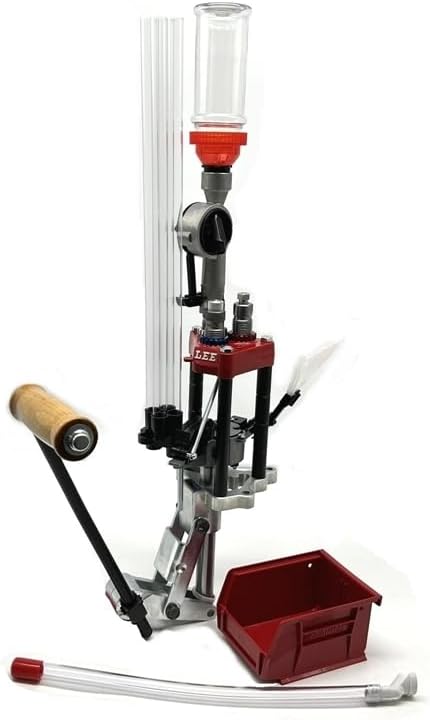
Designed specifically for 9mm Luger reloading, the Lee Precision 9mm Pro 1000 Reloading Press comes with a comprehensive set of dies and components, making it ideal for anyone focused on precision and efficiency in progressive reloading. Its biggest strength lies in the fully integrated system that includes a powder measure, case feeder, and priming system to keep the process straightforward and consistent.
Getting started requires setting up the included turret and #19 shell plate, which accepts the powder-through expanding and bullet seating dies. The large case feeder simplifies loading cases, and the integrated priming system works smoothly using CCI or Remington primers only. Adjustments are straightforward, and the compact size makes it manageable on most benches without taking up too much space.
Reloading speed is solid, with the progressive design handling multiple steps per cycle effectively. The build quality feels durable, with components fitting well, though some note the press is best suited for only specific primers. The press performs reliably in producing consistent rounds, although the primer restriction is frequently mentioned as a limitation.
The press provides a reliable and consistent reload for 9mm rounds with a setup that encourages efficiency through multi-step progressiveness and integrated tools. A common downside is the limitation of primer brands which can be inconvenient for some reloaders.
The press suits those who want a ready-to-go system for 9mm Luger reloading and value a compact design. Reloaders needing flexibility in primer choice or heavier-duty equipment might consider alternatives better suited to those priorities.
Pros
- Complete setup with dies and powder system included
- Large case feeder speeds reloading process
- Integrated priming system simplifies primer seating
- Compact size fits well on typical workbenches
Cons
- Limited to CCI or Remington primers only
- Some parts feel lighter compared to larger presses
| Specification | Details |
|---|---|
| Item Dimensions LxWxH | 20 x 13 x 7 inches |
| Package Weight | 6.17 kg |
| Item Weight | 0.4 kg |
| Model Name | 90640 |
| Warranty Description | 2 Year Factory Warranty |
6. Dillon Precision BL550 4-Station Progressive Reloading Press

Reloading enthusiasts looking to start with a straightforward setup will find the Dillon Precision BL550 4-Station Progressive Reloading Press a solid choice. It suits beginners well, thanks to its clear instructions and all-in-one kit that makes the reloading process less intimidating.
Its biggest strength lies in offering progressive reloading without overwhelming newcomers.
Setting up this press feels manageable with everything included, from the 3-die set and powder funnel die to the scale and calipers. Daily use highlights how the 4-station design lets you perform several steps per pull, speeding up the process compared to single-stage presses. The primer flip tray and case lube are handy extras that help avoid common reloading errors while maintaining smooth operation throughout your work.
Performance meets solid craftsmanship with its aluminum build, making the press sturdy yet not too heavy at 27 pounds. It handles .308 Winchester cases well and supports progressive reloading efficiently by letting you complete multiple operations per pull. The lifetime warranty reflects confidence in its durability.
Common praise centers on easy learning and consistent results; occasional grumbles note the potential bulkiness and some noise during use.
Among feedback, the most praised feature remains the kit’s beginner-friendly setup that helps newcomers learn reloading quickly and confidently. The most frequent complaint points to the press’s size and moderate noise level, which might be a factor for those with limited workspace or quiet needs.
The press suits reloaders who want to move beyond single-stage setups without lost control or steep learning curves. Users with tight work areas or noise sensitivity might prefer a smaller, quieter alternative that fits their environment better.
Pros
- Complete starter kit with all essential tools
- 4-station design speeds up reloads significantly
- Clear instructions helpful for beginners
- Lifetime warranty included
Cons
- Fairly heavy and takes up considerable bench space
- Some people notice noise while the product is running
| Specification | Details |
|---|---|
| Item Package Dimensions L x W x H | 30.5 x 16 x 13 inches |
| Package Weight | 27 pounds |
| Material | Aluminum |
| Included Components | 3-Die Set, BL550 Reloading Machine, Calipers, Powder Trickler, Scale |
| Model Name | BL550 |
| Size | .308 Winchester |
7. Lee Precision Gunsmithing Tools

Offering a sturdy build and tailored for progressive reloaders, this kit stands out with its cast aluminum construction that balances weight and durability. Ideal for hobbyists who value reliable tools that don’t feel flimsy during extended sessions, it brings a strong foundation to reloading without overwhelming bulk.
Setup is manageable given its size and weight, making it suitable for a home bench setup, as it measures 20 by 13 by 7 inches and weighs 6.6 pounds. Daily use feels solid because of the cast aluminum parts, and the kit includes five necessary items to get started without needing many extras.
The kit’s dimensions and weight keep it steady on the bench during repetitive tasks.
Performance in reloading is consistent thanks to the solid materials and thoughtful assembly. The cast aluminum frame resists wear well, showing durability over time.
The strongest praise comes from its reliability in handling different calibers without frequent adjustments. On the downside, some might find the overall weight at 6.6 pounds a bit heavy for easy portability outside a dedicated space.
Reliability stands out as a frequent positive, with the kit handling multiple reloading tasks well, while the common issue centers on the weight, making it less ideal for users needing a light setup. The cast aluminum construction contributes strongly to this trade-off.
Anyone setting up a dedicated reloading space will find strong value here, especially those wanting consistent performance and a solid feel. Users looking for a more compact or lightweight kit for travel should explore lighter options elsewhere.
Pros
- Cast aluminum improves durability and stability
- Includes five essential tools in one kit
- Reasonable size for home bench use
- Two-year warranty offers added confidence
Cons
- Heavier than some may prefer at 6.6 pounds
- Not as portable for field use
| Specification | Details |
|---|---|
| Item Dimensions LxWxH | 20 x 13 x 7 inches |
| Item Weight | 6.6 pounds |
| Package Dimensions LxWxH | 18.8 x 10.2 x 6.3 inches |
| Package Weight | 13.2 pounds |
| Material | Other (cast aluminum parts) |
| Warranty Description | 2 Year Factory Warranty |
8. Lee Precision Six Pack Pro Reloading Press

Lee Precision Six Pack Pro Reloading Press is designed for serious reloaders who want a dependable, multi-station press that handles any brand of die with ease. Its standout feature is the simple, automatic indexing system that requires no tools or adjustments, making it perfect for efficient, precise reloading.
Setting up the press is straightforward with six stations to accommodate various dies, including in-line bullet feed and powder check dies. The automatic indexing moves smoothly with only one replaceable part, so day-to-day use involves minimal fuss. The spent primer tube keeps messy primers contained, helping maintain a cleaner workspace.
Performance is solid thanks to a large 28.4mm ram supported by over 7300 mm2 of steel, providing excellent durability and smooth operation, even with large magnum rifle cases. The all-steel linkage is reliable, using the same design from their Classic Cast 50 BMG press.
The common downside is its fairly heavy weight, which might not suit those wanting a lightweight setup.
Praise highlights how smooth and reliable the automatic indexing system is, requiring no adjustments and making reload cycles easy. The biggest complaint centers on the press’s weight, which might feel cumbersome during transport or setup in smaller areas.
Reloaders wanting a tough, no-fuss press that fits most dies and handles large cases will appreciate this model. Those needing a lighter or more portable option might want to consider a different press better suited to their setup.
Pros
- Six stations for any brand of die
- Automatic indexing with one replaceable part
- Handles large magnum rifle cases
- Spent primer tube collects dirty primers
Cons
- Quite heavy for some workspaces
- Material details not fully specified
| Specification | Details |
|---|---|
| Ram diameter | 28.4 mm |
| Package dimensions (L x W x H) | 18 x 11 x 10 inches |
| Package weight | 7.26 kg |
| Item weight | 4 kg |
| Stroke and clearance | Sufficient for largest magnum rifle cases |
| Included components | Lee Precision 91823: Six Pack Pro Reloading Press |
9. MEC 9000GN .410 Gauge Press

Feels solid and reliable every time you work through a reload cycle, the MEC 9000GN .410 Gauge Press suits those serious about high-volume shotshell reloading. Its biggest strength is consistent progressive operation that keeps the process moving smoothly without frequent adjustments.
Setting it up takes some space due to its size and weight, but once anchored, day-to-day use is straightforward. The progressive design means you can reload multiple shells in a cycle, saving time.
The .410 gauge focus makes it specialized, and materials feel durable, contributing to stability during repeated operations.
Reloading performance holds steady under regular use, delivering consistent shell quality. The build is sturdy and substantial at 26.5 pounds, which helps reduce vibration.
Strong points from reviews highlight dependable mechanical function. Some users mention the press’s weight and size as drawbacks when moving or cleaning.
The press delivers consistent performance which stands out as its strongest quality, keeping reloads steady and reliable. Common concerns focus on its weight and bulk, making it less convenient for those without a dedicated reloading area or those needing frequent transport.
This will suit anyone dedicated to .410 gauge reloading and able to dedicate space for a heavy, sizeable press. For casual or portable use, looking at smaller or lighter alternatives may be better suited.
Pros
- Solid metal build ensures durability
- Progressive design saves reloading time
- Specialized for .410 gauge shot shells
- Stable operation reduces vibration
Cons
- Heavy at 26.5 pounds, tough to move
- Large footprint requires ample workspace
| Specification | Details |
|---|---|
| Item Package Dimensions L x W x H | 22.7 x 17 x 9.3 inches |
| Package Weight | 26.5 pounds |
| Item Weight | 26.5 pounds |
| Brand Name | MAYVILLE ENGINEERING |
| Model Name | MEC progressive 9000N grabber shotshell reloader |
10. RCBS Bullet Feed Die

RCBS Bullet Feed Die suits reloaders aiming for reliable bullet seating with a focus on durability. It’s a well-made tool that shines in lasting performance thanks to its precision crafting and sturdy construction, fitting both rifle and pistol users who want consistency in their reloads.
Setting up the die is straightforward, with dimensions small enough to fit most presses comfortably. Daily use centers on its smooth bullet feeding action, which helps reduce jams.
Its lightweight design at 18.14 grams makes handling easy, and maintenance involves simple cleaning since it’s made from a blend of materials built to resist heavy wear.
The die performs steadily, feeding bullets with accuracy and avoiding misfeeds or damage during reloading. It is crafted for longevity, holding up through repeated use without noticeable degradation. High marks go to its reliability, while on the downside, some have found the limited warranty to be a bit restrictive, and the die’s classic style might not appeal to those looking for newer designs.
The die receives strong praise for its reliable bullet feeding without causing jams, standing up well through frequent use. The common complaint involves the limited manufacturer warranty, which some consider less reassuring compared to broader coverage.
Reloaders looking for a durable, trustworthy bullet feed die built to last will appreciate this tool. Those wanting a modern styling or extended warranty might explore other options better suited to those preferences.
Pros
- Durable construction for long life
- Precision crafted for consistent feeding
- Compact and lightweight design
- Compatible with rifles and pistols
Cons
- Limited warranty coverage
- Classic style may not suit all users
| Specification | Details |
|---|---|
| Item Dimensions LxWxH | 1 x 2.25 x 2.13 inches |
| Item Weight | 18.14 g |
| Package Dimensions LxWxH | 6.22 x 4.88 x 2.09 inches |
| Model Name | 82351 |
| Material | Blend |
| Warranty Description | Limited Manufacturer |
Best Progressive Reloads Comparison Table
| Product | Weight | Warranty | Material | Dimensions (LxWxH) |
|---|---|---|---|---|
| Frankford Arsenal X-10 Press | 42.92 kg | 1 Year Manufacturer | Metal | 10 x 10 x 10 in |
| Dillon RL550C Press | – | – | – | – |
| Dillon XL750 Machine | 39 pounds | Lifetime Warranty | Aluminum | – |
| MEC 9000GN 12GA Press | – | – | – | – |
| Lee 9mm Pro 1000 Press | 0.4 kg | 2 Year Factory | Other | 20 x 13 x 7 in |
| Dillon BL550 4-Station | 27 pounds | Lifetime Warranty | Aluminum | 30.5 x 16 x 13 in |
| Lee Gunsmithing Tools | 6.6 pounds | 2 Year Factory | Other | 20 x 13 x 7 in |
| Lee Six Pack Pro Press | 4 kg | – | Other | 18 x 11 x 10 in |
| MEC 9000GN .410 Press | 26.5 pounds | – | – | 22.7 x 17 x 9.3 in |
| RCBS Bullet Feed Die | 18.14 g | Limited Manufacturer | Blend | 1 x 2.25 x 2.13 in |
- Weight42.92 kg
- Warranty1 Year Manufacturer
- MaterialMetal
- Dimensions (LxWxH)10 x 10 x 10 in
- Weight–
- Warranty–
- Material–
- Dimensions (LxWxH)–
- Weight39 pounds
- WarrantyLifetime Warranty
- MaterialAluminum
- Dimensions (LxWxH)–
- Weight–
- Warranty–
- Material–
- Dimensions (LxWxH)–
- Weight0.4 kg
- Warranty2 Year Factory
- MaterialOther
- Dimensions (LxWxH)20 x 13 x 7 in
- Weight27 pounds
- WarrantyLifetime Warranty
- MaterialAluminum
- Dimensions (LxWxH)30.5 x 16 x 13 in
- Weight6.6 pounds
- Warranty2 Year Factory
- MaterialOther
- Dimensions (LxWxH)20 x 13 x 7 in
- Weight4 kg
- Warranty–
- MaterialOther
- Dimensions (LxWxH)18 x 11 x 10 in
- Weight26.5 pounds
- Warranty–
- Material–
- Dimensions (LxWxH)22.7 x 17 x 9.3 in
- Weight18.14 g
- WarrantyLimited Manufacturer
- MaterialBlend
- Dimensions (LxWxH)1 x 2.25 x 2.13 in
How to Choose the Right Progressive Reload
Choosing the right progressive reload depends on factors like durability, ease of use, and compatibility with your equipment. Prioritizing these ensures reliable performance, reduces the risk of malfunctions, and helps avoid costly repairs or replacements in the long run.
Reload Speed and Efficiency
Reloading speed can disrupt the flow of shooting more than expected. A mechanism that cycles too slowly or inconsistently under different temperatures and conditions breaks concentration and reduces overall performance. In real use, a fast and smooth chambering action allows the shooter to maintain a steady rhythm, crucial for both practice and competitive situations.
Reliable reloads typically take less than a second, with noticeable differences emerging when a design struggles to handle rapid follow-up shots due to jams or slow cycling. Look for products with consistent cycling times under variable conditions and simple mechanisms that minimize timing variation.
This avoids frustrating delays and helps maintain focus throughout sessions.
Build Quality and Durability
Repeated stress can wear down parts quickly in some progressive systems, especially when lower-grade metals or plastics are involved. Components exposed to heavy motion, like springs and slides, need to resist deformation and fatigue to avoid failures during use. Corrosion resistance is equally important because exposure to moisture or sweat accelerates rust and deterioration.
Steel alloys with protective coatings and high-quality polymers excel in durability here. Solid metal pins, hardened springs, and corrosion-resistant finishes on contact points extend lifespan.
Avoid options using cheap materials for critical parts, as this often means replacing or repairing components after just a few hundred reloads.
Ease of Installation and Compatibility
Compatibility issues can cause headaches when the product doesn’t fit your firearm model or caliber without modification. Some units require gunsmithing or adapters, complicating installation.
Those designed with standard specs save time and avoid unnecessary adjustments.
Simple installation often means a direct fit with common calibers, plus easy access to instructions that clearly outline each step. Having manufacturer or community support helps handle unexpected questions.
Check that the item matches your firearm’s exact make and caliber, and prefer those advertised as plug-and-play or requiring minimal tools.
Ergonomics and Usability
Comfort during reloads shapes how quickly you adapt and stay efficient. A part that feels awkward or too stiff adds frustration when trying to cycle rounds. Natural hand positioning with easy leverage reduces fatigue and speeds up operation.
Reload mechanisms that accommodate various hand sizes and grips fit a wider range of users. Features like adjustable levers or optional grip pieces improve usability.
Look for textured surfaces that provide secure hold without being harsh. An intuitive action that doesn’t require retraining your muscle memory also makes a difference in daily handling.
Maintenance and Cleaning
Routine cleaning and maintenance keep the mechanism working smoothly but can be a chore if disassembly is complicated. A design that comes apart easily without special tools encourages regular upkeep.
This prevents gunk buildup that slows cycling and causes malfunctions.
Components should allow good access for brushes and lubricants while withstanding cleaning solvents without degrading. Metal parts need coatings or finishes that resist corrosion from routine solvent exposure.
Avoid complex multi-piece assemblies that trap dirt and resist cleaning; simpler, accessible designs reduce downtime and extend lifespan.
Benefits of Using Progressive Reloads for Different Shooting Activities
Progressive reloads allow shooters to prepare multiple rounds quickly, saving time during both practice and competition. This system is especially useful for those who need a consistent output, such as target shooters and hunters.
By automating several steps in the process, progressive presses reduce repetitive motion, which can cut down on fatigue during long sessions. Reloads produced on these presses typically maintain uniformity in powder charge and bullet seating depth, which is key for accuracy and reliability. Progressive reloads can speed up target acquisition by providing ready-to-use ammo in bulk.
This is beneficial for shooters working through drills or managing large volumes of shooting without constant interruption to reload cases.
Common Mistakes to Avoid When Loading Progressive Reloads
One common mistake is overcharging the case or failing to adjust for bullet seating depth with a progressive reload. These oversights can cause safety issues or lead to inconsistent performance. Another error is neglecting the regular cleaning and maintenance of the press, which affects the smoothness of operation and may cause measurement errors.
Users also sometimes skip proper sizing or trimming steps, leading to rounds that don’t chamber correctly. It’s important to keep track of powder levels and cases processed to avoid double charging or mixing stages mid-cycle.
Loading ammo at a pace faster than the equipment or process allows often leads to errors as well.
Comparing Progressive Reloads to Single-Stage Reloads: Pros and Cons
Progressive reloads excel in speed by performing multiple steps simultaneously, unlike single-stage presses that complete one function at a time. This makes progressive setups better suited for preparing high volumes of rounds quickly. However, single-stage presses provide more control over each step, which appeals to precision reloaders or those working with handloaded ammunition for custom purposes.
The maintenance of progressive machines can be more involved because of their complexity, whereas single-stage presses have simpler mechanics. Progressives usually require more bench space and investment upfront, but they save time in the long run.
Single-stage presses tend to be quieter and more straightforward to use but are slower for mass production.
People Also Asked
How Do I Properly Size a Progressive Reload?
Proper sizing of a progressive reload depends on the specific firearm and cartridge you intend to reload. Measure the cartridge dimensions carefully, especially length and width, and adjust the die settings on your press accordingly to prevent feeding or chambering issues. Consulting a current reloading manual for your specific caliber helps ensure accuracy and safety.
What Are Common Problems with Progressive Reloads?
Common problems with progressive reloads include improper bullet seating depth, inconsistent powder charges, and primer seating issues. These can lead to inaccurate loads or dangerous pressures, so it’s important to check each step carefully. Regularly inspect your press for worn parts to keep everything aligned and functioning smoothly.
Is a Progressive Reload Safe to Use Regularly?
Progressive reloads are safe to use regularly as long as you follow proper reloading procedures and maintain your equipment. Consistently checking powder measures and primer seating helps prevent critical errors. Routine inspection of cases and components ensures reliable and safe ammunition production over time.
How Long Does a Progressive Reload Usually Last?
The lifespan of a progressive reload varies but typically lasts many years with proper maintenance. Frequent use can cause parts like bushings or springs to wear out, so replace these before they impair performance. Keeping spare parts on hand can minimize downtime during reload sessions.
How Do I Clean and Care for a Progressive Reload?
To clean and care for a progressive reload, regularly remove powder and primer residue using a soft brush and a mild solvent. Lubricate moving parts lightly to prevent corrosion and check for worn components during cleaning. Storing the press in a dry, dust-free environment helps maintain its condition.
Conclusion
Choosing the right progressive reload depends largely on how smoothly it fits into your existing setup, how reliable it is during use, and the ease of maintenance over time. These factors affect daily experience more than flashy features or complex adjustments.
Prioritize consistency and straightforward operation to avoid frustrations down the line.
Consider how often you’ll reload and the space available before making a decision. A model too large or complex for your use might sit unused, while one matching your workload and setup provides real benefit. Check the comparison table and the detailed picks above to find the best fit for your needs and budget.