How to Put a Dehumidifier in a Gun Safe for Maximum Effectiveness
Many gun owners know the struggle of keeping their firearms dry and rust-free. Humidity can be a sneaky enemy, and you’re not alone in wanting to protect your investment. A good dehumidifier is essential, but knowing how to use it effectively makes all the difference.
To maximize a dehumidifier’s effectiveness in your gun safe, measure its size first to choose the right model.
Then, place it in the center of the safe on a flat surface, away from walls or shelves that block airflow. Regularly monitor humidity levels with a hygrometer, keeping them around 30-50%.
Check and empty water containers or replace desiccant packs as needed. For deeper insights on placement and maintenance, continue exploring how to keep your firearms perfectly dry.
Key Takeaways
- Measure the safe’s dimensions to pick a dehumidifier that fits well and has the right capacity.
- Place the dehumidifier in the center of the safe, making sure nothing blocks the airflow.
- This helps it work evenly and keeps your guns in good shape.
- Regularly check the humidity levels with a hygrometer. Aim for 30-50% for the best preservation.
- Keep the dehumidifier upright on a flat surface, away from walls or corners.
- This prevents airflow blockages and keeps it working efficiently.
- Don’t forget routine maintenance. Empty any water reservoirs and remove debris.
- This keeps the dehumidifier running smoothly and effectively over time.
Why Protecting Your Guns From Moisture Matters
Moisture is one of the biggest threats to your firearms because it can cause rust and corrosion that damage your guns over time. When metal parts are exposed to humidity, they oxidize, weakening the structural integrity and reducing the lifespan of your weapons. Rust not only looks unsightly but can also make guns difficult to operate or even unsafe to use.
Without proper protection, moisture can seep into every crevice, speeding up deterioration. Keeping your guns dry helps preserve their value, functionality, and safety. Regular exposure to humidity increases how often you need to do maintenance and can raise your costs.
How to Pick the Best Dehumidifier for Your Gun Safe
Choosing the right dehumidifier for your gun safe means thinking about size, capacity, and how easy it is to use. You want a unit that fits well without overcrowding your space.
First, measure your safe’s dimensions so you can pick a size that suits it. Next, consider the capacity—the amount of moisture it can remove. Smaller safes need less power, while larger ones need higher capacity models.
Ease of use is also important. Look for dehumidifiers with simple controls and low maintenance.
Here’s a quick guide:
| Size of Safe | Capacity Needed | Ease of Use |
|---|---|---|
| Small | Low | Basic controls |
| Medium | Moderate | Automatic features |
| Large | High | Digital display |
Choose based on your safe’s size and how much convenience you want.
Measuring Your Safe and Checking Humidity Levels
To keep your gun safe dry and protected, start by measuring its interior dimensions—height, width, and depth. Use a tape measure to get accurate readings, so you know exactly how much space you have for your dehumidifier.
This helps you pick a unit that fits comfortably without overcrowding the safe. Next, check the humidity levels inside using a hygrometer. Place it in the center for the most accurate reading.
Aim for a humidity level around 30-50%. Regularly monitor these levels to see if your dehumidifier is working well. Keeping track ensures your firearms and valuables stay dry and free from rust and corrosion.
Where to Place Your Dehumidifier for Best Results
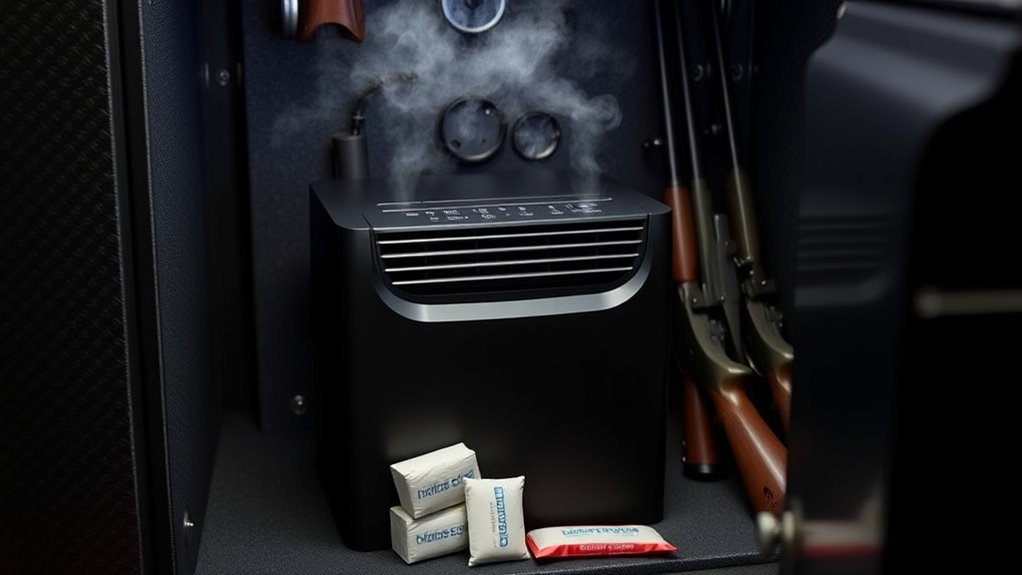
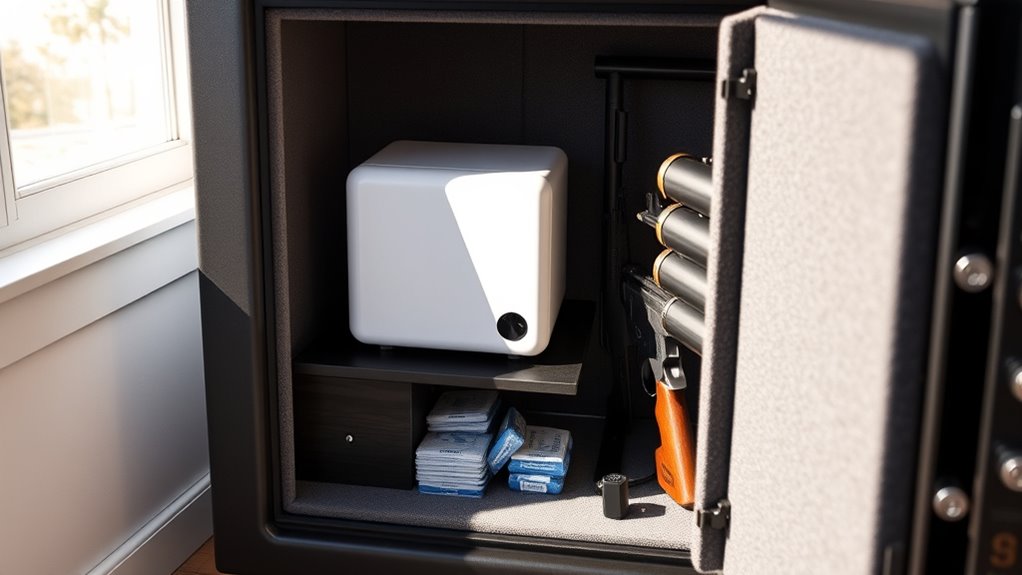
Place your dehumidifier in the center of your safe to ensure even moisture removal. Keep it away from walls or shelves that could block airflow.
This placement helps the unit work efficiently and prevents moisture from building up in hidden spots.
Optimal Safe Location
The best spot for your dehumidifier is usually near the center of the safe, where it can evenly distribute moisture control without being blocked. Placing it here helps the dehumidifier work efficiently, covering the whole interior space evenly.
Avoid corners or placing it close to walls, as these spots can block airflow and reduce effectiveness. Keep the dehumidifier at least a few inches away from shelves or stored items to prevent interference with moisture removal.
If your safe has a built-in rack or divider, put the dehumidifier in a central open area for the best coverage. Consistent placement ensures balanced humidity levels, helping to protect your firearms and valuables from corrosion and moisture damage.
Avoid Obstructing Airflow
Positioning your dehumidifier correctly ensures it can effectively control moisture throughout your space. To promote good airflow, don’t place the unit against walls, shelves, or other objects that block vents.
Good airflow helps the dehumidifier distribute dry air evenly and prevents damp spots. Place it on a flat surface, ideally in the center of the safe, away from corners or clutter.
Use this table to visualize ideal placement:
| Placement Tip | Why it Matters |
|---|---|
| Keep clear of walls | Promotes unobstructed air circulation |
| Avoid overcrowding | Prevents airflow blockages |
| Center the unit | Encourages even moisture removal |
This setup maximizes efficiency, keeping your safe dry and protected.
How to Install a Dehumidifier in Your Gun Safe
To install a dehumidifier in your gun safe effectively, start by choosing the right model for your space and needs.
Next, clear out the interior and prepare it for installation, making sure there’s enough room for proper airflow.
Finally, follow proper installation techniques to secure the dehumidifier and get the best performance.
Choosing the Right Dehumidifier
Are you unsure which dehumidifier suits your gun safe best? To make the right choice, consider the size and humidity level of your safe.
You want a unit that’s powerful enough to maintain ideal conditions without overdoing it. Think about the type of dehumidifier—desiccant or electric—and how often you’ll need to replace or recharge it.
Also, check for features like adjustable humidity settings or automatic shutoff for convenience. Picture a compact, silent device that easily fits into corners, quietly absorbs moisture, and keeps your firearms rust-free.
Visualize a sleek unit with clear controls, ready to protect your collection effortlessly. Picking the right dehumidifier guarantees your safe stays dry, preserving your valued guns for years to come.
Preparing the Safe Interior
Preparing the interior of your gun safe for a dehumidifier involves cleaning out any dust, debris, or old moisture-absorbing materials. Use a damp cloth to wipe down shelves, walls, and corners, removing dirt and residue that could interfere with the dehumidifier’s effectiveness.
If you’ve used silica gel packs or other moisture absorbers, take them out and discard any expired or damp materials. Make sure the interior is dry before installing the dehumidifier.
Check for any rust or corrosion and treat it accordingly. Clear the space of unnecessary items so the dehumidifier can operate freely and evenly distribute moisture control.
Properly preparing the interior helps maximize the dehumidifier’s efficiency and prolongs the life of your firearms and safe.
Proper Installation Techniques
Installing a dehumidifier in your gun safe correctly guarantees it functions effectively and provides consistent moisture control. First, choose a spot that isn’t crowded or blocked, guaranteeing good airflow.
Secure the dehumidifier upright, either on the floor or mounted to a shelf, depending on the model. Make sure it’s not touching the walls directly to prevent uneven moisture absorption.
Keep the power cord accessible for easy maintenance. Check that vents or drainage openings aren’t obstructed.
Place the dehumidifier on a stable, flat surface inside the safe. Keep it away from firearms and sensitive items.
Avoid stacking or overcrowding to promote airflow. Confirm the unit is positioned for ideal moisture absorption.
How to Ensure Good Airflow Inside Your Safe
Maintaining good airflow inside your gun safe is key to preventing moisture buildup and protecting your firearms.
Avoid overcrowding the shelves, as this can block vents and restrict air circulation. Leave some space around your guns and other items so air can move freely.
Installing small vents or using a fan can help circulate air more effectively, especially if your safe doesn’t have good ventilation.
Regularly check for dust or debris that might block airflow paths. Keep the interior clean and organized to ensure consistent air movement.
Good airflow helps distribute humidity evenly, preventing damp spots and reducing the risk of corrosion.
Monitoring and Maintaining Your Dehumidifier
Regularly monitoring your dehumidifier is key to keeping it working well and protecting your firearms from moisture. Check the device often to make sure it’s running smoothly and to prevent any moisture buildup.
Keep an eye on the water collection container, and empty it before it overflows. Inspect the dehumidifier for dust or debris that could block airflow and reduce its efficiency.
Check and empty the water container regularly to maintain dehumidifier efficiency.
If your model uses desiccant packs, replace or recharge them as they lose effectiveness over time. Make sure the dehumidifier stays properly positioned inside the safe, free from obstructions.
Proper maintenance helps ensure consistent moisture control. You can visualize the clear water collected sitting in a tray or reservoir, feeling the dry, cool air circulating inside the safe, or hearing the subtle hum as the device runs smoothly.
Notice the indicator lights signaling proper operation to keep your system functioning optimally.
Common Mistakes When Installing a Gun Safe Dehumidifier
One of the most common mistakes is placing the dehumidifier in the wrong spot inside your gun safe. If you position it too close to firearms or delicate items, it can cause uneven moisture removal or even damage sensitive gear.
Avoid putting the unit near obstructions or in corners where airflow is limited. This can make the dehumidifier less effective because it can’t do its job properly.
Also, don’t install the dehumidifier too high or too low. The best place is usually centered or slightly raised so moisture is spread evenly throughout the safe.
Not considering the safe’s interior layout can lead to hotspots of humidity or dry spots. Always follow the manufacturer’s instructions for placement.
Getting the positioning right ensures the dehumidifier works efficiently, keeping your firearms and valuables protected from excess moisture.
When and How to Replenish Desiccants or Replace Units
Knowing when and how to replenish desiccants or replace dehumidifier units is key to keeping your gun safe dry and rust-free. You should check your desiccants regularly, usually every few months, and swap them out when they become saturated and lose their effectiveness.
For dehumidifier units, listen for unusual noises or notice increased humidity levels, which are signs it’s time for a replacement. Proper maintenance ensures your guns stay in top condition.
Keep these in mind: Visualize desiccants turning from dry to damp or clumping together. Feel for increased humidity or musty odors inside the safe. Notice if the dehumidifier’s fan becomes quieter or stops working.
Regularly test the humidity levels with a hygrometer to confirm proper moisture control. Prompt attention keeps your safe ideally dry and your guns protected.
Extra Tips to Keep Your Guns Dry and Rust-Free
To keep your guns dry and rust-free, regularly apply a high-quality gun oil or rust preventative to the metal surfaces. This creates a protective barrier that helps resist moisture and corrosion.
Storing your firearms in a clean, dry environment is key. Avoid touching metal parts with sweaty or dirty hands, and using silica gel packs or desiccants can help absorb any residual moisture.
Here’s a quick overview:
| Tip | Benefit |
|---|---|
| Apply gun oil regularly | Prevents rust formation |
| Use silica gel packs | Maintains low humidity levels |
| Store guns properly | Reduces exposure to moisture |
| Keep firearms clean | Removes residues that attract rust |
| Avoid humid environments | Limits moisture buildup |
Following these tips will help improve your firearm’s longevity and keep them in pristine condition.
What Humidity Level Should You Aim For?
You want to keep your guns in the ideal humidity range to prevent rust and corrosion.
Generally, aim for a humidity level between 30% and 50%. Regularly monitoring these levels helps you maintain the perfect environment for your firearms.
Recommended Humidity Range
Maintaining the right humidity level is essential for preserving your firearms and preventing rust. Aim for a humidity range between 30% and 50%.
This range keeps moisture levels low enough to stop rust and corrosion, but not so dry that it damages wood or other materials.
When you keep humidity in this zone, your guns stay protected without constant adjustments.
Picture your safe as a stable environment, where moisture isn’t excessive or absent.
Look for these visual cues:
- A gentle fog of moisture, not heavy droplets
- No visible rust spots on metal surfaces
- Wooden stocks feeling firm, not brittle
- No musty or moldy odors lingering inside
Monitoring Humidity Levels
Ever wonder how to keep your gun safe at the right humidity? Monitoring is the key. Aim for a humidity level between 40-60%, ideally around 50%. Use a reliable hygrometer to check the levels regularly.
Check your gauge at least once a week to catch any fluctuations early. Consistent monitoring helps prevent rust, corrosion, and mold buildup. Keep a log of your readings so you can see trends and adjust your dehumidifier if needed.
Here’s a quick guide:
| Humidity Level | Action Needed | Result |
|---|---|---|
| Below 40% | Add moisture or turn on a humidifier | Prevents dryness and cracking |
| 40-60% | Keep it steady | Keeps guns rust-free |
| Above 60% | Increase dehumidification | Stops moisture buildup |
| Fluctuates | Check your dehumidifier settings | Maintains a stable environment |
Monitoring ensures your safe stays exactly right.
Troubleshooting Your Dehumidifier and Moisture Problems
When your dehumidifier isn’t effectively controlling moisture in your gun safe, it’s important to identify the problem quickly to prevent any long-term damage. First, make sure the unit is plugged in and turned on.
Check that nothing is blocking airflow around the dehumidifier. Look for ice buildup on the coils, which can mean it’s too cold or not cycling properly. Also, double-check the humidity settings—they should be set appropriately for your environment.
Common issues include the dehumidifier being full or clogged and unable to drain water. It could also be an electrical problem causing the unit not to run. Additionally, if the safe’s seal isn’t tight, moisture can seep in, making it harder to keep dry.
Finally, consider the humidity level outside the safe. If it’s too high or fluctuates a lot, it can make controlling moisture more challenging. Addressing these factors can help keep your gun safe dry and protected.
Frequently Asked Questions
Can I Use a Small Dehumidifier in a Large Gun Safe?
Yes, you can use a small dehumidifier in a large gun safe, but it might not be very effective on its own. Small units might not remove enough moisture for bigger spaces.
You should consider using multiple dehumidifiers or a larger one designed for larger areas. Also, pick a dehumidifier with adjustable settings to better control humidity levels.
Make sure to regularly check and maintain it to keep your safe dry and protected.
How Often Should I Run the Dehumidifier in My Safe?
You should run your dehumidifier daily for about 8 to 12 hours, especially if you live in a humid climate.
Check the humidity levels regularly with a hygrometer, aiming for 30-50%. If the air feels damp or the gauge reads higher, run the dehumidifier longer or more often.
Adjust the duration based on seasonal changes and how quickly moisture builds up inside your safe.
Are There Any Safety Concerns With Electrical Dehumidifiers?
Yes, there are safety concerns with electrical dehumidifiers. You should make sure the device is properly rated for indoor use and kept away from water or moisture to prevent electrical shocks or fires.
Always follow the manufacturer’s instructions, unplug it when you’re not using it, and check for any damage regularly. Proper placement inside your gun safe also helps reduce the risk of overheating or electrical problems, keeping both your valuables and safety protected.
Can Dehumidifiers Cause Damage to My Guns?
You won’t damage your guns with a dehumidifier if you use it correctly. Think of it as a gentle rain that keeps your weapons safe from rust, not a storm that causes harm.
Just guarantee the dehumidifier is placed properly, not directly touching your firearms, and maintain the right humidity level.
When used responsibly, it safeguards your guns without risking any damage, like a trustworthy guardian.
Is It Better to Use a Chemical Desiccant or an Electronic Dehumidifier?
It’s better to use an electronic dehumidifier for your gun safe, especially if you want consistent, reliable moisture control. Electronic units actively remove humidity and keep the environment stable, which helps reduce mold and rust risks.
Chemical desiccants are more affordable but need frequent replacement and don’t regulate humidity as precisely. They can be a quick fix but aren’t as effective long-term.
You’ll get better protection for your guns with an electronic dehumidifier, saving you time and effort in the long run.
Conclusion
Keeping your guns dry and rust-free is essential for their longevity, and a properly installed dehumidifier makes this much easier.
By selecting the right unit, placing it correctly, and maintaining ideal humidity levels, you protect your firearms effectively.
Are you ready to take the necessary steps to preserve your collection?
With a little effort, you’ll guarantee your guns stay in pristine condition for years to come.
After all, isn’t peace of mind worth the investment in a dehumidifier for your gun safe?