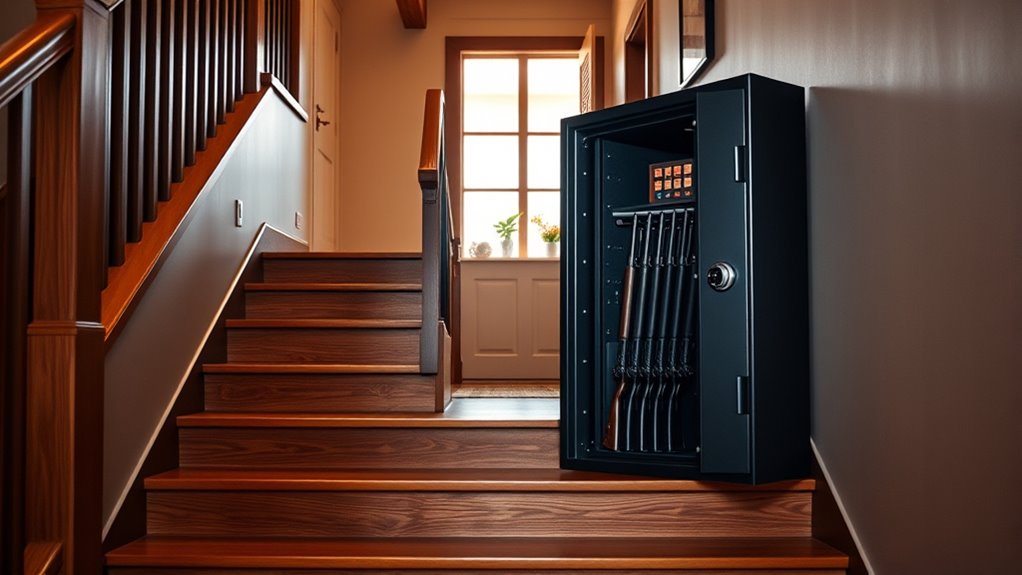
Can You Put a Gun Safe Upstairs?
Are you considering placing a gun safe upstairs but worried about safety and practicality? You’re not alone—many people struggle with figuring out the best spot for their valuables while keeping everything secure and accessible.
Finding the right location can feel overwhelming, especially when trying to balance safety, convenience, and home structure.
Yes, you can put a gun safe upstairs if your home’s structure supports the weight and you follow safety guidelines.
Verify the floor is sturdy and can handle the safe’s weight by checking joist size and spacing.
Secure the safe properly to prevent shifting or tampering, and choose a discreet yet accessible spot away from children.
Proper installation and ongoing maintenance are essential for safety.
Keep going to uncover more tips for a secure upstairs setup.
Key Takeaways
– Yes, you can put a gun safe upstairs, but make sure the upstairs floor can support the weight of the safe.
It’s important to check the structural integrity before installing. You don’t want the safe to cause any damage or be a safety risk.
Choose a high-quality, tamper-resistant safe that can be securely anchored. This adds an extra layer of security.
Pick a discreet spot that’s easy to access but away from children and high-traffic areas.
Proper climate control and ventilation are key to keeping your firearms in good condition.
Make sure to regularly inspect and maintain the safe’s lock, anchoring, and environmental conditions.
Can You Safely Keep a Gun Safe Upstairs?
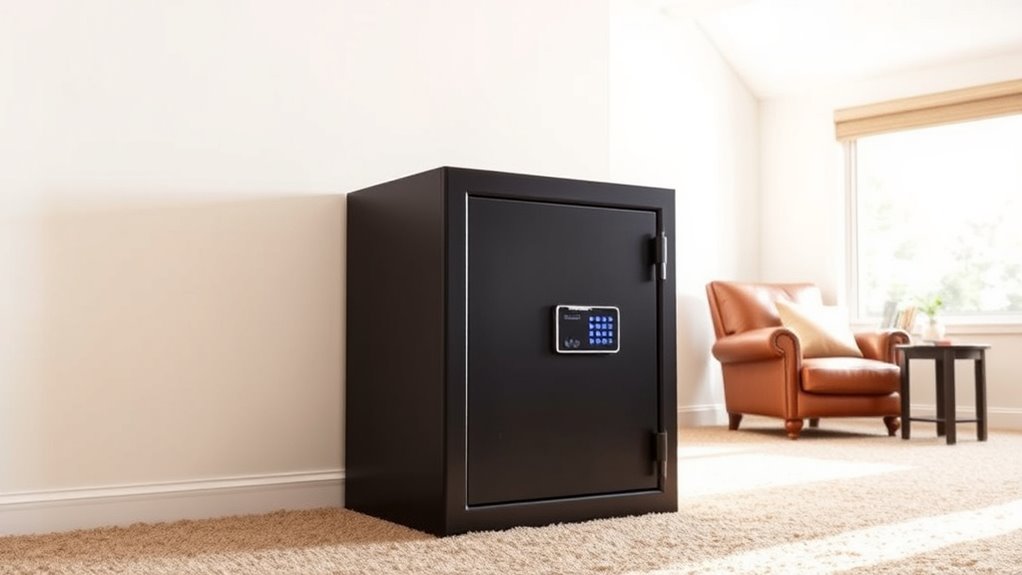
Is keeping a gun safe upstairs a safe choice? It can be, as long as you think about safety and security.
Upstairs locations are often easier to access in emergencies, but they also come with risks. You need to make sure the area is secure from children or intruders, and that the safe is sturdy enough to resist tampering.
Temperature and humidity levels upstairs might fluctuate more, which could damage your firearms or valuables. Proper ventilation and climate control help keep the safe’s condition stable.
Additionally, installing the safe securely to the floor or wall prevents theft or accidental tipping.
How to Assess If Your Home Supports Upstairs Gun Safe Placement
Evaluating whether your home can support an upstairs gun safe involves considering several key factors. Start by checking the structural integrity of the space. You want to make sure the floor can handle the safe’s weight without sagging or causing damage.
Check the size and spacing of the floor joists. Larger and more closely spaced joists are better at supporting heavier safes. Also, verify that the subfloor is solid, undamaged, and properly supported.
Knowing the exact weight of your safe is essential. Confirm your floor’s load capacity, preferably with a structural engineer or by reviewing your home’s blueprint. Proper assessment helps prevent structural issues and ensures safe placement.
Key Safety Precautions for Installing a Gun Safe Upstairs
To safely install a gun safe upstairs, focus on secure mounting techniques that prevent it from shifting or tipping over. Proper anchoring to the floor or wall is key to stability.
Soundproofing measures are also important to reduce noise and protect your privacy. Adding padding or insulation can help keep the installation discreet.
Making sure these precautions are in place helps keep your safe secure and your home safe. Taking these steps ensures everything stays in place and your space remains private.
Secure Mounting Techniques
Securing a gun safe upstairs takes some careful planning to ensure safety and stability. You want it to stay put and resist tampering or accidental tipping. To do that, use heavy-duty bolts and anchors that match your floor type—whether concrete or wood.
Make sure the safe is anchored to a stud or solid surface for the best stability. For extra security, think about mounting the safe at an angle or on a non-slip pad. Here’s a quick overview:
| Step | Tip |
|---|---|
| 1 | Use high-quality bolts |
| 2 | Find and anchor to studs |
| 3 | Drill pilot holes |
| 4 | Use a level to confirm proper alignment |
| 5 | Regularly check and tighten fasteners |
Following these steps helps keep your safe secure and your valuables protected.
Soundproofing Measures
Since gun safes can be heavy and potentially noisy when opened or closed, soundproofing measures are essential to prevent disturbing others in the household. To minimize noise, consider lining the interior and surrounding area with sound-absorbing materials like foam or felt.
Installing rubber or cork mats beneath the safe can reduce vibrations and noise transmission. You might also seal gaps around the safe with weather stripping or acoustic sealant to help contain sound.
Adding a soft lining inside the safe can prevent metal-on-metal noise when opening or closing. Keep in mind that regular maintenance, like lubricating hinges, can also reduce squeaks.
Proper soundproofing not only protects household harmony but also maintains a secure environment for your firearms.
Where Is the Best Spot for a Gun Safe Upstairs?
You want to find a spot upstairs that keeps your gun safe discreet but easy to access when needed.
Consider hidden corners or behind furniture to maintain privacy, while still making it reachable in emergencies.
Balancing safety and convenience is key when choosing the best location.
Discreet Placement Options
Finding a discreet spot for a gun safe upstairs is all about balancing easy access with concealment. You want it hidden enough to keep prying eyes away but still quick to reach when you need it.
Think about placing the safe behind a false wall or inside a closet that looks like regular storage. Underneath a staircase or behind heavy furniture also works well for hiding without drawing attention.
You can even disguise it as a piece of furniture, like a cabinet or a bookshelf with a false back. Be strategic—avoid obvious spots like under the bed or in plain sight.
The goal is to blend the safe into its surroundings without compromising security or quick access.
Accessibility and Safety
Choosing the right spot for a gun safe upstairs means prioritizing quick access while guaranteeing safety. You want a location that’s easy to reach in emergencies but also secure from unauthorized users. Consider placing the safe in a concealed, yet accessible, spot like a closet or behind furniture.
Keep it away from children and areas with a lot of foot traffic to prevent accidents. Make sure the floor can support the weight of the safe without risking damage. Think about the door’s opening clearance and avoid spots prone to humidity or temperature swings.
Some good options include placing it near your bedroom for quick access, out of sight from visitors, and on a sturdy, level floor. Avoid windows or damp areas, and steer clear of high-traffic zones to keep it safe and accessible.
How to Secure Your Upstairs Gun Safe Against Unauthorized Access
Securing an upstairs gun safe against unauthorized access is key for safety and peace of mind. Start by choosing a high-quality, fireproof, and tamper-resistant safe with advanced locking features like biometric or digital keypads.
Install the safe in a hidden spot, such as behind a false wall or inside a closet, to keep it out of sight. Use heavy-duty bolts to anchor it securely to the floor or wall, making it harder to steal or move.
Limit access by sharing the combination or fingerprint only with trusted people. Think about installing security cameras or alarms nearby to monitor activity around the safe.
Regularly update your access codes and check the locking system for any signs of tampering. These steps help ensure only authorized individuals can access your upstairs gun safe.
Common Challenges of Placing a Gun Safe Upstairs and How to Solve Them
Placing a gun safe upstairs can come with some practical challenges that might affect security and convenience. One of these is weight—heavy safes can strain the floors or cause structural issues. To fix this, you can reinforce the floor or opt for lighter models.
Accessibility is another concern, especially if the safe is hard to reach quickly. Choosing a sturdy, easy-to-access spot can make a big difference. Noise from opening or closing the safe might bother people upstairs, so using quiet hinges and soft-close mechanisms can help reduce that.
Ventilation is also important, as moisture buildup can damage your firearms. Ensuring good airflow or using dehumidifiers can prevent this problem. Lastly, securing the safe against theft is crucial. Bolting it down and hiding it behind furniture can improve its security.
Legal and Safety Tips for Using Gun Safes Upstairs
Even if you have a gun safe upstairs, it’s important to follow legal and safety guidelines to ensure responsible firearm use. Make sure your firearm storage complies with local laws, which often specify how and where guns should be stored, especially in multi-story homes.
Always keep your safe locked and out of reach of children or anyone unauthorized. Consider installing alarms or security measures that alert you if the safe is tampered with.
Regularly check that your safe is working properly and that firearms are stored securely. Educate everyone in your household about firearm safety, focusing on responsible handling and storage.
Final Tips for a Safe and Secure Upstairs Gun Safe Setup
To ensure your upstairs gun safe stays both secure and easy to access when needed, it’s important to follow a few final setup tips. First, make sure to anchor the safe firmly to the floor or wall to prevent theft or tipping.
Pick a discreet spot away from common areas so it’s not obvious to outsiders. Regularly check that the lock mechanism is working properly and keep it maintained for reliable security.
Organize your firearms and valuables inside so you can grab them quickly in an emergency. Lastly, install good lighting nearby, so you can see and access your safe easily at any time.
Following these steps helps balance safety, security, and convenience, giving you peace of mind that your firearms are protected but still accessible when needed.
Frequently Asked Questions
Are There Specific Types of Gun Safes Suitable for Upstairs Installation?
Yes, certain gun safes are better suited for upstairs installation. Look for safes with sturdy construction, fire-resistant features, and secure locking mechanisms.
You’ll want a safe that’s easy to access but also offers good protection against theft and fire. Lightweight models might be more suitable for upstairs, but make sure they’re still durable.
Always consider your space, security needs, and ease of installation when choosing the right safe for upstairs.
How Much Weight Can Most Upstairs Floors Safely Support for a Gun Safe?
Most upstairs floors can support between 40 to 50 pounds per square foot, but it’s important to check your home’s specific structure.
An average gun safe weighs around 200 to 600 pounds, so you’ll need to make sure your floor can handle that weight safely.
For larger safes, it’s a good idea to talk to a structural engineer or a professional to avoid any damage or safety issues.
Having proper support ensures your valuables stay secure without risking the floor’s integrity.
Can Noise From a Safe Impact Neighbors or Other Household Members?
Yes, noise from a safe can impact neighbors or household members, especially if the safe is large or if you often access it. The sounds of opening, closing, or moving the safe might be noticeable, especially in quiet environments or shared walls.
To reduce disturbance, think about placing the safe in a less sensitive area. Using soundproofing materials or choosing a model that operates quietly can also help minimize noise.
What Are the Fire Safety Considerations for Upstairs Gun Safes?
Fire safety is essential when installing a gun safe upstairs. Think of it like a fortress with a fire-resistant shield.
Choose a safe rated for fire protection, ideally with at least a one-hour fire rating. Keep it away from heat sources and make sure it’s properly anchored.
Regularly check the seals and insulation, just like maintaining a sturdy fortress, so your firearms stay protected in a fire emergency.
Is Professional Installation Necessary for Upstairs Gun Safes?
Yes, professional installation is recommended for upstairs gun safes. You want to make sure it’s securely anchored to prevent tipping or theft, especially on upper floors where vibrations or movement can happen more often.
Professionals have the right tools and experience to install it properly, which reduces the risk of damage or accidents. Doing it yourself might seem easier, but professional installation guarantees safety, stability, and peace of mind.
Conclusion
Think of your upstairs gun safe as a trusted guardian watching over your home. Just like a sturdy bridge connects two sides, proper placement and security turn it into a reliable link between safety and peace of mind.
When you assess your space, follow safety precautions and secure access. This way, your safe becomes a steadfast protector rather than a potential hazard.
With the right setup, you’ll sleep soundly knowing your valuables are truly safe upstairs. Can you put a gun safe upstairs? Absolutely, if you do it right and prioritize security.