Efficiently Use Your Glock Speed Loader
Many gun owners want to improve their reload speed with a Glock speed loader but often feel overwhelmed or unsure where to start. You’re not alone—getting quick and reliable reloads takes practice and the right technique.
To efficiently use your Glock speed loader, grip it firmly and keep your fingers relaxed. Align each round carefully, applying steady pressure to load smoothly without rushing. Check for proper alignment and cleanliness to prevent jams.
Regular maintenance and safe practices are essential to prevent malfunctions and guarantee reliability.
With consistent technique and attention to detail, you’ll improve your speed and accuracy.
Keep going—these tips will help you master quick, safe reloads every time.
Key Takeaways
- Grip the speed loader firmly and align the rounds precisely. This helps ensure smooth, efficient loading into the magazine.
- Apply steady, controlled pressure during the loading process. This prevents misalignment and jams, making your reloads more reliable.
- Regularly clean and inspect your speed loader. Check for debris, wear, or damage to keep it working at its best.
- Practice a consistent, smooth reloading technique. Building muscle memory will help you increase your speed over time.
- Store the speed loader in a dry, protected area. Always handle it safely to avoid accidents or damage.
How to Load Your Glock Speed Loader Quickly and Correctly
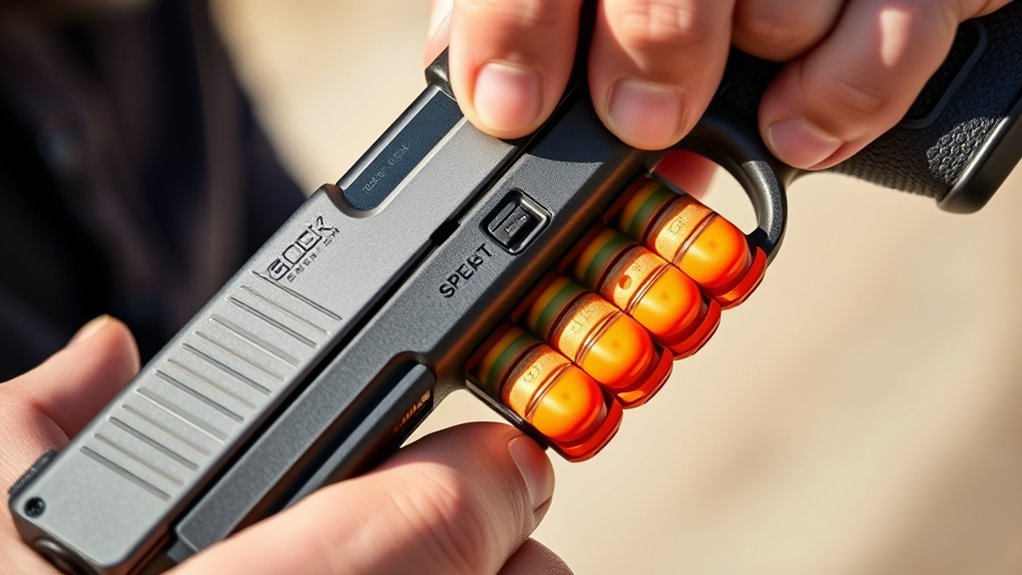
To load your Glock speed loader quickly and correctly, start by making sure your magazines are empty and clean.
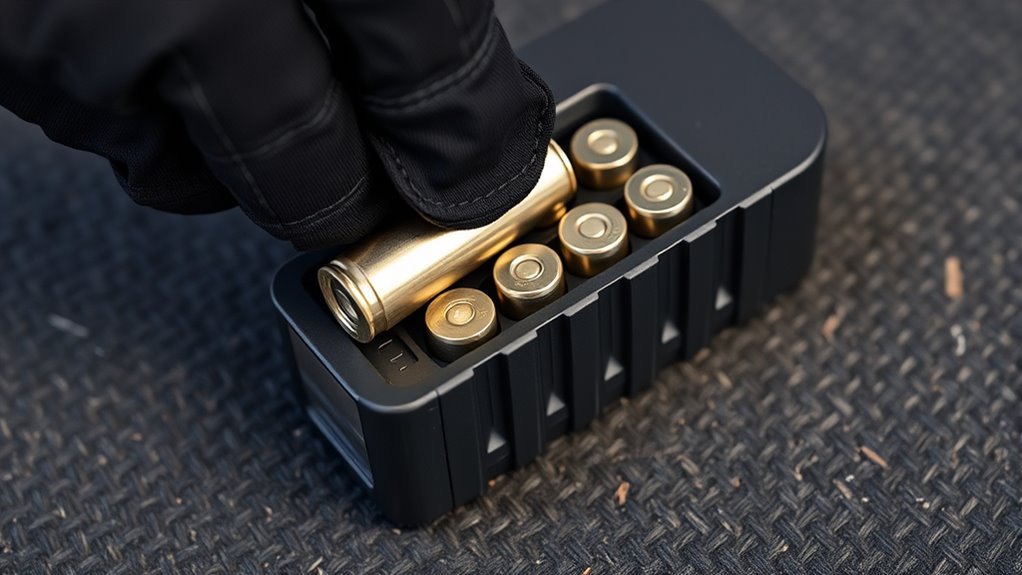
Hold the speed loader in one hand, gripping the handle firmly with your fingers. With your other hand, position a magazine underneath the loader’s opening.
Hold the speed loader securely and position the magazine underneath for quick, efficient loading.
Use your thumb to press down on the top cartridge or follower so it stays in place. Align the first round with the loader’s slot, then push it down firmly into the magazine.
Repeat this process, placing each cartridge into the magazine, using the speed loader’s mechanism to push rounds smoothly. Keep steady pressure and don’t rush.
Proper alignment is key for faster, safer loading. Once the magazine is full, carefully remove the speed loader and you’re ready to go.
Troubleshooting Common Speed Loader Problems
Even with proper technique, speed loaders can sometimes cause issues that slow down your reloads or lead to frustration. One common problem is difficulty inserting rounds smoothly. This might happen if the loader isn’t aligned correctly or if the rounds are too tight.
Double-check the alignment and make sure you’re applying consistent pressure. Another issue is the loader not releasing rounds properly, which could be due to debris, dirt, or damage to the mechanism. Regularly clean and inspect your loader to prevent jams.
If the loader feels too stiff, it might be a sign of wear or poor lubrication. In those cases, apply a light lubricant to the moving parts. Addressing these issues promptly will help keep your reloading process smooth and efficient.
Maintaining Your Glock Speed Loader for Reliable Performance
To keep your Glock speed loader working smoothly, it’s important to clean it regularly to remove dirt and debris.
Store it properly in a dry, safe place to prevent damage or corrosion.
Also, make sure to inspect it often and replace any worn or damaged parts to keep it reliable.
Regular Cleaning Procedures
Regular cleaning is essential to keep your Glock speed loader functioning reliably. Dirt, debris, and lubricant buildup can cause it to jam or operate less smoothly.
Start by disassembling the loader according to the manufacturer’s instructions. Use a soft brush or cloth to remove dirt and residue from all parts. Avoid harsh chemicals that could damage the plastic or internal components.
If necessary, lightly dampen the cloth with mild soap or isopropyl alcohol for thorough cleaning. Dry all parts completely before reassembling.
Regular cleaning guarantees smooth operation, prevents wear, and prolongs your speed loader’s lifespan. Make it a habit to inspect and clean your loader after frequent use, especially in dusty or dirty environments.
Proper maintenance keeps your reloads quick and reliable.
Proper Storage Techniques
After cleaning your Glock speed loader, proper storage helps it stay in top shape and work reliably when you need it.
Keep it in a cool, dry place away from direct sunlight and humidity to stop corrosion and material breakdown.
Use a dedicated case or container to protect it from dust, dirt, and bumps. Avoid storing it somewhere with extreme temperatures or high moisture, which can mess with its function.
If possible, store it flat or upright to prevent deformation. Adding silica gel packs or desiccants in the container can help absorb moisture.
Good storage keeps your speed loader working well longer and ready for use whenever you need it.
Inspection and Replacement
Periodic inspection of your Glock speed loader is essential to confirm it functions reliably when you need it. Regular checks help spot wear, damage, or dirt that could affect performance.
Look for cracks, deformities, or worn parts that may need replacing. Make sure the loader’s mechanism moves smoothly without sticking. Clean it with a soft cloth and avoid harsh chemicals.
Replace any damaged or excessively worn components right away to prevent malfunctions. Keep an eye on the spring tension and the integrity of the loading arms.
Proper maintenance extends the lifespan of your loader and ensures quick, reliable reloads. Check for cracks or deformities and inspect moving parts for smooth operation.
Clean with a soft, dry cloth, and replace worn or damaged components as needed. Verify that spring tension remains firm for optimal performance.
Tips to Reload Faster With Your Glock Speed Loader
To reload quickly with your Glock speed loader, focus on developing a smooth, consistent technique. Start by holding the loader firmly in your dominant hand, keeping your fingers relaxed.
Position the magazine straight and align it with the loader’s opening. Use a steady, controlled motion to push the rounds into the magazine, avoiding jerky movements that slow you down.
Practice smoothly releasing the loader once the rounds are seated, ensuring minimal wasted motion. Keep your non-dominant hand steady to stabilize the magazine during the process.
Repetition helps build muscle memory, making your reloads faster and more fluid over time. Remember, precision and consistency are key—speed will come naturally as your technique becomes more natural and efficient.
Practicing Reloads to Improve Your Speed and Accuracy
Practicing reloads regularly is essential for building both speed and accuracy. Repetition helps you develop muscle memory, making your reloads smoother and more consistent under pressure. Focus on timing and precision to reduce hesitation and mistakes.
Set up drills that simulate real-life scenarios to challenge yourself. Use a timer to track your progress and push for faster times without sacrificing accuracy. Incorporate dry fire practice to refine your technique, then move to live fire for real-world application.
Consistent practice not only improves your reload speed but also boosts your confidence in critical moments. Remember, quality practice beats quantity. Stay focused, analyze your performance, and adjust your technique as needed.
Practice with a timer to track progress. Incorporate dry fire drills and focus on smooth, controlled movements. Simulate realistic scenarios and review your technique regularly to keep improving.
Common Mistakes to Avoid During Reloads
Rushing your reloads can lead to mistakes and compromise safety. Taking your time helps ensure everything is done correctly.
Using your speed loader improperly can cause jams or misfeeds, which slows you down and can be frustrating. It’s better to do it right the first time.
Always follow safety protocols to prevent accidents. This keeps you and others safe and guarantees smooth, reliable reloads every time.
Rushing Reloads Risks
Rushing through reloads can lead to costly mistakes that compromise your safety and efficiency. When you hurry, it’s easy to fumble, miss steps, or mishandle your firearm, which increases the risk of accidents.
It can also slow you down later if you need to fix mistakes or double-check your work. Speeding through a reload might cause improper magazine seating, leading to feeding issues down the line.
Plus, rushing can make you overlook safety protocols, like keeping the firearm pointed in a safe direction. To avoid these risks, stay calm and focus on precision rather than speed.
A controlled, deliberate reload is safer and more effective. Rushing can cause misplacing or dropping rounds, improper magazine seating, or overlooking safety procedures.
It also raises the chance of malfunctions and can make your overall reload slower. Remember, patience and focus pay off in both safety and performance.
Improper Speed Loader Use
Using a speed loader incorrectly can cause jams, misfeeds, or even damage your magazine or firearm. Common mistakes include applying too much force, which can bend or break the magazine lips, or not lining up the loader properly, leading to shells misfeeding.
Another mistake is rushing through the process, which can result in rounds not being seated correctly. To avoid these issues, focus on gentle, steady pressure and make sure everything is aligned properly.
Here’s a quick guide to help you out:
| Mistake | Consequence | Prevention |
|---|---|---|
| Applying too much force | Damage or jams in the magazine | Use smooth, controlled pressure |
| Misalignment | Rounds not seated properly | Double-check loader positioning |
| Rushing reloads | Misfeeds or damaged rounds | Take your time during reloading |
| Not inspecting rounds | Malfunctions when firing | Always double-check rounds after loading |
| Using worn-out tools | Higher risk of damage | Regularly replace worn parts |
Neglecting Safety Protocols
Even when reloading quickly, neglecting safety protocols can lead to accidents or injuries. It’s really important to stay alert and cautious during every reload.
Rushing without checking your surroundings can cause accidental discharges or mishandling. Failing to keep your finger off the trigger increases the risk of unintended firing.
Not inspecting the firearm and speed loader for damage can lead to malfunctions. Ignoring proper grip or stance may cause slips or drops, risking injury.
Finally, neglecting to wear protective gear like eye and ear protection leaves you vulnerable. To stay safe, remember these key points:
- Always keep your finger off the trigger during reloads
- Check for damage before handling
- Maintain a firm grip and stable stance
- Be aware of your surroundings
- Wear proper protective gear
Frequently Asked Questions
Can I Use a Glock Speed Loader With Other Handgun Models?
Yes, you can use a Glock speed loader with other handgun models, but it depends on the magazine size and design. Many speed loaders are universal or adjustable, so they work with different calibers and brands.
However, always check the compatibility first to ensure smooth operation. If you’re unsure, consult the manufacturer’s instructions or test it with your specific handgun to avoid damage or frustration.
How Long Does a Glock Speed Loader Typically Last?
Most Glock speed loaders last for about 5,000 to 10,000 uses. That’s roughly enough for several years of regular practice, assuming you use and maintain it properly.
To make sure it lasts, keep it clean, avoid dropping it, and store it in a dry place. With proper care, your speed loader can serve you well and help improve your shooting speed and accuracy over time.
Are There Safety Precautions When Using Glock Speed Loaders?
Yes, there are safety precautions when using Glock speed loaders. Always keep your finger off the trigger and point the loader away from yourself and others.
Make sure the magazine is empty before loading to prevent accidental discharge. Wear eye protection to guard against potential debris.
Take your time during use and double-check that the ammunition is correctly seated. Following these steps helps prevent accidents and ensures safe handling.
What Materials Are Glock Speed Loaders Usually Made From?
Glock speed loaders are typically made from durable plastics like ABS or polypropylene, making them lightweight yet sturdy. Did you know that over 80% of handguns used by law enforcement are Glock models? This highlights how important reliable accessories are.
You’ll appreciate how these materials allow for smooth, quick reloads and resist wear over time. That way, your gear stays dependable during critical moments.
Can I Store My Glock Speed Loader for Long-Term Use?
Yes, you can store your Glock speed loader for long-term use. Just make sure to keep it in a cool, dry place away from direct sunlight and moisture.
Clean it regularly with a soft cloth and avoid exposing it to harsh chemicals. Proper storage helps prevent damage and keeps it working smoothly.
This way, your speed loader will be ready whenever you need it.
Conclusion
Mastering your Glock speed loader turns each reload into a smooth, efficient process, transforming chaos into calm. When you practice, you’ll cut through hesitation like a breeze through the trees.
With patience and good technique, you’ll handle your loader with the finesse of a seasoned artist, making quick, accurate reloads on your shooting canvas. Keep practicing, and soon speed and precision will feel natural.
Using your Glock speed loader efficiently is key to becoming a confident shooter. The more you hone this skill, the more it will become second nature, boosting your overall performance.