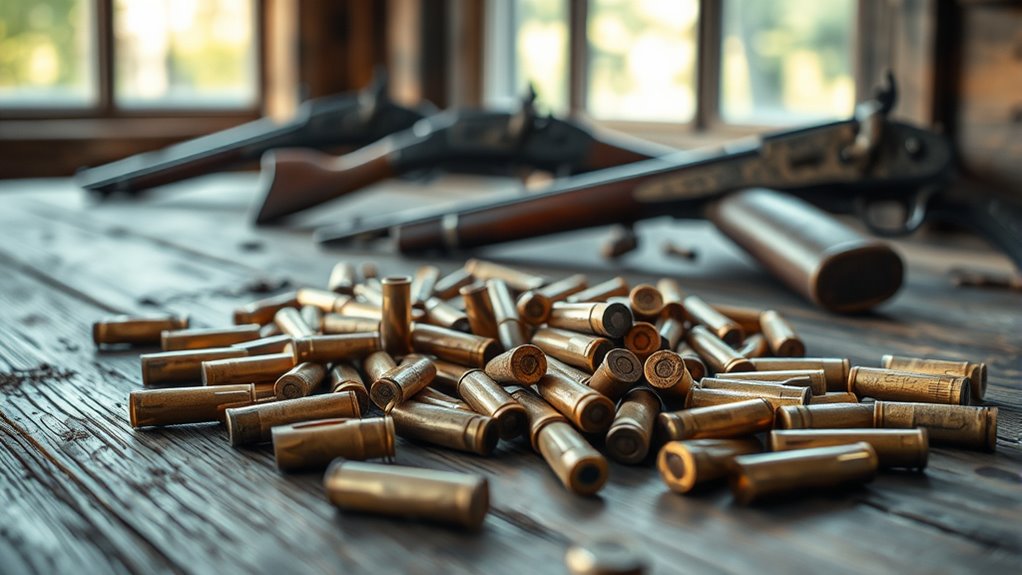
Why Is .44-40 Ammo Hard to Find?
If you’re a shooter or collector trying to find .44-40 ammo, you’re not alone. Many people struggle with locating this vintage caliber because it’s become increasingly scarce.
You might find it hard to locate .44-40 ammo because production has slowed down as fewer manufacturers focus on niche calibers like this one.
Supply chain disruptions and shifting firearm trends also limit availability, with modern guns replacing vintage models that used .44-40.
While some companies still produce it, options are limited, and prices fluctuate.
To uncover more about why it’s so scarce and how to possibly find or make your own, keep exploring.
Key Takeaways
– Production has decreased because fewer manufacturers focus on niche calibers like .44-40.
Modern demand leans toward newer, more popular calibers, which means factories produce less .44-40 ammo.
Supply chain disruptions have also made it harder to get new rounds.
The cartridge isn’t as popular as it once was, so overall market demand has dropped.
This means less manufacturing effort goes into producing .44-40 ammo.
Limited reloading options and sourcing from specialized vendors also make factory rounds harder to find.
Why Is .44-40 Ammo Hard to Find These Days?
Have you wondered why .44-40 ammo has become so difficult to find lately? Several factors contribute to its scarcity.
First, production has slowed as fewer manufacturers make it, mainly because the caliber is considered niche. Modern firearms are less likely to use .44-40, so demand has shifted away from mass production.
Fewer manufacturers produce .44-40 due to its niche status, leading to decreased demand and slower production.
The ammunition industry focuses on more popular calibers, leaving less stock for vintage or specialty rounds like .44-40. Supply chain disruptions, especially recent ones, also reduce availability.
Collectors and shooters who still use old firearms keep some demand alive, but overall, the market shrinks. As a result, you’ll find it harder to locate new .44-40 rounds at local stores or online, making it a rare commodity for enthusiasts today.
A Brief History of .44-40 Ammo
The .44-40 Winchester was developed in the late 1800s to serve both revolvers and rifles, making it a versatile choice for shooters of that era. It gained popularity quickly but eventually saw a decline as newer cartridges emerged and firearms technology advanced.
Understanding its origins and usage helps explain why finding original ammo today is so challenging.
Origins and Development
Introduced in the early 1870s, .44-40 ammo quickly became popular because of its versatility and reliability. It was developed alongside the Winchester Model 1873 rifle, meant for hunting and personal defense.
The caliber was originally based on black powder cartridges used in revolvers, but innovations led to smokeless powder versions that made it more effective. Its design made it easy to switch between rifles and revolvers, which made it a favorite among settlers and cowboys.
Over time, the cartridge’s popularity grew, and it became a standard for frontier firearms. Its development reflects a good balance of power, accuracy, and practicality, which helped it become widely used during America’s westward expansion.
Usage and Decline
As the frontier era progressed, .44-40 ammo stayed popular because it was versatile and effective. But over time, its dominance declined as firearm technology advanced and hunting and self-defense needs changed.
Firearms improved, offering more powerful cartridges and better accuracy, which reduced reliance on the classic .44-40. Hunting rules and self-defense tactics also shifted towards newer, more specialized calibers.
Manufacturers started phasing out production as demand dropped, making it harder to find. Shooting sports moved toward cartridges with better range and stopping power. While the .44-40 remains a nostalgic favorite for collectors and lever-action fans, its practical use has faded.
Today, only a niche market keeps the cartridge alive. Its scarcity makes it increasingly difficult to find in stores.
How Manufacturing Changes Have Reduced Supply
Manufacturing has shifted toward modern, high-volume production methods, making it harder for small-scale operations to stay afloat.
As factories focus on churning out large quantities of popular calibers, niche ammo like .44-40 gets pushed aside.
This change reduces the variety and availability of older or less common cartridges.
Shift to Modern Production
Advancements in production technology have dramatically changed how .44-40 ammunition is made, leading to a decline in its overall availability. Modern manufacturing relies on automated processes and high-precision machinery, which are efficient for mass production but less suited for small batches or niche calibers like .44-40.
Many manufacturers have shifted focus to more popular and profitable calibers, leaving behind older cartridges. Strict safety standards and quality controls favor standardized, high-volume production, making it harder for small-scale or traditional methods to compete.
As a result, fewer factories produce .44-40 ammunition today. This shift to modern, large-scale manufacturing has reduced the variety of available options, making it increasingly difficult for enthusiasts and shooters to find reliable, consistent supplies of .44-40 ammo.
Decline in Small-Scale Manufacturing
The shift toward large-scale, automated production has significantly reduced the number of small manufacturers willing or able to produce .44-40 ammunition. These small shops used to fill niche markets, but automation and economies of scale now favor big factories.
Many small producers shut down as costs increased and profit margins shrank. This decline limits the variety and availability of .44-40 ammo you find today. The table below shows how manufacturing focus shifted over time:
| Year | Production Type | Impact on Supply |
|---|---|---|
| 1920s | Small-scale, artisanal | High variety, low volume |
| 1950s | Factory automation | Reduced small shop presence |
| 2000s | Mass manufacturing | Limited niche ammo options |
| Today | Large-scale only | Scarcity of specialized calibers |
This trend makes it harder for enthusiasts to find authentic, small-batch .44-40 ammo.
Focus on High-Volume Ammo
As the industry shifted toward high-volume production to meet mass demand, smaller manufacturers struggled to stay afloat, and the variety of available calibers like .44-40 diminished. Manufacturers focused on cartridges with broad appeal and higher sales potential, often emphasizing popular calibers like 9mm and .223 Remington.
This change meant fewer production lines were dedicated to niche calibers, including .44-40. Automation and standardization reduced the need for small-batch runs, making it less economical to produce less common calibers.
As a result, supply chains concentrated on high-demand ammunition, leaving less room for specialty calibers. Over time, this shift decreased the availability of .44-40 ammo, making it harder for enthusiasts and collectors to find reliable supply today.
How Firearm Trends Have Affected .44-40 Availability
Firearm trends have greatly impacted the availability of .44-40 ammo in recent years. As the popularity of lever-action rifles and vintage firearms declines, manufacturers focus less on producing ammo for these older guns.
This shift reduces the overall supply, making it harder to find .44-40 rounds. Modern firearm preferences for high-capacity, semi-automatic weapons have also shifted attention away from classic calibers.
Market demand for newer calibers often takes precedence, further limiting .44-40 production. The trend toward hunting and shooting sports that favor modern cartridges also influences availability.
As a result, fewer companies stock or produce .44-40 ammo, creating a tighter market and making it more difficult for enthusiasts to locate this vintage caliber.
Are There Any Current Producers of .44-40 Ammo?
Finding current producers of .44-40 ammo can be tricky, but some manufacturers still cater to enthusiasts. Companies like Winchester, Starline, and CCI produce limited quantities, mainly for specialty markets.
These brands often focus on classic or vintage calibers, making sure there’s some availability for collectors and shooters. However, stock can be sporadic, and prices might fluctuate from time to time.
Here’s a quick look at some producers:
| Manufacturer | Ammo Type | Availability |
|---|---|---|
| Winchester | .44-40 Winchester | Occasionally in stock |
| Starline | Brass cases | Regularly available |
| CCI | Reloading components | Limited supply |
| Buffalo Bore | Premium loads | Specialty markets |
While options are limited, these manufacturers are your best bet for current .44-40 ammo.
How Enthusiasts Can Still Find .44-40 Ammo Today
Though commercial availability remains limited, dedicated enthusiasts can still find .44-40 ammo by being resourceful and strategic. Check online marketplaces, auction sites, or firearm forums where collectors trade rare ammunition.
Networking with fellow enthusiasts can lead you to hidden sources or private sales. Visiting gun shows and antique shops might help you uncover stocked or vintage ammo. Joining online groups focused on lever-action rifles or vintage firearms can connect you with sellers or reloaders.
Finally, consider reaching out to local or regional ammo suppliers who might stock or be willing to special-order small quantities. Staying persistent and well-informed is key to tracking down this elusive ammo.
Can I Reload My Own .44-40 Cartridges?
Can you reload your own .44-40 cartridges? Yes, if you have the right equipment, knowledge, and experience, you can reload .44-40 ammo.
Reloading lets you reuse spent brass, customize loads, and save money, especially since factory ammo can be hard to find.
You’ll need a reloading press, dies specific to .44-40, quality powder, primers, and bullets.
It’s really important to follow precise load data to ensure safety and reliability.
Keep in mind, .44-40 cartridges have unique dimensions and pressure limits, so proper reloading techniques are essential.
If you’re experienced or willing to learn, reloading your own ammo can be a rewarding way to keep your shooting hobby alive.
But always prioritize safety and make sure to consult trusted reloading manuals.
Alternatives to Original .44-40 Ammo for Shooting and Collecting
When original .44-40 ammunition becomes hard to find, shooters and collectors look for good alternatives to keep their firearms working and collections complete.
You might try using modern factory loads like .44 Special or .44 Magnum, with adapters or reduced loads to make them suitable for your firearm.
Reloading your own cartridges with compatible components is another popular option. It allows for customization and can save you money too.
Some companies produce replica or vintage-style ammunition, perfect for collectors wanting authentic-looking rounds.
Using black powder or black powder substitutes can give you a more traditional shooting experience, especially for those interested in history.
Finally, consider shooting different calibers or using firearms with similar characteristics if original .44-40 ammo isn’t available.
Future Outlook: Will .44-40 Ammo Become More Available?
Looking ahead, the availability of .44-40 ammo depends on several factors like manufacturing trends, collector demand, and regulations.
Manufacturers might boost production if more collectors and shooters show interest, especially since vintage firearms remain popular. But since .44-40 is a niche caliber, mass production probably won’t happen unless there’s a big comeback.
Manufacturers may increase production if niche interest grows, but widespread availability remains unlikely without a major revival.
Regulatory changes could either make it easier or harder to get ammo, which would impact supply. If firearm enthusiasts keep seeking original or compatible rounds, suppliers might offer more options.
On the other hand, less interest or tighter rules could limit availability even further. Overall, a small increase in supply isn’t out of the question, but your best bet is to explore reloading or watch specialty suppliers for updates.
Frequently Asked Questions
Is .44-40 Ammo Suitable for Modern Firearms?
Yes, .44-40 ammo is suitable for certain modern firearms, especially those designed for it, like some lever-action rifles and revolvers. However, you need to verify your firearm is chambered for .44-40 since it’s an older cartridge.
Many modern firearms aren’t compatible, so always check your gun’s specifications. If it matches, you can confidently use .44-40 ammo, but availability might be limited.
What Are Typical Prices for .44-40 Ammo Today?
You’ll find .44-40 ammo typically costs between $30 and $50 per box of 50 rounds today.
Imagine hunting for a rare gem — prices fluctuate based on availability and demand, making it feel like a treasure hunt.
Limited production and vintage appeal keep these rounds somewhat elusive, so you can expect to pay a premium when you find them.
Stay patient and shop around; prices can vary like the changing seasons.
Can I Convert Other Calibers to .44-40?
You can’t easily convert other calibers to .44-40 because each cartridge has its own unique dimensions and pressure specs.
Reaming or modifying firearms for different calibers is risky and not recommended unless done by professionals.
Instead, focus on finding original or compatible .44-40 ammunition and firearms.
Custom conversions can be dangerous and might damage your firearm.
For safety and reliability, it’s best to stick with the proper, original calibers.
Are Vintage Firearms Chambered in .44-40 Still Safe to Shoot?
Yes, vintage firearms chambered in .44-40 can still be safe to shoot if you carefully inspect them and have a qualified gunsmith check them out.
Look for signs of corrosion, cracks, or wear that could compromise safety. Regular maintenance and proper cleaning are also essential.
Keep in mind, using modern, high-quality ammunition designed for your firearm helps ensure safer shooting experiences and can help prolong the gun’s lifespan.
Where Can I Find Reliable Sources for .44-40 Reloading Components?
You can find reliable sources for .44-40 reloading components online through well-known retailers like MidwayUSA, Buffalo Arms, and Grafs.
Local gun shops and specialty reloading stores might also carry these items or be able to order them for you.
Joining online forums or firearm communities is a great way to connect with fellow enthusiasts who share tips on where to find quality components.
Always make sure to verify the authenticity and check reviews before making a purchase.
Conclusion
If you’re hoping to find .44-40 ammo, know that it’s become increasingly scarce. Only about 2% of ammo sales today are for vintage calibers like this one.
While manufacturers are limited, enthusiasts still have options through reloading and alternative cartridges. Staying patient and exploring these routes can keep you shooting.
With demand rising among collectors, there’s hope that more .44-40 ammo will become available again someday.