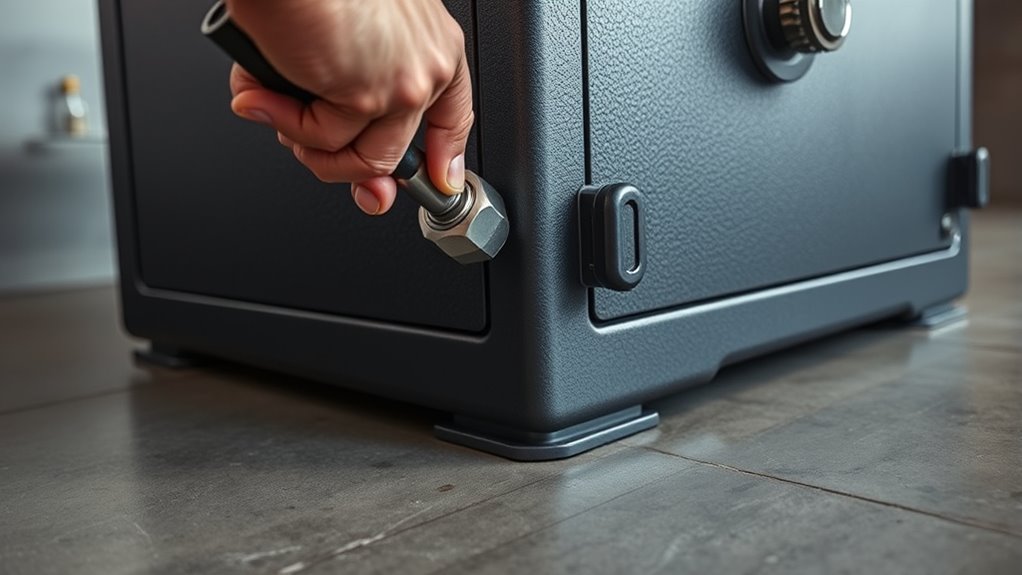
8 Essential Steps to Securely Anchor Your Gun Safe
Many gun owners worry about keeping their firearms secure and out of reach of children or intruders. If you’re like most, you want peace of mind knowing your safe is properly anchored and protected over time.
You’re not alone—securing your gun safe can seem tricky, but with the right steps, it’s straightforward.
To securely anchor your gun safe, start by choosing a discreet, stable location away from moisture and children. Prepare a clean, level surface, and select strong hardware like steel lag bolts or masonry anchors suited for your surface type.
Mark drill points, drill carefully, and tighten the anchors firmly. Regularly check and maintain the hardware to guarantee lasting security. Keep everything tight and rust-free—follow these steps, and you’ll see how to keep your safe protected over time.
Key Takeaways
- Choose a discreet, stable location away from moisture, extreme temperatures, and children for easy access and safety.
- Prepare a flat, solid surface like concrete or reinforced material to ensure secure anchoring.
- Mark drill points accurately, then drill and install heavy-duty anchors like lag bolts or masonry anchors.
- Regularly inspect and tighten hardware, checking for rust, corrosion, or wear to maintain security.
- Keep the area clean and dry. Applying rust inhibitors and lubricant can help ensure long-term stability and protection.
How to Choose the Best Location for Your Gun Safe
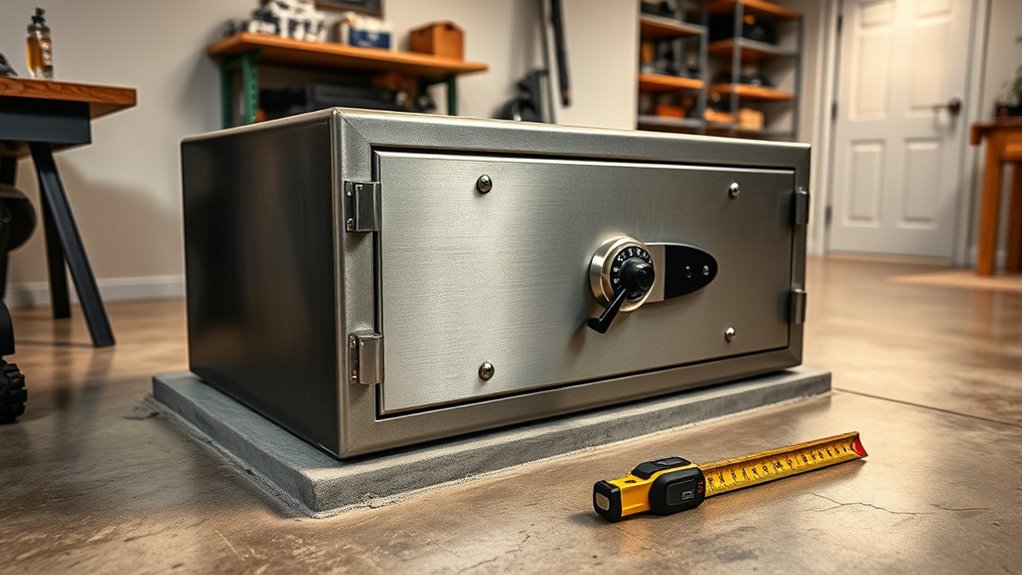
Choosing the right location for your gun safe is essential to guarantee safety, security, and ease of access. You want a spot that’s out of reach of children and intruders but still convenient for you.
Avoid places like closets or behind furniture where access is difficult or visibility is limited. Instead, consider a discreet corner in a secure room, like a basement or a dedicated storage space.
Make sure the area isn’t prone to moisture, extreme temperature changes, or direct sunlight, which can damage your safe or its contents. Think about proximity to your typical firearm use areas so you can quickly access your guns when needed.
Picking the right spot guarantees your safe remains a reliable, protective solution whenever you need it most.
Prepare the Surface for Secure Anchoring
Before anchoring your gun safe, make sure the surface is clean, level, and solid enough to support its weight. A stable foundation helps prevent shifting or tipping over.
Start by clearing away debris, dust, and loose materials so the area is tidy. Check that the surface is flat to avoid gaps that could weaken the anchor.
Make sure the floor or wall is sturdy—concrete or reinforced material works best. Visualize these points: a smooth, dust-free area, an even surface without bumps or dips, and a solid, load-bearing material like concrete or wood.
Ensure the surface is sturdy, flat, and dust-free for a secure, reliable safe installation.
By taking these steps, you’ll ensure your safe is securely anchored. This reduces the risk of accidents or theft.
Proper surface prep is key for a durable, effective anchor that lasts.
Select Hardware to Securely Anchor Your Gun Safe
Once you’ve prepared a sturdy, clean surface, the next step is choosing the right hardware to secure your gun safe. You want strong, durable anchors that can handle the weight and force of potential impacts.
Steel anchors, like lag bolts, are a great choice because they resist corrosion and provide high holding power. Expansion bolts or masonry anchors work well if you’re anchoring into concrete or brick.
Make sure the hardware is long enough to penetrate deeply into the floor or wall for maximum stability. Avoid lightweight or flimsy options that could compromise security.
Using multiple anchors helps distribute the force evenly, reducing the risk of the safe shifting or tipping. Selecting the proper hardware is key to keeping your safe firmly in place.
Follow These Steps to Mount Your Gun Safe Securely
To securely mount your gun safe, start by positioning it where you want it and marking the spots for the anchors. Make sure it’s level and easy to access.
Next, use a pencil to mark the drill points through the pre-drilled holes or onto the surface if needed. Gather your tools: a drill with the right bits, a level, and a wrench.
Carefully drill into your marked spots, being careful not to damage the surface or drill too deep. Visualize a sturdy, immovable safe anchored tightly to the floor or wall.
How to Properly Tighten Anchor Bolts for Maximum Security
Choosing the right anchor bolts is essential to guarantee your safe stays secure. When tightening, use steady, even pressure to avoid damaging the bolts or the safe. Proper technique ensures maximum security and helps prevent loosening over time.
Choose Appropriate Anchor Bolts
Selecting the right anchor bolts is key to keeping your gun safe securely anchored. You want bolts that can handle force and resist pulling out over time.
Think about the material—steel bolts are tough and dependable. The size also matters, so pick bolts that fit your safe’s mounting holes snugly.
If your safe is outdoors, weather-resistant bolts are essential. Picture these bolts securing your safe:
- Thick, sturdy steel that won’t bend or break
- Long enough to penetrate deep into concrete or the floor
- Coated with a rust-resistant finish for longer life
Using the correct bolts ensures your security isn’t compromised. Choosing the right hardware is a crucial first step to keep your safe tamper-proof and firmly anchored.
Ensure Proper Tightening Technique
Properly tightening your anchor bolts is key to making sure your safe stays securely anchored. Use a wrench or socket to tighten each bolt in a crisscross pattern, applying even pressure.
Avoid overtightening, which can crack the safe or strip the threads. Check the manufacturer’s specifications for torque settings and use a torque wrench if you can.
Consistent tightening ensures maximum grip and stability. To help, here’s a quick reference:
| Step | Tip |
|---|---|
| Use the correct tool | Wrench or socket for even tightening |
| Tighten in a pattern | Crisscross for even distribution |
| Follow torque specs | Prevent over or under tightening |
| Check for movement | Make sure the safe doesn’t shift |
| Re-torque after settling | Re-tighten after a few days |
Verify Your Gun Safe Is Securely Anchored
You need to make sure your gun safe is firmly anchored before using it. Check that the anchor bolts are stable and haven’t loosened over time.
Also, verify that the safe’s placement is correct and secure to prevent any shifting or tipping.
Confirm Anchor Stability
Once you’ve finished anchoring your safe, the next step is to check that it’s securely in place. Give it a gentle shake to see if it moves or shifts. Make sure all bolts and straps are tight and properly engaged.
Take a close look at the mounting points and hardware. Check for any looseness or signs of wear or damage around the anchor spots. Visual inspection helps catch any issues early.
Imagine your safe standing firm, barely moving when pushed. The bolts should feel tight against the floor or concrete, with no gaps or wobbling around the anchoring area.
If you notice any movement, tighten the bolts or straps right away. Confirming stability now ensures your safe stays secure during daily use or emergencies.
Check for Proper Placement
To guarantee your gun safe is securely anchored, double-check its placement after installation. Make sure it’s in a spot that’s both accessible and discreet, away from high traffic or moisture-prone areas.
Verify that the safe isn’t wobbling or uneven. It should sit flat and stable on the floor or mounting surface. If you notice any movement, it might mean the anchoring isn’t effective or the surface isn’t suitable.
Adjust the position if needed, ensuring the safe is flush against the wall or floor. Once in place, confirm that all mounting holes line up with the anchor bolts or brackets.
Proper placement not only secures your safe but also makes future access and maintenance easier.
Common Mistakes to Avoid When Anchoring Your Gun Safe
Failing to follow proper anchoring techniques can compromise the safety and security of your gun safe. One common mistake is using weak anchors or bolts that can easily be pulled out or broken.
Another mistake is ignoring the type of surface you’re anchoring into, like drywall or uneven concrete, which might not provide enough stability. Rushing the process without reading the manufacturer’s instructions can also lead to improper installation.
To avoid these pitfalls, make sure to use heavy-duty anchors suitable for your surface. Secure the safe into solid concrete or properly reinforced flooring. And always follow the manufacturer’s instructions carefully for correct placement and tightening.
Maintain Your Anchors for Long-Term Security
Regularly inspecting and maintaining your anchors keeps your gun safe secure over time. Look for rust, corrosion, or wear that could weaken the anchors’ hold.
Tighten any loose bolts or screws right away to prevent shifting or loosening. If you spot damage or deterioration, replace the affected parts immediately.
Keep the area around the anchors clean and free of debris, which can interfere with proper locking. Applying a rust-inhibitor or lubricant can help protect metal parts from corrosion.
Regular maintenance ensures your safe stays firmly anchored, reducing the risk of theft or accidental tipping. Set up a routine inspection schedule, especially if you live in a humid climate or use the safe often.
Proper upkeep guarantees your long-term security and peace of mind.
Frequently Asked Questions
What Types of Floors Are Best Suited for Gun Safe Anchoring?
Concrete floors are the best for gun safe anchoring because they offer a solid, stable surface that can handle heavy weight and resist movement.
If your floor is wooden or carpeted, you’ll need to reinforce it or choose a different anchoring method. Always make sure you drill directly into the concrete or the subfloor beneath.
This way, you’ll maximize stability and security for your safe.
Can I Anchor My Gun Safe to Drywall or Only Concrete and Wood?
You can’t securely anchor your gun safe to drywall alone because it doesn’t have the strength to hold it in place.
Instead, it’s best to attach it to sturdy concrete or wood floors, which provide reliable support.
Concrete offers the most security, but wood can work if you use the right anchors.
In both cases, proper installation ensures your safe stays put, keeping your firearms safe and giving you peace of mind.
How Often Should I Inspect and Re-Tighten the Anchor Bolts?
You should inspect and re-tighten the anchor bolts at least once every six months. Regular checks help ensure the bolts haven’t loosened over time due to vibrations or shifting.
If you notice any wobbling or looseness, tighten the bolts right away. Staying on top of maintenance keeps your gun securely anchored, preventing theft or accidents.
What Safety Precautions Should I Take During the Anchoring Process?
Are you prepared to prevent accidents or theft? Always wear safety goggles and gloves to protect your eyes and hands during anchoring.
Make certain the area is clear of clutter and work on a stable, level surface. Use proper tools and follow the manufacturer’s instructions carefully.
Do you know where your power tools are? Taking these precautions helps guarantee your safety and ensures the safe installation of your gun safe.
Are There Legal Considerations When Anchoring a Gun Safe?
Yes, there are legal considerations when anchoring a gun safe. You need to make sure your safe complies with local laws, which might restrict the type, size, or how you install it.
Some areas require permits or specific security standards. It’s a good idea to check with your local authorities or legal experts to be certain you’re following all the rules.
Properly documenting your safety measures can also help protect you legally and ensure your safe stays compliant.
Conclusion
By anchoring your gun safe with care, you’re creating a stronghold right in the heart of your home. It’s not just about bolts and brackets—it’s about building a shield that stands tall against chaos.
Each step you take weaves security into your space, making sure your valuables stay protected like treasures locked in a vault of resilience.
Stand firm and make sure your gun safe is securely anchored. It’s the best way to ensure your peace of mind and keep what matters safe.