8 Key Differences Between Soft Holster and Hard Holster
Are you tired of struggling with holsters that don’t quite fit your needs? Many people find themselves torn between comfort and security when choosing the right holster for their firearm.
You’re not alone—finding the perfect match can be confusing.
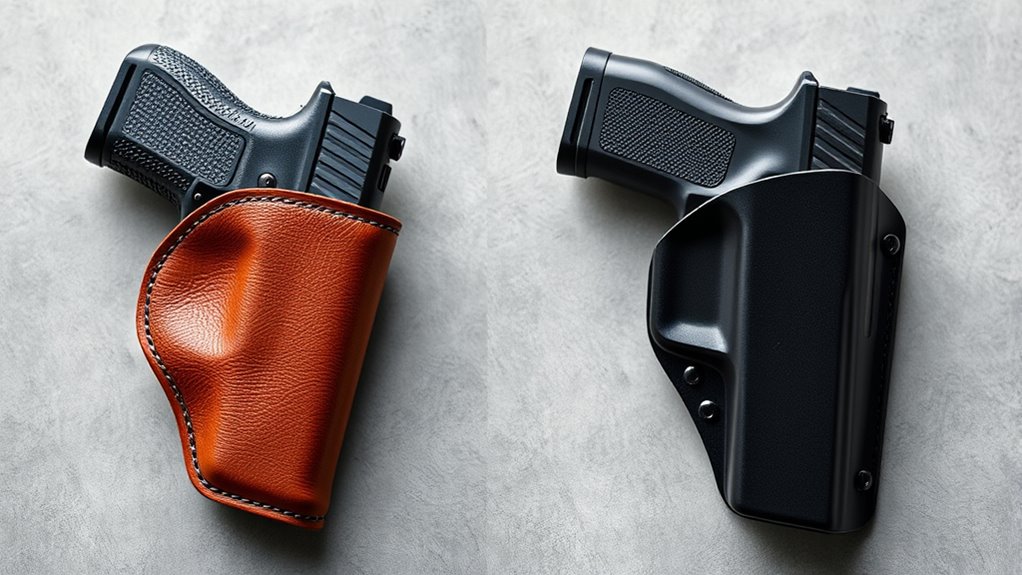
Soft holsters are made from flexible materials like leather, neoprene, or synthetic fabrics, offering a snug, lightweight fit, while hard holsters are crafted from rigid plastics or Kydex for durability and a secure mold.
Soft options are more comfortable and quicker to draw from, but they may wear out faster.
Hard holsters provide better retention and protection, making them ideal for demanding situations.
If you want to know more about these differences, keep exploring the details below.
Key Takeaways
- Soft holsters are made from flexible materials like leather or neoprene, while hard holsters use rigid plastics or Kydex.
- Soft holsters are lightweight and offer a snug fit, making them comfortable for everyday carry. Hard holsters, on the other hand, provide a secure, structured hold that keeps your firearm firmly in place.
- When it comes to durability, hard holsters are more resistant to wear and tear. They tend to last longer compared to softer options that can be more prone to scratches and damage over time.
- Soft holsters allow for quicker and quieter draws. With a soft, flexible material, pulling out your gun is smooth and silent.
- Hard holsters might require a bit more careful handling when re-holstering your firearm. This can help prevent damage, but it may take a little extra effort.
- Budget-wise, soft holsters are generally more affordable and are great for casual carry. Hard holsters tend to be more expensive and are often preferred for demanding or professional situations.
What Materials Are Soft and Hard Holsters Made Of?
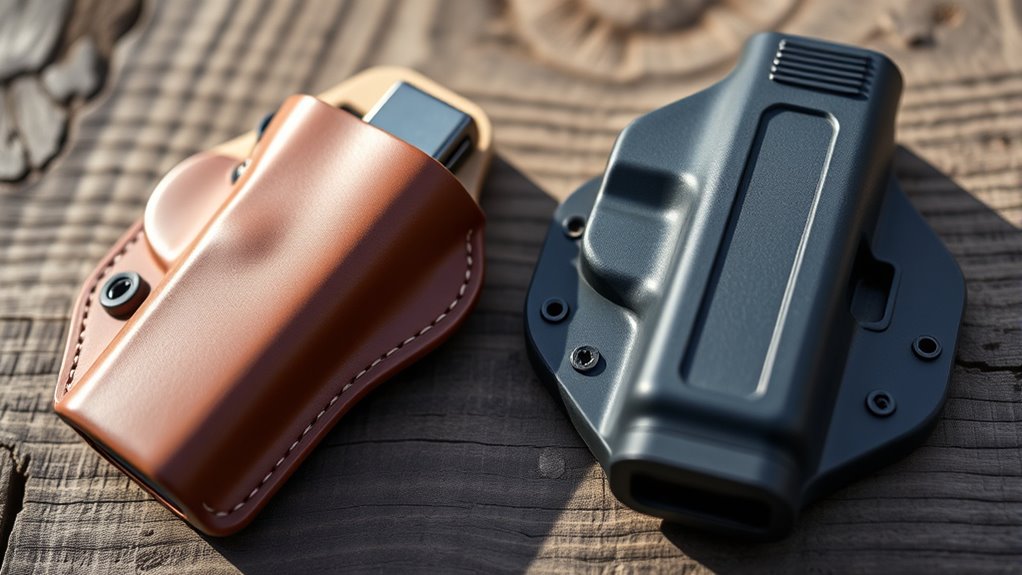
Soft holsters are usually made from flexible materials like leather, neoprene, or synthetic fabrics. These materials easily mold to your body, making the holster comfortable to wear.
Leather is durable and has a classic look, often used in premium holsters. Neoprene is lightweight and flexible, perfect for everyday use or active lifestyles.
Leather offers durability and a timeless appearance, while neoprene provides lightweight flexibility for daily comfort.
Synthetic fabrics like nylon or polyester are affordable, resistant to moisture, and easy to clean. They help the holster conform to your body, providing a snug fit that reduces printing and movement.
Thanks to their flexibility, these materials are great for concealed carry because they offer comfort without sacrificing accessibility. Overall, soft holsters focus on comfort and adaptability through their body-friendly materials.
How Do Soft and Hard Holsters Feel and Fit?
Have you ever wondered how different holsters feel against your body? Soft holsters tend to mold comfortably to your shape, offering a snug, flexible fit that feels natural. They’re usually lightweight and conform easily, making them less noticeable under clothing.
Hard holsters, on the other hand, provide a more rigid, structured fit. They often feel more solid and can create a slight bulk against your body, which might take some getting used to.
Soft holsters are generally gentler, reducing pressure points, while hard holsters offer a firm hold that keeps the firearm securely in place. Your comfort and fit depend on your body shape and preferences.
Durability: Soft vs. Hard Holsters
When thinking about durability, hard holsters usually hold up better to daily use because of their sturdy build. They resist cracking, deformation, and impacts, making them great for frequent use.
Soft holsters, however, tend to wear out faster, especially if handled roughly or exposed to tough conditions. Their materials can stretch or tear over time.
The table below shows the main differences:
| Feature | Soft Holsters | Hard Holsters |
|---|---|---|
| Material | Leather, nylon, fabric | Polymer, Kydex |
| Resistance to Damage | Moderate, prone to wear | High, impact resistant |
| Longevity | Shorter lifespan, needs replacing | Longer-lasting, durable |
Choosing the right one depends on how you plan to use it and the environment you’ll be in.
Retention and Security: Which Holster Keeps Your Firearm Safer?
You want to make sure your firearm stays secure, so the holster’s retention mechanism is really important. Hard holsters usually offer stronger resistance to accidental discharges.
On the other hand, soft holsters can sometimes be less effective at holding the weapon firmly in place. Thinking about how each holster handles retention can help you pick the safest option for your needs.
Retention Mechanism Effectiveness
Retention mechanisms are essential for keeping your firearm securely in place, especially during quick movements or sudden impacts. Soft holsters rely on friction and flexible materials to hold your weapon, which can work well but might wear down over time or with frequent use.
Hard holsters usually have molded retention devices, like trigger guards or locking mechanisms, that offer a stronger grip. They provide better security and reduce the risk of losing or displacing the firearm.
However, hard holsters can sometimes be harder to access quickly when needed. The effectiveness really depends on the quality of the design and your activity level.
Resistance to Accidental Discharge
Hard holsters usually provide better resistance to accidental discharges because their rigid molds and secure locking mechanisms hold the firearm firmly in place. This reduces the chance of unintended trigger access.
Their sturdy construction also minimizes movement, keeping your firearm secure during daily activities. Many hard holsters include active retention systems like thumb locks or trigger guards that need deliberate action to release the gun.
In comparison, soft holsters are more flexible and can shift or loosen, which increases the risk of accidental trigger engagement if you’re not careful. Overall, a hard holster’s design offers better protection against unintentional discharges, especially during high-movement or active situations.
This makes it a safer choice for concealed carry or tactical use.
Drawing and Re-Holstering: Soft vs. Hard Holsters
As far as drawing and re-holstering are concerned, soft and hard holsters each have their strengths. Soft holsters often allow for a quicker, quieter draw and re-holstering. Hard holsters typically provide a smoother process with less noise.
Your choice depends on whether you prioritize speed, stealth, or ease of re-holstering.
Ease of Draw
Drawing and re-holstering a firearm is generally easier with a soft holster because its flexible material allows for quicker grip access and smoother movement. You’ll notice that soft holsters conform to your body, making drawing more natural and faster.
They often require less effort to draw your weapon smoothly. Hard holsters, on the other hand, provide more resistance, which can slow down your draw but offer better retention. Here’s a quick comparison:
| Feature | Soft Holster | Hard Holster | Draw Speed |
|---|---|---|---|
| Material Flexibility | High | Low | Faster |
| Grip Accessibility | Easier | Slightly harder | Quicker grip |
| Retention | Moderate | High | May be slower |
| Movement Fit | Conforms to body | Rigid shape | Smoother movement |
| Draw Control | Less resistance | More resistance | Faster, easier |
Re-Holstering Smoothness
Re-holstering your firearm smoothly really depends on the type of holster you use. Soft holsters are usually easier because their flexible material molds around your firearm, making it simple to slip it back in. You can often re-holster quickly without much fuss, especially if the fit is snug.
Hard holsters, on the other hand, need more careful placement. Their rigid shells can make re-holstering feel awkward or loud, especially if the fit isn’t perfect. You might have to align the firearm just right, which can slow things down.
Noise Level During Draw
Have you ever noticed how some holsters make more noise than others during a draw or re-holstering? Soft holsters usually produce less sound because their flexible material cushions the movement, making the draw quieter. They absorb some of the noise from the weapon sliding out, which makes them great for discreet situations.
In contrast, hard holsters tend to generate more noise due to their rigid structure and tighter fit. When you draw or re-holster a firearm in a hard holster, the metal-on-metal contact can create loud clinks or scraping sounds that might alert others.
If stealth is your priority, a soft holster generally offers a quieter experience. But if durability and retention matter more, a hard holster’s noise level might be a trade-off worth making.
Maintaining Your Holster: Tips for Soft and Hard Options
To keep your holster in good shape, regular maintenance is key, whether you’re using a soft or hard option. For soft holsters, clean them regularly with mild soap and water to get rid of dirt and sweat. Avoid harsh chemicals that could damage the material.
Check for tears or fraying, and replace the holster if needed. For hard holsters, wipe them down with a damp cloth to remove dust and debris. Inspect for cracks or chips, and make sure the retention mechanisms work smoothly.
Lubricate moving parts sparingly to prevent rust and sticking. Always dry your holster thoroughly before storing it. Proper storage in a cool, dry place will help it last longer. Regular upkeep ensures your holster stays functional, safe, and comfortable for daily use.
Best Carry Situations for Soft and Hard Holsters
Choosing the right holster depends largely on your daily activities and carry preferences. If you need quick access and a lightweight option, a soft holster is ideal, especially for concealed carry in casual settings or short trips. It’s flexible, comfortable, and easy to draw from, making it great for everyday errands.
On the other hand, hard holsters excel in situations demanding more retention and protection. This includes outdoor adventures or active pursuits like hiking or sports. They keep your firearm secure and prevent accidental discharges, which is essential in rugged environments.
If you work in security or law enforcement, a hard holster offers added durability and safety. Consider your environment, activity level, and the need for accessibility to choose the best carry situation for each type.
How Do Costs Compare Between Soft and Hard Holsters?
Are soft and hard holsters priced considerably differently? Generally, soft holsters tend to be more budget-friendly, often costing less than hard holsters. Soft holsters are usually made from materials like nylon or leather, which are cheaper to produce.
They’re also more common and widely available, helping keep prices low. Hard holsters, made from rigid plastics or Kydex, usually come with a higher price tag because they’re more durable and custom-molded.
If you’re on a tight budget, a soft holster might be the best choice. But if you want more protection and a secure fit, investing in a hard holster could be worth the extra cost.
Frequently Asked Questions
Are Soft or Hard Holsters Better for Concealed Carry?
Soft holsters are generally better for concealed carry because they’re lightweight, flexible, and easily conform to your body, making them more discreet. Hard holsters offer more protection and retention but can be bulkier and more noticeable under clothing.
If concealment and comfort are your priorities, a soft holster is usually the better choice. But if you want maximum protection, a hard holster might fit your needs better.
Can Soft Holsters Accommodate Different Firearm Sizes Easily?
Yes, soft holsters can accommodate different firearm sizes more easily than hard holsters. Their flexible material allows for some stretching and adjustability, making it simpler to fit various gun models.
This adaptability is especially helpful if you own multiple firearms or plan to switch between different sizes. However, make sure the holster provides a secure fit to prevent movement or accidental dislodging, which is important for safety and accessibility.
Do Hard Holsters Cause More Wear on Firearms Over Time?
Yes, hard holsters can cause more wear on firearms over time. Since they’re made of rigid materials, repeated drawing and re-holstering can lead to scratches, dents, or finish wear, especially if the fit isn’t perfect.
You should regularly inspect your firearm and clean it to minimize damage. Using a soft holster reduces this risk, as it’s gentler on the gun’s surface during handling.
Which Holster Type Offers Quicker Access in Emergencies?
A soft holster generally offers quicker access in emergencies because its flexible material allows for faster draw and easier grip, especially under stress. You can often grip and draw your firearm smoothly without fighting against stiff material.
Hard holsters, while providing more protection and retention, might take a second longer to draw because of their rigid structure. If speed is your priority, a soft holster is usually the better choice.
Are Soft Holsters Suitable for Outdoor or Rugged Use?
Soft holsters aren’t the best choice for outdoor or rugged use because they tend to wear out faster and offer less protection against the elements. You might find yourself chasing rain or dirt, which can compromise your firearm’s safety and your convenience.
For tough environments, a hard holster provides better durability and a snug fit. It ensures your weapon stays secure no matter how rough the terrain gets.
Conclusion
Choosing between a soft or hard holster isn’t just about preferences. It’s about finding the right fit for your needs. Think about how each option aligns with your daily activities and comfort level.
You want a holster that keeps your firearm secure without causing unnecessary fuss. It’s like choosing a trusted companion that quietly supports your routine.
With the right holster, especially the right soft or hard holster, you can move through your day with confidence and peace of mind.