Mastering Aim for Your Glock
Are you struggling to hit your target consistently with your Glock? You’re not alone—many shooters find aiming to be a tricky skill to master. Luckily, with a few simple techniques, you can greatly improve your accuracy and confidence.
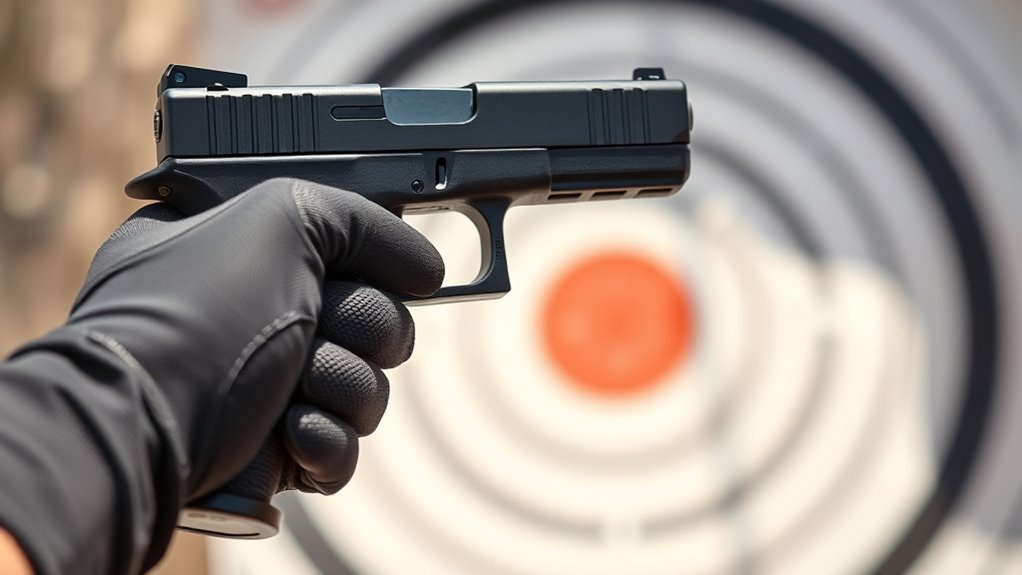
To master your Glock’s aim, focus on proper sight alignment by centering the front sight in the rear notch and keeping the top even with the rear sights.
Adopt a stable stance with feet shoulder-width apart, slightly lean forward, and keep your grip firm but relaxed.
Practice controlled breathing and gentle trigger pulls to improve consistency.
Dry fire drills are also great for building muscle memory and honing your skills.
Keep practicing these techniques, and you’ll uncover even more ways to sharpen your shooting skills.
Key Takeaways
– Focus on proper sight alignment: center the front sight in the rear notch and keep the top level.
Take your time to get this right before pulling the trigger.
– Maintain a stable shooting stance with balanced weight and a relaxed grip for better control.
A good stance helps you stay steady and reduces fatigue during shooting sessions.
– Practice controlled breathing and gentle trigger pulls to enhance shot consistency.
Deep breaths can calm your nerves, and smooth trigger pulls prevent jerking the gun.
– Conduct dry fire drills to develop muscle memory and improve aiming accuracy.
These drills are a great way to practice without wasting ammo.
– Avoid common mistakes like excessive tension, jerking the trigger, or rushing shots.
Staying relaxed and patient will make you a more accurate shooter over time.
How to Master Sight Alignment for Glock Accuracy
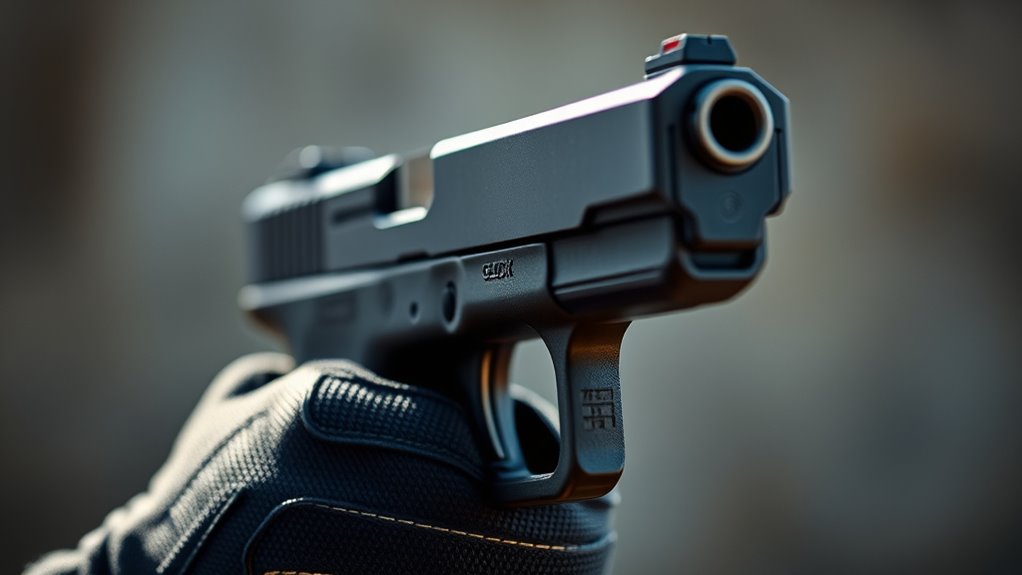
Achieving perfect sight alignment is key to shooting accurately with your Glock. Make sure the front and rear sights are perfectly aligned both horizontally and vertically.
Start by placing the front sight in the center of the rear sight notch. The top of the front sight should be level with the top of the rear sight, and the sides should be evenly spaced.
Center the front sight in the rear notch, ensuring equal side spacing and level top alignment for accurate shooting.
Focus on the front sight, not the target. A sharp focus on the front sight helps you maintain proper alignment. Keep your dominant eye aligned with the sights and avoid tilting the gun, which can throw off your aim.
Regular practice helps build muscle memory. Over time, proper sight alignment becomes automatic, boosting your overall accuracy.
Find the Right Shooting Stance to Improve Stability
The right shooting stance gives you a solid base for better stability and accuracy when firing your Glock. Stand with your feet shoulder-width apart, with your dominant side slightly back for balance.
Keep your knees slightly bent and lean forward just a bit, engaging your core muscles. This stance helps absorb recoil and keeps control during rapid fire.
Distribute your weight evenly on both feet but stay relaxed to avoid tension that can mess with your shot. Grip the gun firmly but not too tight, so you maintain a steady hold.
Your arms should be extended but comfortable, aligning the sights naturally. Practicing this stance consistently will improve your stability and help you shoot more accurately and confidently.
How to Control Your Breathing and Trigger for Consistent Shots
Controlling your breathing helps keep your aim steady, so take slow, deep breaths to stay calm and focused.
When you’re ready to shoot, gently squeeze the trigger without jerking, so your shot stays true to your sight picture.
Practicing these techniques consistently will improve your shot accuracy over time.
Breathing Techniques for Stability
Your breathing pattern plays an essential role in maintaining stability when shooting with your Glock. To achieve steady shots, focus on slow, controlled breaths. Inhale deeply through your nose, then gently exhale, allowing your body to relax.
Just before firing, hold your breath briefly. This pause helps stabilize your aim. Avoid shallow or rapid breathing, which can cause unnecessary movement and reduce accuracy.
Practice rhythmic breathing to build consistency. A common method is inhaling for four counts, exhaling for four counts, then pausing briefly. Keep your shoulders relaxed and avoid tensing up.
Trigger Control Precision
Achieving consistent shots with your Glock depends a lot on timing your trigger pull with your breathing. To get better at trigger control, focus on a smooth, steady press instead of jerking the trigger.
As you breathe out slowly, try to match your trigger pull with the natural pause in your breathing cycle—usually at the bottom of your exhale. Keep your finger lightly resting on the trigger and apply gentle, gradual pressure.
Avoid rushing or pulling too hard, as that can shake your aim. Practice taking controlled, incremental presses, focusing on one shot at a time. Over time, this precise trigger control will become second nature, helping you shoot more accurately and boosting your confidence.
Practice Dry Fire Drills to Improve Your Glock Aim
Practicing dry fire drills is one of the best ways to sharpen your aim with a Glock. They help you focus on trigger control, sight alignment, and grip without worrying about recoil or noise.
Start by setting up a simple target and making sure your firearm is unloaded. Practice steady, controlled pulls on the trigger, aiming for smooth movement without jerking. Using a timer can help you track consistency and improve your speed over time.
Try different scenarios, like aiming at small targets or shifting between multiple targets. Dry fire drills build muscle memory, making your shots more precise during live fire. Regular practice boosts your confidence, improves accuracy, and makes aiming second nature.
Avoid These Common Mistakes That Hurt Your Shooting Accuracy
Many shooters make mistakes that compromise their accuracy without even realizing it. One common error is gripping the Glock too tightly, which causes tension and reduces control. Conversely, gripping too loosely leads to instability and inconsistent shots.
Another mistake is jerking the trigger instead of pressing it smoothly, which disturbs your aim. Poor stance or misalignment also hampers precision; standing unevenly or not aligning your sights properly throws off your shot.
Furthermore, rushing your shots or not focusing on the front sight can cause misses. Finally, neglecting proper breathing control affects steadiness and accuracy.
Recognizing these pitfalls helps you develop better habits. Focus on a relaxed grip, smooth trigger pull, solid stance, and concentration to improve your shooting consistency and overall accuracy.
Applying Practice Techniques in Real-World Shooting Situations
To effectively apply your training in real-world shooting situations, you need to adapt your practice techniques to unpredictable and stressful environments. This means simulating stress and distractions during practice to build resilience.
Adapting training to simulate stress and distractions builds resilience for real-world shooting accuracy.
Focus on maintaining proper grip, trigger control, and sight alignment under pressure. Incorporate these techniques:
- Practice shooting while under timed conditions to mimic adrenaline.
- Use malfunction drills to stay calm and troubleshoot quickly.
- Vary your shooting positions and angles to prepare for different scenarios.
- Incorporate movement, practicing shots while walking or changing stance.
These methods help you develop muscle memory and mental discipline, ensuring you stay accurate and composed when it matters most. Adjusting your training to mirror real-world stressors is key to mastery.
Frequently Asked Questions
How Often Should I Practice to Maintain Optimal Glock Aim?
You should practice your Glock aiming at least two to three times a week to keep your skills sharp. Regular sessions, about 30 minutes each, help build muscle memory and improve your accuracy.
During each practice, focus on maintaining a consistent grip, stance, and sight alignment. If you’re serious about precision, add drills and practice at different distances.
The most important thing is to stay disciplined and make practice a routine. That way, your skills stay reliable and sharp over time.
What Accessories Can Enhance My Glock Shooting Accuracy?
Looking to boost your Glock’s accuracy? Consider adding a quality sight upgrade like fiber optics or night sights. They help you aim precisely in different lighting conditions.
A good trigger upgrade can also improve your control and consistency. Plus, investing in a grip enhancer or custom grip can help stabilize your hold.
Don’t forget, practicing with these accessories is key to maximizing their benefits. Are you ready to take your shooting to the next level?
How Does Grip Strength Affect Aiming and Control?
Stronger grip strength directly improves your aiming and control by providing better stability and reducing recoil. When you grip your Glock firmly, you minimize movement during firing, which helps you shoot more accurately.
A weak grip can cause the gun to shift, making your aim inconsistent. Regular grip exercises like squeezing a stress ball or using grip trainers can help build the strength you need to keep a steady hold.
This, in turn, improves your overall shooting accuracy and control.
Can Diet or Hydration Impact Shooting Performance?
Yes, your diet and hydration can really impact your shooting performance. When you’re well-nourished and properly hydrated, your muscles stay more responsive, which helps reduce fatigue and tremors that can throw off your aim.
Proper nutrition also supports mental focus and alertness, helping you stay calm and precise during shooting. On the flip side, dehydration and poor diet can lead to decreased concentration and shaky hands, making accurate shooting more difficult.
What’s the Best Way to Practice Aiming Under Stress?
You should simulate stress during practice to get better at aiming under pressure. Use drills like quick-fire exercises, timed targets, or stressful scenarios that mimic real-life situations.
Add distractions like noise or movement to help you stay focused. Remember, some might think stress training isn’t needed, but it really sharpens your reflexes and decision-making skills.
Consistent, realistic practice helps you stay calm and focused, so your aim stays steady even when adrenaline kicks in.
Conclusion
Mastering your Glock’s aim is like tuning a fine instrument—you need patience, practice, and attention to detail. I once watched a beginner hit the target consistently after just a few dry fire drills, realizing that precision is a skill you build, not born with.
Keep refining your stance, sight alignment, and breathing, and you’ll find your shots becoming as reliable as a well-tuned engine. With persistence, your Glock aim will improve, and your accuracy will soar—just like that first perfect shot that keeps you coming back for more.