What Is Eye Relief on a Rifle Scope and Why Does It Matter?
Are you tired of struggling with unclear shots or accidentally hitting your scope during recoil? You’re not alone—many shooters find it tricky to get a comfortable and safe shooting experience.
Eye relief on a rifle scope is the distance between your eye and the scope’s lens needed for a clear image. It matters because it helps you shoot comfortably and safely by preventing scope hits during recoil and quick shots.
Proper eye relief also reduces eye strain and improves accuracy.
Whether you choose fixed or adjustable scopes depends on your shooting style.
Keep exploring to uncover how to find the right eye relief for your setup and needs.
Key Takeaways
- Eye relief is the distance between your eye and the scope’s lens needed for a clear, full image.
- Proper eye relief is important for safety. It helps prevent scope hits during recoil or when shooting quickly.
- Many scopes have adjustable eye relief. This gives you flexibility for different shooting positions and makes shooting more comfortable.
- If your eye is too close or too far, you might see black rings, shadows, or experience eye strain. That can also make you less accurate.
- Scopes with longer or adjustable eye relief can be more complex to manufacture and often cost a bit more.
What Is Eye Relief on a Rifle Scope?
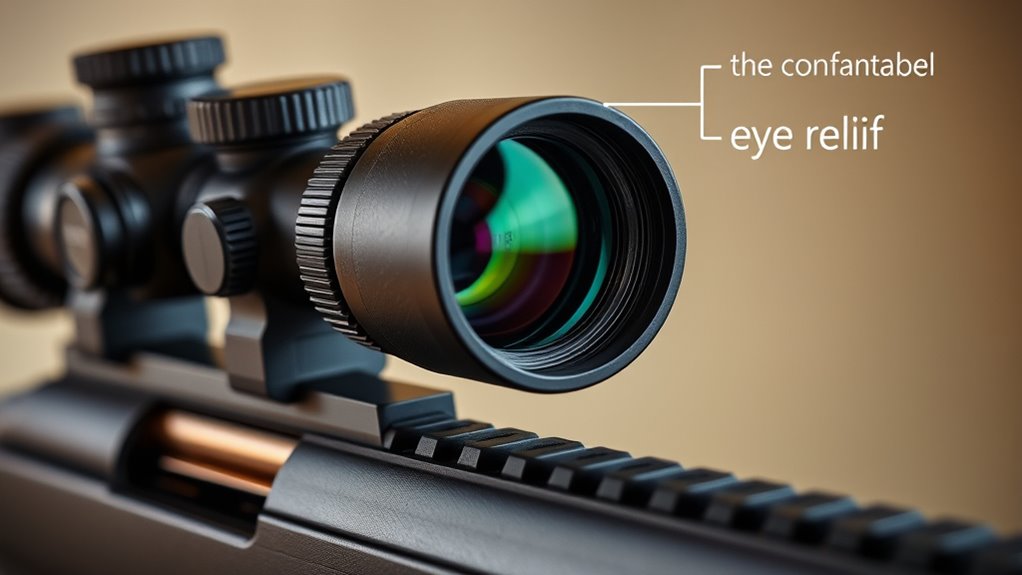
Eye relief on a rifle scope is the distance between your eye and the scope’s ocular lens where you can see the full, clear image. If your eye is too close, the edges of the view might get cut off, and you could bump the scope when firing.
On the other hand, if you’re too far back, the image may look dark or vignetted, making it harder to quickly find your target. Most scopes have an eye relief measurement, usually between 3 to 4 inches.
This distance is important because it affects your comfort and safety when shooting. When you position your eye correctly within the eye relief zone, you get a steady, full sight picture. That helps you aim accurately without strain or discomfort.
Why Eye Relief Matters for Shooting Comfort and Safety
Having the right eye relief helps prevent accidental injuries if you move your face too close to the scope. It also ensures you get a clear sight picture without strain or awkward positioning.
Ultimately, proper eye relief keeps your shooting experience safe and comfortable.
Prevents Accidental Injury
When your eye is too close to the scope, it increases the risk of accidental injury from recoil or sudden movements. Recoil can cause the scope to jerk back unexpectedly, potentially hitting your eye if you’re too close. Proper eye relief creates a safe distance, reducing this risk considerably.
It also helps prevent scope hits during rapid shooting or follow-up shots. Maintaining correct eye relief guarantees you stay clear of sharp edges or lens components that could cause injury.
Ensures Clear Sight Picture
Maintaining the correct eye relief ensures you see a clear, uninterrupted sight picture through your scope. When your eye is positioned properly, the reticle appears crisp and centered, making it easier to aim accurately.
If your eye is too close, the image might be blocked or cut off, which can be frustrating and lead to missed shots. Too far back, and you risk losing sight of the target or seeing a dim, blurry image.
Proper eye relief gives you consistent, sharp visuals, boosting your shooting precision and confidence. It also means less constant readjustment, so you can focus on your shot instead of fighting to see clearly.
Fixed vs. Adjustable Eye Relief Scopes: Which Is Right for You?
Are you trying to decide between fixed and adjustable eye relief scopes? Fixed eye relief scopes have a set distance, offering simplicity and durability. They’re perfect if you like a consistent, no-fuss setup and shoot from a stable position.
Adjustable eye relief scopes, on the other hand, let you change the distance between your eye and the scope, giving you more flexibility. This is especially helpful if you wear glasses, switch shooting positions, or want a customized fit.
Adjustable eye relief scopes offer flexibility for glasses, different positions, and personalized comfort.
However, adjustable scopes can be more complicated and slightly heavier. If your shooting involves different positions or equipment, adjustable eye relief might be the way to go.
For straightforward, stable shooting, fixed scopes are reliable and don’t require adjustments. Choose what fits your shooting style and specific needs best.
How to Find the Best Eye Relief for Your Rifle and Shooting Style
Finding the best eye relief for your rifle depends on your shooting style and comfort preferences. To figure it out, try different distances between your eye and the scope while keeping a clear, full view of the field.
If you like quick target acquisition or shoot at different distances, a longer eye relief gives you more flexibility and safety. For precise shots from a steady position, a shorter eye relief can offer better control and clearer images.
Think about how you mount your rifle—whether prone, standing, or sitting—and adjust your eye relief accordingly. Always make sure your eye is comfortably aligned with the scope without strain.
Practicing different positions and distances will help you find the eye relief that feels natural, safe, and improves your shooting accuracy.
Properly Positioning Your Eye for Optimal Eye Relief
To get the best eye relief, you need to position your eye correctly behind the scope. Keep your eye in the same spot every time to maintain a clear, full view of the reticle.
Adjust your position until it feels comfortable and you see a sharp, unobstructed sight picture. This helps you stay consistent and get the best possible view each time.
Correct Eye Placement
Proper eye placement is key to getting the ideal eye relief on your rifle scope. You want your eye positioned so the entire sight picture stays clear and steady.
To do this, align your eye directly behind the eyepiece, with your forehead or cheek comfortably pressed against the stock. Avoid leaning too far back or forward, as that can cause shadows or blackouts in your view.
Adjust your head until you see the full scope image without any strain or distortion. The goal is to keep a natural, relaxed posture that keeps your eye in the best position.
Consistent placement ensures you get the full field of view, reduces eye strain, and boosts your accuracy when shooting.
Maintain Consistent Position
Maintaining a consistent eye position is key for reliable eye relief and clear sight pictures. Your eye should stay at the same distance from the scope every shot to avoid losing sight of the target or causing eye strain.
Focus on aligning your eye directly behind the eyepiece without moving your head. Use the following table to understand the key positions:
| Position Aspect | Description | Tip |
|---|---|---|
| Head Placement | Keep head straight | Avoid tilting |
| Eye Distance | Maintain consistent distance | Use cheek weld |
| Scope Alignment | Center eye over scope | Stay focused |
| Body Posture | Keep a stable stance | Avoid shifting |
| Repetition | Practice the position | Build muscle memory |
Practicing these habits ensures your eye stays in the right spot for the best eye relief every time.
Adjust for Comfort
Adjusting your eye for comfort is key to getting the best eye relief and a clear sight picture. When you’re properly positioned, you’ll reduce eye strain and shoot more accurately.
Start by gently moving your head and eye until the reticle lines up naturally with your line of sight. Make sure your eye is at a comfortable distance—neither too close nor too far—to avoid blurry images or strain.
Find a position that feels natural and relaxed. This helps with quick target acquisition and consistent shooting. Confirm your cheek weld is stable and consistent, and maintain a relaxed, natural head position.
Adjust your scope’s eye box if needed, and consider using a cheek pad or stock adjustment for extra comfort. Regularly verify your position during long shooting sessions to stay comfortable and focused.
Signs Your Scope’s Eye Relief Needs Adjustment
If your eye relief is off, you’ll notice it almost immediately when shooting. One clear sign is having trouble getting a full, clear sight picture—the image might look cut off or blurry.
If you find yourself pressing your eye too hard against the scope or moving your head into awkward positions, that’s a sign your eye relief isn’t set right. You might also feel eye strain, discomfort, or suddenly lose the sight picture when shooting.
Shadows or black rings around the edges of your view suggest your eye isn’t aligned with the scope’s eye box. Fixing these issues will help you shoot more accurately and comfortably.
How Eye Relief Affects Scope Cost and Design Choices
The design of a scope with adjustable eye relief can increase manufacturing costs and complexity, which often raises the price for you. Fixed eye relief models tend to be simpler and cheaper but limit your flexibility and comfort.
Your choice of eye relief ultimately affects both the scope’s price and how well it fits your shooting style. Adjustable options offer more comfort but come with higher costs, while fixed options are more budget-friendly but less adaptable.
Manufacturing Complexity and Cost
Designing a rifle scope with ideal eye relief involves balancing complexity and cost because the distance directly impacts the internal lens arrangement and overall manufacturing.
Longer or adjustable eye relief requires more sophisticated lens systems, which increases production complexity. This can lead to higher costs due to extra materials and tighter tolerances.
Precise alignment is critical to ensure consistent performance across different shooting positions. Variations in eye relief often need specialized components or mechanisms, adding to assembly time and expense.
Maintaining durability while including these features influences manufacturing choices. More lens elements for flexibility, tighter tolerances, adjustment mechanisms, premium materials, and complex assembly procedures all contribute to the overall complexity and cost.
Design Flexibility Limits
Eye relief requirements place significant limits on scope design flexibility because they restrict how the optical system can be arranged. To get the right eye position, manufacturers need to carefully choose lens placement, tube length, and reticle positioning.
These constraints make innovative design options more difficult, often leading to increased complexity and higher costs. For example, scopes with longer eye relief need larger, more precise lenses, which can drive up manufacturing expenses.
The table below shows how different eye relief ranges impact design choices:
| Eye Relief Range | Optical Arrangement Constraints | Cost Implications |
|---|---|---|
| Short | Compact, tighter lens placement | Lower material costs |
| Moderate | Balanced design flexibility | Moderate costs |
| Long | Larger lenses, complex mounts | Higher expenses |
User Compatibility and Comfort
When a scope’s eye relief is longer, it directly affects user comfort and compatibility, often requiring more careful design choices. Longer eye relief gives you more flexibility, making it easier to shoot from different positions and move your head around.
But keep in mind, it can also make manufacturing more complex and expensive. Optical components need to be optimized for safety and clarity at longer distances, which can drive up costs and add bulk to the scope.
Scopes with longer eye relief usually:
- Offer better safety margins for your eye
- Need larger or more advanced lens systems
- Tend to be heavier and bigger overall
- Require very precise manufacturing tolerances
- Affect pricing and how the scope is marketed
Knowing these points helps you pick a scope that balances comfort, performance, and your budget.
Common Mistakes When Setting Up Eye Relief
One common mistake shooters make when setting up eye relief is not finding a consistent position that gives a clear, full field of view. If your eye isn’t in the right spot, you might see blackouts, tunnel vision, or experience eye strain. Moving your head just a little can distort the image or make it disappear, which hurts your accuracy.
Another mistake is forgetting to adjust the scope’s eye relief whenever you change shooting positions or gear. If your eye is too close or too far from the scope, it can mess with clarity and even be unsafe. Take the time to find a comfortable, repeatable position that offers an unobstructed view.
Make sure to regularly check your eye placement to keep your sighting consistent and clear. This helps avoid discomfort and ensures your shots stay accurate.
Troubleshooting Blackouts and Eye Strain During Shooting
Blackouts and eye strain during shooting often happen because of improper eye relief or inconsistent positioning. This can cause the scope’s image to shift or disappear. To troubleshoot, start by making sure your eye is at the right distance and consistently aligned with the scope.
Check for any obstructions or dirt on the lenses that could interfere with clarity. Adjust your stance and head position to keep a steady, comfortable view. Consider these factors:
- Verify proper eye relief for your scope model
- Maintain consistent head positioning
- Keep lens surfaces clean from dirt or smudges
- Use eye cups or shields to block glare
- Adjust scope brightness to reduce eye strain
Fixing these issues will help stabilize the image and make shooting more comfortable.
How Eye Relief Impacts Safety During Recoil and Rapid Fire
Maintaining proper eye relief isn’t just about comfort; it’s crucial for safety during recoil and rapid fire.
If your eye is too close to the scope, the recoil could cause the scope to hit your face, leading to injury.
On the other hand, if your eye is too far back, you risk losing the sight picture, which can cause missed shots or accidents.
During rapid fire, the sudden movement and recoil make these risks even higher.
Having the right eye relief helps you stay in control and keeps the scope safely away from your face.
It also helps you stay focused on your target and reduces the chance of scope-related injuries.
Proper eye relief is key to shooting confidently and safely, especially during high-volume or aggressive shooting sessions.
Tips to Improve Your Shooting Experience With Correct Eye Relief
To improve your shooting experience, making sure you have the correct eye relief is key. It directly impacts your comfort and accuracy on the range or in the field. Adjust your scope so your eye is at the right distance—not too close, not too far.
Consistent positioning helps you keep a clear, full view through the scope and reduces eye strain. Regularly check and tweak your scope’s eye relief whenever you change shooting positions.
Use a stable cheek weld to keep your eye aligned properly. This makes it easier to maintain the right eye relief every shot. Also, consider investing in scope mounts that allow fine-tuning of eye relief for even better precision.
Practice your shooting stance to ensure you can repeat your position easily. Lastly, keep your scope lenses clean and properly aligned for the best clarity and performance.
Final Tips: Ensuring Comfort, Accuracy, and Safety With Your Scope
Ensuring comfort, accuracy, and safety while using your scope involves paying attention to a few essential details. First, always maintain proper eye relief to prevent strain and injury. Adjust your scope so your eye naturally aligns with the lens without forcing your head into an uncomfortable position.
Regularly check that your scope is securely mounted to avoid shifts during shooting, which can affect accuracy. Practice proper breathing and trigger control to improve precision.
Keep your scope clean and free of dirt or smudges so you have a clear view. Finally, wear appropriate eye protection and be mindful of your surroundings. These small steps make your shooting experience safer, more precise, and more comfortable every time you take aim.
Frequently Asked Questions
How Does Eye Relief Influence Scope Magnification?
Eye relief doesn’t directly influence scope magnification, but it does affect your shooting comfort and safety. When you have the right eye relief, your eye stays at the proper distance from the lens, giving you a clear, full sight picture.
If your eye relief is too short or too long, it can cause vignetting or make the image cut out. This makes it harder to see your target clearly, especially when you’re using higher magnifications.
Can Eye Relief Affect Long-Term Eye Health?
Yes, improper eye relief can harm your long-term eye health. If your scope is too close, it may cause eye strain or discomfort, which could lead to issues over time.
On the other hand, having too much distance can force you to adopt awkward shooting positions, increasing fatigue. Always double-check that your eye relief is correctly adjusted.
This helps you avoid unnecessary strain and protects your vision during long shooting sessions. Comfort and correct setup are key to maintaining good eye health.
Is Eye Relief the Same for All Rifle Types?
No, eye relief isn’t the same for all rifle types. It varies depending on the rifle’s design, scope mounting, and your shooting style.
For example, shotguns often need longer eye relief for safety and comfort. Rifles may require shorter distances for better precision.
You should choose a scope with eye relief that matches your rifle and how you shoot. This helps ensure safety and gives you a clear, comfortable view.
How Do Weather Conditions Impact Eye Relief Adjustments?
Weather conditions can really shake up your eye relief adjustments, almost like turning your scope into a wild roller coaster ride.
When it’s windy, rainy, or humid, your scope might shift slightly, so you’ll need to tweak the eye relief more often.
Cold weather makes metal contract, which can make adjustments tricky, while heat causes expansion.
Always double-check your eye relief in changing weather to stay accurate and safe during your shots.
What Are the Best Tools to Measure Proper Eye Relief?
To measure proper eye relief, you should use a caliper or a transparent ruler. Place the tool against the rear lens of your scope and carefully adjust your position until your eye is comfortably aligned with the eyepiece.
Mark the distance between your eye and the scope, making sure it matches the manufacturer’s recommended eye relief. This helps you get a clear, full sight picture without straining or risking injury.
Conclusion
Getting your eye relief right is like finding the perfect fit for a glove. It guarantees comfort, improves accuracy, and keeps you safe during recoil.
By understanding your scope’s eye relief and positioning yourself correctly, you’ll shoot more confidently and avoid those frustrating blackouts or strain.
Remember, a little adjustment can make all the difference. It can turn your shooting experience from a shaky start into a smooth, enjoyable ride.
Knowing about eye relief on a rifle scope is key to a better shooting experience.