10 Factors That Affect How Much It Costs to Move a Gun Safe
Moving a gun safe can feel overwhelming, especially when you’re trying to keep costs down. Many people struggle with figuring out what factors influence the total price and how to plan accordingly. You’re not alone in this — understanding these key elements can make your move smoother and more affordable.
Your moving costs depend on several factors, like the size and weight of your safe, which determine the equipment needed. The distance you’re traveling affects fuel and labor expenses, while access points like narrow doorways or stairs can add complexity.
Hidden fees, such as permits or insurance upgrades, may surprise you.
Also, whether you hire professionals or do it yourself impacts costs. To get a clear estimate and save money, consider these elements carefully as you plan your move.
Key Takeaways
- The size and weight of the gun safe really matter when it comes to moving costs. Heavier and bigger safes require special equipment and more labor, which can drive up the price.
- Accessibility is another big factor. Narrow doorways, stairs, or tight spaces can make the move more complicated. That can mean extra time and effort, adding to the overall cost.
- The distance between your current location and the new one is important too. Longer trips usually cost more because of transportation expenses.
- If the safe needs disassembly or special handling, that can also increase the price. Custom equipment or extra work can add to the total bill.
- And don’t forget about insurance. High-value safes may need extra coverage, which can come with additional fees or premiums.
What Should You Check Before Moving Your Gun Safe?
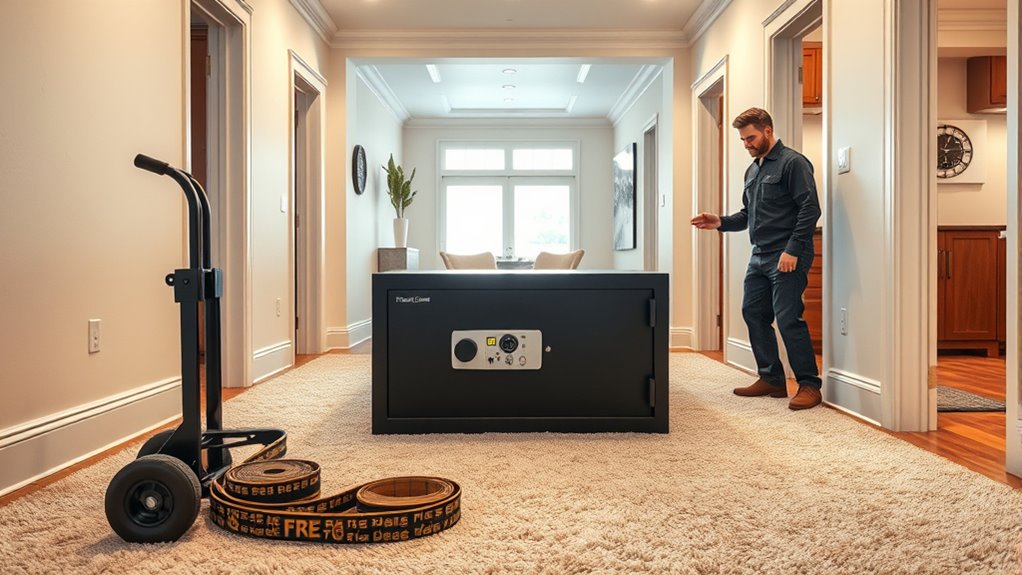
Before you start moving your gun safe, take a good look at the area and the safe itself to make sure everything goes smoothly. Check the path you’ll take and clear out any obstacles like furniture, rugs, or debris that could cause trips or make the move harder.
Measure doorways, hallways, and stairwells to make sure the safe can pass through without trouble. Also, inspect the safe for any damage or loose parts, and fix or secure them if needed.
Think about the weight and size of the safe. Larger or heavier models might need special equipment or extra help. Plan your route carefully, paying attention to tight corners or narrow spaces.
Taking these steps now will help prevent accidents, damage, or delays during the move.
How Do Size and Weight Affect Moving Costs?
The size and weight of your gun safe directly impact the overall cost of moving it. Heavier safes require more effort, specialized equipment, and extra labor, which can drive up expenses. Larger safes also need more space in trucks and need to be handled carefully to avoid damage.
To give you an idea, here’s a quick breakdown:
| Safe Size | Typical Weight | Cost Implication |
|---|---|---|
| Small | Up to 200 lbs | Lower moving costs |
| Medium | 200-400 lbs | Moderate costs |
| Large | 400+ lbs | Higher costs due to complexity |
As you can see, bigger and heavier safes tend to cost more to move. Be prepared for potential extra charges if your safe is particularly bulky or heavy.
What Are the Best Transportation Options for Heavy Safes?
When moving a heavy safe, choosing the right transportation options is essential. You’ll need professional moving services, specialized equipment, and the appropriate vehicle to handle the weight safely.
Understanding these options helps guarantee your safe arrives securely and efficiently. It’s all about planning ahead and making sure everything is up to the task.
Professional Moving Services
Transporting a heavy gun safe requires specialized expertise to guarantee safety and prevent damage. Professional moving services are your best option, offering trained personnel who understand proper handling techniques.
These experts have experience maneuvering tight spaces, stairs, and doorways, reducing the risk of accidents or damage. They also bring the right equipment, like dollies and straps, to ensure safe lifting and secure transport.
Hiring professionals can save you time and effort while giving you peace of mind, especially for larger safes that are hard to move alone. Plus, reputable moving companies often carry insurance, protecting you financially if anything goes wrong.
Equipment and Tools Needed
Moving a heavy safe requires the right equipment to ensure safety and prevent damage. To make things easier, invest in essential tools.
First, a heavy-duty dolly or hand truck can help move the safe without putting strain on your back. Second, straps or ropes will keep the safe secure during transport, so it won’t shift around.
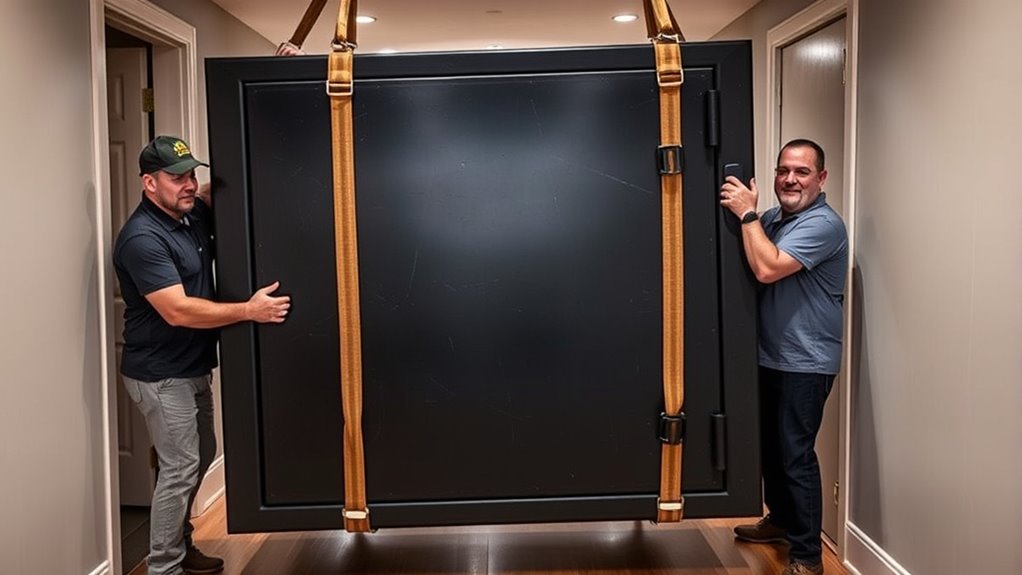
Third, furniture sliders can reduce friction and protect your floors when sliding the safe across surfaces. Finally, lifting straps or harnesses are great for lifting and balancing the safe, especially when navigating stairs or tight spots.
Using these tools correctly minimizes the risk of injury and prevents damage to your property. Always check that your equipment is rated for the weight of your safe and follow safety guidelines to avoid accidents.
Having the proper tools makes the move safer and more efficient.
Transportation Vehicle Options
Choosing the right transportation vehicle is key to safely moving a heavy safe. A truck or van with a flatbed is often the best choice because it offers stability and plenty of space.
For extremely heavy safes, consider renting a specialized moving truck with a liftgate. This makes loading easier and reduces the risk of damage or accidents.
Make sure the vehicle you choose has enough weight capacity to handle the safe safely. Overloading can cause damage or safety issues during transport.
| Vehicle Type | Best For | Key Feature |
|---|---|---|
| Box Truck | Heavy safes, tight spaces | Reinforced flooring, liftgate |
| Flatbed Truck | Very heavy safes | Easy loading and unloading |
| Moving Van | Medium to large safes | Versatile with accessible doors |
Choose wisely to ensure safety and prevent damage during your move.
How Far Are You Moving Your Gun Safe?
Ever wonder how the distance you’re moving your gun safe impacts the process? The farther you go, the more it can cost and complicate the move. Short distances, like moving within the same property or neighborhood, usually mean lower costs and easier logistics.
Longer distances make gun safe moves more costly and complex.
Longer distances, such as interstate moves, increase expenses because of transportation and planning. Here are four ways distance affects your move:
- Transportation Costs. Longer distances require more fuel and time.
- Labor Expenses. Extended moves may need more people or longer hours.
- Permits and Regulations. Moving across states can involve legal requirements.
- Risk of Damage. Longer distances increase exposure to potential mishaps.
Understanding these factors helps you plan and budget accordingly for your gun safe move.
How Much Help Will You Need to Move Your Gun Safe?
The size and weight of your gun safe really influence how much help you’ll need. If it’s large or heavy, you’ll probably want extra people and the right equipment to move it safely.
Your experience with moving heavy objects is important too. Know when to ask for help or consider hiring professionals to get the job done right.
Weight and Size Considerations
Moving a gun safe can be a challenging task, especially when you consider its weight and size. Larger and heavier safes require more effort, equipment, and sometimes multiple people to handle safely.
You’ll need to think about the safe’s weight. Heavier safes often need special tools or equipment.
Dimensions are also important. Larger safes may not fit through doorways or stairwells easily.
Space for maneuvering matters too. Tight hallways or narrow stairs make moving the safe more difficult.
Don’t forget about the equipment needed. Dollies, straps, or moving pads are essential for safe handling.
Knowing these factors helps you decide whether you can move the safe yourself or if you should hire professionals.
Proper planning guarantees safety and helps prevent damage to your property.
Moving Experience Needed
Handling a gun safe often requires more help than you might expect, especially if it’s heavy or bulky. If you’ve never moved such a large item before, you’ll likely need at least one or two strong helpers.
Attempting to move it alone can lead to injuries or damage to the safe or your property. Experience in lifting and maneuvering heavy objects makes a difference, as proper technique reduces strain and risk.
If you lack the necessary strength or experience, hiring professional movers is a smart choice. They know how to navigate tight spaces, stairs, and doorways safely.
Even with help, moving a gun safe is physically demanding, so don’t underestimate the effort required. Planning ahead and knowing your limits will help guarantee a safe, smooth move.
Equipment Required for Transport
Transporting a gun safe requires specific equipment to guarantee safety and minimize damage. Without the right tools, you risk injury or damaging the safe and property.
Essential equipment includes:
- Heavy-duty dollies or hand trucks designed for weight
- Moving straps or harnesses to distribute weight evenly
- Furniture sliders to ease sliding across floors
- Protective padding or blankets to prevent scratches and dents
Having these tools makes the move safer and more efficient. It’s also important to have enough help—moving a heavy, bulky safe alone is risky. Usually, at least two people are needed, but larger safes might require more. Proper equipment reduces strain and helps prevent accidents, ensuring your move is smooth and damage-free.
What Equipment Do You Need for Safe Moving?
To move a gun safe safely and efficiently, you’ll need the right equipment to handle its weight and size. Start with heavy-duty furniture dollies or hand trucks designed for moving large, bulky items.
Straps or lifting belts help secure the safe during transport and give you extra support. Moving blankets or padding protect the safe’s surface from scratches and damage.
If stairs or uneven terrain are involved, consider using a stair dolly or moving straps to distribute weight evenly. Heavy-duty gloves improve grip and safety.
Finally, securing the safe with ropes or straps helps prevent shifting during transit. Having the proper equipment makes the move safer, reduces injury risk, and minimizes potential damage to your property.
How Do Access Points and Moving Routes Impact Costs?
The layout of your property and how accessible entry points are can really affect the total cost of moving a gun safe. If doorways are narrow or blocked, movers might need special tools or make extra trips, which can bump up the price.
Narrow doorways and blocked paths can increase costs when moving a gun safe.
Difficult terrain like stairs, ramps, or uneven ground also makes the job more complicated. These obstacles can slow things down and require additional effort.
Think about factors like narrow hallways or limited access points that force movers to find alternative routes. These situations can add time, effort, and sometimes extra labor, all increasing your costs.
Planning ahead can help you avoid unexpected expenses and make the move smoother and more affordable.
What Hidden Fees Should You Watch Out For?
Watch out for unexpected permit or license fees that might come up during your move. These can unexpectedly add to your costs.
You might also face hidden insurance charges that aren’t included in the initial quote.
Staying aware of these potential fees helps you avoid surprises and keeps your move on budget.
Unexpected Permits or Licenses
Unexpected permits or licenses can catch you off guard and rack up hidden fees during your move. Many states or local areas require special permits for transporting heavy or secure items like gun safes. Not securing these can lead to fines or delays. Here are four common issues to watch out for:
- Transport Permits. Some areas need special authorization for moving large safes through public roads.
- Storage Licenses. If you plan to temporarily store the safe, you might need a license for secure storage.
- Restricted Route Permits. Certain routes may require extra permissions, which can increase costs.
- Local Regulations. Some regions have specific laws about firearm or safe transportation, adding unexpected hurdles and fees.
Always check local regulations beforehand to avoid surprises.
Hidden Insurance Costs
Even after securing permits and understanding local regulations, there are often hidden insurance costs that can catch you off guard during your move. Many moving companies include basic insurance, but this coverage might not fully protect your gun safe or its contents.
You could be surprised by extra fees if your safe has a high value or unique features requiring special coverage. Some companies charge additional premiums for high-value items or for moving safes up stairs or through narrow doorways.
Also, verify if your homeowner’s insurance offers any coverage during the move. If not, you may need to purchase separate transit insurance. Always ask for a detailed insurance breakdown upfront to avoid unexpected expenses and ensure your valuable safe is fully protected throughout the move.
How Do Professional Movers Charge for Gun Safe Relocation?
Professional movers usually determine their charges for relocating a gun safe based on a few key factors. These include the size and weight of the safe, how complex the move is, and the distance between your current and new location.
Your total cost will depend on these elements and how challenging the move turns out to be. Here are four main factors that can influence the price:
- Size and weight of the safe – Larger and heavier safes need more effort and special equipment.
- Accessibility of the location – Narrow doorways or stairs can make the move more difficult and take extra time.
- Distance traveled – Moving the safe over a longer distance usually costs more for transportation.
- Additional services needed – Disassembly, reassembly, or specialized tools can add to the overall cost.
Knowing these factors can help you plan your move better and get an idea of what to expect price-wise.
How Can You Save Money When Moving Your Gun Safe?
Moving a gun safe doesn’t have to break the bank if you plan carefully and look for cost-saving options. First, consider doing some prep work yourself, like emptying the safe and disassembling parts if possible. This reduces the weight and makes the move easier.
Compare quotes from different professional movers to find the best deal, and ask if they offer discounts for off-peak days or multiple items. Renting moving equipment or a truck might be cheaper than hiring full-service movers.
Enlisting friends or family to help can also cut costs, but make sure everyone stays safe. Finally, move the safe during less busy times for movers, which might lower the price. Smart planning can really help reduce your moving expenses.
Frequently Asked Questions
Are There Legal Restrictions on Moving Gun Safes Across State Lines?
Yes, there are legal restrictions when moving gun safes across state lines. You need to follow federal and state laws, including federal firearm regulations and specific state transportation rules.
Some states might require you to declare firearms or safes at border crossings or have particular storage rules. It’s important to check the laws of both states before you move.
Doing your research helps ensure you follow all legal requirements, so you avoid fines or legal trouble. Always make sure you’re aware of the rules to stay compliant.
How Does the Type of Flooring Affect Moving Costs?
The type of flooring really affects your moving costs. Hard surfaces like concrete or tile are easier to navigate with dollies and moving equipment, which can save you time and effort.
Carpeted floors tend to cause more friction, making the move more labor-intensive. You might also need extra protective gear or padding to prevent damage.
If your flooring is delicate or uneven, expect to pay more. That’s because it takes more care and specialized equipment to avoid causing damage.
Can Insurance Cover Damage During Safe Relocation?
A stitch in time saves nine, so it’s wise to check your insurance coverage. Insurance can cover damage during safe relocation if you have a policy that includes moving or valuables coverage.
You should review your policy details or talk to your provider beforehand. Keep in mind, some professional movers also offer insurance options.
Always document the safe’s condition before moving to guarantee you’re protected.
What Is the Average Time Required to Move a Gun Safe?
On average, moving a gun safe takes about 2 to 4 hours, depending on its size, weight, and the distance involved.
If you’re moving a particularly heavy or large safe, it might take longer, especially if there are obstacles or stairs.
You should also factor in time for preparation, like securing the safe and planning the route.
Hiring professionals can streamline the process, making it quicker and safer.
Do Moving Companies Offer Specialized Equipment for Safe Transportation?
Yes, moving companies do offer specialized equipment for safe transportation. Imagine a crew carefully maneuvering your heavy gun safe with dollies, straps, and reinforced padding designed to handle its weight and size.
They often use custom carts and lift systems that prevent damage and ensure safety. This specialized gear helps move your safe efficiently, minimizes risks, and guarantees your valuables arrive intact, giving you peace of mind during the process.
Conclusion
Moving your gun safe is like navigating a tricky maze—you need to consider size, distance, and obstacles to find the easiest route.
Checking access points, understanding costs, and choosing the right help can help you avoid hidden fees and surprises along the way.
Planning ahead is your map, guiding you through the twists and turns of safe relocation.
With the right approach, you’ll move your gun safe safely and efficiently, just like confidently finding your way out of a maze.
Remember, the cost to move a gun safe depends on many factors, so being prepared makes all the difference.