What Should You Know About Carrying a Concealed Weapon in a Bank?
Carrying a concealed weapon into a bank is a concern many gun owners face. You’re not alone in wondering about the rules and safety precautions involved. Knowing the legal and bank-specific restrictions can feel overwhelming.
When carrying a concealed weapon into a bank, you need to know that laws vary by state and bank policies may be stricter. Always check for posted signs indicating gun restrictions and confirm your firearm is fully concealed and secured.
Be aware that some states or banks prohibit concealed carry altogether. Staying informed about legal restrictions and bank rules helps you avoid fines or legal trouble.
If you want to understand how to carry responsibly and safely, keep going.
Key Takeaways
- Check if the bank explicitly allows concealed weapons; many places prohibit firearms entirely.
- It’s important to know your state’s laws about carrying a concealed weapon in private property and banks.
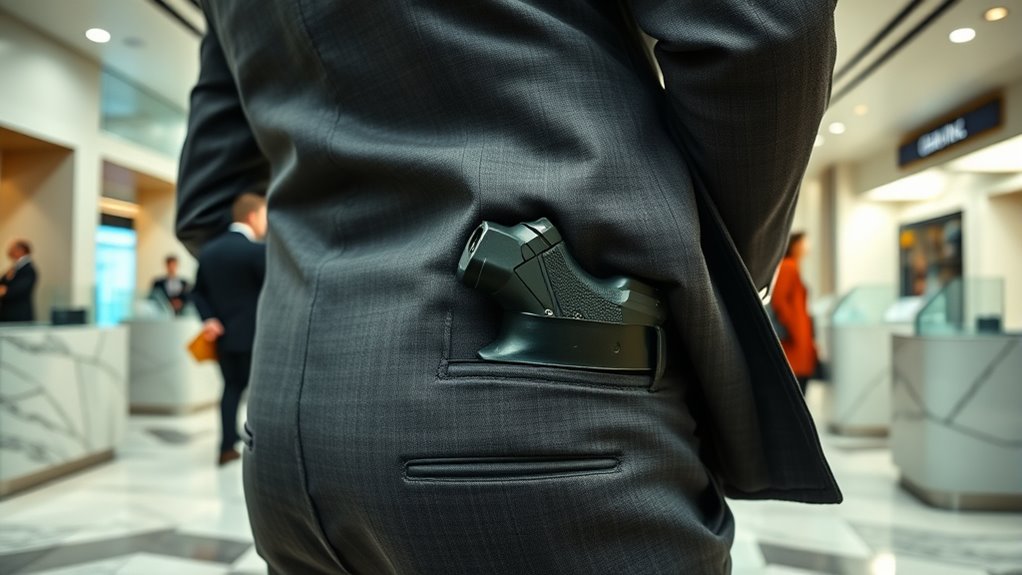
- Make sure your weapon is fully concealed and securely holstered at all times while you’re inside the bank.
- Pay attention to posted signs and follow the bank’s policies to avoid any legal issues or being asked to leave.
- If security or staff ask you to leave or to disarm, stay calm and respond safely.
What Are the Laws About Carrying a Concealed Weapon Into a Bank?

Are there specific legal restrictions on carrying a concealed weapon into a bank? Yes, laws vary by state, but generally, banks are considered private properties where carrying a concealed weapon might be prohibited or restricted.
Some states have open carry laws but restrict concealed carry in certain locations like banks. You might need a specific permit or license to carry concealed, and even with one, banks can impose their own policies.
Some states restrict concealed carry in banks, even with a permit, as banks can set their own policies.
It’s essential to check both state laws and the bank’s policies before carrying a concealed weapon into a bank. Failure to follow these restrictions can lead to criminal charges, fines, or confiscation of your weapon.
Always verify local laws and bank policies beforehand to stay compliant and avoid legal trouble.
Do Banks Have Policies on Concealed Carry?
Banks often have their own policies about concealed carry, no matter what the state laws say.
Many banks explicitly ban firearms on their premises, including concealed weapons. Even if local laws allow you to carry concealed, the bank’s management can set stricter rules or completely prohibit weapons.
Some banks put up signs clearly saying firearms aren’t allowed, while others have internal policies that staff enforce. It’s a good idea to check with your bank beforehand or look for posted signs before you visit.
Breaking the bank’s policy can result in being asked to leave, being banned from future visits, or even legal action. Always respect the bank’s rules to avoid unnecessary trouble.
How to Legally and Safely Carry Your Concealed Weapon in a Bank
To carry your concealed weapon legally and safely in a bank, you need to understand and follow both the bank’s policies and the laws that apply.
Always check if the bank explicitly prohibits weapons; if it does, don’t bring your firearm inside. Even if carrying is allowed, make sure your weapon is fully concealed and secure in a proper holster or container.
This helps prevent accidental exposure or mishandling. Keep your firearm on your body or in a designated concealed carry bag, and avoid touching or adjusting it unnecessarily.
Stay aware of your surroundings and be ready to comply immediately if security or law enforcement ask you to do so. Remember, responsible carrying means respecting regulations and prioritizing safety for yourself, bank staff, and others.
How to Recognize and Respect Bank Signage and Policies
When you enter a bank, take a moment to look at the signage posted at the entrance and around the premises. It shows what’s allowed and what’s not, so it’s good to pay attention.
Respect the restrictions, whether they involve concealed carry, photography, or other policies. Following these rules can help you avoid any issues.
Notice security measures like cameras, safes, and security personnel. Be sure to follow their guidance to stay compliant and ensure everything runs smoothly.
Understanding Signage Types
Recognizing the different types of signage inside a bank is key to knowing what’s expected of you and making sure you follow the rules. Usually, you’ll see signs like “No Weapons,” which clearly prohibit firearms or concealed carry.
These signs are often posted at entrances or in noticeable spots near security. You might also see “Authorized Personnel Only” signs, indicating areas where weapons aren’t allowed. Sometimes, banks put up policy posters explaining safety rules, including firearm restrictions.
Pay close attention to color coding—red or bold signs often signal strict prohibitions. Understanding these signs helps you avoid accidental violations, respect the bank’s policies, and keep everyone safe.
Always read signage carefully and follow the instructions. This way, you stay compliant while carrying a concealed weapon.
Respecting Policy Restrictions
Understanding and respecting bank policies is key to staying safe and avoiding legal issues. When you walk into a bank, make sure to look at the signs and instructions posted around.
These signs tell you whether weapons are allowed or not. Even if you’re carrying a concealed weapon, you need to follow the bank’s specific rules—some places are strictly no firearms.
Ignoring these signs can get you in legal trouble or cause the staff to ask you to leave. Remember, these policies are in place to keep everyone safe.
If you’re unsure about the rules, don’t hesitate to ask a bank employee for clarification before you go inside. Respecting these policies shows responsibility and helps keep the environment secure for everyone.
Recognizing Security Measures
Bank signage and policies are your first line of defense in identifying security measures. Look for clear signs like “No Weapons Allowed” or “Security Cameras in Use.” These signs warn you of restrictions and help you respect the bank’s safety protocols.
Pay attention to any instructions from security personnel or posted notices about entry procedures, bag checks, or metal detectors. Many banks also have visible security cameras, which remind you that surveillance is active.
Respect the signage and follow the policies without hesitation. Recognizing these cues helps you avoid unintentional violations and shows respect for the bank’s safety measures.
Being aware of and complying with security signage demonstrates your understanding of the environment and your commitment to safety.
Risks and What to Do in an Emergency When Carrying a Concealed Weapon
When an emergency happens, spotting warning signs quickly can help you react the right way. Staying calm is key to preventing the situation from getting worse and handling your weapon safely.
Knowing what to do in those moments can really make a difference in keeping yourself and others safe.
Recognize Emergency Signs
Recognizing emergency signs early can make all the difference in protecting yourself and others when carrying a concealed weapon. Stay alert to subtle cues that indicate trouble might be brewing.
Watch for signs like tense body language, raised voices, rapid movements, or people reaching for their waist or pockets. Notice if someone is acting unusually nervous or agitated.
Be aware of sudden, unprovoked actions or weapons being drawn unexpectedly. Trust your instincts—if something feels off, don’t hesitate to take action.
Keep an eye out for people whispering or glaring at others, sudden movements, or aggressive gestures. Also, look for unusual silence or loud confrontations.
Watch for someone reaching into their clothing suspiciously or crowding and blocking exits unexpectedly. Quick recognition helps you respond appropriately and avoid escalation.
Maintain Composure Under Pressure
Maintaining your composure during a high-pressure situation is essential, especially when carrying a concealed weapon. Staying calm helps you think clearly and avoid rash decisions that could escalate the danger.
Take slow, deep breaths to steady yourself, and focus on your surroundings without panicking. Keep your hands visible and avoid sudden movements that might alarm others or be mistaken as aggressive.
Remember, your priority is to de-escalate the situation and protect yourself and others. If things get dangerous, resist the urge to act impulsively.
Instead, give yourself a moment to assess the situation. When possible, follow the instructions of law enforcement or emergency personnel.
Staying composed can make all the difference in keeping everyone safe and avoiding unnecessary harm.
Follow Proper Weapon Handling
Carrying a concealed weapon requires careful attention to proper handling to prevent accidents and ensure safety. Always keep your finger off the trigger until you’re ready to shoot.
Never point your weapon at anything you don’t intend to destroy. Confirm the safety is engaged when your weapon is not in use.
Store the weapon securely, preferably in a holster that covers the trigger. In an emergency, stay calm and avoid rushing your response.
If you need to draw, do it smoothly and only when necessary. Mishandling can lead to unintended injuries or escalation of a situation.
Remember to keep your finger outside the trigger guard, maintain control during quick draws, and check your weapon regularly for obstructions.
Practice safe holstering techniques and always keep the weapon pointed in a safe direction. Safety first helps prevent accidents and keeps everyone safe.
Are Concealed Weapons Allowed in All Banks?
Not all banks allow concealed weapons on their premises. Each bank sets its own policy regarding firearms, and many have strict no-gun rules. Even if local laws permit carrying a concealed weapon, the bank’s rules may prohibit it.
Some banks post signs clearly indicating whether weapons are allowed, while others do not. It’s your responsibility to know the policy before you enter. Violating a bank’s rules can lead to being asked to leave or even legal trouble, no matter what your legal rights are.
Always check for posted signs or ask bank staff if you’re unsure. Remember, policies can vary a lot, so don’t assume that carrying a concealed weapon in one bank means it’s okay in all of them.
Staying Informed: Laws and Policies for Carrying in Banks
Staying informed about the laws and policies governing concealed weapons in banks is key to avoiding legal trouble and making sure you’re acting within the rules. Laws can vary a lot depending on your state and even the bank itself, so it’s important to know the specifics where you plan to carry.
Staying informed about laws and bank policies helps you carry responsibly and avoid legal issues.
Check local, state, and federal regulations regularly because they can change without much notice. Also, review each bank’s policies before you go—some might have strict no-weapon policies even if carrying is legal in your area.
Picture yourself parking outside a bank, knowing the exact rules, and confidently walking in without hesitation. Keep in mind these points:
- State firearm laws and restrictions
- Bank-specific policies on weapons
- Signage indicating weapon policies
- Recent law updates or amendments
- Permits and licensing requirements
Staying current helps you carry responsibly and avoid accidental violations.
Best Practices for Responsible Concealed Carry Near Banks
When you’re carrying a concealed weapon near a bank, practicing responsible behavior is essential for safety and compliance. Always keep your firearm secured and hidden from view, respecting privacy and preventing unnecessary alarm.
Be aware of local laws and bank policies. Never assume you’re allowed to carry unless it’s explicitly permitted. Avoid displaying or adjusting your weapon in public, as this can cause panic or legal issues.
Stay attentive to your surroundings and make sure your weapon is holstered properly at all times. If you enter the bank, remove your hand from your weapon unless there’s a legitimate threat.
Frequently Asked Questions
Can I Carry a Concealed Weapon in a Bank’s Parking Lot?
Yes, you can generally carry a concealed weapon in a bank’s parking lot, but it depends on local laws and the bank’s policies. Some banks prohibit weapons on their property, including parking areas, so always check for signage or ask a bank employee.
Are There Specific Concealed Carry Permits Required for Bank Visits?
Yes, you typically need a specific concealed carry permit to carry a weapon into a bank. Most states require that your permit be valid and recognized in that jurisdiction.
Always check your state’s laws and the bank’s policies before carrying concealed. It’s your responsibility to ensure you’re properly licensed and compliant with all regulations.
This way, you can avoid legal issues or being asked to leave the premises.
What Are the Consequences of Carrying Illegally in a Bank?
Carrying illegally in a bank can lead to serious consequences like hefty fines, license suspension, or even jail time—turning your life upside down.
Think of it as walking a tightrope without a safety net; one slip could ruin your future.
You not only face legal trouble but also risk endangering yourself and others.
Always follow the law to protect your rights and avoid unnecessary tragedy.
How Do Different States Vary in Bank Concealed Carry Laws?
States vary a lot in their bank concealed carry laws. Some states allow you to carry with a permit, while others completely prohibit it.
A few states require specific signage or notices, and some restrict carrying near ATMs or within security zones.
Always check your state’s laws before carrying, since rules can change. Remember, even if it’s legal, follow bank policies and prioritize safety.
Can Bank Employees Ask About My Concealed Carry Status?
Yes, bank employees can ask about your concealed carry status, and it might feel like a surprise. They’re allowed to ask if it’s related to security or policy.
However, they can’t make you reveal it. You’re not required to disclose your concealed carry details unless there’s a specific policy or law in your state.
Stay calm, know your rights, and respond thoughtfully.
Conclusion
Remember, nearly 60% of bank robberies happen during daylight hours, so staying alert is key.
While carrying a concealed weapon might seem like a good safety measure, always check local laws and bank policies first. Respect signage and stay informed about your rights and responsibilities.
By practicing responsible concealed carry, you help safeguard your safety and that of others.
Stay vigilant, legal, and respectful—your preparedness with a concealed weapon can make all the difference in protecting yourself and your community.