How Does the Mechanism of Glocks Work?
Are you tired of complicated gun mechanisms that make maintenance a headache? Many firearm enthusiasts struggle with understanding how their guns work, especially when it comes to safety and reliability.
If you’re looking for a dependable, easy-to-maintain pistol, Glocks are a popular choice for good reason.
A Glock’s mechanism uses a striker-fired system controlled by internal safeties. When you pull the trigger, it releases the partially cocked striker, causing it to strike the primer and fire the bullet.
The slide then automatically cycles to eject the spent cartridge and chamber a new round.
Its modular design makes maintenance simple, while the safeties prevent accidental discharges.
Keep exploring to understand how each part works together for reliable performance.
Key Takeaways
Glock uses a striker-fired system where the firing pin is released by trigger pull to ignite the primer.
When you pull the trigger, it releases the striker, which then hits the primer and fires the bullet.
The slide moves back, ejecting the spent cartridge and then chambers a new round, preparing the gun for the next shot.
The trigger safety helps prevent accidental discharges, so the gun only fires when the trigger is fully pressed.
There are also internal safeties, like firing pin and drop safeties, that keep everything secure during handling.
Once you fire, the slide automatically ejects the empty case and loads a fresh round, making the process smooth and reliable.
How Does the Glock’s Striker-Fired System Work?
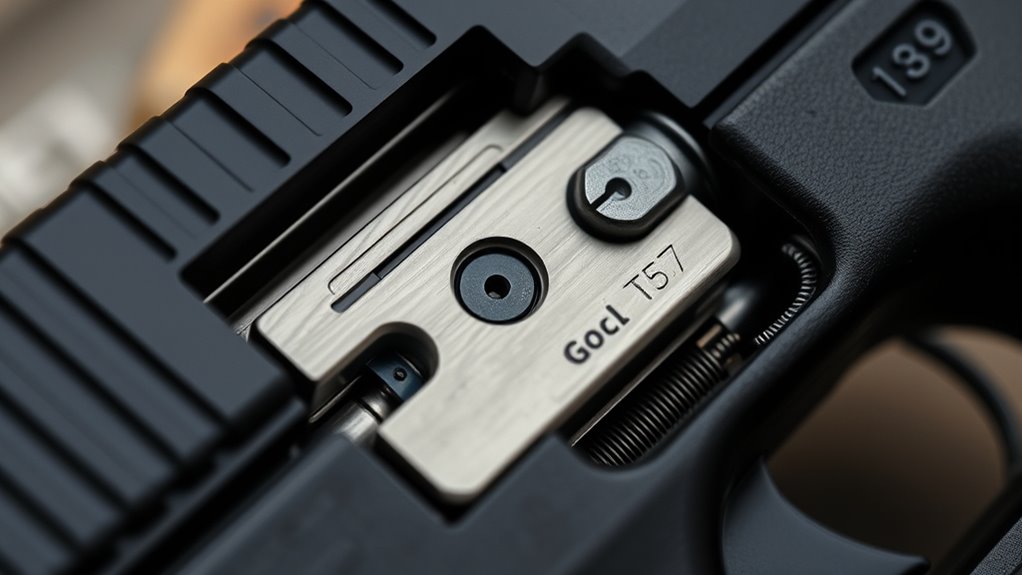
The Glock’s striker-fired system is a key feature that makes it reliable and easy to operate. When you pull the trigger, it releases the striker, which is a spring-loaded firing pin.
Before pulling the trigger, the striker is partially cocked by the slide’s movement during chambering. As you press the trigger, internal mechanisms align, allowing the striker to move forward quickly.
This rapid movement strikes the primer of the cartridge, igniting the gunpowder and firing the bullet. After firing, the slide automatically cycles, ejecting the spent cartridge and chambering a new round.
This entire process happens smoothly and consistently, which is why Glocks are known for their simplicity and dependability. The system’s design also reduces the risk of accidental discharge, ensuring safe and straightforward operation.
What Are Glock’s Safe Action Features?
Glocks are known for their safety features that let you rely on them without making them hard to use. Their Safe Action system combines three internal safeties to stop accidental firing. These safeties work together smoothly:
| Safety Type | Function | Activation |
|---|---|---|
| Trigger Safety | Stops the trigger from moving unless fully pressed | Only activates when you intentionally press it |
| Firing Pin Safety | Blocks the firing pin unless the trigger is pulled | Engages automatically when ready to fire |
| Drop Safety | Prevents the gun from firing if dropped | Works inside the gun, no user action needed |
This layered setup makes sure your Glock won’t fire accidentally, giving you confidence and security when handling it.
Why Is Glock’s Modular Design So Reliable?
Glock’s modular design makes maintenance straightforward, letting you easily replace or upgrade parts without hassle. This means you can keep your gun in top shape with minimal effort.
It also allows for quick customization, so you can adapt your firearm to suit your needs. Overall, this design makes Glock reliable, easy to care for, and flexible for different users.
Simplified Maintenance Process
Because of its modular design, maintaining a Glock is straightforward and quick. The firearm’s components are built to be easily disassembled without tools, making cleaning and inspection simple.
You can separate the slide, barrel, and frame with minimal effort, which reduces maintenance time. This design also makes replacing worn or damaged parts easy, often in just a few quick steps.
Since parts are standardized and fit precisely, you won’t struggle with complex fittings or adjustments. That means less time on maintenance and more time practicing or confidently using your firearm.
The modular approach helps keep your Glock in top shape with minimal hassle, making it a reliable and user-friendly choice for both professionals and enthusiasts.
Easy Customization Options
One of the main reasons Glock is known for its reliability is its modular design. This makes customization quick and easy, so you can swap out parts like slides, barrels, or grips to fit your preferences or needs.
This flexibility lets you upgrade or personalize your firearm without needing special tools or a lot of experience. Repairs are also simpler—you can replace worn components yourself.
Here’s a quick look at some common customization options:
| Part | Benefit |
|---|---|
| Grips | Better comfort and control |
| Slide | Improved looks or added optics |
| Barrel | More accuracy or different caliber |
| Triggers | Smoother trigger pull and feel |
This modular approach helps you tailor your Glock easily, keeping it reliable and personalized.
What Internal Parts Make Glock Fire Consistently?
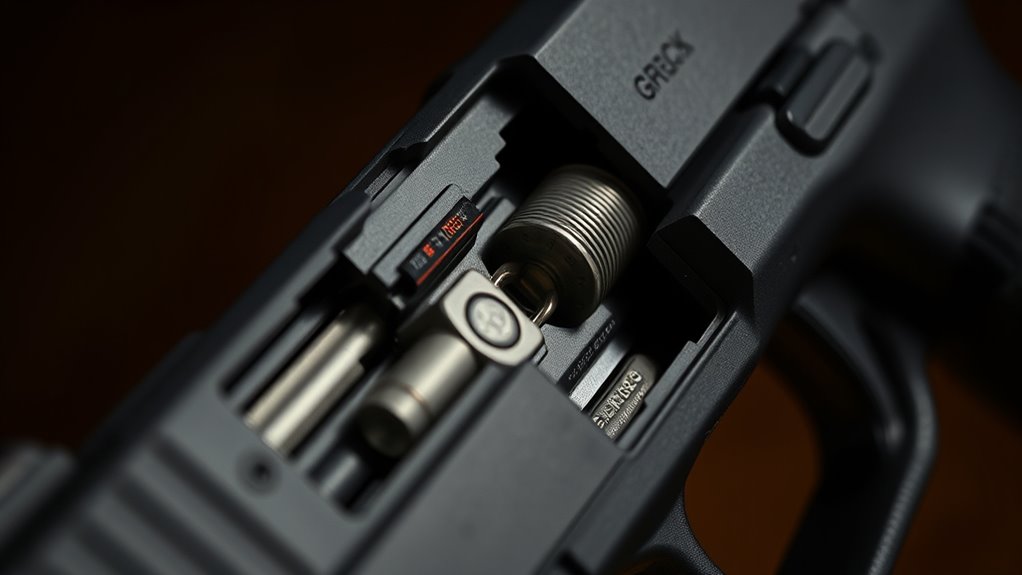
The consistent firing of a Glock depends on several key internal parts working smoothly together. The striker, or firing pin, is crucial; it hits the primer when you pull the trigger, igniting the cartridge.
The trigger bar connects your finger to the striker and helps it release cleanly. The recoil spring absorbs energy and resets the slide after each shot, ensuring reliable cycling.
The trigger bar links your finger to the striker, ensuring smooth and clean release for reliable firing.
The firing pin safety prevents accidental discharges by only allowing the striker to fire when the trigger is fully pressed. The magazine release and feed ramp work together to keep rounds feeding smoothly.
Each of these parts is precisely engineered for reliability, helping to minimize jams and misfires. When all these components operate seamlessly, your Glock fires consistently and reliably.
How Does a Glock Fire Step-by-Step?
When you pull the trigger on a Glock, the firing process starts almost immediately. The trigger pushes the trigger bar upward, which releases the striker spring.
This allows the striker to move forward under spring tension. As it moves, the striker hits the primer of the chambered round, igniting the gunpowder.
The explosion forces the bullet down the barrel. At the same time, the force pushes the slide backward. This rearward movement compresses the recoil spring.
As the slide moves back, it ejects the spent cartridge case through the ejection port. The recoil spring then pushes the slide forward again, chambering a new round.
Now, the gun is ready to fire again if you pull the trigger. This cycle happens in fractions of a second, enabling rapid, reliable firing.
How Do Maintenance and Disassembly Affect Glock Performance?
Regular maintenance and proper disassembly are key to keeping your Glock reliable and safe to use. When you clean and inspect it regularly, you remove dirt, debris, and residue that can cause malfunctions or wear down parts.
Proper disassembly makes it easier to access internal components, so you can spot and fix potential issues before they turn into bigger problems. If you skip maintenance, parts might get sticky, corroded, or misaligned, which could lead to firing or cycling failures.
Cleaning and disassembling your Glock regularly also helps maintain its accuracy and extends its lifespan. Following the right disassembly procedures and keeping up with maintenance ensures your gun runs smoothly, reduces malfunctions, and performs at its best over time.
Troubleshooting Common Glock Mechanism Issues
When your Glock isn’t working right, the first thing to do is check for any mechanical issues that might be causing the problem. Look for worn or broken parts and make sure everything is assembled correctly.
If you’re experiencing jamming, try clearing the jam first. Then, inspect for any obstructions or issues with the magazine that could be causing the trouble.
Identifying Mechanical Failures
Mechanical failures in Glocks can often be spotted by certain signs or patterns of malfunction. Recognizing these clues helps you diagnose issues quickly.
Here are common indicators:
- Failure to chamber a round smoothly
- Repeated misfires or light strikes
- Slide not locking back after the last shot
- Unusual resistance when pulling the slide
If you notice any of these, it could mean a mechanical problem like worn parts, debris buildup, or faulty springs. Pay attention to how your Glock functions during use.
Unusual sounds, resistance, or inconsistent cycling are signs that a component might need inspection or replacement. Spotting these early helps you troubleshoot effectively and keeps your Glock reliable and safe to operate.
Resolving Jamming Problems
Jamming issues can disrupt your shooting experience and compromise safety, but most can be fixed with a simple, step-by-step process. First, always point the firearm in a safe direction and remove the magazine.
Clear the jam by pulling back the slide and ejecting any stuck cartridge or casing. Next, check for debris, dirt, or damaged parts that might be causing a blockage. Inspect the barrel and slide rails for obstructions.
If you see dirt or fouling, clean the components thoroughly. Make sure the magazine and ammunition are in good condition and not causing feeding problems. Lubricate moving parts as recommended by the manufacturer.
Once you’ve cleared the jam, test-fire the Glock in a safe environment to make sure it’s working properly. Regular maintenance is key to preventing future jams and keeping your firearm reliable.
What Tips Keep Your Glock Running Smoothly?
To keep your Glock running smoothly, regular maintenance and proper handling are key. Staying proactive can help you avoid malfunctions and make your firearm last longer.
Regular maintenance and careful handling ensure your Glock stays reliable and in top condition.
Here are four simple tips to keep your Glock in top shape:
- Clean it regularly, especially after shooting, to remove dirt and residue.
- Use quality lubricants on moving parts to reduce friction and wear.
- Check the recoil spring and magazine for damage or wear, and replace them if needed.
- Store your Glock in a dry, secure place to prevent rust and accidents.
Following these easy steps will help keep your Glock reliable, safe, and ready when you need it most. Taking good care of it means a smoother, trouble-free shooting experience.
Frequently Asked Questions
How Does Glock’s Recoil System Enhance Accuracy?
Glock’s recoil system improves accuracy by reducing felt recoil and muzzle flip, making it easier to stay on target.
When you fire, the recoil spring absorbs and controls the slide’s backward movement. This consistent resistance helps you keep better control of the gun.
As a result, you can shoot more quickly and accurately, especially during rapid or extended firing sessions. This means improved shot placement and overall better shooting performance.
What Materials Are Used in Glock’s Internal Components?
You’ll find Glock’s internal components made from durable materials like reinforced steel and high-strength polymer. The slide and barrel are usually steel, providing strength and resistance to wear.
The frame is often made from a lightweight yet tough polymer, which helps reduce overall weight without sacrificing durability. Springs are typically stainless steel for extra longevity.
These materials work together to guarantee reliability, smooth operation, and long-lasting performance, making your Glock a dependable firearm.
Can Glock’s Safety Features Be Manually Overridden?
Think of Glock’s safety features like a car’s seatbelt. They’re designed to activate automatically, but you can override them if needed.
Yes, you can manually disable the trigger safety with deliberate effort, but it’s not recommended for safety reasons.
The Glock’s safety system is built to prevent accidental discharges, so overriding it requires intentional, careful action. This emphasizes safety and control at all times.
How Does Glock Prevent Accidental Discharges?
Glocks prevent accidental discharges mainly through their Safe Action system. This system combines three passive safety features: a trigger safety, firing pin safety, and drop safety.
You need to intentionally pull the trigger with firm pressure to fire. The safety mechanisms block the firing pin until the proper trigger pressure is applied.
This design makes sure the firearm won’t go off if dropped or mishandled, helping to reduce the risk of accidental shootings.
What Is the Lifespan of a Typical Glock Firing Mechanism?
A typical Glock firing mechanism can last around 100,000 to 200,000 rounds with proper maintenance. You’ll find that the polymer frame and metal components are built to be durable, but parts like the firing pin and extractor may wear out over time.
Regular cleaning and inspections help extend your Glock’s lifespan. If you notice malfunctions or decreased accuracy, it’s a good idea to replace worn parts to ensure your firearm keeps functioning reliably.
Conclusion
Understanding how your Glock’s mechanism works helps you shoot safely and confidently. Did you know that over 65% of law enforcement agencies worldwide trust Glock firearms for their reliability?
Regular maintenance, proper handling, and knowing the internal parts guarantee your Glock performs flawlessly every time. By mastering its mechanics, you’ll be better equipped to troubleshoot issues and keep your firearm in top shape.
Knowing how a Glock works is key to making every shot count when it matters most. This knowledge ensures safe handling and reliable performance when you need it most.