
8 Questions: Which Glock Is Right for Me?
Finding the perfect Glock can feel overwhelming with so many options out there. You’re not alone—many people struggle to pick the right one for their needs.
Whether you’re new to guns or a seasoned shooter, choosing the right Glock is key to feeling confident and safe.
Choosing the right Glock depends on your specific needs. For concealed carry, go for compact models like Glock 43 or 19; for home defense, full-sized models like Glock 17 are better.
If you’re into target shooting or sports, models like Glock 34 offer accuracy and capacity. Budget and customization options also matter.
To find your best fit, consider your experience level and try handling different models. This hands-on approach can help you make an informed choice.
More details can help you find the Glock that’s just right for you.
Key Takeaways
- Determine your primary use: concealed carry, home defense, shooting sports, or training.
- Choose size and caliber based on comfort, recoil management, and your intended scenario.
- Consider key features like sights, trigger, capacity, and durability to ensure reliable self-defense.
- Budget for customization options and make sure everything complies with local firearm laws.
- Test different models to see how they feel in your hand. Pay attention to grip, accuracy, recoil, and overall handling before making a decision.
What Will I Use My Glock For?
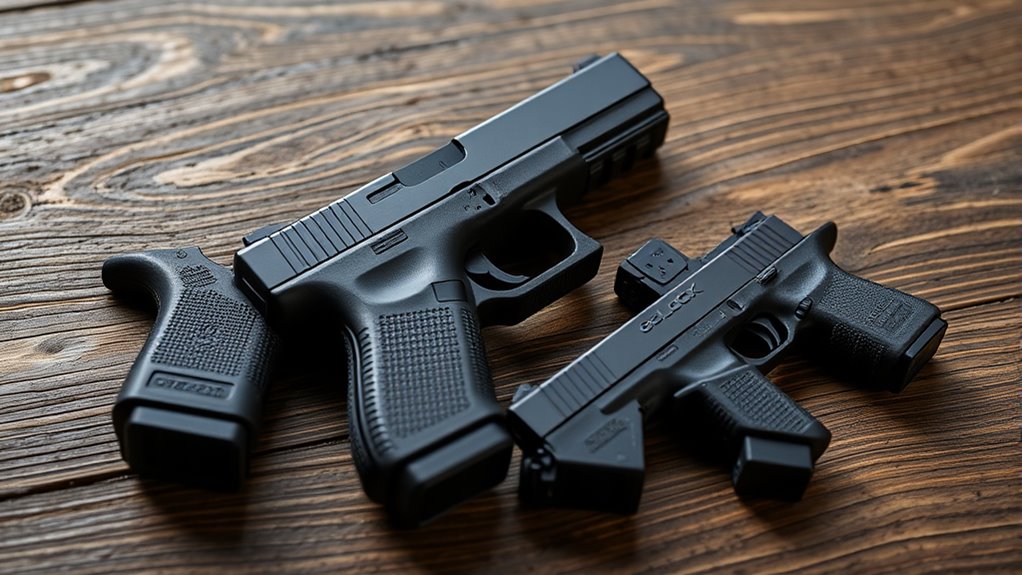
Have you thought about how you’ll actually use your Glock? Knowing your purpose helps narrow down your options.
If you plan to carry every day, you’ll want a compact or subcompact model that’s easy to conceal. For home defense, a full-sized Glock offers more firepower and better control.
If you’re into shooting sports, consider a model with a higher capacity and customizable features. Think about whether you’ll use it mainly for training, target shooting, or competition.
Each purpose influences the size, weight, and features you should prioritize. Clarifying your main use guarantees you choose a Glock that fits your lifestyle, improves your safety, and makes shooting comfortable and effective.
Before buying, visualize how your Glock will fit into your daily routine.
How Do I Pick the Right Glock Size and Caliber for My Needs?
Choosing the right Glock size and caliber really depends on what you plan to use it for and your personal preferences. Think about the different handgun sizes and how they feel in your hand.
Also, consider the caliber’s performance and stopping power. Your needs—whether for concealed carry, home defense, or shooting sports—will help you find the best combo for you.
Handgun Size Options
How do you decide which Glock size and caliber fit your needs best? Think about how you’ll carry and use the firearm every day. Smaller models are easier to hide and great for discreet carry, while larger ones give you a better grip and more control for longer shooting sessions.
Consider your hand size and comfort too, since that affects your accuracy and handling.
Here are some key options to think about:
- Subcompact – Perfect for concealed carry and discreet use.
- Compact – Versatile for both concealed carry and home defense.
- Full-size – Great for target shooting, home defense, and duty use.
Matching the size to your lifestyle and comfort helps ensure you pick a Glock that feels natural and performs reliably.
Caliber Performance Factors
Selecting the right Glock caliber depends on your main use and how you want to balance power and recoil management.
If you’re after maximum stopping power, calibers like 10mm or .45 ACP give you more punch but also produce heavier recoil. This can affect your accuracy and comfort during extended shooting sessions.
For everyday carry or self-defense, 9mm offers a good mix of manageable recoil, high magazine capacity, and effective performance.
Smaller calibers, like .380 ACP, are easier to shoot but less powerful. They’re suitable for close-range protection.
Think about how often you’ll shoot and how well you handle recoil. A larger caliber might be more intimidating but needs more practice. A smaller one is easier to control but may have less stopping power.
Choose based on your comfort level and what you’ll use it for.
Intended Use Considerations
Your intended use should guide both the size and caliber of your Glock. Think about what you’ll mainly use it for—self-defense, target shooting, or concealed carry. Each purpose influences your choice.
For example, if concealment is a priority, a smaller Glock like the 43 might be best. If you’re looking for home defense, a full-sized model like the Glock 17 offers more capacity and better accuracy.
Consider the caliber too. A 9mm strikes a good balance between power and recoil, making it versatile for most needs.
If you’re focused on self-defense, opt for a compact or subcompact Glock with manageable recoil. For target shooting, go for a full-sized Glock with higher capacity. And if concealed carry is your goal, find a small, lightweight model that’s easy to hide.
What Are the Key Features to Look for in a Self-Defense Glock?
When choosing a self-defense Glock, focusing on key features ensures you find a reliable and effective firearm. Look for a model with a manageable size and weight so you can handle it comfortably and carry it discreetly.
Make sure it has a safe and smooth trigger pull. This improves accuracy and helps prevent accidental discharges. A durable finish that resists corrosion is also important, especially if you’ll carry it every day.
Opt for sights that allow quick target acquisition, like fiber optic or night sights. A comfortable grip with textured surfaces improves control, especially in stressful situations.
Finally, consider magazine capacity. Having more rounds can be crucial in a self-defense scenario. Prioritizing these features helps you choose a Glock that is dependable, easy to use, and suited to your personal protection needs.
Which Glock Models Are Best for Target Shooting?
Are you looking for a Glock that excels in precision and ease of shooting at the range? If so, certain models stand out for target shooting. These guns typically feature improved accuracy, comfortable ergonomics, and consistent trigger pulls.
1. Glock 34
Known for its longer barrel and slide, it boosts accuracy and stability for precision shooting.
2. Glock 17L
A longer-slide version of the Glock 17, offering enhanced sight radius and accuracy.
3. Glock 19X
Combines versatility with a comfortable grip and reliable performance, making it great for both practice and competitions.
These models help you achieve tighter groups and better control, making them top choices for target shooting enthusiasts.
How Much Should I Budget for a Glock, and Which Offers the Best Value?
Wondering how much to spend on a Glock while still getting the best value? Budgeting depends on your needs and experience.
Entry-level Glocks like the Glock 19 or Glock 26 usually cost between $500 and $600. These models are reliable and great for beginners or concealed carry.
If you’re looking for more features, consider the Glock 17 or Glock 34, which typically cost around $600 to $700.
For premium options with better durability or finish, prices can go above $700.
Remember, investing in a well-maintained, reputable model ensures better longevity and performance.
While saving money makes sense, don’t compromise on quality or your safety.
Look for deals and pick a model that fits your budget without sacrificing reliability or comfort.
Should I Customize My Glock? Top Accessories and Modifications
Customizing your Glock can boost performance and tailor it to your needs, but it’s important to consider popular accessories like sights, triggers, and grips. These modifications can make your shooting more accurate, improve handling, and increase comfort.
Just keep in mind that legal restrictions may apply depending on where you live. It’s a good idea to weigh the benefits of upgrades against any regulations before making changes.
Popular Custom Accessories
Many Glock owners like to personalize their pistols with popular accessories that boost performance, comfort, and looks. These upgrades can make your Glock more suited to your needs, whether for everyday carry, training, or competition.
Common accessories include sights, grip improvements, and slide modifications. Night sights help you see better in low light, making it easier to aim accurately.
Grip improvements, like textured grips or backstraps, give you better control and comfort when firing. Slide modifications, such as aftermarket slides or cuts, reduce weight and give your gun a more aggressive look.
These accessories can turn your Glock into a more personalized and functional firearm that fits your shooting style perfectly.
Enhancing Performance Features
Enhancing the performance features of your Glock can really improve its accuracy, speed, and overall reliability. Upgrading sights, like adding night sights or fiber optics, helps you aim more precisely in different lighting conditions.
Installing a match-grade barrel can boost accuracy by delivering cleaner shots and reducing barrel wear. Trigger modifications, such as a lighter or crisper trigger, make firing smoother and allow for quicker follow-up shots.
Replacing the recoil spring or guide rod can cut down felt recoil and improve cycling consistency. Consider stippling or grip tape to get a better grip during rapid fire.
These upgrades not only enhance performance but also personalize your Glock to match your shooting style. Just make sure any modifications are reliable, compatible, and installed correctly for the best results.
Legal Considerations
Should you customize your Glock? Before making any modifications, it’s important to consider legal restrictions. Some states or localities have rules about certain changes, like converting a semi-automatic to full-auto or adding accessories that aren’t approved.
Failing to follow these rules can lead to fines or other legal trouble. Always check your local laws before you start customizing.
Here are some key legal considerations:
- Compliance with Local Laws: Make sure your modifications are allowed where you live.
- Serial Number Retention: Keep your gun’s serial number visible; altering it is illegal.
- Approved Accessories Only: Use accessories approved by manufacturers or legal authorities.
Staying informed helps you enjoy your Glock responsibly and avoid legal issues.
Are There Glock Models Recommended for Beginners Versus Experienced Shooters?
Are there Glock models that are better suited for beginners compared to those for experienced shooters? Yes, some Glocks are more beginner-friendly. Typically, models with lighter triggers, manageable sizes, and simple controls are ideal for newcomers.
For example, the Glock 19 provides a good balance of size, weight, and ease of use, making it popular among beginners. Its manageable recoil and straightforward operation help new shooters build confidence.
On the other hand, experienced shooters might prefer larger or specialized models like the Glock 34 or 21. These cater to advanced needs such as competition or hunting. These models often have additional features, higher capacity, or different calibers.
Ultimately, choosing the right Glock depends on your experience level and intended use.
How Can I Test and Compare Glock Models Before Buying?
When you’re ready to buy a Glock, testing and comparing different models beforehand helps you pick the right one for your needs. To do this effectively, visit a shooting range that offers firearm rentals or a gun store with demo models.
Testing and comparing Glock models helps you choose the best fit for your shooting style and needs.
Try handling various models to see how comfortable the grip feels and to get a sense of the weight. Take some time to shoot different Glocks to evaluate accuracy, recoil, and trigger feel.
Before you buy, consider these steps: rent or borrow multiple Glock models to test shoot them firsthand. Focus on how comfortable the grip is in your hand and how well you can aim.
Compare trigger pulls, recoil response, and overall handling with each model. This process helps you make an informed decision and find a Glock that fits your shooting style and purpose.
Frequently Asked Questions
What Safety Features Are Available on Different Glock Models?
Glock models come with several safety features, like the Safe Action System. This system includes a trigger safety, firing pin safety, and drop safety, making sure the gun only fires when you want it to.
Some models also have extra safety options, like manual safeties or magazine disconnect safeties. You can pick a Glock that fits your safety preferences, knowing these systems help keep the firearm reliable and secure during use or carry.
How Does Recoil Differ Between Glock Calibers?
Recoil varies a lot between Glock calibers. For example, 9mm Glocks have mild recoil, making them easy to shoot accurately and quickly.
In contrast, larger calibers like .40 S&W or .45 ACP generate more felt recoil, which can affect follow-up shots. If you’re a beginner or want less recoil, stick with 9mm models.
For more power and recoil, consider .40 or .45. Just be prepared for increased muzzle rise and longer recovery times.
Are There Glock Models Suitable for Concealed Carry?
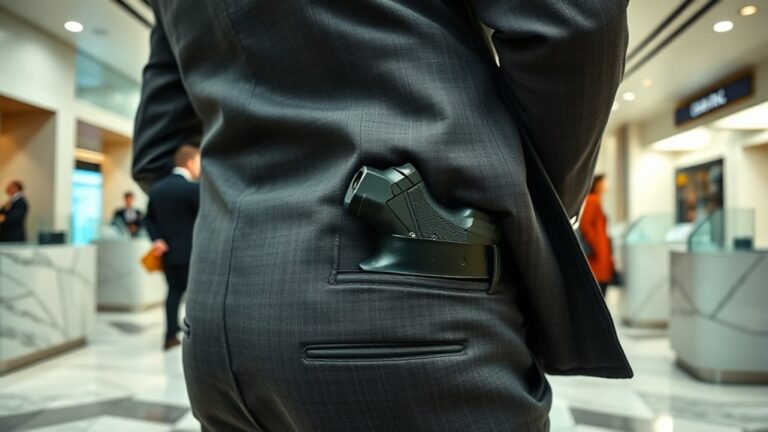
Yes, many Glock models are suitable for concealed carry. Popular options include the Glock 19, which is compact and reliable, and the Glock 43, known for being slim and lightweight.
The Glock 26 is also a good choice because of its small profile.
Pick a model that feels comfortable in your holster and fits well in your hand for everyday carry.
Which Glock Models Are Recommended for Law Enforcement?
You should consider Glock models like the Glock 19, Glock 17, or Glock 26 for law enforcement. These guns are the backbone of police arsenals—reliable, versatile, and easy to handle.
The Glock 19 offers a perfect balance between size and capacity, making it a popular choice for many officers. The Glock 17 is a full-sized option that’s great for duty use.
The Glock 26 is compact and ideal for concealed carry but still packs a punch when needed.
How Often Should I Maintain and Clean My Glock?
You should clean and maintain your Glock after every 500 to 1,000 rounds or once a month if you shoot regularly. Regular cleaning guarantees reliable performance and longevity.
Disassemble the firearm carefully, then clean the barrel, slide, and frame with appropriate solvents. After cleaning, lubricate the moving parts to keep everything working smoothly.
Always follow the manufacturer’s instructions for maintenance. Staying consistent with your cleaning schedule helps prevent malfunctions and keeps your Glock functioning reliably.
Conclusion
Choosing the right Glock is like finding your perfect partner in crime—reliable, powerful, and ready for anything. With the right model, you’ll feel unstoppable, wielding a tiny, unstoppable force of nature in your hand.
So, dive in, test them out, and pick the one that makes your heart race with confidence. When it’s Glock time, you’re unstoppable—like a hero in your own action movie.