What Conditions Do Guns Rust in Safes?
If you’re like many gun owners, keeping your firearms in pristine condition is a constant challenge. Rust is a common worry, especially when safes are involved. You’re not alone—many people struggle with protecting their guns from corrosion over time.
Guns rust in safes mainly because of moisture, high humidity, and temperature swings that cause condensation on metal surfaces. Poor ventilation traps moisture inside, while storage for long periods allows rust to develop if guns aren’t properly protected.
Handling and cleaning also leave residual moisture, speeding up rust formation.
To keep your firearms in top condition, understanding how these factors work together can help you prevent damage. Continue exploring for more effective rust prevention tips.
Key Takeaways
High humidity levels inside the safe promote moisture buildup. This moisture can easily lead to rust formation on your firearms.
Temperature fluctuations are also a problem. They cause condensation, which increases moisture contact and raises the risk of rust on stored guns.
Poor ventilation makes things worse. When there’s no airflow, humidity and moisture get trapped, creating a perfect environment for rust to develop.
If your firearms lack protective coatings or you don’t maintain them properly, rust can form more quickly on exposed metal surfaces.
Handling guns without cleaning or oiling them beforehand can introduce moisture. This moisture inside the safe accelerates the rusting process.
Why Rust in Your Gun Safe Matters
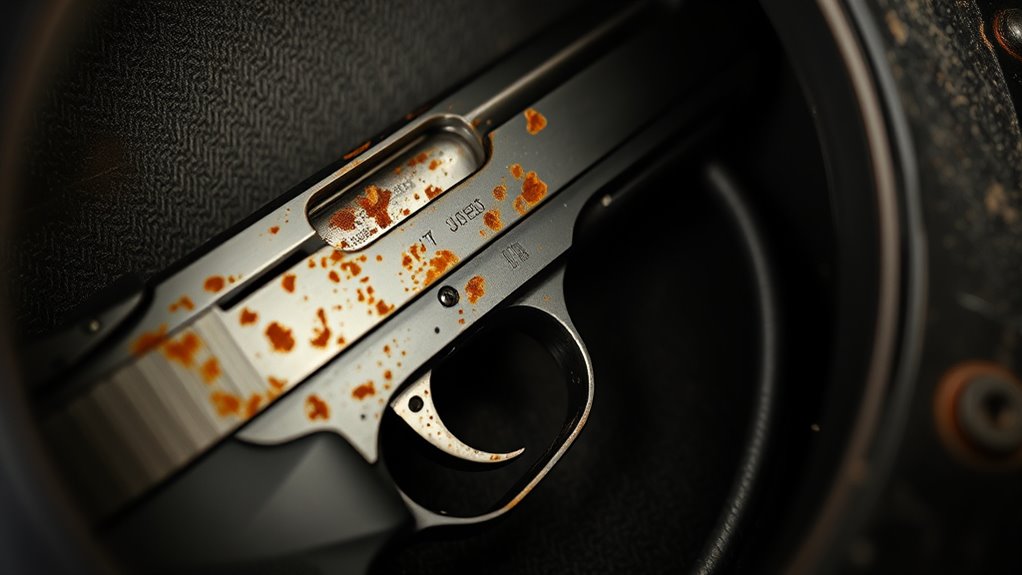
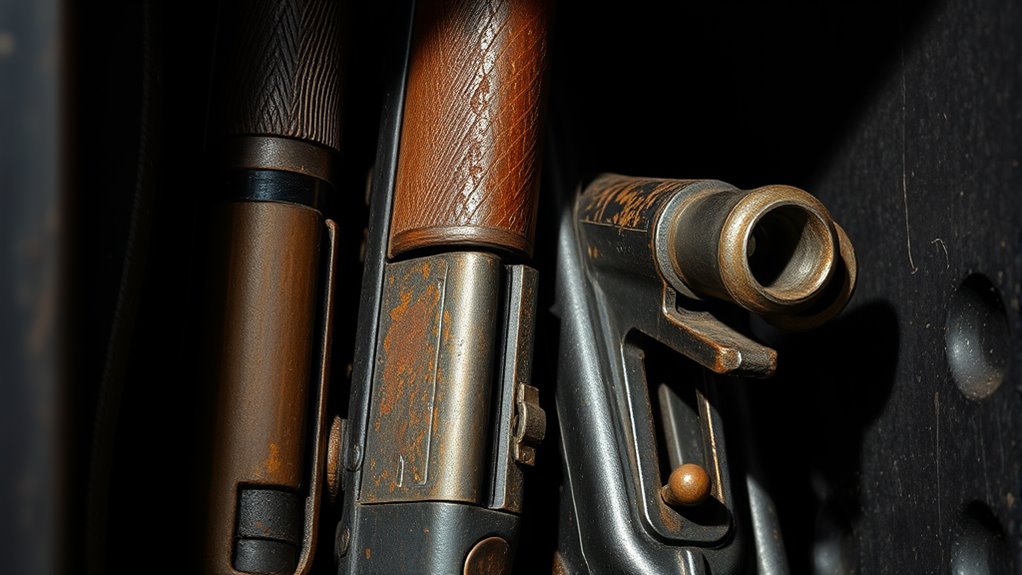
Rust in your gun safe can cause serious damage to your firearms, affecting their appearance, value, and functionality. When rust develops, it can tarnish the finish, making your guns look old and poorly maintained.
Rust in your gun safe can tarnish finishes, reduce value, and compromise firearm functionality over time.
This deterioration lowers their resale value and can even make them harder to sell later. More importantly, rust can weaken metal parts, risking malfunctions or breakage when you need your firearm most.
If rust spreads, it can impact moving parts, causing jams or misfires. Protecting your guns guarantees they stay in top condition, ready for use or display.
Ignoring rust risks long-term damage that’s often costly and difficult to repair. Staying vigilant about rust means preserving your firearms’ looks, value, and safe operation.
How Humidity Causes Rust on Firearms
Humidity plays a big role in how fast firearms can develop rust, especially when stored in places with high moisture. When the air is humid, water molecules settle on your gun’s surface, creating a thin layer of moisture.
This moisture reacts with the metal and forms iron oxide, which is rust. The more humid the environment, the quicker this process speeds up. Even small amounts of humidity can cause damage over time if your firearm isn’t properly protected.
That’s why keeping your gun in a dry, controlled space is so important. Using silica gel packs or dehumidifiers inside your safe can help absorb excess moisture. Regularly inspecting and cleaning your firearms also helps prevent rust from taking hold and causing long-term damage.
Understanding How Temperature Fluctuations Promote Rust
When temperatures fluctuate, moisture can condense on your gun’s surface, creating ideal conditions for rust. Sudden swings between hot and cold cause metal to expand and contract, which can damage protective coatings and expose bare metal.
Furthermore, inconsistent humidity levels increase the risk of moisture buildup, making your firearm more vulnerable to corrosion.
Moisture Condensation Formation
Temperature fluctuations inside a safe can cause moisture to condense on metal surfaces, creating the perfect environment for rust to form. When warm air meets a cooler surface, water vapor turns into droplets and settles on your guns and safe interior. This cycle of condensation and evaporation encourages rust development over time.
To prevent this, try controlling the humidity levels and avoid rapid temperature changes. Keep the safe in a climate-controlled environment and use desiccants or silica gel packs to absorb excess moisture. Be mindful of activities that cause abrupt temperature shifts, like opening the safe in heated or cooled spaces.
Proper ventilation and consistent temperature regulation are key to minimizing condensation. High humidity levels, poor ventilation, and insufficient desiccants all contribute to moisture buildup. Environmental exposure and sudden temperature changes make the problem worse, so take steps to manage these factors.
Temperature Swing Effects
Temperature swings can cause metal surfaces inside your safe to expand and contract. This creates tiny cracks and gaps that can weaken the protective coating.
These gaps let moisture and air reach the metal, which increases the risk of rust. Rapid temperature changes make this worse, especially if your safe isn’t well-insulated.
Here’s how different temperature swings can affect your guns:
| Temperature Change | Effect on Metal |
|---|---|
| Small (10°F) | Minor expansion, minimal stress |
| Moderate (30°F) | Noticeable expansion and contraction |
| Large (50°F+) | Significant stress, cracks may form |
| Rapid shifts | Higher chance of coating damage |
| Consistent temps | Less risk of metal fatigue |
Keeping an eye on your safe’s environment helps prevent rust caused by these temperature swings.
Humidity Fluctuation Risks
As temperature swings cause metal surfaces inside your safe to expand and contract, they also influence the humidity levels that can build up. When warm air suddenly cools, moisture can condense on your guns’ surfaces, increasing the risk of rust.
Fluctuating temperatures cause repeated expansion and contraction, which stresses the protective coatings on your firearms. This cycle can trap moisture inside the safe, making rust formation faster.
Higher humidity levels promote corrosion if not kept in check. Rapid temperature changes create the perfect environment for moisture to settle and stay on metal surfaces, speeding up rust.
To prevent this, it’s important to monitor humidity levels and keep the environment consistent. Proper ventilation helps reduce humidity build-up and minimizes the chances of rust developing on your firearms.
Why Poor Ventilation Accelerates Rust Formation
Poor ventilation inside a gun safe creates an environment where moisture can easily build up, speeding up rust formation on your firearms. When air isn’t circulating, humidity gets trapped, forming damp pockets that settle on metal surfaces.
Without proper airflow, moisture can’t escape or evaporate, increasing the chances of rust over time. Stagnant air also allows residual moisture from handling or cleaning to linger longer, which promotes corrosion.
If your safe lacks vents or fans, moisture stays confined, making rust form faster and more severely. Ensuring good ventilation helps reduce moisture buildup, protecting your guns from rust and damage.
Proper airflow is key to keeping your firearms dry, preserved, and in top condition.
How Condensation Forms and Rusts Your Guns
When humidity levels are high, moisture can build up inside your safe, creating the perfect environment for condensation.
Temperature changes cause the air to expand and contract, which releases moisture that settles on your guns’ surfaces.
This moisture speeds up rust formation, especially if the environment isn’t consistently dry.
Humidity Causes Moisture
Humidity inside a safe can create the perfect environment for moisture to form on your guns. When moisture settles on metal surfaces, it speeds up rust and damages your firearms over time.
High humidity levels make condensation more likely, especially if the safe isn’t airtight or is in a humid area.
Think about factors like poor ventilation trapping moisture, nearby sources raising humidity, leaks or water getting into the safe, or storing in a humid climate without a dehumidifier.
Temperature differences can also cause moisture buildup inside your safe.
To keep your guns in good shape, it’s important to control humidity levels and reduce moisture. Using desiccants, dehumidifiers, or silica gel packs can really help prevent rust from forming.
Temperature Fluctuations Accelerate Rust
Temperature fluctuations cause your guns to develop condensation inside the safe, especially when warm air meets cooler surfaces. This moisture forms because warm air holds more humidity, which condenses when it touches cold metal.
As temperatures drop, the moisture becomes trapped on your guns’ surfaces, creating ideal conditions for rust. Rapid changes between hot and cold environments prevent the safe from stabilizing, increasing condensation risks.
If your safe isn’t climate-controlled, these fluctuations happen more often, especially in garages or basements. Over time, this repeated condensation accelerates corrosion, damaging your firearms.
To prevent this, keep your safe in a steady-temperature environment and consider using desiccants or dehumidifiers. Maintaining consistent temperatures reduces condensation, protecting your guns from rust and ensuring they stay in top condition.
Choosing Protective Coatings to Prevent Rust
Choosing the right protective coating is essential for preventing rust inside your safe, especially if it’s stored in a humid environment. A good coating forms a barrier that keeps moisture away from the metal surface.
You can consider options like oil-based coatings, gun wax, or specialized rust inhibitors. Applying these coatings regularly ensures your guns stay protected over time.
Some effective protective coatings include machine oil or gun oil for easy reapplication, rust-inhibiting sprays designed for firearms, and polymer or clear protective films.
Wax coatings can add extra moisture resistance, and there are commercial gun protection products made for long-term storage.
Always follow the manufacturer’s instructions for application and reapplication. Proper coating helps safeguard your guns from rust, even in less-than-ideal storage conditions.
How Storage Duration and Usage Affect Rust Risk
The longer your guns stay stored, especially if they’re not regularly used or maintained, the higher their risk of developing rust. When guns sit untouched for extended periods, moisture can build up, especially in humid environments, which increases the chances of corrosion.
Long-term storage without maintenance increases rust risk due to moisture buildup and corrosion.
Infrequent handling means protective oils may wear off, exposing metal surfaces to air and moisture. On the other hand, regular use helps keep oils evenly spread and gives you a chance to inspect and clean your firearm, which reduces rust risk.
Shorter storage durations with consistent maintenance lower the chance of rust forming. If you plan to store guns long-term, make sure they’re cleaned, oiled, and checked periodically.
Proper upkeep and mindful storage practices are key to minimizing rust, no matter how long your firearms stay in your safe.
Practical Tips to Prevent Rust Inside Your Safe
To effectively prevent rust inside your safe, you need practical strategies to keep moisture away. First, place silica gel packs or dehumidifiers inside to absorb excess humidity. Remember to check and replace them regularly to keep moisture levels low.
Next, always clean your guns thoroughly before storing. Remove sweat or oil that can attract moisture and cause rust. Using rust-inhibiting gun cases or storage containers adds extra protection.
Keep the safe in a cool, dry place away from humidity sources like bathrooms or basements. You can also line the interior with rust-resistant materials or apply protective coatings for added defense.
These simple steps help create a dry, stable environment inside your safe, reducing rust risk and helping your firearms stay in great condition over time.
How to Detect and Address Rust Early on Your Firearms
Detecting rust early on is key to preventing serious damage to your firearms. Regularly check your guns, especially hidden spots like the barrel, chamber, and inside the safe. Look for small, discolored spots or rough, flaky patches—that’s a sign rust might be forming.
Use a clean, soft cloth or a magnifying glass to get a clearer look. If you spot rust, act quickly by gently removing it with fine steel wool or a rust eraser. After cleaning, apply a light coat of gun oil or a rust inhibitor to keep the metal protected.
Sticking to this routine will help prevent rust from taking hold, keeping your firearms in top shape and ready to use whenever you need them.
Frequently Asked Questions
Can Certain Types of Guns Rust Faster Than Others in Safes?
Yes, some guns rust faster than others in safes. Factors like the metal type, finish, and how well you maintain them all matter. Guns with bare or worn finishes tend to rust more easily, especially if humidity levels change or the safe isn’t climate-controlled.
Steel guns without protective coatings usually rust quicker. On the other hand, guns with corrosion-resistant finishes tend to hold up better. Regular cleaning and keeping humidity in check are key to preventing rust, no matter what kind of gun you have.
Does Storing Guns With Ammunition Increase Rust Risk?
Storing guns with ammunition can increase rust risk because moisture from the ammo, especially if it’s not moisture-resistant, can create a humid environment inside your safe. Think of it like adding a splash of water to a dry sponge—you invite rust and corrosion.
Keep ammo separate and dry, and consider silica gel packs in your safe to absorb moisture. This small step helps protect your firearms from unnecessary damage.
Are There Specific Safe Materials That Resist Rust Better?
Yes, some safe materials resist rust better than others. Look for safes made from powder-coated steel, stainless steel, or those lined with rust-resistant coatings like epoxy or polymer. These create a barrier against moisture and corrosion.
You should also consider safes with airtight seals or dehumidifiers. Proper storage combined with high-quality, rust-resistant safes will help keep your guns in better condition. This prevents rust and corrosion over time.
How Often Should Guns Be Inspected for Rust in Safes?
You should inspect your guns for rust every three to six months. Regular checks help you catch early signs of corrosion before they get worse.
During each inspection, look closely at metal surfaces, joints, and hidden areas. Feel for any roughness or discoloration.
Clean and oil your firearms afterward if needed. This keeps them protected and in good shape.
Consistent inspection and maintenance help prevent rust buildup over time and keep your guns in prime condition.
Can Using Silica Gel Completely Prevent Rusting Inside Safes?
Using silica gel considerably reduces the chances of rust, but it can’t completely prevent it. Silica gel absorbs moisture, creating a drier environment inside your safe, which helps protect your guns.
However, if there’s persistent humidity, leaks, or improper sealing, rust can still develop. To get the best protection, regularly check and replace the silica gel.
Maintaining proper ventilation and considering additional rust-preventive measures for your firearms can also help keep rust at bay.
Conclusion
To keep your guns in top shape, stay vigilant about the conditions inside your safe. Monitor humidity, avoid temperature swings, and guarantee proper ventilation. Remember, a stitch in time saves nine—address rust early before it takes hold.
Rust can develop in safes when there’s high humidity, especially if the safe isn’t well-ventilated. Temperature fluctuations can also cause condensation, which encourages rust formation on your firearms. Keeping these factors in check is key.
Regular maintenance and smart storage habits can make all the difference. Using silica gel packs or dehumidifiers can help control moisture levels inside the safe. Don’t let rust sneak up on you; taking proactive steps now will save you headaches.
When you stay on top of these conditions, you’ll keep your firearms in prime condition for years to come. Proper storage and vigilance are your best defenses against rust in safes.