10 Key Differences Between Paddle Vs Slide Holster
Finding the perfect holster can be tricky, especially with so many options out there. Many gun owners struggle to choose between different styles that suit their daily needs and carry preferences.
If you want quick access or discreet concealment, it’s understandable to feel overwhelmed. You’re not alone—finding the right fit makes all the difference.
Paddle and slide holsters differ mainly in design and carry style. Paddle holsters have a wide, flat paddle that clips outside your waistband, allowing quick attachment and removal. They’re great for open carry and easy access.
Slide holsters fit inside the belt for secure, discreet carry. They’re ideal for daily concealed use, giving you a more stable hold on your firearm.
Paddle holsters are usually faster to access but may be less secure. Slide holsters offer better stability, keeping your firearm more secure during daily activities.
To find out which fits your needs best, keep exploring the details ahead.
Key Takeaways
– Paddle holsters let you attach or remove them quickly without taking off your belt.
With slide holsters, you’ll usually need to remove or adjust your belt first.
– Because of their open-top design, paddle holsters allow for faster access.
Slide holsters might require more deliberate motions to draw your firearm.
– Generally, paddle holsters offer less secure retention.
Slide holsters often come with extra security features to keep your gun in place.
– Paddle holsters distribute the weight evenly, making them comfortable and easy to access.
Slide holsters sit closer to your body, which helps with concealment and stability.
– Paddle holsters are great for open carry and range use.
On the other hand, slide holsters are better suited for concealed carry and everyday use.
What Are Paddle Holsters and How Do They Work?
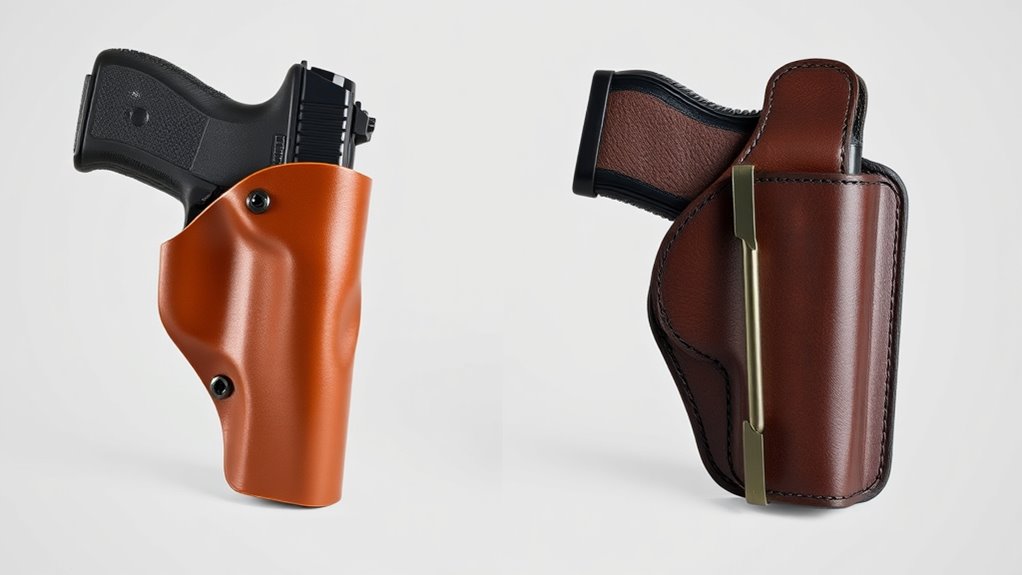
A paddle holster is a type of firearm retention device that features a wide, flat piece of material—usually plastic or leather—shaped like a paddle. You wear it outside your waistband, with the paddle pressing against your body to hold the holster in place.
The design allows for quick attachment and removal without taking off your belt, making it convenient for daily carry. You can slide the holster into your preferred position and then secure it with the paddle’s tension or adjustable retention screws.
When you need your firearm, just pull upward, and the paddle holster releases smoothly from your waistband. Its open-top design provides quick access, making it ideal for fast draws and everyday carry situations.
Design Features of Slide Holsters
Slide holsters are designed with simplicity and versatility in mind. They usually have a single-piece construction, making it easy to attach to a belt or waistband.
They tend to have a sleek profile, which makes them comfortable to carry daily. The focus is on quick access, with features like trigger guards or adjustable tension screws for retention.
These holsters are generally lightweight and durable, often made from materials like Kydex or injection-molded polymer. These features ensure secure retention and a smooth draw. Here’s a quick overview:
| Feature | Material | Retention Method |
|---|---|---|
| Easy attachment | Kydex, Polymer | Adjustable tension |
| Lightweight | Thermoplastics | Trigger guard lock |
| Durable | Steel Reinforced | Passive retention |
| Slim profile | Composite | Friction fit |
Pros and Cons of Paddle Holsters for Daily Carry
Paddle holsters offer quick and easy access, making it faster to draw your firearm when you need it. They’re generally comfortable for daily wear, but the fit and design can impact how accessible your weapon feels throughout the day.
Thinking about these factors can help you decide if a paddle holster is right for your everyday carry routine.
Ease of Draw
While paddle holsters are popular for daily carry, their ease of draw offers both advantages and drawbacks. You’ll find that they often allow a quick, smooth presentation of your firearm, which is essential in urgent situations. However, this same feature can sometimes mean less retention, increasing the risk of accidental or undesired removal. Here are some key points to take into account:
- Quick Access: The design typically enables fast, efficient drawing, ideal for self-defense.
- Less Secure Fit: The ease of draw might compromise retention, so you may need extra safety measures.
- Adjustability: Many paddle holsters allow quick adjustments, but poor fitting can affect how consistently you draw.
Understanding these pros and cons can help you decide if a paddle holster is right for your daily carry needs.
Accessibility and Comfort
Accessibility and comfort are key factors to consider when choosing a holster for daily carry, and paddle holsters shine in these areas for many people.
Their design makes it easy to access your firearm quickly, which is especially helpful in urgent situations. The wide paddle offers stability and spreads out the weight, so it feels more comfortable during long wear.
You can usually attach or detach the holster without much trouble, which adds convenience to your daily routine. But some folks might find the paddle’s bulkiness less comfortable for all-day use, especially if they wear tight clothing.
If quick access and a secure fit are your main priorities, paddle holsters have clear advantages. But if comfort over long periods is more important, you might want to explore other options or adjust the paddle’s position for better comfort.
Pros and Cons of Slide Holsters
Slide holsters usually give you a secure fit and good retention, but they might take a bit longer to draw than paddle styles.
Accessibility and speed can vary depending on the design, which affects how quickly you can respond.
Think about these factors to see if a slide holster fits your everyday carry needs.
Ease of Draw
Slide holsters generally offer a straightforward and quick draw, making them popular among concealed carriers. Their design allows you to access your firearm rapidly without complicated movement. The smooth, snug fit guarantees a seamless draw every time.
Here are three key points about the ease of draw with slide holsters:
- Fast Deployment: The open design minimizes resistance, letting you draw your firearm swiftly in high-pressure situations.
- Consistent Positioning: The holster’s secure fit keeps your firearm in place, so your draw is reliable and repeatable.
- Minimal Obstructions: Without bulky attachments, you avoid snagging or delays, making it easier to draw smoothly from your concealed carry position.
Retention Security
While slide holsters often excel in offering a quick draw, their retention security can be a double-ed-edged sword. They usually rely on friction and a snug fit to hold your firearm in place, which works well during active movement but might sometimes be too loose or too tight.
This variability can make it harder to draw smoothly or, on the flip side, cause the gun to shift unintentionally. Some models add thumb breaks or retention straps for extra security, but these can slow down your draw.
Without extra locking mechanisms, slide holsters depend heavily on precise fit and craftsmanship. That means you need to choose the right size and material carefully.
While they generally provide decent retention, they may not be ideal for high-impact activities where maximum security is crucial.
Accessibility and Speed
Are slide holsters truly the fastest option for quick access? They can be, but it depends on your training and setup. Slide holsters usually offer a smooth draw with minimal movement, making them reliable for quick access.
To maximize speed, consider these factors:
- Ease of Draw – The open design allows for a natural grip and quick presentation.
- Positioning – Proper placement on your hip or thigh reduces reach time.
- Retention Mechanism – A secure but accessible retention system prevents delays during rapid draws.
While they’re generally fast, your familiarity and practice with the holster matter most. Some users find paddle holsters more instinctive, but slide holsters can be just as quick if set up correctly.
Paddle vs Slide Holsters: Which Is More Comfortable?
With regard to comfort, choosing between a paddle and a slide holster depends on how well each fits your body and daily activity. Paddle holsters tend to distribute weight more evenly across your hip, which can reduce fatigue during extended wear. They’re often adjustable, so you can find a snug yet comfortable fit.
Slide holsters, on the other hand, are usually more form-fitting and sit closer to your body, giving a sleeker profile. But they might feel tighter or more restrictive, especially if not properly adjusted.
Your daily movement patterns also matter. If you’re active or sit for long periods, a paddle holster might feel more comfortable. Ultimately, comfort comes down to fit, adjustability, and how your body responds to each style.
Drawing Speed: Paddle vs Slide Holsters
In terms of drawing speed, your choice of holster affects how quickly you can access your firearm. Paddle holsters often allow for faster draws because of their quick-release design.
Slide holsters, on the other hand, might require a more deliberate motion to draw. Think about how easy it is to get to your gun quickly because that can impact your safety and response time.
Draw Time Efficiency
Paddle holsters usually allow for faster draw times than slide holsters because of their accessible design and easy grip. The open-top design helps you grab your firearm quickly with minimal effort, saving you time.
To get the most efficient draw, focus on a few key factors:
- Ease of grip: The paddle’s shape and placement make it easier to grasp your firearm quickly.
- Retention system: A secure yet accessible retention mechanism ensures a fast draw without risking accidental release.
- Holster placement: Positioning the holster properly on your waist allows for a natural, quick motion when drawing.
Accessibility During Draw
Have you ever wondered which holster offers quicker access during a draw? With paddle holsters, you usually get faster access because they sit outside your waistband and can be easily rotated or repositioned. The design allows for a quick grip and smooth draw, especially if the paddle is easy to remove or adjust.
Slide holsters, on the other hand, are generally more secure because they sit inside the waistband. They require a slightly more deliberate draw. While they might take an extra second to access, they offer better concealment and stability.
If speed is your priority, paddle holsters tend to provide quicker, more natural access. But for everyday concealment and security, slide holsters might slow you down a bit, but they give you peace of mind.
Materials and Durability of Paddle and Slide Holsters
The materials used in paddle and slide holsters directly impact their longevity and performance. Durability depends on the construction and material quality, so choosing the right one really matters.
Kydex is known for being tough and keeping its shape. It resists cracking and warping, which means it can last a long time.
Leather offers flexibility and a classic look. But it can wear down over time, especially with frequent use. Proper maintenance can help extend its lifespan.
Nylon is lightweight and affordable. It’s resistant to impacts and moisture, but it may not be as rigid, which could affect how well it holds your gun in place.
Your choice of material influences how well your holster stands up to daily wear and tear. Think about your environment and how often you’ll use it.
Best Use Cases for Paddle and Slide Holsters
Choosing the right holster really depends on how and where you’ll be carrying your firearm. Paddle holsters are great when quick access and versatility matter, like for open carry or range days. They’re easy to put on and take off, making them perfect for temporary or casual use.
Slide holsters, on the other hand, are better for concealed carry or everyday use. They attach securely to your belt, giving you a snug fit that reduces printing and stays stable during movement. If you’re in law enforcement or need self-defense gear, a slide holster offers better retention.
Use a paddle holster for recreational shooting or when quick access is a priority. Switch to a slide holster if you want discreet, all-day carry with improved security and comfort.
How to Choose the Right Holster for Your Lifestyle
Ever think about how your daily routine and activities impact the best holster for you? Your lifestyle is a key factor in choosing the right one. Consider how often you carry, your activity level, and your dress code.
Your daily routine shapes the ideal holster for comfort, safety, and accessibility.
To help narrow down your options, keep these in mind:
- Frequency of carry: If you carry every day, look for something comfortable and easy to access.
- Activity level: If you’re active, you’ll want a secure, stable holster that stays put.
- Dress code: Formal clothes might mean you need a concealed holster, while casual wear allows for open carry.
Matching your holster to your lifestyle ensures it’s comfortable, safe, and easy to access. This makes carrying more seamless and suited to your daily life.
Final Tips for Selecting the Perfect Holster
Finding the perfect holster involves considering several key factors to ensure it meets your needs. First, prioritize comfort—pick a holster that fits well and feels secure during your daily activities.
Think about your typical wardrobe. If you wear lighter clothing, go for a slim design that doesn’t print or cause discomfort.
Next, assess ease of access. Your holster should allow quick, reliable draws without sacrificing safety.
Consider the retention features. A good holster keeps your firearm secure but still allows smooth retrieval when needed.
Finally, match the holster style to your lifestyle. If you’re active or carry for long periods, a paddle holster might be more comfortable. For more stability during everyday carry, a slide holster could be better.
These tips will help you make a confident, informed choice.
Frequently Asked Questions
Are Paddle Holsters More Secure Than Slide Holsters?
Paddle holsters aren’t necessarily more secure than slide holsters, but they do offer a quick, easy draw, which can be handy.
Slide holsters usually fit more snugly and have better retention because of their design, making them feel more secure when you’re moving around.
In the end, how secure a holster feels really depends on its quality, how well it fits, and what you’re doing.
Pick the one that gives you a good balance of quick access and solid retention for your needs.
Can Paddle Holsters Be Concealed Easily?
Yes, paddle holsters can be concealed easily. They’re designed with a slim profile that fits close to your body, making them discreet under clothing.
You can wear them inside or outside the waistband, depending on what’s more comfortable for you and your concealment needs.
Their quick on-and-off design makes them convenient for quick access and easy concealment.
With the right clothing choices and positioning, paddle holsters can be a practical and comfortable option for concealed carry.
Do Slide Holsters Require More Maintenance?
Yes, slide holsters generally require more maintenance than paddle holsters. They’re often made of leather or other materials that can wear out over time.
You need to regularly clean and condition them to keep their shape and durability. Also, check for any loose screws or parts to ensure safety and proper function.
Taking good care of your slide holster will help it last longer and stay in great shape.
Which Holster Type Is Better for Appendix Carry?
For appendix carry, a paddle holster is generally better because it offers quick access and stability. Its design makes it easy to slip on and off without removing your belt, which is super convenient for daily use.
The paddle’s snug fit helps keep the holster secure against your body, ensuring safety and comfort. A slide holster might be less practical for appendix carry because it’s more permanently attached to your belt.
Are Paddle Holsters Suitable for Tactical Situations?
Paddle holsters excel in tactical situations because they offer quick, easy access, perfect for high-pressure moments. Unlike slide holsters, which require more precise placement, paddles provide a secure fit with rapid draw capability.
You can quickly adjust or remove them if needed, making them versatile for dynamic environments. While they might not be as discreet, their accessibility and ease of use make paddle holsters a reliable choice in tactical scenarios.
Conclusion
Choosing between a paddle and slide holster is like finding the perfect pair of shoes—comfort, fit, and purpose matter. Think about your daily routine and what feels best for your lifestyle.
Whether you prefer quick access with a paddle or the secure hold of a slide, the right holster becomes your trusted partner. It helps you move smoothly through each day.
Trust your instincts, and you’ll walk confidently with the best holster for your needs. When it comes to paddle vs slide holster, choosing the right one makes all the difference.