Paddle Holster Vs IWB – 8 Key Differences You Should Know
Finding the right holster can be a challenge, especially with so many options out there. You’re not alone—many people struggle to choose between comfort, accessibility, and concealment.
When it comes to paddle holsters vs IWB, understanding the key differences can make your decision much easier.
Choosing between a paddle holster and an IWB holster depends on your needs. Paddle holsters offer quick access, easy removal, and tend to be more affordable but can shift with movement.
IWB holsters provide better concealment, go inside your waistband for comfort, and are more adjustable. Your lifestyle and daily activities influence the best choice.
Keep exploring to uncover which holster suits your carry style and preferences even better.
Key Takeaways
- Paddle holsters offer quick access and easy removal. They are great if you need to grab your firearm fast.
- IWB holsters focus on concealment and comfort inside the waistband. They’re perfect for everyday carry where discretion matters.
- The attachment methods are different. Paddles slide inside your waistband from the outside, making them easy to put on or take off.
- IWB holsters attach with belt clips or loops. This keeps the holster more secure and less noticeable under clothing.
- IWB holsters usually provide better concealment. They also distribute the weight more evenly, which can make all-day carry more comfortable.
- Paddle holsters tend to be more affordable. They are simpler to maintain because they have fewer complex features.
- Your choice should depend on your activity level and lifestyle. An IWB holster might be better if you’re active or need deep concealment.
- A paddle holster is a good option if you want quick access and easy removal. It’s often preferred for situations where speed matters.
What Are Paddle Holsters and IWB Holsters?

Paddle holsters and IWB (Inside Waistband) holsters are two popular options for carrying a handgun and keeping it concealed.
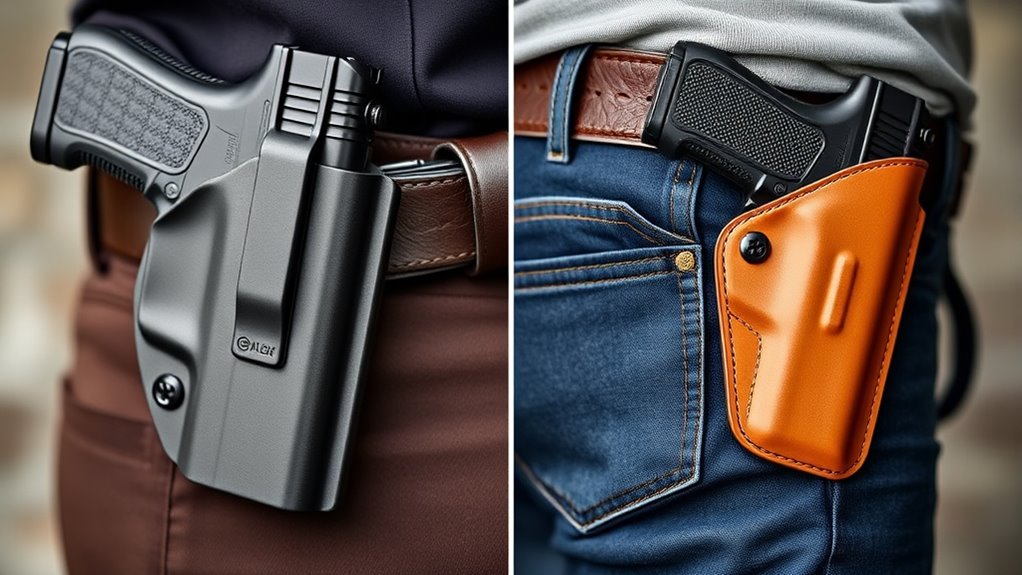
Paddle holsters have a flat, wide piece of material that slides inside your waistband, with a paddle-shaped attachment outside for extra stability. They’re easy to put on and take off, making them a convenient choice for quick access.
IWB holsters are designed to be worn inside your pants, directly against your body. They usually have a clip or belt attachment to keep them secure.
While paddle holsters sit outside your waistband, IWB holsters hide the firearm better by staying inside and close to your body. Both options serve different needs based on comfort, accessibility, and concealment preferences.
How Do Paddle and IWB Holsters Attach and Carry?
Paddle and IWB holsters attach differently, which impacts how you carry your firearm throughout the day. Knowing how each one secures your weapon can help you pick the most comfortable option.
Understanding their attachment methods is key to choosing a holster that fits your needs for comfort and security. Let’s look at how each type positions and holds your firearm in place.
Attachment Methods Explored
Understanding how each holster attaches to your body is key to choosing the right one. Paddle holsters attach via a wide, flat paddle that slides inside your waistband, giving you quick access and stability. They often have adjustable clips or loops for a custom fit and are designed for easy on-and-off wear.
IWB holsters, on the other hand, clip or loop onto your belt and sit inside your waistband, making them more concealed. They usually use adjustable retention screws so you can tighten or loosen the fit around your firearm.
Both methods focus on security and comfort but differ in how easy they are to attach and how well they conceal. Paddle holsters are more versatile for quick wear and removal, while IWB holsters prioritize discreet carry and a snug fit.
Carrying Positions Explained
Since the way a holster attaches influences your carry position, it’s important to understand how each type is worn. Paddle holsters typically attach outside the waistband, allowing you to wear them at various positions like strong side, crossdraw, or appendix.
They’re easy to put on and remove, making quick adjustments simple. IWB holsters are worn inside the waistband, usually at the appendix, hip, or behind the hip. They offer concealed carry, so your firearm stays hidden beneath clothing.
Your choice depends on comfort and concealment needs. Paddle holsters provide quick access and easy removal, ideal for open carry or quick draws. IWB holsters, however, excel at concealment and are perfect for discreet carry.
Understanding these positions helps you select the right holster for your carry style.
Which Holster Offers Faster Draws and Better Accessibility?
In terms of speed and accessibility, where and how your holster is worn really matters. A paddle holster usually lets you draw faster because it’s easier to access and provides a smooth draw.
IWB holsters might take a bit more effort for a quick draw, but they offer better concealment. How each holster lines up with your movement and grip can make a big difference in how fast you can respond.
Accessibility Speed Factors
The speed and ease with which you can draw your firearm often depend on the holster you choose. Paddle holsters usually offer quicker access because they sit outside your waistband and can be drawn fast without adjusting your clothing.
Their open-top design makes for a faster, smoother draw, especially in emergencies. IWB holsters sit inside your waistband, which can slow down your draw due to clothing interference or needing to reposition your hand.
Some IWB models have adjustable retention and cant angles that can improve accessibility. Overall, if quick access is your priority, paddle holsters generally provide faster, more immediate accessibility.
But comfort and concealment might influence your choice, depending on your specific needs.
Holster Placement Efficiency
Holster placement plays a crucial role in how quickly and easily you can draw your firearm. A paddle holster, usually worn outside the waistband, offers quick access because it’s positioned for immediate reach and easy removal. Its open design lets you slide your hand in smoothly, making draws faster in high-pressure situations.
On the other hand, IWB holsters sit inside your waistband, often requiring you to adjust your grip and clothing to access your firearm. While IWB provides better concealment, it can sometimes slow down your draw because of deeper placement and extra clothing layers.
Draw Technique Variations
Drawing from a paddle holster usually requires less manipulation because its open design lets your hand slide directly to the grip with minimal obstruction. This makes for a smoother, faster draw, especially in high-pressure situations.
Since the paddle sits outside your waistband, you can access your firearm easily without adjusting your clothing or holster. In contrast, IWB holsters often involve more steps—like repositioning or maneuvering clothing—to draw quickly.
With IWB, you might need to break your grip and reposition your hand to clear the holster properly, which can slow your response time. Overall, paddle holsters tend to offer quicker, more accessible draws, making them great when rapid access is crucial.
Are Paddle or IWB Holsters More Comfortable for Daily Carry?
Have you ever wondered which type of holster feels more comfortable for daily carry—the paddle or the IWB? Comfort really depends on your body shape and carry preferences.
IWB holsters sit inside your waistband, offering a snug fit that many find less noticeable once you get used to it. They distribute weight evenly and can be adjusted for a personalized fit.
Paddle holsters, on the other hand, clip outside the waistband, making them quick to draw and remove. They tend to feel less restrictive but may shift during movement, which can cause discomfort.
If you prefer a more discreet option, IWB might be more comfortable for long days. If quick access and easier removal are more important, paddle holsters could be the better choice.
Ultimately, comfort varies based on personal preference and daily activity.
How Do They Compare in Adjustability and Versatility?
When comparing paddle and IWB holsters, their adjustability and versatility are key factors in how well they fit your needs. Paddle holsters often have adjustable retention and cant, so you can customize the fit and the angle for drawing.
They’re generally easier to put on and take off, making quick adjustments simple. IWB holsters usually offer more detailed adjustability, like adjustable retention screws and multiple carry positions.
This versatility helps you fine-tune comfort and access. But, IWB models can be a bit more effort to adjust because of their complex retention systems. Overall, paddle holsters allow for quick, simple adjustments, while IWB holsters offer broader options for personalized carry.
IWB holsters offer more customization but require more effort to adjust compared to the quick, simple adjustments of paddle holsters.
Your choice depends on how much customization you want.
Which Holster Is Easier to Clean and Maintain?
Cleaning and maintaining your holster is key to making sure it lasts and works well. When comparing paddle and IWB holsters, how easy they are to clean can be quite different.
Paddle holsters usually have fewer crevices, so they’re generally easier to wipe down and keep clean. On the other hand, IWB holsters tend to fit tighter and have more intricate designs, which can require more attention when cleaning.
Material matters too. Leather holsters need conditioning to stay in good shape, while Kydex or polymer options are easier to wipe clean. Simpler designs also mean less dirt and debris can get trapped.
Regular cleaning helps prolong the life of any holster, but paddle styles usually demand less effort to maintain.
How Do Cost, Price, and Value Differ Between Paddle and IWB Holsters?
Are you curious about how the costs of paddle and IWB holsters compare? Generally, paddle holsters tend to be more affordable upfront, making them appealing for budget-conscious buyers. They often cost less because they’re simpler to manufacture and don’t require the extra hardware or attachments that IWB holsters might need.
IWB holsters, on the other hand, can be more expensive due to their more complex design, adjustable features, and premium materials. However, their higher price can offer better comfort, concealment, and durability, providing good value over time.
Ultimately, the true value depends on how well each holster fits your needs, comfort, and how often you plan to use it. While initial cost matters, investing in quality can save you money in the long run.
Which Holster Is Best for Your Lifestyle and Carry Preferences?
Choosing the right holster really depends on your daily routine and how you like to carry your firearm. Think about your activity level, what you wear, and what feels comfortable for you.
If you’re active or wear lighter clothing, an IWB holster can hide your gun without adding bulk. It’s great for concealment and comfort during everyday tasks.
For quick access and open carry, a paddle holster might be a better fit. It’s easy to draw from and perfect if you want to be ready to go.
Consider where you spend most of your time—are you sitting at a desk or moving around outside? Your lifestyle plays a big role in choosing the best holster for you.
If concealment and comfort are your priorities, go with an IWB holster.
If you want fast access and easy drawing, a paddle holster is ideal.
And if you carry daily and need something versatile, look for a holster that adapts to your routine.
Frequently Asked Questions
Are Paddle Holsters Suitable for Concealed Carry?
Paddle holsters are generally not ideal for concealed carry because they tend to be bulkier and more noticeable under clothing.
However, if you want quick access and easy removal, they can work for open carry or situations where concealment isn’t a big deal.
For better concealment, consider an IWB holster. It stays hidden and offers a snug fit, making it more suitable for discreet carry.
Can I Switch Between Paddle and IWB Holsters Easily?
Yes, you can switch between paddle and IWB holsters easily, but it depends on each holster’s design. Many holsters work with different clothing styles, making switching straightforward.
You might need to adjust retention settings or how the holster attaches to your belt. Practicing transferring your firearm between holsters helps ensure a smooth, safe change.
Always prioritize safety when handling your weapon during these adjustments. With a bit of practice, switching becomes quick and hassle-free.
What Materials Are Commonly Used in Paddle and IWB Holsters?
Did you know that leather and Kydex are the most popular materials for holsters? You’ll often see paddle holsters made from sturdy leather or durable Kydex, both offering strength and flexibility.
IWB holsters usually use these materials too, but they often include neoprene or nylon for extra comfort. Leather gives a classic look, while Kydex is lightweight and rigid.
Your choice really depends on what you prioritize—comfort, durability, or style.
How Do Weather Conditions Affect Holster Choice?
Weather conditions greatly influence your holster choice. In hot, humid climates, you’ll want a breathable, lightweight material like Kydex or nylon to prevent sweat buildup and discomfort.
Cold or rainy weather calls for water-resistant options, such as coated leather or synthetic materials, to protect your firearm and keep it dry.
Ultimately, choosing a holster suited to your environment helps guarantee comfort, safety, and reliable performance.
Are There Specific Firearms Better Suited for Each Holster Type?
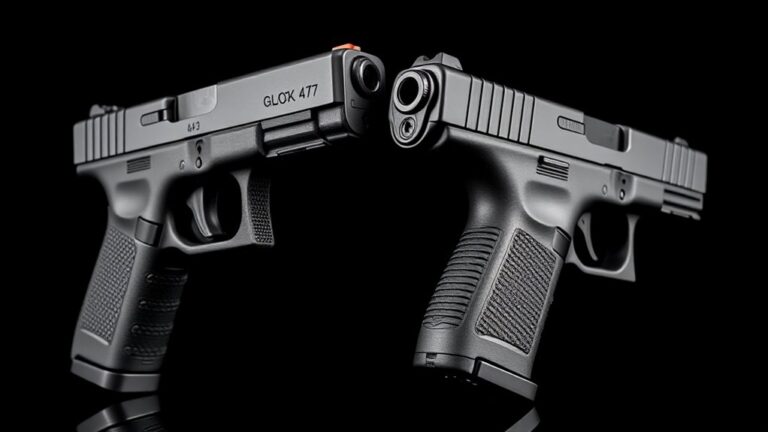
If you’re considering which holster suits your firearm, a paddle holster often works well with larger, heavier guns like a Glock 17. It provides sturdy, quick access.
Conversely, IWB holsters are ideal for compact firearms such as a Smith & Wesson M&P Shield. They offer deep concealment and comfort.
For example, a law enforcement officer might prefer a paddle holster for duty use and an IWB for concealed carry off-duty.
Conclusion
Choosing between a paddle holster and an IWB ultimately depends on your lifestyle and preferences, much like picking the right gear for a trip. It’s about finding the perfect fit for your daily routine, comfort needs, and budget.
Think of it as finding the key that unlocks comfort, accessibility, and security. Each holster has its own strengths, so consider how it will work with your wardrobe and activity levels.
With the right choice, you’ll carry with confidence. It turns everyday wear into a seamless extension of yourself, giving you personal armor in the rhythm of daily life. When it comes to paddle holsters versus IWB, making an informed decision helps you stay prepared and comfortable.