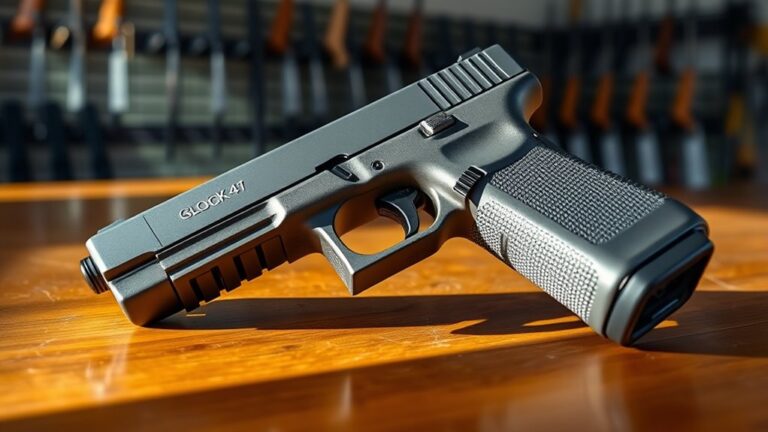
Understanding Hard Cast Ammo: A Complete Guide
Are you tired of struggling with unreliable ammo that doesn’t deliver the performance you need? You’re not alone—many shooters face challenges finding the right rounds for hunting, self-defense, or target practice.
Hard cast ammo might just be the solution you’ve been searching for.
Hard cast ammo consists of lead bullets alloyed with metals to boost durability, making them great for hunting, self-defense, and target practice. They offer deep penetration, consistent shape, and reusability, especially in tough conditions.
Comparing them to jacketed bullets, hard cast provides more impact resistance, but both have their advantages.
Want to know how to choose, maintain, and optimize your hard cast ammo? Keep exploring to get all the essential details.
Key Takeaways
- Hard cast bullets are made from lead alloyed with metals to improve durability and penetration.
- They are ideal for hunting tough game and long-range shooting because they tend to retain their shape better.
- Proper reloading techniques and safety practices are crucial to prevent overpressure and avoid damaging your firearm.
- Hard cast ammo offers deep penetration, making it a good choice for specific hunting and defense situations.
- Regular firearm maintenance is important to manage lead buildup and keep your gun performing reliably.
What Is Hard Cast Ammo and Why Do Shooters Use It?
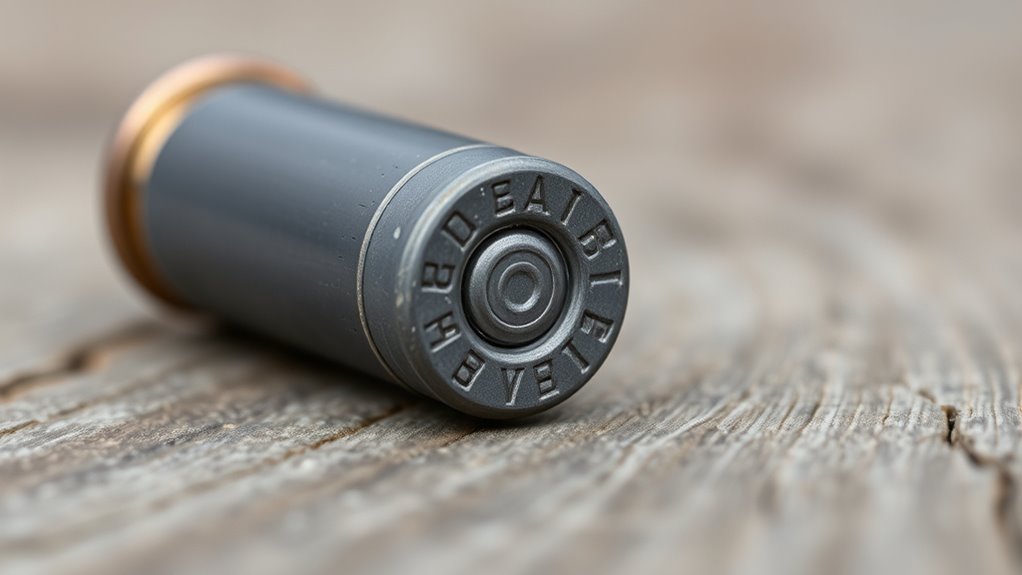
Hard cast ammo consists of bullets made from lead that’s been alloyed with other metals to create a dense, durable projectile. You use it because it’s designed to withstand high velocities without deforming or breaking apart.
Unlike traditional lead bullets, hard cast rounds penetrate deeper and keep their shape under tough conditions, making them great for hunting and shooting through thick targets.
Hard cast rounds penetrate deeply and maintain shape, ideal for tough targets and challenging hunting conditions.
They’re also less likely to lead up your barrel, which can cause fouling and require more frequent cleaning.
You’ll find hard cast ammo especially useful when tackling tough game or shooting at longer ranges where accuracy and penetration matter most.
Key Benefits of Hard Cast Bullets for Shooting and Hunting
The benefits of using hard cast bullets become clear when you’re aiming for reliable performance in challenging shooting and hunting scenarios. They’re known for their exceptional durability, which helps them resist deformation and fragmentation upon impact. This means you get deeper penetration, making them ideal for hunting larger game or shooting at longer ranges.
Hard cast bullets also offer excellent accuracy because their uniform shape and consistency reduce barrel fouling and improve shot placement. Moreover, they’re cost-effective over time since they can be reused after reloading, saving you money.
Their ability to perform reliably in tough conditions, such as thick cover or heavy bone impact, makes them a preferred choice for hunters and shooters seeking dependable, consistent results.
Hard Cast vs. Jacketed Bullets: How Do They Perform?
How do hard cast and jacketed bullets compare in performance? Hard cast bullets are great at penetrating tough targets and resisting deformation, making them perfect for hunting dense game or shooting through barriers. They keep their shape better under high impact, which helps maintain accuracy over long distances.
Jacketed bullets, on the other hand, usually deliver cleaner, more precise shots with less barrel fouling thanks to their copper or brass coverings. They tend to expand more reliably upon impact, which is helpful for hunting game that needs quick incapacitation.
When it comes to recoil and accuracy, both can perform well depending on the load and firearm. Hard cast bullets are generally more durable and better suited for hard targets, while jacketed bullets are optimized for precision and effective terminal performance in softer targets.
How to Choose the Right Hard Cast Ammo for Your Needs
To choose the right hard cast ammo, start by figuring out what you’ll be using it for—self-defense, hunting, or target shooting. Knowing your main purpose helps narrow down your options.
Next, make sure the caliber matches your firearm. It’s a simple step but super important for safety and performance. Then, think about how much penetration and expansion you need for your specific use.
Finally, weigh these factors to find ammo that offers a good balance of performance, safety, and reliability. Picking the right hard cast ammo is all about matching it to your needs.
Determine Your Shooting Purpose
Determining your shooting purpose is a crucial step in selecting the right hard cast ammo because different applications demand different performance characteristics.
If you’re using it for self-defense, prioritize ammo with reliable expansion and penetration to stop threats effectively. For hunting, focus on hard cast rounds that offer deep penetration to reach essential organs, especially on larger game.
Target shooting or practice requires ammo that performs consistently and produces minimal fouling. Consider the environment you’ll be shooting in—outdoor or indoor—and how that influences your choice.
Your specific needs will guide you toward the right bullet weight, hardness, and load. Clarifying your purpose guarantees you choose ammo optimized for your shooting goals, improving both safety and effectiveness.
Consider Caliber Compatibility
Choosing the right hard cast ammo starts with making sure it’s compatible with your firearm’s caliber. Using the wrong caliber can cause malfunctions or even damage your gun, so always double-check your firearm’s specs.
Measure your barrel’s caliber or check your owner’s manual to confirm the exact size needed. Different calibers need different bullet diameters, so never assume similar ones are interchangeable.
When you’re shopping, look carefully at the ammo packaging. It should clearly state the caliber—don’t just guess based on appearance. Even small differences in diameter can affect chambering and safety.
Ensuring compatibility protects your firearm and ensures it performs properly. Always match your hard cast ammo to your gun’s specifications for safe and reliable shooting.
Assess Penetration and Expansion
Evaluating penetration and expansion is crucial when selecting hard cast ammo because different situations demand different performance traits. You need to consider how deeply the round will penetrate to ensure it reaches vital organs without over-penetrating and causing unintended damage.
Expansion affects stopping power because it creates a larger wound channel, increasing the chance of a quick, humane stop. For self-defense, you want a round that penetrates enough to hit critical areas but also expands reliably.
Hunting scenarios might require deeper penetration for ethical kills. Test different loads to see how they perform in your firearm and target medium. Adjust your choice based on the environment, threat level, and your personal preferences to find the best hard cast ammo for your needs.
Best Uses for Hard Cast Bullets: Hunting, Self-Defense, and Range Practice
Hard cast bullets excel in various shooting scenarios because they’re durable and penetrate well.
Hard cast bullets provide reliable penetration and durability across many shooting applications.
For hunting, they’re great for game that needs deep penetration, like thick-skinned animals, since they can handle impact without breaking apart.
In self-defense situations, hard cast bullets reliably penetrate barriers and clothing, making sure your shot hits vital organs.
They’re also perfect for range practice, helping you test your firearm’s accuracy and consistency with long-lasting, durable ammo.
Their toughness means less fouling and barrel wear, which makes them cost-effective if you shoot frequently.
But avoid using them when you want expansion or quick energy transfer, because they’re designed more for penetration than expansion.
Safety Tips for Handling and Shooting Hard Cast Ammunition
When handling and shooting hard cast ammo, make sure you follow proper techniques to avoid accidents. Always wear your protective gear and keep your workspace tidy to stay safe.
Remember to practice safe shooting habits. This helps protect not just you but everyone around you as well.
Proper Handling Techniques
Handling hard cast ammunition safely is essential to prevent accidents and ensure proper firearm performance. Always wear eye and ear protection before handling or loading ammo.
Inspect each round carefully for damage or imperfections, like cracks or deformations, which can cause malfunctions. Use a clean, well-lit workspace to reduce the chance of dropping or mishandling rounds.
When loading, follow the firearm manufacturer’s guidelines, making sure the ammo fits correctly and is seated properly. Take your time with each step—don’t rush.
Store ammunition in a cool, dry place, away from heat sources or humidity. Keep rounds out of reach of children and unauthorized persons.
Proper handling minimizes risks and helps ensure your firearm works reliably when you need it.
Safe Shooting Practices
To guarantee safe shooting with hard cast ammunition, always wear appropriate eye and ear protection before firing. Hard cast rounds can produce more pressure and noise, so protecting your senses is essential.
Follow your firearm’s manual for proper loading and make sure your gun is in good condition. Keep your finger off the trigger until you’re ready to shoot, and always point the firearm in a safe direction.
Be aware of your target and what’s beyond it because hard cast bullets can penetrate deeper. Use the correct ammunition for your firearm, and avoid improvising or reloading your own rounds without proper knowledge.
Finally, stay sober and focused. Practicing these safety tips helps prevent accidents and ensures a safe, enjoyable shooting experience.
How to Reload Hard Cast Bullets Safely and Effectively
Reloading hard cast bullets requires careful preparation to guarantee safety and peak performance. First, confirm your workspace is clean and well-ventilated. Wear safety glasses and gloves to protect against accidental primer or powder spills.
Always use appropriate reloading data specific to hard cast bullets to avoid overpressure. When resizing and seating bullets, check for proper fit and crimp them securely to prevent bullet setback during firing.
Use a chronograph to verify velocity, and double-check your powder charge with a scale. Store reloaded rounds in a cool, dry place, and keep your reloading equipment maintained and calibrated.
Following these steps helps prevent accidents and ensures your hard cast bullets perform reliably, making your reloading process safer and more effective.
Common Myths About Hard Cast Ammo Debunked
Many myths about hard cast ammo stick around despite advances in bullet design and reloading techniques. One common misconception is that hard cast bullets always cause excessive barrel wear. In reality, modern alloys and coatings help reduce this issue.
Another myth is that they’re prone to over-penetration. But with proper load development, you can control both expansion and penetration effectively. Some folks also believe hard cast bullets are only good for handguns, yet they work well in rifles too.
Here’s a quick fact check:
| Myth | Reality | Impact on Use |
|---|---|---|
| Hard cast causes rapid barrel wear | Modern alloys and coatings cut down on wear | Safe to use often |
| They over-penetrate easily | Proper loads control penetration and expansion | Great for self-defense |
| Suitable only for handguns | They perform well in rifles too with the right loads | Versatile across platforms |
Knowing these myths helps you make smarter choices about your ammo.
Hard Cast vs. Cast vs. Jacketed Bullets: What’s the Difference?
Understanding the differences between hard cast, cast, and jacketed bullets starts with their composition and materials. Each type is designed for specific scenarios, so knowing what suits your needs can improve your shooting performance.
Let’s explore when and where to use each type for the best results. This way, you can choose the right bullet for your firearm and shooting style without any guesswork.
Composition and Material Differences
The composition and materials used in bullets are key to how they perform and what they’re best suited for. Hard cast, cast, and jacketed bullets mainly differ in their materials, which impacts durability, penetration, and ease of use.
Hard cast bullets are made from a lead alloy with added metals like tin or antimony for strength. This makes them ideal for deep penetration and tough conditions.
Cast bullets are usually softer, made from pure lead or with minimal alloys. They’re easier to mold but tend to wear out faster.
Jacketed bullets have a lead core covered with a copper or brass jacket. This design reduces barrel fouling and improves accuracy over time.
Ideal Usage Scenarios
Choosing the right bullet type really depends on what you’re planning to do with your firearm. Hard cast bullets are great for hunting big game and provide strong stopping power, especially at close to medium ranges.
Cast bullets are pretty versatile—they work well for target shooting and practice but might not penetrate deeply enough for larger animals.
Jacketed bullets are best suited for high-velocity shooting and hunting. They help reduce barrel fouling and expand reliably on impact.
| Bullet Type | Best For | Limitations |
|---|---|---|
| Hard Cast | Big game, rugged terrain | Heavier wear on barrel |
| Cast | Target practice, varmints | Less penetration for large game |
| Jacketed | High-velocity, hunting | More expensive |
Choose the bullet type based on your target, environment, and firearm capabilities for the best results.
Maintaining Your Firearm When Using Hard Cast Bullets
Because hard cast bullets can be more abrasive than traditional jacketed rounds, it’s essential to regularly maintain your firearm to prevent excessive wear and ensure reliable performance. Hard cast bullets can cause faster barrel erosion and buildup of fouling, so cleaning becomes even more important.
After shooting, thoroughly clean your firearm’s bore, chamber, and moving parts to remove lead residue and debris. Regularly inspect the barrel for signs of wear or damage, and apply a good quality lubricant to reduce friction and prevent corrosion.
Consider using a bore cleaner designed for lead fouling to keep your firearm in top condition. To keep everything working smoothly, always remember to clean after every shooting session, use appropriate lubricants and solvents, and check for signs of wear regularly.
How to Spot High-Quality Hard Cast Ammunition on the Market
To spot high-quality hard cast ammunition, start by checking the lead alloy composition and manufacturing standards. Look for bullets made from a consistent, properly alloyed lead mixture, usually with a small amount of antimony or tin to add hardness.
Reputable manufacturers clearly label their products, showing alloy details and compliance with industry standards. Inspect the bullets for uniformity in size, shape, and finish—irregularities can indicate poor quality or shortcuts during production.
Check for smooth, well-defined seams and minimal porosity or casting flaws. The packaging should look professional, with clear specifications and batch numbers. Avoid cheap or unbranded options, as they often lack quality control.
High-quality hard cast ammo offers consistent performance, reliable expansion, and safer shooting overall.
Future Trends in Hard Cast Bullet Technology and Manufacturing
Advancements in materials science and manufacturing processes are driving big innovations in hard cast bullet technology. Expect to see stronger, more durable alloys that improve penetration and reduce deformation.
Manufacturing techniques like precision casting and 3D printing are enabling tighter tolerances, which means more consistent performance. New coatings and surface treatments will likely cut down on fouling and corrosion, helping bullets last longer.
You might also see the use of environmentally friendly materials, making bullets safer for both the environment and shooters. Overall, these trends point to more reliable, effective, and eco-conscious bullet options in the future.
- Improved alloy compositions for better armor penetration
- Advanced coatings for corrosion resistance and reduced fouling
- Precision manufacturing for tighter tolerances and consistent accuracy
Frequently Asked Questions
How Does Hard Cast Ammo Affect Barrel Wear Over Time?
Hard cast ammo can increase barrel wear over time because its harder projectiles create more friction against the barrel’s rifling. You might notice this wear as slight erosion or leading buildup, especially if you shoot often or use lower-quality barrels.
To minimize wear, make sure your firearm is well-maintained and cleaned regularly. If barrel longevity is a big concern, consider using softer projectiles to reduce the amount of wear.
Can Hard Cast Bullets Be Used in All Firearm Calibers?
Like a knight donning armor, you can use hard cast bullets in most firearm calibers, but not all. They work well in popular calibers like .357 Magnum or .45 ACP, yet some high-pressure or specialized calibers may require specific bullet types.
Always check your firearm’s manufacturer recommendations and verify the bullet’s design matches your gun’s specifications to avoid damage or safety issues. Proper matching guarantees your shooting remains smooth and safe.
What Environmental Factors Influence Hard Cast Bullet Performance?
Environmental factors like temperature, humidity, and dirt notably influence your hard cast bullet performance. Cold weather can cause metals to contract slightly, which might affect your accuracy.
High humidity may lead to corrosion if your firearm isn’t properly maintained. Dirt, mud, or debris can jam or clog your weapon, reducing its effectiveness.
Always clean and lubricate your gun after exposure to harsh conditions. And consider environmental specifics when choosing your ammunition to keep things running smoothly.
Are There Specific Cleaning Procedures After Shooting Hard Cast Ammo?
After shooting hard cast ammo, it’s important to clean your firearm thoroughly to prevent lead buildup and corrosion. Think of it like caring for a garden to keep it healthy.
Use a solvent made specifically for lead removal. Scrub the barrel and chamber with a brush to loosen any deposits. Then, follow up with a good lubricant to protect the metal.
Pay extra attention to the barrel and chamber, removing any residual lead or debris. Regular cleaning ensures your gun stays reliable and ready for your next shoot, just like a well-tended tool.
How Does Hard Cast Ammo Impact Firearm Accuracy at Long Distances?
Hard cast ammo can slightly affect your firearm’s accuracy at long distances because it can cause increased barrel wear and lead buildup. Over time, this might lead to a decrease in precision.
You might notice your gun isn’t as accurate if you don’t clean it properly after shooting. Regular maintenance is key to keeping your firearm in good shape.
Make sure to thoroughly clean the barrel, especially the rifling, and check for any lead deposits. Keeping your gun clean helps maintain its accuracy at long ranges.
Conclusion
Understanding hard cast ammo reveals a new level of confidence in your shooting journey. Just as a sturdy foundation supports a towering structure, choosing the right bullets guarantees your firearm’s integrity and your safety.
With knowledge and care, you become the steady hand guiding the course. Welcome this craft and let your choices echo resilience and purpose, like the unwavering flame that lights the path forward in every shot you take.
Understanding hard cast ammo is a key part of building that confidence and purpose.