How to Change Glock Sights – Step-by-Step Guide
Changing your Glock sights can feel intimidating if you’re new to firearm maintenance, but you’re not alone. Many gun owners find this task tricky at first, wondering if they’ll do it right or risk damaging their slide.
Luckily, with a little guidance, you can master it easily and improve your shooting accuracy.
To change Glock sights, start by ensuring your firearm is unloaded. Use a sight pusher tool or small punch to carefully remove the old sights, then clean the slide.
Align your new sights with the slide’s grooves and press them into place, using a pusher or brass punch for a secure fit. Adjust and zero the sights for accuracy.
If you encounter issues or want expert tips, there’s more to investigate below.
Key Takeaways
- Before you start, make sure the firearm is unloaded and remove the magazine. Safety first!
- Use a sight pusher tool or a brass punch to carefully remove the old sights. When installing new ones, do the same with gentle pressure.
- Align the new sights properly with the slide’s grooves. Press gently until they sit flush.
- Make small adjustments to get everything just right. Zero the sights for accurate targeting.
- It’s a good idea to regularly clean and inspect your sights. If you notice any damage or misalignment, don’t hesitate to seek professional help.
Why Should You Upgrade Your Glock Sights?
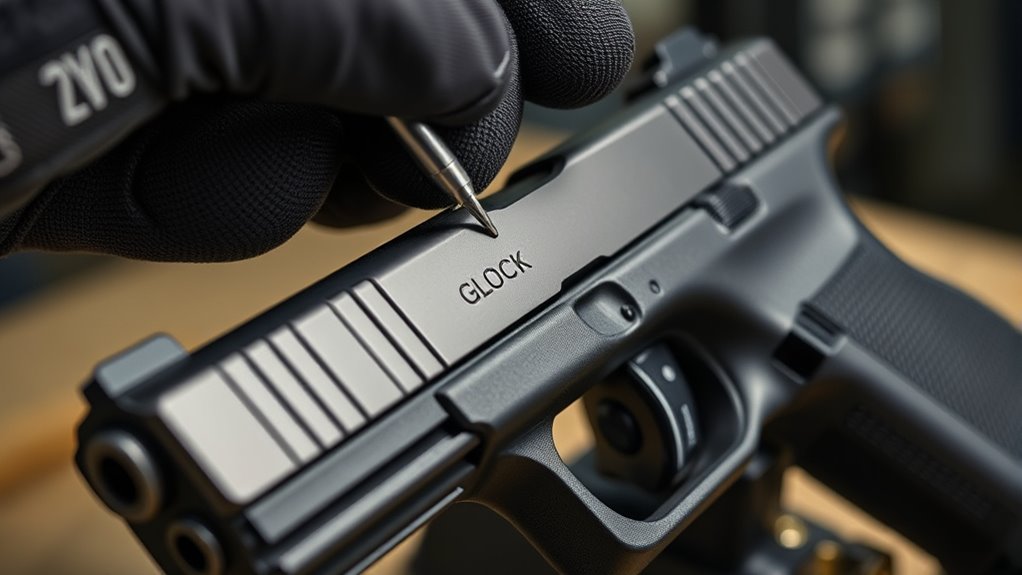
Upgrading your Glock sights can really boost your shooting accuracy and confidence. Stock sights are dependable but often made for general use, which might not match your specific needs.
Custom sights can help you lock onto targets faster and improve precision, especially in low-light or fast-moving situations. If you’re into competitive shooting, tactical training, or self-defense, upgraded sights give you a clear advantage with more visible indicators.
They also make it easier to align your sights quickly, reducing the chance of missing your target. Plus, many aftermarket sights are more durable and resistant to wear, so they keep performing well over time.
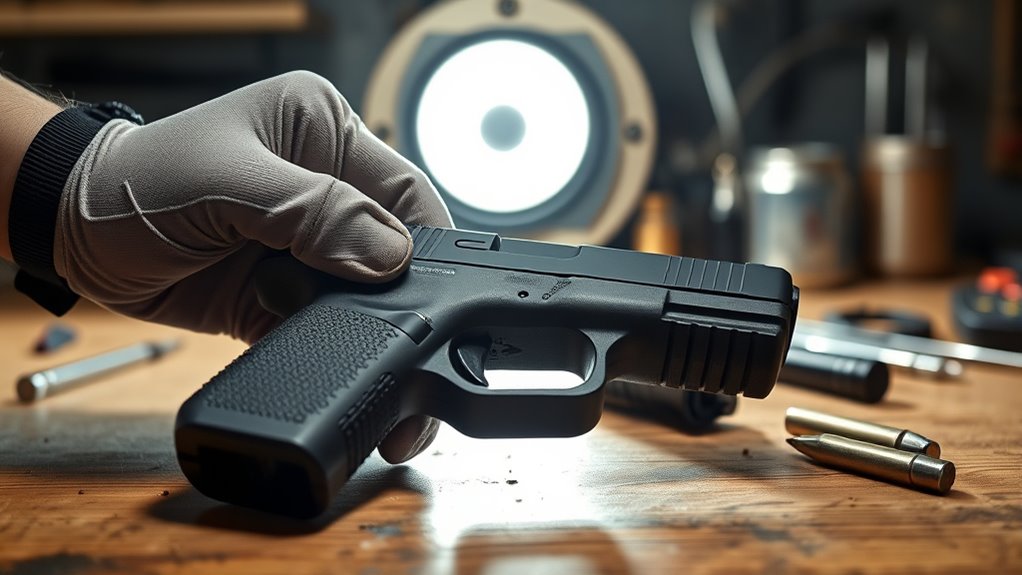
Tools Needed to Change Glock Sights
Changing your Glock sights requires a few specific tools to do the job correctly and safely. First, you’ll need a sight pusher tool, which is designed to remove and install sights without damaging your slide.
A sight pusher tool is essential for safe, damage-free Glock sight removal and installation.
A small hammer or punch can help with stubborn sights, but use it carefully to avoid dents or scratches. You’ll also need a flat-head or Phillips screwdriver, depending on your sight type, for any screws involved.
Moreover, some cleaning supplies like a cloth or brush can help keep your workspace tidy. If you’re working with a Glock that has a front sight set pin, a nylon or plastic punch is recommended to prevent marring the slide.
Having these tools ready will guarantee a smooth and safe sight replacement process.
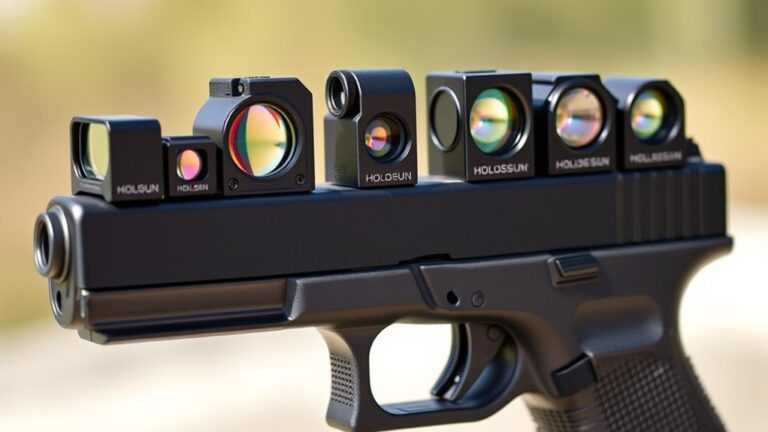
Choosing the Right Glock Sights for Your Needs
Are you unsure which Glock sights are best suited to your shooting style and needs? Think about what matters most: visibility, speed, or accuracy.
First, consider fiber optic sights—they glow brightly in daylight, making it quick to acquire your target.
Second, night sights use tritium, so they’re perfect if you often shoot in low light or darkness.
Third, combining fiber optic with a glow-in-the-dark rear can give you a balance of fast focus and visibility in different conditions.
Your choice depends on whether you prioritize rapid shots, precise aiming, or versatility.
Visualize yourself at the range or in a self-defense situation, and pick sights that boost your confidence and performance in those scenarios.
Removing Your Old Glock Sights Safely
Before installing new sights, you’ll need to safely remove the old ones from your Glock. Start by making sure your firearm is unloaded and the magazine is out.
Use a proper sight removal tool or a small punch to gently tap the sights out. For rear sights, place the punch on the base and tap lightly from the side.
Use a small punch to carefully tap out the sights from the side or base.
For front sights, apply gentle pressure directly on the sight, avoiding the slide’s surface. Be careful not to damage the slide or scratch the finish.
If the sight is stubborn, a little penetrating oil can help loosen it up. Take your time and work steadily to avoid cracks or damage.
Once the sights are out, clean the slide so it’s ready for the new installation.
Installing Your New Glock Sights : Step-by-Step
To install your new Glock sights, start by aligning them correctly with the slide. First, position the sight so that the notch or dot lines up with the designated groove on the slide.
Next, secure it in place by pressing down gently, making sure it sits flush. Finally, use a sight pusher or a hammer with a brass punch to gently tap the sight into the correct position, feeling for a firm seat.
Remember, you want the sight to be centered and level with the slide’s surface. Visualize the process as:
- Aligning the sight with the slide’s grooves.
- Applying gentle pressure to hold it in place.
- Tapping it steadily until it’s firmly seated.
This guarantees a proper, secure fit for accurate shooting.
How to Zero and Align Your New Sights
Once you’ve installed your new sights, it’s time to zero and align them for accurate shooting. You want to make sure your sights are set correctly so your shots hit where you’re aiming.
You’ll need to properly sight the rifle by adjusting the sights until your shots land exactly where you want. This process helps ensure your firearm delivers precision every time you pull the trigger.
Properly Sight the Rifle
Aligning your sights accurately is essential for precise shooting. To properly sight your rifle, start by securing it on a stable surface or shooting rest.
Next, focus on the target and carefully line up your sights. Imagine placing the front sight exactly in the center of the rear sight notch, making sure it’s level from side to side.
Then, align the top of the front sight perfectly with the top of the rear sight to create a straight, horizontal line. Center the target in the front sight post or aperture so your shot hits where you aim.
Take your time to check each step. Make small adjustments and verify that your sights are perfectly aligned.
Proper sighting boosts your accuracy and confidence with every shot.
Adjust for Precision Aim
After mounting your new sights, the next step is to zero and align them for maximum accuracy. Find a reliable target at your desired distance, preferably with a bullseye or grid. Fire a few shots to see where your rounds hit relative to your point of aim.
Adjust the rear sight by turning the screws—usually clockwise to lower the point of impact or counterclockwise to raise it. For the front sight, if adjustable, move it slightly left or right to align with the target.
Repeat firing and adjusting until your shots consistently hit where you aim. Take your time, make small adjustments, and test at different distances if needed. Proper zeroing guarantees your Glock’s sights deliver precise, predictable accuracy every time.
Troubleshooting Common Glock Sight Installation Issues
If you’re having trouble installing your Glock sights, the most common issue is getting them fitted properly without causing damage. Using the right tools is key to making sure the sights stay secure and don’t get misaligned.
Troubleshooting these problems starts with checking that you have the correct equipment. Applying proper techniques will also help ensure a smooth installation process.
Common Installation Challenges
Installing Glock sights can sometimes be trickier than you’d expect, especially if they don’t slide on smoothly or sit flush. Common problems include stubborn sights that resist moving, uneven seating, or misalignment.
To troubleshoot, think about these issues:
- Sticking Sights: The sight might be tight or corroded. A little oil or lubricant can help it slide on easier.
- Misalignment: The sight could tilt or sit unevenly. Make sure you’re lining it up correctly before applying force.
- Incomplete Seating: The sight might not be fully seated in the channel. Gently tap it with a rubber mallet or punch to make sure it’s flush.
Dealing with these problems carefully helps prevent damage and ensures a proper fit.
Proper Tool Usage
Using the right tools is essential when troubleshooting Glock sight installation issues. Make sure you have a good sight pusher or a brass punch, along with a hammer, to avoid damaging your firearm.
A properly sized screwdriver can help tighten or loosen screws without slipping. Avoid using metal tools that might scratch or deform the slide or sights.
If the sight is stuck, don’t force it. Instead, use a gentle tap with the punch and hammer to seat or remove it carefully.
Lubricating the sight or slide can make installation smoother. Always secure the firearm in a vise or on a work surface to prevent slips.
Proper tool usage minimizes damage and makes the process safer and more efficient.
Tips for Maintaining Your Glock Sights for Longevity
To keep your Glock sights in great shape and reliable, regular maintenance is key. Start by cleaning the sights with a soft brush or cloth to wipe away dirt and debris that can block your view.
Next, check for any corrosion or damage, especially around the edges and mounting points. Address any issues right away to prevent further problems.
Inspect for corrosion or damage around the edges and mounting points, and address issues promptly to prevent further problems.
Then, apply a light coat of lubricant to help prevent rust and keep adjustments smooth. Imagine yourself gently wiping away grime, inspecting for cracks, and lightly oiling the sights—each step helps protect them from wear.
Consistent care keeps your sights bright and accurate, so your Glock stays dependable shot after shot. Remember, keeping up with basic maintenance isn’t complicated but makes a big difference in long-term performance.
When Should You Seek Professional Help?
While regular maintenance helps keep your Glock sights working well, there are times when you should seek professional help. If you’re unsure about removing or installing sights without risking damage to your firearm, it’s better to get expert assistance.
If your sights are badly damaged, crooked, or won’t stay aligned, a gunsmith can ensure proper installation and safety. Trying complex adjustments without experience can cause misalignment or damage, which can hurt accuracy and safety.
If you’re not comfortable using specialized tools or if you encounter stubborn sight components, it’s smart to turn to a professional. Remember, improper installation can compromise your firearm’s reliability, so don’t hesitate to ask for help.
Prioritizing safety and precision is always more important than attempting DIY fixes that could go wrong.
Frequently Asked Questions
Can I Change Glock Sights Myself Without Prior Experience?
Yes, you can change Glock sights yourself even if you don’t have experience, but it’s important to be patient and have the right tools.
Start by safely unloading your firearm and making sure it’s completely safe. Use a sight removal tool to carefully take off the old sights.
Then, align and install the new sights gently, applying just enough pressure. Take your time and follow safety precautions throughout the process.
Watching tutorial videos can really help you understand each step better and prevent any damage to your firearm.
Are There Specific Glock Models Compatible With Certain Sights?
Yes, some Glock models are compatible with specific sights. Most Glock sights are designed to fit standard Glock dovetail cuts, but certain models like the Glock 17, 19, or 26 might need different sight types or heights.
Before buying sights, it’s a good idea to check your Glock’s model and slide specifications. This helps ensure you pick sights that will fit properly and function correctly.
Making sure your sights are compatible makes installation easier and helps your firearm perform as it should.
How Often Should I Check and Realign My Glock Sights?
You should check and realign your Glock sights regularly, ideally every few hundred rounds or once a month, to ensure accuracy.
After cleaning, transportation, or if you notice any change in your shot grouping, it’s a good idea to verify their alignment.
Consistent checks help maintain precision and safety, preventing potential issues during shooting.
Keep a routine, and your firearm will perform reliably over time.
What Are the Signs That My Glock Sights Need Replacement?
Your Glock sights are like a lighthouse guiding your shot. If they’re dim, crooked, or damaged, it’s time for a change.
You might notice misaligned sights, chipped or cracked surfaces, or difficulty acquiring a clear sight picture.
Faded or worn-out sights can also impair your accuracy.
When these signs appear, replacing your sights keeps your aim sharp and your firearm reliable.
Don’t let faulty sights steer you off course.
Is It Safe to Use Aftermarket Sights on My Glock?
Yes, it’s generally safe to use aftermarket sights on your Glock, but make sure they’re compatible with your specific model.
Check the quality and ensure proper installation to avoid any malfunctions or safety issues.
Some aftermarket sights can give you better visibility or last longer, which might improve your shooting experience.
If you’re unsure about how to install them or if they fit your gun, it’s a good idea to ask a professional gunsmith.
This way, you can keep your firearm safe and working correctly.
Conclusion
So, you’ve upgraded your Glock sights — a small change with a big impact. Ironically, the very upgrade that promises precision might just make you question your eyesight more than ever.
But don’t worry, with patience and a steady hand, you’ll soon be hitting your mark with confidence. After all, what’s more satisfying than turning a simple sight swap into a moment of personal mastery?
Happy shooting!