
Top 12 Best 50 Mil FFP Scope Reviews You Can’t Miss
Struggling with scopes that lose zero quickly or fog up in damp conditions is a familiar headache for anyone who’s spent time in the field. The best 50 mil ffp scope solves common issues like poor clarity and unreliable adjustments, which often plague cheaper models. Having an accurate first focal plane reticle matched with solid build quality can make all the difference in shot consistency and confidence.
Key factors that set a good 50 mil ffp scope apart include durable construction using aircraft-grade aluminum to resist wear and weather, reliable elevation and windage turrets with at least 0.1 mil clicks for precise zeroing, and good lens coatings to improve light transmission and reduce glare. Magnification typically ranges from 5x to 25x, providing versatility for varied distances without sacrificing sight picture clarity or ease of focus.
Need a Quick Check?
| Image | Product | Price |
|---|---|---|
Our Top Picks 1  | Celestron Ultima Spotting Scope | Check Price |
Our Top Picks 2  | Celestron Travel Scope 70mm | Check Price |
Our Top Picks 3  | Celestron SkyMaster 15×70 Binoculars | Check Price |
Our Selected Top 12 50 Mil Ffp Scope Picks for Every Need
This list features a range of 50 mil FFP scopes evaluated for performance, suitability, strengths, and weaknesses. Each review provides clear insights to help readers understand which scope fits different needs and shooting preferences.
1. Celestron Ultima 22-66×100 Spotting Scope
Outdoor enthusiasts looking for a dependable spotting scope for nature observation will find this model fits well. It suits long-distance viewing with a strong zoom range and a convenient angled eyepiece that helps reduce neck strain during extended use.
Setting up involves a straightforward manual focus and attaching it to an equatorial mount. The zoom eyepiece offers clear adjustments from 22x to 66x magnification, while the included tripod mounting plate adds stability. Carrying and protecting the scope is simple thanks to the soft case and eyepiece pouch included with the package.
The optics deliver crisp images with vibrant colors and good contrast, thanks to multiple anti-reflective coatings. Its waterproof and fogproof design holds up well in various weather conditions. Some users mention the manual focus can take a bit of time to get just right, which is the main drawback, but build quality and optical clarity receive high marks.
Images are bright and detailed due to multi-coated optics, making wildlife and distant objects clear to see. The manual focus, while precise, can feel slow and requires careful adjustment during use. Weatherproof features mean it performs well outdoors without worry.
Those who want a solid spotting scope with zoom and camera compatibility will appreciate this model’s features and build. Users needing quick-focus or simpler mounts might prefer scopes designed for faster adjustments and ease of setup.
Pros
- Multi-coated lenses improve color and contrast
- Comes with soft carrying case and eyepiece pouch
- Zoom eyepiece with integrated T-adapter for cameras
- Waterproof and fogproof for use in rough weather
Cons
- Manual focus requires patience for sharp images
- Equatorial mount setup may be complex for beginners
| Specification | Details |
|---|---|
| Eye Piece Lens Description | 22-66x zoom |
| Mount | Equatorial Mount |
| Focus Type | Manual Focus |
| Finderscope | Reflex |
| Field Of View | 45 degrees |
2. Celestron Travel Scope 70mm Telescope
Offering bright, sharp views with a 70mm aperture, this refractor telescope suits beginners and families wanting clear daytime and night observations. Its standout feature is the fully coated glass lenses that bring the Moon, planets, and landscapes into focus while remaining lightweight and easy to carry.
Setup takes only a few minutes without any tools, with the full-height tripod and telescope tube snapping into place quickly. The included backpack makes it portable, so carrying it for outdoor adventures is simple. Manual focusing and an altazimuth mount keep changes intuitive, letting you spend time enjoying views instead of fiddling with complicated parts.
Image quality benefits from sharp optics due to fully coated glass lenses and the 70mm aperture providing crisp details within a 1.43° field of view. The build feels solid yet remains lightweight, though some mention the zoom ratio of 2 limits detailed close-up views.
The reflex finderscope helps with aiming, though manual focus means adjusting carefully for clarity.
The telescope delivers rewarding, crisp views thanks to quality optics while setting up fast without tools. Some users mention the modest zoom ratio and manual focus limit detail precision, especially on distant or small objects.
People new to astronomy or families wanting a portable, easy-to-use scope will find it suitable. Observers needing higher magnification or motorized focus might look for a different model.
Pros
- Sharp, clear views with fully coated lenses
- Quick, no-tool setup with full-height tripod
- Lightweight and travel-ready with backpack
- Easy manual focus for beginners
Cons
- Limited zoom ratio of 2 restricts close detail
- Manual focus requires patience for crisp images
| Specification | Details |
|---|---|
| Aperture | 70mm |
| Focal Length | 400 millimeters |
| Mount Type | Altazimuth Mount |
| Focus Type | Manual Focus |
| Field of View | 1.43 degrees |
| Coating | Fully Coated |
3. Celestron SkyMaster 15×70 Astronomy Binoculars
Celestron SkyMaster 15×70 Astronomy Binoculars are designed for those who need powerful magnification combined with large objective lenses. Ideal for astronomy and long-distance land viewing, it excels at delivering bright and sharp images in low light, making it a solid option for evening or night observations.
Setting up requires a tripod due to the binoculars’ size and weight, but the built-in ¼”-20 adapter makes attaching them straightforward. Focus is manual with a center focus knob, which feels precise and responsive. Multi-coated lenses and BaK-4 prisms help bring out details even at dawn or dusk.
The water-resistant build means occasional outdoor moisture won’t be an issue.
The binoculars perform well in bringing distant objects closer with the 15x magnification and 70mm lens diameter. Sharpness stays consistent, and the eye relief provides comfortable viewing sessions.
The most common gripe is the bulkiness making handheld use tough. Constructed solidly with Porro prisms, the main praise lies in the bright images seen under low light conditions.
Bright, detailed images in low light stand out as the most praised feature, while the binoculars’ weight and bulk make handheld use impractical. Users appreciate the tripod adapter but note that the manual focus can require frequent adjustments.
Those wanting steady, powerful views for astronomy or land observation in dim light will find this well suited. Anyone needing lightweight, portable binoculars for quick handheld use will want to consider other options.
Pros
- Powerful 15x magnification for detailed views
- Bright images thanks to BaK-4 prisms
- Water-resistant for outdoor conditions
- Easy tripod mounting with built-in adapter
Cons
- Heavy and bulky, needs tripod support
- Manual focus may take time to adjust precisely
| Specification | Details |
|---|---|
| Magnification Maximum | 15 x |
| Objective Lens Diameter | 7 centimeters |
| Prism Type | Porro Prism |
| Eye Relief | 18 millimeters |
| Exit-Pupil Diameter | 4.7 millimeters |
| Water Resistance Level | Water Resistant |
4. Celestron Telescope Eyepiece, Barlow & Filter Kit

Using this kit makes swapping eyepieces and filters quick and straightforward, perfect for both beginners and those who enjoy casual stargazing. The biggest strength lies in having a range of eyepieces and a 2x Barlow lens all in one sturdy case, so you can explore different magnifications without hassle.
Setup is simple with standard 1.25” mounts that fit most telescopes and an altazimuth mount for smooth adjustment. Daily use involves swapping between 32mm for wide views and 6mm for close zooms, while the fully multi-coated lenses help keep images bright and sharp. The case keeps everything organized and ready to expand your collection.
Performance matches what you’d expect from quality Plössl eyepieces, offering sharp views and a pleasant 52-degree field of view. The built-in 2x Barlow lends versatility by doubling magnification on any compatible eyepiece.
The kit is well-built with a foam-lined case protecting the optics. Most praise focuses on the value and range, while some note the highest magnifications can reveal atmospheric distortions.
The kit receives strong praise for its value, offering multiple eyepieces and a 2x Barlow lens that fit most telescopes, all organized in a sturdy foam-lined case. Most users find the highest power views show distortions caused by atmospheric conditions, which is typical.
This setup suits anyone wanting a versatile starter kit or casual stargazer who wants choices ready at hand. Those seeking very high magnifications or a larger collection may want to look at options with more expansive cases or specialized lenses.
Pros
- Includes 5 eyepieces covering wide to high power
- 2x Barlow lens doubles magnification options
- Foam-lined case keeps everything secure and organized
- Fully multi-coated lenses deliver clear, bright views
Cons
- High magnifications can reveal atmospheric distortions
- Case space limited for significantly larger collections
| Specification | Details |
|---|---|
| Eye Piece Lens Description | Plossl |
| Mount | Altazimuth Mount |
| Compatible Devices | Most telescopes |
| Coating | Fully Multi-Coated |
| Focal Length Description | 64mm |
| Field Of View | 52 degrees |
5. Athlon Optics Ares UHD 22x Eyepiece

Clear and sharp imaging makes it a solid choice for serious spotting scope users needing precise distance measurement. Suited for those who want a straightforward mil dot reticle and reliable waterproofing under harsh conditions. Its biggest strength lies in delivering a crisp view free from distracting chromatic fringes.
Setting it up is straightforward, fitting easily on compatible spotting scopes with its 22x fixed magnification. The etched ranging reticle paired with a quick ranging guide adds practical value during daily outdoor use.
The external XPL coating keeps the lenses clean longer and guards against scratches, while argon purging reduces fogging by expelling moisture for better clarity on chilly mornings.
Images appear bright and detailed thanks to the extra-low dispersion glass, enhancing clarity through challenging light conditions. The waterproof build means it holds up well in rain or accidental immersion.
Most praise highlights image sharpness and protective coatings. The strongest common complaint points to the fixed 22x magnification, limiting versatility for users wanting adjustable zoom.
The extra-low dispersion glass and XPL coating work together to deliver sharp images with clear edges, while waterproofing and argon purging ensure steady performance in wet or humid environments. Most users appreciate the clarity and protection but note the lack of adjustable zoom as a drawback.
Those who need consistent high magnification and rugged weather resistance will find this eyepiece very suitable. Anyone wanting variable zoom or a lighter setup may want to consider other options that offer more magnification flexibility or smaller lens sizes.
Pros
- Clear image with minimal chromatic distortion
- Durable XPL coated exterior lenses
- Waterproof and argon-purged for fog resistance
- Quick ranging guide etched into reticle
Cons
- Fixed 22x magnification limits flexibility
- Relatively large 6.5 cm lens may add weight
| Specification | Details |
|---|---|
| Magnification Maximum | 22 x |
| Objective Lens Diameter | 6.5 centimeters |
| Magnification Minimum | 22 x |
| Compatible Devices | Spotting Scopes |
| Reticle Type | Mil Dot |
6. Monstrum Beast 3-18×50 FFP Rifle Scope

Solid construction with a 50 millimeter objective lens makes this scope ideal for precision long-range shooting. It fits shooters who want both close and extended range versatility at a good magnification range.
The standout feature is its adjustable 3-18x zoom paired with a first focal plane reticle, offering clear targeting regardless of distance.
Setting up the scope is straightforward with its ring mount, and the adjustable magnification lets you switch quickly between closer targets and long shots. The six-level illuminated reticle helps maintain visibility in various lighting conditions, and the precise windage and elevation turrets make fine adjustments easy to perform on the fly. The zero stop feature on elevation is a helpful addition for consistent shooting.
Optically, it provides sharp images thanks to multicoated lenses with extra low dispersion glass, which reduces color distortions. The build quality feels solid and durable with reliable turrets that click precisely at 0.1 MIL per increment.
A common critique is the reticle illumination isn’t always bright enough in extreme daylight, but it’s otherwise a dependable and well-made scope backed by a lifetime guarantee.
The image clarity benefits greatly from extra low dispersion glass, and the scope’s adjustable magnification covers most long-range shooting scenarios well. The illumination system works at various settings but sometimes lacks brightness at peak daylight. The confirmable zero stop is a standout for making repeat shots faster and more reliable.
Shooters needing a broad magnification range with reliable turret adjustments will find this scope useful. Those who often shoot exclusively in full daylight might prefer an option with stronger illumination capabilities. The lifetime guarantee adds a layer of confidence for anyone planning consistent use over time.
Pros
- Sharp image quality with ED glass
- Adjustable 3-18x magnification
- Precise elevation and windage turrets
- Six levels of reticle illumination
Cons
- Reticle illumination struggles in very bright daylight
- Weight not specified, which may affect handling
| Specification | Details |
|---|---|
| Magnification Minimum | 3 x |
| Magnification Maximum | 18 x |
| Objective Lens Diameter | 50 millimeters |
| Reticle Type | MIL |
| Mounting Type | Ring Mount |
7. SVBONY SV202 8×42 Binoculars

Sharp and clear vision stands out with its 8x magnification and ED glass optics, ideal for bird watchers and nature lovers seeking crisp images in various lighting. The wide field of view makes scanning open spaces and tracking movement easy and enjoyable.
Setting it up is straightforward thanks to a center focus knob and a tripod mount option. A solid build with non-slip rubber armor provides good grip during long outdoor sessions. Eye relief at 17.2 millimeters helps reduce eye strain, while the waterproof rating means it handles mist and rain without worry, making it reliable day after day.
Performance shines with excellent color accuracy and minimal chromatic aberration, delivering vibrant views from edge to edge. Durable enough to take on rough environments and wet conditions without damage, yet some find the weight a bit noticeable during extended use. The sharp focus adjusts smoothly, but the zoom ratio stays fixed at 8x, which works well for steady observation rather than fast zooming.
Most appreciate the clarity and color accuracy across the whole view, while weight is the main drawback mentioned. The binoculars handle low light well, making early mornings or dusk enjoyable for bird watching and wildlife spotting. The waterproof and rugged rubber armor also gets strong positive notes for outdoor durability.
People who spend time outdoors tracking animals and birds will find this model suits their needs nicely. Those wanting a lighter pair for long hikes or a zoom lens for adjustable magnification might want to look elsewhere.
Pros
- Sharp images with low chromatic aberration
- Wide 8.12° field of view for tracking
- Waterproof and impact-resistant design
- Comfortable eye relief reduces strain
Cons
- Heavier than some similar models
- Fixed 8x magnification lacks zoom flexibility
| Specification | Details |
|---|---|
| Magnification Maximum | 8 x |
| Objective Lens Diameter | 42 millimeters |
| Field of View | 8.12 degrees |
| Water Resistance Level | Waterproof (IPX7) |
| Eye Relief | 17.2 millimeters |
| Focus Type | Center Focus |
8. HD 20-60×80 Spotting Scope with Tripod

Ideal for serious outdoor observation, the HD 20-60×80 Spotting Scope offers powerful magnification that suits bird watchers and nature lovers. Its standout feature is the dual focusing system that makes tuning in on distant subjects quick and accurate, whether scanning wetlands or mountain vistas.
Setting up is straightforward with the included tripod, providing stable support during use. The scope’s aluminum body is lightweight at 1.18 kg, making it easy to carry on hikes. Dual focus knobs allow precise adjustments without struggle, while the phone adapter lets you capture what you see.
The carrying case helps keep everything organized and protected on the go.
Performance delivers a sharp, clear image at 20-60x zoom, making distant details easy to spot. The 80 mm objective lens brings in plenty of light for early morning or low-light observation. Build quality feels solid with a durable aluminum exterior, but the weight can feel a bit bulky during longer treks.
Most praise is aimed at the clarity and zoom range; common complaints mention the size and occasional challenge in rapid refocusing.
Users appreciate the clear, bright images at high magnification and smooth focusing adjustments. The most frequent downside is the weight and bulk, which may slow down longer outings or make carrying less comfortable.
Perfect for those prioritizing sharp, detailed views in nature or birdwatching trips where setup time isn’t an issue. Not ideal for travelers needing ultra-light gear or rapid-moving scenarios requiring split-second focusing changes.
Pros
- Strong 20-60x zoom for detailed observation
- Dual focus knobs for precise and quick adjustments
- Comes with tripod and phone adapter included
- Durable aluminum body feels sturdy yet portable
Cons
- Somewhat bulky and heavy for extended hikes
- Refocusing quickly can be tricky in fast situations
| Specification | Details |
|---|---|
| Magnification | 20-60x |
| Objective Lens Diameter | 80 mm |
| Item Weight | 1.18 kg |
| Item Dimensions (LxWxH) | 14.96 x 3.54 x 6.5 inches |
| Included Components | Spotting Scope, Tripod, Carrying Case, Phone Adapter |
| Warranty | 2 years |
9. Arken Optics SH4J GEN2 6-24×50 FFP Rifle Scope
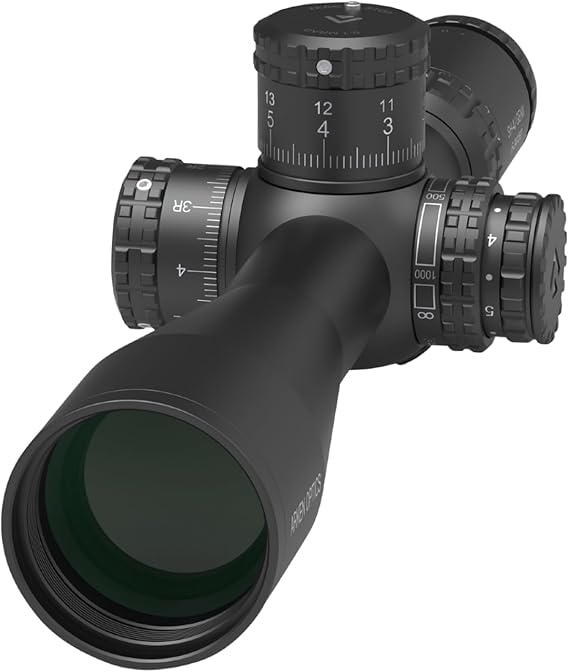
Getting precise shots at varying distances requires a scope that balances clarity with a straightforward setup. The Arken Optics SH4J GEN2 6-24×50 FFP suits shooters wanting power without sacrificing ease of use. Its main strength lies in sharp optics paired with a reliable zero stop system for quick adjustments.
Setting up involves mounting it on dovetail, Weaver, or Picatinny rails, making it fit most rifles easily. The side knob for parallax adjustment keeps range numbers visible while you’re aiming, which is handy in the field. Switching between 6x and 24x magnification is smooth, helping with both close and long-range shots without fuss.
Performance stands out thanks to Japanese ELD glass that ensures crisp, clear images even in low light. The zero stop mechanism is simple but solid, making it quick to return to your baseline zero.
A common complaint is the limited reticle choice, with only the VPR reticle available. The build feels durable but leans towards functional rather than flashy.
Sharp clarity thanks to the Japanese ELD glass is the most praised feature, making spotting targets easier in all light conditions. The simple zero stop system quickly returns to zero but some users find the lack of reticle options a drawback for customization.
An excellent choice for shooters looking for strong optics and ease of adjustment. Those wanting multiple reticle styles or a more premium feel might want to explore other models.
Pros
- Clear Japanese ELD glass for sharp images
- Easy zero stop system
- Side knob parallax with visible range numbers
- Versatile magnification range from 6x to 24x
Cons
- Reticle selection limited to VPR only
- Build feels more functional than premium
| Specification | Details |
|---|---|
| Magnification Minimum | 6 x |
| Magnification Maximum | 24 x |
| Objective Lens Diameter | 50 millimeters |
| Mounting Type | Dovetail Mount, Weaver Mount, Picatinny Mount |
| Reticle Type | VPR |
10. 18×70 Astronomy Binoculars

18x magnification with a 70mm objective lens sets these astronomy binoculars apart for anyone serious about stargazing or long-distance viewing. Their impressive light-gathering ability lets you see finer details even in dim conditions, making them ideal for both night sky enthusiasts and nature observers.
Setup is straightforward thanks to the center focus and tripod mount compatibility, ensuring steady and comfortable use over long sessions. Lightweight and waterproof, they handle outdoor environments well.
Eye relief at 18mm provides comfort during extended viewing, and the anti-reflective coatings keep images bright and clear. Manual focus and diopter adjustment allow precise control for your eyesight.
Optics deliver sharp, bright images with excellent edge-to-edge clarity from the BAK-4 prisms and fully multi-coated lenses. The build is solid, designed to endure typical outdoor use without issue.
Most praise revolves around clear, detailed visuals, especially in low light. A common drawback is the need for a tripod to keep the image steady at 18x magnification.
Clear and detailed images impress users, particularly in low light, thanks to quality BAK-4 prisms and coatings. The main limitation is the strong magnification making handheld use tricky, necessitating a tripod for sharp steady views.
Anyone wanting to explore the night sky or distant landscapes will appreciate this binocular’s capabilities. Those looking for compact, easily handheld optics might prefer a lower magnification model to avoid stability issues.
Pros
- Strong 18x magnification for detailed viewing
- 70mm aperture captures plenty of light
- Waterproof design suitable for outdoor use
- Comfortable 18mm eye relief for long sessions
Cons
- Requires tripod to avoid shaky images
- Manual focus needs practice for sharpness
| Specification | Details |
|---|---|
| Magnification Maximum | 18x |
| Objective Lens Diameter | 7 centimeters |
| Eye Relief | 18 |
| Prism Type | Roof Prism with BAK-4 glass |
| Water Resistance Level | Waterproof |
| Focus Type | Center Focus |
11. 25-75×70 Spotting Scope with Tripod

Ideal for bird watchers and target shooters who need clear, detailed views over long distances, the 25-75×70 Spotting Scope with Tripod excels at capturing fine details even in low light. Its ability to handle a wide zoom range while maintaining sharpness is its biggest strength.
Setting up is straightforward thanks to the included tripod and altazimuth mount, which allow smooth manual focusing. The large 70mm objective lens gathers plenty of light, making early morning or dusk observations practical.
The phone adapter adds convenience for capturing images or sharing what’s seen through the Plössl eyepiece lens. Carrying it around is easier with the supplied bag.
Performance-wise, sharp images and minimal glare due to FMC multi-coated optics stand out. The wide 99-48 feet field of view at 1000 yards helps keep moving targets in sight without constant repositioning. Built solidly with waterproof and fogproof features, it handles outdoor conditions well.
Some users mention that the zooming can feel a bit stiff, which may slow quick adjustments during active observation.
Optical clarity and multi-coated lenses impress for daytime and low-light usage, though zoom control stiffness can challenge quick shifts. Its sturdy design handles weather effectively, featuring waterproof and fogproof qualities.
Enthusiasts valuing detailed, stable views and photo capability will appreciate this scope. Those needing faster zoom action or quicker manual adjustments may look for alternate options better suited for rapid movements.
Pros
- Large 70mm objective lens for better light intake
- Waterproof and fogproof for tough outdoor use
- Includes tripod and phone adapter for versatility
- Wide field of view helps track moving targets
Cons
- Manual zoom mechanism feels stiff at times
- Setup requires patience for precise focus adjustments
| Specification | Details |
|---|---|
| Focal Length Description | 25-75mm |
| Eye Piece Lens Description | Plössl |
| Mount | Altazimuth Mount |
| Field Of View | 1000 yard |
| Coating | Multi-Coated |
12. 20-60×60 Spotting Scope with Tripod
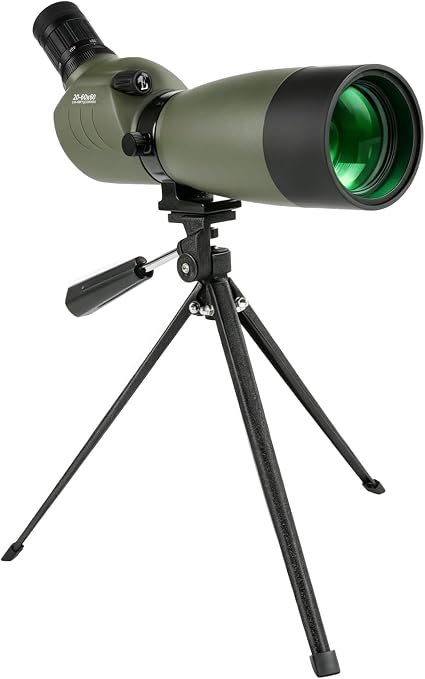
Large 60mm objective lens and a zoom range from 20x to 60x make this spotting scope great for birdwatchers and shooters alike. Its biggest strength lies in capturing clear, bright images even at dawn or dusk, thanks to its multi-coated optics and BAK4 prism.
Setting up is straightforward with the included tripod and altazimuth mount, which offers smooth manual focusing. The angled eyepiece and reflex finderscope make tracking targets comfortable and precise.
A phone adapter is handy for capturing what you see, and the waterproof, fog-resistant body means it holds up well outdoors.
Optically, the scope delivers sharp images with minimal chromatic aberration across its wide field of view, which helps in keeping moving targets in sight. The build feels solid and reliable, designed for use in varying weather. Most praise highlights image clarity and brightness.
Some users mention the manual focus requires patience for fast-moving objects.
Sharpness and brightness stand out, especially at lower light levels, making it excellent for detailed observation. The main limitation is the manual focus, which demands a steady hand and patience for moving subjects. Most users find the setup solid but note focusing speed as a trade-off.
Those looking for high-magnification spotting with clear optics and portability will appreciate this scope. Users requiring quick autofocus or wider fields at higher magnifications might want to explore other options tailored for rapid target acquisition.
Pros
- Bright, clear images in low-light conditions
- Comfortable angled eyepiece for long viewing sessions
- Steady altazimuth mount with included tripod
- Phone adapter for easy smartphone photography
Cons
- Manual focus can be challenging with fast targets
- Field of view narrows significantly at highest zoom
| Specification | Details |
|---|---|
| Zoom Ratio | 20-60x |
| Objective Lens | 60mm Large |
| Focus Type | Manual Focus |
| Mount | Altazimuth Mount |
| Field Of View | 99–48Ft/1000Yds |
| Additional Features | Waterproof and Fog-Resistant Body, Phone Adapter Included |
Top 50 Mil FFP Scopes Comparison Table
| Product | Magnification Max | Objective Lens Diameter | Mount Type | Reticle Type |
|---|---|---|---|---|
| Celestron Ultima Spotting Scope | 66x | – | Equatorial | – |
| Celestron Travel Scope 70mm | 2x | 70mm | Altazimuth | – |
| Celestron SkyMaster 15×70 Binoculars | 15x | 70mm | Tripod | – |
| Celestron Eyepiece & Filter Kit | Variable | – | Altazimuth | – |
| Athlon Ares UHD 22x Eyepiece | 22x | 65mm | – | Mil Dot |
| Monstrum Beast 3-18×50 Scope | 18x | 50mm | Ring Mount | MIL |
| SVBONY SV202 8×42 Binoculars | 8x | 42mm | Tripod | – |
| HD 20-60×80 Spotting Scope | 60x | 80mm | – | – |
| Arken SH4J GEN2 6-24×50 Scope | 24x | 50mm | Dovetail/Weaver/Picatinny | VPR |
| 18×70 Astronomy Binoculars | 18x | 70mm | Tripod | – |
| 25-75×70 Spotting Scope | 75x | – | Altazimuth | – |
| 20-60×60 Spotting Scope | 60x | 60mm | Altazimuth | – |
- Magnification Max66x
- Objective Lens Diameter–
- Mount TypeEquatorial
- Reticle Type–
- Magnification Max2x
- Objective Lens Diameter70mm
- Mount TypeAltazimuth
- Reticle Type–
- Magnification Max15x
- Objective Lens Diameter70mm
- Mount TypeTripod
- Reticle Type–
- Magnification MaxVariable
- Objective Lens Diameter–
- Mount TypeAltazimuth
- Reticle Type–
- Magnification Max22x
- Objective Lens Diameter65mm
- Mount Type–
- Reticle TypeMil Dot
- Magnification Max18x
- Objective Lens Diameter50mm
- Mount TypeRing Mount
- Reticle TypeMIL
- Magnification Max8x
- Objective Lens Diameter42mm
- Mount TypeTripod
- Reticle Type–
- Magnification Max60x
- Objective Lens Diameter80mm
- Mount Type–
- Reticle Type–
- Magnification Max24x
- Objective Lens Diameter50mm
- Mount TypeDovetail/Weaver/Picatinny
- Reticle TypeVPR
- Magnification Max18x
- Objective Lens Diameter70mm
- Mount TypeTripod
- Reticle Type–
- Magnification Max75x
- Objective Lens Diameter–
- Mount TypeAltazimuth
- Reticle Type–
- Magnification Max60x
- Objective Lens Diameter60mm
- Mount TypeAltazimuth
- Reticle Type–
How to Choose the Best 50 Mil FFP Scope
Key factors in choosing a 50 mil FFP scope include clarity, durability, and reliable adjustment controls, as these affect accuracy and ease of use. Prioritizing quality components ensures consistent performance and prevents costly repairs or replacements over time.
Magnification and Reticle
Shooting at varied ranges with a 50 mil first focal plane reticle changes what you can rely on for accurate holdover and windage. The reticle subtensions must remain clear as magnification shifts, so you don’t second-guess how much to adjust.
On scopes lacking this clarity, estimating holdover at different zooms becomes tricky, often causing missed shots especially beyond 300 yards.
Good reticles maintain consistent scaling with power changes, allowing some to use the reticle marks as precise measuring tools. Look for reticles with clear, evenly spaced mil marks that don’t blur or distort at high magnification. This precision simplifies ranging targets and making windage corrections without constantly dialing turrets, which saves time during actual shooting.
Optical Quality
Watching through a scope with poor optics quickly reveals distracting color fringing or dull images. Clear, bright glass makes it easier to spot target details in changing light, whether at dawn or dusk. Scopes with multi-coated lenses boost light transmission and help cut down glare from the sun or reflections on leaves or metal.
Resolution becomes critical on distant targets; a scope that sharpens edges and contrasts reduces eye strain and improves shot placement. Chromatic aberration can camouflage subtle details, so choosing optics that minimize it through quality coatings means higher confidence in what you see.
Durability and Materials
Handling a scope built from thin or cheap materials leads to damage or misalignment after rough use. Strong bodies made from aircraft-grade aluminum stand up to drops and bangs but remain lightweight enough for longer hunts. Weather resistance matters even more, with fully sealed scopes keeping out dust and moisture, ensuring clarity and function last.
Fog-proofing through nitrogen or argon purging keeps views clear when temperatures swing drastically. Important too are the turret caps and adjustment parts, which need to lock down tightly without feeling flimsy. Good materials and build quality reduce the chances of losing zero on the range or trail.
Turret Performance and Adjustments
Turrets that click audibly and consistently offer crucial feedback for adjustments under stress. Varying from model to model, those calibrated in exact 50 mil increments align perfectly with the reticle, removing guesswork. This synchronization speeds up corrections when shifting between distances or wind conditions.
Some scopes provide zero-reset functions so you can return to your baseline zero quickly after dialing in elevation adjustments. Locking turrets prevent accidental changes, and tool-free systems let you fine-tune settings without carrying extra gear.
Practical turret design saves time and keeps settings reliable in the field.
Eye Relief and Field of View
Maintaining about 3.5 to 4 inches of eye relief avoids annoying scope shadows or even bruises during recoil, especially on powerful rifles. An extended eye relief is essential on rifles with heavy kick or for shooters wearing glasses. The field of view shrinks as magnification increases, so wide views at lower powers help in fast target acquisition.
Balancing a broad field of view with enough detail at high zoom means neither speed nor precision suffers. Size and weight influence how comfortably a scope mounts and moves with the rifle; overly bulky models can hinder handling and natural pointing. Choose something that fits your rifle’s build without adding unnecessary bulk.
Optimizing Accuracy with a 50 Mil FFP Scope in Various Shooting Scenarios
A 50 mil first focal plane (FFP) scope allows shooters to make precise adjustments based on the reticle’s consistent scale, which is crucial in varied shooting conditions. Since the reticle remains proportional to the target as magnification changes, range estimation and holdover corrections stay accurate at any zoom level.
This consistency benefits target shooters and hunters operating at medium to long distances, where bullet trajectory adjustments need to be calculated quickly.
Key points for optimizing accuracy with such a scope include:
- Zeroing the scope to a reliable distance, often 100 yards or meters, to serve as a baseline for adjustments.
- Using the mil-based reticle to calculate wind drift and elevation changes on the fly without guessing.
- Practicing consistent shooting positions and trigger control to complement the scope’s precision features.
Combining these techniques with the precise mil adjustments available on a 50 mil FFP scope leads to improved accuracy in both static and dynamic shooting environments.
Proper Cleaning and Maintenance Techniques to Prolong Scope Performance
Routine cleaning and maintenance can extend the lifespan and maintain the clarity of any scope, including those with a 50 mil FFP design. Avoiding harsh chemicals is important; instead, use a lens cleaning solution specifically made for optics and a microfiber cloth to gently remove dust and smudges.
Maintenance tips include:
- Regularly inspecting and tightening mounting screws to prevent shifts in zero.
- Keeping the scope capped when not in use to protect lenses from scratches and environmental elements.
- Occasionally checking the turret movement to ensure smooth, consistent clicks without resistance or looseness.
- Storing the scope in a padded case to avoid impacts or drops during transport.
Following these steps helps maintain consistent performance and prevents the buildup of dirt or moisture that can impair sight picture and accuracy.
Comparing First Focal Plane (FFP) Scopes with Second Focal Plane (SFP) Scopes for Long-Range Precision
First focal plane (FFP) scopes differ from second focal plane (SFP) models primarily in how the reticle behaves when magnification changes. In FFP scopes, the reticle size scales with zoom, so the mil markings remain accurate at every magnification setting. In contrast, SFP reticles stay the same size, meaning range estimation and holdovers are only accurate at one set magnification.
FFP versus SFP for long-range precision:
- FFP scopes provide consistent measurements through all zoom levels, valuable during variable-distance shooting.
- SFP scopes typically offer a cleaner sight picture since the reticle appears larger and less cluttered at lower magnifications.
- FFP scopes often require learning to manage a smaller reticle at low zooms, which can be challenging in low light or fast target acquisition scenarios.
The choice depends on how the shooter plans to use the scope. For dynamic ranges and tactical applications, an FFP scope with a 50 mil reticle supports flexible adjustments.
For static shooting at a known distance, an SFP might be simpler to use.
People Also Asked
How Do I Properly Zero a 50 Mil FFP Scope?
Start by setting your rifle on a stable rest and firing a group at a known distance, then adjust the turrets to align the point of impact with the point of aim. Remember to confirm the zero at multiple distances to ensure accuracy downrange.
What Do 50 Mil FFP Scope Reticles Mean in Practical Use?
The 50 mil reticle allows for precise holdovers and windage corrections at long ranges since each mil mark corresponds to a specific measurement on targets. Users find this helpful for quick range estimation and adjusting without touching the turrets.
Are 50 Mil FFP Scopes Compatible with My Rifle Mounts?
Most 50 mil FFP scopes are designed with standard tube diameters like 30mm or 34mm, which fit common mounts. Double-check your rifle’s mounting system and ensure the mount can accommodate the scope’s size and weight to avoid compatibility issues.
How Long Do 50 Mil FFP Scopes Typically Last Under Heavy Use?
These scopes often last several years under regular heavy use, holding zero and functioning well if maintained properly. Regular cleaning and avoiding dropping or extreme shocks can extend their lifespan significantly.
What Common Issues Should I Watch for with 50 Mil FFP Scopes?
Pay attention to turret backlash, lens fogging, and reticle clarity, as these can degrade performance over time. Routinely check turret clicks for consistency and keep the lenses clean and dry to maintain clear sight pictures.
Conclusion
Choosing a 50 mil FFP scope comes down to clear optics, reliable adjustment clicks, and durable construction. These features directly impact accuracy and ease of use in the field.
A good reticle design that matches your shooting style also matters since it affects target acquisition and holdovers.
Consider your typical shooting environment and how much you want to spend before making a decision. Scopes that are overbuilt or too complex might not suit casual use. Use the comparison table and detailed reviews above to find the best fit for your needs and budget.