Top 12 Best Airshow Scanner Hacks You Can’t Miss!
Trying to follow the action at an airshow can quickly turn frustrating without the best airshow scanner. A cheap or poorly chosen model often struggles to lock onto signals or cuts out during critical moments, leading to missed commentary and aircraft communications.
Stumbling through static and dropped transmissions is all too common with scanners that lack the right frequency range or sensitivity.
The best airshow scanner should cover the full aviation band, typically 108 to 137 MHz, to catch all control tower and pilot communications. A device with a clear, easy-to-read display and straightforward controls makes tuning in simple, even when quick changes are necessary.
Battery life also matters; a scanner that runs for several hours on standard batteries or rechargeable options can keep up through the entire event without interruption.
Need a Quick Check?
| Image | Product | Price |
|---|---|---|
Our Top Picks 1  | PJ2+ Aviation Radio | Check Price |
Our Top Picks 2  | Uniden BC125AT Scanner | Check Price |
Our Top Picks 3 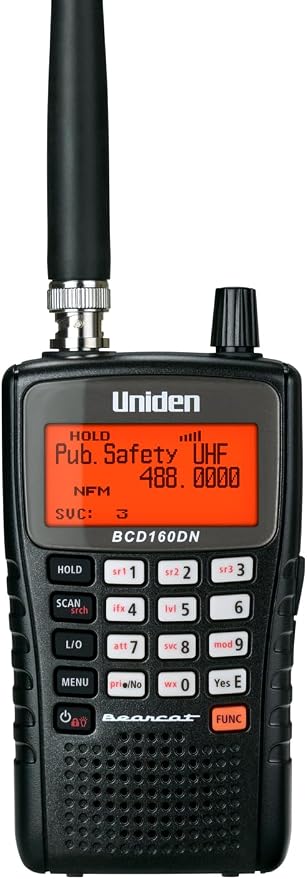 | Uniden BCD160DN Scanner | Check Price |
Our Selected Top 12 Airshow Scanner Worth Buying
This list includes a variety of airshow scanners designed to improve your listening experience during aviation events. Each review covers performance details, ideal user profiles, and highlights both the advantages and limitations, helping you make an informed choice based on your specific needs.
1. PJ2+ COM Aviation Handheld Radio
Having 760 channels to scan makes this handheld radio an excellent choice for aviation enthusiasts and pilots wanting quick access to a wide range of COM frequencies. Its standout feature is the dual PJ headset plugs, which let you use standard general aviation headsets without needing adapters.
Setting this radio up is straightforward, power it on and dial in your frequency with large, simple buttons that are easy to manage even with one hand while flying. It runs reliably on six AA batteries, which hold their charge well, and it also supports USB Type-C power from your aircraft, giving you flexibility during longer sessions.
The VHF tuner covers 118.000-136.975 MHz efficiently, producing a solid 6 watts of transmission power. Its build is functional and comfortable, with a large backlit keypad that makes using it in low light easier. Positive feedback often highlights the easy operation, while a common downside is the lack of water resistance, meaning care is needed around moisture.
Users appreciate the simple, adapter-free operation with standard PJ headsets allowing quick connection and communication. The most common issue is the lack of water resistance, which requires extra care around rain or spills.
This radio suits pilots and aviation spotters wanting a straightforward, reliable device for scanning frequencies without adapters. Those needing a waterproof option or fewer batteries might want to explore other models.
Pros
- No adapter needed for standard GA headsets
- Large backlit buttons for easy operation
- Works with USB power in aircraft
- Good range of frequency channels
Cons
- Not water resistant
- Relies on six AA batteries
| Specification | Details |
|---|---|
| Number of Channels | 760 |
| Frequency Range | 118.000-136.975 MHz |
| Transmission Power | 6 Watts |
| Power Source | 6 AA batteries or USB Type-C cable |
| Headset Plugs | Dual PJ plugs |
2. Uniden Bearcat BC125AT Analog Handheld Scanner
People interested in listening to analog transmissions at airshows or nearby public safety channels will find the Uniden Bearcat BC125AT a solid choice. It’s great for those who want a compact scanner with a good channel capacity and useful features focused on analog signals.
Setting it up is straightforward thanks to its 500 alpha-tagged channels and a clear digital display. The Close Call RF capture technology quickly locks onto nearby transmitters, which makes tracking signals easy. The compact size fits comfortably in hand, and Do Not Disturb mode helps avoid interruptions when a broadcast is in progress.
Running on two AA batteries, it provides about 10 hours of listening time.
Performance on analog frequencies is reliable across a wide range (25-54 MHz, 108-174 MHz, 225-380 MHz, 400-512 MHz). It’s built to be portable but has no water resistance. Strong points include easy channel scanning and quick frequency detection.
The biggest downside noted is that it doesn’t support digital trunking systems, limiting use in areas where agencies have shifted to digital radios.
Uniden Bearcat BC125AT provides clear reception on up to 500 analog channels, useful for monitoring local emergency services and other analog transmissions. The Close Call RF capture technology quickly finds strong signals nearby, making it practical for scanning on the go. A common complaint is its lack of digital signal support, which limits access to newer police and fire digital.
People who mainly want to listen to analog radio communications such as airshows, amateur radio, or older public safety signals will find this scanner effective. Those needing to follow digital trunked systems or newer digital transmissions will need a different model that supports those formats for more comprehensive coverage.
Pros
- Quick close call RF capture feature
- Compact and easy to carry handheld design
- Alpha-tagged channels for easy identification
- Long battery life with included AA batteries
Cons
- Cannot monitor digital trunking systems
- Not water resistant, careful with outdoor use
| Specification | Details |
|---|---|
| Number of Channels | 500 |
| Frequency Range | 25-54 MHz, 108-174 MHz, 225-380 MHz, 400-512 MHz (UHF) |
| Battery Type | 2 AA batteries (included) |
| Battery Life | 10 hours |
| Voltage | 3 volts |
| Digital Display | Yes |
3. Uniden Bearcat BCD160DN Digital Handheld Scanner
Setting itself apart with exclusive features like Band Scope Rapid System/Channel Number Tagging, the Uniden Bearcat BCD160DN is ideal for airshow enthusiasts who want quick, precise decoding of digital signals. Its strong point lies in detecting elusive signals faster, which is crucial at intricate events or crowded frequency environments.
Setup is straightforward with USB connectivity providing easy updates and data management. Day-to-day use benefits from quick identification of system settings via DCS/CTCSS Rapid Decode, allowing you to immediately know the tones and codes being transmitted. Support for DMR and NXDN out of the box, along with additional APCO P25 decoding through free firmware updates, means fewer hurdles when scanning various digital signals.
Performance delivers reliably on conventional digital decoding, handling the frequency scans accurately. The build quality feels solid for handheld use, offering durability without unnecessary bulk.
The most frequent praise calls out its speed in signal detection, while the lack of trunking support and inability to decode encrypted signals often comes up as a drawback for users seeking complete coverage.
Signal detection speed gets consistent praise for helping identify transmissions faster, a critical feature for scanning at busy events. However, the inability to handle trunking systems and encrypted communications limits use in some professional or encrypted environments.
Those focused on scanning conventional digital voice systems will find the scanner fits well, especially hobbyists tracking multiple frequencies. Users needing trunking or encrypted signal decoding might want to consider other options for broader coverage.
Pros
- Quick detection of CTCSS tones and DCS codes
- Supports multiple digital decoding standards
- Free firmware updates add functionality
- USB connection simplifies data management
Cons
- No trunking support
- Cannot decode encrypted signals
| Specification | Details |
|---|---|
| Scanner Type | Radio Scanner |
| Connection Type | USB |
| Decoding Support | DMR and NXDN, APCO P25 Phase 1 & 2 (via update) |
| Special Features | Band Scope Rapid System/Channel Number Tagging |
| DCS/CTCSS Rapid Decode | Yes |
4. Uniden BCD325P2 Handheld TrunkTracker V Scanner

Uniden BCD325P2 Handheld TrunkTracker V Scanner excels at picking up signals around you, making it ideal for anyone wanting to monitor local airshows and emergency channels. Its standout feature is the Close Call RF Capture Technology, which automatically tunes into the nearest signals for timely updates during events.
Setting it up requires some attention to programming the Quick-Key System Access, letting you save up to 100 favorite systems for fast switching. Using the scanner daily involves scanning through a broad range of channels, up to 25,000, and relying on its GPS compatibility to keep location-based tuning accurate. The hardware feels solid, making it easy to handle during outdoor events without adding weight to your gear.
Performance-wise, it handles APCO Project 25 Phase II communications smoothly, making it very reliable for public safety frequencies. The build is sturdy and designed for portable use, though some users find the interface a bit complex at first.
Most people praise how quickly it locks onto nearby signals, but a common criticism is the learning curve when setting up the scanning lists.
The scanner’s best feature is how swiftly and accurately it tunes to the closest signals, giving you real-time updates without manual searching. Many find the initial setup of channels and quick keys challenging, which slows the learning process but does not affect long-term use.
People wanting quick, reliable scanning of multiple local channels will appreciate this unit’s abilities. Those who prefer a simpler, plug-and-play scanner might want to consider easier-to-program alternatives instead.
Pros
- Close Call RF Capture quickly finds nearby signals
- Supports latest APCO Project 25 Phase II systems
- Stores 100 Quick-Key system access shortcuts
- GPS compatibility improves location-based scanning
Cons
- Interface setup can be confusing initially
- Some complexity in programming channels and systems
| Specification | Details |
|---|---|
| Scanner Type | Radio |
| Connection Type | gps |
| Resolution | 2400 dpi |
| Wattage | 20 watts |
| Media Type | USB |
5. Uniden SDS100 True I/Q Digital Handheld Scanner

Picking up signals in crowded or weak-signal areas feels a lot easier with this handheld scanner. It suits anyone serious about airshow scanning or monitoring digital trunked systems.
Its biggest strength lies in its True I/Q receiver that tackles difficult radio environments better than others.
Getting started is pretty straightforward, just enter your zip code, and it populates with all known radio systems nearby. The color display can be customized to show the info you want at a glance.
Daily use involves updating the HomePatrol database through Sentinel software so you always stay current on radio systems across the US and Canada.
The scanner handles digital signals, especially in simulcast and weak-signal spots, way better than most other scanners. It feels solid and built for handheld use.
Most praise centers on its advanced digital reception and easy programming, though some find it a bit tricky to use at first.
The strongest praise highlights the digital reception quality in tough signal environments, making a noticeable difference during airshows. A common complaint points to the learning curve due to its complex navigation and setup options, which might slow down first-time use.
People wanting detailed, up-to-date scanning in digital trunked systems will be pleased. Those who prefer something simpler or less tech-heavy should consider other models geared more toward basic analog use.
Pros
- True I/Q receiver improves digital performance greatly
- Customizable color display shows preferred info
- HomePatrol database covers US and Canada systems
- Regular weekly updates via Sentinel software
Cons
- Can feel complex to use initially
- Relies on USB connection for updates
| Specification | Details |
|---|---|
| Scanner Type | Digital Handheld Scanner |
| Connection Type | USB |
| Resolution | 24 Bits |
| Color Depth | 24 |
| Media Type | MicroSD Card |
6. ZHIWHIS A330 SSB Shortwave Radio Receiver

Great for those keen on catching a wide range of airshow signals, this radio receiver covers everything from FM to the essential AIR band. Its standout feature is the wide frequency range combined with single-sideband (SSB) capability for clear shortwave listening, making it a solid pick for anyone who wants detailed, reliable scanning on the go.
Setup is straightforward, with an option to plug in an external antenna boosting the signal significantly when in use. Switching between manual, automatic, and full auto search modes lets you find stations without fuss. The numeric keypad also speeds station entry, and the 200 station memory per band means not having to hunt for your favorites again after setup.
Performance holds up well with clear reception, especially in shortwave modes using AM, LSB, or USB modulation. The device feels lightweight and portable, making it easy to carry around at events. Praises often highlight its sensitivity and precise tuning, while complaints mostly focus on the need for a nonstandard battery, which might be tricky to replace quickly.
The radio receives signals clearly across all specified bands, especially true with the SSB modes feeding single-sideband reception. Users appreciate the sensitivity and fine tuning offered by the BFO adjustment. The most noted downside centers on the included nonstandard battery, which may not be easy for everyone to source or swap out quickly.
Anyone looking for reliable airshow and shortwave scanning with lots of station memory will find this receiver quite fitting. Those who prioritize battery convenience or want a more common power source might want to consider alternatives.
Pros
- Covers wide range of frequency bands
- Supports multiple demodulation modes with BFO adjustment
- Stores many stations for quick recall
- Lightweight and portable design
Cons
- Requires nonstandard battery included
- Battery replacement could be inconvenient
| Specification | Details |
|---|---|
| Frequency Coverage | FM, MW, SW (2.3-30MHz), AIR (118-138MHz), CB, VHF, UHF, WB |
| SSB Modes | AM, LSB, USB demodulation |
| Station Memory | Up to 200 per frequency band |
| Number of Channels | 1400 |
| External Antenna | 3.5mm port |
7. A330 Portable SSB Shortwave Radio Scanner

Designed with a classic portable build, the A330 Portable SSB Shortwave Radio Scanner suits anyone needing wide frequency access in one handheld device. Its biggest strength lies in covering a vast range of bands including air, shortwave, VHF, and UHF, making it a versatile choice for airshow scanning and more.
Setting up the radio involves inserting the included nonstandard battery and turning it on, with no complicated procedures. Daily use benefits from the STN LCD screen that is bright and visible outdoors, plus the ability to store up to 1,400 stations.
Bluetooth 5.2 makes streaming music or using app controls straightforward, and quick frequency switching across various bands keeps scanning convenient.
The radio scans an impressive range of frequencies and supports AM, LSB, and USB for clear single sideband reception on shortwave modes, thanks to BFO fine-tuning. The build feels solid enough for regular handheld use, but it does not have any water resistance. Strong points include its large channel memory and clear display, while the most common complaint revolves around the lack of water protection and the reliance on a single nonstandard battery.
The device is praised for its broad frequency coverage and clear single sideband reception, particularly useful for airshow enthusiasts. Complaints mainly focus on the lack of water resistance and the inconvenience of using a single nonstandard battery, which may not be easy to replace.
Ideal for users who need extensive channel memory and versatile scanning options in dry conditions. Those needing rugged, weatherproof equipment or standard battery options should consider other radios.
Pros
- Wide frequency coverage across multiple bands
- Stores up to 1,400 radio stations
- Bluetooth 5.2 for wireless connectivity
- Clear STN LCD with good outdoor visibility
Cons
- Not water resistant for outdoor use in rain
- Uses a nonstandard battery, limiting replacements
| Specification | Details |
|---|---|
| Number of Channels | 1400 |
| Frequency Coverage | FM (64-108MHz), MW (520-1710kHz), SW (2.3-30MHz), AIR (118-138MHz), CB (25-28MHz), VHF (20-250MHz), UHF (250-999MHz), WB (162.4-162.55MHz) |
| Connectivity Protocol | Bluetooth |
| Tuner Type | FM, MW, SW, WB, AIR, VHF, UHF |
| Battery | 1 Nonstandard Battery (included) |
| Display | STN LCD blue-backlit screen |
8. Whistler WS1040 Handheld Digital Scanner

Compact and user-friendly, the Whistler WS1040 Handheld Digital Scanner fits well for anyone wanting straightforward programming with helpful guidance. Its biggest strength lies in the menu-driven programming supported by context-sensitive help, making it approachable for users who need clear instructions while setting it up.
Setting up the scanner is intuitive thanks to the built-in help text for each menu item. You can organize scan lists according to your own preference, which helps in tracking specific groups of frequencies. The free form memory allocation means you aren’t stuck with rigid memory banks, so managing channels feels more flexible.
Connecting via USB is simple, streamlining updates or transfers.
Performance on scanning essential frequencies like storm spotter networks is reliable, offering instant access when required. The build uses LED light sources and organizes memory efficiently, making daily use smooth and effective.
The scanner is praised for its helpful programming aid, while some find the interface requires a bit of patience to master fully.
The scanner’s menu help system earns praise for simplifying complex programming, but this comes with a learning curve that slows initial navigation for some. Memory flexibility and the ability to create specific scan lists stand out as valuable features during everyday use.
Anyone wanting guided setup and tailored frequency management will appreciate this scanner. Those seeking quick, plug-and-play operation might want to consider other options with less involved menu systems.
Pros
- Menu help guides programming clearly
- Customizable scan lists for tailored listening
- Dynamic memory allocation avoids wasted space
- Immediate access to Skywarn storm frequencies
Cons
- Interface can feel slow to some users
- Learning curve with menu-driven setup
| Specification | Details |
|---|---|
| Scanner Type | Radio Scanner |
| Connection Type | USB |
| Resolution | 10000 |
| Standard Sheet Capacity | 300 |
| Light Source Type | LED |
| Media Type | USB |
9. Uniden SDS200 TrunkTracker X Base/Mobile Scanner

For those looking to access a wide range of radio signals easily, the Uniden SDS200 TrunkTracker X is a powerful choice. Perfect for hobbyists wanting detailed scanning of digital simulcast systems, its biggest strength is combining advanced technology with user-friendly operation.
Setting it up is straightforward thanks to the HomePatrol database, which includes every known radio system in the US and Canada. Daily use is convenient because the scanner’s large 3.5 color display is customizable, letting you see as much or as little info as you want.
You stay up to date with weekly database updates via USB connection and the Sentinel software.
Performance excels at handling digital simulcast signals, delivering clear and reliable scanning in difficult environments. The build feels solid and functional, with an LED light for easy use in low light.
The most frequent praise is for its advanced digital signal handling, while some users note that mastering all features can take some patience.
Handling of digital simulcast systems is praised for clear reception even in tough conditions. The scanner’s advanced features require time and patience to master, making it less intuitive for newcomers starting with scanning.
Those wanting detailed tracking of various radio systems and ready to spend time learning the controls will appreciate this model. Casual users looking for something simpler might prefer a less complex option to avoid the initial setup challenge.
Pros
- Handles complex digital simulcast systems well
- Large 3.5″ fully customizable color display
- Includes and regularly updates HomePatrol database
- USB connectivity for easy updates
Cons
- Learning curve to fully utilize advanced features
- Display may show more info than needed at first
| Specification | Details |
|---|---|
| Scanner Type | Radio Scanner |
| Connection Type | USB |
| Resolution | scanner |
| Standard Sheet Capacity | 10 |
| Light Source Type | LED |
| Media Type | USB |
10. Uniden Bearcat BCD260DN Base/Mobile Digital Scanner

Trying to catch fast-moving signals at airshows can be a real challenge without the right scanner. Perfect for aviation enthusiasts and emergency frequency followers, this digital scanner stands out for its broad coverage and quick channel tagging. It offers a straightforward way to keep up with various communications from the air, sea, railways, and emergency services in one device.
Setting up takes little time since it comes pre-programmed with key service bands, including aviation and weather alerts. Its USB connection makes updates simple, and the band scope with rapid system tagging speeds up scanning for new or active frequencies. Day-to-day use is smooth because you can easily jump between important channels or search through thousands of frequencies without hassle.
The scanner picks up signals clearly across multiple bands, performing well at detecting elusive transmissions. The build feels solid with a clear, 300 dpi resolution display for easy reading of information.
Many users appreciate its wide frequency range and reliability. Some mention the device’s size or layout as a bit bulky or cluttered, which might slow navigation for beginners.
Many find the scanner reliable for picking up a wide range of signals, especially with its fast channel tagging feature. The main downside noted is the somewhat bulky layout, which could challenge newer users during scanning or programming.
Aviation fans and emergency frequency listeners will appreciate the extensive band coverage and convenience of pre-programmed settings. Those who prefer a more compact or minimalist scanner might want to consider other options better suited to simpler use.
Pros
- Covers multiple important service bands
- Includes direct access to 10,000 frequencies
- USB connection for easy updates
- High-resolution 300 dpi display
Cons
- Size and layout can feel bulky to some users
- Navigation may be confusing for beginners
| Specification | Details |
|---|---|
| Scanner Type | Radio Frequency scanner |
| Connection Type | USB |
| Resolution | 300 dpi |
| Pre-programmed Bands | Emergency, Aviation, Marine, Railroad, NASCAR |
| Direct Frequencies Access | 10,000 frequencies |
11. Uniden BearTracker BCT15X Base/Mobile Scanner

Boasting 9,000 channels, the Uniden BearTracker BCT15X is tailored for airshow enthusiasts and scanner hobbyists needing wide frequency coverage. Its biggest strength lies in its TrunkTracker III technology, letting you follow Motorola, EDACS, and LTR trunked systems without missing a beat.
Perfect for those who want to catch every update during live events or on the road.
Setting it up involves connecting the included antenna, power cords, and optional GPS receiver for location-based scanning. The advanced dynamic memory system makes channel management simple, while Alpha Tagging makes it easy to identify stations.
State-by-state preprogrammed channels mean you can travel without having to reprogram local police or highway patrol frequencies, saving valuable time.
Performance is solid, with clear audio and reliable reception across numerous channels. The build feels sturdy with a practical mounting bracket and hardware included. The scanner’s strongest point is the ability to keep up with multiple trunked systems simultaneously.
Some users find the interface a bit outdated, which can slow down navigation through menus.
The scanner impresses with its wide frequency range and reliable trunking system tracking, which many highlight as a key benefit. A frequent downside is the dated interface, making some actions slower and less intuitive than expected. That might challenge new users during the initial setup process.
Anyone who values extensive channel capacity and trunk system support will find it highly useful. People seeking a modern touchscreen or simpler navigation might want to explore other options. Ideal for those comfortable with tech and serious about scanning multiple systems on the go.
Pros
- Supports 9,000 channels for extensive coverage
- Location-based scanning with GPS compatibility
- Preprogrammed state channels for convenience
- Individual channel volume offset feature
Cons
- The interface feels outdated and difficult to use.
- Setup can be complex for first-time users
| Specification | Details |
|---|---|
| Channels | 9,000 |
| Model Number | BCT15X |
| Trunking Technology | TrunkTracker III (Motorola, EDACS, LTR) |
| Included Accessories | Antenna, AC Adapter, Vehicle Power Cord, Mounting Bracket, Serial Programming Cable |
| Warranty | 1 year manufacturer |
12. Uniden BC355N Base/Mobile Scanner

People interested in scanning analog radio signals in their local area will find this base/mobile scanner a solid choice. It suits those who don’t need digital radio access but want a device that can quickly lock onto nearby transmissions.
The standout feature is its Close Call RF Capture Technology that automatically tunes into strong signals.
Setup is straightforward with a corded power source and a simple LCD display for easier reading. You can plug it into a USB port for added connectivity options.
Day-to-day use revolves around scanning the 800 MHz band and quickly picking up signals with Close Call, making it good for monitoring local emergency services that remain on analog channels.
It performs well in analog scanning, delivering clear reception for compatible channels. The build is practical and durable enough for base or mobile use, while the biggest praise centers on its quick signal capture. The main downside is the lack of digital system support, which limits what you can hear in areas moving to trunked digital radios.
Close Call RF Capture Technology gets praised for quickly finding nearby transmissions. The common complaint is its lack of compatibility with growing digital trunking radio systems, which limits usefulness in some urban areas.
A person monitoring analog emergency channels in areas without digital systems will appreciate this scanner. Those needing access to modern digital radio networks should consider a digital-capable model instead.
Pros
- Instantly tunes to nearby signals with Close Call technology
- Clear LCD makes channel info easy to read
- Simple setup with corded power source
- Supports wide frequency and service bank options
Cons
- Not compatible with digital radio systems
- Only covers one band at 800 MHz
| Specification | Details |
|---|---|
| Radio Bands Supported | 1-Band |
| Frequency | 800 MHz |
| Connectivity Technology | USB |
| Power Source | Corded Electric |
| Additional Features | Close Call RF Capture Technology, Wide Frequency and Service Bank Support |
| Display Type | LCD |
Comparison of Top Airshow Scanners Side by Side
| Product | Channels | Frequency Range | Talking Range | Power Source |
|---|---|---|---|---|
| PJ2+ Aviation Radio | 760 | 118.000-136.975 MHz | 10 miles | 9 volts |
| Uniden BC125AT Scanner | 500 | 25-54,108-174,225-380,400-512 MHz | 31 miles | 2 AA batteries |
| Uniden BCD160DN Scanner | – | – | – | – |
| Uniden BCD325P2 Scanner | – | – | – | – |
| Uniden SDS100 Scanner | – | – | – | – |
| ZHIWHIS A330 Receiver | 1400 | Full-Band | – | 1 Nonstandard battery |
| ZHIWHIS A330 Portable | 1400 | – | – | 1 Nonstandard battery |
| Whistler WS1040 Scanner | – | – | – | – |
| Uniden SDS200 Scanner | – | – | – | – |
| Uniden BCD260DN Scanner | – | – | – | – |
| Uniden BCT15X Scanner | – | – | – | – |
| Uniden BC355N Scanner | – | 800 MHz | – | Corded electric |
- Channels760
- Frequency Range118.000-136.975 MHz
- Talking Range10 miles
- Power Source9 volts
- Channels500
- Frequency Range25-54,108-174,225-380,400-512 MHz
- Talking Range31 miles
- Power Source2 AA batteries
- Channels–
- Frequency Range–
- Talking Range–
- Power Source–
- Channels–
- Frequency Range–
- Talking Range–
- Power Source–
- Channels–
- Frequency Range–
- Talking Range–
- Power Source–
- Channels1400
- Frequency RangeFull-Band
- Talking Range–
- Power Source1 Nonstandard battery
- Channels1400
- Frequency Range–
- Talking Range–
- Power Source1 Nonstandard battery
- Channels–
- Frequency Range–
- Talking Range–
- Power Source–
- Channels–
- Frequency Range–
- Talking Range–
- Power Source–
- Channels–
- Frequency Range–
- Talking Range–
- Power Source–
- Channels–
- Frequency Range–
- Talking Range–
- Power Source–
- Channels–
- Frequency Range800 MHz
- Talking Range–
- Power SourceCorded electric
How to Choose the Right Airshow Scanner
Choosing an airshow scanner requires focusing on clear reception, frequency coverage, and easy operation to stay tuned to all important communications. Prioritizing these factors ensures reliable performance, helping avoid frustration and unnecessary expenses on equipment that doesn’t meet your needs.
Frequency Range and Coverage
Many scanners fail to pick up all the relevant airshow communications because they lack the proper frequency coverage. A scanner that includes both VHF and UHF bands covers the typical aviation frequencies used at airshows, along with some local emergency channels.
Missing these bands means missing important traffic or emergency updates during an event.
Good models support the aviation band roughly from 108 to 137 MHz for civil aircraft and include UHF coverage around 400 MHz. Support for trunked or digital police and fire bands improves overall situational awareness, especially when emergency responders are nearby. Aim for a scanner with broad frequency coverage and specific aviation band support to keep up with everything happening in the air and on the ground.
Receiver Sensitivity and Audio Quality
Fast-paced air traffic chatter often gets lost in background static on cheaper scanners, making it hard to follow multiple aircraft or emergency radios. A receiver with strong sensitivity and a low noise floor shows clear audio with minimal hiss or crackle. This can be crucial when trying to distinguish overlapping transmissions.
Adjustable squelch controls prevent constant background noise by muting the speaker until a set signal strength is reached. Volume controls help tailor listening comfort over long periods, especially in noisy environments.
A scanner with these features makes extended use much less tiring and ensures you catch every important call.
Portability and Battery Life
Carrying a bulky scanner throughout an event quickly becomes tiring, so a lightweight and compact model makes a big difference. Smaller handheld units designed for portability fit easily in a pocket or clipped to a belt, convenient during long airshows.
Battery life also matters a lot. Units with long-lasting batteries or rechargeable options reduce worries about losing reception mid-show.
USB charging or easy battery replacement options bring flexibility, letting users swap batteries or recharge without interrupting use.
User Interface and Controls
Managing frequencies swiftly during an event keeps you tuned in to the most relevant traffic. Scanners with intuitive controls let you scan, search, and save favorite channels without fumbling. Clear displays that show frequency and signal strength help assess when to focus on one channel or scan around.
Programmable scanning features prioritize certain channels so the scanner alerts you to key communications immediately. This is especially helpful when many frequencies are active but some are more important to monitor at any given time.
Durability and Build Quality
Airshows often take place outdoors where gear can be exposed to weather and accidental drops. Scanners built with rugged materials withstand occasional knocks and rough handling.
Look for devices with weather resistance that guard against rain or dust to avoid interruptions.
The antenna should be sturdy but not overly bulky, balancing signal reception with easy transport. A well-built scanner holds up throughout an event, reducing the chance of damage or performance loss during use.
Maximizing Airshow Experience with Your Scanner: Tips and Tricks
Using a scanner at an airshow requires more than just turning it on and tuning in. The key lies in knowing the specific frequency bands used by the event’s controllers and pilots.
Most airshows operate within known VHF and UHF ranges, so programming these frequencies into the scanner beforehand can save time and avoid missing critical transmissions.
Additional practical tips include:
- Adjusting the squelch control to filter out unwanted static and background noise, which makes communications clearer.
- Utilizing priority channels so the scanner alerts you instantly to the most important transmissions without manual scanning.
- Keeping spare batteries or a reliable power source handy since scanning can drain power quickly during long events.
Using these methods allows you to focus on the action while staying informed about movements and instructions communicated over the radio. Proper use of your scanner at an airshow boosts both enjoyment and safety awareness.
Maintaining Your Airshow Scanner for Long-Term Reliability
Regular upkeep of your airshow scanner significantly extends its service life and maintains its effectiveness. Cleaning the exterior and connectors prevents dust and residue buildup that can interfere with signal quality and control responsiveness.
For long-term reliability, consider these maintenance steps:
- Remove batteries when the scanner is not in use for extended periods to prevent corrosion inside the battery compartment.
- Inspect antennas for damage or looseness and replace or tighten them as necessary to ensure optimal reception.
- Store the device in a dry, temperature-controlled environment, avoiding exposure to extreme heat or moisture that can damage internal components.
Periodic firmware updates, if the scanner supports them, can also resolve bugs and improve functionality over time. Keeping these maintenance routines helps avoid unexpected failures during important events.
Comparing Airshow Scanners to Alternative Communication Devices
Airshow scanners specialize in monitoring aviation communications by covering the appropriate frequency ranges commonly used by pilots and controllers. In contrast, alternative communication devices like general handheld radios or smartphone apps often lack these specific capabilities or legal clearance for aviation frequencies.
Key differences include:
- Frequency Coverage: Scanners designed for airshows access VHF aviation bands, which handheld two-way radios typically do not.
- Legal Use: Many apps rely on streaming aggregated data instead of direct reception, which can introduce delays and miss live communications.
- Functionality: Dedicated scanners offer features like priority scanning and channel locking, which improve real-time listening compared to multipurpose devices.
Choosing a scanner specifically designed for airshows ensures real-time and accurate monitoring, unlike alternative devices that may provide limited or delayed information.
People Also Asked
How Do I Properly Care for My Airshow Scanner?
Keep the scanner clean and store it in a dry place to prevent damage. Regularly check the battery compartment for corrosion, and remove batteries when not in use for long periods to avoid leaks. Avoid dropping it as the internal components can be delicate.
What Size Scanner Is Ideal for Airshow Listening?
A compact scanner that fits comfortably in your hand works best for airshow listening. It should be portable since you might be moving around, and easy to hold for several hours without fatigue. Look for one with a clear, readable display for quick frequency adjustments.
Are Airshow Scanners Safe to Use Near Airports?
Using an airshow scanner near airports is generally safe as these devices only receive transmissions and do not broadcast signals. Always follow the local regulations regarding scanner use. Keep the scanner’s volume at a reasonable level to avoid distracting others especially in crowded areas.
How Long Does an Airshow Scanner Typically Last?
Airshow scanners tend to last several years with proper care, depending on usage frequency and handling. Battery life varies, so carrying fresh batteries or a portable charger helps during long sessions. Regular firmware updates, if available, can keep the device functioning properly over time.
What Are Common Problems with Airshow Scanners and Fixes?
Common problems include poor reception due to interference and dead batteries. Make sure the antenna is fully extended and positioned properly. Clean the battery contacts if the unit fails to power on, and reset the scanner if it freezes or has glitches during use.
Conclusion
Choosing the right airshow scanner comes down to a few key things. It should pick up a wide range of frequencies clearly, have easy-to-use controls that don’t slow you down, and be durable enough to handle outdoor use. Good battery life matters, too, since shows can last several hours.
These points will help make sure you catch every important transmission without frustration.
Think about where you’ll use the scanner most and how much you want to spend. A scanner for occasional use at small local displays won’t need the same features as one for frequent travel to larger events. Check the comparison table and detailed picks above to find the model that fits your needs and budget best.