
Top 12 Best Bow Chornagrapgh You Can’t Miss Today!
Many archers end up with a stopwatch or a phone timer to measure their arrow speed, only to find the results inconsistent or difficult to capture accurately. A cheap or poorly made device can give readings that jump around or fail to catch every shot. Finding the best bow chornagrapgh makes a real difference in reliably capturing arrow speed, avoiding guesswork during tuning or competition practice.
What sets a good bow chornagrapgh apart is its sensor accuracy and sampling rate. A solid device uses infrared or laser sensors and records at least 10,000 samples per second to catch the arrow’s speed precisely. Size matters too, as a compact unit that clamps easily onto the bow without altering the shot ensures consistent results.
Battery life and ease of cleaning matter as well, especially when shooting outdoors and needing quick maintenance between sessions.
Need a Quick Check?
| Image | Product | Price |
|---|---|---|
Our Top Picks 1  | Garmin Xero C1 Pro | Check Price |
Our Top Picks 2  | Xuhal Ballistic Chrono | Check Price |
Our Top Picks 3  | Rifle Shooting Chronograph | Check Price |
Our Selected Top 12 Bow Chornagrapgh for Every Budget
This list features a variety of bow chronographs designed to measure arrow speed and performance accurately. Each review covers how well the device works, the type of user it fits best, and highlights its main advantages and drawbacks to help you make an informed choice.
1. Garmin Xero C1 Pro Ballistics Chronograph
Compactness stands out immediately, making it ideal for those who need a portable, easy-to-handle chronograph for shooting sports like archery or hunting. Its biggest strength lies in straightforward operation, letting you quickly measure different projectile speeds without fuss.
Setting up is quick and painless: just power on, aim the device correctly, and shoot within about 15 inches for measurement. The backlit LCD screen is clear enough to check readings in varied lighting, while button controls keep things simple. Bluetooth connectivity pairs well with smartphones, making data tracking convenient during regular range sessions.
Speed measurements range from 100 to 5,000 fps, covering arrows, bullets, paintballs, and more, providing accurate ballistics data. The device fits easily in a back pocket, so carrying it around doesn’t get in the way.
Most appreciate its ease of use and portability, but some note the 6-hour battery life may require charging on longer outings.
The chronograph is praised most for its portability combined with straightforward setup and use, allowing quick speed readings for arrows and bullets. The most common drawback cited is the limited battery life, which can be tight during extended shooting sessions.
People who want a lightweight, easy-to-carry device that pairs with smartphones for tracking speeds will appreciate this model. Those planning long-range outings without easy access to charging might look for a chronograph with longer battery endurance.
Pros
- Compact enough to fit in a back pocket
- Simple button controls for easy operation
- Measures wide projectile speed range accurately
- Clear backlit LCD readable in varying light
Cons
- Battery life lasts up to 6 hours only
- Needs precise placement within 15 inches for best results
| Specification | Details |
|---|---|
| Screen Size | 2.2 inches |
| Battery Average Life | 6 hours |
| Connectivity Technology | Bluetooth |
| Resolution | 240 x 230 |
| Compatible Devices | Android devices, iPhone |
| Mounting Type | Tripod Mount |
2. Xuhal Ballistic Chronograph
Perfect for paintball players and competitive shooters, the Xuhal Ballistic Chronograph stands out due to its durable aluminum alloy and stainless steel build. It suits anyone needing a reliable tool to measure bullet speed accurately during training or matches, ensuring consistent performance with long-lasting materials.
Setting up involves attaching the support rods and inserting four batteries, which are not included in the package. Once powered, it’s straightforward to use, making it practical for regular practice sessions.
The size and weight allow for easy placement without cumbersome adjustments, and it feels stable when positioned properly for measurement.
Measurement accuracy meets daily training needs well, providing solid speed data for every shot. The durable materials ensure steady performance, but a frequent complaint is that batteries aren’t included, so you’ll need to buy them separately before using it. Installation is easy, and the device holds up well under normal conditions.
Accuracy in speed measurement and the sturdy build stand out as key strengths. Many note the inconvenience of needing four batteries that don’t come with the unit, affecting readiness out of the box. Assembly is straightforward but requires attention for stable placement.
Those regularly tracking bullet speed in paintball or training will appreciate the precise readings and rugged materials. Users wanting immediate use without additional parts might look for alternatives with batteries included.
Pros
- Durable aluminum alloy and stainless steel construction
- Easy to install with included support rods
- Stable and consistent speed measurements
- Lightweight at 0.7 kg for portability
Cons
- Batteries not included, extra purchase needed
- Requires manual setup each time before use
| Specification | Details |
|---|---|
| Item Package Dimensions | 14.88 x 4.76 x 4.65 inches |
| Package Weight | 0.7 kg |
| Item Dimensions | 14.76 x 4.72 x 4.53 inches |
| Material | Aluminum alloy and stainless steel |
| Batteries Required | 4 (not included) |
3. Ballistic Chronograph for Rifle Shooting
Tracking the exact speed of your shots or arrows can be tricky without the right tools. Designed for rifle shooters and archers, this chronograph stands out for its accurate readings and easy-to-read display, making it a solid choice for anyone serious about measuring projectile speeds.
Setting it up involves placing the device so the projectile passes through its large sensing area, which is very sensitive and detects movement quickly. The big LCD screen clearly shows speed in meters per second, feet per second, or energy in Joules, letting you switch units without fuss. It handles different objects including bullets, arrows, and even light objects used in experiments, making daily use straightforward and flexible.
Performance is reliable with minimal error, thanks to its aluminum and stainless steel construction which feels sturdy and durable. It accurately measures projectile speeds consistently, living up to expectations.
One common drawback mentioned is that despite its strengths, it could be a bit bulkier than some other models, but the build quality compensates for that.
The device performs with solid accuracy and reliable results, which gets praised often. The main complaint revolves around its size, making it less portable than smaller chronographs. The sensing area’s sensitivity is a strong feature that adds to this product’s consistent measurements.
Ideal for anyone wanting dependable speed readings from a sturdy, well-built device, especially those using it for rifles or archery. Those prioritizing compactness or light travel gear might look for a smaller, lighter model instead.
Pros
- Large sensitive sensor area detects fast movement easily
- Clear LCD screen showing multiple speed units
- Durable construction with aluminum and stainless steel
- Versatile for bullets, arrows, and light objects
Cons
- Device is somewhat bulky to carry around
- Limited to measurement of speed and energy only
| Specification | Details |
|---|---|
| Material | Aluminum |
| Package Dimensions (L x W x H) | 14.84 x 4.69 x 4.65 inches |
| Package Weight | 0.77 kg |
| Speed Units Displayed | MPS, FPS, Joules |
| Included Components | Chronograph and Accessories |
4. Archery Chronograph FPS Tester

Capturing arrow speeds from 4 to 6,500 FPS makes it perfect for anyone needing precise shooting data, from beginners to pros. It suits shooters who want accurate tuning for bows and crossbows without bulky or fragile equipment.
Its ability to record up to 36 test sets automatically is its biggest strength.
Setting it up involves unfolding the stand to a sizeable 210x63x56cm, which provides a solid shooting lane. The lightweight aluminum alloy body at 578.4g makes it easy to carry while resisting impacts.
Storing and reviewing your test results doesn’t require extra tools since data saves automatically, so day-to-day use stays simple and focused on shooting.
Accuracy in measuring FPS and energy is reliable across a wide range, useful for anything from casual target practice to physics experiments. The build handles outdoor use without feeling fragile, thanks to the impact-resistant aluminum.
Praise often centers on its precision and durability, while a common complaint involves its mixed colors, which some find less visually appealing.
Precision measuring and impact resistance stand out as major advantages users appreciate, while some mention that the mixed colors aren’t visually pleasing. Data memory makes tracking simple without extra effort during shooting sessions.
This suits any archer interested in detailed performance tracking and a sturdy, portable device. Those needing a more compact or visually uniform chronograph might want to explore other options.
Pros
- Wide speed and energy measurement range
- Lightweight yet durable aluminum build
- Automatic storage of multiple data sets
- Large foldable stand for stable setup
Cons
- Mixed color scheme may not appeal to everyone
- Stand can feel bulky to transport
| Specification | Details |
|---|---|
| Arrow Speed Range | 4 to 6,500 FPS |
| Energy Range | 0.1 to 6,000J |
| Weight | 578.4g |
| Stand Dimensions (expanded) | 210x63x56 cm |
| Data Storage | Up to 36 test data sets |
5. Ballistic Precision Chronograph

Archery enthusiasts looking for precise speed and energy measurements will appreciate the Ballistic Precision Chronograph. It suits those who want accurate and reliable data for their arrows, boasting a very low margin of error as its biggest strength.
Setting it up involves making sure the light strip is installed correctly, since reversing it disrupts function. Powered by four AA batteries, the device features a large induction area and strong sensitivity.
It works well indoors and outdoors, during day or night. You just need to aim through it to record velocity and energy readings with consistent performance.
Measuring speeds between 4 and 6500 FPS with less than 1% error, this chronograph delivers highly accurate results. Its aluminum alloy and stainless steel build feels durable and solid.
The standout praise highlights its stable performance, while some frustration occasionally arises from initial setup errors regarding the light strip orientation.
Stable and accurate performance is a highlight, with many users noting the near 1% error rate. Most issues stem from the light strip being installed backwards, which prevents proper shooting detection until corrected.
Bow shooters wanting consistent data and a flexible indoor/outdoor tool will be pleased. Those seeking a ready-to-use device without setup quirks or included batteries might want to explore other models.
Pros
- Accurate speed and energy measurements
- Works indoors and outdoors day or night
- Durable aluminum and stainless steel construction
- Large induction area for easy use
Cons
- Light strip installation error can stop function
- Batteries are not included with the unit
| Specification | Details |
|---|---|
| Range of velocity measurement | 4-6500 FPS |
| Range of energy measurement | 0.1-6000 J |
| Accuracy | test error ≤1% |
| Power supply | 4 x AA battery (not included), DC6 V |
| Materials | Aluminum alloy, stainless steel |
| Effective induction area | Large and highly sensitive |
6. ProChrono DLX Chronograph

ProChrono DLX Chronograph from Competition Electronics suits serious archery and shooting enthusiasts focused on precise velocity measurements. Its single biggest strength is accurate timing, making it ideal for tracking arrow speeds in practice or competition settings.
Setup involves a simple, straightforward process, as the device requires minimal components and is ready to use out of the box. Day-to-day, it remains reliable and consistent, letting you quickly register speeds without fuss.
Its compact, lightweight design makes it easy to position near your shooting area without getting in the way.
Accuracy is excellent, capturing shot velocities clearly with dependable electronic timing. The device is well built, with sturdy construction to handle outdoor use, backed by a 2-year manufacturer warranty. Common feedback praises its precision, though some users mention the limited number of included components as a downside.
The most frequent compliment highlights the device’s precise and dependable velocity readings, which improve training and performance evaluations. The typical complaint points to the minimal accessories provided, requiring users to have additional gear or make separate purchases for full functionality.
People aiming for accurate speed measurements during archery or shooting will appreciate this tool’s reliability. Those seeking a package with extra attachments or more complex features might want to explore alternative options better suited for their needs.
Pros
- Accurate shot velocity timing
- Lightweight and easy to position
- Sturdy build quality
- Two-year manufacturer warranty
Cons
- Limited included components
- No extra accessories in package
| Specification | Details |
|---|---|
| Brand Name | Competition Electronics |
| Model Number | CEI-3820 |
| Manufacturer Part Number | CEI-3820 |
| Included Components | Competition Electronics Prochrono DLX Chronograph |
| Manufacturer Warranty Description | 2 years |
| Number of Items | 1 |
7. Ballistic Precision Chronograph

Ballistic Precision Chronograph measures the speed of arrows and other projectiles with high accuracy. Suited for archers and shooters needing consistent velocity readings, it excels with its stable, industrial-grade components and easy-to-read large LCD screen.
Its single biggest strength lies in accuracy combined with a wide and sensitive detection area.
Setting up is straightforward due to its simple operation and support rod design. The large induction area helps catch projectiles easily without constant repositioning. Day-to-day use is convenient because you can switch between meters per second, feet per second, or Joules to suit your needs.
Its compact size and solid build make it easy to carry and set up at different locations.
Performance is reliable with only minimal measurement error thanks to the industrial-grade core components. The aluminum alloy and stainless steel materials feel durable without being too heavy at 1.68 pounds.
The strongest praise highlights its accuracy and stable readings, while the common complaint involves the somewhat bulky size compared to smaller handheld devices.
Many appreciate the device’s precise and stable measurements across different projectile types, which rarely fluctuate. Users often note the device’s large size and weight make it less portable than smaller chronographs.
Archers, shooters, and experimenters needing accurate velocity readings and a broad detection area will welcome this chronograph. Those looking for a lightweight, pocket-sized device may prefer something smaller and more compact.
Pros
- Highly accurate with minimal error
- Supports various projectiles beyond arrows
- Large effective induction area
- Simple, intuitive operation
Cons
- Size can be bulky for some setups
- Weight may feel heavy compared to compact models
| Specification | Details |
|---|---|
| Package Dimensions | 15.39 x 5.04 x 4.45 inches |
| Item Weight | 1.68 pounds |
| Materials | Aluminum alloy, stainless steel |
| Display | Large LCD screen |
| Measurement units | Meters per second (MPS), feet per second (FPS), Joules |
8. High-Precision Ballistic Chronograph with Tripod

Measuring projectile speed feels surprisingly straightforward and precise with this high-precision ballistic chronograph. Designed for those serious about tracking velocity, it excels in accuracy when working with arrows, pellets, and even softer toys. Its key strength lies in providing reliable, fast data while being sturdy enough for regular field or range use.
Setup involves placing the aluminum frame on the tripod, which holds steady even outdoors. It’s easy to align the sensor rods for different projectiles like arrows or pellets. Seeing average speeds and energy values right away adds clarity, especially when tuning your shots or testing new gear.
The ability to scan records through the unit helps keep track without needing extra devices.
Accuracy in measuring velocity and energy satisfies most expectations for performance, handling everything from archery arrows to lightweight projectiles. The build quality reflects a solid mix of aluminum alloy and stainless steel, making the unit durable but not overly heavy at 0.91 kg.
Some users mention difficulty in initial calibration and sensitivity to lighting conditions, which can affect signal consistency.
Accurate measurement of projectile speeds is a standout feature, delivering reliable results across various shooting activities. Common feedback points to some difficulty during initial calibration and occasional issues with sensor sensitivity under different light settings.
Those needing detailed velocity and energy data for archery or shooting experiments will appreciate its precision and sturdy construction. Users seeking an instantly user-friendly or fully automated chronograph might want to explore simpler models or ones with enhanced calibration aids.
Pros
- Measures speed of arrows, pellets, and bullets accurately
- Includes tripod for stable and flexible setup
- Allows viewing of average velocity and energy data
- Durable build using aluminum and stainless steel
Cons
- Can be sensitive to ambient lighting conditions
- Calibration process may be challenging at first
| Specification | Details |
|---|---|
| Material | Aluminum alloy, stainless steel |
| Package Dimensions L x W x H | 14.8 x 4.88 x 4.69 inches |
| Package Weight | 0.91 kg |
| Color | Grey |
| Item Number | D7-3A79-YD0Y |
| Model Year | 2022 |
9. Caldwell Ballistic Precision Chronograph 2.0

Ideal for anyone who needs consistent velocity data from rifles or bows, this chronograph is prized for its precise accuracy. Its biggest strength lies in being factory calibrated within +/- .10%, making it reliable for both casual shooters and serious testers.
Setting it up involves mounting the chronograph on the included tripod and positioning the extra-wide sun screens to cut glare, which helps maintain accuracy in bright conditions. Connecting via Bluetooth to the Caldwell app makes recording and analyzing shot data straightforward, including environmental factors that can affect performance.
The included LED light kit also extends usability into lower light situations.
The chronograph handles shot velocity measurement with solid precision, living up to its promise for detailed and repeatable data. Constructed from sturdy plastic, it feels durable without being too heavy, weighing 1 kg itself.
Most feedback highlights its accurate readings as a strong point. Some users note the setup can be fiddly on uneven ground, which occasionally complicates getting consistent placement.
Precision accuracy within a tight margin is the chronograph’s standout feature. Capturing consistent velocity data along with environmental conditions through the mobile app comes up as particularly useful. On the downside, some users find the setup process difficult, especially when the ground isn’t level, and they wish the build material felt more solid.
This model suits enthusiasts who want detailed shot analysis and don’t mind spending a little extra time on setup. Those seeking a more rugged or simpler device for quick use might consider other options better suited for rougher field conditions or faster deployment.
Pros
- Highly accurate to +/- .10%
- Bluetooth data logging and environmental tracking
- Extra-wide sun screens reduce glare
- Includes LED light kit and tripod
Cons
- Setup can be tricky on uneven surfaces
- Plastic construction may feel less rugged
| Specification | Details |
|---|---|
| Accuracy | Factory calibrated to within +/- .10% |
| Item Weight | 1 kg |
| Package Weight | 2.45 kg |
| Item Dimensions (LxWxH) | 15 x 15 x 14.25 inches |
| Includes | LED Light Kit, Sun Screens, Tripod |
| Bluetooth Compatibility | Connects to Caldwell Chronograph Mobile Application |
10. Optical Projectile Speed Chronograph with Bluetooth

Lightweight and crafted for accurate optical measurement, the Optical Projectile Speed Chronograph with Bluetooth is suited for archers and shooters who want precise velocity tracking. Its standout feature is the infrared sensors that provide accurate speed results, making it a solid choice for those focusing on detailed performance analysis of their shots.
Setting it up involves positioning the chronograph where the projectile will pass, which is straightforward thanks to its compact design. Daily use gets easier with Bluetooth connectivity to the GeniLife App, allowing automatic data tracking.
This removes the hassle of manual entry, so you can focus on shooting and reviewing exact speeds afterwards through your phone.
Accuracy is reliable with an allowance of ±0.5% over a wide speed range up to 9999 ft/s. The build is designed to be dependable for long-term use, backed by a 2-year warranty from Zuomeng. Common praise notes its consistent measurements for fine-tuning gear, while the frequent downside mentioned is the occasional challenge in pairing with the app.
Accuracy stands out as the strongest feature, with users appreciating its reliable speed measurements within ±0.5%. The most frequent issue mentioned involves trouble maintaining a stable Bluetooth connection with the linked app.
Those focused on tracking projectile speeds precisely and reviewing data on a smartphone will find this chronograph effective. Users looking for a device with additional features or easy app connectivity might want to consider other options.
Pros
- Accurate projectile speed measurement
- Bluetooth connection with app tracking
- Wide velocity measurement range
- Two-year warranty included
Cons
- Occasional difficulty connecting to app
- Single component included, no extras
| Specification | Details |
|---|---|
| Measurement Range | 0–9999 ft/s |
| Accuracy | ±0.5% or better |
| Connectivity | Bluetooth |
| Included Components | 1 |
| Warranty | 2 years |
| Model | ZM-276 |
11. Shooting Speed Ballistic Chronograph

A reliable chronograph for measuring arrow speed and energy, suited for archery enthusiasts who want accurate data. Its biggest strength lies in a stable performance with minimal error, making velocity and energy tracking straightforward for both indoor and outdoor shooting.
Setup is simple thanks to its large induction area and clear LCD screen displaying speed in meters per second or feet per second. It runs on 4 AA batteries (not included), so powering it up is easy.
The device works well in various lighting conditions, so it’s convenient to use during the day or night without worrying about light interference.
Precision is solid, with a testing error of less than or equal to 1%, which means the readings are quite reliable. The aluminum alloy and stainless steel construction give it a sturdy feel. Users appreciate the consistent accuracy, though some may find the device a bit limited since it doesn’t come with batteries or extra accessories.
Consistent accuracy with minimal error defines the chronograph’s strongest point. It delivers dependable speed and energy readings across various light settings, making it practical for archery enthusiasts. However, the absence of batteries and extras means some preparation is needed before use.
Ideal for anyone needing precise velocity and energy data during arrow testing. Those looking for a complete out-of-the-box setup or extra features might want to explore alternatives with included batteries or accessories.
Pros
- High accuracy with test error ≤1%
- Works well in indoor and outdoor lighting
- Large effective induction area for easy readings
- Durable aluminum and stainless steel build
Cons
- Batteries not included, must source separately
- No included components or accessories
| Specification | Details |
|---|---|
| Velocity Measurement Range | 4-6500 FPS |
| Energy Measurement Range | 0.1-6000 J |
| Power | DC6 V (4 x AA batteries, not included) |
| Material | Aluminum alloy, stainless steel |
| Accuracy | Test error ≤1% |
| Display | Large LCD screen, shows MPS or FPS |
12. Caldwell Velociradar Chronograph with Ballistic Calculator
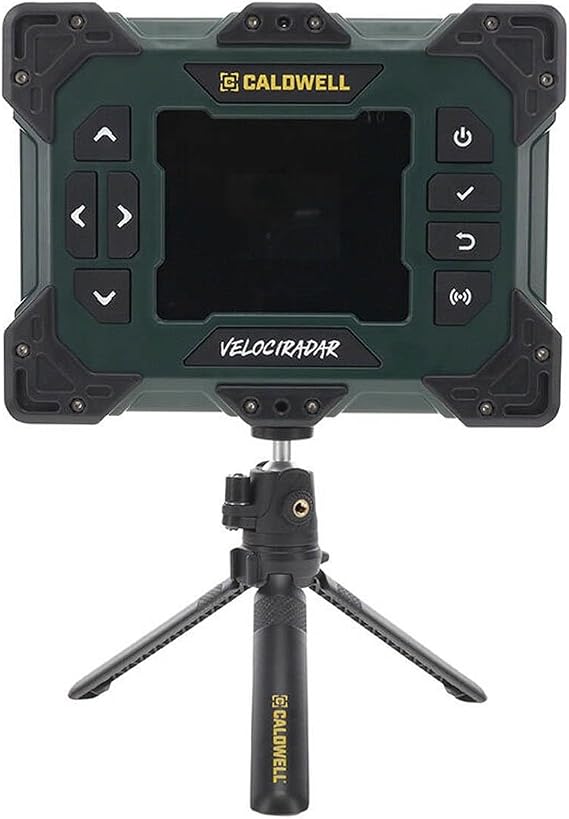
Chose this chronograph for its ability to track bullets downrange, not just at the muzzle, making it ideal for serious shooters wanting accurate ballistic data. It suits rifle, shotgun, handgun, and bow users who value detailed velocity and drag measurements over simple speed checks.
Setting it up is straightforward with the rechargeable Li-ION battery powering the device for extended sessions. The radar tracks projectiles from arrows to bullets up to 100 yards away, so everyday shooting routines benefit from versatile use.
The built-in ballistic calculator adds a practical layer, helping analyze downrange energy without extra gadgets involved.
Performance matches its promise by measuring velocities from 250 to 4500 FPS using Chirp Radar technology, which makes readings reliable across many types of firearms and archery equipment. The build feels solid and practical though some note the unit can be a bit bulky.
Most praise goes to its comprehensive data capture, while common complaints concern the size and occasional complexity of setup.
Users appreciate the detailed ballistic tracking and measurement beyond just muzzle velocity, providing real downrange velocity and drag data. Most note the unit’s size and initial setup as the main challenges encountered during use.
Good fit for anyone wanting precise, long-range ballistic data with versatility across different projectile types. Those seeking a more compact or simple chronograph might prefer alternatives focused on basic velocity only.
Pros
- Tracks bullets downrange up to 100 yards
- Measures wide velocity range, 250-4500 FPS
- Works with bows, rifles, shotguns, and handguns
- Rechargeable battery for long sessions
Cons
- Some find the size bulky for transport
- Setup can be slightly complex for beginners
| Specification | Details |
|---|---|
| Velocity Range | 250 to 4500 FPS |
| Tracking Distance | Up to 100 yards downrange |
| Power Source | Built-in rechargeable Lithium Ion battery |
| Sport Type | Rifle Shooting |
| Included Components | 1 Caldwell Velociradar Chronograph, 1 Lithium Ion Battery |
Best Bow Chronographs Comparison Table
| Product | Compatibility | Weight | Battery Life | Warranty |
|---|---|---|---|---|
| Garmin Xero C1 Pro | Car | – | 6 hours | – |
| Xuhal Ballistic Chrono | – | 0.7 kg | – | – |
| Rifle Shooting Chronograph | – | 0.77 kg | – | 1 year |
| Archery FPS Tester | – | 0.91 kg | – | – |
| Ballistic Precision Chrono | Archery | – | – | No |
| ProChrono DLX | – | – | – | 2 years |
| Ballistic Precision Chrono II | – | 1.68 pounds | – | – |
| Precision Chronograph Tripod | – | 0.91 kg | – | – |
| Caldwell Ballistic 2.0 | – | 1 kg | – | 1 year |
| Bluetooth Optical Chrono | – | – | – | 2 years |
| Shooting Speed Chrono | – | – | – | No |
| Caldwell Velociradar Calculator | Rifle shooting | – | Lithium Ion Battery | – |
- CompatibilityCar
- Weight–
- Battery Life6 hours
- Warranty–
- Compatibility–
- Weight0.7 kg
- Battery Life–
- Warranty–
- Compatibility–
- Weight0.77 kg
- Battery Life–
- Warranty1 year
- Compatibility–
- Weight0.91 kg
- Battery Life–
- Warranty–
- CompatibilityArchery
- Weight–
- Battery Life–
- WarrantyNo
- Compatibility–
- Weight–
- Battery Life–
- Warranty2 years
- Compatibility–
- Weight1.68 pounds
- Battery Life–
- Warranty–
- Compatibility–
- Weight0.91 kg
- Battery Life–
- Warranty–
- Compatibility–
- Weight1 kg
- Battery Life–
- Warranty1 year
- Compatibility–
- Weight–
- Battery Life–
- Warranty2 years
- Compatibility–
- Weight–
- Battery Life–
- WarrantyNo
- CompatibilityRifle shooting
- Weight–
- Battery LifeLithium Ion Battery
- Warranty–
How to Choose the Best Bow Chronograph
Accuracy, ease of use, and durability are the key factors to consider when selecting a bow chronograph. Choosing a reliable model ensures precise speed measurements and prevents frustration, ultimately saving money and avoiding potential damage to your equipment.
Accuracy and Precision
One frustrating issue with some bow speed measurement tools is inconsistency in the readings. Some devices can vary several feet per second from shot to shot, especially in windy or overcast conditions. This inconsistency stems from sensor sensitivity to environmental factors like wind, lighting, or temperature.
A good device provides stable output within a close range across multiple shots.
Calibration is essential to maintain accuracy. Without it, measurements can drift and misrepresent real arrow speeds. A straightforward calibration process lets you set a reliable baseline, often by confirming with a known arrow speed or using factory presets.
Look for models that allow recalibration and have ratings showing consistent performance even in different weather conditions for dependable results.
Ease of Setup and Use
Setting up these tools can turn from quick to frustrating depending on the design. Devices that easily clamp or stand directly in the arrow’s path save time and reduce guesswork. Misalignment leads to missed or false readings, so clear positioning guides included with the product make a huge difference.
The instructions should be straightforward, avoiding technical jargon. Buttons and displays that reflect the current status without confusion help get you shooting faster.
Smaller, lightweight models ease transport to outdoor ranges or practice sessions, fitting comfortably into archery bags without adding bulk.
Durability and Build Quality
Devices regularly used outdoors face wind, rain, dust, and the occasional bump during transport. Models built with sealed cases and water-resistant buttons offer protection against moisture and grit that can ruin electronics. Cheap plastics often crack or wear quickly if handled roughly.
Metal frames or high-quality polymer materials generally last longer despite being carried in backpacks or dropped on hard surfaces. Something sturdy enough to hold up over time reduces the need for replacements and ensures consistent performance. Check for IP ratings or manufacturer notes specifying dust and water resistance as a sign of durability.
Power Source and Battery Life
Many chronographs rely on common AA or AAA batteries, which makes replacement easy while in the field. Some newer models use rechargeable batteries but may require a charger not always convenient on location. Battery life varies widely, so models boasting 20+ hours of continuous use avoid the hassle of frequent swaps.
Power-saving options like auto shut-off after short inactivity help stretch battery life without sacrificing readiness. This is crucial during longer practice sessions where interruptions to replace power sources can break concentration and affect consistency.
Display and Data Output
Strong backlighting or high-contrast displays make it possible to see speed data clearly under bright sunlight or dim conditions. Some devices also show extra info like average speed over the session or total shot count, which can be helpful for tracking progress.
Data transfer options such as Bluetooth or USB output allow for easier logging and analysis on phones or computers. Devices without these features require manual recording, which can slow down practice or lead to errors. Look for simple interfaces that allow saving or exporting results without fuss.
Proper Maintenance Techniques to Prolong the Life of Your Bow Chronograph
Keeping a bow chronograph in good working condition requires regular cleaning and careful handling. Dirt and debris can accumulate on the sensors, causing inaccurate readings, so wipe the device gently with a soft cloth after each use.
Avoid using harsh chemicals that might damage the surface or sensors.
Store the chronograph in a protective case away from extreme temperatures and moisture. Batteries should be removed if the device won’t be used for a long time to prevent corrosion.
Checking the battery level regularly helps prevent sudden shutdowns during shooting sessions.
Additional tips for maintenance:
- Calibrate the device periodically following the manufacturer’s instructions to maintain accuracy.
- Inspect the chronograph for any loose parts or cracks that could affect performance.
- Avoid excessive vibration or dropping the device to prevent sensor misalignment.
Consistent upkeep ensures reliable velocity readings and extends the tool’s overall lifespan.
Common Mistakes to Avoid When Using a Bow Chronograph
One common mistake is placing the chronograph too close to the bow, which can interfere with proper arrow detection. Positioning it at the recommended distance, usually several feet away, helps the sensors register the arrow’s speed accurately.
Failing to shoot arrows through the designated sensor window is another frequent error. Arrows passing outside this zone often result in no reading or false velocity measurements.
Other pitfalls to watch out for:
- Ignoring the need for bright, consistent lighting; poor light conditions can disrupt sensor operation.
- Using damaged or dirty arrows that confuse the sensors and yield unreliable data.
- Skipping calibration checks before use; calibration drift over time affects accuracy.
Making sure the chronograph setup matches its usage guidelines prevents inaccurate or missed readings, saving frustration during practice.
Comparing Bow Chronographs to Alternative Archery Measuring Tools
Bow chronographs provide direct measurements of arrow speed by capturing the details as the arrow passes through sensor points. This real-time data is valuable for tuning equipment and monitoring performance changes.
Alternative tools like draw weight scales and broadhead testers focus on different aspects of the bow’s function but don’t offer velocity information. While useful for assessing draw effort or arrow penetration, these tools don’t measure flight speed.
Comparing features:
- Chronographs deliver quantitative velocity data essential for tuning arrow weight and bow settings.
- Draw weight scales measure the force required to pull the bowstring but lack flight data.
- Broadhead testers help evaluate cutting ability but don’t inform about arrow speed or stability.
Choosing a bow chronograph makes sense if velocity measurement is a priority, especially for those tweaking setups to improve accuracy and consistency.
People Also Asked
How Do I Properly Size a Bow Chronograph for Accuracy?
The needed size depends mainly on the size of your bow and arrow speed; ensure the chronograph’s sensor gap fits the full arrow flight path without interference. Always measure the arrow length and set the device so the sensors align properly to avoid inaccurate readings.
What Is the Safest Way to Set up a Bow Chronograph?
Place the chronograph on a stable surface perpendicular to the arrow’s flight line with adequate lighting. Avoid any background motion behind the sensors that might disrupt the readings and maintain clear visibility of the sensors throughout the shot.
How Long Does a Typical Bow Chronograph Last with Regular Use?
Most bow chronographs last several years if used carefully; the durability mainly depends on build quality and storage conditions. Regularly clean the sensors and avoid exposing the electronics to moisture to prolong the device’s lifespan.
Can I Use a Bow Chronograph with Any Type of Bow?
Bow chronographs generally work with most bows including recurve, compound, and traditional types; the main factor is adjusting sensor spacing to match arrow flight characteristics. Confirm the device’s sensor width and testing range aligns with the bow’s arrow speed and size.
What Are Common Problems When Using a Bow Chronograph?
Common issues include low lighting, incorrect sensor alignment, and interference from nearby objects affecting signal detection. Ensuring consistent lighting, stable setup, and clearing the shooting path help reduce measurement errors when using the chronograph.
Conclusion
Accuracy matters most in a bow chronograph since it directly affects how well you can measure your arrow speed. Durability and ease of use also play key roles, especially if you spend a lot of time outdoors or need to take quick readings.
A stable setup that holds the device steady will give you more consistent results.
Consider where you’ll set up the chronograph and how often you’ll use it before making your choice. Matching the device to your budget helps avoid overspending on features you won’t need.
Check the comparison table above to see which options fit your requirements and review the detailed picks for more guidance.