
Top 12 Best Chicken Knife You Can’t Cook Without!
Cutting through chicken with a dull or awkward knife can be frustrating, turning a simple kitchen task into a struggle. A cheap blade often slips or tears the meat instead of slicing cleanly, which wastes both time and ingredients. The best chicken knife makes a noticeable difference by gliding through joints and separating skin without excessive force or mess.
Quality chicken knives typically have a blade length between 6 to 8 inches, balancing control and reach. Stainless steel is preferred for durability and resistance to corrosion, while a comfortable handle ensures a secure grip even when wet. A slightly flexible yet sharp blade helps maneuver around bones and cartilage, reducing accidents and making cleanup easier.
These features combined make handling poultry far smoother and more efficient.
Need a Quick Check?
| Image | Product | Price |
|---|---|---|
Our Top Picks 1 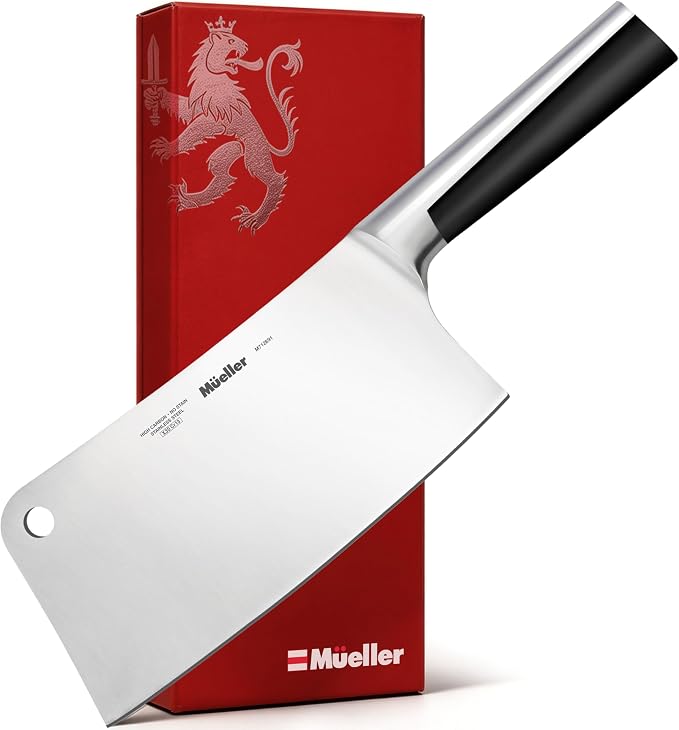 | Mueller Meat Cleaver | Check Price |
Our Top Picks 2  | HOSHANHO Fillet 7 | Check Price |
Our Top Picks 3  | Yardbird Poultry Knife | Check Price |
Our Selected Top 12 Chicken Knife for Every Budget
We offer a variety of chicken knives carefully chosen to fit different needs and budgets. Each review covers performance, suitability for various users, as well as strengths and weaknesses to help you make an informed decision.
1. Mueller 7-inch Meat Cleaver Knife
High-quality stainless steel forms the basis of this 7-inch cleaver, crafted to resist rust and corrosion. It’s ideal for anyone needing a powerful, versatile chicken knife that holds its edge well during daily kitchen use. Its standout feature is the sharpness that slices through meat with ease.
Daily use involves easy handling thanks to its well-balanced design. Cleaning is straightforward since the material resists discoloration and corrosion. The blade smoothly chops, slices, minces, and dices without much pressure, which helps speed up prep work for both home cooks and professionals.
Performance meets durability with a blade that stays razor-sharp and can be quickly re-sharpened when necessary. It handles chicken chopping tasks with ease thanks to its solid build. A common praise is how sharp and efficient the blade is.
Some mention that the knife can feel a bit heavy during extended use.
The cleaver earns high marks for its sharpness and durability, making it a reliable choice for frequent kitchen tasks. Some users find it a little heavy, which might affect comfort during prolonged use. Cleaning and maintenance are simple thanks to the blade’s resistance features.
Great for anyone who cooks often and needs a knife able to cut through chicken and other meats efficiently. Those preferring a lighter tool may want to look for alternatives designed with lighter materials or ergonomic grips.
Pros
- Resists rust, corrosion, and discoloration
- Razor-sharp blade for easy chopping
- Suitable for both home and professional kitchens
- Easy to clean and maintain
Cons
- Can feel heavy during long chopping sessions
- May require regular sharpening over time
| Specification | Details |
|---|---|
| Brand Name | Mueller |
| Blade Length | 7 inches |
| Model Number | SS-77 |
| Material | High-quality stainless steel |
| Manufacturer | Mueller Austria |
2. HOSHANHO 7-inch Fillet Knife
Known for its sharpness and precision, the 7-inch fillet knife from HOSHANHO suits anyone who needs a reliable tool for slicing and filleting meat or fish. Its main strength lies in the razor-sharp edge, allowing for clean cuts with minimal effort.
Setting it up is straightforward since it comes ready to use out of the box with a hand-polished edge set at 15 degrees per side. The thin, 7-inch blade makes trimming, skinning, and butterflying meat and fish straightforward. Its slender design helps you maneuver around bones and joints while minimizing waste, making everyday prep work more precise and less messy.
The high carbon Japanese stainless steel blade holds its edge well and feels solid in hand during use. Many appreciate how smoothly it glides through flesh and bones, leaving neat fillets.
On the downside, a few find the handle less comfortable during extended use, especially when working with larger cuts. It performs its job with sharpness and durability.
Many users praise the sharpness and precision of the Japanese stainless steel blade, which makes slicing and filleting easier and neater. The most frequent downside mentioned is discomfort when using the handle for long periods, especially with larger meat pieces.
This knife is well suited for people needing detailed fillet work and who prefer sharp, thin blades for less waste. Those who require a more ergonomic handle or a heavier knife for tougher cuts might want to explore other options.
Pros
- Sharp Japanese stainless steel blade
- Thin 7-inch blade for precise cuts
- Hand-polished edge at 15 degrees
- Good durability for long-term use
Cons
- Handle can feel uncomfortable with extended use
- Not ideal for heavier cutting tasks
| Specification | Details |
|---|---|
| Blade length | 7 inch |
| Material | Japanese stainless steel 10Cr15CoMoV |
| Edge angle | 15 degrees per side |
| Unit count | 1 Count |
| Model Number | 7 inch Fillet Knife |
3. Yardbird Poultry Processing Knife Model 47185
Sharpness and precision stand out as the main reason to consider this knife for poultry work. Suited for anyone handling poultry processing or butchering, it features a high carbon stainless steel blade that promises durability and control throughout the entire preparation process.
Daily chores with this knife are comfortable thanks to its ergonomic slip-resistant handle. The 3.5 blade is compact enough to manage delicate cuts but sturdy enough for tougher butchering tasks.
Setup only involves easy cleaning and maintenance, making it ready for next use without fuss.
It handles poultry easily thanks to a dual-edged tip built for efficiency and accuracy. The high carbon stainless steel blade holds up well over time without dulling quickly. Most users admire the handle’s grip, although some mention the short blade length limits bigger jobs.
The sharpness and grip of the blade receive high marks for making poultry processing easier and more precise. Some mention the compact blade length as a limiting factor when handling larger cuts or whole birds. The handle design is a consistent positive, providing confidence in use.
Anyone regularly working with poultry in small to medium portions will appreciate the control this knife offers. Those needing a longer blade for bigger butchering jobs might prefer a different tool better suited to handle size and scale.
Pros
- Sharp high carbon stainless steel blade
- Ergonomic slip-resistant handle for good grip
- Dual-edged tip ensures precise cuts
- Compact size ideal for detailed poultry work
Cons
- Blade length too short for larger tasks
- May require frequent sharpening for heavy use
| Specification | Details |
|---|---|
| Blade Length | 3.5 inches |
| Blade Material | High carbon stainless steel |
| Handle | Ergonomic slip-resistant |
| Recommended Uses | Poultry Processing, Butchering, Food Preparation |
| Warranty | 1-Year Limited Warranty |
4. PAUDIN 6-inch Boning Knife

Preparing chicken can be tricky without the right knife, especially when it comes to deboning and trimming. PAUDIN 6-inch Boning Knife suits cooks who want a reliable, multi-use tool for various meat prep tasks.
Its biggest strength lies in handling delicate cuts with surprising ease thanks to its focused design.
Unboxing reveals a lightweight knife with a 6-inch blade that fits comfortably in hand for precise control. It slices through chicken joints and separates skin with minimal effort, making everyday prep smoother. The stainless steel holds up well against regular washing and doesn’t feel unwieldy during use, helping maintain efficiency in busy kitchens.
Built from German stainless steel, the blade offers solid resistance to rust and wear, making it a dependable choice long term. Its slightly waved pattern adds grip to cuts without being a showy Damascus-style blade.
Most praise revolves around how well it smooths deboning tasks, while some find the handle slightly thin for larger hands.
The knife excels at smooth deboning and meat preparation, with many noting how its blade stays sharp and resists rust during regular use. The most common issue mentioned is the handle’s narrowness, which may affect users seeking a chunkier grip. Its performance matches well with everyday kitchen demands.
Those who handle chicken frequently and prefer a blade that combines sharpness with durability will find this knife appealing. People needing a broader, more ergonomic handle might want to explore alternatives better suited for larger hand sizes.
Pros
- Sharp, precise blade for delicate meat work
- Good rust and corrosion resistance
- Comfortable grip for most hand sizes
- Multi-functional for trimming and filleting
Cons
- Handle can feel narrow for larger hands
- Blade pattern not true Damascus steel
| Specification | Details |
|---|---|
| Blade Length | 6 inch (200mm) |
| Material | German stainless steel (5Cr15MoV) |
| Brand Name | PAUDIN |
| Model Number | N10 |
| Included Components | knife |
| Unit Count | 1 Count |
5. Mercer Culinary Ultimate 6-inch Curved Boning Knife

Crafted from high-carbon Japanese steel, this 6-inch curved boning knife stands out for its razor-sharp edge that maintains itself with minimal effort. It suits cooks who need precise control when separating meat from bones, especially for chicken, fish, or ham.
Everyday use feels comfortable because of the ergonomic handle with textured finger points, giving a secure, non-slip grip even when hands get a bit wet. Hand washing with warm water and mild soap keeps it in good shape.
Avoid dishwashers or soaking to preserve its edge and handle integrity.
The blade excelled at trimming fat and sinew cleanly, making the toughest deboning tasks a simpler job. The construction feels durable, built to last with careful handling. Most praise centers on the sharpness and grip, while the main complaint is that it requires hand washing only, which might feel inconvenient for some.
The knife keeps a razor-sharp edge for a long time and offers a very secure grip, making boning tasks easier than with typical knives. The biggest drawback is the need for careful hand washing and drying to maintain its performance and prevent damage.
Anyone who regularly prepares chicken, ham, or fish and values blade sharpness and handle comfort will appreciate this knife. Those wanting low-maintenance cleaning or machine dishwasher compatibility might prefer a different option.
Pros
- Razor-sharp blade with long-lasting edge
- Ergonomic non-slip handle for safety
- Ideal for precise meat and bone separation
- Durable high-carbon Japanese steel construction
Cons
- Must be hand washed, cannot go in dishwasher
- Not suitable for submerging in water for long
| Specification | Details |
|---|---|
| Brand Name | Mercer Culinary |
| Model Number | M18180 |
| Blade Length | 6 inches |
| Material | High-carbon Japanese steel |
| Included Components | Funnel |
| Handle Features | Ergonomic with textured finger points |
6. Imarku 8-inch Japanese Gyutou Chef Knife
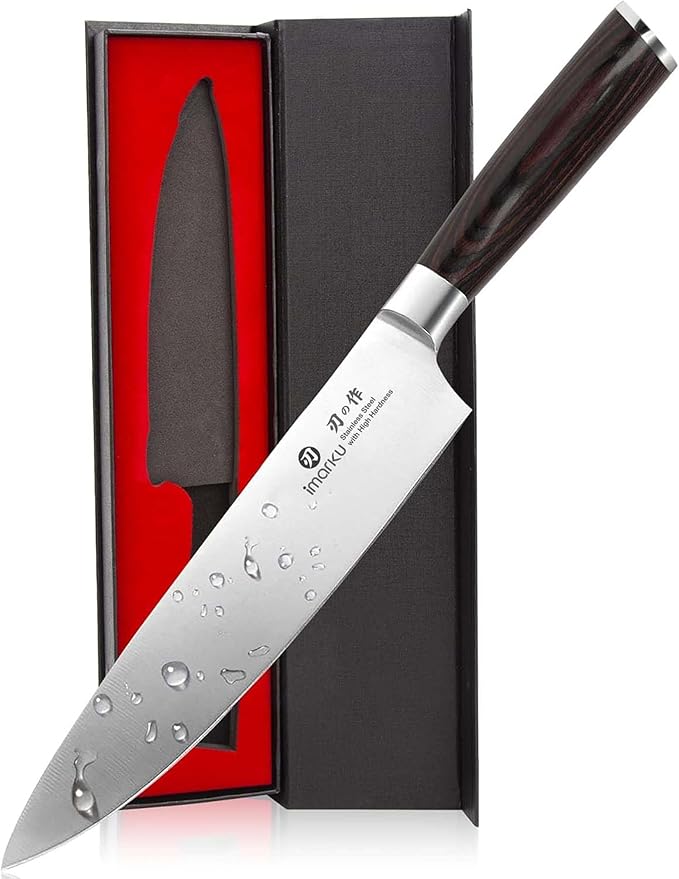
Perfect for home cooks and pros handling poultry, this 8-inch Japanese Gyutou Chef Knife shines in durability. Its biggest strength lies in a high-carbon stainless steel blade that stays sharp longer than many others, making it reliable for cutting through chicken efficiently.
Setup is simple, out of the box, it feels balanced and ready to use. The ergonomic handle fits comfortably in hand, giving good control during chopping and slicing. Daily tasks like dicing vegetables or removing meat from bones are handled with little effort thanks to its tough steel and versatile design.
Performance impresses with a blade hardness rating (HRC) of 56-58, allowing clean cuts through various textures without frequent sharpening. Built with 0.6-0.75% carbon steel, it is roughly twice as hard as typical knives in its class. Strong praise focuses on its toughness, while some mention a learning curve with the sharper edge requiring careful handling.
The toughest feature is the high-carbon blade that maintains sharpness well but demands cautious use due to its keen edge. Many find it durable for all-purpose kitchen tasks, though some struggle initially with its sharpness.
Great fit for cooks wanting a lasting, versatile knife that tackles chicken and other foods with ease. Those unaccustomed to sharper blades might prefer something less demanding on handling at first.
Pros
- High-carbon steel holds edge longer
- Comfortable ergonomic handle
- Good for slicing meat off bones
- Strong and durable construction
Cons
- Sharp edge requires careful handling
- May feel stiff for beginners
| Specification | Details |
|---|---|
| Blade Material | High-Carbon Stainless Steel (0.6-0.75% carbon) |
| Blade Length | 8 inches |
| Hardness | 56-58 HRC (Rockwell Hardness Scale) |
| Item Type | Ergonomic Equipment |
| Manufacturer Part Number | SC10-01 9inch |
7. Cutluxe 12-inch Brisket Knife

Cutluxe 12-inch Brisket Knife stands out with its razor-sharp Granton blade designed specifically for slicing brisket and other meats with precision. Perfect for anyone who needs a reliable carving knife that combines sharpness and comfort, it shines in busy kitchens where control and durability matter most.
Day-to-day handling benefits from the full tang ergonomic design that provides excellent balance and grip thanks to its triple-riveted pakkawood handle. Setting it up requires no extra effort as the blade comes hand sharpened at an optimal 14-16 degrees per side, making each cut smooth and consistent. Cleaning is straightforward due to the polished construction, keeping it sanitary even after frequent use on fatty, tough cuts.
The knife excels at slicing and carving, with a blade that stays sharp even after repeated use, easily handling brisket, turkey, and ribs. Its sturdy build offers strong blade stability and a comfortable feel in hand. Reviews praise the sharpness and comfortable grip highly, while some mention the handle needing a break-in period to feel fully natural during long sessions.
The hand sharpened edge at 14-16 degrees per side provides consistently precise and clean slices, praised widely in reviews. A frequently noted downside is that the pakkawood handle can feel stiff or slightly uncomfortable until it is broken in through use.
This carving knife suits those who cut brisket, ribs, and roasts regularly and want sharpness combined with control. It may not be the best pick for someone seeking a smaller or lighter knife for delicate tasks or those wanting an immediately soft handle feel.
Pros
- Razor-sharp Granton blade for precise slicing
- Triple-riveted pakkawood handle for strong grip
- Hand sharpened edge retains sharpness well
- Laminated and polished for sanitary use
Cons
- Handle may feel stiff initially for some hands
- Relatively long blade needs careful storage
| Specification | Details |
|---|---|
| Brand Name | Cutluxe |
| Model Number | ART-SLC-12-1 |
| Blade Length | 12-inch |
| Handle Material | Luxury pakkawood, triple-riveted |
| Edge | Hand sharpened at 14-16 degrees per side |
| Item Type Name | Carving knife |
8. Amazon Basics 8-inch Chefs Knife

Amazon Basics 8-inch Chefs Knife shines as a versatile kitchen tool, perfect for chopping, dicing, and mincing. Its main strength lies in the high carbon stainless steel blade that resists stains, rust, and pits, making it a reliable choice for everyday cooking tasks.
Daily use is straightforward with a comfortable grip and a balanced feel thanks to the semi bolster design. Its full tang and three rivets add to the sturdy build, while the 8-inch blade offers plenty of cutting surface.
Hand washing keeps the satin finish intact and ensures the knife stays in good condition.
The knife performs well for general kitchen prep, cutting through vegetables and meats cleanly. Its forged stainless steel construction gives it durability and weight that many appreciate. Reviews often commend the sharpness and balance, though some mention the need for frequent sharpening and hand washing as minor downsides.
Many praise the knife for its sharpness and balanced weight, which makes everyday cutting tasks easier. The most common drawback noted is the need for frequent sharpening and the care required to maintain the blade’s finish by hand washing exclusively.
Home cooks looking for an affordable, reliable chef’s knife with solid build quality will find this meets their needs well. Those preferring low-maintenance knives that can go in the dishwasher or hold an edge longer might want to consider other options.
Pros
- Stain, rust, and pit resistant blade
- Balanced weight with semi bolster design
- Durable forged stainless steel construction
- Full tang improves handle stability
Cons
- Requires regular sharpening to maintain edge
- Hand wash only, no dishwasher safe
| Specification | Details |
|---|---|
| Blade Length | 8 inches |
| Blade Material | High carbon stainless steel |
| Construction | Forged stainless steel with full tang |
| Handle Design | Semi bolster, three rivets |
| Dimensions (LxWxH) | 13.28” x 1.85” x 0.87” inches |
| Care | Hand wash only |
9. PAUDIN 8-inch Chef Knife

Feels solid and sharp right out of the box, suited for anyone wanting a reliable all-purpose kitchen knife. It excels at cutting through chicken and other meats smoothly, making meal prep quicker and less frustrating. The biggest strength is definitely how sharp it stays, which is key for handling poultry with ease.
Easy to grip thanks to its ergonomic handle, it quickly becomes a go-to knife in the kitchen. Day-to-day slicing, chopping, and dicing feel precise without struggle, whether working on vegetables or different meats like chicken and beef.
Cleanup is straightforward, making it convenient after busy cooking sessions. The balance between blade and handle helps keep control steady during use.
Performance on meats is impressive due to the ultra-sharp German high carbon stainless steel blade, allowing clean cuts that reduce tearing. The build quality feels durable and well-made, suitable for both home cooks and professionals. Strongest praise highlights its sharpness and versatility, while the most common critique mentions the handle could be more comfortable during extended use.
The knife’s ultra-sharp blade is praised for easily slicing through chicken and other meats, making kitchen tasks faster and more precise. Common feedback points out that the handle might become uncomfortable during longer use, which could affect control over time.
People who cook a variety of meals involving meats and vegetables will find it a handy and durable tool. Those needing a knife with maximum handle comfort for extended prep time may want to explore other options.
Pros
- Super sharp blade cuts meats cleanly
- Ergonomic handle design for secure grip
- Versatile for vegetables and different meat types
- Durable German high carbon stainless steel
Cons
- Handle comfort can be improved for long use
- Single knife without protective sheath included
| Specification | Details |
|---|---|
| Blade Length | 8 inch |
| Material | German High Carbon Stainless Steel |
| Handle | Ergonomic design |
| Included Components | PAUDIN Chef Knife 8 inch-Chefs Knife Professional, Super Sharp Kitchen Knives |
| Warranty | 24 months |
10. HOSHANHO 7-inch Fillet Knife

Made from high carbon Japanese steel, this 7-inch fillet knife suits anyone needing precision for chicken or fish. Its sharpness stands out, cutting smoothly through meat and bones, making it ideal for cooks who value a clean, accurate slice.
Daily use is straightforward as the slender blade glides easily under skin and along bones. The hand-ground edge at 15° on each side means you won’t struggle with tougher parts. Handling feels balanced thanks to the blade’s design, helping maintain control and reduce waste during prep.
The blade holds its sharp edge well and shows strong resistance to corrosion, a clear advantage for frequent kitchen use. Its durability matches the premium steel quality. Some find the special waved pattern unique, though it doesn’t affect cutting.
A noted drawback is that frequent sharpening is needed to keep up the initial sharpness.
The knife excels at slicing meat and fish cleanly, praised often for its sharpness and durability. Its waved blade pattern is visually distinct but adds no functional benefit. Some users feel the sharpness fades without routine honing.
Perfect for those who want a precise and long-lasting fillet knife with a strong cutting edge. Better to look elsewhere if maintenance and frequent sharpening aren’t an option or if a decorative pattern matters more than function.
Pros
- High carbon steel for edge retention
- Sharp tapered tip for precision cuts
- Corrosion resistant blade
- Hand-ground edge for sharpness
Cons
- Requires regular sharpening
- Blade pattern purely decorative
| Specification | Details |
|---|---|
| Blade Length | 7 inch |
| Steel Type | Japanese high carbon powder steel |
| Hardness | 62 HRC |
| Edge Angle | 15° per side |
| Included Components | 7 inch fillet knife |
11. Huusk Fillet Knife with Wood Handle

Forged from premium Japanese steel, the Huusk Fillet Knife with Wood Handle suits anyone who needs precision and durability in the kitchen. Its razor-sharp 15° hand-sharpened edge stands out as its biggest strength, making it ideal for tasks like filleting fish or deboning meat with accuracy.
Every day in the kitchen, the wooden handle offers a comfortable grip that feels sturdy and balanced. The blade’s hardness keeps it sharp longer than many other knives, reducing the need for frequent sharpening.
It’s well-suited for delicate slicing thanks to the fine laser-etched blade, which makes prep work quicker and more precise.
Performance-wise, the knife holds an edge that lets you glide through fish or poultry cleanly without tearing. The Japanese steel resists corrosion, which is a bonus for regular exposure to wet ingredients. Some find the handle a bit less ergonomic after long use, but the sharpness and build quality receive high praise for lasting through heavy kitchen use.
The blade’s sharpness and resistance to corrosion are consistently praised, allowing clean, precise cuts in daily use. The most common complaint concerns the handle, which some find less comfortable during longer tasks or extended handling sessions.
Anyone focusing on filleting or deboning will appreciate the knife’s precise edge and durable build. Those needing different blade shapes or more ergonomic handles might want to consider alternatives better suited for varied kitchen activities.
Pros
- Sharp hand-sharpened 15° blade edge
- Durable, corrosion-resistant Japanese steel
- Comfortable wooden handle
- Versatile for fish and meat prep
Cons
- Handle can feel less ergonomic with extended use
- Single knife option limits choices for different cuts
| Specification | Details |
|---|---|
| Brand Name | Huusk |
| Manufacturer | Huusk |
| Number of Items | 1 |
| Unit Count | 1 Count |
12. Shun Premier 6-inch Boning & Fillet Knife

A keen, narrow blade stands out first with this boning and fillet knife, designed especially for getting close to the bone. Ideal for people who often prepare chicken or fish and need precision cutting, it excels in tackling fibrous tissue without much effort.
Setting up involves just handling the knife to feel its balance and curve. The sharpness stays consistent for everyday meal prep, and the hammered tsuchime finish helps keep pieces from sticking while you work. It’s light enough to control but sturdy enough to handle repeated cuts without discomfort.
Performance is where this knife shines, with its VG-MAX steel blade slicing cleanly through chicken joints and fillets. The shape and thickness make it effective at separating meat from bone without tearing. Built with 68 layers of Damascus cladding, the blade holds an edge well.
Most praise centers on its sharpness and precision; some find the handle shape less comfortable during extended use.
The sharpness and precision of the blade consistently get praised as its greatest strengths, making it excellent for detailed boning and filleting tasks. However, a common complaint is that the handle can be less comfortable during longer use sessions, which may affect grip and control.
Those looking for a reliable, sharp knife primarily for chicken and fish will appreciate this model’s design and performance. Anyone needing a more ergonomic handle for extended cutting might consider alternatives with a softer or differently shaped grip for better comfort.
Pros
- Extremely sharp narrow blade for precision cuts
- Hammered finish reduces sticking while cutting
- Durable VG-MAX steel holds edge well
- Curved blade design aids boning close to bone
Cons
- Handle may feel uncomfortable for long use
- Narrow blade requires careful handling for safety
| Specification | Details |
|---|---|
| Brand Name | Shun |
| Model Number | TDM0774 |
| Blade Length | 6 Inch |
| Steel Type | VG-MAX steel with 68 layers of Damascus |
| Edge Angle | 16-degree edge |
| Finish | Hammered tsuchime finish |
Comparison of Top Rated Chicken Knives
| Product | Recommended Uses | Size | Warranty | Included Components |
|---|---|---|---|---|
| Mueller Meat Cleaver | – | – | Manufacturers Warranty | MU-CLK1 |
| HOSHANHO Fillet 7 | – | 7 inch | – | 7 inch Fillet Knife |
| Yardbird Poultry Knife | Poultry Processing | – | – | Knife |
| PAUDIN Boning 6 | – | 200mm | Satisfaction Guarantee | knife |
| Mercer Ultimate Boning | – | – | – | Funnel |
| imarku Gyutou 8 | – | 8-inch | – | 1 pc chef knife |
| Cutluxe Brisket 12 | – | 12 inch | – | carving knife |
| Amazon Basics Chef 8 | – | 8 inch | – | nome |
| PAUDIN Chef 8 | – | 8 inch | – | PAUDIN Chef Knife 8 inch |
| HOSHANHO Fillet Pro | – | 7 inch | – | 7 inch fillet knife |
| Huusk Wood Handle Fillet | – | – | – | – |
| Shun Premier Boning 6 | – | 6 inch | – | Boning Knife |
- Recommended Uses–
- Size–
- WarrantyManufacturers Warranty
- Included ComponentsMU-CLK1
- Recommended Uses–
- Size7 inch
- Warranty–
- Included Components7 inch Fillet Knife
- Recommended UsesPoultry Processing
- Size–
- Warranty–
- Included ComponentsKnife
- Recommended Uses–
- Size200mm
- WarrantySatisfaction Guarantee
- Included Componentsknife
- Recommended Uses–
- Size–
- Warranty–
- Included ComponentsFunnel
- Recommended Uses–
- Size8-inch
- Warranty–
- Included Components1 pc chef knife
- Recommended Uses–
- Size12 inch
- Warranty–
- Included Componentscarving knife
- Recommended Uses–
- Size8 inch
- Warranty–
- Included Componentsnome
- Recommended Uses–
- Size8 inch
- Warranty–
- Included ComponentsPAUDIN Chef Knife 8 inch
- Recommended Uses–
- Size7 inch
- Warranty–
- Included Components7 inch fillet knife
- Recommended Uses–
- Size–
- Warranty–
- Included Components–
- Recommended Uses–
- Size6 inch
- Warranty–
- Included ComponentsBoning Knife
How to Choose the Right Chicken Knife
Selecting a good chicken knife depends on sharpness, blade size, and handle comfort to ensure precise cuts and ease of use. Choosing the right features prevents injury, reduces food waste, and avoids frequent replacements, ultimately saving money and effort in the long run.
Blade Material and Sharpness
Blades made from low-quality steel quickly dull and show corrosion marks, turning a simple kitchen task into a chore. After using blades with high-carbon stainless steel, it becomes clear that sharpness retention matters a lot, these blades can stay sharp through a whole day of cutting without constant sharpening. Their steel resists rust and corrosion better too, which means the blade keeps its integrity even with frequent washing.
Look for blades made of high-carbon stainless steel with 55 to 60 HRC on the hardness scale. This range keeps the edge sharp longer but remains tough enough to handle cutting through chicken bones.
Avoid basic stainless steel that wears quickly or easily picks up stains and rust spots, especially if you store the blade wet.
Blade Design and Size
Using a blade that’s too long or too short makes maneuvering around joints a struggle, wasting time and applying unnecessary force. The right blade length is usually around 6 to 7 inches, providing enough reach without losing control. Shapes that taper to a narrow point help get into tight spaces around poultry bones, while a slight curve aids slicing through meat.
Blade stiffness is another key point. Some flexibility is needed when trimming meat, but cutting through tougher parts requires a firm blade. Most blades fall somewhere in the middle, offering enough rigidity to handle bones without feeling rigid and awkward.
This balance makes working around chicken contours easier and safer.
Handle Comfort and Grip
Gripping a handle that feels slippery or too small quickly leads to hand fatigue and poor control. Handles designed with ergonomics in mind provide comfort even during extended prep sessions. Materials like rubber or textured plastics hold well even when wet from poultry juices, reducing the risk of slips.
The right handle size also matters. People with larger hands need thicker grips, while smaller hands benefit from narrower shapes.
A well-fitted handle feels like an extension of your hand, offering a natural and secure hold that prevents strain.
Safety Features
Blades without a finger guard or bolster allow your hand to slide forward during cutting, which often leads to accidental nicks. A sturdy guard not only prevents slips but also adds to the feeling of safety when working with tougher cuts of poultry.
The connection between the blade and handle needs to be rock solid; a loose blade attachment makes any cut precarious.
Some handles feature non-slip patterns or rubberized sections that keep your grip steady on oily or wet surfaces. These are small design choices that directly reduce accidents by keeping the knife stable in the hand throughout use.
Ease of Cleaning and Maintenance
Cleaning blades that trap food bits in seams or crevices turns into a daily annoyance and hygiene risk. Blades and handles crafted from stainless steel or high-quality synthetic materials repel stains and odors more effectively as time passes.
These surfaces make it easier to rinse off stuck-on particles without special effort.
Many blades are safe for hand washing with thorough scrubbing, but few dishwasher-safe ones survive repeated cycles without degrading. Avoid designs with multiple joints or complicated fittings that hold small food scraps. A simple, solid blade-to-handle connection speeds up maintenance and keeps the knife sanitary.
Proper Techniques for Using a Chicken Knife Efficiently
Using a chicken knife efficiently depends on holding the knife with a firm grip and making precise cuts along the joints and bones. Chicken knives are designed with a curved blade to allow for better maneuvering around the irregular shapes of poultry. Applying steady pressure helps avoid tearing the meat.
Starting at the breastbone and working towards the wing joints makes the process smoother. When breaking down a whole chicken, cutting through the skin carefully preserves the presentation.
Resting the chicken on a stable surface reduces the risk of slips. It is best to use short, controlled strokes since this reduces the chance of accidentally cutting into the bone and dulling the blade faster.
- Grip the handle firmly but comfortably
- Use curved blade to cleanly slice around joints
- Start cuts at breastbone or wing joints
- Apply steady pressure instead of sawing motions
- Work on a stable cutting board
Cleaning and Maintaining Your Chicken Knife for Longevity
Cleaning a chicken knife right after use is crucial to prevent food residue and bacteria buildup. Rinse the blade under warm water to remove large pieces, then wash with mild dish soap using a soft sponge or cloth. Avoid abrasive cleaners to protect the blade finish.
Dry the knife immediately after washing to prevent rust spots, especially if it has a carbon steel blade. Regularly sharpen the knife to maintain its cutting efficiency; a dull chicken knife makes the job harder and less safe.
Storage matters too. Using a knife block, magnetic strip, or protective sheath keeps the blade from damage and reduces risk of accidental cuts.
Avoid throwing it loose in a drawer with other utensils.
- Rinse and wash promptly after use
- Use mild soap and soft sponge only
- Dry fully before storage
- Sharpen regularly to keep edge sharp
- Store safely in a block, strip, or sheath
Comparing Chicken Knives to Other Poultry Cutting Tools
Chicken knives are specialized tools designed mainly for cutting through poultry joints and bones with minimal effort. Compared to a chef’s knife, chicken knives have a narrower, curved blade that fits into tighter areas around joints.
This makes portions like wings and drumsticks easier to separate without shredding the meat. Boning knives share some features, but they usually have thinner, more flexible blades for removing meat from bones rather than cutting through them. Cleavers are heavier and much thicker, meant for chopping through entire bones, but they lack the precision offered by a chicken knife.
The balance and shape of chicken knives make them practical for preparing poultry quickly and cleanly without using excessive force.
- Chicken knives offer precision around joints
- Chef’s knives are more general purpose
- Boning knives are thinner and more flexible
- Cleavers handle thick bones but lack finesse
- Chicken knives combine control with bone-cutting ability
People Also Asked
How Do I Properly Care for a Chicken Knife?
Clean the chicken knife immediately after use with warm soapy water and dry it thoroughly to prevent rust. Avoid putting it in the dishwasher, as the high heat and detergent can damage the blade and handle over time. Regularly sharpening keeps it cut-ready and safe to use.
What Size Chicken Knife Is Ideal for Everyday Use?
A chicken knife around 5 to 7 inches long is ideal for everyday tasks like cutting through joints and trimming skin. This size offers sufficient control without being cumbersome, making it easier to maneuver around bones and cartilage efficiently.
Are Chicken Knives Safe to Use for Beginners?
Chicken knives are generally safe for beginners if handled with care and attention. The blade’s design helps cut through poultry joints cleanly, but beginners should start slowly and keep fingers clear of the cutting path to avoid slips.
How Long Does a Typical Chicken Knife Last?
A chicken knife can last several years with proper care, including regular sharpening and avoiding harsh cleaning methods. The lifespan depends on the quality of steel and how often it is used, but well-maintained knives stay functional well beyond initial purchase.
What Common Problems Should I Watch for with Chicken Knives?
Watch for dulling of the blade and loosening of the handle as common issues. A blunt blade requires more force and increases the chance of accidents. Also, inspect for rust spots, especially if the knife isn’t dried properly after washing.
Conclusion
Choosing the best chicken knife mostly depends on how comfortable it feels in your hand, sharpness for clean cuts, and the durability of the blade material. A knife that is easy to control and keeps its edge well will make preparing chicken much smoother.
Pay attention to handle design and size to suit your grip and cutting style.
Consider how much counter space you have and how often you expect to use the knife when making a decision. It might be worth spending a bit more for a blade that lasts longer if you cook chicken frequently.
Review the comparison table and earlier sections to find a knife that fits your kitchen and budget best.


