
Top 12 Best Compact Spotting Scope Under 300 – Must See!
Using a compact spotting scope under 300 can quickly turn frustrating if the optics are foggy or if the scope feels awkward to hold during long viewing sessions. Many scopes in this price range tend to skimp on the lens quality or build, leading to cloudy images or shaky grips that ruin the experience.
The best compact spotting scope under 300 manages to avoid these pitfalls, providing clear views and a sturdy feel without costing a fortune.
Key features that differentiate a solid compact spotting scope here include lens coating quality, magnification range, and overall size. Fully multi-coated lenses are essential for bright, sharp images, especially with scopes around 20-60x magnification, which balances zoom and clarity.
The scope should also be lightweight enough to carry comfortably yet large enough for a stable grip and easy focusing. A weather-resistant build adds durability and makes cleaning straightforward after field use.
Need a Quick Check?
| Image | Product | Price |
|---|---|---|
Our Top Picks 1  | SVBONY SV28 Scope | Check Price |
Our Top Picks 2 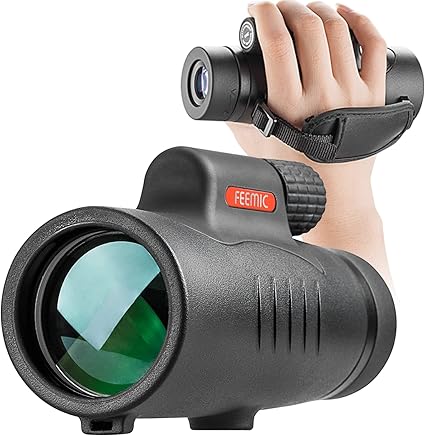 | High Power 8×42 Monocular | Check Price |
Our Top Picks 3  | Celestron C70 Maksutov | Check Price |
Our Selected Top 12 Compact Spotting Scope Under 300 Worth Buying
This list features compact spotting scopes that balance size, quality, and affordability under 300. Each review explains how the scopes perform in different conditions, highlights their strengths and weaknesses, and identifies the users they are best suited for, helping you find the right option.
1. SVBONY SV28 Spotting Scope
Bird watchers and outdoor enthusiasts starting out will appreciate a spotting scope that’s straightforward with adjustable zoom. Its standout feature is an easy-to-use 25-75x zoom range, making it simple to get the perfect view without fuss.
Setting up involves mounting it on any standard tripod thanks to its equatorial mount compatibility. The 70mm lens gathers plenty of light, which helps when scanning birds or distant scenery. Adjusting focus manually is smooth, and the built-in extendable sunshade cuts glare effectively for clearer images during bright days.
Performance-wise, it delivers a bright and detailed view once focused properly, supported by FMC coating on the lenses that helps reduce reflections. The waterproof construction and non-slip finish make it reliable outdoors in damp conditions, though some users mention the manual focus requires patience to lock sharp images. Build quality feels solid for the price, but quick action shots might be tricky.
Bright, clear views come from the sizable 70mm lens and FMC coating, making images easier to see in bright light. Users note the manual focusing requires a bit of time, which may slow down quick spotting sessions.
People beginning bird watching or casual spotters will find it suits their needs well, especially in stable environments. Those needing fast focus for active subjects might want to look for options with quicker focusing mechanisms.
Pros
- Easy 25-75x zoom for varied viewing needs
- 70mm lens offers good light gathering
- Waterproof and non-slip finish for wet conditions
- Built-in sunshade reduces glare
Cons
- Manual focus can be slow to adjust sharply
- Less ideal for fast-moving targets
| Specification | Details |
|---|---|
| Zoom Ratio | 3:1 |
| Objective Lens Diameter | 70mm |
| Focal Length | 380 millimeters |
| Field Of View | 64 feet |
| Mount | Equatorial Mount |
| Additional Features | 45 degree, waterproof |
2. High Power 8×42 Monocular Telescope
High Power 8×42 Monocular Telescope stands out by offering an 8X magnification combined with a 42mm objective lens, perfect for outdoor explorers who need a wide-angle, crystal clear view without carrying bulky gear. Its biggest strength lies in delivering sharp images across a large field of view, making it great for hiking, birdwatching, or sports events.
Setting up the monocular is straightforward thanks to its manual focus and altazimuth mount, letting you quickly zoom in on distant subjects. Everyday use is boosted by a fully multi-coated lens that improves clarity and light transmission.
The rubber finish adds a secure grip, and the built-in dust cover keeps the lens safe from dirt and moisture, which is handy when you’re on the move outdoors.
Its performance shines through crisp images and a wide 360ft field of view at 1000 yards, helping to catch details far away. The build is tough, featuring a nitrogen-filled, waterproof design that’s also fogproof and shockproof, protecting it from harsh weather and rough handling. Most users find the optical quality impressive, although some note the manual focus can take a moment to adjust precisely.
Users praise the sharp, wide-angle viewing experience and durable protective features, making it reliable in tough outdoor conditions. However, many mention that dialing in manual focus requires patience and can be tricky when tracking moving subjects.
Anyone needing a compact, rugged monocular for clear distant views will appreciate this model’s features. Those who want quick autofocus or variable zoom might want to explore other options that better suit fast-changing scenes or different magnification levels.
Pros
- 8X magnification with wide 42mm objective lens
- Fully multi-coated optics for clear images
- Waterproof, fogproof, dustproof, and shockproof
- Rubber finish offers solid grip and durability
Cons
- Manual focus can be slow to adjust precisely
- No built-in zoom beyond fixed 8X magnification
| Specification | Details |
|---|---|
| Power Source | Manual Power |
| Field Of View | 360 degrees |
| Eye Piece Lens Description | Convex |
| Focus Type | manual Focus |
| Mount | Altazimuth Mount |
3. Celestron C70 Mini Maksutov Spotting Scope
Celestron C70 Mini Maksutov Spotting Scope serves well for those needing a compact, lightweight optical device for bird watching and nature observation. It shines brightest in delivering sharp, bright views of distant targets thanks to its 700mm focal length and f/10 ratio.
Setup involves attaching the tabletop tripod with slow-motion controls, which keeps the scope steady during use. Manual focus allows fine adjustments, with the included multi-coated Brandon eyepiece enhancing clarity.
Its small size at 11 inches and 2 pounds makes it easy to bring along for various activities, including digiscoping using a smartphone adapter.
Performance is focused on delivering crisp images of small or distant objects, thanks to the Maksutov-Cassegrain optical design. Build quality feels solid for a portable device, though some mention manual focusing can require patience.
The built-in 3x zoom eyepiece provides useful flexibility without extra lenses, but the narrow 1.55-degree field of view limits scanning wide scenes quickly.
Shiny optical clarity stands out as the main advantage, making distant bird or target details easy to spot. Meanwhile, many find the manual focus requires patience for precise adjustment, which can be frustrating during quick observations.
This scope suits people valuing portability and detailed views at longer distances. Those needing fast focusing or a wider field of view in viewing large scenes would benefit from a different model.
Pros
- The compact and lightweight design makes it easy to carry around.
- Multi-coated optics deliver bright, sharp views
- Built-in 3x zoom eyepiece adds versatility
- Tabletop tripod with slow motion controls provides stability
Cons
- Manual focus can be tricky and slow to adjust
- Narrow 1.55-degree field makes wide viewing limited
| Specification | Details |
|---|---|
| Aperture | 70MM |
| Focal Length | 700 millimeters |
| Zoom Ratio | 3x |
| Field Of View | 1.55 degrees |
| Focus Type | Manual Focus |
| Mount | Equatorial Mount |
4. 25-75×80 Compact Spotting Scope

Using the 25-75×80 Compact Spotting Scope feels convenient and straightforward, built for anyone needing a high-powered view without lugging heavy gear. Its standout strength is a bright, clear image thanks to specially chosen lens materials that improve clarity over typical scopes in this price range.
Setting up means attaching it to any tripod with ease, then adjusting the manual focus. The zoom is smooth between 25x and 75x, letting you lock in on distant details easily.
A built-in optical sight helps point the scope quickly, while the compact size keeps it handy for hikes or birdwatching. No batteries mean less hassle, and the lightweight design makes carrying comfortable.
Clarity and brightness stand out during use, with images sharper than many similar-priced options due to the high-transparency objective lens. The sturdy construction offers weather protection with waterproof and fogproof features, making it reliable outdoors. Some found the manual focus tricky to fine-tune exactly or mentioned the scope’s weight when packing light.
The scope delivers noticeably brighter and sharper images compared to similar BK4 models, making clear viewing a strong point. Its waterproof and fogproof build ensures it holds up well outdoors. However, the manual focus sometimes requires patience to dial in perfectly, which may slow down quick spotting moments.
Anyone prioritizing image clarity and durability in a compact package will find good use for this scope. Those wanting ultra-lightweight gear or simpler focusing might look for something with fewer manual adjustments or a lighter frame for extended carrying.
Pros
- 10% brighter and sharper images than standard BK4 lenses
- Compact and easy to carry for outdoor activities
- Waterproof and fogproof, safe in bad weather
- Built-in finder scope for quick targeting
Cons
- Manual focus can be challenging to adjust precisely
- Feels a bit heavy for long excursions without a pack
| Specification | Details |
|---|---|
| Magnification | 25-75x |
| Objective Lens Diameter | 80mm |
| Focus Type | Manual Focus |
| Coating | Multi-coated Green Lens |
| Field of View | 82 feet |
| Waterproof | Nitrogen-filled and O-ring sealed |
5. Barska Colorado 15-40×50 Spotting Scope

Good value compact spotting scopes with adjustable zoom often struggle with clarity at long distances, but this model stands out for its crisp images up to 150 yards. Ideal for casual birdwatching or general outdoor spotting, it offers a solid balance between portability and performance.
Setup involves mounting the scope on the included table tripod, making it stable on flat surfaces. Its center focus knob is easy to adjust for quick sharpness changes. The soft carrying case keeps it protected during transport, while the rubber armor provides a reassuring grip and shock absorption.
Zooming from 15x to 40x allows flexibility depending on the scene.
Clarity is impressive within the recommended range thanks to fully coated optics and the porro prism system. The body feels tough with good shock resistance from the rubber armor.
The biggest positive noted is the clear and bright view up to 150 yards. The main drawback is that image sharpness declines noticeably beyond this distance, limiting its use for more distant spotting.
Clarity and brightness within 150 yards make it good for nearby spotting, but details fade beyond that range. Rubber armor protects against impacts, though the included tripod only works well on flat surfaces.
Those needing clear images for moderate distances will appreciate this scope’s strengths. Users wanting sharp views far beyond 150 yards should consider other options with larger lenses or better optics.
Pros
- Sharp views up to 150 yards
- Shock absorbing rubber armor
- Includes table tripod and carrying case
- Adjustable 15-40x zoom
Cons
- Image blurs quickly past 150 yards
- Table tripod limits placement options
| Specification | Details |
|---|---|
| Objective Lens Diameter | 50mm |
| Zoom Range | 15-40x |
| Focus Type | Center Focus |
| Mount | Table Top Mount |
| Coating | Fully Coated |
| Field Of View | 3 degrees |
6. BIBIRE 25-75X60 Spotting Scope

Built with a 60mm fully multi-coated lens and a high-quality BAK4 prism, this spotting scope suits birdwatchers and wildlife enthusiasts who need strong zoom and clear images without straining their neck. Its main strength is the 25-75x zoom range, which covers everything from wide views to detailed close-ups.
Setup involves mounting the scope on a 360° rotatable tripod, allowing smooth turning while spotting. The 45° angled eyepiece keeps your neck comfortable during long viewing sessions. Manual focus lets you quickly adjust clarity, and the straight-through finderscope helps you locate subjects easily.
Nitrogen filling ensures fogproof performance, so it stays clear in damp conditions.
The scope delivers sharp, high-contrast images with true color thanks to the green FMC lens and BAK4 prism. While the zoom range handles distant details well, some find manual focusing a bit slow in changing conditions.
Built solidly for field use, it balances portability with reliability. The nitrogen-filled design keeps internal fog from forming but doesn’t eliminate all glare in bright sunlight.
Sharp, high-contrast images with natural colors stand out as the biggest advantage, though some users note the manual focus feels slow when switching targets quickly. The nitrogen-filled design prevents fog but doesn’t fully eliminate glare on sunny days.
Birdwatchers or wildlife viewers wanting a versatile zoom and comfortable posture should find this scope fits well. Those needing fast autofocus or glare reduction might want to consider other models.
Pros
- Wide zoom range from 25x to 75x
- Comfortable 45° angled eyepiece
- Nitrogen-filled and fogproof design
- 360° rotatable tripod mount
Cons
- Manual focus can be slow to adjust
- Some glare in bright sunlight
| Specification | Details |
|---|---|
| Eye Piece Lens Description | 45° angled eyepiece |
| Mount | 360° rotatable tripod |
| Focus Type | manual focus |
| Finderscope | Straight-Through |
| Focal Length Description | 25-75×60 mm Spotting Scope |
| Zoom Ratio | 25-75x |
7. Vortex Solo Monocular 10×36

Compact size and lightweight design stand out first, making the Vortex Solo Monocular 10×36 great for anyone needing high magnification on the go. It suits outdoor enthusiasts who want a clear image without carrying bulky equipment, and its biggest strength lies in delivering sharp, bright views through fully multi-coated lenses.
Setting up involves adjusting the manual focus and the eyecup for comfort, even when wearing glasses. The non-slip rubber armor feels secure in hand, and the multi-position utility clip allows quick attachment to gear or clothing.
Weather conditions won’t be a problem thanks to its waterproof and fogproof construction, keeping it ready for any environment at a moment’s notice.
Performance delivers a crisp image with 10x magnification and a decent 6.2-degree field of view, making it suitable for spotting details at a distance. The solid build with rubber armor and nitrogen purging assures durability and no fogging inside lenses. Users often appreciate the clarity and waterproof features, while some mention the manual focus can require steady handling for precise adjustments.
The clear, sharp images and dependable waterproof performance stand out as strong points. A frequent note is that focusing manually can be tricky, especially when trying to hold the monocular steady on moving targets or at longer distances.
People seeking a simple, durable spotting device that fits in a pocket will find this ideal. Those needing image stabilization or easier focusing for fast-moving subjects might prefer higher-end or specialized options.
Pros
- Bright, clear images with 10x magnification
- Durable, rubber armored body
- Waterproof and fogproof for all conditions
- Adjustable eyecup for comfort with glasses
Cons
- Manual focus requires steady hands for precision
- No image stabilization for handheld use
| Specification | Details |
|---|---|
| Magnification | 10x |
| Objective Lens Diameter | 36mm |
| Field Of View | 6.2° |
| Focus Type | Manual Focus |
| Coating | Fully Multi-Coated Lenses |
| Waterproof/Fogproof Features | Nitrogen purged and o-ring sealed |
8. Bushnell Prime 16-48×50 Spotting Scope

Compact and lightweight, the Bushnell Prime 16-48×50 Spotting Scope fits easily into any hunting or sports enthusiast’s gear without compromising on clarity. Its standout feature is a strong zoom paired with fully multi-coated lenses that deliver bright, sharp images in varying conditions. Ideal for anyone after solid low-light viewing without the bulk.
Setup is quick thanks to the included tabletop tripod, and carrying it around is no hassle given its compact and lightweight design. Manual focus and diopter adjustment allow precise tuning, while the IPX7 waterproof build handles unexpected weather without fogging up.
The protective EVA foam case and soft field cover keep it safe when you’re on the move.
Seeing distant details is reliable with low dispersion glass that improves color and contrast especially in dawn or dusk light. The roof prism design keeps the scope sturdy yet light. While many appreciate the waterproofing and brightness, some mention the manual focus requires careful handling to avoid blurred spots during fast changes.
Fully multi-coated lenses and waterproofing stand out as key strengths, delivering clear views even in tricky light or weather conditions. Manual focus gets the job done but might need extra patience when tracking moving subjects or quickly changing scenes.
Anyone prioritizing portability, decent zoom, and ruggedness in a spotting scope will appreciate this model. Those looking for higher magnification or quicker autofocus features might want to explore other options.
Pros
- Fully multi-coated lenses for bright images
- IPX7 waterproof and fog-proof construction
- Lightweight and compact design
- Includes tabletop tripod and protective case
Cons
- Manual focus requires careful adjustment
- Maximum magnification limited to 16x
| Specification | Details |
|---|---|
| Magnification Maximum | 16 |
| Objective Lens Diameter | 50 millimeters |
| Water Resistance Level | Waterproof |
| Focus Type | manual |
| Field of View | 4.72 degrees |
| Exit-Pupil Diameter | 3.13 millimeters |
9. Celestron C90 Maksutov Spotting Scope

Trying to get a clear look at birds or distant targets without lugging around bulky gear can be frustrating. Compact and lightweight, this Maksutov-Cassegrain spotting scope fits the bill perfectly for nature observation and digiscoping.
Its biggest strength lies in offering sharp views in a surprisingly small package.
Setup is straightforward with manual focus and an equatorial mount that stays steady during use. The multi-coated lenses and an 8×21 erect image finderscope make spotting easier, and manual operation means no batteries to worry about. It’s also camera adaptable, so taking photos through the scope with a smartphone is pretty simple and adds a lot of versatility for outdoor use.
Image clarity is bright and sharp at long distances, making it suitable for small land-based targets and even night sky viewing. The compact build relies on a Maksutov-Cassegrain design that folds the optical path, making it smaller than scopes with similar focal lengths. Some users find manual focusing a bit slow, but the sturdy build and excellent image contrast earn strong marks.
The scope delivers bright and sharp images with high contrast, which is praised for both land and night viewing. Common frustration comes from manual focusing that can take extra effort to get exactly right, especially in quick spotting situations.
People who want a compact, lightweight scope for steady, detailed observation and occasional digiscoping will appreciate its design. Those looking for faster focus or simpler mounts might prefer other options over this manual equatorial setup.
Pros
- Compact size with lightweight design
- Sharp, bright views at long distances
- Manual focus for precise adjustments
- Camera adaptable for smartphone use
Cons
- Manual focusing can feel slow
- Equatorial mount may require practice to use
| Specification | Details |
|---|---|
| Eye Piece Lens Description | Plossl |
| Mount | Equatorial Mount |
| Focus Type | Manual Focus |
| Finderscope | 8×21 Erect Image Finderscope |
| Coating | Multi-Coated |
| Focal Length Description | 1250 millimeters |
10. URBANCOAST 25-65x75mm Spotting Scope

Offering a powerful 25–65× zoom paired with a wide 75mm objective lens, this spotting scope suits birdwatchers and wildlife observers seeking clear, distant views. Its ability to deliver bright, detailed images stands out for anyone needing high magnification without sacrificing clarity.
Setup involves attaching it to a tripod using its compatible mounting system, which feels sturdy and steady. Adjusting focus manually is straightforward, while the included 6×30 optical finderscope helps with quick target acquisition.
Day-to-day use benefits from multi-coated lenses that improve light transmission, making views vivid throughout varying light conditions. Being unpowered, it requires no batteries, which simplifies outdoor use.
Performance is sharp with BAK4 fully multi-coated optics that produce vibrant, high-contrast images, minimizing glare during bright or low-light situations. The build is solid but a common downside is the manual focus, which may not be ideal for fast-moving subjects.
The strongest point is definitely its optical quality at this price range.
Strongest praise notes clear, high-contrast images even at max zoom levels thanks to the BAK4 fully multi-coated lenses. The most common complaint is about the manual focus, which can feel slow or tricky for quickly changing scenes or fast wildlife.
Someone prioritizing detailed, stationary observation and durability will be happy with this scope. Those needing quick, autofocus capabilities or integrated power should look for different models better suited to fast-paced tracking or electronic convenience.
Pros
- Wide 75mm objective for bright images
- BAK4 fully multi-coated optics reduce glare
- Tripod compatibility for stable viewing
- Long distance viewing with sharp clarity
Cons
- Manual focus needs careful adjustment
- No built-in power source; unpowered design
| Specification | Details |
|---|---|
| Eye Piece Lens Description | Fully Coated Optical Glass Lens With Eye Relief |
| Mount | Tripod Compatible Mounting System |
| Focus Type | Manual Focus |
| Finderscope | 6×30 Optical Finder |
| Zoom Ratio | 20-60x |
11. Performance Optics 25-75×85 Spotting Scope
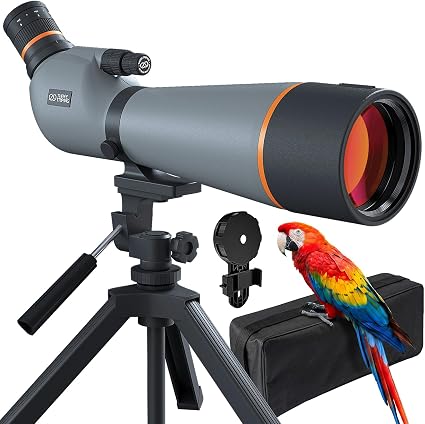
Ideal for bird watchers and nature lovers seeking detailed views, this spotting scope suits anyone wanting bright, sharp images without straining their eyes. Its standout strength is the large 85mm objective lens, which significantly improves brightness and clarity, especially in low light conditions.
Setting up the scope is straightforward thanks to the altazimuth mount, which allows smooth panning across the view. Switching between wide-angle views and close-up details feels natural with its 25-75x continuous zoom. The dual focus system combines fast and fine adjustments, helpful when tracking fast-moving wildlife or inspecting distant objects.
Plus, you can attach a smartphone for easy photo sharing.
Image quality holds up well at all zoom levels, showing rich contrast and sharpness without noticeable edge darkening. The waterproof and fogproof design means it withstands dew or mist without scratching easily.
Most praise the brightness and fine details visible, while the most common issue involves manual focusing sometimes being tricky at higher magnifications.
Bright, clear images even in dim conditions receive consistent praise while manual focusing near 75x zoom causes some frustration. The scope’s sturdy waterproof design withstands outdoor use well, adding practical value beyond optical performance.
People who want an affordable, high-magnification scope for nature observation will appreciate this model. Users who want easy focus or highly stable setups at extreme zoom might consider options with motorized focus or tripod mounts.
Pros
- Large objective lens for bright images
- Smooth zoom from wide to close-up
- Durable waterproof and fogproof build
- Smartphone compatibility for easy photos
Cons
- Manual focus can be challenging at high zoom
- Altazimuth mount less steady at maximum magnification
| Specification | Details |
|---|---|
| Objective Lens | 85mm |
| Magnification | 25-75x Continuous Zoom |
| Focus Type | Manual Focus |
| Mount | Altazimuth Mount |
| Field Of View | 88.5 feet |
| Additional Features | Waterproof & Fogproof |
12. SVBONY SV28 80mm Spotting Scope

Strong light gathering and sharp images make SVBONY SV28 80mm especially suited for birdwatching and long-distance viewing. Its standout feature is correcting aberrations at 20–60x magnification, delivering clear details up to 100 yards.
Compact but powerful, it fits well for anyone needing quality optics under $300.
Setting up takes minimal effort thanks to the included full-size, adjustable tripod that goes from 17 to 54 inches tall. Manual focusing with the altazimuth mount allows fine-tuned adjustments, and the reflex finderscope helps with quick target spotting. Using it with a smartphone or camera feels straightforward, as compatibility is built-in.
The fully multi-coated lenses reduce glare and work well in low light, making sunrise or dusk sessions more productive.
The scope delivers crisp, bright images owing to 98% light transmission through FMC optics and BAK4 prisms. The 80mm objective handles fine details well, ideal for spotting small features at long distances.
The build feels sturdy and eco-friendly, though weight might be noticeable during longer carries. The sharpest praise points to excellent aberration control, while the most frequent complaint is the lack of optical image stabilization during handheld viewing.
Aberration control and sharp imaging at 20–60x magnification earn top marks for clarity and detail, especially at long range. Common drawbacks include struggles with handheld stability, making the tripod essential for steady viewing.
Anyone focused on birdwatching or outdoor observation in early or low light will appreciate the optics and tripod. Those looking for a lighter, handheld-friendly option might want to explore smaller or stabilized scopes.
Pros
- Clear images with excellent aberration correction
- Strong light transmission for low-light visibility
- Included adjustable tripod suits various heights
- Compatible with smartphone and camera attachments
Cons
- No optical image stabilization for handheld use
- Relatively heavy for extended carrying periods
| Specification | Details |
|---|---|
| Objective Lens Diameter | 80mm |
| Magnification Range | 20-60x |
| Coating | FMC (Fully Multi-Coated) |
| Mount | Altazimuth Mount |
| Focus Type | Manual Focus |
| Tripod Height Range | 17 to 54 inches |
Best Compact Spotting Scopes Under 300 Compared
| Product | Zoom Ratio | Mount Type | Coating | Field Of View |
|---|---|---|---|---|
| SVBONY SV28 Scope | 3:1 | Equatorial Mount | FMC | 64 feet |
| High Power 8×42 Monocular | – | Altazimuth Mount | Fully Multi-Coated | 360 degrees |
| Celestron C70 Maksutov | 3x | Equatorial Mount | Multi-Coated | 1.55 degrees |
| 25-75×80 Compact Scope | – | Tripod Mount | Multi-coated Green Lens | – |
| Barska Colorado 15-40×50 | 40x | Table Top Mount | Fully Coated | 3 degrees |
| BIBIRE 25-75×60 Scope | 25-75x | 360° rotatable tripod | – | 105 meters |
| Vortex Solo 10×36 | – | Equatorial Mount | Multiple Anti-Reflective | – |
| Bushnell Prime 16-48×50 | 16 | Tripod Mount | Fully Multi-Coated | – |
| Celestron C90 Maksutov | 39x | Equatorial Mount | Multi-Coated | 9.7 degrees |
| URBANCOAST 25-65×75 | – | Tripod Compatible Mount | Fully Coated Optical Glass | – |
| Performance Optics 25-75×85 | 75x | Altazimuth Mount | – | 88.5 feet |
| SVBONY SV28 80mm Scope | 20-60x | Altazimuth Mount | FMC | 1000 yard |
- Zoom Ratio3:1
- Mount TypeEquatorial Mount
- CoatingFMC
- Field Of View64 feet
- Zoom Ratio–
- Mount TypeAltazimuth Mount
- CoatingFully Multi-Coated
- Field Of View360 degrees
- Zoom Ratio3x
- Mount TypeEquatorial Mount
- CoatingMulti-Coated
- Field Of View1.55 degrees
- Zoom Ratio–
- Mount TypeTripod Mount
- CoatingMulti-coated Green Lens
- Field Of View–
- Zoom Ratio40x
- Mount TypeTable Top Mount
- CoatingFully Coated
- Field Of View3 degrees
- Zoom Ratio25-75x
- Mount Type360° rotatable tripod
- Coating–
- Field Of View105 meters
- Zoom Ratio–
- Mount TypeEquatorial Mount
- CoatingMultiple Anti-Reflective
- Field Of View–
- Zoom Ratio16
- Mount TypeTripod Mount
- CoatingFully Multi-Coated
- Field Of View–
- Zoom Ratio39x
- Mount TypeEquatorial Mount
- CoatingMulti-Coated
- Field Of View9.7 degrees
- Zoom Ratio–
- Mount TypeTripod Compatible Mount
- CoatingFully Coated Optical Glass
- Field Of View–
- Zoom Ratio75x
- Mount TypeAltazimuth Mount
- Coating–
- Field Of View88.5 feet
- Zoom Ratio20-60x
- Mount TypeAltazimuth Mount
- CoatingFMC
- Field Of View1000 yard
How to Choose the Right Compact Spotting Scope
Key factors to consider include magnification, lens quality, portability, and durability, as these affect clarity, ease of use, and how well the scope holds up outdoors. Choosing the right features ensures better performance and prevents costly replacements or frustration from poor optics.
Optical Quality
Spotting scopes with poor optical quality often deliver blurry or dim images that frustrate even short viewing sessions. A lens that offers sharpness and clear detail can reveal the fine features of distant birds or landscapes without needing constant refocusing.
Most people find that a 15x to 20x magnification strikes a good balance between detail and field of view, allowing wide enough scenery while zoomed in.
Coatings on the lenses significantly impact daily performance. Look for scopes with fully multi-coated lenses; these reduce glare and increase light transmission so images remain bright even in low-light conditions.
Skimping here results in washed-out views and eye strain during longer outings.
Size and Portability
Constantly hauling a bulky scope limits how much you’ll actually use it, especially on hikes or quick trips. A compact design that fits easily into a daypack or even a large pocket makes it tempting to bring along everywhere. Typical sizes between 7 to 9 inches in length and weights under 1.5 pounds are ideal for portability.
The shape matters too. Streamlined barrels or foldable eyepieces reduce bulk without compromising performance. Durable but lightweight casing materials like rubber armor protect against minor knocks while keeping the total weight down.
This balance ensures it won’t weigh you down but still survive outdoor conditions.
Durability and Build Materials
Weatherproofing features are essential because mist or sudden rain can fog lenses and ruin viewing sessions. Models marked as waterproof and fogproof use sealed O-rings and nitrogen purging to keep moisture out and inside clear, which pays off in wet or humid environments.
Materials also affect longevity. Metal or high-grade polycarbonate bodies resist dents and shocks better than cheap plastics.
Lens surfaces covered by scratch-resistant coatings also make a difference. After a year of rough use, scratched lenses degrade image clarity noticeably.
Ease of Use
Focusing should be smooth and precise, letting you quickly zero in on subjects without fumbling with stiff or jerky controls. Large, textured focus knobs are easier to operate, especially when wearing gloves or on uneven terrain.
Grip comfort shows in subtle design choices like rubberized exteriors and contours that fit your hand naturally. A scope held comfortably reduces fatigue over longer viewing sessions. Simplicity matters too: most scopes under $300 come with fixed optical alignment, so no lengthy setup procedures are needed before the first use.
Versatility and Mounting Options
Stability during viewing is often overlooked until you try holding a high magnification scope steady by hand. Tripod compatibility makes a notable difference, allowing sharper images free from hand shake. Most compact models have standard tripod mounts for easy attachment.
Scopes that work well for multiple activities, hiking, birdwatching, or even target spotting, usually offer interchangeable eyepieces or setting adjustments to adapt to different lighting or distances. The ability to tweak these settings means one scope can cover many needs rather than needing separate devices.
Optimizing Your Viewing Experience: Tips for Using Compact Spotting Scopes
Choosing the right placement for your compact spotting scope makes a big difference in clarity and comfort. Place the scope on a sturdy tripod to minimize shaking, especially at higher magnifications. Use the focus ring gently to avoid overshooting your target.
Start with the lowest magnification to locate the subject, then zoom in gradually for better detail.
Keep in mind that lighting conditions affect what you see through the scope. Low light times such as early morning or late afternoon often provide sharper images and greater contrast.
Avoid pointing the scope directly into the sun, as this can cause glare and reduce visibility.
Quick tips for better viewing:
- Keep both eyes open to reduce strain.
- Use lens caps only when not in use to protect lenses.
- Adjust your eye relief settings to match your eyesight and prevent dark rings around images.
Essential Maintenance Practices to Prolong Your Spotting Scope’s Lifespan
Regular cleaning prevents dust and grime from degrading lens quality over time. Use a soft brush or air blower to remove loose dirt before wiping. For smudges and fingerprints, apply a few drops of lens cleaning solution to a microfiber cloth and clean gently in circular motions.
Store your spotting scope in a padded case when not in use, avoiding exposure to extreme temperatures or moisture. This protects both the optics and the mechanical parts like zoom and focus mechanisms. After use in wet conditions, allow the scope to dry completely before packing it away to prevent mold or rust.
Maintenance essentials:
- Check for loose screws or parts periodically.
- Avoid using household cleaners or paper towels on lenses.
- Keep the eyecup clean and free from damage to maintain comfortable viewing.
Comparing Compact Spotting Scopes to Binoculars: Which Suits Your Needs Better
Binoculars offer faster target acquisition and are easier to carry due to their lighter, more compact shape without accessories like tripods. They provide a wider field of view, which suits activities like birdwatching where you track moving subjects.
Compact spotting scopes tend to have higher magnification and better image detail for distant objects. They are often preferred for static viewing such as observing wildlife or landscapes far away, where holding an image steady at high zoom is important.
Considerations when choosing:
- Portability and quick scanning make binoculars the more practical choice.
- Sharp, high magnification viewing from a fixed spot is better served by a compact spotting scope.
- Tripods required for scopes add weight and setup time.
The decision depends on what you plan to observe and how you intend to use the optics in the field.
People Also Asked
How Do I Properly Care for a Compact Spotting Scope?
Clean the lenses with a soft microfiber cloth and avoid touching them with fingers to prevent smudges. Store the scope in a protective case to keep dust and moisture away. Regularly check for loose parts and tighten them to maintain performance.
What Size Spotting Scope Fits Best for Hiking Trips?
A 20-60mm objective lens size works well for hiking because it balances weight and light-gathering ability. These scopes are light enough to carry all day and still offer clear views in various lighting conditions. Carrying a compact tripod or stabilizer can improve image stability.
Are Compact Spotting Scopes Safe for Prolonged Eye Use?
Prolonged eye use with compact spotting scopes is generally safe as they have low light intensity and do not emit harmful radiation. Taking short breaks during extended viewing sessions helps reduce eye strain and fatigue. Adjusting the eyepiece to your comfort level prevents discomfort.
How Long Does a Compact Spotting Scope Typically Last?
A compact spotting scope typically lasts several years with proper care. Lens coatings can wear off or get scratched, so keeping it clean and protected is important. Storing it in a dry place and avoiding extreme temperatures extends the internal mechanisms’ life.
What Are Common Problems with Compact Spotting Scopes Under 300?
Common issues include fogging inside the lens, loose focus mechanisms, and lower image clarity compared to pricier models. Some scopes may also have a narrow field of view, making tracking moving objects harder. Regular maintenance and careful handling reduce these problems.
Conclusion
When choosing a compact spotting scope under 300, focus on clear optics, durable build, and ease of use. A scope that provides sharp images and holds up in outdoor conditions will serve best.
Size and weight are important since you want something truly portable without sacrificing performance.
Consider where and how often you’ll use the scope, along with your budget, before making a final decision. Check the comparison table and the detailed reviews above to find the one that fits your needs and setup. That way, your choice will be practical and useful for your specific activities.