
Top 12 Best Emergency Radio That Will Save Your Life Fast
Cheap or poorly made emergency radios often fail just when you need them most. Dead batteries, weak signals, or fragile construction can turn a crucial tool into a source of frustration.
A reliable best emergency radio stays functional through extended power outages and severe weather, providing clear audio for emergency alerts without interruptions.
The most important factors in a good emergency radio include durable build quality, often with water-resistant casing and shockproof features, and power versatility. Radios with multiple power options like hand-crank, solar panels, and standard batteries avoid dead power sources.
Also, size matters; it should be compact enough for easy storage but large enough for comfortable handling and volume control, typically fitting in a small backpack or emergency kit.
Need a Quick Check?
| Image | Product | Price |
|---|---|---|
Our Top Picks 1  | Generic Hand Crank Weather Radio | Check Price |
Our Top Picks 2  | RunningSnail Crank Radio | Check Price |
Our Top Picks 3  | Motion Sensor NOAA Radio | Check Price |
Our Selected Top 12 Emergency Radio Worth Buying
This list features reliable emergency radios designed for different needs and situations. Each review covers performance details, ideal users, and highlights strengths and weaknesses to help you find the best fit for your emergency preparedness.
1. Hand Crank AM/FM NOAA Weather Radio
Living with this hand crank AM/FM NOAA weather radio feels like having a reliable companion during unexpected outages or storms. It suits those who want a multi-powered emergency radio with strong light and an SOS alarm that can actually be heard across some distance. Its biggest strength lies in the combination of power options and practical safety features.
Setup is straightforward, charging the radio through its hand crank, solar panel, or USB Type-C port. Day-to-day use includes tuning into AM, FM, or NOAA weather bands on its LED display.
The upgraded 3 LED flashlight provides solid brightness for emergencies. The SOS alarm can be activated quickly to alert anyone nearby, adding reassurance in challenging situations.
Performance delivers clear reception across three bands with a decent 1 watt speaker. Durable enough for emergency use, the build feels compact but solid, meant to last through rough handling. The brightest praise focuses on the flashlight and SOS siren, while the most common complaint points to the speaker’s limited output power for louder environments.
The flashlight provides strong illumination during blackouts, and the SOS alarm is loud enough to attract attention. Some users mention the speaker could be louder for noisy weather conditions. Handling charging options lets you keep power even when outlets aren’t available, making it practical in the field.
Anyone who needs trustworthy weather alerts and emergency lighting will find this radio helpful. Those wanting louder audio or longer battery life might want to look for radios with bigger speakers or additional batteries.
Pros
- Three ways to power the radio including hand crank
- Bright 3 LED flashlight at 140 lumens
- SOS alarm louder than 80 decibels
- AM/FM/NOAA weather band tuning
Cons
- Speaker max output power is just 1 watt
- Single lithium ion battery required
| Specification | Details |
|---|---|
| Power Source | Battery Powered, hand crank, solar panel, Type-C charge |
| Tuner Type | AM/FM/NOAA |
| Flashlight | 3W 3 LED bead, 140LM brightness |
| Speaker Maximum Output Power | 1 watt |
| Connectivity Technology | USB |
2. RunningSnail Emergency Crank Radio
Ideal for anyone preparing for power outages or outdoor adventures, it stands out due to its large 4000mAh battery that can charge smartphones. Reliable weather alerts and a sturdy crank make it especially useful when the power goes out unexpectedly.
Setup is straightforward, with an ergonomic hand crank and sensitive touch switch allowing easy operation. The external antenna improves reception for AM/FM/NOAA bands, and you can rely on the built-in flashlight when needed. Charging a phone through the USB port adds substantial convenience during extended emergencies.
Reception of NOAA weather alerts is clear and timely, helping you stay informed about severe conditions. The water-resistant design and solid build feel durable in hand. Positive comments often highlight the phone charging feature, while some mention the 1-watt speaker output as less powerful than they would like.
Charging smartphones with its large-capacity battery is often praised as a major advantage, while users commonly note that the 1-watt speaker can be underwhelming in noisy environments. The hand crank and touch controls are appreciated for ease of use during emergencies.
Anyone needing dependable weather alerts and phone charging during outages will appreciate this radio. Those focused on loud audio or without access to lithium polymer batteries might look for alternatives.
Pros
- Large 4000mAh battery charges smartphones
- Real-time NOAA weather band alerts
- Water-resistant for outdoor use
- Ergonomic hand crank for easy power generation
Cons
- Speaker output power only 1 watt
- Requires lithium polymer batteries included
| Specification | Details |
|---|---|
| Power Source | Battery Powered |
| Built-In Battery Capacity | 14800mWh (4000mAh) |
| Radio Bands Supported | 3-Band (AM/FM/NOAA) |
| Speaker Maximum Output Power | 1 watts |
| Connectivity Technology | USB |
| Water Resistance Level | Water Resistant |
3. Emergency Motion Sensor NOAA Weather Radio
Durable and solar-powered, this emergency radio suits anyone needing reliable weather updates and added security in remote or emergency situations. Its motion sensor alarm stands out, alerting you to nearby movement with sound and flashing lights, making it a practical choice for camping, RVs, or home use.
Setup involves charging it via USB or solar power, then switching to “Alarm” mode for the motion sensor feature. Daily use includes tuning into AM, FM, or NOAA Weather Radio bands to stay updated on weather alerts. The built-in flashlight and SOS alarm offer extra safety, while portability means it’s easy to carry along wherever you go.
The radio delivers solid performance across its seven bands, especially with NOAA Weather listening during storms or emergencies. Construction feels sturdy and practical for outdoor use. Positive comments often highlight the helpful motion sensor alarm, while some note the detection range could be wider for total coverage around large campsites or garages.
Many appreciate the motion sensor alarm for added security around campsites or emergency areas, though some wish it detected movement a bit farther. Day-to-day, the radio stays reliable for weather updates and emergency alerts, with solar charging providing convenient power in outdoor situations.
People looking for a multi-function emergency radio with extra motion awareness will find this useful, especially for camping or in cabins. Those needing longer-range motion detection or waterproofing should consider other options better suited for harsh weather or wider coverage.
Pros
- Motion sensor alarm with light and sound
- Rechargeable with solar and USB options
- Includes AM, FM, and NOAA weather bands
- Built-in flashlight and SOS alarm
Cons
- Motion detection range limited to about 10 feet
- No mention of water resistance or weatherproofing
| Specification | Details |
|---|---|
| Power Source | Solar Powered |
| Radio Bands Supported | 7-Band |
| Connectivity Technology | USB |
| Additional Features | Built-In Flashlight, Motion Sensor Alarm, Rechargeable, SOS Alarm |
| Tuner Type | FM |
4. C. Crane CCRadio Solar Bluetooth Emergency Radio
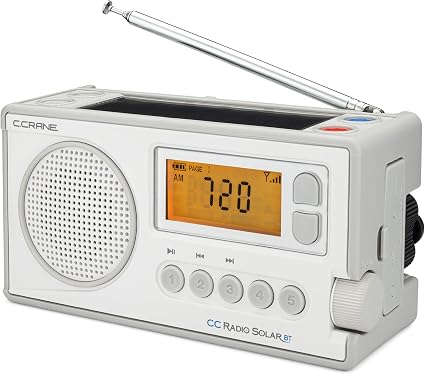
Right away, what stands out is the solar panel that’s noticeably larger than other radios its size. It’s built for anyone wanting a reliable emergency radio that also performs well day to day, combining AM/FM, NOAA weather, and Bluetooth all in one.
Setup is easy since it includes a rechargeable lithium-ion battery and multiple charging options: solar, crank, or battery. The Bluetooth lets you stream music from your phone, which also works as a remote.
The LED flashlight is bright and useful around the house or outdoors, while a stable design means it won’t tip over easily.
Sound is sharp, especially with superior voice-focused audio on weather broadcasts. The build feels solid with UV-resistant rubber edges and a weighted base that holds its place. Most praise centers on the bright flashlight and strong solar recharge, though some mention the unit’s size feels a bit bulky for very compact pack situations.
The solar panel size and LED flashlight receive strong praise for reliability and brightness, making daily use straightforward for both emergencies and casual listening. Some find the unit a bit bulky, which might not suit those looking for a very compact or ultralight option.
People looking for a solar emergency radio that doubles as a Bluetooth speaker and flashlight will appreciate this model’s features and solid construction. Those needing a smaller or lighter radio to carry on hikes might want to explore more compact alternatives.
Pros
- Large solar panel for effective solar charging
- Bluetooth receiving with smartphone remote control
- Bright, high-quality LED flashlight
- Stable design with UV-resistant rubber perimeter
Cons
- Bulky compared to smaller, minimalist radios
- Speaker output limited to 3 watts
| Specification | Details |
|---|---|
| Power Source | Battery Powered, Solar, Wind-Up |
| Connectivity Technology | Bluetooth |
| Speaker Maximum Output Power | 3 watts |
| Number of Batteries | 1 Lithium Ion battery (included) |
| Display Type | LCD |
5. Solar Hand Crank AM/FM NOAA Weather Radio

Packed with a 10000mAh battery reserve and multiple radio bands, this emergency radio suits those who want reliable power and weather updates during outages or outdoor trips. Its standout feature is the ability to charge smartphones and USB devices, making it more than just a radio when you lose access to regular electricity.
Setup involves charging the battery via solar power, hand crank, or USB, giving flexibility when on the go. Switching between FM, AM, shortwave, and NOAA weather channels is straightforward using the BAND/SCAN button.
Daily use revolves around tuning in for weather alerts and news, with the built-in flashlight and SOS alarm providing added security in an emergency. The clock and memory presets add convenience for regular listeners.
The radio performs well across all bands, offering clear access to local NOAA forecasts and extended ranges on shortwave. Its analog tuner is simple but effective for emergencies.
The flashlight and hand crank work reliably when power sources fail. Most appreciate the large battery capacity, while some note the speaker’s 1-watt output is a bit low for noisy environments. The build is solid, though slightly bulky for pocket carry.
Many users appreciate the generous battery capacity that keeps devices charged and the radio running during extended outages. On the downside, the 1-watt speaker output sometimes struggles in loud environments, and analog tuning requires more patience than digital alternatives.
People needing a dependable emergency radio with multiple power options and charging capabilities will find this model suitable. Those who want a compact device with louder sound or digital tuning might look for other options.
Pros
- Large 10000mAh battery for extended power backup
- Multiple radio bands including NOAA weather alerts
- Can charge smartphones and USB devices
- Built-in flashlight and SOS alarm for emergencies
Cons
- Speaker output power only 1 watt
- Analog tuner can be less precise than digital ones
| Specification | Details |
|---|---|
| Battery Reserve | 10000mAh rechargeable built-in battery |
| Radio Bands Supported | AM, FM, WX (NOAA), SW |
| Power Source | Hand Crank, Solar, Battery |
| Frequency | 162.4 MHz |
| Speaker Maximum Output Power | 1 watt |
| Compatible Devices | USB Charged Devices |
6. Hand Crank Solar AM/FM NOAA Weather Radio

Power outages and outdoor trips demand a reliable emergency radio that keeps you informed and connected. Designed for campers, hikers, and anyone wanting weather updates on the go, this radio’s biggest strength is its versatile power options that ensure it’s ready whenever you need it.
Setting up takes just a few steps. Extend the telescopic antenna for better reception, use the tuning knob to find your AM, FM, or NOAA weather band, and adjust the volume for clear sound.
You can charge it by cranking the handle, using solar power, plugging in a Type-C cable, or inserting AAA batteries. Its built-in 5000mAh rechargeable battery makes daily use convenient, and the lighting feature is helpful at night.
Reception on local stations and weather broadcasts is solid, thanks to the adjustable antenna and tuning controls. The radio feels sturdy and well-built with all controls easy to access.
Praised most is the multiple power sources that truly cover every situation. Some find the hand crank a bit tiring when used for extended periods, but it does the job in emergencies.
The radio impresses with its flexible charging methods, especially the solar and crank options, ensuring reliable power in any situation. Common feedback notes the hand crank requires effort that can become tiring during long charges, which limits comfort for some users.
Ideal for those prioritizing multiple power choices and consistent weather updates. Those needing quieter volume control or less manual effort for charging might prefer simpler battery-powered models instead.
Pros
- Multiple power options: solar, crank, USB, batteries
- Clear AM, FM and NOAA band reception
- Built-in 5000mAh battery for extended use
- Telescopic antenna improves signal quality
Cons
- Hand crank can be tiring during extended use
- Volume control lacks fine adjustment
| Specification | Details |
|---|---|
| Radio Bands Supported | ALL (AM/FM/NOAA) |
| Power Source | Hand Crank Powered |
| Additional Features | Hand Crank |
| Hardware Interface | Radio Frequency |
| Compatible Devices | Smartphone |
| Battery Capacity | 5000mAh rechargeable battery |
7. RunningSnail Hand Crank NOAA AM/FM Radio

2000mAh built-in battery powers this radio along with an LED flashlight, making it perfect for emergency weather updates during outages or outdoor trips. Anyone facing unpredictable weather conditions will appreciate its reliable AM/FM and NOAA alert system. It’s a solid choice where power options are limited but keeping informed remains critical.
Setup involves charging via the USB port or the hand crank when off the grid, providing power to both radio and flashlight. Tuning between AM, FM, and NOAA bands is straightforward, with stable reception reported for all three.
The lightweight design keeps it portable enough to grab on outdoor adventures or emergency kits without adding bulk.
Reception holds steady for clear access to local weather alerts and broadcasts, helping you stay ahead of storms or emergencies. Build quality leans on water-repellent materials to protect against rain, which suits outdoor use. The flashlight is a reliable backup light source.
Most praise focuses on its dependable alert system, while some find the hand crank effortful during extended use.
Reviews highlight its reliable emergency alert reception and useful flashlight as major benefits. On the downside, hand cranking for power can tire users when needed for extended periods, especially without prior battery charge.
People needing steady emergency updates and a compact, battery-powered setup will find this radio fits well. Those expecting a fully waterproof device or minimal physical effort for charging might look for a different option.
Pros
- Built-in 2000mAh rechargeable battery
- Supports AM, FM, and NOAA alerts
- Lightweight and portable design
- Includes durable LED flashlight
Cons
- Hand crank requires effort during longer use
- Only water repellent, not fully waterproof
| Specification | Details |
|---|---|
| Power Source | Battery Powered |
| Number of Batteries | 1 Lithium Polymer batteries required. |
| Radio Bands Supported | 3-Band |
| Frequency | 108 MHz |
| Hardware Interface | USB |
| Speaker Maximum Output Power | 3 watts |
8. Portable AM/FM Radio with Speaker

Anyone needing a reliable emergency radio for home or travel will find this model useful. It covers AM, FM, and shortwave bands and stands out for its ability to pick up a wide range of frequencies clearly thanks to its strong antenna and DSP chip.
Setting it up takes just a few minutes since the radio comes with a rechargeable lithium-ion battery and charges via USB. Daily use involves simply extending the telescopic antenna to get the best reception. The clear 5W speaker makes it easy to hear news, music, or weather updates without extra equipment.
The radio does a solid job receiving signals across FM, AM, and shortwave bands, allowing for flexible listening. The build feels sturdy, though it’s not water-resistant.
The most praised feature is the clarity of sound and signal despite interference. Some users mention the lack of water resistance as a downside in tough conditions.
The radio’s greatest strength is its clear reception across all supported bands, thanks to the DSP chip and antenna. Most often mentioned drawback is the lack of water resistance, which limits use during adverse weather or outdoor emergencies.
People who prioritize good signal quality and versatile frequency options will appreciate this model. Those needing a rugged, weatherproof device for outdoor survival situations might want to look for alternatives that offer water resistance.
Pros
- Wide frequency coverage including shortwave
- Rechargeable battery with USB charging
- Clear sound from a 5W speaker
- Telescopic antenna for better reception
Cons
- Not water resistant
- Dependent on battery life for long use
| Specification | Details |
|---|---|
| Power Source | Battery Powered |
| Number of Batteries | 1 Lithium Ion battery required (included) |
| Connectivity Technology | USB |
| Radio Bands Supported | 4-Band (AM/FM/SW1/SW2) |
| Display Type | LED, LCD |
9. NOAA Weather Hand Crank Solar Radio

County-specific NOAA alerts with S.A.M.E. make this radio stand out for anyone needing precise weather updates. Perfect for people living in disaster-prone areas or those who want to focus on alerts in up to 25 counties. Its biggest strength is the ability to tailor warnings with voice, display, and tone modes for accurate and clear notifications.
Setting it up is straightforward with a 2.4 color screen guiding through a quick three-step S.A.M.E. process. Day-to-day, it quietly monitors your saved counties while you listen to FM or NOAA channels. Power options include solar panel, hand crank, lithium battery, USB-C input, or AAA batteries, so keeping it charged in various situations isn’t an issue.
Reception for NOAA and FM channels is sensitive and reliable, making sure you stay informed during emergencies. The build feels solid enough to last through rough conditions. Strong praise often highlights the precise alert system, while the most common complaint points to the somewhat small display which can be tricky in bright sunlight.
The radio is praised for delivering clear and accurate county-specific weather alerts through voice, display, and tone. Many find the alert system reliable and essential during severe weather. On the downside, the display size sometimes makes it difficult to read under sunlight, which can hinder quick information checks.
People needing precise local weather updates without fuss will find this radio very useful. Those wanting a larger screen or simpler alert setup might prefer something less focused on customization and more on straightforward tuning.
Pros
- County-specific S.A.M.E. alerts with voice and tone options
- Multiple power sources including hand crank and solar
- Easy three-step setup on color screen
- High-sensitivity NOAA and FM reception
Cons
- Small display can be hard to read in bright light
- Some alerts may require manual tuning for accuracy
| Specification | Details |
|---|---|
| Power Source | Solar Panel | Hand Crank | 12000mAh Lithium Battery | Type-C Input 5V/2A | 3 AAA Batteries |
| Battery Capacity | 12,000mAh Rechargeable Battery |
| Display | 2.4-Inch Color Display |
| Radio Bands Supported | NOAA Weather Band (7 channels), FM (87.5 MHz – 108.00 MHz) |
| Alert System | S.A.M.E. County-Specific Alerts, 86 alert events |
10. Emergency Crank AM/FM Weather Radio

Emergency Crank AM/FM Weather Radio fits well for anyone wanting a reliable companion during blackouts or severe weather. Its standout feature is multiple power options, combining hand crank, solar panel, and USB-C charging to ensure the radio and flashlight stay operational without worrying about batteries.
Setting up involves extending the telescoping antenna to catch AM, FM, and NOAA weather band signals easily. Day to day, the radio stays ready thanks to features like power off memory and a rechargeable battery.
You can count on the built-in flashlight for light, and the SOS alarm adds an extra layer of security during emergencies. Charging can be done by hand-cranking, sunlight, or plugging it in, providing flexible options in different situations.
Reception performs well for local radio and weather alerts, with clear sound in stereo mode. Built to resist dust and shocks, the unit feels durable and portable for outdoor or home use. Reviews praise its dependability during power outages but note that the hand crank takes some effort to generate enough charge for extended use.
Many find the triple power options crucial for staying informed and lit during outages, while some mention the crank feels tiring after extended use. It offers reliable reception of weather alerts, but its manual power generation can be challenging.
Perfect for emergency preppers wanting versatile charging and weather updates on the go. Those needing long-lasting crank power without effort might want to consider alternatives with stronger hand crank mechanisms.
Pros
- Multiple charging methods including hand crank
- Receives AM, FM, and NOAA weather bands
- Durable with dust resistant and shockproof body
- Built-in flashlight and SOS alarm included
Cons
- Hand crank requires significant effort for charging
- Sound quality can occasionally be unclear in weak signal areas
| Specification | Details |
|---|---|
| Power Source | Hand Crank Powered, Solar Powered, USB |
| Tuner Type | AM FM WB |
| Radio Bands Supported | 3-Band |
| Connectivity Technology | USB |
| Additional Features | Built-In Flashlight, SOS Alarm, Weather Alert |
11. Midland WR400 NOAA Weather Radio

Hard to miss when a weather alert goes off thanks to the bright strobe light paired with the siren, this emergency weather radio suits anyone who wants reliable, clear warnings. Its biggest strength is the wide range of event types it covers, making it a solid choice for those needing thorough weather and safety updates.
Plugging it in and setting the clock is straightforward, and it quickly becomes a dependable bedside companion. With AM, FM, and NOAA weather bands all in one device plus a dual wake and snooze feature, it saves space on your nightstand. The USB port adds versatility for powering compatible devices, and it switches instantly to emergency broadcasts for quick alerts.
The main job of delivering emergency notifications comes through loud and clear, with over eighty event types decoded and spoken aloud. The build feels sturdy, with a clear LCD display and functional buttons. Praise often centers on the bright strobe that catches attention even during noisy or dark conditions.
Some users note it’s not water resistant, so it’s best kept indoors.
The brightest strobe light combined with more than eighty alert types provides unmatched warning clarity. Most find the lack of water resistance a drawback that limits where it can be safely used.
Those prioritizing clear emergency alerts and bedside convenience will appreciate this. People needing a water-resistant model or minimal battery upkeep might consider other options.
Pros
- Bright strobe light alerts alongside siren
- Wide event type coverage with spoken broadcasts
- Replaces bedside clock radio
- USB connectivity for powering devices
Cons
- Not water resistant
- Requires 4 AA batteries as backup
| Specification | Details |
|---|---|
| Power Source | Corded-Electric, Battery |
| Number of Batteries | 4 AA batteries required |
| Radio Bands Supported | AM |
| Connectivity Technology | USB |
| Display Technology | LCD |
| Frequency | 162.55 MHz |
12. Kaito Voyager X Emergency Weather Radio

A reliable emergency radio designed for anyone wanting consistent access to weather alerts and multiple power options. Its standout feature is the 5-way power multiplier, ensuring it stays charged regardless of the situation. Perfect for preppers, campers, or those living in storm-prone areas.
Setting it up involves charging via solar panel or USB, or using the hand crank to generate power manually. Daily use is straightforward thanks to analog tuning across NOAA weather channels, AM, FM, and shortwave bands. The built-in flashlight and SOS alarm add practical value during emergencies, while the radio stays portable enough for easy handling outdoors or at home.
It reliably delivers alerts from seven NOAA channels alongside analog AM, FM, and shortwave reception with satisfactory audio output. The build is rugged enough for field use, blending a lithium polymer battery and backup AA options for power. Praised often for the dependable alert function, common complaints mention the analog tuner can feel a bit fiddly when changing stations.
The radio consistently provides timely and reliable NOAA alerts, which earns strong praise for emergency preparedness. However, adjusting the analog tuner to the exact frequency can sometimes prove frustrating for users seeking precision in station selection.
This product suits anyone needing a versatile emergency radio with multiple power sources and solid weather updates. People wanting digital tuning or a fully battery-included package might want to consider other options better tailored to those preferences.
Pros
- Multiple power options including solar and hand crank
- Comprehensive NOAA weather channel coverage
- Built-in flashlight and SOS alarm
- Portable with rechargeable lithium polymer battery
Cons
- Analog tuner can be difficult to tune precisely
- Requires separate AA batteries not included
| Specification | Details |
|---|---|
| Radio Bands Supported | AM, FM, Shortwave, Weather |
| Power Source | Battery Powered (1 Lithium Polymer battery included) |
| 5-WAY POWER MULTIPLIER | Hand crank, solar panel, USB fast charging, rechargeable battery, AA backup batteries |
| Additional Features | Built-In Flashlight, NOAA Weather Alert, Portable, Rechargeable, SOS Alarm |
| Connectivity Technology | Auxiliary |
Best Emergency Radios Comparison Table
| Product | Power Source | Radio Bands Supported | Additional Features | Connectivity Technology |
|---|---|---|---|---|
| Generic Hand Crank Weather Radio | Battery Powered | 3-Band | Built-In Flashlight | USB |
| RunningSnail Crank Radio | Battery Powered | 3-Band | Built-In Flashlight | USB |
| Motion Sensor NOAA Radio | Solar Powered | 7-Band | Flashlight, Motion Sensor, SOS | USB |
| C. Crane CCRadio Solar | Battery, Solar, Wind-Up | 3-Band | Clock, Flashlight, Rechargeable | Bluetooth |
| Solar Hand Crank Weather Radio | Hand Crank, Solar, Battery | AM, FM, WX, SW | Flashlight, Clock, SOS | Am, Fm, Noaa, SW |
| Solar Hand Crank AM/FM Radio | Hand Crank Powered | ALL | Hand Crank | ALL |
| RunningSnail Crank NOAA Radio | Battery Powered | 3-Band | Lightweight | USB |
| Portable AM/FM Speaker Radio | Battery Powered | 4-Band | Rechargeable | USB |
| NOAA Solar Hand Crank Radio | Rechargeable Battery | – | Weather Alert, 5 Power Options | USB |
| Emergency Crank Weather Radio | Rechargeable, Hand Crank | AM FM WB | Flashlight, SOS, Weather Alert | USB |
| Midland WR400 NOAA Radio | Corded, Battery | AM | Clock | USB |
| Kaito Voyager X Radio | Battery Powered | AM, FM, SW, Weather | Flashlight, SOS | Auxiliary |
- Power SourceBattery Powered
- Radio Bands Supported3-Band
- Additional FeaturesBuilt-In Flashlight
- Connectivity TechnologyUSB
- Power SourceBattery Powered
- Radio Bands Supported3-Band
- Additional FeaturesBuilt-In Flashlight
- Connectivity TechnologyUSB
- Power SourceSolar Powered
- Radio Bands Supported7-Band
- Additional FeaturesFlashlight, Motion Sensor, SOS
- Connectivity TechnologyUSB
- Power SourceBattery, Solar, Wind-Up
- Radio Bands Supported3-Band
- Additional FeaturesClock, Flashlight, Rechargeable
- Connectivity TechnologyBluetooth
- Power SourceHand Crank, Solar, Battery
- Radio Bands SupportedAM, FM, WX, SW
- Additional FeaturesFlashlight, Clock, SOS
- Connectivity TechnologyAm, Fm, Noaa, SW
- Power SourceHand Crank Powered
- Radio Bands SupportedALL
- Additional FeaturesHand Crank
- Connectivity TechnologyALL
- Power SourceBattery Powered
- Radio Bands Supported3-Band
- Additional FeaturesLightweight
- Connectivity TechnologyUSB
- Power SourceBattery Powered
- Radio Bands Supported4-Band
- Additional FeaturesRechargeable
- Connectivity TechnologyUSB
- Power SourceRechargeable Battery
- Radio Bands Supported–
- Additional FeaturesWeather Alert, 5 Power Options
- Connectivity TechnologyUSB
- Power SourceRechargeable, Hand Crank
- Radio Bands SupportedAM FM WB
- Additional FeaturesFlashlight, SOS, Weather Alert
- Connectivity TechnologyUSB
- Power SourceCorded, Battery
- Radio Bands SupportedAM
- Additional FeaturesClock
- Connectivity TechnologyUSB
- Power SourceBattery Powered
- Radio Bands SupportedAM, FM, SW, Weather
- Additional FeaturesFlashlight, SOS
- Connectivity TechnologyAuxiliary
How to Choose the Right Emergency Radio
Consider features like battery life, signal reception, and power options when selecting an emergency radio. Choosing a reliable model ensures access to critical information during power outages or disasters, preventing costly replacements and unnecessary frustration. Prioritizing durability and ease of use boosts long-term value.
Power Sources and Battery Life
Lost power during a storm makes any small radio a lifeline, but the way it’s powered matters a lot. Radios with multiple power options, solar panels, hand cranks, traditional batteries, and USB charging, offer flexibility in different situations.
Hand cranks can provide power without any external source but often require significant effort for limited runtime. Solar panels are convenient in the day but depend on weather conditions. Battery capacity usually ranges from 1000mAh to 3000mAh, allowing several hours of continuous use; knowing the estimated runtime at full volume helps avoid surprises.
Switching batteries in the field can be tricky, so models with rechargeable batteries via USB are easier to maintain. Look for radios with reliable, standard battery types like AA or AAA if replacing batteries matters more than recharging.
Some radios offer a combination of these power sources, giving the greatest chance to keep functioning during extended outages.
Signal Reception and Frequency Coverage
Receiving critical broadcasts depends heavily on the range of frequencies the device can pick up and the antenna quality. Radios covering AM, FM, and NOAA weather channels are basic essentials.
Good antenna design, often telescoping and adjustable, helps pull in weaker signals, especially in remote or low-signal areas where weather updates mean everything.
Low signal strength can be frustrating, causing static or complete loss of information. Radios with sensitive tuners and extendable antennas improve reception noticeably.
Some models even include features that automatically scan and lock on the strongest frequencies. Practical use shows that ease of antenna adjustment can make a big difference when time is short and signals fluctuate.
Durability and Weather Resistance
Using a radio outside during bad weather or after accidental drops reveals a lot about its quality. Radios built with rigid plastic casings or rubberized edges tend to withstand impacts better.
Check for shock-absorbing features that prevent internal damage if the radio falls.
Water resistance is another critical factor; a decent rating like IPX4 or higher ensures the device survives rain or splashes without failing. Waterproof models allow more confidence, especially near water sources or in wet conditions. Materials that resist scratches and wear also keep the radio usable for multiple emergencies over time rather than becoming useless after the first rough use.
Size, Portability, and Weight
Smaller radios fit more comfortably in emergency backpacks and leave room for other supplies but may sacrifice battery size or features. Dimensions around 6 to 8 inches tall and 3 to 4 inches wide strike a good balance for portability without losing functionality.
Weight plays a role too; radios under 1.5 pounds are easier to carry long distances or in a pocket.
Handles, straps, or clips add convenience. A radio with a built-in loop or strap can hang off a pack or belt, freeing hands during evacuation or hikes.
Comfort in carrying avoids fatigue and encourages keeping the radio ready and accessible at all times.
Additional Emergency Features
Extra features like built-in flashlights come in handy when power is out and visibility is low. Some radios include an SOS alarm or siren, useful for attracting help when you’re stranded. The ability to use the radio itself as a USB power bank to charge phones or other small devices adds significant value in extended emergencies.
Controls designed for quick, intuitive use help during stressful situations. Buttons that are easy to feel and operate without looking can speed up access to important channels or alarms in dark or cramped spaces.
These practical additions often separate simple radios from those truly built for emergency use.
How to Maximize the Lifespan of Your Emergency Radio
Proper battery management is critical for keeping an emergency radio operational when it matters most. Remove batteries if the device won’t be used for extended periods to avoid corrosion. Store the radio and batteries in a cool, dry place to prevent damage from humidity and extreme temperatures.
Regularly test the radio by turning it on and tuning to local emergency frequencies to check functionality and signal quality.
Routine maintenance includes:
- Replacing batteries annually or based on usage.
- Cleaning contacts and exterior surfaces to remove dust and dirt.
- Inspecting antenna connections for wear or corrosion.
Keep the emergency radio packed with other survival gear so it is easy to find and use during an emergency. Carry a manual or quick reference guide on how to operate it, especially if it has multiple power options like hand crank, solar, or USB charging.
Essential Safety Precautions When Using Emergency Radios
Emergency radios often rely on external power sources like batteries or hand cranks, so handling them with care is important. Avoid using water or cleaning solutions on the radio to prevent damage to electrical components.
Only use batteries recommended by the manufacturer to prevent overheating or leaks. When using a unit with a built-in flashlight or charging functions, limit continuous use to prevent overheating.
During use, observe these safety points:
- Do not expose the radio to open flames, sparks, or excessive heat.
- Keep cords and hand crank mechanisms untangled and free-moving to avoid stress on parts.
- Follow instructions for charging times to prevent battery damage.
Be mindful of antenna placement; avoid positioning it near power lines or metal structures to reduce electrical risk.
Comparing Emergency Radios with Alternative Communication Devices
Emergency radios focus on receiving weather alerts and public safety broadcasts, which differ from devices built for two-way communication. Unlike walkie-talkies or satellite phones, they typically do not allow you to send messages.
Cell phones require network coverage, which may become unavailable during disasters, while emergency radios operate independently by tuning into standard broadcast frequencies.
Consider these factors when choosing communication tools:
- Range: Radios receive signals over wide areas without dependency on cell towers.
- Power sources: Radios often have multi-method charging (solar, crank, batteries) versus limited options on other devices.
- Functionality: Some radios include built-in flashlights and sirens, adding value beyond communication.
A combination of devices may provide the best preparedness, using radios for alerts and alternatives for direct contact as needed.
People Also Asked
How Long Do Emergency Radio Batteries Typically Last During Use?
Emergency radio batteries usually last between 10 to 40 hours, depending on the model and usage. Turning off extra features like LED lights can help extend battery life during an emergency.
Is It Safe to Keep an Emergency Radio Plugged in All the Time?
Keeping an emergency radio plugged in continuously is generally safe if it has built-in overcharge protection. Still, unplugging it during storms or power surges can avoid potential damage.
Can Emergency Radios Connect to Other Devices or Weather Alerts?
Some emergency radios can connect to weather alerts by receiving NOAA broadcasts and may sync with other devices via Bluetooth or USB. Make sure to test these connections before relying on them.
What Size Emergency Radio Is Best for Camping or Home Use?
A compact, lightweight emergency radio, around the size of a small paperback book, works well for both camping and home use. It fits easily into bags and takes up minimal space without sacrificing functionality.
How Do I Properly Maintain and Care for an Emergency Radio?
Regularly charging the battery and testing the radio ensures it stays operational when needed. Store it in a dry place and avoid dropping it to keep the internal components intact.
Conclusion
Durability, reliable power options, and clear sound quality are the key factors for an emergency radio. It should work without dependable electricity, so look for solar, hand crank, or battery options.
Loud and clear output makes sure you hear alerts even in noisy environments. Also consider how easily it tunes into important stations for your area.
Think about your space and how often you’ll use the radio when making a choice. Some models are compact and simple, others larger with extra features.
Check the comparison table above to find one that fits your budget and needs without extra bells and whistles you won’t use.


