
Top 12 Best FFP Spotting Scope Deals You Can’t Miss!
Struggling with blurry images and shaky views through an ordinary spotting scope is a common frustration for those who rely on optical gear outdoors. The best ffp spotting scope offers clarity and precision that budget models often lack, especially in long-distance viewing situations. Choosing a scope without first focal plane (FFP) can result in awkward reticle sizes and inaccurate range estimations, which is why selecting the right design matters in critical moments.
The key factors that set a good best ffp spotting scope apart include optical quality, magnification range, and build durability. High-grade lenses with fully multi-coated glass provide brighter, sharper images, even at 20-60x magnification commonly used in these scopes. Solid construction with waterproofing and fog-proofing ensures reliability in varying weather conditions.
Also, ease of cleaning the lens surfaces plays a role in maintaining clear views during extended outdoor use.
Need a Quick Check?
| Image | Product | Price |
|---|---|---|
Our Top Picks 1  | Celestron Ultima 22-66×100 | Check Price |
Our Top Picks 2  | Celestron TrailSeeker 16-48×65 | Check Price |
Our Top Picks 3  | Celestron Regal M2 100ED | Check Price |
Our Selected Top 12 Ffp Spotting Scope for Every Budget
This list features carefully chosen first focal plane spotting scopes suitable for various needs and budgets. Each review discusses performance, ideal users, and highlights key strengths and weaknesses to help you find the best match for your viewing preferences.
1. Celestron Ultima 22-66×100 Spotting Scope
Designed for outdoor enthusiasts who want clear, powerful views at varying distances, the Celestron Ultima 22-66×100 Spotting Scope stands out with its versatile 22-66x zoom and large 100mm objective lens. Its angled 45° viewing makes long sessions comfortable, making a noticeable difference in nature observation.
Setting up is straightforward thanks to the included extended tripod mounting plate, which keeps the scope stable during use. The manual focus is smooth, allowing precise adjustments.
The multi-coated optics improve brightness and color contrast noticeably, and the carry case and accessories like the lens cloth keep it protected and clean while on the go.
Image clarity is sharp across the zoom range, and its waterproof, fogproof, and UV-protected design makes it well-suited for outdoor conditions. The build feels solid and reliable, yet some users mention the manual focus can require some patience for fine detail. It performs the core task very well, balancing durability with optical quality.
The scope delivers sharp and bright views with improved color thanks to multi-coated lenses; however, the manual focus requires careful adjustment, which may be slow for some tasks. Users appreciate the durable build and protective features that allow it to handle outdoor conditions with confidence.
Those needing a versatile zoom and durable, weather-resistant design will find this scope satisfying, especially for nature observation. Anyone preferring quicker focusing or an intuitive mount might want to explore other options better suited to faster adjustments or simpler handling.
Pros
- Large 100mm objective lens brightens images
- Smooth 22-66x zoom for varied distances
- Comes with useful accessories and carrying case
- Multi-coated optics improve color and contrast
Cons
- Manual focus can be tricky for very fine adjustments
- Equatorial mount less intuitive than other mounts
| Specification | Details |
|---|---|
| Eye Piece Lens Description | 22-66x zoom |
| Mount | Equatorial Mount |
| Focus Type | Manual Focus |
| Focal Length Description | 540 millimeters |
| Field Of View | 45 degrees |
| Additional Features | fogproof, waterproof, zoom, UV-protection |
2. Celestron TrailSeeker 16-48×65 Spotting Scope
Celestron TrailSeeker 16-48×65 Spotting Scope provides sharp and bright views, making it well suited for birdwatchers and hikers who need a balance of power and portability. Its biggest strength lies in delivering vivid, high-contrast images even in low light conditions thanks to premium coatings and quality glass.
Setting up the scope is straightforward, mostly manual focus but that’s typical for spotting scopes. The zoom range from 16 to 48 times allows scanning wide areas or getting detailed close-ups.
A twist-up eyepiece adds comfort whether you wear glasses or not. The 65mm objective keeps it lightweight enough for all-day use on the trail without sacrificing clarity.
Optical performance impresses with edge-to-edge clarity, made possible by phase-coated BaK-4 prisms and fully multi-coated lenses. The build feels solid and thoughtfully designed, including waterproof and nitrogen-purged features that protect it outdoors.
Some users found the manual focus requires patience but the image quality often makes that a minor trade-off.
Users praise the vivid color and crisp detail thanks to Celestron’s coatings and premium optics. Commonly noted is the challenge of manual focusing when quickly changing views, requiring some patience and practice for smooth operation.
Anyone wanting reliable, portable optics for birding or hiking will appreciate its mix of power and size. Those needing faster focusing or extensive battery info might want to explore different models better suited for rapid targeting or longer outdoor sessions.
Pros
- Bright, sharp views at dawn and dusk
- Compact and lightweight for travel
- Comfortable twist-up eyepiece for glasses
- Waterproof and nitrogen-purged for durability
Cons
- Manual focus can be slow to adjust
- Battery-powered but no details on battery life
| Specification | Details |
|---|---|
| Zoom Ratio | 16-48x |
| Objective Lens Diameter | 65mm |
| Focus Type | Manual Focus |
| Coating | Fully multi-coated-xlt coatings |
| Prisms | Phase-coated BaK-4 Prisms |
| Additional Features | Angled Body with Rotating Tripod Collar, Waterproof and Nitrogen-Purged Design |
3. Celestron Regal M2 100ED Spotting Scope
Using the Celestron Regal M2 100ED is a smooth experience, especially for those serious about clear, sharp spotting. Its biggest strength lies in the crystal-clear images delivered by the extra-low dispersion glass, making it great for bird watchers and outdoor enthusiasts who want accurate color and detail at varying distances.
Setup is straightforward with the included altazimuth mount and manual focus dial, giving you total control over the view. The zoom eyepiece covers a wide range from 22x to 67x magnification, making it simple to adjust depending on what you’re observing. The magnesium alloy body keeps it tough but not too heavy for carrying.
Lens coatings help maintain brightness even in less-than-ideal lighting.
Visuals through this spotting scope are impressively sharp with minimal color fringing thanks to the premium ED glass. The build feels sturdy, with a durable magnesium alloy construction that stands up well in the field. The most praised feature is the bright, true-to-life image quality, while the most common gripe is the need for careful manual focusing to keep the target perfectly sharp at all zoom levels.
The sharp, color-accurate images thanks to the ED glass receive consistent praise, while the effort required for precise manual focusing at higher zoom levels is the main complaint. Brightness and clarity stand out, but focusing patience is needed.
Strong image quality and solid build make it a good pick for those wanting detailed views without electronic aids. Those seeking quicker, easier focusing or a wider field of view might want to consider alternative models.
Pros
- Extra-low dispersion glass reduces color fringing
- XLT coatings improve brightness and light transmission
- Wide zoom range from 22x to 67x magnification
- Sturdy magnesium alloy body
Cons
- Manual focus requires careful adjustment
- Field of view narrows significantly at highest zoom
| Specification | Details |
|---|---|
| Eye Piece Lens Description | Zoom |
| Mount | Altazimuth Mount |
| Focus Type | Manual Focus |
| Focal Length Description | 22-67x |
| Additional Features | Extra Low Dispersion (ED) glass, XLT lens coatings, dual focus mechanism, magnesium alloy body |
4. Bushnell Sentry 18-36×50 Spotting Scope

Compact and clear, Bushnell Sentry 18-36×50 Spotting Scope suits outdoor enthusiasts needing adjustable zoom and portability. Its biggest strength lies in the variable 18-36x magnification that adapts to different viewing distances, making it great for birdwatching or scoping distant targets.
Setup is straightforward with a smooth focus wheel and twist-up eyecup for comfort during long viewing sessions. The 50mm objective lens balances brightness and size, while the moderate weight makes it easy to carry on hikes or set on tripods.
The zoom range allows quick adjustments when tracking moving objects or scanning wide areas.
Image clarity holds up well across the zoom range, offering sharp views even at higher magnifications. The build feels sturdy with a textured grip that prevents slipping. Users often appreciate the clear optics but mention occasional edge distortion at full zoom as a drawback to consider.
Many users highlight the clear imagery and flexible zoom range as major positives, helping to capture detailed views without switching gear. Complaints mainly focus on slight blurring at the edges when the magnification is pushed to its maximum limit, which can be distracting in precise observation.
Those who want a mid-range spotting scope for daylight use and varying zoom levels will find it suits their needs well. Anyone needing flawless edge-to-edge sharpness or night performance might want to look at other models with specialized optics or larger lenses.
Pros
- Variable zoom adjusts for different distances
- Bright 50mm lens performs well in daylight
- Comfortable twist-up eyecup
- Textured grip for secure handling
Cons
- Edge distortion noticeable at maximum zoom
- Not ideal for very low light conditions
| Specification | Details |
|---|---|
| Magnification | 18-36x |
| Objective Lens Diameter | 50mm |
| Focus Type | Smooth focus wheel |
| Eyecup | Twist-up |
| Weight | Moderate for portability |
5. ALPEN Waterproof Fogproof Spotting Scope
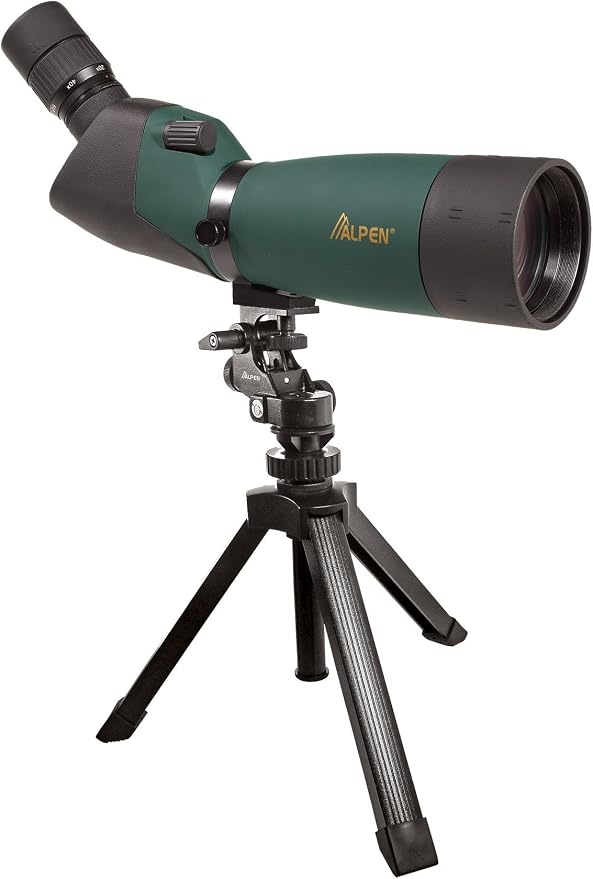
Durable waterproof housing makes this scope a solid choice for outdoor use in different weather. It suits bird watchers, hunters, and range shooters who need strong zoom and reliable optics.
Its standout feature is the wide 20-60x zoom that covers everything from broad views to fine details.
Setting it up is simple thanks to compatibility with standard tripods and an ergonomic design that feels natural in hand. The large 80mm objective lens lets in plenty of light, keeping views bright even in low-light conditions like dawn or dusk. Eye relief of 18 millimeters helps reduce eye strain, while the 45-degree field of view gives a comfortable range for scanning areas or focusing on distant targets.
Optical performance is sharp across its full zoom range, making it easy to spot birds or wildlife with good color accuracy and contrast. The fully multi-coated lenses improve clarity in various lighting situations.
The rugged build protects internal parts from rain and moisture, adding to its reliability outdoors. Common feedback highlights the solid optics and durable waterproof design, though some say the eye relief could be longer for more comfortable extended viewing.
Views remain bright and detailed even at the highest zoom thanks to the large objective lens and coated optics. The waterproof design keeps the scope safe in rain or damp conditions. However, the eye relief can feel tight during long viewing sessions, affecting comfort.
Those wanting a versatile scope for birding or hunting in varied weather conditions will appreciate the combination of rugged build and flexible zoom. People requiring longer eye relief for glasses might want to look at other models.
Pros
- Large 80mm lens for bright, clear images
- Wide 20-60x zoom covers many viewing needs
- Waterproof and fogproof for outdoor durability
- Ergonomic design easy to handle in the field
Cons
- Eye relief of 18 mm may be short for some users
- Tripod needed for steady viewing at high magnification
| Specification | Details |
|---|---|
| Magnification Maximum | 60 x |
| Objective Lens Diameter | 8 centimeters |
| Magnification Minimum | 20 x |
| Eye Relief | 18 millimeters |
| Field Of View | 45 degrees |
| Mounting Type | Tripod Mount |
6. Vanguard Endeavor XF Angled Spotting Scope

Large 80mm objective lens and 20-60x zoom make this angled spotting scope ideal for anyone needing clear views in varying light conditions. Its eye relief and rugged body work well for extended outdoor use, especially in low light, where seeing detail without strain is key.
Setup is straightforward thanks to the quick adjustment focus wheel and center focus design. The angled eyepiece with long eye relief helps when you wear glasses or want comfort during long observation sessions. The built-in sunshield protects from glare, and the scope’s weight and rubber armor give it durability without feeling overly heavy on a tripod.
Image quality stays sharp at all zoom levels with Bak4 phase-coated prisms and fully multi-coated lenses ensuring good light transmission. Waterproof and fogproof features mean it holds up well in damp or misty conditions.
Biggest praise lies in the excellent clarity, while some mention the weight as a drawback for handheld use.
Most praise goes to the clear, bright images even in dim conditions thanks to the quality prism and lens coatings. A common complaint is the weight, which can make handheld use tiring over longer periods. The scope’s sturdy build adds confidence but makes it less convenient for quick carry.
Anyone looking for sharp detail and comfortable viewing in nature or birdwatching will appreciate this scope. Those needing a lighter, more portable option may want to look elsewhere, especially if they prefer frequent handheld usage without a tripod.
Pros
- Excellent light transmission for low light
- Comfortable angled eyepiece with long eye relief
- Durable rubber armored magnesium body
- Quick adjustment center focus wheel
Cons
- Relatively heavy at 59.3 ounces
- Limited field of view at maximum zoom
| Specification | Details |
|---|---|
| Objective Lens Diameter | 8 centimeters |
| Eye Relief | 19 millimeters |
| Magnification Maximum | 60 x |
| Focus Type | Center Focus |
| Field Of View | 2.2 degrees |
| Coating | Fully Multi-Coated |
7. Tasco World Class 20-60×60 Spotting Scope

Perfect for wildlife watchers who need sharp detail and durability, this spotting scope stands out with its 20-60x magnification and waterproof design. It suits those who want to track nature closely without sacrificing clarity or toughness in various conditions.
Setup is straightforward thanks to the included tripod that even mounts to your car, making it handy when you’re following active animals. Focus is manual, which gives you control over sharpness, and the 45-degree eyepiece makes long viewing sessions more comfortable. Its ability to connect with cameras or smartphones turns it into a versatile tool for sharing your finds.
The optics deliver crisp images across the zoom range, with the fully coated lens reducing glare on sunny days. The body feels solid and the waterproof, fogproof construction adds confidence in rough weather.
Some users wish it weighed less, as it can feel a bit heavy after long use, but most praise its clear, steady visuals.
Users appreciate the clear, detailed images at varying magnifications and the sturdy waterproof design that holds up well outdoors. Complaints often focus on the weight, as it can feel cumbersome during long observation sessions, and the manual focus takes some practice to perfect.
Those who spend hours observing wildlife outdoors will find it reliable and effective, especially with the tripod mount. People needing a lightweight or quick-focus scope might prefer a simpler or lighter model for ease of use.
Pros
- Wide zoom range from 20X to 60X
- Waterproof and fogproof for outdoor use
- Includes tripod mountable on a car
- Compatible with camera and smartphone
Cons
- Somewhat heavy for extended handheld use
- Manual focus requires patience and precision
| Specification | Details |
|---|---|
| Magnification | 20-60X |
| Objective Lens Diameter | 60Mm |
| Field of View at 20X | 87 ft/1000 yds |
| Field of View at 60X | 41 ft/1000 yds |
| Focus Type | Manual |
| Coating | Fully Coated |
8. BARSKA Blackhawk 20-60×60 Straight Spotting Scope

Watching distant wildlife or scouting scenic views outdoors requires clear, adjustable optics. Perfect for anyone wanting high magnification with reliable durability, this scope excels at sharp long-distance viewing thanks to its wide zoom range.
Setup involves mounting the scope on the included tripod, making it stable for steady viewing. The manual focus allows precise adjustments, while the reflex finderscope helps locate subjects quickly. Multi-coated lenses reduce glare and improve image clarity, and the waterproof, fogproof design ensures use in various weather conditions without worry.
Image quality stays sharp throughout the 20-60x zoom levels, with bright and clear views even under less ideal conditions. The spotting scope’s durable shock-absorbing armoring protects it during outdoor adventures. Main praise highlights excellent optics and rugged build.
Some users note the manual focus can be slow when tracking moving targets.
The scope delivers sharp, bright images at high zoom with solid protection from weather and shocks. Users appreciate its tough build and clear viewing but mention the manual focusing slows tracking fast-moving objects.
Ideal for those focusing on detailed distant observation in rugged conditions, especially when portability is less important. Those needing quick focus adjustments or a lightweight scope might consider other options.
Pros
- Wide 20-60x zoom for versatile viewing
- Multi-coated optics for clearer images
- Waterproof and fogproof for outdoor use
- Includes tripod and protective cases
Cons
- Manual focus can be slow on moving subjects
- Relatively large and not very compact
| Specification | Details |
|---|---|
| Zoom Ratio | 20-60x |
| Eye Piece Lens Description | Multi-coated BAK-4 Porro Prism |
| Mount | Altazimuth Mount |
| Field Of View | 10 degrees |
| Focus Type | Manual Focus |
| Additional Features | Waterproof, Fogproof, Shock Absorbing Armoring |
9. Celestron TrailSeeker 16-48×65 Angled Spotting Scope

Zooming up to 48x magnification makes this spotting scope ideal for anyone who needs close, detailed views outdoors. It fits well for bird watchers, hunters, or nature lovers looking for clear, crisp images in a portable design. Its biggest strength lies in the sharp, high contrast visuals delivered by Celestron’s XLT fully multi-coated optics.
Setting up is straightforward thanks to the rotating tripod mount that spins full 360°, letting you position the eyepiece just right for comfortable viewing. The dual focus mechanism with coarse and fine adjustments lets you focus quickly on distant subjects, then sharpen the image to your liking.
Waterproof and fogproof construction means it stands up well during outdoor adventures.
Performance in spotting is solid with sharp, bright images and a wide zoom range from 16x to 48x that covers both broad landscapes and detailed close-ups. Build quality feels sturdy without being overly heavy, and the manual focus works smoothly.
Strong praise often highlights the clear optics and ease of use. Some mention the weight as a bit much for long hikes and occasional learning curve with the dual focus.
Clear, high contrast images are frequently praised for delivering excellent detail in various lighting conditions. Users often note the sturdy build and smooth focusing, but some find the overall weight a bit cumbersome on long trips. The rotating tripod mount is appreciated for ease of positioning the eyepiece.
People who prioritize sharp optics and don’t mind a bit of extra weight will enjoy this scope. Those seeking something lighter or with simpler focusing might consider alternative models better suited for easy carry and quick adjustments.
Pros
- Zoom range from 16x to 48x
- XLT fully multi-coated optics for sharp images
- Rotating tripod mount for flexible viewing angles
- Waterproof and fogproof for outdoor reliability
Cons
- Some find it heavy for extended carry
- Dual focus has a slight learning curve
| Specification | Details |
|---|---|
| Zoom Ratio | 32 |
| Focal Length Description | 65 millimeters |
| Focus Type | Manual Focus |
| Mount | Altazimuth Mount |
| Coating | Fully Multi-Coated |
| Additional Features | Waterproof & Fogproof |
10. Celestron Travel Scope 70mm Portable Telescope

Ideal for beginners and families wanting to explore the night sky or daytime scenes, this telescope offers bright and clear views without a steep learning curve. Its standout feature is a 70mm aperture combined with fully coated glass lenses that deliver sharp images in a compact, portable size.
Setting up takes mere minutes, with no tools required. The full-height tripod and telescope tube come together quickly, making it easy to pack away in the included backpack. Manual focus and an altazimuth mount allow straightforward adjustments, so you can spend more time observing and less time fiddling with equipment.
Performance-wise, this refractor gives vibrant, crisp views of the Moon, planets, and landscapes thanks to its 400mm focal length and 2x zoom ratio. Users appreciate its lightweight build for outdoor adventures but note that manual focusing sometimes demands patience. The reflex finderscope helps in spotting objects but may take a moment to get used to.
Bright, sharp views and easy setup receive strong praise, making it welcoming for novices. Some mention patience is needed to achieve precise focus, especially during quick observation sessions. The finderscope aids in locating objects but differs from traditional types, requiring a short adjustment period.
People new to stargazing and those wanting a portable scope for casual viewing will appreciate this model. Anyone needing quick autofocus or professional-grade optics might look elsewhere for more advanced features and precision.
Pros
- Bright and clear views with 70mm aperture
- Quick, no-tool setup with included backpack
- Lightweight for easy travel and outdoor use
- Simple manual focus suitable for beginners
Cons
- Manual focus requires patience for sharp images
- Reflex finderscope can be tricky at first
| Specification | Details |
|---|---|
| Eye Piece Lens Description | Glass |
| Mount | Altazimuth Mount |
| Focus Type | Manual Focus |
| Finderscope | Reflex |
| Coating | Fully Coated |
| Focal Length Description | 400 millimeters |
11. Tasco World Class 20-60×60 Spotting Scope

Offering clear HD clarity with a versatile 20-60x60mm zoom, it suits anyone needing precision for hunting or birding. Its biggest strength is the fully coated optics paired with BK7 prisms, delivering sharp, detailed views at various distances.
Setup is straightforward using the altazimuth mount, and manual focus gives precise control over image sharpness. A reflex finderscope helps quickly locate subjects, making day-to-day adjustment simple. Compatible with cameras and smartphones, it allows easy photo capturing, and the option to power via AC/DC adds convenience during long outings.
It performs well, showing crisp images with good light transmission thanks to fully coated lenses. Built with tested quality materials, it stands up to regular outdoor use and has a durable design. Most users praise the clarity and solid construction, while some mention the weight can make handheld use tiring over extended periods.
Sharp image clarity is a standout feature, made possible by fully coated optics and BK7 prisms. Durability gets solid marks for enduring outdoor conditions, but the spotting scope’s weight may challenge users during long handheld sessions.
Ideal for people prioritizing optical quality and compatibility with photo devices during activities like birding or hunting. Those needing ultra-lightweight or very wide views might want to explore other options better suited to those specific needs.
Pros
- Clear HD optics with full coatings
- Manual focus for precise adjustments
- Compatible with cameras and smartphones
- Durable build quality with tested materials
Cons
- Can feel heavy for handheld use
- Limited field of view at higher magnification
| Specification | Details |
|---|---|
| Magnification | 20-60x60mm |
| Prism Type | Porro |
| Mount | Altazimuth Mount |
| Focus Type | Manual Focus |
| Coating | Fully Coated |
| Field Of View | 30 meters |
12. Bresser Spezial Zoomar 12-36×70 Binoculars

Bresser Spezial Zoomar 12-36×70 binoculars excel at delivering strong magnification and clear views, particularly for star gazing and bird watching. Well-suited for outdoor enthusiasts who want detailed observation with a versatile zoom range and solid build, these binoculars stand out for their waterproof design and bright optics.
Setting up involves mounting on a tripod, which stabilizes the view when using the high magnifications up to 36x. The center focus mechanism and +/-5 diopters adjustment let you quickly sharpen your vision.
Fully multi-coated lenses improve light transmission, enhancing clarity during concerts or nature walks. The large 7-centimeter objective lenses bring in plenty of light, making it easier to spot details even at dawn or dusk.
Performance is clear and detailed, especially using the Porro prism design that offers a wide apparent angle of 62.6 degrees. Build quality feels sturdy, with waterproofing protecting against rain or moisture during outdoor use.
Brightness levels stay high, but some find the exit pupil diameter of 1.94 millimeters limiting in very low light. Common praise highlights the sharp zoom, while the most frequent downside is the need for steady mounting to avoid shake.
Many appreciate the sharp detail and brightness at various zoom levels, thanks to the fully multi-coated lenses and 7-centimeter objectives. It is common that the highest magnification demands a tripod, as hand-holding causes noticeable image shaking. The center focus and diopter adjustment make quick focusing easy during active observation.
People seeking detailed views of stars, wildlife, or concerts in various weather will find this binocular appealing. Those needing hand-held ease or better low-light capability might consider alternatives with larger exit pupils or image stabilization features.
Pros
- Strong zoom range from 12x to 36x
- Fully multi-coated lenses for bright images
- Waterproof for outdoor durability
- Diopter adjustment for personalized focus
Cons
- Requires tripod to prevent image shake at high zoom
- Exit pupil size limits low light performance
| Specification | Details |
|---|---|
| Objective Lens Diameter | 7 centimeters |
| Magnification Maximum | 36 |
| Coating | Fully Multi-Coated |
| Water Resistance Level | Waterproof |
| Focus Type | Center Focus |
| Exit-Pupil Diameter | 1.94 millimeters |
Best FFP Spotting Scopes Comparison Table
| Product | Magnification Range | Objective Lens Diameter | Coating | Mount Type |
|---|---|---|---|---|
| Celestron Ultima 22-66×100 | 22-66x | 100 mm | Multi-Coated | Equatorial Mount |
| Celestron TrailSeeker 16-48×65 | 16-48x | 65 mm | Fully multi-coated-xlt | Others |
| Celestron Regal M2 100ED | 22-67x | 100 mm (implied) | XLT lens coatings | Altazimuth Mount |
| Bushnell Sentry 18-36×50 | – | 50 mm | – | – |
| ALPEN Waterproof Spotting Scope | 20-60x | 80 mm | – | Tripod Mount |
| Vanguard Endeavor XF Angled | 20-60x | 80 mm | Fully Multi-Coated | – |
| Tasco World Class 20-60×60 | 20-60x | 60 mm | Fully Coated | Tripod Mount |
| BARSKA Blackhawk 20-60×60 | 20-60x | 60 mm | Multi-Coated | Altazimuth Mount |
| Celestron TrailSeeker Angled 16-48×65 | 16-48x | 65 mm | Fully Multi-Coated | Altazimuth Mount |
| Celestron Travel Scope 70mm | – | 70 mm | Fully Coated | Altazimuth Mount |
| Tasco World Class Spotting Scope | – | – | Fully Coated | Altazimuth Mount |
| Bresser Spezial Zoomar 12-36×70 | 12-36x | 70 mm | – | Tripod Mount |
- Magnification Range22-66x
- Objective Lens Diameter100 mm
- CoatingMulti-Coated
- Mount TypeEquatorial Mount
- Magnification Range16-48x
- Objective Lens Diameter65 mm
- CoatingFully multi-coated-xlt
- Mount TypeOthers
- Magnification Range22-67x
- Objective Lens Diameter100 mm (implied)
- CoatingXLT lens coatings
- Mount TypeAltazimuth Mount
- Magnification Range–
- Objective Lens Diameter50 mm
- Coating–
- Mount Type–
- Magnification Range20-60x
- Objective Lens Diameter80 mm
- Coating–
- Mount TypeTripod Mount
- Magnification Range20-60x
- Objective Lens Diameter80 mm
- CoatingFully Multi-Coated
- Mount Type–
- Magnification Range20-60x
- Objective Lens Diameter60 mm
- CoatingFully Coated
- Mount TypeTripod Mount
- Magnification Range20-60x
- Objective Lens Diameter60 mm
- CoatingMulti-Coated
- Mount TypeAltazimuth Mount
- Magnification Range16-48x
- Objective Lens Diameter65 mm
- CoatingFully Multi-Coated
- Mount TypeAltazimuth Mount
- Magnification Range–
- Objective Lens Diameter70 mm
- CoatingFully Coated
- Mount TypeAltazimuth Mount
- Magnification Range–
- Objective Lens Diameter–
- CoatingFully Coated
- Mount TypeAltazimuth Mount
- Magnification Range12-36x
- Objective Lens Diameter70 mm
- Coating–
- Mount TypeTripod Mount
How to Choose the Right FFP Spotting Scope
Choosing the right full focal plane spotting scope depends on factors like optical clarity, magnification, durability, and ease of use. Prioritizing these ensures sharp images, long-lasting performance, and comfortable viewing, ultimately saving money by avoiding frequent replacements or dissatisfaction with low-quality gear.
Optical Quality
Looking through a spotting scope with poor optics quickly becomes frustrating, especially at higher zoom levels when images lose sharpness or colors fade. The clarity of the image depends heavily on the quality of the glass and the coatings applied to the lenses.
Many scopes have multi-coated lenses that reduce glare and improve light transmission, which matters a lot during low-light conditions like dawn or dusk. A scope with good coatings allows for brighter, clearer images with less eye strain.
The field of view describes how much area you can see at once and varies between models and zoom settings. Wider fields of view help track moving subjects and get a better sense of surroundings without moving the scope too much. A decent scope will offer a field of view around 300-400 feet at 1000 yards, balancing zoom with visibility.
Magnification and Zoom Range
Zoom levels affect how close objects appear, but cranking the magnification too high often leads to shaky or blurry images unless the scope maintains good stabilization. Typical zoom ranges start around 15x and go up to 45x or more. For most outdoor spotting purposes, a zoom that covers 20x to 30x offers a good balance between detail and stillness.
Smooth and easy zoom adjustment is important because jerky or stiff controls make it hard to quickly refocus. Look for scopes where the zoom ring turns fluidly without slipping or sudden jumps. At very high magnifications, even slight hand movements can destabilize the image, so pairing the scope with a solid tripod helps maintain a steady view.
Build and Weather Resistance
Scopes built with metal or high-quality polymer housings tend to resist dents and scratches better than cheaper plastic bodies. For anyone spending time outdoors under rough conditions, a durable casing extends the lifespan of the device.
This is critical when accidentally dropping or bumping the scope during hikes or fieldwork.
Waterproof and fogproof features prevent internal moisture buildup and keep the lens clear in rain, snow, or rapid temperature changes. Scopes with sealed O-rings and nitrogen purging offer reliable protection. Ergonomics also play a role; a scope that feels balanced and has non-slip grips reduces fatigue during long viewing sessions.
Eye Relief and Comfort
Eye relief is the distance between your eye and the eyepiece where the full image is visible, and long eye relief is key for comfortable viewing, especially with glasses on. Scopes offering 15mm or more let glasses wearers see the entire field without strain.
Good eyecups adjust easily to block unwanted light and improve comfort, whether you prefer to look through directly or with sunglasses. Weight and balance also influence comfort; heavier scopes tire the arm and neck faster. Choosing a model with balanced weight distribution makes carrying and steady viewing for hours manageable.
Portability and Mount Compatibility
Carrying a bulky or heavy scope can be a hassle during extended trips. Compact models under 3 pounds fit better in backpacks and reduce shoulder strain. Smaller size also helps with quick setup in tight spaces or uneven terrain.
Many scopes come with threaded mounts compatible with standard tripods for stable positioning. This can be crucial when using high magnifications. Additional accessory options such as smartphone adapters or lens filters increase versatility but need you to check thread sizes and attachment options before buying.
Tips for Maximizing Accuracy with an FFP Spotting Scope
Accurate spotting relies heavily on stable mounting. Use a sturdy tripod to reduce shakes, especially at higher magnifications where even slight movements blur the image.
Position yourself comfortably to avoid disturbing the setup during observation. Adjust the focus slowly and precisely; rushing often leads to overshoot and loss of clarity. Employ the first focal plane (FFP) reticle correctly by practicing holdovers at various magnifications, since the reticle scales with zoom, you can effectively estimate distances and make precise adjustments without guessing.
Consider the lighting conditions too, as harsh sunlight or low light can affect your ability to discern details. Finally, clean your lenses regularly, but gently, to avoid smudges that compromise sharpness. These precautions help make the most of your spotting scope’s capabilities during any detailed viewing session.
Essential Maintenance Practices to Extend the Life of Your Spotting Scope
Protecting your spotting scope begins with proper storage. Keep it in a padded case when not in use to guard against dust, moisture, and accidental knocks. After exposure to rain or dew, wipe the body and lens edges with a soft, dry cloth before storing.
Clean lenses with a microfiber cloth or lens brush designed for optics; avoid household cleaners which can damage coatings. Check moving parts periodically, focus rings and zoom mechanisms benefit from occasional, light lubrication using products recommended by the manufacturer.
Inspect seals and O-rings to ensure they maintain waterproof and fog-proof integrity, particularly if you use the scope in harsh environments. These steps extend the life of your equipment and preserve performance, preventing minor issues from becoming costly repairs.
Comparing FFP Spotting Scopes with Other Optical Devices for Outdoor Use
FFP spotting scopes differ from binoculars and riflescopes mainly in their zoom and reticle design. The first focal plane reticle changes size with magnification, which allows consistent accuracy for range estimation and targeting adjustments at any zoom level, something fixed reticles on many riflescopes lack. Compared to binoculars, spotting scopes offer a higher magnification range and often better image resolution, making them suited for long-distance observation rather than wide field viewing.
While riflescopes are optimized for aiming precision on the move, spotting scopes prioritize stable, detailed observation from a fixed position. They are larger and heavier, which affects portability.
For activities like birdwatching, target shooting, or surveillance at varied distances, an FFP spotting scope provides clearer measurement tools and adaptability not found in other common outdoor optics.
People Also Asked
How Do I Properly Clean and Maintain My FFP Spotting Scope?
Use a soft brush or air blower to remove dust before cleaning the lenses with a microfiber cloth and lens cleaner designed for optics. Store the scope in a protective case when not in use to prevent scratches and moisture buildup. Regularly check and tighten screws to keep it stable.
What Size FFP Spotting Scope Is Ideal for Birdwatching?
A 20-60x or 25-50x zoom FFP spotting scope is practical for birdwatching because it offers versatile magnification without too much bulk. This size balances clear detail and ease of carrying during long birdwatching sessions.
Are FFP Spotting Scopes Safe for Prolonged Use Without Eye Strain?
FFP spotting scopes are generally comfortable for extended use, especially those with adjustable eyecups and eye relief. Taking breaks every hour reduces eye fatigue, and using proper lighting conditions also helps prevent strain.
Can I Use My Existing Tripod with a New FFP Spotting Scope?
Most FFP spotting scopes fit standard tripods, but it’s important to check the mounting plate and thread size for compatibility. Ensure the tripod head is sturdy enough to support the weight of the scope for steady viewing.
How Long Does a Typical FFP Spotting Scope Last with Regular Use?
A well-maintained FFP spotting scope can last several years with regular use. Proper cleaning, storage in a dry place, and avoiding harsh impacts help extend the life of internal lenses and mechanisms.
Conclusion
Choosing a spotting scope comes down to clear optics, durability, and how easy it is to adjust the zoom and focus. A good field of view and solid build will make a noticeable difference in use. Pay attention to lens coatings and eye relief if you plan long sessions.
Consider where you’ll use it most and how often, then find a model that fits your budget and space. Check the comparison table and detailed reviews above to see which options align best with your needs.
That will help narrow the choice without overspending or carrying extra weight.