
Top 12 Best First Focal Plane Mil Dot Scope You Need Now
Trying to estimate distance accurately through a cheap or poorly designed first focal plane mil dot scope can ruin a shot. The reticle in a subpar mil dot scope might shift or distort as you zoom, making precise adjustments almost impossible. That’s why investing in the best first focal plane mil dot scope matters when you rely on quick, consistent range calculations during fieldwork or target practice.
A quality first focal plane mil dot scope keeps the reticle scale consistent across all magnifications, which is critical for accurate holdovers and windage corrections. Durability also plays a big role, look for scopes with aircraft-grade aluminum tubing and waterproof, fog-proof seals. Ideal magnification ranges tend to fall between 3-15x, ensuring versatility without excessive bulk.
The clarity of the glass and simple reticle illumination options also make a noticeable difference in different lighting conditions.
Need a Quick Check?
| Image | Product | Price |
|---|---|---|
Our Top Picks 1  | Monstrum Hornet Scope | Check Price |
Our Top Picks 2 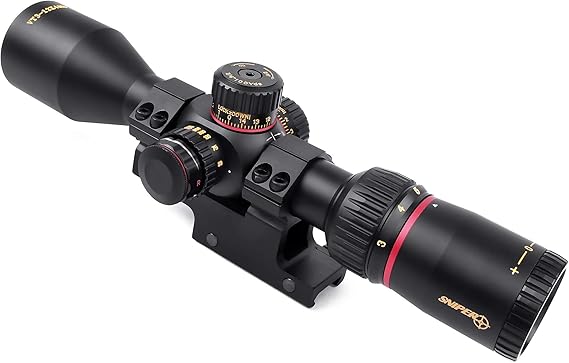 | Sniper 3-12×40 Scope | Check Price |
Our Top Picks 3  | Nightforce NX8 4-32×50 | Check Price |
Our Selected Top 12 First Focal Plane Mil Dot Scope for Every Budget
This list features a variety of first focal plane mil dot scopes suited for different users and needs. Each review covers performance, ideal usage scenarios, strengths, and limitations to help you choose the best option for your specific requirements.
1. Monstrum Hornet 6-24×50 FFP Rifle Scope
Monstrum Hornet 6-24×50 FFP Rifle Scope is a solid choice for those needing clear magnification and precision in a first focal plane mil dot scope. It suits shooters who want reliable range estimation with adjustable illumination and smooth zoom control.
Its biggest strength lies in the combination of detailed reticle features and easy turret adjustments.
Setup is straightforward, with an integrated throw lever that makes changing magnification from 6 to 24x quick and smooth. The throw lever feels sturdy and fits well in hand during shoots.
The zero stop on the elevation turret allows you to return to zero quickly after making adjustments, helping you maintain consistent shots during sessions. Six illumination levels on the X-Tree reticle provide good visibility in varying light, fitting different conditions well.
Performance matches expectations for a scope aimed at precision shooting. The aluminum body feels durable while staying relatively lightweight at under 1.5 kg, making it easy to carry on long hunts or range days.
Adjustments move in precise 1/8 MOA clicks that translate well in fine tuning. Most praise focuses on how fast and accurate holdover and range estimation are with the reticle. The main complaint involves a somewhat steep learning curve for reticle features at first.
The reticle’s illumination and design allow faster range estimation and holdover correction, praised for its precision in target calling. Users commonly mention the extra effort needed to master the reticle’s layout and illumination settings when starting out. The scope’s adjustment turrets and magnification feel consistently reliable and sturdy.
Shooters looking for a detailed reticle with plenty of adjustment options and smooth magnification changes will appreciate this scope. Someone wanting a lighter or simpler setup might explore other models. It fits best for those valuing precision and customizable settings over minimal weight or instant usability.
Pros
- Integrated throw lever for fast magnification changes
- Clear X-Tree MIL reticle with six illumination levels
- Easy-to-use zero stop elevation turret
- Durable aluminum construction
Cons
- Reticle features take time to fully understand
- Weight may feel heavy for some users
| Specification | Details |
|---|---|
| Magnification | 6-24x |
| Objective Lens Diameter | 50 mm |
| Adjustment Click Value | 1/8 MOA |
| Weight | 1.48 kg |
| Reticle Type | X-Tree MIL Reticle |
| Package Dimensions | 17.76 x 4.76 x 4.61 inches |
2. Sniper 3-12×40 FFP Rifle Scope
Crafted from aircraft-grade aluminum alloy with a hardened anodized black matte finish, the Sniper 3-12×40 FFP Rifle Scope offers durability and a reliable design for serious shooters. Its red and green illuminated mil-dot reticle suits those who need variable magnification and clear reticle visibility in various lighting conditions.
Setting up the scope is straightforward thanks to the included medium-profile Picatinny mount designed for firm attachment. The fully multi-coated lenses minimize glare and maximize light transmission, helping maintain a sharp view throughout the day.
Quick adjustment turrets with 1/2 MOA click values allow for precise wind and elevation changes, making fine-tuning easier on the fly.
Performance-wise, the 3-12x zoom range covers close quarters to medium distance, while the mil-dot reticle supports accurate range estimation and holdover. Its strong build ensures it handles the rigors of shooting environments well. Common praise highlights the scope’s precision adjustments, but some mention the turrets could be quieter and that the lens covers might feel a bit basic.
Precise wind and elevation adjustments make zeroing in easier and accurate, while a few users note the adjustment turrets produce noticeable noise which might be distracting. Lens covers serve their purpose but lack a premium feel.
Shooters wanting a solid first focal plane scope with variable illumination will appreciate this model. Those seeking completely silent turret clicks or top-tier lens cover materials might look elsewhere.
Pros
- Durable aircraft-grade aluminum alloy construction
- Red and green illuminated mil-dot reticle for visibility
- Fully multi-coated lenses reduce glare effectively
- Precise quick adjustment turrets with 1/2″ MOA clicks
Cons
- Turrets can be a bit noisy during adjustment
- Flip-open lens covers feel somewhat basic in quality
| Specification | Details |
|---|---|
| Magnification Minimum | 3 |
| Magnification Maximum | 12 |
| Objective Lens Diameter | 40 millimeters |
| Reticle Type | Mil-dot |
| Mounting Type | Picatinny Mount |
| Field Of View | 31.9 feet |
3. Nightforce NX8 4-32×50 F1 Riflescope
Magnification range stands out on the NX8 4-32×50, fitting shooters who want one scope that covers close engagements and extreme distance precision. Its versatility coupled with clear optics offers confidence whether tracking fast targets at 4x or locking on tiny details at 32x.
Setting up is straightforward thanks to features like the ZeroStop for quick return to zero and the Power Throw Lever for fast magnification changes. Parallax adjustment starting at 11 yards makes close shots sharp. Eye relief sits at a comfortable 8.8 cm, providing a solid view without strain, making it practical for long sessions.
Clarity and resolution hold steady across the wide zoom range, supporting a reliable aiming experience for long-range shooting. The MIL-XT reticle remains clear with Digillum illumination for low light conditions. Construction feels solid, but some mention the 13.4-inch length as a bit bulky.
The scope offers a strong design without sacrificing usability.
Excellent clarity and rapid zeroing receive strong approval, helping with both long-range precision and quick follow-ups. The bulkier length detracts somewhat from handling, making it less convenient for lighter setups.
Shooters wanting a single scope to cover varied distances will appreciate the NX8’s flexibility. Those seeking the lightest or most compact option might look for alternatives with smaller profiles or lighter builds.
Pros
- Wide magnification range from 4x to 32x
- ZeroStop for rapid return to zero
- Digillum reticle illumination for low light
- Comfortable eye relief of 8.8 cm
Cons
- Measuring 13.4 inches long, the scope might feel bulky to some.
- Objective lens diameter at 30mm could limit light gathering
| Specification | Details |
|---|---|
| Magnification Minimum | 4 x |
| Magnification Maximum | 32 x |
| Objective Lens Diameter | 30 millimeters |
| Eye Relief | 8.8 centimeters |
| Reticle Type | MIL-XT |
| Parallax Adjustment | 11 yards to infinity |
4. Meopta MeoPro R6 5-30×56 FFP Riflescope

Meopta MeoPro R6 5-30×56 FFP Riflescope fits well for shooters wanting a wide magnification range combined with precise Mil-Dot targeting at any zoom. Its strongest suit is the 5-30x magnification paired with a first focal plane reticle that stays accurate no matter the power level.
It’s perfect for versatile long-range shooting demands.
Setting up on a rifle is straightforward thanks to compatibility with both Picatinny and Weaver mounts. Day-to-day, the scope is easy to adjust and delivers clear sighting through its large 56mm objective lens.
The first focal plane Mil-Dot reticle helps with quick range estimation and holdover corrections whether zoomed in at 30x or down at 5x.
Performance shines with crisp optics and reliable reticle accuracy across magnifications. The build is weather-resistant and solid enough to endure harsh outdoor conditions. The best feedback highlights its clarity and reticle precision.
A noted downside is its size and weight may feel bulky on lighter rifles.
Optical clarity and reticle precision remain standout positives, supporting confident long-range shots. Common critique centers on the scope’s weight and size, which can make it less ideal for compact setups or lighter hunting rifles.
Shooters needing a reliable, high-magnification FFP Mil-Dot scope with strong light transmission will appreciate this rifle optic. Those prioritizing lightweight gear for smaller rifles will likely benefit from exploring lighter alternative scopes.
Pros
- Wide 5-30x magnification suitable for varied distances
- First Focal Plane reticle stays accurate at all zoom levels
- 56mm objective lens ensures bright and clear viewing
- Durable weather-resistant design for outdoor reliability
Cons
- Feels bulky and heavy on lighter rifles
- Might require careful mounting to retain zero
| Specification | Details |
|---|---|
| Magnification Minimum | 5 x |
| Magnification Maximum | 30 x |
| Objective Lens Diameter | 5.6 centimeters |
| Reticle Type | Mil Dot |
| Mounting Type | Picatinny Mount, Weaver Mount |
| Compatible Devices | Rifle |
5. Discovery Optics HD 5-30×56 FFP Rifle Scope

Long-range shooting demands precision and clarity, especially when adjusting for bullet drop and windage. Suited for shooters needing reliable adjustments at various distances, this scope’s biggest strength is its expansive 34mm tube, allowing ample elevation and windage travel without sacrificing clarity.
Setting it up on a Picatinny mount is straightforward. The 5 to 30x magnification range covers close to extreme distances, ideal for spotting details far away. The first focal plane mil dot reticle keeps measurements accurate regardless of zoom level.
Daily use is boosted by the clear glass, which handles low-light conditions well thanks to multi-coated optics, enhancing target visibility at different times of day.
Precision zero stop turrets provide tactile clicks at 0.1 MRAD intervals, ensuring you can dial in adjustments accurately and quickly return to zero without guesswork. The build feels solid, with an intended design to withstand harsh outdoor conditions.
Most praise highlights the clear imaging and easy turret adjustments, while some mention its relatively large size and weight compared to smaller scopes.
The scope’s standout feature is its sharp clarity combined with precise turret adjustments, making ranging and holdover corrections straightforward. Some users note the size can be cumbersome for lighter setups or close-range shooting, which may affect maneuverability.
The scope fits shooters who prioritize long-range precision and maximum adjustment capability on sturdy rifle platforms. Those needing a lightweight or more compact setup might want to look for smaller or simpler optic models instead.
Pros
- Wide 5-30x magnification for versatile shooting distances
- Precise 0.1 MRAD click turrets with zero stop
- Exceptional light transmission with fully multi-coated optics
- Durable 34mm main tube provides a wide adjustment range
Cons
- Relatively bulky and heavier than smaller scopes
- Limited field of view at maximum magnification
| Specification | Details |
|---|---|
| Magnification Minimum | 5 x |
| Magnification Maximum | 30 x |
| Objective Lens Diameter | 5.6 centimeters |
| Reticle Type | Mrad Ffp (first Focal Plane) |
| Mounting Type | Picatinny Mount |
| Field Of View | 25 feet |
6. SIG SAUER Tango-MSR 1-6×24 LPVO Riflescope

With a maximum magnification of 6x and crystal-clear optics, the SIG SAUER Tango-MSR 1-6×24 LPVO Riflescope is well-suited for shooters who want clear visuals and quick adjustments during tactical setups or hunting. Its key strength lies in the high-performance optical system that delivers excellent light transmission and clarity.
Setting up the scope is straightforward thanks to the cantilever mount, which fits most rifles securely. The integrated throw lever offers smooth zooming from 1x to 6x, making it easy to switch magnification quickly.
The illuminated MSR BDC-6 reticle features 11 brightness levels, so you can make precise shots even in changing light conditions. Daily use stays reliable with its 24mm objective lens balancing brightness and size well.
The optical clarity stands out during actual shooting, letting you see targets sharply without much effort. Construction feels solid and durable, designed for tactical environments.
The best-loved feature is definitely the combination of sharp optics and bright reticle. On the downside, some users mention the magnification throw lever can feel a bit loose or removable thread less durable over time.
The optical clarity and brightness levels stand out as key advantages, helping with shot placement in low light. Some users have noted that the throw lever’s durability could be better, with occasional looseness after extended use.
This scope suits shooters who want fast zooming and bright, clear reticles on their rifles. Those needing heavier magnification or ultra-rugged parts might consider other options instead.
Pros
- High light transmission for clearer images
- 11 brightness levels on the reticle
- Easy and quick magnification changes
- Compact size with good balance
Cons
- Throw lever may feel loose over time
- Removable thread could be fragile
| Specification | Details |
|---|---|
| Magnification Maximum | 6 x |
| Magnification Minimum | 1 x |
| Objective Lens Diameter | 24 millimeters |
| Reticle Type | Illuminated MSR BDC-6 Reticle |
| Mounting Type | Cantilever Mount |
7. SIG SAUER Tango-SPR 4-16×44 Tactical Riflescope

Hunters or tactical shooters looking for a versatile first focal plane scope will appreciate this choice. It suits those who need sharp clarity and reliable, quick adjustments from 4x up to 16x magnification. Its biggest strength lies in the exposed zero-stop elevation turret, which offers precise dialing without guessing.
Setting it up on a Picatinny mount is straightforward, and the removable magnification throw lever makes zooming in and out feel natural during use. The side focus, along with the elevation and windage controls, stay well within reach and respond smoothly.
These features matter when making fast corrections on varied shooting distances.
Performance is consistent with the promise of pinpoint accuracy, especially at longer ranges. The 44mm objective lens provides bright views, even in low light.
Sturdy construction handles rough handling, although some mention the capped windage turret could be more accessible. Reviews highlight great optical clarity but occasional complaints about turret knob stiffness.
Many users appreciate how the exposed zero-stop elevation turret provides straightforward and accurate adjustments under varied conditions. The main negative points focus on the windage turret’s accessibility and stiffness, which can slow down quick changes. Optical clarity receives frequent praise as a highlight of daily handling.
This scope fits those who want both high magnification range and reliable controls for precision shooting. People needing ultra-fast turret changes or softer knob feels might want to consider alternative options. It’s well suited for medium to long-range tactical and hunting applications.
Pros
- Exposed zero-stop elevation turret for precise adjustments
- Removable magnification throw lever for quick zoom changes
- Bright, clear view through 44mm objective lens
- Durable build suitable for tactical use
Cons
- Capped windage turret can be hard to adjust quickly
- Turret knobs sometimes feel stiff to operate
| Specification | Details |
|---|---|
| Magnification Minimum | 4 x |
| Magnification Maximum | 16 x |
| Objective Lens Diameter | 44 millimeters |
| Mounting Type | Picatinny Mount |
| Reticle Type | MOA BDC-1 |
8. Monstrum Hornet II 3-15×50 FFP Rifle Scope

Monstrum Hornet II 3-15×50 FFP Rifle Scope stands out for its flexible magnification range and easy-to-use zero stop feature, ideal for shooters who want precise range estimation in a first focal plane scope. It suits those needing detailed holdover correction with a durable design built for regular use.
Setup is straightforward, with an integrated throw lever that makes adjusting magnification from 3 to 15 smooth and quick. The MIL reticle with six levels of illumination helps in varying light conditions, while the improved turrets allow precise windage and elevation adjustments. The zero stop mechanism lets you set and reliably return to zero without hassle.
The aluminum build keeps the weight manageable at 1.4 kg for steady handling.
Performance on range estimation and holdover is accurate thanks to the first focal plane reticle, making it reliable for different distances. The scope’s aluminum material feels solid and stands up well to regular use. Many praise the crisp adjustments and clear reticle, while some mention the package dimensions as slightly bulky for compact setups.
The throw lever and zero stop system make magnification and zeroing adjustments straightforward and precise. The reticle illumination with six levels is especially handy in low light. Bulkiness of the scope’s packaging and its 1.4 kg weight come up often as considerations for users wanting more compact gear.
This scope fits well for shooters valuing detailed range estimation and smooth adjustments in varied conditions. Users looking for a lighter or smaller scope might want to consider other options tailored for compactness and weight.
Pros
- Wide 3-15x magnification range
- Six reticle illumination levels
- Aluminum build for durability
- Easy zero stop adjustment
Cons
- Package dimensions are somewhat bulky
- Weight may feel heavy for some setups
| Specification | Details |
|---|---|
| Magnification | 3-15x adjustable |
| Reticle Style | MM6 MIL Reticle, 6 illumination levels |
| Material | Aluminum |
| Package Dimensions | 17.87 x 4.76 x 4.13 inches |
| Package Weight | 1.4 kg |
| Adjustment | 1/4 MOA/click windage with zero stop |
9. SIG SAUER Tango-MSR 1-6×24 FFP Riflescope
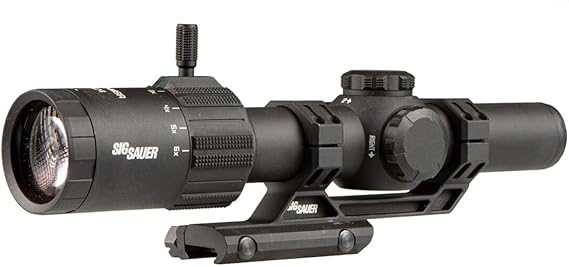
SIG SAUER Tango-MSR 1-6×24 FFP Riflescope offers excellent clarity and light transmission, ideal for tactical and intermediate range shooting. It fits well on rifles needing reliable magnification from 1x to 6x and features a precise illuminated MSR BDC-6 reticle for accurate holdover at varying distances.
Mounting it on a rifle using the cantilever mount is straightforward, providing solid stability. Switching between 1x and 6x magnification allows quick adaptation from close quarters to longer shots.
The illuminated reticle helps in low light and gives useful bullet drop and wind drift references for aiming in diverse conditions.
Optically, it performs well across magnifications, delivering sharp images with a wide 124.8 feet field of view at 100 yards. The build feels rugged and durable, suited for tactical applications without hassle. Most users praise the clarity and reliability, though some note the 24mm objective lens limits light gathering compared to larger scopes.
Many appreciate the clear optics and detailed illuminated reticle that help make aiming easier during tactical shoots. A common drawback is the smaller 24mm objective lens, which can affect clarity in dim environments where larger lenses perform better.
Shooters engaged in intermediate range encounters with varied lighting conditions will find this scope a solid choice. Those requiring higher magnification or better low-light gathering might want to consider different options with bigger objective lenses or extended zoom ranges.
Pros
- Bright, clear optics with excellent light transmission
- Illuminated MSR BDC-6 reticle for precise holdovers
- Smooth magnification range from 1x to 6x
- Sturdy cantilever mounting for firm attachment
Cons
- Objective lens size limits performance in very low light
- Limited maximum magnification compared to some other scopes
| Specification | Details |
|---|---|
| Magnification Minimum | 1 x |
| Magnification Maximum | 6 x |
| Objective Lens Diameter | 24 millimeters |
| Field Of View | 124.8 feet |
| Reticle Type | Illuminated BDC Reticle |
| Mounting Type | Cantilever Mount |
10. Monstrum Beast ED 1-6x FFP LPVO Scope

Feels natural with its true 1x sight picture and variable magnification from 1-6x, making it fit for shooters needing fast target acquisition and versatile ranges. Its biggest strength lies in clear optics that don’t mess with your eye relief while giving a sharp, bright view no matter the light.
Setup revolves around the crisp Monstrum LPVO optics and an easy cantilever mount that fits standard 30mm rings. On a daily basis, the uncapped windage and elevation turrets with locks make adjustments straightforward without losing zero. The generous eye relief and forgiving eye box help keep your sight picture steady, even during rapid aiming or less perfect cheek welds.
Clarity and color contrast stand out thanks to extra low dispersion glass and anti-reflective coatings, delivering sharpness unusual for this price. The tubes and turrets feel solid, built to handle routine use with no fuss.
Most praise centers on the optical quality; the only common gripe is the 30mm objective lens might limit light gathering in very dim conditions.
Monstrum Beast ED scope delivers sharp, colorful views with reliable adjustments, praised for optical clarity. A repeated drawback appears in the smaller objective lens size that might affect brightness in dim settings.
Those seeking a versatile, clear sight for close to mid-range shooting will appreciate this setup. Shooters requiring optimal low-light performance might consider alternatives with larger objective lenses.
Pros
- True 1x sight picture for quick transitions
- Extra low dispersion glass reduces chromatic aberration
- Easy access locking windage and elevation turrets
- Generous eye relief and forgiving eye box
Cons
- 30mm objective lens limits light in low-light use
- Uncapped turrets may be prone to accidental adjustments
| Specification | Details |
|---|---|
| Magnification Minimum | 1 x |
| Magnification Maximum | 6 x |
| Objective Lens Diameter | 30 millimeters |
| Mounting Type | Cantilever Mount |
| Thread Type | 30mm |
| Reticle Type | CM8 |
11. Monstrum Archangel ED 1-10x FFP LPVO Scope

Excellent choice for those needing a reliable first focal plane scope with versatile magnification from 1 to 10 times. Its standout feature is the true 1x sight picture combined with high-quality optics, making it a solid fit for shooters wanting clarity and flexibility without overspending.
Set up includes straightforward windage and elevation adjustments that click precisely in half MOA increments on the MOA model, helping maintain accuracy. Generous eye relief and a forgiving eye box reduce headaches during quick target acquisition, while extra low dispersion glass cuts down on color distortions and boosts image sharpness for extended use.
Performance-wise, the optics deliver sharp, well-contrasted images aided by anti-reflective coatings, making targets pop even at higher magnifications. The build feels durable yet not overly heavy on the rifle.
Most praise centers on the clarity and bright images at a fair price; common complaints touch on the slightly bulky size that might not suit all setups.
Sharp optic clarity and a bright sight picture stand out as top benefits. Common critique involves its bulk and weight, which affects rifle balance for some users. The adjustable clicks feel precise, helping maintain consistent accuracy during use.
Those needing a versatile scope with quick magnification changes and great image quality will find this fits well. Shooters prioritizing a compact, lightweight optic might want to explore smaller options elsewhere.
Pros
- True 1x sight picture for quick target finding
- Extra low dispersion glass reduces color aberrations
- Precise 1/2 MOA click adjustments
- Generous eye relief with wide eye box
Cons
- Somewhat bulky dimensions may not fit all firearms
- Weight on the heavier side at 1.28 kg
| Specification | Details |
|---|---|
| Magnification | 1-10x variable |
| Adjustments | 1/2 MOA per click (MOA version) |
| Dimensions (L x W x H) | 16 x 3 x 4 inches |
| Package Weight | 1.28 kg |
| Reticle Style | Morpheus MIL Reticle |
12. Nightforce ATACR 1-8×24 F1 Tactical Riflescope

Aircraft-grade aluminum construction gives the Nightforce ATACR 1-8×24 F1 a solid, durable feel that fits tactical shooters and hunters demanding reliability. Its biggest strength lies in combining a true 1x red dot sight with an 8x zoom scope, letting you shift from close-quarters rapid shooting to longer-range precision without changing optics.
Setting it up is straightforward with low-profile adjustments that don’t snag or get accidentally bumped in the field. The eye relief sits at 9.5 centimeters, providing comfort without forcing your head into an awkward position.
The wide 1x field of view makes quick target acquisition easy, while the daylight visible center red dot ensures you can shoot fast, even in bright conditions. The reticle’s first focal plane design means holds and adjustments stay accurate at any zoom level.
Performance is sharp thanks to ED glass delivering clear images and the flexible 1-8x magnification range. It handles rapid target identification through 1x mode like a red dot but adds the ability to zoom in up to 8 times for longer shots. The main complaint tends to be its slightly limited objective lens diameter of 34 millimeters, which might affect low-light performance a bit.
Many appreciate its rugged build and precision adjustment controls that hold zero reliably.
The scope is praised for its clear glass and bright red dot that makes quick shooting a breeze. Most users find the 34mm objective lens a bit limiting in dim conditions, affecting some precision at dusk or dawn.
Those who want a scope flexible enough for both close and mid-range shots will be happy here. Shooters needing maximum low-light performance might prefer a scope with a larger objective lens.
Pros
- Bright daylight-visible red dot for fast target acquisition
- Pristine ED glass provides clear glass clarity
- Low-profile, easy-to-use adjustment turrets
- Wide 1x field of view for close-range engagements
Cons
- 34mm objective lens may limit low-light use
- Eye relief shorter than some competitors
| Specification | Details |
|---|---|
| Magnification Maximum | 8 x |
| Magnification Minimum | 1 x |
| Objective Lens Diameter | 34 millimeters |
| Eye Relief | 9.5 centimeters |
| Field Of View | 96.1 feet |
Best First Focal Plane Mil Dot Scopes Comparison Table
| Product | Magnification Range | Objective Lens Diameter | Reticle Type | Mounting Type |
|---|---|---|---|---|
| Monstrum Hornet Scope | – | – | X-Tree MIL Reticle | – |
| Sniper 3-12×40 Scope | 3-12x | 40 mm | Mil-dot | Picatinny Mount |
| Nightforce NX8 4-32×50 | 4-32x | 30 mm | MIL-XT | Planter Mount |
| Meopta MeoPro R6 5-30×56 | 5-30x | 56 mm | Mil Dot | Picatinny, Weaver |
| Discovery Optics HD 5-30×56 | 5-30x | 56 mm | Mrad Ffp | Picatinny Mount |
| SIG SAUER Tango-MSR 1-6×24 | 1-6x | 24 mm | Illuminated MSR BDC-6 | Cantilever Mount |
| SIG SAUER Tango-SPR 4-16×44 | 4-16x | 44 mm | MOA BDC-1 | Picatinny Mount |
| Monstrum Hornet II 3-15×50 | 3-15x | 50 mm | MM6 MIL Reticle | – |
| SIG SAUER Tango-MSR FFP | 1-6x | 24 mm | Illuminated BDC Reticle | Cantilever Mount |
| Monstrum Beast ED 1-6x | 1-6x | 30 mm | CM8 | Cantilever Mount |
| Monstrum Archangel ED 1-10x | 1-10x | – | Morpheus MIL Reticle | – |
| Nightforce ATACR 1-8×24 | 1-8x | 34 mm | FFP | Weaver Mount |
- Magnification Range–
- Objective Lens Diameter–
- Reticle TypeX-Tree MIL Reticle
- Mounting Type–
- Magnification Range3-12x
- Objective Lens Diameter40 mm
- Reticle TypeMil-dot
- Mounting TypePicatinny Mount
- Magnification Range4-32x
- Objective Lens Diameter30 mm
- Reticle TypeMIL-XT
- Mounting TypePlanter Mount
- Magnification Range5-30x
- Objective Lens Diameter56 mm
- Reticle TypeMil Dot
- Mounting TypePicatinny, Weaver
- Magnification Range5-30x
- Objective Lens Diameter56 mm
- Reticle TypeMrad Ffp
- Mounting TypePicatinny Mount
- Magnification Range1-6x
- Objective Lens Diameter24 mm
- Reticle TypeIlluminated MSR BDC-6
- Mounting TypeCantilever Mount
- Magnification Range4-16x
- Objective Lens Diameter44 mm
- Reticle TypeMOA BDC-1
- Mounting TypePicatinny Mount
- Magnification Range3-15x
- Objective Lens Diameter50 mm
- Reticle TypeMM6 MIL Reticle
- Mounting Type–
- Magnification Range1-6x
- Objective Lens Diameter24 mm
- Reticle TypeIlluminated BDC Reticle
- Mounting TypeCantilever Mount
- Magnification Range1-6x
- Objective Lens Diameter30 mm
- Reticle TypeCM8
- Mounting TypeCantilever Mount
- Magnification Range1-10x
- Objective Lens Diameter–
- Reticle TypeMorpheus MIL Reticle
- Mounting Type–
- Magnification Range1-8x
- Objective Lens Diameter34 mm
- Reticle TypeFFP
- Mounting TypeWeaver Mount
How to Choose the Best First Focal Plane Mil Dot Scope
Choosing a good first focal plane mil dot scope depends on durability, clear optics, and accurate reticle markings to ensure precise shooting at varying distances. Prioritizing these factors helps avoid costly replacements and improves reliability in the field, saving time and frustration.
Reticle Type and Visibility
Using a mil dot reticle that loses clarity or proper scale under varying light can make quick target acquisition a struggle. Reticles placed in the true first focal plane maintain consistent size relative to the target across all magnifications, so the holdover marks stay accurate whether zoomed in or out. This is crucial for precise range estimation and shot adjustments.
Reticle thickness affects visibility significantly. Thicker lines can obscure small targets or details, slowing down target acquisition.
On the other hand, overly thin reticles get lost in low light or dense backgrounds. An illuminated reticle with multiple brightness settings helps keep the dots visible at dusk or dawn without overwhelming the sight picture. Look for options that offer good contrast without cluttering the field of view.
Magnification Range and Adjustment
Scopes with a flexible but practical zoom range usually cover typical shooting distances effectively; for example, 3-9x or 4-16x are common sweet spots. Too low magnification limits detail at distance, while too high can make quick target scanning tedious. Smooth turret adjustments are essential for dialing in zero quickly, especially under time pressure.
Turrets should have clear tactile clicks and consistent resistance.
Locking mechanisms on turrets prevent accidental shifts when moving through rough terrain or during recoil. Without this, zero settings can change unnoticed, wrecking accuracy.
A turret lock or at least a secure, tight adjustment ring is a practical feature to keep your settings reliable throughout the day.
Optical Quality and Lens Coatings
High-quality glass dramatically improves image sharpness and detail resolution, which matters when identifying small targets at range. Scopes with multi-coated lenses reduce reflections and increase light transmission, making brighter, crisper images even in low-light situations.
This boosts overall shooting confidence, especially at dawn or dusk.
Coatings that resist fog and glare also improve performance in varied weather conditions. Hydrophobic coatings help repel water and dust, keeping the lens cleaner for longer periods.
A scope that performs well under rain or early morning fog without image distortion adds reliability whether in the field or on the range.
Build Quality and Weather Resistance
Scopes built from aircraft-grade aluminum or similar sturdy metals handle recoil and occasional impacts without losing zero. Durability is vital when paired with high-recoil rifles; softer materials can lead to misalignment or damage over time.
Weather resistance is equally important, look for waterproof, fogproof, and dustproof ratings such as IPX7 or nitrogen purging to prevent internal fogging and moisture buildup.
The overall weight and size of the scope also influence how the rifle handles. A heavy or bulky optic can disrupt balance and make quick movements cumbersome.
Compact models with solid build quality help maintain a manageable setup without sacrificing ruggedness.
Compatibility and Mounting Options
A good fit with common mounting systems like Picatinny or Weaver rails simplifies installation and ensures proper alignment. Compatibility with popular rifle platforms avoids the hassle of finding special adapters or custom mounts.
For those who use multiple optics or accessories, easy co-witnessing and adjustment save time during setup.
Flexibility for future upgrades is another consideration. Some scopes allow swapping reticles, adding illumination modules, or upgrading magnification rings. Having these options means the scope can adapt as shooting needs evolve without requiring a full replacement.
Proper Zeroing Techniques for First Focal Plane Mil Dot Scopes
Proper zeroing is essential for getting accurate readings from a first focal plane (FFP) mil dot scope. Since the reticle scales with the magnification, any error in zeroing directly impacts holdover calculations and range estimations. Start by choosing a suitable backstop and shooting at a fixed distance, typically 100 yards.
Use a stable rest to minimize movement and keep consistency between shots. Adjust the windage and elevation turrets according to your point of impact changes, not just the aiming point.
Key points to zero an FFP mil dot scope:
- Confirm that the reticle is properly aligned and not canted within the tube.
- Record environmental factors like wind and temperature for adjustments in field conditions.
- Adjust the scope’s turrets in small increments, then test fire to observe changes.
- Repeat until your group consistently hits the intended zero point.
This process ensures your holdover calculations will be reliable at various magnifications, making long-distance shots practical and precise.
Comparing First Focal Plane and Second Focal Plane Mil Dot Scopes for Precision Shooting
First focal plane (FFP) mil dot scopes differ from second focal plane (SFP) scopes primarily in reticle behavior when changing magnification. In an FFP scope, the mil dots scale with the target image size, meaning measurements remain accurate at any zoom level. Conversely, SFP scopes keep the reticle size fixed, so the mil dots only measure correctly at one magnification setting.
Advantages of FFP scopes for precision shooting include:
- Consistent holdover and range estimation regardless of magnification.
- Ability to quickly adapt reticle use without changing power settings.
- Better suited for dynamic shooting scenarios involving variable distances.
SFP scopes work well for shooters who use a fixed magnification for rangefinding or rely on holdovers only at that scale, but they can complicate calculations if the zoom changes. Choosing between these depends on shooting style and application, with FFP scopes favored for flexibility in precision engagements.
Common Mistakes to Avoid When Using a First Focal Plane Mil Dot Scope
Using a first focal plane mil dot scope involves more than just understanding the reticle. Several mistakes can undermine its performance and accuracy.
One common error is failing to confirm the zero at the specific magnification setting intended for use. Although the reticle scales, improper zeroing leads to incorrect holdovers at any zoom.
Other mistakes to watch for include:
- Ignoring parallax adjustments, which affect point of impact and measurement accuracy.
- Not accounting for scope cant, which distorts mil dot readings when the rifle isn’t level.
- Overlooking environmental factors such as wind or altitude changes that alter bullet trajectory.
- Misreading the mil dots due to inadequate practice or poor reticle illumination in low light.
Careful attention during setup and routine practice with the reticle’s subtensions will help avoid these pitfalls, ensuring the scope performs as expected in the field.
People Also Asked
How Do I Properly Zero a First Focal Plane Mil Dot Scope?
Proper zeroing involves adjusting the windage and elevation knobs so the point of impact matches your point of aim at a set distance, often 100 yards. Always confirm zero after every significant adjustment and use a stable rest to minimize movement.
What Size Reticle Is Ideal for a First Focal Plane Scope?
A medium-sized reticle is ideal as it provides a good balance between visibility and precision without obscuring the target. Smaller reticles may be too fine for quick snap shooting, while larger ones can block smaller targets.
Are First Focal Plane Scopes Compatible with All Rifle Mounts?
Most first focal plane scopes work with standard rifle mounts, but checking specific mount compatibility is important before purchase. Mounts need to maintain scope alignment and withstand recoil for consistent zero retention.
How Do I Clean and Maintain a Mil Dot Scope Lens?
Use a soft microfiber cloth and lens cleaner designed for optics to avoid scratching or damaging coatings. Avoid household cleaners, and clean lenses only when necessary to prevent buildup of debris.
What Are Common Issues with First Focal Plane Mil Dot Scopes?
Common issues include reticle illumination failures, parallax adjustment slip, and fogging inside the scope. Regular inspection and proper mounting can reduce these problems and maintain performance over time.
Conclusion
Choosing the right first focal plane mil dot scope depends on clear reticle visibility at various magnifications, consistent adjustments for windage and elevation, and durable construction that holds zero under different conditions. The size and weight should also fit your rifle without adding unnecessary bulk. Prioritizing these factors helps ensure the scope performs reliably in the field.
Consider how often you plan to use the scope and the environment it will be in before making a decision. A scope that matches your shooting needs and budget will give you better satisfaction over time. Check the comparison table and product details above to see which options align best with your setup and preferences.


