
Top 12 Best GPS Radio Hunting Gear You Can’t Miss!
Spending hours in the field with a poorly performing GPS radio can be frustrating, especially when signal drops or inaccurate positioning happen at critical moments. The best gps radio hunting devices keep you connected and accurately tracked, avoiding lost time and confusion during a hunt. Many cheaper radios fail due to weak antennas or unreliable software, which can leave you without communication or lead you far from your starting point.
Durability matters most for these radios since they’re often exposed to rough weather and rough handling. A solid casing rated for water resistance, typically IP67 or higher, helps protect against rain and dust.
Battery life also plays a key role; look for devices that can last at least 12 hours on continuous use to cover long days. Finally, a clear, easy-to-read display with simple controls makes a big difference when trying to operate the radio quickly and efficiently. These factors separate a reliable GPS hunting radio from one that might fail when needed most.
Need a Quick Check?
| Image | Product | Price |
|---|---|---|
Our Top Picks 1  | Garmin Rino 750t Radio | Check Price |
Our Top Picks 2  | Garmin inReach Mini 2 | Check Price |
Our Top Picks 3  | Garmin Rino 750 GPS Radio | Check Price |
Our Selected Top 12 Gps Radio Hunting Worth Buying
This list features a variety of GPS radios designed specifically for hunting, highlighting each product’s performance, suitability for different users, and key advantages and disadvantages. Readers will gain clear insights to help choose the device that best fits their hunting needs.
1. Garmin Rino 750t Two-Way Radio
Garmin Rino 750t Two-Way Radio combines GPS and two-way radio features in one device designed for outdoor enthusiasts who need reliable communication and navigation. Its biggest strength lies in offering up to 20 miles of 5-watt GMRS radio range alongside detailed TOPO U.S. maps, making it ideal for hunting in rugged terrain.
Setup is straightforward thanks to the preloaded maps and multi-GNSS support, which helps track your location even in challenging environments. Day-to-day use is enhanced by its sunlight-readable 3” touchscreen that supports both horizontal and vertical viewing. Bluetooth connectivity allows clear voice communication with headsets, while the dual battery system provides flexibility for longer outings.
It performs well in extending communication range while keeping navigation accurate and accessible. The build is hand-held with a capacitive touchscreen that responds well to touch.
The strongest praise highlights its range and position reporting feature, showing your team on the same channel. Common complaints focus on the need for optional AA batteries to reach the full 18-hour battery life.
People appreciate how far the two-way radio reaches and the handy feature that displays other users’ locations on the same channel. The most common frustration is having to buy AA batteries separately to get the full 18 hours of use, which may interrupt plans if extra batteries aren’t ready.
This radio works well for hunters who need dependable communication and solid navigation in remote areas. Those seeking higher screen resolution or an all-in-one battery system might consider other models to better suit their needs.
Pros
- Up to 20 miles radio communication range
- Preloaded TOPO U.S. 100K maps included
- Bluetooth headset connectivity for clear audio
- Dual battery system with long lasting power
Cons
- Optional AA batteries not included for full battery life
- Screen resolution limited to 240 x 400 pixels
| Specification | Details |
|---|---|
| Screen Size | 3 inches |
| Connectivity Technology | Bluetooth |
| Map Types | North America |
| Battery Average Life | 18 hours |
| Supported Satellite Navigation System | GPS |
| Display Type | Sunlight-readable touchscreen |
2. Garmin inReach Mini 2 Satellite Communicator
Carrying communication gear that doesn’t weigh you down makes a big difference when tracking or hunting remote areas. Compact and lightweight, this satellite communicator suits those who need reliable two-way messaging and emergency SOS features in a tiny package.
Its biggest strength lies in allowing contact from almost anywhere through satellite connectivity.
Setting it up requires an active satellite subscription, and once connected, it easily links to your smartphone via Bluetooth. Using the touchscreen, you can send messages with your exact coordinates embedded, making check-ins straightforward.
The TracBack routing helps guide you back to your starting point, which is reassuring when wandering through unfamiliar terrain.
Performance lives up to the need for dependable satellite navigation and messaging, thanks to support for GPS and a bright, sunlight-readable monochrome display. Water resistance means this tech stands up to rugged hunting environments comfortably.
Most users praise its durable build and compactness, though small screen size and monochrome output can limit detailed navigation visuals.
Reliable two-way satellite messaging and a sturdy, water-resistant case make it great for backcountry communication. On the down side, the small monochrome screen can make reading maps and messages less comfortable, especially in complex navigation scenarios.
Hunters and adventurers wanting lightweight, dependable satellite communication will appreciate its features. Anyone needing detailed map navigation or larger displays might want to look at alternatives with bigger color screens.
Pros
- Compact and lightweight design for easy carrying
- Bluetooth connectivity to smartphone for messaging
- Long battery life lasting up to 336 hours
- Water resistant for outdoor conditions
Cons
- Small 1.27-inch screen limits navigation details
- Monochrome display not suited for complex map views
| Specification | Details |
|---|---|
| Screen Size | 1.27 inches |
| Battery Average Life | 336 hours |
| Connectivity Technology | Bluetooth, USB |
| Display Type | Sunlight-Readable, Monochrome, Transflective Memory-in-Pixel (MIP) |
| Operating System | Garmin OS |
3. Garmin Rino 750 Handheld Two-Way Radio GPS
Garmin’s Rino 750 blends two-way radio communication with GPS tracking, perfect for hunting trips where staying connected is crucial. Its standout feature is the 5 W GMRS radio that reaches up to 20 miles, making it reliable for groups covering large areas. Hunters who prioritize communication and location sharing will find this device really effective.
Setting it up involves syncing with other Rino units on the same channel, so everyone knows where each member is through position reporting. The touchscreen is easy to use outdoors, even in sunlight.
Voice control adds convenience when your hands are busy. The dual battery system means you’re covered for a full day without frequent recharging, and you can switch to AA batteries if needed.
Performance-wise, the high-sensitivity GPS and GLONASS reception help keep tracking steady in dense woods or tricky environments. The build feels sturdy and suitable for outdoor use, though some find the touchscreen less responsive in extreme cold. The main strength is clear communication and reliable location tracking, while occasional screen lag is the most common gripe.
Clear communication over long distances and reliable tracking with GPS plus GLONASS are what most users appreciate. A noticeable issue is the touchscreen responsiveness dropping when temperatures fall, making it a bit tricky in cold weather. Battery life gets good marks, but needing to buy AA batteries separately stands out as a downside.
Those who need dependable two-way radio and GPS functionality in rugged outdoor settings will be satisfied. Users expecting flawless touchscreen performance in freezing conditions might want to explore other options better suited for extreme cold.
Pros
- Voice control for hands-free operation
- Extended range up to 20 miles
- Position sharing with other Rino users
- Dual battery options for flexible power use
Cons
- Touchscreen can lag in cold conditions
- Optional AA batteries sold separately
| Specification | Details |
|---|---|
| Radio Power | 5 W GMRS |
| Screen Size | 3 inches |
| Battery Life | 14 hours (lithium-ion), 18 hours (optional AA) |
| Satellite Systems | GPS and GLONASS |
| Connectivity | Bluetooth |
| Display Resolution | 240 x 400 |
4. Retevis EZTalk 5 GMRS Radio

Durable and waterproof, the Retevis EZTalk 5 GMRS Radio fits well for hunters needing reliable communication and accurate GPS in tough outdoor settings. Its dual GPS and BDS positioning system is the standout feature, offering faster, stable location tracking even in dense forests and canyons.
Setup moves smoothly through the wireless app, where you can control settings and organize group talk quickly without digging through a manual. The walkie talkie connects with an Android app for talk, while mapping works on both Android and iOS.
Daily use benefits from its long-lasting rechargeable battery and clear weather alerts, which help adjust plans based on conditions.
Performance is solid with a maximum talking range of 4 miles and accuracy that holds up in weak signal areas, a key for outdoor safety. The build withstands temperatures from -10 to +55 °C and includes an emergency alarm for added security. Most praise highlights the reliable GPS lock, while some mention the dual nonstandard battery setup as less convenient.
Reliable and fast GPS positioning stands out as the best feature, preventing loss of signal in dense environments. The main drawback comes from the use of two nonstandard batteries, which some people find less convenient during long trips. The weather alerts and emergency alarm support outdoor safety well.
Hunters who need precise location tracking and solid communication in remote areas will appreciate this radio. Those looking for broader device compatibility and simpler power setups might consider other options.
Pros
- Dual satellite GPS + BDS positioning
- Long battery life of 18 hours
- Waterproof design for tough conditions
- Wireless app controls for easy setup
Cons
- Two nonstandard batteries required
- Talk feature limited to Android only
| Specification | Details |
|---|---|
| Number of Channels | 30 |
| Talking Range Maximum | 4 mile |
| Battery Average Life | 18 hours |
| Water Resistance Level | Waterproof |
| Temperature Range | -10~+55 °C |
5. Garmin eTrex 22x Handheld GPS Navigator

A 2.2-inch sunlight-readable color display is the first thing you’ll notice on this handheld GPS navigator, ideal for hiking, cycling, or hunting trips where visibility matters. It suits outdoor enthusiasts who want a dependable device packed with topo maps and strong satellite tracking for challenging terrain.
Setup involves familiar button controls rather than a touchscreen, so it feels straightforward when navigating through Topo Active maps. The combination of GPS and GLONASS support ensures reliable tracking in thick woods or valleys.
You’ll appreciate the long 25-hour battery life using standard AA batteries, which is great for multi-day outings without charging hassle.
Accuracy holds up well even in tough environments, thanks to dual satellite system support. The device is solidly built to withstand outdoor use but lacks a touchscreen, which some find a drawback. It has ample internal storage and a micro SD slot for extra maps.
Responding to Bluetooth commands adds convenience, though voice control has its own quirks.
The longest praised feature is the reliable satellite tracking in challenging environments, combining GPS and GLONASS for consistent accuracy. The main common complaint centers on the lack of a touchscreen, making navigation feel slower or less intuitive for some users.
Ideal for people who value durable, accurate navigation with extended battery life and bright display during outdoor activities. Those preferring modern touchscreen interfaces or smoother voice commands might want to look at alternatives.
Pros
- Bright sunlight-readable color display
- Supports GPS and GLONASS satellites
- Long battery life with AA batteries
- Expandable memory with micro SD slot
Cons
- No touchscreen, uses button control only
- Voice control can be inconsistent
| Specification | Details |
|---|---|
| Screen Size | 2.2 inches |
| Resolution | 240 x 320 |
| Battery Average Life | 25 hours |
| Memory Storage Capacity | 8 GB |
| Connectivity Technology | Bluetooth |
6. Garmin GPSMAP 65 Handheld GPS

Ideal for any hunter needing reliable location tracking, this GPS handheld stands out with its large sunlight-readable display and multi-band GNSS support. It’s clearly built for tough environments like dense forests and steep terrain, making it a solid choice when precise navigation is critical.
Setting it up is straightforward thanks to preloaded TopoActive maps and public land boundaries for the U.S., which help plan routes and mark waypoints. Using the Garmin Explore app on your smartphone adds convenience by syncing your data and reviewing your stats after long days outdoors.
The button controls and capacitive touchscreen make navigating menus manageable, even in bright daylight.
Accuracy remains consistently strong thanks to multi-band frequency support even under heavy tree cover or in urban canyons. The build feels sturdy and practical for handheld use.
Most people praise its reliable satellite connection and clear screen, while some mention that the 160 x 240 resolution could feel a bit basic compared to modern smartphones.
The strongest praise goes to its accurate satellite tracking and reliable screen visibility in harsh outdoor conditions, keeping navigation straightforward. The most common complaint involves the screen resolution feeling a bit low and the device’s dated look when compared to current smartphone displays and apps.
Anyone needing a dependable, no-nonsense handheld GPS for hunting or exploring public land will find this useful. Those expecting a high-res touchscreen or smartphone-like interface might want to look elsewhere for a different experience.
Pros
- Large sunlight-readable color display
- Expanded GNSS and multi-band support
- Preloaded TopoActive and public land maps
- 16-hour battery life for long outings
Cons
- Screen resolution relatively low at 160 x 240
- Design and interface slightly outdated compared to smartphones
| Specification | Details |
|---|---|
| Screen Size | 2.6 inches |
| Battery Average Life | 16 hours |
| Connectivity Technology | ANT, Bluetooth |
| Map Types | North America |
| Display Type | LCD |
7. Midland GXT1050VP4 GMRS Two-Way Radios 2 Pack

Communicating quietly and clearly while hunting can be tough with so many obstructions around. These radios are designed especially for hunters, with a camo finish that blends into the environment and enough channels to keep conversations private over long distances.
Their biggest strength is how well they carry voices through dense woods and across ridgelines without dropping out.
Setting them up is straightforward, with rechargeable batteries included and a charger ready for use right away. The radios come powered so you can head out early in the morning without worry. Scanning NOAA weather alerts automatically keeps you informed during unpredictable outdoor conditions.
The variety of 50 channels and 142 privacy codes allows you to find a clear frequency no matter the crowd around.
Range hits up to 36 miles in ideal conditions, which is more than enough for most hunting trips through forests and fields. The radios have a water-resistant design, so light rain or snow won’t stop your communication. A common praise points to the reliable signal through thick hardwoods, but a frequent complaint mentions the radios requiring 8 AA batteries, which can add weight and need replacement over time.
The radios are praised for strong signal transmission through thick woods and hills, maintaining contact without breaks. Common feedback mentions the need for a large number of AA batteries, which can make carrying extra fuel bulky and sometimes inconvenient.
Those who spend long days in the field and need reliable weather updates will appreciate these radios. Hunters looking for durable, field-ready communication with excellent range will find them suitable, while those wanting lighter, battery-efficient options might prefer smaller handhelds.
Pros
- Mossy Oak camo finish for stealth in the field
- 50 channels with 142 privacy codes
- Includes rechargeable batteries and charger
- NOAA weather alerts keep you informed
Cons
- Requires 8 AA batteries, adding bulk
- Performance varies in extreme conditions
| Specification | Details |
|---|---|
| Number of Channels | 50 |
| Frequency Range | 462-467 MHz |
| Talking Range Maximum | 36 mile |
| Water Resistance Level | Water Resistant |
| Battery Average Life | 10 hours |
8. TIDRADIO TD-H9 GMRS Handheld Radio

Having 199 channels, the TIDRADIO TD-H9 GMRS stands out as a great pick for hunters needing reliable communication with GPS location sharing. It suits those wanting versatile radio options, including GMRS, Ham, and unlocked modes, packed into a rugged, water-resistant device.
Getting it up and running is straightforward with USB-C programming and Bluetooth support, making it easy to connect headphones or program settings. Dual PTT buttons help switch channels quickly, while SMS texting and APRS tracking keep teammates in the loop.
The 1.8-inch color screen with multiple display options makes reading info under different lighting a good experience.
Communication clarity and long battery life work well during extended outings, providing dependable range and a durable design with IP54 water resistance. Users have praised battery longevity but occasionally note that the size and weight can be heavier than expected, which may affect carry comfort over long periods.
Strong praise highlights the impressive 72-hour battery life that holds up well on long hunting trips, while the most mentioned downside revolves around the radio’s weight and bulk making it less ideal for ultralight packing. Programming options and Bluetooth add convenience during daily communication.
This radio works well for hunters wanting solid battery performance and modern features in a tough package. Those needing a lighter, more compact radio might look elsewhere for easier carry over extended treks in the field.
Pros
- GPS location sharing and APRS tracking included
- Dual PTT buttons for quick channel access
- Bluetooth connectivity supports headphones and programming
- Long 72-hour battery life
Cons
- Heavier than some handheld alternatives
- Uses nonstandard batteries that may be tricky to replace
| Specification | Details |
|---|---|
| Number of Channels | 199 |
| Voltage | 7.4 volts_of_direct_current |
| Water Resistance Level | Water Resistant |
| Number of Batteries | 4 Nonstandard Battery batteries required (included) |
| Battery Average Life | 72 hours |
9. BAOFENG UV-25 PLUS GPS Ham Radio

Hunters and outdoor enthusiasts who need reliable communication and precise location tracking will appreciate the BAOFENG UV-25 PLUS GPS Ham Radio. It stands out by combining a powerful 10W output with advanced GPS functionality, making it ideal for team coordination and safety in remote areas.
Setting up the radio is straightforward thanks to its digital display and user-friendly controls. Switching between high, medium, and low power modes helps manage battery life and range during outings. USB-C recharging ensures quick power top-ups, while voice-operated transmission adds convenience when hands-free communication is needed.
The GPS feature displays real-time coordinates, which makes sharing locations with teammates easy and effective.
Communication is clear over long distances, with a claimed maximum talking range of 15 miles on both UHF and VHF frequencies. It covers wide bands including AM, FM, and NOAA for versatile use.
The solid build supports rugged outdoor use, though it is not water-resistant, which requires caution in wet conditions. The top praise tends to highlight its reliable range, while the lack of water resistance stands out as a main drawback.
Clear communication up to 15 miles and accurate GPS location sharing are the strongest features users highlight. The most common complaint is the lack of water resistance, which can be a risk during rainy or wet conditions outdoors.
Those looking for powerful, GPS-enabled radios for group tracking will find this radio a solid choice. Anyone needing a fully waterproof device or a more compact radio might want to explore other options better suited to those specific needs.
Pros
- Powerful 10W output with adjustable settings
- Real-time GPS coordinates for team tracking
- Wideband reception including NOAA weather alerts
- Voice-operated transmission for hands-free use
Cons
- Not water-resistant, limits use in wet conditions
- Large size may be cumbersome for some users
| Specification | Details |
|---|---|
| Output Power | 10W High, Medium, Low Power Settings |
| Channels | 999 |
| Frequency Range | UHF VHF 1.25M |
| Talking Range Maximum | 15 mile |
| Connectivity Protocol | GPS, RF |
| Rechargeable Port | USB-C |
10. Garmin Alpha 300i TT25 Bundle

Garmin Alpha 300i TT25 Bundle combines a handheld GPS device with a tracking collar designed for serious hunters managing multiple dogs. Its biggest strength lies in precise location tracking over a wide area, supported by high-sensitivity GPS and GLONASS satellites, along with two-way communication in emergencies.
Setup involves pairing the Alpha 300i with the TT25 collar, which takes a few minutes. Daily use benefits from the high-resolution touchscreen that makes navigating the map simple, while tracking up to 20 dogs keeps everything organized.
The SOS messaging via inReach technology offers reassurance during remote hunts, though the monthly subscription should be factored in. The included screen saver helps keep the display clean during rugged activity.
Performance meets the demands of extensive outdoor use with the collar’s rugged, waterproof construction resisting rough terrain and weather. Tracking accuracy is reliable within a 9-mile range. Praise often highlights the device’s tracking precision and communication features.
Complaints mostly focus on the ongoing cost of the inReach subscription and occasional screen smudging despite the protector.
The device’s tracking accuracy and inReach SOS messaging stand out as powerful features for hunters covering large areas with multiple dogs. Most users find the subscription necessary but view it as a downside. The screen protector helps but does not fully prevent smudging during use.
Hunters who need to track numerous dogs over extended distances and want reliable communication in emergencies will find this bundle suitable. Those looking for a lower-cost option without subscription fees or less extensive tracking may prefer other alternatives.
Pros
- Tracks up to 20 dogs simultaneously
- 9-mile range tracking collar
- High-resolution touchscreen interface
- Durable waterproof collar design
Cons
- Requires monthly subscription for inReach features
- Screen can smudge despite screen saver
| Specification | Details |
|---|---|
| Brand | Conkey’s |
| Built-In Media | Split Charger Cable |
| Unit Count | 1 Count |
| Number of Items | 6 |
| Warranty Description | 1 Year Manufacturer |
11. Garmin inReach Explorer+ Handheld Satellite Communicator
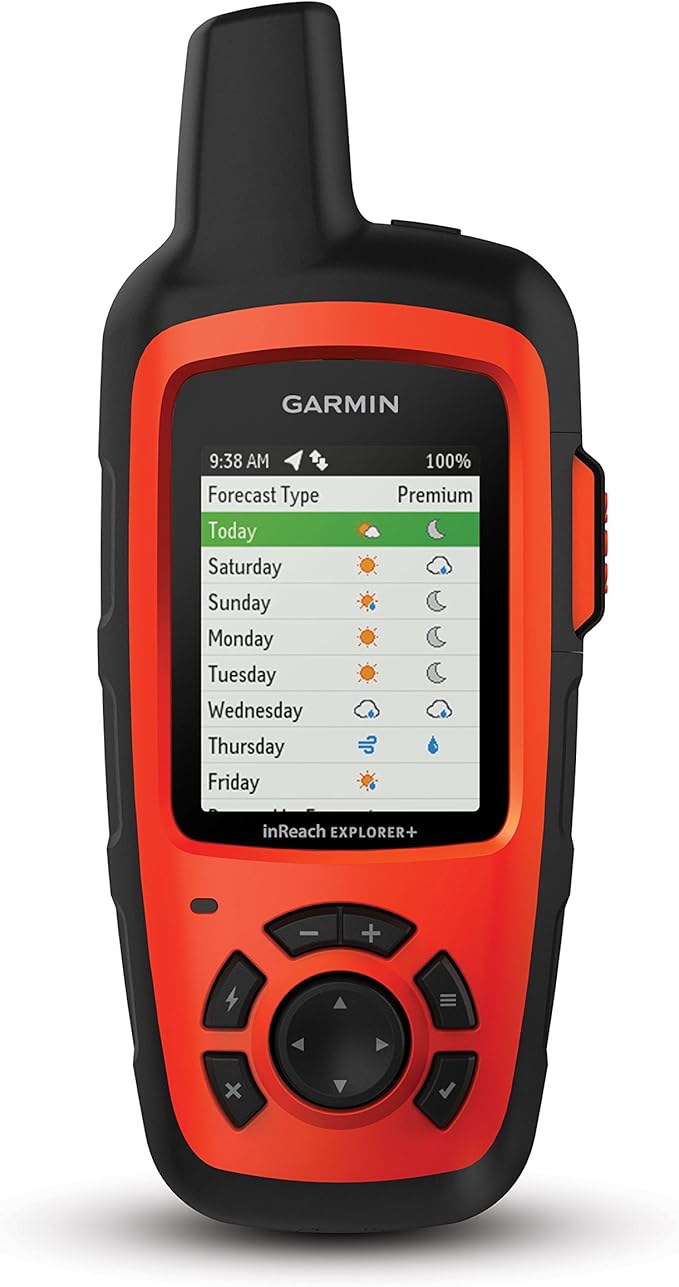
Garmin inReach Explorer+ Handheld Satellite Communicator stands out for its global two-way satellite messaging, making it ideal for hunters needing reliable communication off the grid. It shines in safety with an SOS feature that connects directly to a 24/7 search and rescue center and offers detailed GPS tracking and mapping tools for outdoor navigation.
Setting it up involves pairing with a smartphone through the Earthmate app, which unlocks downloadable maps and US NOAA charts. Carrying it daily means relying on the on-screen GPS routing, digital compass, altimeter, and accelerometer to find your way through tough terrain.
Texts get sent via Iridium satellites, covering any location globally, crucial for staying connected during extended hunts.
Performance delivers what’s expected from a serious handheld satellite communicator, with reliable global coverage and solid location tracking. Construction feels durable and water-resistant to IPX7 standards, with a comfortable grip and easy button controls. Most users praise the consistent satellite signal, though some mention the screen resolution could be higher for better detail and visibility.
Consistent satellite connectivity and reliable SOS functionality stand out as the strongest features. Some users find the screen’s resolution somewhat lacking, which can make detailed map reading harder, especially in bright conditions. The device is well-built for outdoor use, including a solid battery life that supports extended trips.
Those needing dependable global messaging and emergency communication will appreciate this device. Hunters looking for detailed maps and navigation tools in the wilderness will benefit most, while anyone wanting a higher-resolution screen or no ongoing subscription costs might want to consider alternatives.
Pros
- 100% global Iridium satellite coverage
- SOS alerts to 24/7 rescue center
- Preloaded Delorme topo maps
- Water-resistant rating of IPX7
Cons
- Screen resolution limited to 200 x 265 pixels
- Requires active satellite subscription for messaging
| Specification | Details |
|---|---|
| Battery Average Life | 30 hours |
| Screen Size | 2.3 inches |
| Connectivity Technology | Bluetooth |
| Water Rating | IPX7 |
| Map Types | North America |
12. Garmin Montana 700i GPS Handheld with inReach

Using it feels sturdy and reliable, perfect for anyone spending serious time outdoors tracking or hunting. The biggest strength lies in its tough build combined with a large, easy-to-see 5” touchscreen, which makes navigation and map reading comfortable even in bright daylight.
Setup is straightforward, with routable topo maps and multiple satellite systems helping you get accurate positioning quickly. The touchscreen responds well, although it’s resistive type, so it’s better suited for gloves or stylus use. The device includes ABC sensors for altitude, barometric pressure, and compass, all handy during daily trips.
Satellite messaging capability keeps you connected even when you’re out of cellular coverage.
Accuracy and durability stand out; the unit feels solid and can take rough treatments outdoors. Routable maps and BirdsEye satellite imagery give clear guidance for routes.
The strongest praise centers on reliable two-way satellite communication, while a common complaint is the resistive touchscreen not being as smooth or sensitive as modern capacitive types. Battery life at 18 hours is good but requires monitoring on extended trips.
Reliable two-way satellite communication stands out as the device’s main strength, allowing users to stay connected anywhere worldwide. The resistive touchscreen, while durable, is the most frequent gripe and can feel less responsive compared to newer touch technologies.
Ideal for hunters and outdoor professionals needing a tough, feature-packed GPS with safety messaging. Those prioritizing a smoother touchscreen experience might consider alternatives with capacitive displays, though they may sacrifice some ruggedness or satellite capabilities.
Pros
- Rugged military-grade construction for tough environments
- Large 5” touchscreen for easier map reading
- Two-way satellite messaging via Iridium network
- Accurate ABC sensors for better situational awareness
Cons
- Resistive touchscreen less responsive than capacitive screens
- Requires active satellite subscription for full communication features
| Specification | Details |
|---|---|
| Screen Size | 5 inches |
| Battery Average Life | 18 hours |
| Connectivity Technology | ANT+, USB, high speed micro USB |
| Additional Features | Routable Topo Maps; Multiple GNSS Networks, ABC Sensors; inReach Satellite Communication; BirdsEye Satellite Imagery |
| Display Type | WVGA Transflective, Dual Orientation |
Best GPS Radio Hunting Devices Comparison Table
| Product | Battery Life | Screen Size | Channels / Range | Water Resistance |
|---|---|---|---|---|
| Garmin Rino 750t Radio | 18 hours | 3 inches | – | – |
| Garmin inReach Mini 2 | 336 hours | 1.27 inches | – | – |
| Garmin Rino 750 GPS Radio | 14-18 hours | 3 inches | – | – |
| Retevis EZTalk 5 Radio | – | – | 30 / 4 mile | Waterproof |
| Garmin eTrex 22x GPS | 25 hours | 2.2 inches | – | – |
| Garmin GPSMAP 65 GPS | – | 2.6 inches | – | – |
| Midland GXT1050VP4 Radios | – | – | 50 / 36 mile | Water Resistant |
| TIDRADIO TD-H9 Radio | 72 hours | – | 199 / – | Water Resistant |
| BAOFENG UV-25 PLUS Radio | – | – | 999 / 15 mile | Not Water Resistant |
| Garmin Alpha 300i TT25 | – | – | – | – |
| Garmin inReach Explorer+ | 30 hours | 2.3 inches | – | – |
| Garmin Montana 700i GPS | – | 5 inches | – | – |
- Battery Life18 hours
- Screen Size3 inches
- Channels / Range–
- Water Resistance–
- Battery Life336 hours
- Screen Size1.27 inches
- Channels / Range–
- Water Resistance–
- Battery Life14-18 hours
- Screen Size3 inches
- Channels / Range–
- Water Resistance–
- Battery Life–
- Screen Size–
- Channels / Range30 / 4 mile
- Water ResistanceWaterproof
- Battery Life25 hours
- Screen Size2.2 inches
- Channels / Range–
- Water Resistance–
- Battery Life–
- Screen Size2.6 inches
- Channels / Range–
- Water Resistance–
- Battery Life–
- Screen Size–
- Channels / Range50 / 36 mile
- Water ResistanceWater Resistant
- Battery Life72 hours
- Screen Size–
- Channels / Range199 / –
- Water ResistanceWater Resistant
- Battery Life–
- Screen Size–
- Channels / Range999 / 15 mile
- Water ResistanceNot Water Resistant
- Battery Life–
- Screen Size–
- Channels / Range–
- Water Resistance–
- Battery Life30 hours
- Screen Size2.3 inches
- Channels / Range–
- Water Resistance–
- Battery Life–
- Screen Size5 inches
- Channels / Range–
- Water Resistance–
How to Choose the Right GPS Radio for Hunting
Choosing a good GPS radio for hunting depends on factors like signal range, battery life, and durability. These features ensure reliable communication and long use during outings, preventing costly replacements or lost gear. Prioritizing the right specifications helps avoid frustration and saves money over time.
Signal Range and Accuracy
Finding the exact location of game or tracking a group in dense woods can fall apart without solid signal strength and precision. Devices with a wider signal range, often exceeding 5 miles in open areas, make it easier to stay connected while navigating remote terrain or dense forests.
Signal accuracy also plays a huge role; a GPS that can pinpoint locations within a few meters helps avoid wasted time searching in the wrong spots.
Terrain and weather frequently interfere with signal quality. Heavy canopy cover, steep hills, and stormy conditions may cause brief drops or less accurate readings. Choosing a model designed to maintain consistent performance despite these challenges prevents frustration and increases the reliability of tracking in real conditions.
Battery Life and Power Options
Battery life is critical during multi-day hunts or long sessions without access to power. Devices offering at least 12 to 20 hours of continuous use and several days on standby avoid running out of juice unexpectedly.
Rechargeable batteries are convenient but having the option to pop in replaceable AA or AAA batteries keeps the radio working when you can’t access a charger.
Features like automatic power-saving modes extend uptime by reducing drain when idle. Charging options such as USB ports compatible with portable power banks add flexibility for recharging in the field. Balancing battery capacity with weight and size is important to prevent carrying unnecessary bulk.
Durability and Weather Resistance
Dropping a radio onto rocks or wet ground is almost guaranteed in hunting environments. Radios built from tough plastics or rubberized materials tend to survive these impacts better, protecting internal components. Look for devices with water resistance ratings like IPX7 to stay operational in rain or accidental submersion.
Dustproof designs keep fine dirt and grit from causing malfunctions over time. Some models also tolerate wide temperature ranges, ensuring electronics don’t fail if mornings are freezing but midday heats up. Durability extends the life of the radio and reduces frustration with breakdowns on crucial days.
Audio Clarity and Volume Control
Clear audio is essential when background noise from wind, brush, or gunshots can drown out critical messages. Radios with high-quality speakers and microphones improve the chances of understanding each other without asking for repeats.
Volume controls allowing fine adjustment let users lower sound to avoid startling nearby game or raise it in windy conditions.
Two-way communication depends on clarity; muffled or distorted sound leads to missed directions and wasted time. Radios with noise-canceling features or directional microphones provide better audio performance in challenging environments.
User Interface and Ease of Use
Wearing gloves and hunting in low light are common, so buttons and controls must be sizable and tactile. Complex menus slow down operation and distract from tracking, making simple, intuitive interfaces a necessity. Key functions should be accessible with minimal button presses to ensure quick responses.
Display readability outdoors varies with lighting; screens that remain clear under bright sunlight or activate backlights for dark conditions improve usability. Having well-labeled buttons and straightforward navigation prevents fumbling when focus is on the hunt.
Optimizing GPS Radio Settings for Enhanced Hunting Accuracy
Most GPS radios for hunting come with adjustable settings that directly affect tracking accuracy and battery life. Setting the update rate to once every 5 to 10 seconds strikes a balance between precise location data and preserving power.
Enabling waypoint alerts also helps hunters stay aware of critical spots without constantly looking at the device. Some models allow customization of map details, which can reduce screen clutter and make it easier to focus on relevant terrain features. Another practical adjustment is setting the communication channel according to local regulations and terrain conditions to maintain clear and consistent signals.
Understanding these basic settings can improve the overall hunting experience by providing reliable location updates and better coordination with hunting companions.
Essential Maintenance Tips to Prolong Your GPS Radio’s Lifespan
Keeping a GPS radio in good condition requires regular care beyond just charging it. Wiping the screen and buttons with a soft, damp cloth removes dirt and sweat that can interfere with controls. Make sure to check the battery contacts for corrosion or debris, especially if the radio has been exposed to moisture.
Storing the device in a padded case helps avoid damage from drops or impacts during hunting trips. Periodically updating the device’s firmware is essential to fix bugs and improve performance.
Avoid exposing the radio to extreme temperatures, which can degrade the battery faster. Following these simple maintenance steps can extend the functional life of a GPS radio, ensuring it remains reliable over multiple hunting seasons.
Comparing GPS Radios with Traditional Hunting Navigation Tools
GPS radios offer distinct advantages over traditional hunting navigation tools, such as compasses and paper maps. Unlike a compass, GPS radios provide real-time tracking of location with detailed maps that include topographical data, which helps in identifying specific hunting zones and natural features.
Traditional maps require constant manual reading and interpretation, increasing the chance of errors in unfamiliar terrain. Radios with GPS also allow communication between hunters over distances, an option unavailable with just a compass. However, traditional navigation tools don’t rely on batteries and can be more reliable in remote areas without satellite coverage.
Many hunters carry both to combine the reliability of analog tools with the precision and convenience of digital navigation.
People Also Asked
How Do I Properly Care for a GPS Radio Hunting Device?
Keep the GPS radio dry and store it in a protective case when not in use. Cleaning the screen gently with a soft cloth helps maintain visibility during hunting trips.
What Size GPS Radio Is Ideal for Hunting Trips?
A compact and lightweight GPS radio, roughly palm-sized, works best for carrying in a hunting vest or pocket without bulk. Smaller devices are easier to manage while on the move.
Are GPS Radios Safe to Use for Hunting Outdoors?
Those radios are generally safe outdoors as they use low-power signals to communicate, posing minimal health risks. Always follow manufacturer guidelines about device use near other electronics.
How Long Does a Typical GPS Radio Battery Last?
Battery life typically ranges from 10 to 20 hours depending on model and how often the radio transmits. Carry extra batteries or a portable charger for extended trips to avoid losing signal.
What Common Problems Should I Expect with GPS Radios?
Common issues include signal loss in dense forest or steep terrain, battery drain in cold weather, and occasional syncing errors. Regularly updating the device software can reduce glitches during use.
Conclusion
Accuracy, battery life, and ease of use are the key factors to consider when picking a GPS radio for hunting. A device that provides clear location data without frequent need for recharging will save time and frustration. Controls should be straightforward to operate in the field, especially when wearing gloves or managing other gear.
Choose a model that fits your hunting habits and budget, whether that means something compact for occasional use or a rugged unit for frequent trips. Check the comparison table and detailed reviews above to match features and prices with your specific needs before making a decision.