Top 12 Best Knife Blog You Can’t Miss Right Now!
Anyone who cooks regularly knows the frustration of working with a dull or poorly balanced knife. The best knife blog offers insights to avoid mistakes like choosing blades that won’t hold an edge or handles that slip during use.
A cheap knife can ruin food prep and even lead to accidents, so it’s important to rely on advice that focuses on practical performance and durability.
A good knife blog highlights the importance of blade steel quality, such as high-carbon stainless steel which balances sharpness with rust resistance. Handle ergonomics also matter; a comfortable grip reduces hand fatigue during chopping. Blade length around 8 inches suits most kitchen tasks, while ease of sharpening and cleaning should be stressed since knives dull faster with daily use and improper care.
Need a Quick Check?
| Image | Product | Price |
|---|---|---|
Our Top Picks 1  | Cutluxe Brisket Knife | Check Price |
Our Top Picks 2  | Damascus VG10 Chef Knife | Check Price |
Our Top Picks 3  | imarku Santoku Knife | Check Price |
Our Selected Top 12 Knife Blog for Different Needs
This list features a variety of knives tailored to different uses and preferences. Each review explains how the knife performs, identifies the ideal user, and highlights its strengths and weaknesses to help readers make informed decisions.
1. Cutluxe Brisket Carving Knife 12
Carving large cuts of meat like brisket or turkey requires a knife that glides through without tearing or crushing. Cutluxe Brisket Carving Knife 12 is made for serious cooks who want a razor-sharp blade that slices precisely and a handle designed for secure, comfortable control.
It shines in turning big roasts into neat, consistent slices.
Setting up the knife is straightforward, no special prep needed beyond a quick wash. The hand-sharpened Granton blade edge cuts smoothly and reduces drag, making it easier to carve meat on busy cooking days.
Its ergonomic pakkawood handle feels solid and comfortable in hand, giving you good leverage for steady slicing without slipping.
Cutting through brisket or ribs happens with surprising ease thanks to the fine 14-16 degree blade edge that keeps sharp longer than typical knives. The full tang design adds useful balance and stability while handling.
The most frequent praise points to its sharpness and smooth slicing. The few complaints mention it requires careful hand washing to keep the polished pakkawood handle in good condition.
Sharpness stands out as the best feature, delivering clean, precise cuts on large meat pieces, which makes carving easy and satisfying. The main drawback noted is the need to hand wash carefully since moisture and harsh cleaning can dull the pakkawood handle’s polish over time.
Anyone who cooks whole brisket, roasts, or large cuts of meat regularly will appreciate how the knife balances sharpness with control. Those looking for a dishwasher-safe option or a low-maintenance handle might want to explore different knives with synthetic handles instead.
Pros
- Razor-sharp Granton blade reduces slicing drag
- Ergonomic, triple-riveted pakkawood handle for safety
- Full tang for solid balance and maneuverability
- Well-suited for brisket, turkey, and roast carving
Cons
- Handle requires gentle cleaning to maintain finish
- Blade sharpness demands careful handling and storage
| Specification | Details |
|---|---|
| Brand Name | Cutluxe |
| Model Number | ART-SLC-12-1 |
| Blade Edge | Hand sharpened 14-16 degrees per side |
| Handle Material | Luxury pakkawood, triple-riveted |
| Item Type Name | Carving knife |
2. Japanese Damascus VG10 Chef Knife 8
VG-10 steel core offers excellent sharpness and makes this knife great for anyone needing precision in the kitchen. It suits both professional chefs and home cooks who want a durable, sharp blade that stays rust-free thanks to its Damascus cladding.
Setup is straightforward with just the chef knife included in the package. Its 8-inch blade with 67 layers of Damascus steel adds both beauty and strength, while the stain resistance keeps maintenance low.
Handling is balanced and comfortable, so chopping meat, fish, or vegetables feels controlled and smooth day to day.
Cutting performance is precise and sharp right out of the box, thanks to hand-sharpening with traditional Japanese methods. The blade maintains its edge longer than many typical kitchen knives.
Most users praise its durability and attractive pattern, though some point out the knife can feel a bit heavy for extended use.
Highly praised for its lasting sharpness and aesthetic appeal with its detailed Damascus layers, the knife receives positive notes for exceptional cutting precision. However, some find the weight a challenge during prolonged chopping sessions.
People who value sharpness and visual design alongside durability will appreciate this knife. Those seeking a lighter option or a set with sheath may want to explore alternatives.
Pros
- Razor-sharp edge out of the box
- Stylish rust-resistant Damascus pattern
- Maintains sharpness longer than usual
- Comfortable and balanced handle
Cons
- Can feel heavy with long use
- Only one knife included, no sheath
| Specification | Details |
|---|---|
| Brand Name | Atumuryou |
| Model Number | AT8101-US02 |
| Manufacture Year | 2025 |
| Blade Material | VG-10 Steel Core with 67-layer Damascus Cladding |
| Included Components | Chef Knife (1 Count) |
3. Imarku Santoku Chef Knife 7
Anyone who spends serious time cooking will appreciate a knife that handles everything without fuss. Suitable for home cooks and restaurant kitchens alike, it excels at making precise cuts thanks to its sharp edge.
Its standout feature is the high-quality Japanese high carbon stainless steel that keeps it sharp and corrosion-resistant.
Setting this knife up in the kitchen means having a versatile tool ready for chopping, slicing, dicing, and mincing a variety of foods from vegetables to bread. It’s a comfortable fit in hand, with a balanced feel that reduces fatigue during longer meal prep sessions.
Cleaning is straightforward, and the durable steel means it will resist staining or rusting through regular use.
The edge holds up well under repeated cutting tasks, carving through ingredients cleanly with minimal effort. Its 2.5mm thickness strikes a balance, you get a sharp blade sturdy enough for tougher jobs but still nimble for delicate slicing.
The strongest point noted is its sharpness being able to endure restaurant-level demands. A common downside is that users need to keep the blade well-maintained to enjoy peak performance.
The knife’s sharpness is often praised for lasting through rigorous kitchen use, making food prep easier and more precise. On the other hand, keeping the blade in top condition means routine care and sharpening, which some might find demanding. Its quality steel helps maintain sharpness and appearance over time.
Those who value a sharp, reliable knife for daily cooking tasks will find this a solid choice. Anyone needing a tool for heavier chopping or very hard materials may want to consider something thicker or with a heavier blade.
Pros
- Sharp edge designed for professional use
- Resists rust, corrosion, and discoloration
- Suitable for various kitchen tasks
- Comfortable and balanced in hand
Cons
- Blade requires regular maintenance for best sharpness
- Not ideal for heavy-duty chopping of very hard items
| Specification | Details |
|---|---|
| Blade Thickness | 2.5mm |
| Material | Japanese high carbon stainless steel |
| Brand Name | imarku |
| Included Components | 1 piece santoku knife |
| Model Number | I-KSK0064DB |
4. Imarku Japanese Gyutou Chef Knife 8

High-carbon stainless steel sets this 8-inch Japanese Gyutou chef knife apart, making it tougher than many others in its class. It suits anyone looking for a versatile kitchen tool that handles everything from delicate slicing to tougher chopping and cutting meat off bones without losing sharpness.
Daily use involves little fuss due to the ergonomically designed handle that fits comfortably in hand. The blade’s hardness means it holds an edge with regular sharpening, while still being manageable for everyday kitchen prep.
Cleaning is straightforward given the stainless steel, and weight feels balanced, so it doesn’t tire your wrist during longer sessions.
Performance stands out with a Rockwell Hardness Scale rating of 56-58, making it solid enough to stay sharp through varied tasks like dicing and boning. The high carbon content boosts blade strength, though some mention the knife can require care to avoid chipping. Sturdy construction provides confidence, but the blade profile may feel slightly different compared to Western-style knives.
The blade’s high carbon content and hardness deliver lasting sharpness that handles a range of cutting jobs well. Common feedback notes that the knife requires careful use to avoid chipping the edge, suggesting it’s best for users who understand blade care.
Anyone seeking a versatile, tough knife for professional or serious home cooking will appreciate this. Those preferring a softer or more forgiving blade, or looking for a classic Western-style profile, might want to explore other options.
Pros
- Extremely hard steel blade for long-lasting sharpness
- Multipurpose cutting, slicing, dicing, and boning capabilities
- Ergonomic handle offers comfortable grip during extended use
- Stainless steel resists rust and simplifies cleaning
Cons
- Blade edge can chip if mishandled
- Profile differs from typical Western chef knives
| Specification | Details |
|---|---|
| Brand Name | imarku |
| Model Number | 8-inch chef knife |
| Manufacturer Part Number | SC10-01 9inch |
| Included Components | 1 pc chef knife |
| Unit Count | 1 Count |
| Material | High-Carbon Stainless Steel (0.6-0.75% carbon) |
5. PAUDIN Chef Knife 8 High Carbon Stainless Steel

PAUDIN Chef Knife 8 High Carbon Stainless Steel suits both home cooks and professionals, standing out for its sharpness. It works well across tasks from slicing vegetables to filleting meat, making kitchen work feel straightforward and precise.
Getting started means just holding its ergonomic handle that fits comfortably for extended use. Day-to-day chopping, dicing, and mincing feel steady thanks to balanced weight and sharpness that doesn’t fade quickly. The knife’s versatility covers bread, meat, and various veggies without needing to switch tools frequently.
Performance is sharp and consistent, making cutting tasks smooth and controlled. Built with high carbon stainless steel, it resists dulling and holds an edge well.
Praise often highlights its sharp blade and comfortable grip. The most common downside mentioned is that some find the balance slightly heavy for delicate work.
The blade maintains sharpness well, making it reliable for consistent chopping and slicing. Some users find the knife’s weight a bit much for detailed or fine cutting tasks.
Kitchens with varied prep work benefit from this knife’s versatility, especially users handling meats and vegetables regularly. Those needing ultra-light knives for precise, delicate cuts may prefer a lighter option.
Pros
- Ultra sharp edge for precise cutting
- Ergonomic handle for comfortable grip
- Sturdy high carbon stainless steel blade
- Versatile use on meats and vegetables
Cons
- Heavier than some prefer for delicate tasks
- Warranty description contains a typo (“moths” instead of months)
| Specification | Details |
|---|---|
| Brand Name | PAUDIN |
| Item Type Name | Chef Knife – PAUDIN Pro Kitchen Knife 8 Inch Chef’s Knife N1 German High Carbon Stainless Steel Knife with Ergonomic Handle |
| Model Number | N1-Chef Knife |
| Unit Count | 1 Count |
| Included Components | PAUDIN Chef Knife 8 inch-Chefs Knife Professional, Super Sharp Kitchen Knives |
| Manufacturer Warranty Description | 24 moths warranty as standard |
6. Huusk Viking Japanese Butcher Knife

Feels balanced and solid in hand, fitting nicely for those who spend time prepping meat and vegetables. Suited for home cooks and pros alike, it shines with its sharp edge and strong build that makes slicing feel precise and controlled.
Setup involves noticing the balanced weight and 11-inch overall length, with the 5.12-inch ergonomic handle designed to reduce hand fatigue. Daily use covers everything from cutting thick meat to dicing vegetables, making it versatile in a busy kitchen. Easy grip and blade length work well for various chopping tasks.
Performance is sharp and reliable thanks to premium Japanese steel, holding edges longer than many knives in this size range. The sturdiness gives confidence during tougher jobs, though some users mention it can feel a bit heavy for delicate tasks.
Built with a solid handle and carefully crafted blade, it performs well across many kitchen needs.
The knife receives strong praise for its sharpness and sturdy feel, making slicing straightforward and reliable every day. The most common downside noted is its weight, which some find a little much during extended or delicate work.
Great for those who cook meat and vegetables frequently and want a reliable, all-purpose knife. Not the best choice for users needing something extremely lightweight or specialized for fine cutting tasks.
Pros
- Sharp edge lasts through multiple uses
- Balanced weight feeling good in hand
- Durable premium Japanese steel construction
- Versatile blade for various kitchen tasks
Cons
- Heavier blade may tire hand in precise tasks
- Not ideal for very delicate cutting
| Specification | Details |
|---|---|
| Handle Length | 5.12 inches |
| Blade Length | 5.9 inches |
| The total length of the knife is 11 inches. | |
| Brand Name | Huusk |
| Model Number | HK-KK-006b |
| Unit Count | 1 Count |
7. Matsato Chef Knife 6.3

Sharp and well-balanced, the Matsato Chef Knife 6.3 suits home cooks looking for a versatile and precise kitchen tool. Its standout feature is the sharp edge forged from Japanese stainless steel, offering reliable slicing, chopping, and cutting for daily cooking tasks.
Using the knife every day feels comfortable due to its balanced weight and solid handle, which give good control when prepping meat, vegetables, or herbs. The 6.3-inch blade fits nicely in hand and handles a range of kitchen jobs without feeling cumbersome or tiring.
The knife performs well with clean, accurate cuts thanks to the quality Japanese steel blade. It has a sturdy build that supports everyday use from simple slicing to BBQ prep. The main praise focuses on its sharpness and control, while some users mention the handle might feel heavy for very light tasks.
The knife is praised for its sharp edge and precise control, making chopping and slicing straightforward. Some find the handle’s weight a bit much when working on smaller or delicate items, which may affect those preferring ultra-light knives.
People who want a dependable, everyday kitchen knife that handles various foods well will appreciate this one. Those needing something lighter or part of a set might want to explore other options.
Pros
- Sharp edge for precise cutting
- Balanced weight for better control
- Solid handle feels secure
- Compact 6.3-inch blade size
Cons
- Handle can feel heavy for light tasks
- No additional components included
| Specification | Details |
|---|---|
| Brand Name | Matsato |
| Set Name | 6.3″ – Chef Knife |
| Model Number | Matsato |
| Blade Length | 6.3 in (16 cm) |
| Material | Japanese stainless steel |
| Number of Items | 1 |
8. Emojoy Damascus Chef Knife 8
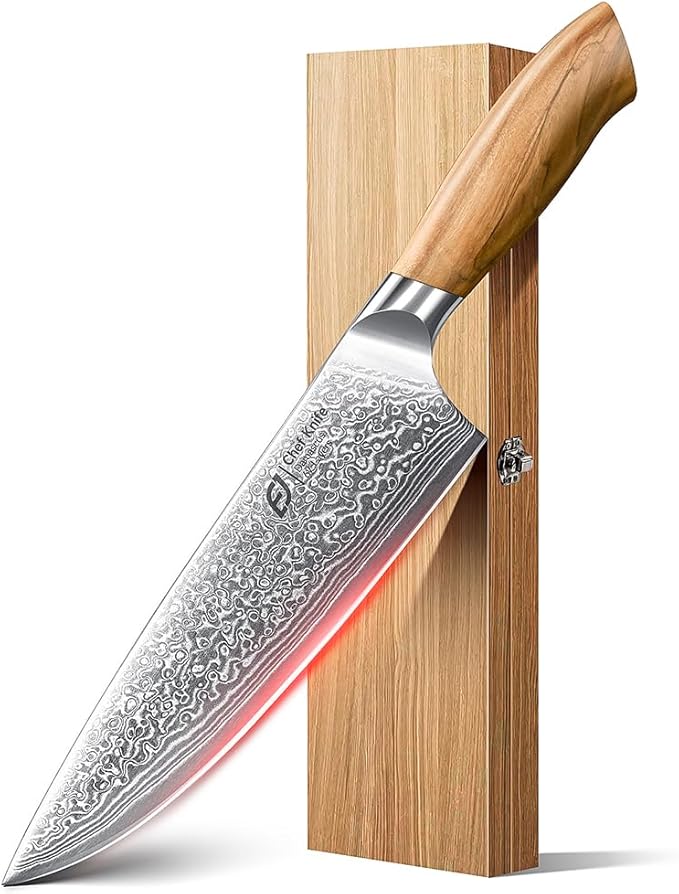
67-layer Damascus steel forms the heart of this chef knife, crafted with a mix of carbon and chromium for toughness and rust resistance. Its standout quality is the balanced sharpness, making it a fine tool for home cooks or pros who want precision cutting and durability in one blade.
Handling the knife is satisfying right from the start, thanks to its 15° laser-controlled edge that slices through ingredients smoothly. Regular chopping, dicing, or slicing feels natural, and the knife stays sharp longer because of the hard steel.
The blade’s layered Damascus pattern isn’t just for looks, it helps prevent rust and keeps the knife looking good with regular care.
Cutting performance is excellent, with the blade easily handling a variety of foods without slipping or dragging. Its construction by skilled blacksmiths ensures it holds an edge well and is strong enough for daily kitchen tasks. Some mention the handle could be more ergonomic, which might affect comfort during long prep sessions, but the build quality is generally praised for lasting sharpness and wear resistance.
This chef knife is praised for holding a sharp edge and cutting through tasks cleanly because of its hard, layered Damascus steel. The most common issue noted involves the handle comfort, which might not suit those working long hours in the kitchen.
People seeking a dependable, sharp knife with good rust resistance will find this a suitable choice. Those prioritizing ergonomic grips for extended use might prefer to explore other options designed with comfort in mind.
Pros
- 67-layer Damascus steel for durability
- Sharp 15° edge from laser precision
- Rust-resistant blade design
- Hardness rating of 58HRC for wear resistance
Cons
- Handle ergonomics could be improved
- May require careful cleaning to maintain appearance
| Specification | Details |
|---|---|
| Brand Name | Emojoy |
| Model Number | KC-KS61 |
| Steel Composition | 0.98% carbon & 18% chromium |
| Blade Hardness | 58HRC |
| Edge Angle | 15° |
9. HOSHANHO Nakiri Japanese Chef Knife 7
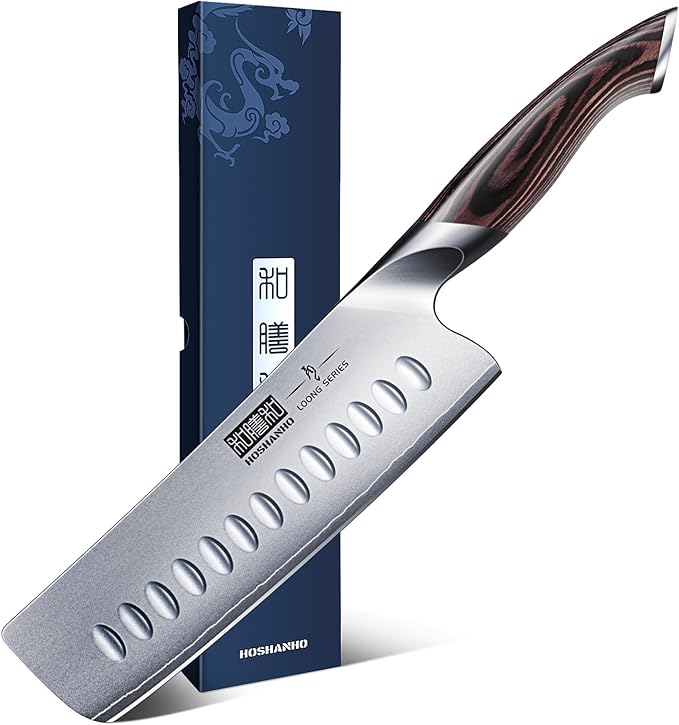
Sharpness stands out right away with this 7 inch Nakiri knife crafted for precision chopping and slicing. It caters well to those who want a lightweight, expertly hand-polished blade designed for smooth cutting in vegetable prep. Its biggest strength lies in maintaining a razor edge that glides through food with minimal effort.
Out of the box, the knife feels perfectly balanced with a manageable size that’s ideal for daily kitchen tasks. The high carbon stainless steel holds up against heavy use without dulling quickly.
It’s easy to clean after each use, and the hand-polished 15 degree edge makes slicing thin pieces and chopping firm vegetables smoother and less tiring.
Slicing performance is excellent thanks to the hard 60HRC blade after vacuum heat treatment, ensuring long-lasting sharpness. The high carbon steel construction supports durability, maintaining its like-new condition despite frequent use.
Most praise focuses on the edge retention and weight balance. Some find the blade a bit narrow for bigger chopping jobs.
The blade’s sharpness and ability to stay like new impress many in everyday kitchen work. Some users mention the narrow blade limits use for larger chopping tasks. Cleaning and handling feel straightforward, thanks to the balanced design and quality steel.
Perfect for cooks who focus on vegetable prep requiring precision and sharpness. People needing a broader blade or heavier cleaver-like knife might prefer other options better suited for tough chopping jobs.
Pros
- Hand-polished ultra sharp blade
- Maintains sharp edge with heavy use
- Balanced for easy handling
- 7 inch size ideal for precise cutting
Cons
- Blade width may be narrow for some tasks
- Not designed for heavy-duty chopping
| Specification | Details |
|---|---|
| Blade Material | Japanese 10Cr15CoMoV high carbon stainless steel |
| Blade Hardness | 60HRC after vacuum heat treatment |
| Blade Length | 7 inch |
| Edge Angle | 15 degree edge |
| Unit Count | 1 Count |
10. Japanese Damascus VG10 Chef Knife 8

Offering a striking balance of sharpness and durability, the Japanese Damascus VG10 Chef Knife 8 suits serious home cooks or culinary pros who want a reliable workhorse. Its detailed 67-layer damascus steel construction not only looks great but also resists wear better than standard knives, making it worth the extra investment.
Handling feels natural thanks to the full tang design that evenly balances the blade and handle. From chopping vegetables to slicing meats, the ultra-sharp 10-12° razor edge cuts cleanly and precisely. Its resistance to corrosion means it stays looking sharp and requires less frequent sharpening compared to other kitchen knives.
The VG10 core steel maintains sharpness well, letting you slice through ingredients with minimal effort. The build quality, highlighted by the damascus pattern, adds toughness for demanding kitchen prep. Some find the blade slightly heavier than typical knives, which might take some getting used to, but most appreciate its sturdiness and grip comfort.
The razor-sharp edge paired with tough damascus steel is often praised for cutting performance and durability. A common drawback noted is the knife’s weight, which might feel a bit much during extended use.
Those who value long-lasting sharpness and design will appreciate this knife, especially in heavy cooking tasks. Casual cooks looking for something lighter may prefer a simpler, less hefty blade.
Pros
- Resists corrosion and dulling effectively
- Balanced full tang for stable handling
- Sharp VG10 core steel edge
- Unique and attractive damascus pattern
Cons
- Blade weight can feel heavy for some
- Requires careful maintenance to preserve sharpness
| Specification | Details |
|---|---|
| Brand Name | Sunnecko |
| Model Number | Sonne-ABS-S-8IN |
| Knife Length | 8 inch |
| Blade Material | 67-Layer Damascus Steel |
| Edge Angle | 10-12° Razor Edge |
| Unit Count | 1 Count |
11. Huusk Japanese High Carbon Carving Knife

Carving large cuts of meat can be tough without a proper knife that stays sharp and comfortable during long use. Designed for serious home cooks and pros alike, this Japanese high carbon knife stands out for its sharp edge retention and sturdy balance, making slicing brisket or turkey a smoother task.
Holding the knife right feels natural thanks to its ergonomic handle, which fits securely and stays steady when working with big roasts. The full-tang design adds stability, so you don’t have to worry about the blade wobbling or the handle loosening after regular use. You won’t need any special setup; a quick sharpen now and then keeps it ready.
The blade, forged using traditional Japanese methods, offers strong resistance to rust and maintains an edge through heavy carving tasks. It slices cleanly, cutting through thick meat with less effort. The main praise is for its sharpness and balanced grip.
Some find the handle size a bit small for bigger hands.
The knife is praised for holding its edge and providing a solid, balanced grip. The most common concern is the handle size, which some find too small for their hands during extended use.
People looking for a sharp, reliable carving knife with good balance will appreciate this one. Those needing a larger handle for comfort might want to consider other options.
Pros
- Sharp edge keeps well over time
- Ergonomic handle offers secure grip
- Blade resists rust naturally
- Full-tang construction adds balance
Cons
- Handle may feel small for large hands
- Requires occasional careful sharpening
| Specification | Details |
|---|---|
| Brand Name | Huusk |
| Number of Items | 1 |
| Unit Count | 1 Count |
| Material | Japanese high carbon steel |
12. Huusk Japanese Butcher Knife Set Of 3

Sharpness and versatility stand out with the Huusk Japanese Butcher Knife Set of 3, made for anyone who needs solid cutting tools in the kitchen or outdoors. The set covers everything from smashing bones to precision vegetable dicing, making it ideal for both serious cooks and backyard BBQ fans.
Getting the knives ready for use is straightforward; no complicated setup is needed. The 6.2 butcher and chef’s knives handle tough tasks while the 5.9 viking knife offers fine control for detailed work.
The hand-hammered finish keeps food from sticking, cutting down on cleanup annoyance after prepping meals or camping food.
Made from high quality Japanese steel and hammered by hand, these knives hold their edge well and feel sturdy during use. The strongest praise is for their sharpness and ability to manage heavy-duty chopping. The most common complaint revolves around the knives’ weight, which some find a bit heavy for delicate cutting or long sessions.
The sharpness and durability receive consistent praise, making it reliable for tough kitchen jobs and outdoor cutting. Weight is a frequent point of feedback, with some finding these knives less comfortable for light or extended use. The hand-forged blades stand out visually and practically in the way they hold their edge well.
Those who face heavy chopping or want a range of cutting options in one set will appreciate these knives. People seeking very lightweight knives for delicate, prolonged prep might want to look for alternatives better suited for fine control over long periods.
Pros
- Three knives covering heavy to precise cutting
- Hand-forged Japanese steel for good edge retention
- Hammered finish reduces food sticking
- Suitable for kitchen, BBQ, and camping use
Cons
- Weight can feel heavy during prolonged use
- No additional components included in the set
| Specification | Details |
|---|---|
| Set Name | Butcher Knife Set of 3 |
| Number of Items | 3 |
| Model Number | MDX-GJ |
| Manufacturer | Huusk |
| Blade Lengths | 6.2″ butcher, 6.2″ chef’s, 5.9″ viking |
Comparison of Top Knife Blogs Reviewed
| Product | Brand | Item Type | Unit Count | Included Components |
|---|---|---|---|---|
| Cutluxe Brisket Knife | Cutluxe | carving knife | 1 | – |
| Damascus VG10 Chef Knife | Atumuryou | chef knife | 1 | chef knife |
| imarku Santoku Knife | imarku | santoku knife | 1 | 1 piece santoku knife |
| imarku Gyutou Knife | imarku | chef knife | 1 | 1 pc chef knife |
| PAUDIN Chef Knife | PAUDIN | chef knife | 1 | PAUDIN Chef Knife |
| Huusk Viking Butcher | Huusk | – | 1 | – |
| Matsato Chef Knife | Matsato | knife | 1 | knife |
| Emojoy Damascus Knife | Emojoy | – | 1 | – |
| HOSHANHO Nakiri Knife | HOSHANHO | nakiri knife | 1 | 7 inch Nakiri Knife |
| VG10 Damascus Chef | Sunnecko | chef knife | 1 | – |
| Huusk Carbon Carving | Huusk | – | 1 | – |
| Huusk Butcher Set | Huusk | butcher knife set | 3 | – |
- BrandCutluxe
- Item Typecarving knife
- Unit Count1
- Included Components–
- BrandAtumuryou
- Item Typechef knife
- Unit Count1
- Included Componentschef knife
- Brandimarku
- Item Typesantoku knife
- Unit Count1
- Included Components1 piece santoku knife
- Brandimarku
- Item Typechef knife
- Unit Count1
- Included Components1 pc chef knife
- BrandPAUDIN
- Item Typechef knife
- Unit Count1
- Included ComponentsPAUDIN Chef Knife
- BrandHuusk
- Item Type–
- Unit Count1
- Included Components–
- BrandMatsato
- Item Typeknife
- Unit Count1
- Included Componentsknife
- BrandEmojoy
- Item Type–
- Unit Count1
- Included Components–
- BrandHOSHANHO
- Item Typenakiri knife
- Unit Count1
- Included Components7 inch Nakiri Knife
- BrandSunnecko
- Item Typechef knife
- Unit Count1
- Included Components–
- BrandHuusk
- Item Type–
- Unit Count1
- Included Components–
- BrandHuusk
- Item Typebutcher knife set
- Unit Count3
- Included Components–
How to Choose the Right Knife for You
Choosing the right knife involves considering blade material, handle comfort, and intended use to ensure durability and ease of handling. Paying attention to these factors prevents frequent replacements and improves safety, ultimately saving money and reducing frustration during everyday tasks.
Content Quality
Reading a knife blog where the information feels shallow or just repeats the same brand slogans can be frustrating. The difference shows when a writer digs into blade steel types, edge geometry, and handle ergonomics with real examples from daily kitchen or outdoor use. Depth means you get more than specs; you understand how a VG10 steel holds up against high-carbon or stainless options after months of cutting.
Accuracy and clarity come through well-written tutorials with step-by-step photos or videos, not vague summaries. Reliable reviews highlight both strengths and flaws instead of glowing endorsements, making it easier to know what to expect.
Strong blogs update often to cover new models or techniques, maintaining relevance. Look for detailed posts that include:
- Exact blade dimensions and steel composition
- Clear pros and cons based on hands-on use
- Regular content updates (monthly at minimum)
Such precision saves you from wasting money on poorly suited knives.
Audience Engagement
Blogs without a way to interact feel like one-sided conversations. A section for comments or a dedicated forum lets readers exchange tips and ask about specific tools or problems. The real test is how quickly and thoroughly the blogger or staff answer questions.
This back-and-forth builds practical understanding, especially for complex topics like sharpening angles or blade maintenance.
Active engagement extends beyond the blog itself. Social media groups and regular newsletters keep the community connected and informed. They also share trending gear or seasonal advice faster than articles alone.
A strong knife blog often feels like a hub with multiple ways to participate and learn from others, creating a more meaningful and sustained experience.
Variety of Coverage
A blog focused on one type of knife or use limits learning and purchase decisions. Broad coverage including kitchen knives, pocket knives, and outdoor blades means readers find advice matched to numerous needs.
Good sites also address a spectrum of skill levels, providing clear guidance for beginners while diving into techniques and gear nuances for experts.
Maintenance and safety are often overlooked but vital topics. Videos or posts on sharpening, cleaning, proper grip, and storage make a big difference in a knife’s longevity and user safety. Practical guides here prevent common mistakes like ruining an edge or mishandling tools, which often lead to frustration or even injury.
Visual Presentation
Images or videos that clearly show a knife’s details make understanding its construction and features easier than text alone. Close-ups of the blade edge, handle texture, and locking mechanisms provide insight into quality.
Poor photos can leave you guessing about grip comfort or blade thickness, leading to bad buys.
An organized site layout is key when you want to quickly compare knives or find tutorials. Simple menus and search functions reduce the time spent hunting for info.
Useful extras include comparison charts listing blade steels, lengths, and prices side by side, helping with quick decision-making. Infographics explaining blade types or maintenance steps also clarify complex info at a glance.
Trustworthiness and Transparency
Finding out a blog gets money for recommending certain knives without telling readers can feel like a bait-and-switch. Clear disclosure of affiliate links and sponsorships builds trust. Honest bloggers distinguish their genuine opinions by openly sharing the pros and cons of all products, not just those that benefit them.
The author’s background matters too. Experience in knife craftsmanship, outdoor activities, or culinary arts reflects in the quality of reviews and advice. Blogs run by or featuring authors with years of hands-on expertise deliver insights that go beyond promotional fluff to real, actionable knowledge.
Proper Knife Maintenance and Sharpening Techniques
Keeping a kitchen knife well-maintained depends heavily on consistent sharpening and proper care. Regular honing with a steel rod helps maintain the blade’s edge by realigning small bends and nicks, which delays the need for full sharpening.
For sharpening, a whetstone is the preferred tool because it allows controlled abrasion to restore the blade’s geometry. Start with a coarse grit to reshape the edge if it’s dull, then switch to a finer grit to polish and refine it. Avoid pulling the knife directly toward you or applying uneven pressure, as this risks uneven edges and damage.
After sharpening, wash and dry the blade immediately to prevent rust spots, especially on carbon steel knives.
Key points:
- Use honing to maintain sharpness between sharpenings.
- Sharpen on a whetstone using consistent angles (usually 15-20 degrees).
- Keep the blade dry and clean after sharpening to prevent corrosion.
Safe Handling Practices to Maximize Knife Longevity
Handling knives safely extends both the lifespan of the blade and reduces injury risk. Storing knives loosely in drawers can dull the edge quickly and cause accidents.
Instead, use a magnetic strip or a dedicated knife block to keep blades separated and protected. Avoid cutting on hard surfaces like glass or stone; wooden or plastic cutting boards absorb impact and protect the edge. When washing, never put knives in a dishwasher; high heat and detergents can damage the handle and cause corrosion.
Hand wash with warm, soapy water and dry immediately.
Safe handling essentials:
- Store knives separately to prevent edge damage.
- Cut on soft surfaces to protect the blade.
- Wash and dry by hand promptly after use.
Comparing Popular Knife Types for Different Culinary Uses
Different types of kitchen knives serve specific purposes, making it important to choose the right one for your cooking needs. Chef’s knives are versatile and work well for chopping, dicing, and slicing vegetables or meats.
Paring knives excel at precision tasks like peeling and trimming fruits or small vegetables. Serrated knives are ideal for cutting bread or tomatoes where a sawing motion helps preserve the food’s shape without crushing it. Santoku knives combine qualities of a chef’s knife with a thinner blade, making them suitable for straight chopping and slicing.
Selecting the right knife improves efficiency and reduces unnecessary wear by matching blade shape and toughness with the cutting task.
Common knife types and their uses:
- Chef’s knife – all-purpose cutting and chopping.
- Paring knife – small tasks, peeling, trimming.
- Serrated knife – bread, soft-skinned produce.
- Santoku – slicing, dicing with precise cuts.
People Also Asked
How Do I Properly Care for a New Kitchen Knife?
Proper care includes hand washing the knife with mild soap and drying it immediately. Avoid dishwashers since heat and detergent can damage the blade and handle. Regularly honing the edge with a steel rod keeps the blade sharp between sharpenings.
What Size Knife Is Best for Daily Cooking Tasks?
An 8-inch chef’s knife usually suits most daily tasks from chopping vegetables to slicing meat. It balances control and versatility while fitting comfortably in most hands. Smaller knives are better for intricate work, but 8 inches covers most kitchen needs.
Are Certain Knives Safer to Use Than Others?
Knives with handles that provide a secure, non-slip grip are generally safer. A full tang blade (metal running through the handle) adds balance and reduces the chance of breaking. Using a proper cutting technique also helps prevent accidents more than just the knife model.
How Long Does a Typical High-Quality Knife Last?
A high-quality kitchen knife can last decades if properly maintained. Regular sharpening and careful handling extend its life. The blade’s material and construction quality have the biggest impact on longevity.
What Are Common Problems with Kitchen Knives and Solutions?
A common issue is dull blades, which increase slipping risks and require frequent sharpening. Rusting can occur if knives are not dried after washing; oiling carbon steel blades prevents this. Chips in the blade happen if used improperly on hard surfaces; using a wooden cutting board helps avoid damage.
Conclusion
Focus on clear photos and honest descriptions when choosing a knife blog. Look for posts that cover various blade types and maintenance tips to suit different needs. Practical advice on durability and versatility also helps in making the right choice.
Pick a blog that fits your cooking style and how often you plan to use the knives. Check the comparison table and detailed reviews above to find one that matches your budget and space. This approach will make it easier to find useful, real-world information.