Top 12 Best Long Range FFP Scope Under 1000 – Must See!
Cheap or poorly made scopes can cause frustration long before a shot is taken. A blurry or loose reticle at distance wastes time and can spoil a hunt or a precision sport shot.
Finding the best long range ffp scope under 1000 requires understanding how the first focal plane reticle behaves through magnification, which many scopes miss. Without this feature, holdover points don’t scale properly as you zoom in, making long-distance adjustments guesswork.
Durability and clarity are key. Look for scopes with at least 50mm objective lenses to gather enough light without adding too much bulk. Magnification ranges between 4-16x or 5-20x offer flexibility for different distances.
The tube should be 30mm or 1 inch depending on the mounts you have, and the reticle must be easily visible in low light. Reliable turret adjustments that hold zero through tough use are essential, along with coatings that resist fog and scratches for maintenance ease.
Need a Quick Check?
| Image | Product | Price |
|---|---|---|
Our Top Picks 1  | Celestron Regal M2 80ED | Check Price |
Our Top Picks 2  | Celestron Travel Scope 70mm | Check Price |
Our Top Picks 3  | Celestron SkyMaster 15×70 Binoculars | Check Price |
Our Selected Top 12 Long Range Ffp Scope Under 1000 Worth Considering
This list features carefully chosen long-range first focal plane scopes that balance quality and affordability. Each review highlights how the scope performs, identifies the ideal user, and outlines its key strengths and limitations to help you make an informed decision.
1. Celestron Regal M2 80ED Spotting Scope
Spotting distant targets and landscapes gets a lot clearer with this scope, fitting anyone needing a long-range optic without breaking the bank. Its biggest appeal lies in the clarity and color accuracy you get from the special ED lens, making sharp views easier on the eyes.
Setup is straightforward, thanks to the altazimuth mount which allows smooth tilt and pan movement useful for scanning wide areas. Manual focus lets you quickly dial in sharpness, and the included 20-60x zoom eyepiece adjusts easily when switching between close and far sights.
The reflex finderscope helps with fast target acquisition during active use days.
Performance meets expectations by producing crisp images with true-to-life colors, thanks to the extra-low dispersion glass and XLT coatings that boost brightness. The magnesium alloy body feels sturdy without adding unnecessary weight. What many find most impressive is the exceptional optical quality for the price.
Some notices trouble with close-focusing speed, which may slow rapid shifts in focus.
Users praise the crystal-clear images and true-to-life colors thanks to the extra-low dispersion glass and XLT coatings. A common downside is that manual focusing isn’t very fast or smooth during rapid target changes, which can slow down observation sessions.
Anyone looking for bright, sharp long-range views in a compact, sturdy package will find a lot to like here. Those who need quick focus changes or close-range viewing should consider alternatives with faster or automatic focusing features.
Pros
- Extra-low dispersion glass for sharp images
- XLT coatings improve brightness and contrast
- Wide 45-degree field of view
- Durable magnesium alloy body
Cons
- Manual focus can be slow for quick adjustments
- No close-focus enhancement for macro viewing
| Specification | Details |
|---|---|
| Eye Piece Lens Description | Multi-coated Zoom Eyepiece |
| Mount | Altazimuth Mount |
| Focus Type | Manual Focus |
| Finderscope | Reflex |
| Focal Length Description | 20-60x |
| Field Of View | 45 degrees |
2. Celestron Travel Scope 70mm Telescope
70mm aperture and fully coated glass lenses provide crisp views of the Moon, planets, and daytime scenery. Designed as a beginner-friendly telescope, it suits both adults and kids looking for a lightweight, travel-ready scope that’s easy to carry and use anywhere.
Setup takes just minutes with no tools required, thanks to the full-height tripod and simple manual focus. The telescope tube fits neatly into the included backpack, making it easy to take along on trips or quick stargazing nights. The altazimuth mount and reflex finderscope help you quickly locate objects without hassle.
Optical performance delivers sharp and bright views, especially impressive for a beginner model. The build feels sturdy enough for casual use; it’s lightweight but not flimsy. Praise often points to the ease of use and clear images, while the limited zoom ratio means it won’t satisfy those wanting high magnification for deep space.
The most common praise highlights clear, crisp images and ease of setup without needing prior experience. Some find the zoom range too narrow for detailed viewing beyond the Moon and closer planets. Brightness and lens coating provide good daytime and nighttime views alike.
Those new to stargazing or looking for a simple, portable option will appreciate this scope. Users needing higher magnification or advanced features should consider other models better suited for detailed long-range viewing.
Pros
- Bright, sharp views with 70mm aperture
- Quick, no-tool setup in minutes
- Lightweight and travel-ready design
- Includes full-height tripod and backpack
Cons
- Limited zoom ratio of 2
- Manual focus may feel slow for some users
| Specification | Details |
|---|---|
| Eye Piece Lens Description | Glass |
| Mount | Altazimuth Mount |
| Focus Type | Manual Focus |
| Finderscope | Reflex |
| Coating | Fully Coated |
| Focal Length Description | 400 millimeters |
3. Celestron SkyMaster 15×70 Astronomy Binoculars
People into stargazing or long-distance nature watching will appreciate a binocular with serious power and brightness. Designed with a massive 70mm objective lens and 15x magnification, it excels at revealing details in low light, making it great for dawn, dusk, or night viewing.
Setting it up usually means grabbing a tripod because these binoculars are hefty. The built-in ¼”-20 adapter makes tripod attachment quick and straightforward.
Daily use involves manual center focus, which is intuitive once you get the hang of it. Eye relief at 18mm helps keep your eyes comfortable during longer observation sessions. The multi-coated lenses and BaK-4 prisms mean the image is clear and bright, even as light fades.
In use, it delivers remarkable brightness and sharpness that stands out in dim conditions, thanks to the BaK-4 prisms and large lenses. The water-resistant design adds some durability, but the bulk and weight often mean it’s not a handheld option for long. Most praise the clarity for astronomy, while some find it a bit heavy and cumbersome without a good tripod.
Celestron SkyMaster 15×70 binoculars offer impressive 15x magnification with large 70mm lenses that collect plenty of light for detailed views. They produce bright, clear images thanks to BaK-4 prisms, which is especially helpful for astronomy or low-light conditions. The built-in tripod adapter is convenient, but the binoculars are quite heavy and nearly impossible to hold steady without mounting.
People interested in stargazing or watching distant landscapes will likely appreciate these binoculars, especially when paired with a tripod. Those needing a lighter or more portable option for casual daytime use might find them cumbersome. Recommended mainly for serious observation rather than quick or handheld viewing sessions.
Pros
- Very bright images in low light
- Tripod mount adapter included
- Comfortable eye relief for extended use
- Water-resistant design
Cons
- Heavy and bulky, needs tripod
- Manual focus may require adjustment
| Specification | Details |
|---|---|
| Objective Lens Diameter | 7 centimeters |
| Magnification Maximum | 15 x |
| Eye Relief | 18 millimeters |
| Focus Type | Manual Focus |
| Prism Type | Porro Prism |
| Water Resistance Level | Water Resistant |
4. Celestron Eyepiece, Barlow & Filter Telescope Kit

Perfect for amateur astronomers wanting versatility, this kit combines a range of eyepieces and a 2x Barlow lens, offering broad magnification options in one compact set. The biggest strength lies in its curated selection, which lets you explore different views without buying multiple accessories separately.
Setting up is straightforward since all components fit most telescopes with a 1.25 barrel size. You can switch between eyepieces ranked from 32mm to 6mm quickly, while the Barlow lens instantly doubles magnification without changing lenses. The foam-lined case helps keep everything organized and protected, making regular use easier and storage safer.
Eyepieces use a four-element Plössl design with a 52-degree field of view, delivering clear, sharp images across different powers. Construction feels solid and well-coated to reduce reflections.
Praise often points to its versatility and value for price, though some mention a wish for additional specialized filters and eyepiece types in the set.
The wide range of magnifications and durable case receive strong praise for convenience and value. Common complaints focus on the absence of more specialized filters or different eyepiece styles beyond the Plössl set.
Those starting out or expanding existing eyepiece collections on standard telescopes will find this kit useful. Users needing specialized filters or different barrel sizes may want to look for dedicated sets designed for those purposes.
Pros
- Includes five popular Plössl eyepieces
- 2x Barlow lens doubles magnification easily
- Foam-lined case keeps parts safe and organized
- Compatible with most 1.25″ telescopes
Cons
- Limited to 1.25″ eyepieces only
- No specialized or colored filters included
| Specification | Details |
|---|---|
| Eye Piece Lens Description | Plossl |
| Mount | Altazimuth Mount |
| Compatible Devices | Most telescopes |
| Coating | Fully Multi-Coated |
| Focal Length Description | 64mm |
| Field Of View | 52 degrees |
5. Professional 18×70 Astronomy Binoculars

Professional 18×70 Astronomy Binoculars deliver impressive detail with 18x magnification and a large 70mm aperture, ideal for spotting distant objects under low light. Best suited for astronomy enthusiasts and long-distance viewers who need clarity without breaking the bank.
Setting these up takes a moment because of the manual center focus and tripod mount, but that’s part of what makes daily use precise. The waterproof design holds up during outdoor sessions, while the 18mm eye relief and diopter adjustment help tailor the view comfortably.
Attaching a smartphone is a neat way to capture what you see, though the hand-held weight means a tripod quickly becomes essential.
Produces sharp, bright images thanks to BAK-4 prisms and fully multi-coated lenses, making distant scenes clearer. Build quality feels solid and waterproof, good for varied environments.
Most praise goes to the image clarity under low light, while the main downside people mention is that lack of zoom flexibility since the power is fixed at 18x.
Sharpness and brightness in low light draw consistent praise, thanks to BAK-4 prisms and coating. Commonly noted drawback is the fixed magnification, which limits versatility if you want to adjust the zoom on the fly.
Those who prioritize detailed long-range views and tripod use will be satisfied with these binoculars. Anyone needing lightweight portability or variable zoom should consider other options instead.
Pros
- High magnification with broad field of view
- Excellent light transmission and low-light clarity
- Waterproof for outdoor durability
- Tripod mount supports stable long viewing
Cons
- Fixed 18x magnification without zoom option
- Heavier weight, not ideal for handheld use
| Specification | Details |
|---|---|
| Optical Power | 18x |
| Objective Lens Diameter | 7 centimeters |
| Exit-Pupil Diameter | 4.7 millimeters |
| Eye Relief | 18 |
| Prism Type | Roof Prism with BAK-4 glass |
| Water Resistance Level | Waterproof |
6. Tridaptor Universal Phone Scope Digiscoping Adapter

Connecting your smartphone to spotting scopes or telescopes feels straightforward and precise with the Tridaptor Universal Phone Scope Digiscoping Adapter. It suits anyone wanting to capture clear photos or videos through an eyepiece without vibrations or dark edges getting in the way.
Its biggest strength lies in the precise 3-axis alignment that really cleans up the shots.
Setting it up means manually fitting the adapter onto eyepieces with diameters from 22mm to 61mm, then sliding and adjusting the phone in three directions, left/right, up/down, and forward/back. This adjustability helps you find the exact sweet spot to align the camera so images come out sharp and free of shadows around the edges. The reflex finderscope aids quick aiming, and the lightweight design keeps the whole setup manageable during outdoor use.
The adapter performs well at its job of linking phones and eyepieces with minimal vignetting thanks to the Z-axis adjustment reaching ideal eye relief. Built with thoughtful engineering around the glass sizes it supports, it holds the phone steadily during shots.
The most notable praise highlights the clean image capture it enables, while a common drawback mentioned is the need for manual focus and battery-powered operation, which some find less convenient.
Clear shots through scopes and telescopes improve noticeably with the 3-axis adjustment, which reduces dark edges. Most praise centers on the clean photo output, while complaints usually mention the manual focus and the need for a special battery as tricky aspects.
People wanting detailed long-range digiscoping with a phone will appreciate this adapter’s flexibility and precision. Those needing autofocus or standard battery options might want to look for alternatives better suited to those needs.
Pros
- Precise three-axis phone alignment for clear photos
- Fits eyepieces from 0.86 to 2.4 inches diameter
- Lightweight and easy to carry
- Reflex finderscope for quick aiming
Cons
- Requires manual focus adjustment
- Uses nonstandard battery, may be inconvenient
| Specification | Details |
|---|---|
| Eyepiece lens diameter | 0.86 to 2.4 inches (22mm to 61mm) |
| Mount | 3-axis digiscoping phone mount |
| Focus Type | manual focus |
| Power Source | battery powered (1 nonstandard battery) |
| Field Of View | 37.5 degrees |
| Additional Features | lightweight |
7. Tridaptor Universal Digiscoping Adapter for Phone

Great for anyone wanting to capture sharp images through spotting scopes or telescopes on a budget, the tridaptor Universal Digiscoping Adapter offers precise alignment to get your smartphone camera perfectly matched with the eyepiece. Its standout feature is easy fine-tuning in three directions, helping you avoid dark edges in photos.
Setting up involves attaching the adapter to your scope and mounting your smartphone securely. The 3-axis design allows quick adjustments left/right, up/down, and forward/backward, making it much easier to line up the phone camera without struggling. It works well each day by letting you see the scope’s view on your phone screen, so you’re not pressed against the eyepiece, and capturing photos or videos becomes straightforward.
Performance holds up well with a zoom ratio of 60x and a focal length of 3600 millimeters, meaning distant subjects show clearly on your phone. The adapter is all-metal, which feels solid and durable.
Most praise mentions how the precise adjustments clean up the image and make alignment simple. A common gripe is the manual focus requirement, meaning you need to tweak the focus on your scope separately, which can slow things down.
Many appreciate how the three-dimensional adjustments clear up the image, reducing the dark edges that commonly trouble digiscoping photos. Most find the need for manual focus awkward since it demands constant scope adjustment apart from the phone setup.
Good choice for anyone willing to spend time on precise alignment to get clear images from their scope using a smartphone. It may frustrate users wanting quick autofocus or simpler setups without fiddling. Those seeking automatic focus or less hands-on use might look elsewhere.
Pros
- Precise 3-axis camera alignment adjustments
- Sturdy all-metal construction
- Wide smartphone compatibility
- Helps reduce vignetting in photos and videos
Cons
- Manual focus only, no autofocus support
- Requires careful setup for best photo quality
| Specification | Details |
|---|---|
| Zoom Ratio | 60x |
| Focal Length Description | 3600 millimeters |
| Mount | Altazimuth-like Mount |
| Focus Type | Manual Focus |
| Compatible Devices | Smartphone |
| Additional Features | 3-Axis Design, High Precision Fine-Tuning, All-Metal Build |
8. Z Flex Tilt Tripod Head for Camera and Monopod

CNC aluminum forms the core of this tripod head, giving it both durability and a lightweight feel. Perfect for photographers or videographers needing a reliable pan and tilt head that won’t weigh down their gear pack.
Its most noticeable strength is the balance between solid build and portability.
Setup is straightforward with a foldable design that makes packing and travel simple. Weighing just 220 grams, carrying it around all day is easy, and the compact size fits neatly on tripods or monopods. It supports cameras up to 2kg, making it versatile for various gear without feeling bulky.
Performance wise, it smoothly handles camera adjustments and holds position firmly without slipping. The anodized finish adds protection against wear. Quite a few mention how sturdy yet light it feels, though some find the weight limit a bit restrictive for heavier professional cameras.
Users appreciate how the head balances strong construction with an impressively light weight. The main drawback noted is the 2kg load cap, which restricts use with some bulkier camera rigs. Everyday handling is simple, and it locks securely when positioned.
Those needing a portable, durable tripod head for mid-weight cameras will find this works well. Anyone using heavier professional cameras should consider a stronger alternative with a higher load capacity.
Pros
- Very lightweight at 220g
- Strong enough for cameras up to 2kg
- Durable black anodized CNC aluminum
- Foldable for easy transport
Cons
- Weight limit may not suit heavier cameras
- Limited tilt range on some setups
| Specification | Details |
|---|---|
| Material | CNC aluminum with black anodized finish |
| Weight | 220g / 0.48 lbs |
| Max load | 2kg / 8.8lbs |
| Design | Foldable and ultra-portable |
| Brand | MOVE SHOOT MOVE |
9. Celestron Nature DX ED 8×42 Birding Binoculars

Bright, clear views stand out right away with these binoculars, built for birdwatchers and outdoor enthusiasts. The sharpness and true-to-life color set it apart, especially when you’re tracking wildlife at a distance or hiking through varied terrain.
Setup involves just a quick focus adjustment using the center focus wheel, which feels smooth and precise. The 8x magnification strikes a good balance, bringing distant subjects close without making things too shaky or hard to keep in sight. Waterproof design means no worries about sudden rain or splashes on outdoor adventures.
Performance is solid thanks to the extra-low dispersion glass that reduces color fringing and keeps images sharp. Build-wise, it’s lightweight and compact, making it comfortable to carry all day. High praise goes to the brightness and clarity, while some mention the field of view could be a bit wider for easier tracking.
Images are notably sharp and colors appear natural thanks to ED glass, making wildlife details easy to spot. The most common downside is the relatively narrow field of view, which can make following quick-moving subjects a bit tricky. The waterproof design and lightweight frame help during long hikes or unpredictable weather.
People wanting clear, close views during birdwatching or general outdoor exploration will appreciate these binoculars. Those who need higher magnification or a wider field should consider other options suited to those specific needs.
Pros
- Razor-sharp images with excellent color accuracy
- Lightweight and compact for easy carrying
- Waterproof build for all-weather use
- Smooth manual center focus adjustment
Cons
- Field of view could be wider for easier tracking
- 8x magnification may not suit very long distances
| Specification | Details |
|---|---|
| Magnification Maximum | 8 x |
| Objective Lens Diameter | 42 millimeters |
| Water Resistance Level | Waterproof |
| Eye Relief | 17.8 millimeters |
| Focus Type | Center Focus |
10. Celestron Travel Scope 80mm Telescope Kit

Offering clear and bright views thanks to its 80mm aperture and fully coated glass lenses, the Celestron Travel Scope 80mm Telescope Kit suits beginners looking for a travel-friendly scope. Its standout feature is easy portability without sacrificing sharpness, making it ideal for casual stargazing and daytime viewing alike.
Setup takes only a few minutes with the no-tool assembly, which helps get it ready quickly whether in the backyard or on the go. The full-height tripod provides stability, and packing everything into the included backpack makes transport straightforward.
Manual focus lets you adjust precisely, while the altazimuth mount keeps movements smooth and intuitive for those new to scopes.
Performance delivers crisp views of the Moon, planets, and terrestrial scenes thanks to the fully coated optics and 457 millimeter focal length. The build has a solid feel with its large aperture, though some find the zoom limited to a ratio of 2. A smartphone adapter adds convenience, integrating modern tech for capturing your observations.
The most common downside mentioned is the manual focus, which might require patience.
Users appreciate the sharp and bright views provided by the 80mm aperture and coated lenses, making both lunar and planetary observation rewarding. Patience is often needed to master the manual focusing. Transporting and setting up quickly is supported by the complete backpack kit, ensuring convenience outdoors.
Anyone new to telescopes who values portability and easy setup will find this a good match. More experienced stargazers wanting higher zoom or motorized focus might want to consider other options. It fits well in casual use without complex controls or heavy gear.
Pros
- Compact, portable with included backpack
- Fully coated optics for clear images
- Easy, no-tool setup
- Smartphone-compatible adapter included
Cons
- Manual focus may take time
- Limited zoom ratio of 2
| Specification | Details |
|---|---|
| Aperture | 80mm |
| Focal Length | 457 millimeters |
| Mount Type | Altazimuth Mount |
| Focus Type | manual focus |
| Zoom Ratio | 2 |
| Includes | Backpack, Smartphone Adapter, Software |
11. Celestron StarSense Explorer LT 80AZ Refractor Telescope

Looking to explore the night sky without fussing over complicated controls or heavy gear? Perfect for beginners or casual stargazers, this refractor telescope pairs easily with your smartphone, making it simple to find planets, stars, and galaxies. Its biggest strength is the built-in StarSense technology that guides you exactly where to point in the sky.
Setting it up takes just minutes since it comes with an altazimuth mount and manual focus, making adjustments straightforward. Dock your phone, open the StarSense Explorer app, and follow arrows on screen to spot celestial objects.
No external power source or complicated calibration is needed, and the included eyepieces cover a good range for different views. The red dot finderscope helps line up targets quickly in darker conditions.
Optically, it delivers clear views thanks to fully coated glass lenses and a 400mm focal length that works well with the 25mm and 10mm eyepieces. The build quality feels solid yet portable, though some users mention that manual focusing can require patience to get just right.
The smart app does a great job curating interesting targets based on your location and time, making it easier to know what to look for on any night.
The StarSense app provides clear guidance to locate objects quickly, which users appreciate the most. The manual focus system requires some time to adjust precisely, and several note this learning curve when aiming at distant targets.
Anyone wanting a tech-friendly way to find stars and planets without needing deep astronomy knowledge will enjoy using it. Those seeking higher magnification or automated focusing should consider other scopes better suited for advanced viewing.
Pros
- Simple smartphone integration with StarSense technology
- Manual focus offers precise control
- Altazimuth mount is easy to use for beginners
- Includes 25mm and 10mm eyepieces for varied views
Cons
- Manual focusing can be fiddly for newcomers
- Limited zoom ratio of 2.5x restricts close-up views
| Specification | Details |
|---|---|
| Focal Length Description | 400 millimeters |
| Eye Piece Lens Description | 25mm and 10mm eyepieces |
| Mount | Altazimuth Mount |
| Focus Type | Manual Focus |
| Power Source | Manual Operation Without External Power Source |
| Finderscope | StarPointer™ red dot finderscope (CR2032 battery included) |
12. DNT Optics Hydra-LRF Thermal Scope with Rangefinder
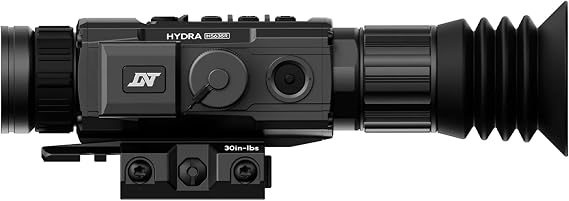
Precision ranging up to 1,300 yards sets this thermal scope apart for professional hunters needing reliable long-distance detection. It combines multiple functions, thermal imaging, rangefinding, and ballistic calculation, into one device, making it ideal for diverse hunting situations requiring accurate drop compensation.
Setup involves attaching via a QDM150 quick detach mount, compatible with rifles, shotguns, and handguns. Daily use benefits from the digital reticle and adjustable magnification between 1.5x and 6x, allowing clear target acquisition in various conditions. Eye relief of 6.5 cm contributes to comfortable positioning, while the included ballistic calculator automates range-based adjustments for faster shot placement.
Performance excels at detecting targets with thermal clarity and providing exact distance readings through the laser rangefinder. Construction feels solid and purpose-built for demanding environments. User comments highlight the dependable accuracy over long distances as a major positive, though some find the objective lens diameter of 35 mm limits light gathering compared to larger scopes.
Accurate distance measurement and integrated ballistic calculations draw consistent praise for their impact on shot precision. Some users find the relatively small objective lens restricts image brightness in twilight or dense cover.
Hunters focused on precise long-range engagements will appreciate the all-in-one capabilities and reliability. Those prioritizing highest low-light clarity might look toward scopes with larger objective lenses instead.
Pros
- Rangefinder measures distances up to 1,300 yards
- Built-in ballistic calculator automates drop compensation
- Versatile mounting for rifles, shotguns, and handguns
- Adjustable magnification from 1.5 to 6 times
Cons
- 35 mm lens limits low-light performance somewhat
- Eye relief may feel short for some users
| Specification | Details |
|---|---|
| Magnification Maximum | 6 x |
| Objective Lens Diameter | 35 millimeters |
| Magnification Minimum | 1.5 x |
| Eye Relief | 6.5 centimeters |
| Mounting Type | QDM150 Quick Detach Mount |
| Reticle Type | Digital |
Best Long Range FFP Scopes Under 1000 Comparison
| Product | Magnification Max | Objective Lens Diameter | Mount Type | Compatible Devices |
|---|---|---|---|---|
| Celestron Regal M2 80ED | 60x | – | Altazimuth Mount | Handgun |
| Celestron Travel Scope 70mm | 2x | 70mm | Altazimuth Mount | Finderscope, Star Diagonal |
| Celestron SkyMaster 15×70 Binoculars | 15x | 70mm | Tripod Mount | – |
| Celestron Telescope Accessory Kit | – | – | Altazimuth Mount | Most telescopes |
| Professional 18×70 Binoculars | 18x | 70mm | Tripod Mount | – |
| tridaptor Phone Scope Adapter | – | 22-61mm | 3-axis digiscoping | Smartphone |
| tridaptor Universal Digiscoping Adapter | 60x | – | Altazimuth-like Mount | Smartphone |
| Z Flex Tilt Tripod Head | – | – | Tilt Tripod Head | – |
| Celestron Nature DX ED 8×42 | 8x | 42mm | Tripod Mount | – |
| Celestron Travel Scope 80mm | 2x | 80mm | Altazimuth Mount | Smartphone |
| Celestron StarSense Explorer 80AZ | – | – | Altazimuth Mount | Smartphone |
| DNT Optics Hydra-LRF Thermal Scope | 6x | 35mm | QDM150 Quick Detach | Rifle, Shotgun, Handgun |
- Magnification Max60x
- Objective Lens Diameter–
- Mount TypeAltazimuth Mount
- Compatible DevicesHandgun
- Magnification Max2x
- Objective Lens Diameter70mm
- Mount TypeAltazimuth Mount
- Compatible DevicesFinderscope, Star Diagonal
- Magnification Max15x
- Objective Lens Diameter70mm
- Mount TypeTripod Mount
- Compatible Devices–
- Magnification Max–
- Objective Lens Diameter–
- Mount TypeAltazimuth Mount
- Compatible DevicesMost telescopes
- Magnification Max18x
- Objective Lens Diameter70mm
- Mount TypeTripod Mount
- Compatible Devices–
- Magnification Max–
- Objective Lens Diameter22-61mm
- Mount Type3-axis digiscoping
- Compatible DevicesSmartphone
- Magnification Max60x
- Objective Lens Diameter–
- Mount TypeAltazimuth-like Mount
- Compatible DevicesSmartphone
- Magnification Max–
- Objective Lens Diameter–
- Mount TypeTilt Tripod Head
- Compatible Devices–
- Magnification Max8x
- Objective Lens Diameter42mm
- Mount TypeTripod Mount
- Compatible Devices–
- Magnification Max2x
- Objective Lens Diameter80mm
- Mount TypeAltazimuth Mount
- Compatible DevicesSmartphone
- Magnification Max–
- Objective Lens Diameter–
- Mount TypeAltazimuth Mount
- Compatible DevicesSmartphone
- Magnification Max6x
- Objective Lens Diameter35mm
- Mount TypeQDM150 Quick Detach
- Compatible DevicesRifle, Shotgun, Handgun
How to Choose the Best Long Range FFP Scope
Key factors for a good long range FFP scope include clear optics, reliable adjustment turrets, and a durable build to handle varying conditions. Choosing the right features ensures accuracy and longevity, ultimately saving money and avoiding frequent replacements or upgrades.
Optical Clarity and Magnification
Even the clearest scope can become frustrating without quality glass. Cheaper lenses often produce blurry edges and color fringing, making it hard to identify distant targets.
Scopes with multi-coated lenses reduce glare and increase light transmission, so images stay sharp and bright in dim light. A variable magnification helps when shooting at different ranges, you can zoom in for precise shots or dial back to acquire targets quickly.
Reticle design also matters; simple crosshairs may work in bright daylight but become hard to see at dusk. Illuminated reticles with adjustable brightness ensure the aiming point remains visible without overpowering the target area. Look for scopes with etched reticles and at least one illumination brightness level suitable for varying light conditions.
First Focal Plane Ffp Reticle Functionality
The reticle in a first focal plane moves proportionally with magnification, so the holdovers and range estimations remain accurate no matter the zoom level. This is a lifesaver in long-range shooting when quick, precise adjustments are needed without guessing. Second focal plane reticles, by contrast, only scale correctly at one magnification setting, which can create errors at other zoom levels.
Compatibility with ballistic charts depends on the reticle subtensions matching typical bullet drop and wind drift for your setup. Most FFP reticles come with mil or MOA markings, so choosing one that corresponds to your caliber and load simplifies corrections in the field. This direct translation means fewer mistakes and faster follow-up shots.
Build Quality and Durability
Durability isn’t just about how the scope looks but what it’s made of. Aluminum alloy tubes are common since they resist corrosion and handle drops better than plastic.
Scopes rated IP67 or higher promise protection against dust and moisture, so they hold up during rain or mud encounters. Fog proofing, often achieved through nitrogen or argon purging, prevents internal misting during temperature changes.
Adjustment turrets should click firmly without being too stiff or loose. Precise tactile feedback feels reassuring when zeroing or dialing corrections, especially in cold weather or with gloves on.
Metal turrets are usually more durable than plastic ones, and models with locking or zero-stop features help maintain settings.
Eye Relief and Field of View
Eye relief length determines how far your eye can sit from the scope without causing scope bite. Around 3.5 to 4 inches is practical for most rifles, allowing comfortable shooting without risking injury during recoil.
This distance makes a difference during quick follow-up shots or when wearing glasses.
Field of view at low magnification lets you scan and track moving targets easier. Wide FOV means less searching through a narrow tunnel, beneficial for both hunting and tactical shooting. Larger scopes tend to offer longer eye relief but can add weight and bulk.
Balanced scope size ensures it fits well on your rifle without awkward positioning.
Adjustment Range and Precision
Turret adjustments typically click in increments of 0.1 mil or ¼ MOA, which offers a good balance between precision and ease of use. The total travel range should cover common long-range distances, often around 10 to 20 mils or 40 to 70 MOA, depending on the cartridge and shooting expectations.
Zero stop controls prevent dialing below your zero point, making it easier to return quickly after elevation or windage changes. Parallax adjustment is crucial for long-distance clarity, and a side or adjustable objective knob that moves smoothly without binding helps fine-tune without disturbing your position.
A clear, well-marked parallax dial improves setup accuracy outdoors.
Optimizing Your Long Range Shots with a First Focal Plane Scope
Adjusting your reticle based on the first focal plane (FFP) design makes distance estimation more accurate throughout different magnifications. Since the reticle size changes proportionally with the target image, holdover points and range markings remain reliable at any zoom level. This is especially useful for long range shots where precision matters.
FFP scopes also make it easier to use ballistic drop compensators and windage corrections without having to guess or memorize adjustments at specific magnifications. Switching magnification during a shot doesn’t affect your reference points, reducing chances for error.
- Check the scope’s reticle style, mil-dot or hash marks are common for FFP.
- Practice dialing and holding at various zoom levels to understand reticle scaling.
- Use a scope with clear turret clicks and consistent rotation for better shot adjustments.
These features lead to faster, more reliable long distance targeting when moments to acquire a shot are limited.
Essential Maintenance Tips to Prolong Your Scope’s Lifespan
Regular care keeps scope optics sharp and mechanical components functional over years of use. Wipe lenses gently with a microfiber cloth after each shooting session to remove dust and fingerprints without scratching the glass.
Avoid harsh cleaning chemicals; lens-specific solutions work best. Moisture can damage internal parts or cause fogging, so ensure the scope is dry before storage. Use protective lens caps when the scope is not attached to the rifle.
- Periodically check mount screws for tightness to preserve zeroing.
- Store the scope in a padded case to prevent shocks from knocks or drops.
- Inspect for any signs of water intrusion or corrosion, especially after harsh weather exposure.
Proper maintenance extends your scope’s lifespan and maintains image clarity critical for long range shooting accuracy.
Comparing FFP Scopes to SFP Alternatives for Long Range Shooting
First focal plane (FFP) and second focal plane (SFP) scopes both have advantages depending on shooting style. FFP scopes retain accurate reticle measurements at all magnifications, useful for shooters who frequently adjust zoom during engagement distances.
In contrast, SFP scopes keep the reticle size constant, which some users find less cluttered and easier to see at low power. However, range estimation or holdovers can only be relied upon at a specific magnification, often the highest.
- FFP scopes work well for dynamic shooting scenarios requiring range adjustments mid-shot.
- SFP scopes are often simpler and cheaper but may limit precision at variable magnifications.
- Consider your typical shooting distance and whether you prefer a simpler reticle or flexible scaling.
For budgets under $1000, many FFP options provide solid features that balance accuracy and cost without major compromises.
People Also Asked
How Do I Properly Zero a Long Range FFP Scope?
Zero a long range FFP scope by starting at 100 yards and adjusting windage and elevation until your shots consistently hit the target center. Confirm zero at your preferred distance, as small changes in range can affect accuracy. Use a stable rest to minimize movement during this process.
What Is the Recommended Reticle Size for Long Range Shooting?
A reticle with fine, clear markings and holdover points is best for long range shooting. Mil-dot or MOA reticles help with estimating range and bullet drop, ensuring you can make precise adjustments without touching the turrets often.
How Durable Are FFP Scopes Under Extreme Weather Conditions?
FFP scopes built under $1000 are generally sealed and nitrogen purged, providing good resistance to fog and moisture. While they handle rain and cold reasonably well, prolonged exposure to harsh conditions may still affect lens clarity or turret smoothness over time.
Will This Scope Fit on My .308 Rifle Without Modifications?
Most standard FFP scopes designed for long range shooting fit a .308 rifle without modifications if you have a standard Picatinny rail. Make sure your rings or mounts match the scope tube diameter and have the right height to avoid eye strain or incorrect eye relief.
What Common Issues Should I Watch for in FFP Scopes?
Common issues with FFP scopes include parallax adjustment errors, turret looseness after repeated use, and reticle illumination failures. Regularly check turret zeroing and make sure the scope housing is free of debris to maintain consistent performance.
Conclusion
Choosing a long range first focal plane scope under $1000 means focusing on clear optics, reliable adjustment turrets, and a reticle that suits your shooting style. Durability and good warranty coverage matter too since you want a scope that performs consistently without needing repairs or recalibration.
Prioritize what features help with accuracy and ease of use at distance.
Consider how you plan to use the scope and where you will shoot most often before making a final decision. Matching the scope to your shooting environment and budget will save you money and frustration. Review the comparison table and detailed picks above to find the best fit for your setup and needs.