
Top 12 Best Long Range Scope for Your Money Revealed!
Many shooters have faced the frustration of a blurry or misaligned view at long distances, which can ruin the shot. Finding the best long range scope for your money means avoiding cheap optics that distort or lose zero quickly. A poor scope makes it hard to hold steady and judge distances, wasting time and ammo in the field.
Good long range scopes usually stand out by having clear glass with at least 10x magnification, durable materials like aircraft-grade aluminum, and precise adjustment turrets for elevation and windage. Eye relief of around 3.5 to 4 inches helps avoid scope bite, while a solid waterproof and fog-proof seal keeps the view clear in rough conditions.
These features matter most for practical long-distance shooting rather than flashy extras.
Need a Quick Check?
| Image | Product | Price |
|---|---|---|
Our Top Picks 1  | SVBONY SV28 Spotting Scope | Check Price |
Our Top Picks 2  | CVLIFE 6-24×50 Riflescope | Check Price |
Our Top Picks 3  | CVLIFE EagleBlaze 7-35×56 | Check Price |
Our Selected Top 12 Long Range Scope for Your Money Worth Your Money
This list features carefully chosen long-range scopes that balance quality and affordability. Each review covers performance, ideal user types, strengths, and drawbacks, helping readers understand which scope fits their needs and shooting style.
1. SVBONY SV28 Spotting Scope 25-75×70 Angled
Zooming between 25x and 75x, this spotting scope suits those starting out but wanting strong magnification for birdwatching or scenery. Its biggest strength lies in the large 70mm objective lens, which lets in plenty of light for clearer, brighter views compared to cheaper scopes.
Setting up involves mounting it on a tripod and adjusting focus with the manual zoom eyepiece. The extendable sunshade helps reduce glare when you’re out in bright conditions.
Its angling feature feels natural when scanning landscapes. The non-slip finish keeps it secure in hand, even when the weather takes a wet turn.
It delivers solid optical performance across its zoom range, offering sharp views thanks to FMC coating and the large lens. Waterproof construction reassures during unexpected weather changes. Common praise mentions clear and bright images at high magnifications while some users comment on the manual focus requiring patience for fine adjustments.
The clearest advantage is the bright, sharp images at higher magnifications thanks to the large lens and FMC coating. On the downside, manual focus can be tricky and demands some patience, especially at maximum zoom levels.
People wanting a powerful scope for occasional nature observations with solid light gathering will be quite pleased. Those needing quick-focus or simpler mounts might prefer a more beginner-specific model.
Pros
- Large 70mm objective lens for better light gathering
- Manual zoom eyepiece easy to focus
- Waterproof design protects from weather
- Non-slip finish feels secure in wet conditions
Cons
- Manual focus requires steady handling
- Equatorial mount may need familiarity for proper use
| Specification | Details |
|---|---|
| Zoom Ratio | 3:1 |
| Focal Length Description | 380 millimeters |
| Field Of View | 64 feet |
| Mount | Equatorial Mount |
| Coating | FMC |
| Waterproof | Yes |
2. CVLIFE 6-24×50 Side Focus FFP Riflescope
Taking precise shots at long distances demands clarity and reliable adjustments. Designed for medium to long-range shooting, the CVLIFE 6-24×50 Side Focus FFP Riflescope stands out by offering a First Focal Plane reticle that scales with your zoom level, making holdovers natural and accurate across various magnifications.
Setting up the scope is straightforward thanks to the zero-stop elevation turret and lockable windage turret, both equipped with 1/4 MOA tactile clicks that are easy to adjust and reset after sighting-in. The side focus lets you fine-tune the parallax to keep the image sharp at distance, while the illuminated MOA reticle with red brightness levels supports aiming in low light, helping maintain visibility during dawn or dusk sessions.
The glass delivers a crisp and bright image from 6x up to 24x magnification, suitable for spotting detailed targets at long range. The build feels solid and functional with tactile turrets, although some find the objective lens diameter a bit smaller than they expected for gathering light. The most appreciated feature is the precise holdover at variable zooms, while the most frequent complaint involves the limited brightness range for some lighting conditions.
The reticle’s consistent scaling at all magnifications receives strong praise for making long-distance holdovers straightforward. However, some find the brightness settings for the illuminated reticle insufficient in very bright or very dark situations. The turrets lock securely and provide clear feedback, which many appreciate for reliability in the field.
Those focusing on long-range shooting with a need for quick zero resets and parallax adjustment will find this scope well-suited. Shooters requiring a larger objective lens for maximum light transmission or a wider illumination brightness range might consider alternative options better fitting those specific needs.
Pros
- First Focal Plane reticle scales with magnification
- Lockable and resettable windage turret
- Zero stop elevation turret for quick zero return
- Six red brightness levels for low-light use
Cons
- Objective lens diameter relatively small at 34 millimeters
- Illumination brightness range may not suit all lighting
| Specification | Details |
|---|---|
| Magnification Minimum | 6 x |
| Magnification Maximum | 24 x |
| Objective Lens Diameter | 34 millimeters |
| Mounting Type | Side Focus FFP |
| Reticle Type | MOA |
| Compatible Devices | Airsoft Rifle, Airsoft Gun |
3. CVLIFE EagleBlaze 7-35×56 FFP Rifle Scope
Magnification that reaches up to 35x makes the CVLIFE EagleBlaze 7-35×56 perfect for long-range shooting such as hunting or competition. Its biggest strength lies in the extra-low dispersion Japanese ED glass with fully multi coatings, which keeps images sharp and clear even at high zoom.
Setting it up on a Picatinny mount is straightforward and stays secure once tightened. The first focal plane illuminated reticle with six brightness levels helps spot targets in dim light, while the MOA markings guide precise adjustments. Zero-stop and locking turrets mean you can dial back to zero quickly without second-guessing, ideal for quick follow-up shots or varying distances.
Performance delivers a crisp view at all magnifications between 7x and 35x, and the reticle’s illumination adds value when light fades. The build feels solid and reliable, designed to withstand regular use on rifles. Exceptional clarity at long range is praised often, but some note that the scope can be a bit heavy, which might matter for extended carry.
The clarity and bright image quality stand out as the best features, making precision shooting easier at long distances. The most common complaint revolves around its weight, which some find heavy compared to lighter scopes, impacting comfort during long hunts.
Shooters who value high magnification and clear optics without budget-breaking costs will appreciate this scope. Those who prioritize lightweight setups or require a wider field of view at extreme zooms might consider other options better suited to their needs.
Pros
- Clear image with Japanese ED glass
- Illuminated MOA reticle with six brightness levels
- Zero-stop and locking turrets for quick readjustment
- Wide magnification range from 7x to 35x
Cons
- Noticeable weight may affect prolonged carry
- Field of view narrows significantly at highest zoom
| Specification | Details |
|---|---|
| Magnification Maximum | 35 x |
| Objective Lens Diameter | 5.6 centimeters |
| Magnification Minimum | 7 x |
| Mounting Type | Picatinny Mount |
| Field Of View | 18.6 feet |
| Reticle Type | MOA |
4. RIX LEAP LRF Thermal Night Hunting Scope

Hunters and shooters who need a reliable thermal scope for night hunting or long-range precision will find the RIX LEAP LRF Thermal Night Hunting Scope a strong candidate. Its built-in laser rangefinder paired with a ballistic calculator stands out as a major advantage when exact distance is critical.
Setting up the scope is straightforward thanks to the built-in laser rangefinder that perfectly aligns with the lens, providing precise distance measurements up to 1,312 yards. The fixed 3x magnification keeps things steady for shooting, while the fine duplex reticle offers clarity during daily use.
The AI-enhanced processor ensures the thermal image stays sharp for spotting targets clearly, which helps when zeroing or tracking game in low light.
Performance is impressive with 0.35 MOA precision that supports confident long-range shots. The scope is solidly built to handle outdoor conditions, although some users find the fixed magnification limiting for varied terrain.
The crisp, detailed imaging wins considerable praise, while the main downside noted is the single magnification setting, which may not suit all situations.
RIX LEAP LRF offers impressive precision with its 0.35 MOA reticle, making it easier to aim accurately at long distances. The built-in laser rangefinder matches the optical axis well, providing reliable distance readings that integrate with a ballistic calculator for quicker shot adjustments. Some find the interface a bit complex at first, requiring time to get used to all features.
Hunters focused on long-range night shooting will appreciate the detailed imaging and practical distance data. Those needing a simpler or more straightforward scope for daytime use or close-range shooting might be better off choosing a model with fewer advanced functions and a more basic setup.
Pros
- Built-in laser rangefinder with up to 1,312 yards range
- 0.35 MOA fine reticle for accurate targeting
- AI-enhanced processor for sharp thermal images
- Real-time ballistic calculator integration
Cons
- Fixed 3x magnification limits versatility
- Some users prefer variable zoom for different scenarios
| Specification | Details |
|---|---|
| Magnification Maximum | 3 x |
| Magnification Minimum | 3 x |
| Compatible Devices | Rifle |
| Thread Type | 1/4″-20 UNC |
| Reticle Type | Duplex |
5. Vortex Triumph HD 3-9×40 Riflescope

Vortex Triumph HD 3-9×40 Riflescope stands out for its simple setup and clear optics tailored for newer hunters. It balances quality and ease of use without overwhelming complexity, making it ideal for those looking to get reliable vision in various hunting conditions.
Its biggest strength lies in delivering sharp images and true color across the entire view.
Setup comes with everything needed, including low-height 1 Hunter Rings and a protective neoprene case, making it ready to mount right away. Adjusting magnification from 3x to 9x feels smooth, and the Dead-Hold BDC reticle helps keep holdovers simple without fiddling with complicated settings. The scope stays clear and bright even during low-light early mornings or late evenings.
The scope performs well with HD optics that minimize color fringing and provide edge-to-edge sharpness. It’s built solid for regular use but light enough to avoid adding unnecessary weight to your rifle.
Most praise focuses on the clarity and ease of use, while some mention the magnification range might feel limited for extremely long distances compared to higher zoom scopes.
Clarity and brightness receive strong praise, especially in low-light scenarios, making it dependable during dawn and dusk hunts. Some find the 3-9x magnification less suited for very long-range shooting, which could be a drawback when extending beyond typical hunting distances.
Those looking for a straightforward scope that performs well without fuss will appreciate this model. Hunters seeking higher zoom or more complex reticle options might look elsewhere for specialized long-range requirements.
Pros
- Sharp images with excellent color fidelity
- Includes low-height rings and protective case
- Fully multi-coated lenses for better low-light performance
- Simple, user-friendly Dead-Hold BDC reticle
Cons
- Magnification range may be limited for extreme long-range shots
- Not packed with advanced features for experienced users
| Specification | Details |
|---|---|
| Magnification Minimum | 3 x |
| Magnification Maximum | 9 x |
| Objective Lens Diameter | 40 millimeters |
| Reticle Type | Dead-Hold BDC |
| Mounting Type | Ring Mount |
| Compatible Devices | Rifle |
6. CVLIFE EagleBlaze 5-25×56 FFP Rifle Scope

CVLIFE EagleBlaze 5-25×56 FFP Rifle Scope focuses on precision long-range shooting with strong clarity and reliable reticle tracking. Ideal for hunters and competition shooters looking to stretch their shots far without spending too much. Its best feature lies in clear target acquisition across all zoom levels thanks to its fully multi-coated Japanese ED glass and an illuminated reticle.
Setting up the scope on a Picatinny mount is straightforward, and the adjustable magnification from 5x to 25x lets you dial in the perfect view depending on the distance. The zero-stop turret helps you quickly return to a confirmed zero, while the locking turrets feel crisp and secure, which keeps the settings steady even after recoil.
Daylight and low-light usage benefit from the 6-level red illumination, making target holds faster and clearer without straining your eyes.
It delivers very sharp images across its 26.2 feet field of view at 100 yards with minimal distortion or color fringing. The first focal plane Christmas-tree MOA reticle stays accurate no matter how much you zoom in or out, a key factor in consistent long-range shooting. Built with reliability in mind, the scope handles recoil well, though some find the 34mm objective lens a bit smaller than expected for low-light extremes.
Brightness adjustments are practical but might be limited for certain shooters.
The clearest strength is its sharp, distortion-free optics paired with an illuminated reticle that stays precise at all magnifications. Most common complaint involves the smaller-than-expected 34mm objective lens, which can hamper visibility in dim light conditions despite excellent glass quality.
Hunters and target shooters who want powerful zoom, reticle accuracy, and consistent zero return will appreciate this scope. Those prioritizing superior low-light capability or wider fields of view might find other scopes more fitting for their needs.
Pros
- Crystal clear view with 98% light transmittance
- Accurate holdovers at any zoom level
- Zero-stop allows quick return to zero
- Crisp, lockable 1/4 MOA turrets
Cons
- Objective lens size limits low-light performance
- Brightness levels may not suit all shooters
| Specification | Details |
|---|---|
| Magnification Minimum | 5 x |
| Magnification Maximum | 25 x |
| Objective Lens Diameter | 34 millimeters |
| Reticle Type | Christmas-tree |
| Mounting Type | Picatinny Mount |
| Field Of View | 26.2 feet |
7. Monstrum Beast 6-24×50 Rifle Scope

Using a scope that adapts well to different environments makes long-range shooting more approachable. Designed for those who need clear vision and precise aiming, the 6-24x magnification and bright reticle stand out as its biggest strengths.
Setting it up is straightforward with a cantilever mount that fits well on both rifles and shotguns. The fiber optic reticle ensures a clear, daylight-bright center dot, making target acquisition easier during the day. The side focus parallax dial helps dial in sharp focus and reduce parallax errors, which is especially handy when estimating distances.
It performs solidly in its long-range role, delivering sharp images through a large 50mm objective lens that lets in more light and offers a wider view. The scope feels sturdy and reliable, matching the needs of precise shooting.
Praise often goes to the brightness of the reticle, while some users mention the parallax adjustment dial can take a bit of getting used to.
The brightness of the fiber optic reticle is praised as making aiming simple and clear in daylight settings. The parallax adjustment is a useful feature but requires some time to master for smooth focus adjustments.
Shooters who want a flexible, clear view for daytime long-distance aiming will find it suited to their needs. Those primarily hunting in low light or preferring simpler reticle adjustments might look for alternatives better tailored to those conditions.
Pros
- Bright fiber optic reticle for daylight clarity
- Wide 50mm objective lens for better light transmission
- Side focus parallax dial for sharp target focus
- Multiple reticle options for different preferences
Cons
- Parallax adjustment dial can be tricky at first
- Reticle brightness mainly benefits daylight conditions
| Specification | Details |
|---|---|
| Magnification Minimum | 6 x |
| Magnification Maximum | 24 x |
| Objective Lens Diameter | 50 millimeters |
| Reticle Type | Dot |
| Mounting Type | Cantilever Mount |
| Thread Type | 1/2″-20 UNC |
8. DIY Night Vision Scope with 5 Display

Great for hunters or anyone wanting an affordable night vision upgrade, it converts standard scopes into nocturnal tools. The standout feature is how it fits most rifles with a simple clamp mount and offers clear visuals in complete darkness.
Setup involves attaching it to any rifle scope with an eyepiece diameter between 38 and 44mm, which took just a few minutes. The IR illuminator illuminates targets up to 200m away in pure darkness, and the 5 720p HD display is adjustable, making it easy to see details without straining your eyes.
Performance-wise, the night vision camera delivers a sharp, high-definition image even in very dark conditions. The build feels solid for a DIY kit, with the duplex reticle clear and practical. Some users found the clamp mount less secure than expected, but most appreciate how versatile and practical the overall setup is.
The ability to see clearly at night with a crisp 720p screen stands out as the best feature. A common issue is that the clamp mount sometimes feels less steady than expected, which can affect long-term use without extra adjustments.
People who want a simple night vision upgrade for their existing rifle scopes will find this versatile and cost-effective. Those needing a permanently fixed, professional-grade system might want to look elsewhere for stability and build quality.
Pros
- Fits eyepieces 38-44mm easily
- Clear night vision up to 200m
- Adjustable brightness and contrast
- Large 5″ HD display for detail
Cons
- Clamp mount can feel a bit loose
- DIY assembly requires patience
| Specification | Details |
|---|---|
| Objective Lens Diameter | 30 millimeters |
| Field Of View | 984 feet |
| Compatible Devices | Rifle |
| Mounting Type | Clamp Mount |
| Aiming Scope Sight Pin Size | 0.25 mils |
| Reticle Type | Duplex |
9. CVLIFE 3-9×40 R4 Reticle Crosshair Scope

Crafted with a straightforward design, the CVLIFE 3-9×40 R4 Reticle Crosshair Scope suits shooters looking for versatile magnification and clear aiming without extra bells and whistles. Its biggest strength lies in balancing decent zoom levels with a wide field of view, making it a practical choice for mid to long-range shooting.
Setting it up is simple due to the free mount design, which fits most rifles without fuss. Daily use benefits from its 3 to 9 times magnification, letting you zoom in smoothly when needed.
The 40mm objective lens collects enough light for clear visibility, while the R4 crosshair reticle keeps aiming straightforward at various distances.
Performance-wise, the scope offers clear images up to its maximum 9x magnification, ideal for spotting targets at range. The build is satisfactory for casual to moderate use, sporting a 12.20-inch length that balances size and weight comfortably.
Some note the exit pupil size of 0.2 can feel limiting in low light, but most praise its solid crosshair design and easy adjustment.
The strongest praise centers on the scope’s clear and effective crosshair reticle, which aids consistent aiming. A common complaint is that the exit pupil size of 0.2 reduces visibility in dim conditions, affecting performance in lower light environments.
People needing a reliable mid-range scope with basic but clear optics will find this model fitting. Those requiring superior low-light performance or a more compact scope could consider other options better suited for those needs.
Pros
- Good zoom range for various distances
- Wide 300-degree field of view
- Clear R4 crosshair reticle design
- Compatible with most rifle mounts
Cons
- Exit pupil size may hinder low-light use
- Length might feel bulky for some setups
| Specification | Details |
|---|---|
| Magnification | 3-9x |
| Objective Lens Diameter | 40 millimeters |
| Reticle Type | R4 Crosshair |
| Field of View | 300 degrees |
| Length | 12.20 inches |
10. DISCOVERYOPT HD 5-30×56 GEN2 FFP Rifle Scope

Clear optics stand out immediately with the DISCOVERYOPT HD 5-30×56 GEN2 FFP Rifle Scope, made for hunters and shooters who need reliable precision at long distances. Its biggest strength is the high magnification range combined with a large 34mm main tube that gives plenty of elevation and windage adjustment.
Setting up is straightforward on a Picatinny mount, and magnification from 5x to 30x covers most extreme long-range needs. The first focal plane Mrad reticle means you can calculate holdovers accurately at any zoom.
Zero Stop turrets make returning to your zero quick and worry-free, which helps during rapid target engagement or in changing terrain.
The scope delivers sharp, edge-to-edge clarity with fully multi-coated lenses, letting you spot targets clearly even in low light. It’s constructed with a sturdy tube that feels durable yet not too heavy.
High marks go to the precision zero stop feature; less favorable comments mention the relatively narrow 25-foot field of view, which can feel tight at lower magnification.
Precision zero stop turrets are praised for allowing confident return to baseline zero, simplifying adjustments in the field. The narrow 25-foot field of view at minimum magnification is cited as a limiting factor, especially when tracking moving targets or scanning wide areas.
Those who prioritize long-distance shooting with detailed adjustments and clarity will appreciate this scope’s features. Users who value a wider field of view or lighter setups might want to consider other options better suited to dynamic or close-range use.
Pros
- High magnification with clear optics
- Durable 34mm tube allows for a wide range of adjustments
- Zero Stop turrets for quick dialing back
- Fully multi-coated lenses for better light transmission
Cons
- Field of view feels limited at lower magnification
- Heavier than some smaller scopes
| Specification | Details |
|---|---|
| Magnification Range | 5-30x |
| Objective Lens Diameter | 5.6 centimeters |
| Main Tube Diameter | 34mm |
| Reticle Type | Mrad Ffp |
| Mounting Type | Picatinny Mount |
| Field of View | 25 feet |
11. KT12 60×60 Long Range Rifle Scope 35mm

High magnification and bright optics make the KT12 60×60 ideal for long-range shooting where clarity and detail matter most. It’s designed for serious marksmen who need a sharp image at distances beyond 30 yards, with a wide magnification range and strong light gathering to deliver precision.
Setting up involves mounting on a Picatinny rail, which is straightforward. The side parallax adjustment lets you fine tune focus quickly between 30 yards and infinity, so tracking targets at varying distances is smooth. Reticle illumination offers red and green options across several brightness levels, helping visibility in changing light without being distracting.
Eye relief of 10.9 centimeters provides a comfortable viewing distance without sacrificing clarity.
The 60x max power offers exceptional reach and detailed views at long range, and the 35mm tube ensures durability without excess bulk. The MIL glass etched reticle stands up well to use, staying clear at all times.
The biggest praise centers around its crisp image quality and flexible focusing. Some complaints mention the field of view is narrower than expected, making target acquisition at extreme zoom a little fiddly.
Reviews highlight the sharpness and brightness of the image as the strongest feature, making long-distance targets easy to identify. The common issue revolves around the limited field of view when zoomed in fully, which can slow down spotting moving targets.
Anyone focusing on precision shooting at extended ranges will appreciate the flexibility and clarity offered here. Those who want a wider view or less intense illumination effects in low light may want to consider other options.
Pros
- Clear image up to 60x magnification
- Side parallax adjustment from 30 yards to infinity
- Illuminated reticle with red and green options
- Durable 35mm tube construction
Cons
- Narrow field of view at highest magnification
- Reticle illumination might be too bright in some conditions
| Specification | Details |
|---|---|
| Magnification Maximum | 60 x |
| Objective Lens Diameter | 6 centimeters |
| Magnification Minimum | 12 x |
| Mounting Type | Picatinny Mount |
| Eye Relief | 10.9 centimeters |
| Reticle Type | MIL |
12. RIX Storm S6 640 Thermal Scope 35mm
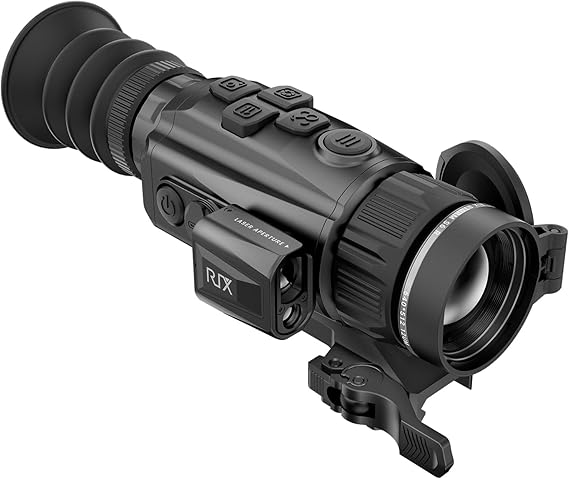
Chasing game or scouting at long distances often means battling poor visibility and unreliable distance readings. Built for rifle users who need sharp thermal imaging and accurate rangefinding, this scope’s biggest strength is its clear thermal picture paired with a compact laser rangefinder that doesn’t weigh you down.
Setting it up involves attaching via a quick detach mount, which feels solid and lets you swap scopes easily. The 35mm objective lens with a max 10x magnification gives enough zoom for long shots without making the image feel too cramped. The built-in laser rangefinder shows distances up to 1,312 yards, and it automatically factors in ballistics, so dialing in your shot is much faster.
Image quality stands out thanks to the 640×512 thermal sensor and a NETD under 20 mK, leading to crisp visuals that hold up even in humidity. The scope’s build feels durable, compact, and balanced on the rifle. Most people mention how clear and reliable the thermal image is, while a few note the reticle type being basic for their taste.
People appreciate the crystal-clear thermal image from the 640×512 sensor and low NETD, which performs well even in humid conditions. Some find the reticle design too basic, lacking customization or complexity they might prefer for long-range adjustments.
The scope is well-suited for rifle users needing sharp thermal views combined with precise ranging in a compact form. Those wanting higher magnification or more advanced reticle options could look for alternatives better tailored to those specific needs.
Pros
- Clear thermal imaging with NETD <20 mK
- Compact, lightweight design for easy handling
- Accurate laser rangefinder up to 1,312 yards
- Free ballistic calculator included
Cons
- Duplex reticle might feel too simple for some
- Limited to 10x magnification max
| Specification | Details |
|---|---|
| Magnification Maximum | 10 x |
| Objective Lens Diameter | 35 millimeters |
| Compatible Devices | Rifle |
| Mounting Type | Quick Detach Mount |
| Reticle Type | Duplex |
Best Long Range Scopes Compared Side by Side
| Product | Magnification Max | Objective Lens Diameter | Mounting Type | Reticle Type |
|---|---|---|---|---|
| SVBONY SV28 Spotting Scope | 3x | – | Equatorial Mount | – |
| CVLIFE 6-24×50 Riflescope | 24x | 34mm | Side Focus FFP | MOA |
| CVLIFE EagleBlaze 7-35×56 | 35x | 56mm | Picatinny Mount | MOA |
| RIX LEAP Thermal Scope | 3x | – | – | Duplex |
| Vortex Triumph HD 3-9×40 | 9x | 40mm | Ring Mount | Dead-Hold BDC |
| CVLIFE EagleBlaze 5-25×56 | 25x | 34mm | Picatinny Mount | Christmas-tree |
| Monstrum Beast 6-24×50 | 24x | 50mm | Cantilever Mount | Dot |
| DIY Night Vision Scope | – | 30mm | Clamp Mount | Duplex |
| CVLIFE 3-9×40 R4 Scope | 9x | 40mm | Free mount | R4 Crosshair |
| DISCOVERYOPT HD 5-30×56 | 30x | 56mm | Picatinny Mount | Mrad Ffp |
| KT12 60×60 Long Range | 60x | 60mm | Picatinny Mount | MIL |
| RIX Storm S6 Thermal | 10x | 35mm | Quick Detach Mount | Duplex |
- Magnification Max3x
- Objective Lens Diameter–
- Mounting TypeEquatorial Mount
- Reticle Type–
- Magnification Max24x
- Objective Lens Diameter34mm
- Mounting TypeSide Focus FFP
- Reticle TypeMOA
- Magnification Max35x
- Objective Lens Diameter56mm
- Mounting TypePicatinny Mount
- Reticle TypeMOA
- Magnification Max3x
- Objective Lens Diameter–
- Mounting Type–
- Reticle TypeDuplex
- Magnification Max9x
- Objective Lens Diameter40mm
- Mounting TypeRing Mount
- Reticle TypeDead-Hold BDC
- Magnification Max25x
- Objective Lens Diameter34mm
- Mounting TypePicatinny Mount
- Reticle TypeChristmas-tree
- Magnification Max24x
- Objective Lens Diameter50mm
- Mounting TypeCantilever Mount
- Reticle TypeDot
- Magnification Max–
- Objective Lens Diameter30mm
- Mounting TypeClamp Mount
- Reticle TypeDuplex
- Magnification Max9x
- Objective Lens Diameter40mm
- Mounting TypeFree mount
- Reticle TypeR4 Crosshair
- Magnification Max30x
- Objective Lens Diameter56mm
- Mounting TypePicatinny Mount
- Reticle TypeMrad Ffp
- Magnification Max60x
- Objective Lens Diameter60mm
- Mounting TypePicatinny Mount
- Reticle TypeMIL
- Magnification Max10x
- Objective Lens Diameter35mm
- Mounting TypeQuick Detach Mount
- Reticle TypeDuplex
How to Choose the Best Long Range Scope
Focus on clarity, durability, and adjustable magnification when selecting a long range scope, as these features directly affect accuracy and ease of use. Prioritizing quality optics and reliable construction helps avoid costly replacements and ensures better shooting performance over time.
Optical Clarity and Magnification
Lens quality often makes the difference between spotting a target clearly or struggling with a blurry image. Cheap lenses can distort the view, especially at longer distances, making it hard to place shots accurately.
A scope with multi-coated lenses improves light transmission, leaving the image brighter and clearer during dawn or dusk. Pay attention to lens coatings labeled as fully multi-coated; these tend to cut down glare and retain contrast. Variable magnification offers flexibility, you can zoom in closer for distant targets or widen your view for closer situations.
Fixed magnification scopes are simpler and can provide sharper optics at one setting, but they lack versatility.
Reticle visibility matters whenever lighting changes, such as moving from shaded woods into open fields. A well-lit reticle, whether illuminated or with fine lines, helps maintain focus without straining your eyes. Good scopes often feature reticles designed for low light and high contrast, balancing detail without obscuring the target.
Typical magnification ranges for mid-level scopes start around 3-9x and can go as high as 5-25x depending on shooting needs.
Durability and Build Quality
Durability comes down to the materials used in the scope’s housing and how tightly sealed it is. Aluminum alloy bodies are common because they offer a solid structure without too much weight.
Avoid scopes with plastic or thinner materials, as they tend to dent or break from rough handling. Waterproof ratings ensure the scope keeps functioning after heavy rain or accidental submersion, while fog proofing relies on nitrogen or argon purging inside the tube to prevent internal condensation. Shock resistance means the scope won’t lose zero after dropping or the recoil from a heavy rifle.
The weatherproofing will decide if the scope can handle temperature swings and wet conditions reliably. A rugged scope feels firm to the touch and shows no signs of looseness in turrets or adjustments.
Most reliable models offer proven sealing techniques and durable finishes that resist scratches and corrosion.
Adjustment Precision and Range
Windage and elevation turrets can be either a source of frustration or precision control. Cheap ones often turn too loosely or too tightly, making it difficult to dial in adjustments steadily.
High-quality turrets click audibly for each increment, commonly a quarter-minute of angle (MOA) or 0.1 milliradian (MRAD), and have a tactile feel, so you know exactly how much you’ve moved the crosshairs. This helps prevent overshooting the target during adjustment.
Long-distance shooting demands a wide adjustment range, often at least 60 MOA total for elevation to accommodate bullet drop on very far targets. Repeatability means you can confidently return the turrets to zero after making changes, which is crucial during competitions or hunting seasons when conditions vary.
Some scopes allow you to reset the turret after sight-in, simplifying this process without losing calibration.
Eye Relief and Field of View
Eye relief affects both comfort and safety, especially on rifles with heavy recoil. Short eye relief can lead to painful strikes against the eye, while longer eye relief, typically 3.5 to 4 inches, lets you maintain a safer and more natural position.
A consistent eye relief is important to avoid constantly adjusting your head for a clear sight picture.
The field of view determines how much area you see at a glance, aiding quick location of targets. Wider fields of view make it easier to track moving objects or scan wide open areas, but this is often reduced at higher magnifications.
For practical use, scopes offer around 30 to 40 feet of view at 100 yards on low magnification settings. Balancing both factors like eye relief and field of view directly impacts your ability to shoot accurately without discomfort over extended periods.
Mounting and Compatibility
Compatibility with your rifle’s mounting system solves a lot of headaches before shooting starts. Common mounting standards include Picatinny or Weaver rails, and knowing which one your rifle uses ensures the scope fits without modification.
The physical length and weight of the scope matter for balance; a large or heavy scope can throw off the rifle’s handling or require different mounting positions.
Many scopes come with rings or base mounts included; having all necessary hardware upfront saves time and expense. Installation ease ranges from simple clamp-on mounts to ones needing precise torque settings or special tools.
Confirming these details before purchasing will keep the setup straightforward and stable during repeated use.
Maximizing Accuracy: Techniques for Using Long Range Scopes Effectively
Adjusting your scope’s parallax correctly can make a big difference in long-range shooting accuracy. Many scopes have adjustable parallax knobs that help eliminate the target’s image shifting against the reticle. Also, dialing in the correct elevation and windage based on your shooting distance and environmental factors is vital.
Use ballistic charts or apps for these adjustments rather than guessing.
Proper hold and positioning are crucial too. Resting your rifle firmly and using a stable shooting position minimizes movement. Even slight shifts can affect the point of impact at long distances.
Consistent cheek weld and eye relief ensure you get the same sight picture every time.
- Zero your scope at a known distance before shooting longer ranges
- Confirm the scope’s reticle style suits your range calculations
- Practice range estimation without electronic devices to avoid reliance
Maintaining Your Long Range Scope: Cleaning and Storage Best Practices
Regular cleaning keeps your long-range scope functioning smoothly and extends its life. Use a soft brush or air blower to remove dust from lenses before wiping. Lens tissues or microfiber cloths dampened with lens cleaner prevent scratches.
Avoid household cleaners or rough materials.
Protect the scope from moisture by storing it in a dry case with silica gel packets. Prolonged exposure to humidity can fog internal elements or cause corrosion in adjustment turrets. When not in use, keep lens covers on to guard against scratches and dirt buildup.
- Check turret caps and O-rings regularly for damage or wear
- Perform a function check on adjustments before important trips
- Store in a padded case to reduce impact damage during transport
Comparing Optical Alternatives: When to Choose a Spotting Scope or Binoculars Instead
Spotting scopes offer higher magnification and wider objective lenses than rifle scopes, which makes them better suited for observing targets and terrain rather than shooting. They provide clearer images at long distances, useful for spotting bullet impacts or tracking game without disturbing it.
Binoculars are more versatile for scanning wide areas and have the advantage of quick target acquisition with both eyes. They don’t attach to a rifle and don’t provide range estimation features but are handy for scouting and observation before choosing a shooting position.
- Choose a rifle scope for aiming and precision at your target
- Select a spotting scope for tracking shot placement and spotting targets at great distances
- Use binoculars for general wildlife viewing and area scanning
People Also Asked
How Do I Properly Size a Long Range Scope for My Rifle?
Match the scope’s objective lens diameter and magnification to your shooting distances and rifle type. A larger objective lens gathers more light but requires a taller mount, which could affect your cheek weld. Be sure the tube size fits your mounting rings and that weight doesn’t throw off your balance.
What Is the Typical Lifespan of a Quality Long Range Scope?
A well-built long range scope can last a decade or more with proper care. Quality glass and durable construction resist environmental wear. Keep an eye on zero retention and mechanical function to know when truly time for replacement approaches.
How Do I Maintain and Clean a Long Range Scope Safely?
Use a soft brush or lens cloth to remove dust and fingerprints. Avoid harsh chemicals; a little lens cleaner sprayed on the cloth is enough. Always clean in gentle circular strokes to prevent scratching the coatings and to maintain clarity.
Can a Long Range Scope Be Used on Different Firearm Types?
Long range scopes can fit many firearms, including bolt-action rifles and some semi-autos, as long as mounting is compatible and recoil is manageable. Switching between guns requires recalibration to maintain accuracy, so consider dedicated scopes for different firearms if possible.
What Are Common Problems Experienced with Long Range Scopes?
Common issues include reticle drift, fogging inside the lenses, and difficulty holding zero after heavy recoil. Dirt and moisture can also cause image distortion. Regular maintenance and choosing a scope with good sealing and shock resistance can reduce these problems.
Conclusion
Choosing a long range scope means focusing on clarity, reliable adjustments, and durability. Clear glass helps you see targets at a distance without strain. Adjustments need to be precise and repeatable to stay on target.
The scope should also handle the conditions you plan to use it in, whether that means withstanding weather or recoil.
Consider how and where you will use the scope most often, then pick one that fits that setting and your budget. It’s important to balance features against cost and practicality.
Check the comparison table and the detailed reviews above to find the scope that matches your needs and won’t waste your money.

