
Top 12 Best Low Power Spotting Scope You Can’t Miss!
Struggling with a cheap spotting scope that distorts images or feels bulky during long periods of use is familiar to anyone in the market for the best low power spotting scope. Many models offer high magnification but skip on clarity or stability, making it tough to get a clear, steady view of wildlife or distant objects.
The first time the lens fogs up or the focus dial slips too easily, it’s clear that not all scopes are built for practical day-to-day use.
Quality spotting scopes balance magnification with optical clarity and build durability. A low power scope typically ranges from 15x to 25x magnification, enough to cover wide fields without strain.
Look for fully multi-coated lenses to reduce glare and improve brightness under different lighting conditions, usually around 50mm to 60mm in objective lens diameter. A sturdy, weather-resistant body with a textured grip helps with handling and maintenance, especially when used outdoors in varying conditions.
Need a Quick Check?
| Image | Product | Price |
|---|---|---|
Our Top Picks 1  | SVBONY SV28 Scope | Check Price |
Our Top Picks 2  | Bushnell Prime 16-48×50 | Check Price |
Our Top Picks 3  | Celestron C70 Mini Maksutov | Check Price |
Our Selected Top 12 Low Power Spotting Scope Picks for Every Need
This list features twelve carefully chosen low power spotting scopes suited to various uses, from casual observation to specialized activities. Each review explains the scope’s performance, highlights its strengths and weaknesses, and identifies the type of user who will benefit most from it.
1. SVBONY SV28 Spotting Scope
With a 25-75x zoom range, the SVBONY SV28 spotting scope is ideal for anyone getting started in birdwatching or nature observation. Its ease of use paired with a large 70mm objective lens makes it especially effective at gathering light and delivering clear images.
Setting up the scope is straightforward thanks to its zoom eyepiece and manual focus. Adjusting magnification feels smooth, and the built-in sunshade helps reduce glare during sunny days.
The non-slip finish provides a secure grip, even in wet conditions, and it’s compatible with tripods and cameras, adding flexibility for different settings.
Performance-wise, it offers a decent and bright view across its zoom range, particularly under good lighting thanks to the 70mm lens. The body is waterproof, so sudden weather changes won’t be a problem.
A common downside is the manual focus, which requires some patience to lock sharp images, especially at higher zoom levels.
Users find the large objective lens effective for clear imaging under good light, but adjusting the manual focus can take time to get perfect at strong zoom levels. Day-to-day handling is secure due to the non-slip finish, and the scope withstands sudden weather changes without worry.
It fits beginners who want a reliable, versatile scope for outdoor observation without complex controls. Those needing quick autofocus or very wide views might look for models with electronic focusing or wider fields of view instead.
Pros
- Large 70mm objective lens for better light gathering
- Easy to zoom and manually focus
- Waterproof design for outdoor use
- Non-slip finish ensures secure handling
Cons
- Manual focus can be tricky at higher magnifications
- Limited field of view at maximum zoom
| Specification | Details |
|---|---|
| Zoom Ratio | 3:1 |
| Focal Length Description | 380 millimeters |
| Field Of View | 64 feet |
| Mount | Equatorial Mount |
| Coating | FMC |
| Waterproof | Yes |
2. Bushnell Prime Spotting Scope 16-48×50
Ideal for hunters and sports enthusiasts needing a clear view without heavy gear, this spotting scope offers a 16x maximum magnification that suits close to mid-range observation. Its standout feature is the bright, sharp images thanks to fully multi-coated lenses that bring out details even in low light.
Setup involves mounting it on the included tabletop tripod, which stays steady enough for casual use by the window or outdoors. The lightweight, compact design makes it easy to carry around, while the manual focus allows precise control. The included foam case and soft cover keep it protected when moving between spots, adding convenience on the go.
The scope performs well in varied weather thanks to its IPX7 waterproof and fog-proof build. The low dispersion glass improves color and contrast, especially in dim conditions.
Most praise appreciates its brightness and clarity at lower magnifications, although some mention the manual focus can be a bit fiddly and the tripod isn’t the sturdiest.
The scope delivers strong image brightness and clarity under varying light thanks to its fully multi-coated lenses and low dispersion glass. Its manual focus and included tripod are adequate but may test patience for those wanting quick or more solid setup.
The setup suits outdoors and hunting use where clear, sharp images in changing weather are key. People favoring quick focus adjustment or a heavier duty tripod should consider other options better tuned for those demands.
Pros
- Bright and clear views in low light
- Lightweight and easy to carry
- Waterproof and fog-proof for rough weather
- Comes with tabletop tripod and protective case
Cons
- Manual focus can feel slow to adjust
- Included tripod is not very sturdy
| Specification | Details |
|---|---|
| Objective Lens Diameter | 50 millimeters |
| Magnification Maximum | 16 |
| Water Resistance Level | Waterproof |
| Focus Type | manual |
| Field of View | 4.72 degrees |
3. Celestron C70 Mini Maksutov Spotting Scope
Compact and lightweight, the C70 Mini Mak is designed for anyone wanting a reliable low power spotting scope that’s easy to carry around. It stands out for its versatility, suitable for bird watching, target shooting, and quick nature observations without the bulk of larger models.
Setting up is straightforward thanks to the equatorial mount and manual focus, allowing precise adjustments. The built-in zoom eyepiece simplifies switching between views without changing lenses. Its 2-pound weight and 11-inch length make it easy to pack for a day trip or slip into a small bag.
Pairing with a smartphone is a nice plus for quick shots.
The 70mm aperture combined with a 700mm focal length delivers bright, sharp images of distant targets, especially with its multi-coated Maksutov-Cassegrain lens. Build quality is solid, particularly appreciating the included tabletop tripod with slow-motion controls for steady viewing. Some users note that the 3x zoom ratio limits versatility at times, especially for longer distances.
The scope delivers crisp and clear views suitable for spotting small targets at a distance. Its compact size and included tripod make it a practical choice for both terrestrial and astronomical use. Most complaints focus on the limited zoom range that can feel restrictive for some long-distance observations.
Great for hobbyists who prioritize portability and solid image quality without needing high zoom levels. Those seeking more powerful or varied magnification might prefer a different model with a wider zoom ratio and automatic focusing options.
Pros
- Compact and lightweight for easy transport
- Multi-coated optics for bright, clear images
- Equatorial mount allows precise aiming
- Compatible with smartphone for digiscoping
Cons
- 3x zoom offers limited magnification range
- Manual focus requires patience and fine adjustment
| Specification | Details |
|---|---|
| Aperture | 70 millimeters |
| Focal Length | 700 millimeters |
| Zoom Ratio | 3x |
| Weight | 2 pounds |
| Focus Type | manual focus |
| Mount | equatorial mount |
4. Celestron C90 Maksutov Spotting Scope

Celestron C90 Maksutov Spotting Scope offers a compact, lightweight design perfect for birdwatchers and nature observers. The biggest strength lies in its bright and sharp views, making distant targets clear without carrying bulky equipment.
Setting up revolves around the manual focus and equatorial mount, which lets you make fine adjustments easily. The multi-coated lenses improve clarity, and the small size thanks to the Maksutov-Cassegrain design means you can tuck it into a backpack without much fuss.
Using the included 8×21 erect image finderscope helps quickly locate your subject so you can focus on the view.
Performance delivers sharp, high-contrast images even at long distances, useful for spotting small land targets and stargazing. Build quality feels solid for the price, with the optics designed for durability on nature trips. Frequent praise notes its sharpness and image quality.
Some mention manual focusing takes a little getting used to, especially in low light.
The sharpness and clarity at long distances stand out as the scope’s greatest assets, allowing detailed observation far away. Many find the manual focus a bit challenging at first, particularly when lighting isn’t ideal. The build holds up well during outdoor use, but beginners may need some time to adjust to focusing and mount controls.
Birdwatchers and casual nature observers who want sharp images without carrying heavy gear will appreciate this scope. Those looking for quick autofocus or simpler mounting might be better off looking at different models designed with ease of use as a priority.
Pros
- Compact and lightweight for easy carrying
- Bright, sharp views of distant objects
- Fully camera adaptable for digiscoping
- Multi-coated optics reduce glare and improve contrast
Cons
- Manual focus can be tricky in low light
- Equatorial mount needs learning to operate smoothly
| Specification | Details |
|---|---|
| Eye Piece Lens Description | Plossl |
| Mount | Equatorial Mount |
| Focus Type | Manual Focus |
| Finderscope | 8×21 Erect Image Finderscope |
| Focal Length Description | 1250 millimeters |
| Zoom Ratio | 39 multiplier x |
5. Vortex Solo Monocular 10×36

Using this compact monocular feels natural thanks to its lightweight design and 10x magnification. Perfect for those who need a low power spotting scope on the go, it offers clear, crisp images with a simple setup. Its single biggest strength lies in delivering great optical clarity without the bulk.
Setting up the Solo Monocular is straightforward with the manual focus, and it stays comfortably in hand because of the full rubber armor. The adjustable eyecup makes viewing comfortable whether you wear glasses or not.
Attaching it to your jacket or gear is quick using the multi-position clip, making it handy for outdoor activities.
The optics deliver clear, bright views with multi-coated lenses enhancing light transmission. Built tough with waterproof and fogproof capabilities thanks to nitrogen purging and o-ring seals, it can handle various weather conditions.
Most appreciate its durability and grip, though some find the 36mm lens a bit limiting in very low light settings.
Reviews highlight the great optical clarity and durable grip as strong points of this monocular. A common drawback mentioned concerns the smaller objective lens being less effective in dim lighting, requiring more careful handling during focus adjustments.
People who want a sturdy, portable monocular for daylight use will find this well suited to their needs. Those planning extended viewing in low light might want to consider a model with a larger objective lens for better light gathering.
Pros
- Clear, crisp images with fully multi-coated lenses
- Durable rubber armor for secure grip
- Waterproof and fogproof in various conditions
- Adjustable eyecup for use with glasses
Cons
- 36mm lens may limit low light performance
- Manual focus requires cautious adjustment
| Specification | Details |
|---|---|
| Eye Piece Lens Description | Monocentric |
| Mount | Equatorial Mount |
| Focus Type | Manual Focus |
| Field Of View | 6.2 |
| Zoom Ratio | 10:1 |
6. Flagship 20-60×80 Spotting Scope

Great for anyone needing detailed long-range views without heavy gear, this spotting scope impresses with its clear, bright images and flexible zoom from 20x to 60x. Its single biggest strength lies in delivering sharp visuals thanks to premium optics that suit outdoor activities like birdwatching and camping.
Setup involves attaching the included altazimuth mount and adjusting the manual focus, which feels smooth and intuitive during use. The fully multi-coated 80mm lens brings in plenty of light, keeping images bright even in lower light conditions.
Connecting a smartphone to capture what you see is straightforward with the adapter, adding useful functionality without extra hassle.
Performance meets expectations for a scope in this range, offering crisp views across its zoom levels thanks to the BAK4 Porro prism. The build feels solid and water resistant, which helps in outdoor environments. Most users praise its image clarity, while the common complaint highlights the manual focus requiring a steady hand to lock onto subjects precisely.
Users appreciate the excellent image brightness and clarity, especially across different zoom levels, which suits detailed observation outdoors. However, manual focus demands patience and stability to get the sharpest views, making it less ideal for quick target acquisition.
Anyone wanting a bright, versatile spotting scope for nature or archery will find this suitable. Those needing faster focusing or lighter gear might look for alternative models with autofocus or more compact designs.
Pros
- Bright images from high-quality 80mm lens
- Variable 20x to 60x zoom
- Compatible with smartphones for easy photo capture
- Water resistant and fog-free design
Cons
- Manual focus can be tricky without a steady hand
- Requires external adapter for power source
| Specification | Details |
|---|---|
| Magnification | 20x to 60x |
| Objective Lens Diameter | 80mm |
| Field Of View | 82.9–48ft/1000 yards |
| Focus Type | Manual Focus |
| Mount | Altazimuth Mount |
| Coating | Fully Multi-Coated |
7. High Powered 80×100 Monocular Telescope

Built with a lightweight, compact body, this monocular telescope suits anyone needing a powerful yet portable viewing option. Its premium multi-layer optical coating brings out bright and clear images, making it especially strong in low-light conditions.
Setup involves mounting the scope on the included tabletop tripod with ball head, which holds it steady while you use the manual focus to find your target. Holding it in one hand is easy due to the design, and attaching a smartphone for photos or videos is simple thanks to the included adapter. Its waterproof and fogproof design means it can handle humid or rainy environments without hassle.
Optical performance impresses with bright, glare-free views even when light is limited. The build quality supports outdoor use with a sealed structure preventing moisture inside the lens.
Positive feedback highlights clear images and portability, while some note manual focus can be tricky to adjust quickly.
Bright images and portability stand out as the strongest points, making it great for low-light outdoor observations. A frequent drawback reported is the difficulty in quickly adjusting manual focus, which some may find limiting in fast-moving scenarios.
People seeking a lightweight, weather-ready monocular with smartphone capability will appreciate this tool. Those needing faster autofocus or a more versatile tripod setup might want to consider alternatives better suited for dynamic or hands-free use.
Pros
- Lightweight and easy to hold one-handed
- Bright views with multi-layer optical coating
- Waterproof and fogproof for all weather use
- Includes smartphone adapter for photos
Cons
- Manual focus can be slow to adjust
- Tripod suitable only for tabletop use
| Specification | Details |
|---|---|
| Mount | Tabletop tripod with ball head |
| Focus Type | Manual Focus |
| Power Source | Manual |
| Finderscope | Straight-Through |
| Compatible Devices | Smartphone |
| Additional Features | Smartphone Adapter |
8. High Power 8×42 Monocular Telescope
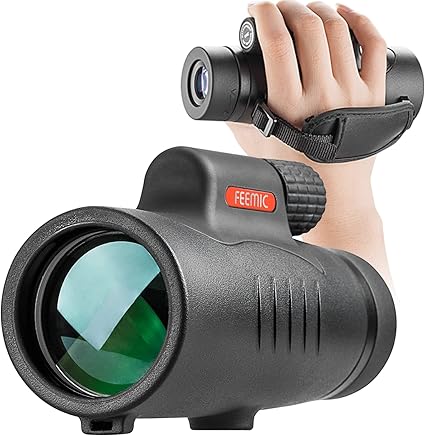
Lightweight and compact, the High Power 8×42 Monocular Telescope fits well for anyone after a low power spotting scope that offers a wide view. Its 8X magnification combined with a 42mm lens makes it ideal for outdoor enthusiasts who want clear, broad scenes without lugging heavy gear.
Setup is simple thanks to the manual focus and an altazimuth mount that’s easy to adjust. The built-in lens dust cover helps keep the optics clean, and the rubber exterior gives a secure grip while protecting against shocks.
It feels sturdy and handles everyday outdoor conditions without fuss, making it easy to use on hikes or birdwatching trips.
Performance mostly impresses with sharp images thanks to the FMC Superior BAK-4 prism and fully multi-coated lenses. It delivers a large 360ft/1000yards field of view that makes scanning landscapes enjoyable. The design is rugged with waterproof, fogproof, and dust-proof features, protecting its internals well.
Some users mention manual focus can be a bit fiddly when quickly switching targets.
Strong points in user comments highlight the sharp and wide view made possible by the high-quality glass and coatings, ideal for detailed observations in nature. Common drawbacks involve the manual focus struggling during rapid changes in focus distance, demanding patience from the user.
The device suits those wanting dependable performance on outdoor trips, appreciating durability and optical clarity over speed. Less suitable for users needing very fast focusing or smaller, lightweight monoculars for ultralight travel.
Pros
- Wide field of view covers large areas easily
- Durable build with waterproof and shockproof design
- Clear images from high-quality BAK-4 prism optics
- Compact size fits comfortably in hand
Cons
- Manual focus can be slow for quick adjustments
- Lenses require care to avoid dust despite cover
| Specification | Details |
|---|---|
| Magnification Power | 8 multiplier x |
| Objective Lens Diameter | 42 millimeters |
| Field Of View | 360 degrees |
| Focus Type | Manual Focus |
| Coating | Fully Multi-Coated |
| Waterproof | Yes, Nitrogen-filled waterproof |
9. 20-60×80 HD Spotting Scope

Powerful zoom capabilities in a compact form make the 20-60×80 HD Spotting Scope ideal for anyone wanting detailed views in outdoor settings. Its standout feature is the smooth dual focusing system that makes adjustments quick and precise, perfect for bird watchers and hikers alike.
Setting up involves attaching the included tripod which feels sturdy enough for steady viewing. The carrying case adds convenience when moving from one location to another. Daily use benefits from the lightweight aluminum build at just over a kilogram, making it easy to handle for extended periods without strain.
The phone adapter comes in handy for capturing what you see.
The scope delivers sharp images across its zoom range, allowing clear observation from near up to over 80 feet at 1000 yards, which impresses when checking distant mountain details or wildlife. The aluminum body balances durability and lightweight use well. Common praise is for the smooth dual focus; the main complaint centers on its overall size being a bit bulky compared to smaller optics.
Smooth dual focus allows quick and easy sharpening at different distances, something reviewers love for bird watching or enjoying distant views. The scope’s bulky size often comes up as an inconvenience during hiking or when trying to travel light.
People wanting a powerful zoom and clear detailed images will be satisfied, especially if they prefer carrying a tripod for stability. Those looking for a more compact or minimalist setup might want to consider smaller or lighter options.
Pros
- Powerful zoom from 20x to 60x
- Lightweight aluminum construction
- Comes with tripod and phone adapter
- Smooth dual focusing system
Cons
- Size is a bit bulky for some users
- Carrying case adds extra bulk
| Specification | Details |
|---|---|
| Magnification | 20-60x |
| Objective Lens Diameter | 80 mm |
| Weight | 1.18 kg |
| Material | Aluminum |
| Package Dimensions | 16.57 x 7.05 x 4.69 inches |
| Included Components | Spotting Scope, carrying case, tripod, phone adapter |
10. 20-60×80 HD Spotting Scope
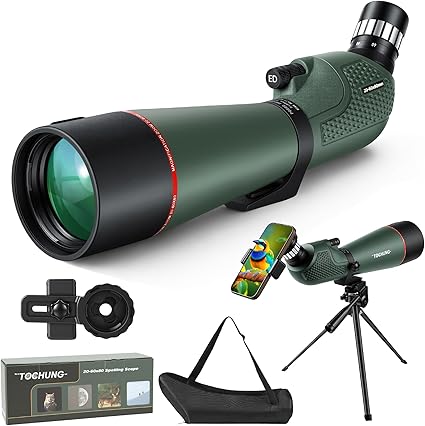
Spotting targets at long distances without lugging heavy gear becomes easier with an 80mm lens scope offering up to 60x zoom. Perfect for outdoor enthusiasts into birdwatching or precise target spotting, its biggest strength lies in bright and clear images, even far away.
Setting up involves attaching the scope to a tripod mount, which feels stable during use. Manual focus requires a bit of attention but gives precise control over clarity. The fully multi-coated optics let plenty of light through, keeping views bright.
Smartphone compatibility allows snapping distant shots, adding versatility to everyday use.
Zooming from 20x to 60x offers fine detail at long distances without losing image quality. The build stands up well in wet or foggy conditions, thanks to waterproof and fogproof design. Most enjoy the crisp HD viewing, though some mention the manual focus takes getting used to for quick adjustments.
Users appreciate the clear, high-definition view across long distances, but some struggle with the manual focus when trying to adjust quickly. The durable build withstands weather well, keeping images bright and sharp.
Birdwatchers and target shooters needing steady, detailed views will find this scope suitable. Those wanting lightweight gear or faster autofocus might prefer different models.
Pros
- Bright and sharp images with large 80mm lens
- Steady tripod mount for stable viewing
- Wide zoom range from 20x to 60x
- Waterproof and fogproof for all-weather use
Cons
- Manual focus can be tricky for quick changes
- Heavier than smaller spotting scopes
| Specification | Details |
|---|---|
| Mount | Tripod Mount |
| Focus Type | Manual Focus |
| Field Of View | 1000 yard |
| Zoom Ratio | 20x-60x |
| Additional Features | Fully Multi-Coated Optics, Waterproof & Fogproof, Universal Smartphone Adapter |
11. 20-60×60 Spotting Scope

20-60X magnification makes spotting details easy, perfect for casual birdwatchers or light observers who want a versatile, low-power spotting scope. The 60mm fully multi-coated lens paired with a BAK4 prism ensures clear, bright images even in low light conditions.
Setting up takes just minutes with the included lightweight tripod, which weighs only 1.5 pounds and moves smoothly for quick adjustments. The extendable sun hood helps reduce glare on brighter days, and the fast focus feature lets you lock in sharp views without any fuss. Comes with a carry bag so you can take it anywhere without hassle.
Provides crisp, high-contrast images thanks to the BAK4 Porro prism and multi-coated lens. Its waterproof housing handles light rain and morning dew well, while the matte, non-slip armor maintains grip in wet or gloved hands.
Some users note that the zoom can be a bit tricky to stabilize at the highest magnification.
The bright, high-contrast images at dawn and dusk are a standout feature, making low-light spotting a strong point. The most common drawback is difficulty holding the view steady at maximum zoom levels, which may require extra care or a sturdier tripod for some users.
Birdwatchers and casual outdoor enthusiasts who prioritize portability and low-to-mid power magnification will appreciate this scope. People needing very stable, high-magnification viewing or professional-grade optics might want to explore options with heavier tripods or fixed positions.
Pros
- Bright images in low light conditions
- Lightweight design easy to carry
- Waterproof and fogproof housing
- Fast-focus knob for quick clarity
Cons
- Zoom can be hard to steady at 60x
- Tripod may feel less stable on uneven ground
| Specification | Details |
|---|---|
| Zoom Ratio | 20-60x |
| Objective Lens Diameter | 60mm |
| Field Of View | 108 feet at 1000 yards |
| Eyepiece Angle | 45° angled eyepiece |
| Mount | Tripod |
| Focus Type | Fast focus |
12. SVBONY SV410 Spotting Scope 9-27×56

Birdwatchers, hikers, and travelers will appreciate a compact, lightweight spotting scope that slips easily into any jacket pocket or backpack. Known especially for its true-to-life color delivery thanks to ED glass, it’s a great fit for anyone needing a low power, portable option without compromising image quality.
Setting it up is simple, with manual focus and a twist-up eyecup that adapts well to different eyesight needs. Day-to-day, it stays light on your gear thanks to its 550g weight. The fully multi-coated objective lens helps keep your views bright during longer outdoor sessions, while the reflex finderscope makes spotting the target straightforward.
Its standard thread interface means you can easily add accessories or a compatible digital eyepiece.
Image clarity is sharp and the extra-low dispersion optics reduce color fringing on fine details like bird feathers. Build quality feels solid for such a lightweight scope. The biggest praise highlights vivid, natural colors and excellent contrast.
The most common complaint relates to the manual focus, which can take some getting used to for quick adjustments in the field.
Users praise the vivid, natural color and sharp detail this scope offers thanks to its extra-low dispersion optics and multi-coated lenses. Common feedback points to the manual focus system requiring patience when adjusting in fast-moving situations.
Birdwatchers, hunters, and hikers who value portability and image quality will find this scope fits well into their adventures. Those needing rapid focus changes or wider views may want to look at other models better suited to those specific demands.
Pros
- Extremely lightweight and easy to carry
- True-to-life color with ED glass
- Bright, sharp images at high magnification
- Compatible with cameras and smartphones
Cons
- Manual focus can be slow for quick spotting
- Relatively narrow field of view at max zoom
| Specification | Details |
|---|---|
| Eye Piece Lens Description | ED Glass, Twist up eyecup |
| Focus Type | Manual Focus |
| Weight | 550g |
| Zoom Ratio | 3:1 (9-27x) |
| Field Of View | 78 feet |
| Coating | Fully Multi-Coated |
Best Low Power Spotting Scopes Comparison Table
| Product | Magnification | Mount Type | Coating | Additional Features |
|---|---|---|---|---|
| SVBONY SV28 Scope | 3:1 zoom | Equatorial Mount | FMC | Waterproof, 45 degree |
| Bushnell Prime 16-48×50 | Max 16x | Tripod Mount | Fully Multi-Coated | Lightweight, Waterproof |
| Celestron C70 Mini Maksutov | 3x zoom | Equatorial Mount | Multi-Coated | Smartphone compatible |
| Celestron C90 Maksutov Scope | 39x multiplier | Equatorial Mount | Multi-Coated | Smartphone compatible |
| Vortex Solo 10×36 Monocular | 10x | Equatorial Mount | Multiple anti-reflective | Battery powered |
| Flagship 20-60×80 Scope | 60x multiplier | Altazimuth Mount | Fully Multi-Coated | Smartphone compatible |
| High Powered 80×100 Monocular | High powered | Tabletop tripod | – | Smartphone adapter |
| High Power 8×42 Monocular | 8x | Altazimuth Mount | Fully Multi-Coated | Reflex finderscope |
| HD 20-60×80 Spotting Scope | 20-60x | – | – | Aluminum material |
| HD 20-60×80 Spotter | 20-60x | Tripod Mount | Fully Multi-Coated | Waterproof, smartphone adapter |
| 20-60×60 Spotting Scope | 20-60x | Tripod | – | Fast focus eyepiece |
| SVBONY SV410 9-27×56 | 9-27x | Standard thread | Fully Multi-Coated | ED glass, twist eyecup |
- Magnification3:1 zoom
- Mount TypeEquatorial Mount
- CoatingFMC
- Additional FeaturesWaterproof, 45 degree
- MagnificationMax 16x
- Mount TypeTripod Mount
- CoatingFully Multi-Coated
- Additional FeaturesLightweight, Waterproof
- Magnification3x zoom
- Mount TypeEquatorial Mount
- CoatingMulti-Coated
- Additional FeaturesSmartphone compatible
- Magnification39x multiplier
- Mount TypeEquatorial Mount
- CoatingMulti-Coated
- Additional FeaturesSmartphone compatible
- Magnification10x
- Mount TypeEquatorial Mount
- CoatingMultiple anti-reflective
- Additional FeaturesBattery powered
- Magnification60x multiplier
- Mount TypeAltazimuth Mount
- CoatingFully Multi-Coated
- Additional FeaturesSmartphone compatible
- MagnificationHigh powered
- Mount TypeTabletop tripod
- Coating–
- Additional FeaturesSmartphone adapter
- Magnification8x
- Mount TypeAltazimuth Mount
- CoatingFully Multi-Coated
- Additional FeaturesReflex finderscope
- Magnification20-60x
- Mount Type–
- Coating–
- Additional FeaturesAluminum material
- Magnification20-60x
- Mount TypeTripod Mount
- CoatingFully Multi-Coated
- Additional FeaturesWaterproof, smartphone adapter
- Magnification20-60x
- Mount TypeTripod
- Coating–
- Additional FeaturesFast focus eyepiece
- Magnification9-27x
- Mount TypeStandard thread
- CoatingFully Multi-Coated
- Additional FeaturesED glass, twist eyecup
How to Choose the Right Low Power Spotting Scope
Choosing the right low power spotting scope means focusing on factors like magnification, lens quality, and durability to ensure clear, stable views. Prioritizing these features prevents frustration and frequent replacements, ultimately saving money and providing a better outdoor experience.
Magnification and Field of View
Trying to scan a wide field with a high magnification scope can turn frustrating fast. Higher magnification narrows the view and can make it harder to keep the image steady, especially without a tripod. Lower magnification in the 15x to 20x range typically offers a better balance; you get a wide field of view that’s essential for tracking moving targets or covering open terrain quickly.
In daily use, a narrow field means constantly moving the scope to catch up with what you’re observing. A wide field of view around 200-400 feet at 1000 yards makes it easier to spot and follow animals or birds without losing them. Clarity tends to hold up better at this lower zoom, meaning you avoid blurry images caused by shakiness or poor resolution.
Optical Quality and Lens Coatings
The difference lens coatings make is immediately noticeable under bright sunlight or low-light conditions. Coatings that reduce glare allow more light to pass through, producing brighter and sharper images. Look for multi-coated lenses as a standard; these typically deliver better light transmission compared to single coatings.
Optics without sufficient coatings can show washed-out colors and reflections, making it tough to identify details accurately. A good set of coatings minimizes these issues, improving color fidelity and contrast. This matters a lot during morning or evening when lighting is tricky, or when you are looking against reflective surfaces like water or snow.
Size and Portability
Carrying a heavy, bulky scope on a long hike soon gets old. Portability hinges on weight and size. Scopes around 1.5 to 2.5 pounds are manageable, especially if you have to carry extra gear.
Compact designs with lengths under 10 inches fit easier in backpacks or side pouches, which helps in tight or variable terrain.
Durability counts too, especially during transport. A solid case or padded bag prevents scratches and damage from bumps.
A well-made, compact scope is easier to pull out quickly and use, avoiding those moments where fumbling causes missed sightings.
Build Quality and Weather Resistance
Materials such as aluminum or high-grade polycarbonate make a noticeable difference in how well a scope handles rough outdoor use. Cheaper plastics can crack or wear out fast during regular adventures. Metal bodies usually offer better longevity.
Reliable waterproof and fogproof features allow using the scope in rain or humid environments without image deterioration. Nitrogen or argon purging is common to prevent internal fogging. Impact resistance protects the scope if dropped or knocked around, so scopes with rubber armor or reinforced housings are easier to rely on.
Ease of Use and Adjustment
Adjustments that are stiff or hard to reach complicate use in the field. Large, textured knobs for focus and zoom controls let you make precise changes easily, even with gloves on or in cold weather.
The smoother and more intuitive these controls feel, the less time is wasted.
Ergonomic design is key for comfortable handling during extended use. Non-slip surfaces and thoughtful shape reduce hand fatigue.
Compatibility with tripods or mounts also matters, as long sessions benefit from steadier viewing. Standard 1/4-20 mounting threads are common and work with a wide range of tripods.
Maximizing Performance: Tips for Effective Use of Low Power Spotting Scopes
Choosing the right setup can significantly improve your experience with a low power spotting scope. Stability is key; mounting the scope on a sturdy tripod prevents shaky images that strain your eyes. Adjust the eyepiece to suit your eyesight, focusing carefully on the subject before fine-tuning the zoom.
This approach reduces eye fatigue and gives sharper details.
Consider these tips for better use:
- Set up in a location with minimal vibrations or disturbances.
- Use daylight to your advantage, early mornings and late afternoons offer clearer views due to less atmospheric distortion.
- Protect your hands from cold, which can affect steadiness, especially during long sessions.
- Check the angle of the scope regularly to avoid awkward neck positions that cause discomfort.
Consistent practice with these techniques helps in getting the most out of the spotting scope, making it easier to spot details at lower magnifications.
Maintaining Your Spotting Scope: Cleaning and Care Best Practices
Spotting scopes require careful maintenance to keep optical clarity over time. Dirt, dust, and moisture are the main culprits that degrade performance. Cleaning should be done with the right tools to avoid scratches on the lenses.
Follow these care practices:
- Use a soft brush or air blower to remove loose particles before wiping lenses.
- Apply lens cleaning solution sparingly with a microfiber cloth, wiping gently in a circular motion.
- Store the scope in a dry place, preferably in a protective case to shield it from impact and moisture.
- Check and tighten any loose parts periodically to maintain alignment and function.
Routine cleaning after every outing ensures clearer views and prolongs the life of your spotting scope.
Comparing Low Power Spotting Scopes with Binoculars and Monoculars
Low power spotting scopes fill a niche between binoculars and monoculars, offering a different balance of portability and magnification. Compared to binoculars, the scope generally provides stronger zoom capabilities and a more stable platform when used with a tripod, which can offer sharper images at distance.
Points of comparison include:
- Field of view: Binoculars typically have a wider field, making tracking moving objects easier.
- Portability: Monoculars are more compact and lighter than spotting scopes, ideal for quick or hands-free use.
- Image stability: Spotting scopes, when tripod-mounted, reduce shake more effectively than handheld binoculars or monoculars.
- Magnification: Spotting scopes usually provide clearer details at higher magnifications.
Choosing between these depends on specific needs like distance, ease of carrying, and the type of observation. Each device serves different purposes without replacing the others fully.
People Also Asked
How Do I Properly Clean and Care for My Spotting Scope?
Use a soft brush or air blower to remove dust first, then gently clean lenses with a microfiber cloth and lens cleaner made for optics. Avoid using household cleaners or tissues, which can scratch lenses or leave residue and keep the scope covered when not in use.
What Size Spotting Scope Is Best for Low Power Viewing?
Sizes around 20-40mm objective lens work well for low power viewing, balancing image brightness and portability. Larger lenses gather more light but are bulkier and harder to stabilize without a tripod.
Are Low Power Spotting Scopes Safe to Use for Extended Periods?
Low power spotting scopes do not emit harmful radiation, so they are generally safe for extended viewing. Take breaks to avoid eye strain from lots of close focusing and keep the scope steady to prevent fatigue.
How Long Do Low Power Spotting Scopes Typically Last with Regular Use?
These scopes can last several years if stored properly and maintained by cleaning lenses and lubricating moving parts occasionally. Heavy outdoor use might require more frequent attention but does not usually shorten lifespan quickly.
What Are Common Problems with Low Power Spotting Scopes and Fixes?
Common issues include blurry images from dirty lenses and loose focus knobs causing image drift. Clean lenses carefully and check screws or focus mechanisms regularly; some scopes allow easy part replacement to fix mechanical problems.
Conclusion
Choosing a low power spotting scope comes down to clarity, size, and ease of use. You want clear images without straining your eyes, a compact size that fits your carrying needs, and controls that are straightforward to adjust in different light conditions.
Consider how often you will use the scope and where you plan to keep it. A heavier or larger scope may not suit casual use or small storage spaces. Check the comparison table and our detailed picks above to find the best balance between performance and practicality for your needs.