
Top 12 Best Mid Range Scope for 223 That Will Blow Your Mind
Plenty of shooters aiming for precision in the 100 to 300-yard range know the frustration of a scope that fogs up, shifts zero, or has an unclear reticle. The best mid range scope for 223 rifles needs to hold zero despite recoil and changing conditions. A shaky or cluttered sight picture can quickly ruin an otherwise solid shot.
Durability is crucial, typically meaning a tube made of aircraft-grade aluminum that resists impact and corrosion. Magnification in the 4-16x range works well for 223 rounds, providing clear detail without pushing too much weight.
A scope with exposed turrets or one-step adjustments keeps dialing quick and reliable. Also, waterproof and fog-proof features matter most to keep the lenses clean and clear in the field.
Need a Quick Check?
| Image | Product | Price |
|---|---|---|
Our Top Picks 1  | Vortex Triumph HD | Check Price |
Our Top Picks 2  | Triton Ronin 2 MPVO | Check Price |
Our Top Picks 3  | Triton Ronin 3 HD | Check Price |
Our Selected Top 12 Mid Range Scope for 223 Picks for Every Need
This list features reliable mid-range scopes designed for .223 rifles, offering detailed reviews focused on performance, suitability, strengths, and weaknesses. Each entry provides clear insights to help you understand which scope best matches specific shooting needs and preferences.
1. Vortex Triumph HD 3-9×40 Riflescope
Vortex Triumph HD 3-9×40 Riflescope stands out with its clear optics and simple design, making it well suited for newer hunters looking for dependable gear without complexity. Its biggest strength lies in providing sharp, bright images, even in low light conditions.
Setup is straightforward with the included 1 Hunter Rings and neoprene case, making it easy to mount and protect the scope. The Dead-Hold BDC reticle helps hold shots at varying distances without fuss.
Day-to-day use benefits from fully multi-coated lenses that improve clarity and reduce glare during early morning or late evening hunts.
Performance impresses with edge-to-edge sharpness and good color fidelity thanks to the HD optical system and select glass elements. The build is solid, focusing on low profile and durability through the 0.90 low-height rings. Strong praise centers on the clear sight picture, while a common complaint is the limited maximum magnification of 9x for longer-range shooting.
Sharp and bright imagery is praised for making target acquisition easier throughout the day, especially in low light. Users note the limited 9x magnification as a drawback when trying to engage targets at extended distances.
Hunters needing a straightforward scope that performs well in common hunting situations will be satisfied. Those requiring higher magnification or specialized features for long-range shooting should look elsewhere.
Pros
- Clear optics with excellent color fidelity
- Simple setup with included mounting rings
- Good low-light performance
- Edge-to-edge sharpness
Cons
- Maximum magnification limited to 9x
- Not suited for very long-range shooting
| Specification | Details |
|---|---|
| Magnification Maximum | 9 x |
| Objective Lens Diameter | 40 millimeters |
| Magnification Minimum | 3 x |
| Mounting Type | Ring Mount |
| Reticle Type | Dead-Hold BDC |
2. Triton Ronin 2-10×32 MPVO
Opting for a mid range scope with adaptable brightness and sharp optics, the Triton Ronin 2-10×32 MPVO suits hunters and shooters wanting solid performance from 2x to 10x magnification. Its greatest strength lies in the combination of a fiber optic and battery-powered reticle that makes aiming clear in all lighting.
Setting it up is straightforward, and the wider 2x magnification helps when quickly shifting targets nearby while the 10x zoom tightens precision for shooting out mid range. The illumination has several brightness settings, letting you handle bright days and dim conditions easily.
Multi-coated lenses contribute to clear images, reducing glare and maintaining contrast.
Optical quality stands out, delivering crisp target definition with good color clarity across the field of view. The build feels solid with well-crafted glass, and the reticle remains visible without overpowering the target. A common gripe is that the illumination battery can drain faster with frequent use, requiring attention before outings.
Strong points include bright, adjustable reticle illumination and exceptional glass clarity that keeps targets crisp from edge to edge. Most users notice battery life as a weak spot, needing replacement or recharge after long or frequent sessions.
Ideal for shooters who want versatility from close to mid range and prioritize clear sight images under different lights. Those relying on very low light shooting or extended battery life might consider options with larger lenses or different illumination systems.
Pros
- Hybrid fiber optic and battery powered reticle
- Multi brightness settings for diverse lighting
- Sharp, high contrast Ronin HD glass
- Wide 2-10x zoom range
Cons
- Battery may drain quickly with heavy illumination use
- 32mm objective lens may limit light gathering in very low light
| Specification | Details |
|---|---|
| Magnification Minimum | 2 x |
| Magnification Maximum | 10 x |
| Objective Lens Diameter | 32 millimeters |
| Reticle Type | F1 Duplex |
| Compatible Devices | Rifle |
3. Triton Ronin 3-9×32 HD MPVO
Getting clear shots from close to mid-range can be tricky without switching optics constantly. The Triton Ronin 3-9×32 HD MPVO works well for folks who want a versatile zoom without carrying the bulk of a precision scope.
Its biggest strength lies in balancing magnification and clarity in a compact design.
Setting up the scope is straightforward thanks to its manageable size and weight. The 3-9x magnification range covers a good variety of shooting distances without feeling too long or heavy on a 223 rifle.
The second focal plane reticle keeps the aiming point consistent, which helps when adjusting magnification on the fly. The compact 32mm objective lens keeps it from getting too bulky, making it comfortable for everyday carry.
Performance-wise, the glass clarity stands out for giving a clean sight picture through all zoom levels. The build feels solid and rugged enough for regular use, without unnecessary weight.
The biggest compliment often centers on how well it balances reach and portability. On the downside, a few find that the maximum 9x magnification might not be enough for long-range precision beyond mid distances.
Users appreciate the clean and clear sight picture the optics provide from 3 to 9 times magnification, making it adaptable for different distances. The most common issue mentioned is that the 9x max zoom can fall short for those wanting to push the rifle’s reach further beyond mid-range.
Shooters who want a lightweight scope that offers flexibility between close and mid-range shots will find it well-suited. Those who require higher magnification for extended distances or more varied reticle options may want to consider other scopes tailored specifically for precision long-range shooting.
Pros
- Clear HD glass across entire magnification range
- Moderate zoom covers close and mid-range well
- Compact size fits lightweight rifle setups
- Consistent reticle sizing at all zoom levels
Cons
- Max 9x magnification limits long-range precision
- Reticle options are limited to F2 Duplex only
| Specification | Details |
|---|---|
| Magnification Minimum | 3 x |
| Magnification Maximum | 9 x |
| Objective Lens Diameter | 32 millimeters |
| Reticle Type | F2 Duplex |
| Compatible Devices | Rifle |
4. CVLIFE EagleTalon 2-10×32 AO Rifle Scope
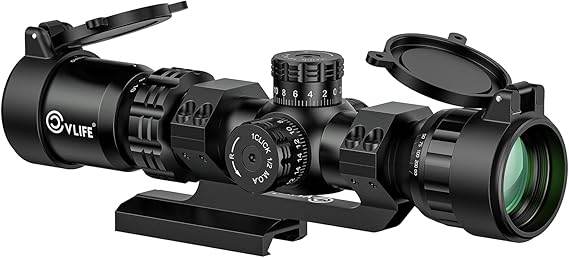
Magnification ranging from 2 to 10 times makes the CVLIFE EagleTalon 2-10×32 AO perfect for mid-range shooting, especially with .223 rifles. What stands out is its parallax adjustment combined with a dual color illuminated reticle, suited for quick target acquisition in varying light conditions.
Setting it up involves attaching the cantilever mount designed for low-power variable optics, making alignment straightforward. The exposed locking turrets offer quick and precise adjustments by touch, saving time at the range. The fast focus eyepiece helps maintain a clear sight picture day after day, while the illumination settings handle both bright daylight and low-light shooting.
The scope performs consistently, offering clear, sharp images across its magnification range. The etched glass reticle’s red and green illumination at five levels is appreciated during dawn or dusk.
It’s built solid with precise clicks on the turrets, though some find the smallest adjustment increments a bit sensitive. The main praise is the clarity and quick target relocking, while the common complaint centers on its bulkier cantilever mount adding some weight.
Clear, crisp optics combined with the illuminated reticle make acquiring targets straightforward in different lighting. Users often mention the setup is reliable but report that the mounted weight feels slightly heavy for extended carry. The tactile turret clicks are precise but might take a little getting used to.
Those looking for adaptable magnification and illuminated aiming points will find this scope well matched to their .223 or similar calibers. It suits shooters focused on daylight and low-light conditions, while users needing ultra-light setups might want to explore lighter options.
Pros
- Versatile 2-10x magnification for varied distances
- Five settings for red and green illuminated reticle
- Exposed locking turrets with tactile, audible clicks
- Fast focus eyepiece for quick adjustments
Cons
- Cantilever mount adds noticeable weight
- Turret adjustments may feel overly sensitive for some
| Specification | Details |
|---|---|
| Magnification Minimum | 2 x |
| Magnification Maximum | 10 x |
| Objective Lens Diameter | 32 millimeters |
| Mounting Type | Cantilever Mount |
| Reticle Type | CVX-1 |
5. SIG SAUER Tango-MSR 1-6×24 Riflescope

Ideal for shooters looking for a flexible zoom range and clear optics, the SIG SAUER Tango-MSR 1-6×24 suits mid-range shooting with a keen focus on light transmission and reticle versatility. Its main strength lies in excellent optical clarity thanks to the high-performance 6x system with low dispersion glass.
Setting up the scope is straightforward with the included cantilever mount that fits rifles easily. Day-to-day use benefits from the illuminated MSR BDC-6 reticle, which has 11 brightness levels, allowing for quick adjustments based on lighting. The integrated throw lever lets you switch magnifications from 1x to 6x quickly without fumbling, making it practical whether you’re taking close or longer shots.
Performance shines with clear sight pictures and precise shot placement, especially in varied light conditions due to the light transmission quality. The build feels solid and designed to handle regular use, although some reviews mention the illumination settings could be simpler to manage. Most users praise clarity and brightness, while the occasional difficulty with reticle brightness adjustments is noted.
The scope offers impressive clarity and brightness, making shot placement reliable in various lighting. The most frequent downside is the challenge in managing the illumination levels for the reticle. Its magnification and reticle features combine well for many shooting conditions, though some may find brightness controls less intuitive.
Shooters seeking a flexible mid-range scope with clear optics and quick zoom changes will appreciate what this offers. Those who need simpler illumination controls or a larger objective lens for very low-light situations might prefer alternatives better suited to those needs.
Pros
- Exceptional optical clarity with low dispersion glass
- Illuminated reticle with 11 brightness levels
- Quick magnification changes via integrated throw lever
- Easy rifle mounting with cantilever system
Cons
- Reticle brightness adjustment can feel complicated
- Objective lens size limits low-light gathering
| Specification | Details |
|---|---|
| Magnification Minimum | 1 x |
| Magnification Maximum | 6 x |
| Objective Lens Diameter | 24 millimeters |
| Mounting Type | Cantilever Mount |
| Reticle Type | Illuminated MSR BDC-6 Reticle |
6. Vortex Venom First Focal Plane Riflescope

Built for precision at long ranges, the Vortex Venom First Focal Plane Riflescope suits shooters using .223 who need a wide magnification range and reliable zeroing. Its standout feature is the large 34mm tube with 85 MOA turret travel, allowing for extensive elevation and windage adjustments.
Setting up the scope takes advantage of the RevStop Zero System, making zeroing fast and dependable without messing up your settings. Parallax adjustment is easy with the side knob, showing range numbers clearly during use.
The 5-25x magnification range fits well for various mid- to long-distance shots, and eye relief stays comfortable at 9.1 centimeters throughout the zoom levels.
Optically, the XD system offers clear images with minimal chromatic aberration, and lens coatings keep clarity high in low light. The build is solid and focused on precision without adding excessive weight. Reviews appreciate the crisp performance and easy adjustments.
Some mention the side parallax knob can feel a bit stiff at times but nothing major.
The scope delivers sharp, consistent clarity with optical coatings that perform well even in low light. Its RevStop Zero System allows quick resetting to zero, praised in reviews. Some find the parallax side knob a bit stiff but manageable with use.
This scope fits competitive shooters and those needing extensive adjustment for long-range .223 shooting. Anyone looking for a lighter, more compact scope might want to explore smaller options with lower objective lens diameter.
Pros
- Wide 5-25x magnification range
- 85 MOA turret travel for elevation and windage
- Clear edge-to-edge optics with minimal aberration
- Fast, reliable RevStop Zero System
Cons
- Parallax adjustment knob can feel stiff
- Bulky 56mm objective lens may require mounting clearance
| Specification | Details |
|---|---|
| Magnification Minimum | 5x |
| Magnification Maximum | 25x |
| Objective Lens Diameter | 5.6 centimeters |
| Eye Relief | 9.1 centimeters |
| Reticle Type | EBR-7C |
| Mounting Type | Cantilever Mount |
7. MidTen 4-16×50 AO Hunting Rifle Scope

MidTen 4-16×50 AO Hunting Rifle Scope offers a versatile mid-range option for .223 rifle shooters who value flexibility and accuracy. It shines with its combination of a riflescope, laser sight, red dot sight, and flashlight, making it a practical choice for hunting across various lighting conditions.
Setting up the scope is straightforward, thanks to its Picatinny mount compatibility. Switching between the 4-16x magnification and the illuminated reticles in red or green with five brightness levels helps adapt quickly to different shooting scenarios. The built-in flashlight with five brightness modes is useful for low-light target acquisition, and the independent Class IIIA laser sight adds extra precision for aiming up to 300 meters away.
Performance aligns well with what hunters expect from a mid-range scope. The optics provide a clear, 50.85 feet field of view at 100 yards, offering enough detail and range to target effectively.
The construction feels solid for the price, though some users mention adjustments can be a bit fiddly at first. Strong points include the helpful range-finding reticle and reliable illumination options. The most noted drawback is the complexity introduced by so many features, which might overwhelm some during quick setups.
The illumination system gets strong praise for offering both red and green reticles with multiple brightness settings, improving visibility in varied conditions. The addition of a laser and flashlight adds value but some find juggling these options less intuitive, especially under pressure.
Hunters who prioritize adaptable sighting options and low-light readiness will appreciate this scope’s blend of features. Those looking for a simple and quick-to-use setup might want to explore more straightforward scopes without integrated extras.
Pros
- Includes red and green illuminated reticles
- Comes with laser sight and multi-mode flashlight
- Wide magnification range from 4x to 16x
- Compatible with standard Picatinny mounts
Cons
- Feature-rich design can feel complicated to operate
- Aiming adjustments may require patience
| Specification | Details |
|---|---|
| Magnification Minimum | 4 x |
| Magnification Maximum | 16 x |
| Objective Lens Diameter | 50 millimeters |
| Field Of View | 50.85 feet |
| Mounting Type | Picatinny Mount |
| Reticle Type | Illuminated Range Finding Reticle |
8. SIG SAUER Buckmasters 3-12×44 Riflescope

Using a scope that adjusts well to varied distances makes a noticeable difference in shooting accuracy. Perfect for hunters and shooters needing clear views in different scenarios, it stands out for its sharp optics paired with versatile magnification.
The Buckmasters 3-12×44 strikes a good balance between power and clarity, helping maintain a steady aim across multiple ranges.
Setting up the scope is straightforward thanks to the Weaver Mount compatibility. The 3x to 12x zoom range covers close to mid-distance shots comfortably, which suits many typical hunting conditions.
The field of view at 34.1 feet lets you locate and track targets without constantly adjusting your position. The BDC reticle with holdover dots simplifies shooting at varied distances, which can save time in the field.
Clear and crisp images remain consistent at all magnifications thanks to the low-dispersion glass. The build quality feels solid enough for regular outdoor use, resisting the usual wear. Most praise focuses on how the BDC reticle makes long-distance shots more manageable, while complaints often mention that it can be a bit bulky for users wanting a lighter optic.
Durable but with some weight to consider.
The sharp images and precise holdover options make long-range shots more reliable with this scope. Some users find its size adds noticeable weight, which can impact handling during extended use.
Hunters needing clear visuals and adjustable magnification will appreciate this scope’s abilities. Those seeking a very lightweight or minimalist setup might want to consider other models.
Pros
- Sharp clarity at all magnifications
- BDC reticle with holdover dots to 500 yards
- Wide field of view for easier target tracking
- Compatible with rifles, shotguns, crossbows
Cons
- Heavier than some mid-range scopes
- May feel bulky for lightweight setups
| Specification | Details |
|---|---|
| Magnification Minimum | 3 x |
| Magnification Maximum | 12 x |
| Objective Lens Diameter | 44 millimeters |
| Field Of View | 34.1 feet |
| Reticle Type | BDC |
| Mounting Type | Weaver Mount |
9. MidTen 3-9×40 Rifle Scope with Laser

Great value for anyone looking for a mid-range scope on a .223 rifle. It combines a 3-9x magnification scope with a red laser for quick target acquisition, making it a solid choice for both hunting and general shooting.
The wide field of view stands out as its biggest advantage.
Setting it up on a Picatinny mount is straightforward, and the eye relief between 3.7 and 4.1 inches feels comfortable during use. Switching between red and green reticle illumination with five brightness levels lets you adjust for different lighting, which helps with aiming in varying conditions.
The laser is handy for fast close-range shots, complementing the magnified view.
The scope delivers a bright and clear image thanks to the fully multi-coated lenses and a wide field of view of 36.5 feet at 100 yards. It holds zero well, but some mention the laser’s brightness could be stronger outdoors.
The build feels solid for the price point, though the laser alignment might need occasional tweaking after rough handling.
Bright and clear images stand out most, supported by fully multi-coated lenses and good field of view. Common complaints revolve around the laser’s limited brightness and stability under heavy recoil or movement.
Hunters and shooters who want quick switching between magnified shots and close-range aiming will appreciate the combo. Look elsewhere if a stronger, more stable laser is a priority or if you rarely use illumination features.
Pros
- Wide field of view at 36.5 feet
- Dual red and green reticle illumination
- Includes a Class IIIA red laser
- Comfortable eye relief for quick sighting
Cons
- Laser brightness could be higher outdoors
- Laser alignment may shift after rough handling
| Specification | Details |
|---|---|
| Magnification Minimum | 3 x |
| Magnification Maximum | 9 x |
| Objective Lens Diameter | 40 millimeters |
| Eye Relief | 9.1 centimeters |
| Field Of View | 36.5 feet @ 100 yards |
| Mounting Type | Picatinny Mount |
10. Vortex Crossfire HD 30mm Riflescope

Crafted with a solid build and a 30mm tube, this riflescope suits intermediate shooters who demand clear, sharp optics in mid-range engagements. Its main strength lies in delivering vibrant, edge-to-edge clarity through a high-quality HD Optical System, making it a solid pick for 223 caliber rifles.
Setup is straightforward thanks to its user-friendly reticle with illuminated Dead-Hold BDC, which helps with holdover and windage adjustments at different distances. The fully multi-coated lenses improve visibility in low-light, adding an advantage during dawn or dusk shooting sessions.
Day-to-day handling is comfortable, and the 6x to 18x magnification range covers a lot of ground without constant adjustments.
Optical performance holds up well, delivering crisp detail and minimal chromatic aberration that improves target acquisition. The scope feels sturdy, designed for rifle use with a 50mm objective lens that gathers plenty of light.
Reviews often praise the clarity and accurate reticle but note that the scope can be a bit bulky for lightweight setups.
The scope consistently earns praise for its clear optics and useful illuminated reticle that simplify aiming at various distances. The most frequent drawback mentioned involves its size and weight, which may not suit all rifle setups.
Hunters and target shooters who value a bright, precise sight picture and solid build will find it reliable. Those seeking a lighter, more compact option for fast handling might want to explore alternatives.
Pros
- Sharp resolution with excellent color fidelity
- Fully multi-coated lenses for better low-light clarity
- Effective holdover and windage guidance
- Illuminated reticle aids quick target acquisition
Cons
- Can feel bulky on lightweight rifles
- Heavier than some competing mid-range scopes
| Specification | Details |
|---|---|
| Magnification Minimum | 6 x |
| Magnification Maximum | 18 x |
| Objective Lens Diameter | 50 millimeters |
| Reticle Type | Illuminated Dead-Hold 2A BDC (MOA) |
11. Leupold VX-Freedom 3-9×40 Riflescope

Sharp image quality stands out the most in this scope, suited for shooters seeking reliable mid-range performance on a .223 rifle. Its 3-9x magnification range handles close to moderate distances with ease, making it versatile for most hunting and target shooting needs.
Setting up takes little time thanks to capped finger click adjustments that feel precise and solid to operate. The 40mm objective lens offers a clear field of view without bulk, while the matte finish reduces stray reflections during sunny days.
The Hunt-Plex reticle balances simplicity and functionality well in various light conditions.
Leveraging Leupold’s Advanced Optical System, clarity and glare reduction help spot details better at different ranges. The build is sturdy and made in the USA, promising long-lasting durability. Many appreciate the sharp clarity, though some mention the magnification could feel limiting beyond 9x for longer shots.
The advanced optics deliver excellent clarity and glare control, making targets easier to spot throughout the day. Some users wish the zoom went beyond 9x when engaging at longer distances, which might feel restrictive depending on your shooting needs.
Those who mostly shoot within moderate ranges will appreciate the consistent performance and rugged build. Shooters who prioritize higher magnification or wider fields of view may want to consider other options tailored for long-distance precision.
Pros
- Clear and sharp image quality
- Easy-to-use capped finger click adjustments
- Good glare reduction in bright conditions
- Lightweight and compact design
Cons
- Magnification only up to 9x for longer shots
- Field of view narrows at higher zoom
| Specification | Details |
|---|---|
| Magnification Minimum | 3 x |
| Magnification Maximum | 9 x |
| Objective Lens Diameter | 40 millimeters |
| Reticle Type | Hunt-Plex |
| Field Of View | 33.1 feet |
| Mounting Type | Cantilever Mount |
12. Triton Orion HD 2-10×40 AO MPVO

Ideal for shooters looking for mid-range precision, the Triton Orion HD 2-10×40 AO MPVO delivers versatility with its adaptive 2-10x magnification. It fits those who want quick target acquisition at lower zoom and detailed views at higher settings without breaking the bank.
Setting up involves adjusting the magnification from 2x for fast target pickup to 10x for clear aiming. The adjustable objective focus helps remove parallax error at different ranges, keeping the sight picture sharp and the point of aim stable.
Various reticle options allow matching the scope to your rifle and shooting preferences comfortably.
Performance-wise, the scope offers solid clarity throughout the zoom range, making it dependable for common .223 shooting distances. Constructed with quality materials, it stands up to regular use. The best feedback highlights the crisp optics and adjustable focus, while some users find the reticle options could be more varied or finer in detail.
The sharp optics combined with adjustable objective focus create a clear, accurate view useful at changing distances. Common complaints revolve around the reticle choices not offering as much customization or detail as some would like.
Shooters who want reliable mid-range performance with decent zoom flexibility and clear parallax adjustment will find it fitting. Those needing highly specialized reticles or very fine aiming marks might want to consider other options.
Pros
- Adaptive magnification from 2x to 10x
- Adjustable objective reduces parallax errors
- Multiple reticle options available
- Sharp sight picture at all zoom levels
Cons
- Reticle detail could be finer
- Limited variety in reticle styles
| Specification | Details |
|---|---|
| Magnification Minimum | 2 x |
| Magnification Maximum | 10 x |
| Compatible Devices | Rifle |
| Reticle Type | C5 Dot BDC |
Best Mid Range Scopes for 223 Compared Side by Side
| Product | Max Magnification | Min Magnification | Objective Lens Diameter | Reticle Type |
|---|---|---|---|---|
| Vortex Triumph HD | 9x | 3x | 40mm | Dead-Hold BDC |
| Triton Ronin 2 MPVO | 10x | 2x | 32mm | F1 Duplex |
| Triton Ronin 3 HD | 9x | 3x | 32mm | F2 Duplex |
| CVLIFE EagleTalon AO | 10x | 2x | 32mm | CVX-1 |
| SIG SAUER Tango-MSR | 6x | 1x | 24mm | Illuminated MSR BDC-6 |
| Vortex Venom FFP | 1x | 5x | 56mm | EBR-7C |
| MidTen 4-16 AO | 16x | 4x | 50mm | Illuminated Range Finding |
| SIG SAUER Buckmasters | 12x | 3x | 44mm | BDC |
| MidTen 3-9 Laser | 9x | 3x | 40mm | – |
| Vortex Crossfire HD | 18x | 6x | 50mm | Illuminated Dead-Hold 2A |
| Leupold VX-Freedom | 9x | 3x | 40mm | Hunt-Plex |
| Triton Orion HD AO | 10x | 2x | – | C5 Dot BDC |
- Max Magnification9x
- Min Magnification3x
- Objective Lens Diameter40mm
- Reticle TypeDead-Hold BDC
- Max Magnification10x
- Min Magnification2x
- Objective Lens Diameter32mm
- Reticle TypeF1 Duplex
- Max Magnification9x
- Min Magnification3x
- Objective Lens Diameter32mm
- Reticle TypeF2 Duplex
- Max Magnification10x
- Min Magnification2x
- Objective Lens Diameter32mm
- Reticle TypeCVX-1
- Max Magnification6x
- Min Magnification1x
- Objective Lens Diameter24mm
- Reticle TypeIlluminated MSR BDC-6
- Max Magnification1x
- Min Magnification5x
- Objective Lens Diameter56mm
- Reticle TypeEBR-7C
- Max Magnification16x
- Min Magnification4x
- Objective Lens Diameter50mm
- Reticle TypeIlluminated Range Finding
- Max Magnification12x
- Min Magnification3x
- Objective Lens Diameter44mm
- Reticle TypeBDC
- Max Magnification9x
- Min Magnification3x
- Objective Lens Diameter40mm
- Reticle Type–
- Max Magnification18x
- Min Magnification6x
- Objective Lens Diameter50mm
- Reticle TypeIlluminated Dead-Hold 2A
- Max Magnification9x
- Min Magnification3x
- Objective Lens Diameter40mm
- Reticle TypeHunt-Plex
- Max Magnification10x
- Min Magnification2x
- Objective Lens Diameter–
- Reticle TypeC5 Dot BDC
How to Choose the Right Mid Range Scope
Choosing the right mid range scope for a .223 involves focusing on clarity, reliable magnification, and durable construction, as these factors ensure accurate targeting and long-lasting performance. Investing in the right features helps you avoid frequent replacements and improves shooting precision as time goes on.
Optical Quality and Clarity
Lens coating greatly impacts how much light passes through an optic, directly affecting clarity and brightness. Without good coatings, images often look dull or cloudy, especially in low light or early morning shoots. Coatings also reduce glare and reflections that can obscure your target or cause distracting bright spots.
The type and number of coatings can vary; look for fully multi-coated lenses for better light transmission and scratch resistance.
Resolution and reticle sharpness matter most when aiming at small or distant targets. A crisp reticle helps place shots precisely, while a fuzzy image forces guesswork. Distortion near the edges can be an issue in cheaper scopes, sometimes bending or stretching the image.
Quality optics keep distortion low and maintain clarity across the entire field of view, making it easier to track moving targets and hold steady shots in different lighting.
Magnification Range and Adjustability
Typical shooting distances for 223 rounds fall between 100 and 300 yards, so magnification between 3x and 9x is generally practical. Lower zoom levels give a wider view for targets at closer range or moving targets, while higher zoom helps zero in on small objects further away.
Smooth, easy-to-turn magnification rings feel more precise and don’t jump abruptly between settings, which can disrupt sight picture.
Variable magnification scopes provide flexibility to adapt on the fly, but fixed scopes often offer less complexity and can be more durable. For midrange shooting, variable zoom tends to be more useful because it allows quick changes without sacrificing clarity. Look for scopes with reliable clicks for each zoom step and a lock feature to avoid accidental adjustments during a session.
Durability and Build Quality
Durability is non-negotiable given the recoil forces and rough outdoor use scopes endure. Materials like aircraft-grade aluminum are standard for strong but relatively lightweight construction. Plastic or weaker metals sometimes fail early or warp after repeated shots.
Good waterproofing prevents internal fogging and damage from rain or humidity, while fog proofing involves nitrogen purging or similar methods to keep the view clear in cold or moist environments.
Scratch resistance on lenses is more than cosmetic; scratches can seriously degrade image quality or cause glare. Many scopes come with protective lens covers that help guard against drops or dirt when not in use. Having covers that stay firmly attached and easy to flip is practical for field use, saving time and protecting your investment.
Reticle Type and Illumination
Reticles vary widely, from simple crosshairs to more complex patterns designed for range estimation or bullet drop compensation. For the calibers and distances typical of 223 shooting, reticles with clear central aiming points and mild but visible hash marks tend to work best.
Overly cluttered reticles can make targeting harder rather than easier.
Illumination in a reticle helps during dawn, dusk, or shady conditions by making the aiming point stand out. Brightness controls should allow dialing down to avoid overpowering the target or causing eye strain. Adjustable illumination also means compatibility across different light conditions, ensuring the reticle remains helpful without becoming a distraction.
Mounting Compatibility and Eye Relief
Ensuring a scope mounts securely on a 223 rifle involves checking the tube diameter matches common mount sizes, usually 1 inch or 30mm. Mismatched mounts can cause poor alignment and loss of zero. Adequate eye relief, generally around 3 to 4 inches, is essential to prevent the scope from hitting your face when the gun recoils, especially with higher calibers.
Stable mounting with easy adjustment options saves time when zeroing or making quick changes in the field. Mounts that lock firmly in place reduce shifting from jolts or carrying. Features like quick-detach mechanisms may appeal to those switching gear often, but for consistent performance, solid ring mounts designed for repeatable positioning offer reliability.
Optimal Zeroing Techniques for Mid Range Scopes on .223 Rifles
Zeroing a mid range scope on a .223 rifle typically involves setting the scope so the bullet hits precisely where the crosshairs indicate at a specific distance. Most shooters choose 100 yards for zeroing the .223, since this distance aligns well with the cartridge’s trajectory and common shooting ranges.
To zero effectively:
- Use a stable rest or bench to minimize movement.
- Fire a three-shot group at the target to assess impact points.
- Make adjustments to elevation and windage knobs based on where the group landed relative to the point of aim.
- Repeat steps until the group centers on the bullseye consistently.
This process controls for factors like barrel harmonics and ammo variance. Many mid range scopes also feature adjustable parallax settings to keep the reticle sharp at various distances, which helps maintain accuracy during rapid target transitions.
Comparing Mid Range Scopes to Red Dot and Holographic Sights For .223
Mid range scopes on .223 rifles offer magnification levels usually between 3x and 9x, which provides a significant advantage over red dot and holographic sights for engaging targets at longer distances. Red dots and holographic sights excel at quick target acquisition inside 100 yards, but they lack the magnification needed for precise shots beyond that range.
Mid range scopes allow shooters to identify target details and natural cover, improving shot placement accuracy between 100 and 300 yards. Unlike reflex sights, they often come with adjustable turrets for fine-tuning elevation and windage, essential when compensating for bullet drop and environmental conditions.
The trade-off is a slightly slower sight picture and more weight on the rifle, which might affect handheld shooting agility. However, for mid distance shooting typical of .223 usage, the clearer optics and adjustable features of mid range scopes make them practical choices.
Common Mistakes to Avoid When Using a Mid Range Scope on .223 Firearms
One common mistake with mid range scopes on .223 rifles is neglecting to check zero regularly, especially after transporting or adjusting the setup. Even slight knocks can throw off alignment and degrade accuracy. Re-zeroing before important trips or shooting sessions prevents surprises downrange.
Another issue is overlooking parallax adjustment. Some scopes require manual parallax tuning at different distances to maintain a crisp sight picture and avoid aiming errors caused by eye position shifts.
Many shooters also fail to consider the reticle type and illumination settings for their specific needs. Using a highly detailed reticle with illumination on bright settings might reduce visibility in certain lighting. Experimenting with reticle brightness and style before field use helps find the best balance.
Finally, improper mounting height or eye relief can lead to discomfort and a poor sight picture, undermining the scope’s potential. Ensuring the scope is correctly mounted for your shooting stance safeguards consistent accuracy and comfort.
People Also Asked
How Do I Properly Zero a Mid Range Scope For .223?
Zero a mid range scope for .223 by sighting in at 50 yards, then fine-tuning at 100 yards. Use a stable rest to reduce movement and verify bullet impact to match your point of aim. Confirm adjustments by firing multiple rounds to ensure consistency.
What Are Common Issues with Scopes Used on .223 Rifles?
Common issues include reticle fogging, parallax error, and turrets that can be easily knocked out of zero. Moisture inside the scope can blur vision, so use scopes with good sealing. Check your scope’s construction to avoid loose parts after repeated shooting.
Can I Use a Mid Range Scope on Different .223 Barrel Lengths?
A mid range scope can be used on different .223 barrel lengths since zeroing adjusts for velocity changes. Note that longer barrels typically produce less bullet drop, so expect to tweak elevation settings if you switch between lengths frequently.
How Do I Clean and Maintain My Mid Range .223 Scope?
Clean the lenses with a soft microfiber cloth and lens cleaner designed for optics to avoid scratches. Keep the exterior free of debris and check mounts regularly for tightness, as vibration from shooting can loosen screws over time.
What Is the Typical Lifespan of a Mid Range Scope For .223?
Mid range scopes for .223 generally last several years with proper care and moderate use. Durability largely depends on build quality and handling; avoid dropping and exposure to harsh weather to prolong performance.
Conclusion
Choosing the right mid range scope for a .223 depends mostly on durability, clear optics, and reliable adjustments. The scope needs to handle recoil without losing zero, provide a sharp image at various distances, and allow precise windage and elevation changes. These factors affect how well you can shoot consistently under different conditions.
Consider how you plan to use the scope and the environment where you’ll shoot. Match its size, weight, and price to your setup and frequency of use.
Check the comparison table and the detailed picks above to find the scope that fits your needs best without overcomplicating your choice.