
Top 12 Best Monoculars for Birding That Will Blow Your Mind!
Fumbling with a cheap monocular that fogs up or offers a blurry view is a familiar frustration for anyone serious about birding. The best monoculars for birding provide clear, sharp images that bring out the subtle colors and details of birds from afar, making those moments in nature truly rewarding.
Using a low-quality monocular often means missing out on crucial behavior or plumage patterns, turning what should be an enjoyable experience into a disappointment.
Key features that differentiate a reliable birding monocular include lens quality, magnification, and portability. A monocular with fully multi-coated glass lenses typically offers brighter and clearer images. Magnification between 8x and 12x strikes a balance between detail and ease of holding the device steady without a tripod.
In addition, a compact and lightweight design, often weighing under 400 grams, makes it easier to carry during long walks or hikes. Weather-proofing and ease of cleaning also matter since birders frequently encounter fog, rain, or dust in the field.
Need a Quick Check?
| Image | Product | Price |
|---|---|---|
Our Top Picks 1 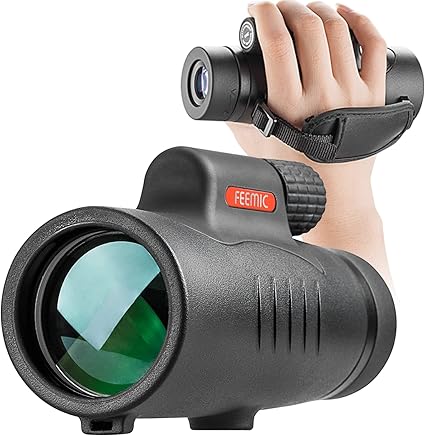 | Generic 8×42 Monocular | Check Price |
Our Top Picks 2  | Vortex Solo 10×25 | Check Price |
Our Top Picks 3  | Gosky 12×55 with Adapter | Check Price |
Our Selected Top 12 Monoculars for Birding Picks for Every Need
This collection features carefully chosen monoculars designed for birdwatching enthusiasts with varied needs and experience levels. Each review explains how the monocular performs in the field, identifies the ideal user, and highlights its main advantages and potential drawbacks.
1. Monocular Telescope 8×42
Monocular Telescope 8×42 offers clear, wide-angle views ideal for birding enthusiasts wanting detailed images without bulk. Its main strength lies in delivering an 8X magnification combined with a 42mm objective lens that captures expansive scenes, perfect for tracking birds in their natural environment.
Setup involves manual focusing, which feels intuitive and straightforward, letting you quickly adjust your view to catch fleeting spots of wildlife. A built-in lens dust cover protects the optics from the outdoors, and a rubber finish adds shock resistance, which is handy when navigating rough trails or sudden movements.
Its all-glass high-end optics with FMC Superior BAK-4 Green Film Prism produce sharp, bright images with a broad 360ft/1000yards field of view. The waterproof, fogproof, dustproof, and shockproof design ensures it holds up well in various conditions.
Praise often highlights the clear, crisp images, while some mention the manual focusing takes a moment to get used to.
Clear and sharp imagery combined with strong weatherproofing wins praise, especially for outdoor use. The manual focus setup is the most frequent point of critique, requiring patience and some practice in fast-paced birding situations.
Those who prioritize viewing quality and durability during outdoor adventures find this monocular well-suited. Birders seeking quick-focus or a lighter device might look toward other options better tailored to speed or compactness.
Pros
- Wide 360 degrees field of view
- Waterproof and fogproof for all weather
- Shock-resistant rubber exterior
- High-quality FMC BAK-4 prism optics
Cons
- Manual focus can be slow to adjust
- Relatively bulky compared to some models
| Specification | Details |
|---|---|
| Magnification | 8X |
| Objective Diameter | 42 mm |
| Field Of View | 360 degrees |
| Focus Type | Manual Focus |
| Prism Type | FMC Superior BAK-4 Green Film Prism |
| Waterproof | Yes, Nitrogen-filled |
2. Vortex Solo Monocular 10×25
Compact and lightweight, the Vortex Solo Monocular 10×25 fits easily in your hand or pocket while offering a clear view for bird watchers on the move. Designed for those who want strong magnification with a small form, its biggest strength is delivering sharp, bright images without bulk.
Setup is straightforward since it’s a fixed focus with an adjustable eyecup, making it comfortable whether or not you wear glasses. Its rubber armor gives a secure grip, even in wet conditions.
Nitrogen purging and o-ring seals mean it’s ready for early morning fog or unexpected rain during your birding walks.
Optically, the 10x magnification brings distant birds close and sharp thanks to fully multi-coated lenses, maintaining image clarity. The build feels solid with rubber armor protecting against bumps.
Most praise centers on its clear visuals and ease of use. Some find the fixed focus limits focusing on very close subjects.
Clear and crisp images stand out in daily use thanks to the fully multi-coated lenses. Its fixed focus design draws occasional complaints for not being able to adjust focus on very close subjects during quick birding moments.
Birders who want a no-fuss, tough monocular for spotting distant birds will find it handy. Those needing close-range focus or brighter views in dim light might look into other models with larger lenses or adjustable focus options.
Pros
- Compact and lightweight for easy carry
- Fully multi-coated lenses improve brightness
- Rubber armor for a secure, non-slip grip
- Waterproof and fogproof in any conditions
Cons
- Fixed focus limits close-range viewing
- Small objective lens may reduce brightness in low light
| Specification | Details |
|---|---|
| Magnification | 10x |
| Objective Lens Diameter | 25mm |
| Field Of View | 107.14 feet |
| Focus Type | Fixed Focus |
| Length | 4.4 inches |
| Coating | Fully Multi-Coated |
3. Gosky 12×55 Monocular with Smartphone Adapter
Great for birders wanting clear, distant views and smartphone integration, the Gosky 12×55 strikes balance between power and comfort. Its standout feature is the 12x magnification paired with a wide 352 ft field of view, making it easier to locate and follow birds without losing context.
Setup is pretty straightforward, with manual focus that feels natural to adjust with one hand. The included smartphone adapter lets you snap photos through the lens, which adds a fun layer to spotting sessions.
Its large 55mm objective lens keeps the image bright enough even in mixed light, while the multi-coated optics cut glare.
The monocular delivers sharp detail and a wide view, perfect for picking out bird markings from a distance. Built solid and weather-sealed to IPX7 standards, it holds up well outdoors.
The main praise lies in its ability to balance magnification with a wide image, though some find the manual focus takes a moment to get used to.
Users appreciate the clear, wide view and daylight brightness the large 55mm objective lens provides, making birds easier to track. The most frequent drawback mentioned is the manual focus, which requires a little patience and practice to master, especially when observing fast-moving subjects.
Bird watchers wanting a strong zoom with a wide scene and photo capabilities would like this monocular. Those needing rapid focus changes or the lightest, most compact model may want to look elsewhere.
Pros
- Bright image from large 55mm lens
- Wide 352 ft field of view
- Includes smartphone adapter
- Waterproof and fogproof build
Cons
- Manual focus can slow quick spotting
- Somewhat bulky for long handheld use
| Specification | Details |
|---|---|
| Magnification | 12X |
| Objective Lens Diameter | 55MM |
| Field Of View | 352 FT / 1,000 YDS |
| Coating | Multi-Coated |
| Focus Type | Manual Focus |
| Additional Features | Wide Field of View, IPX7 Waterproof & Fogproof, One-Hand Focus, Tripod and Phone Adapter |
4. Nocs Provisions Zoom Tube 8×32 Monocular

Lightweight and compact, the Nocs Provisions Zoom Tube 8×32 Monocular offers a portable design that fits easily in a pocket or small bag. Perfect for birdwatchers who want clear views without carrying bulky gear, its standout feature is the bright and wide field of view made possible by the Swiss-designed Bak4 prism.
Using the monocular is straightforward thanks to the central focusing system that adjusts quickly and smoothly. Carrying it around is easy thanks to its compact size and light weight of just 7.6 ounces. The scratch-proof and water-resistant body means it stands up well to outdoor conditions, making it suitable for hiking or traveling alongside birding trips.
Bird details come through crisp and clear with the fully multi-coated optics, supporting a field of view of 384 feet at 1000 yards. The build feels solid yet light, suggesting durability without bulk. The clearest praise notes how bright and sharp the image remains across different light situations.
Some users find the narrow width a bit tricky to hold steady at times, though it’s generally easy to manage.
Clear and bright views rank highly in praise for this monocular, helping users spot birds easily even at a distance. The most frequent drawback mentioned is how the thin body shape sometimes makes it tricky to hold steady during longer viewing sessions.
People who want something lightweight and compact for casual birding, hiking, or travel will appreciate how simple it is to pack and use. Those needing a more substantial grip or requiring a strap might want to consider other options better suited to long periods of handheld use.
Pros
- Ultra lightweight at just 7.6 ounces
- Bright image with fully multi-coated optics
- Scratch-proof and water-resistant body
- Compact and easy to carry anywhere
Cons
- Narrow width can feel difficult to grip firmly
- No attached strap included for hands-free carrying
| Specification | Details |
|---|---|
| Product Dimensions | 4.96 x 0.73 x 2.72 inches |
| Item Weight | 7.6 ounces |
| Magnification | 8x |
| Objective Lens Diameter | 32 mm |
| Field of View | 384 ft @ 1000 yds |
5. Monocular Telescope 16×52
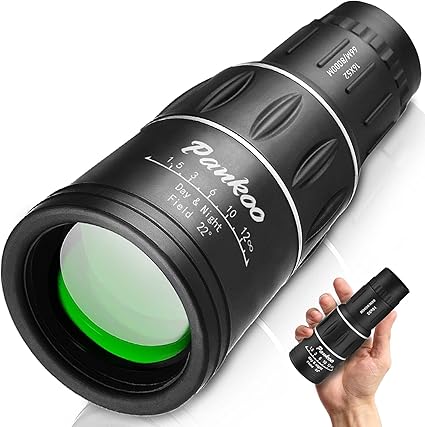
Sharp 16x magnification stands out in this handheld monocular, making it ideal for anyone serious about bird watching or outdoor adventures. Its large 52mm lens means you get a bright and clear image, even in lower light.
This piece suits people wanting detailed views without the bulk of a full binocular setup.
Setting it up takes no time since it requires no power source and uses a manual focus system, which feels straightforward. The fully multi-coated lenses help reduce glare, offering a clearer look at your target.
Compact and relatively lightweight, it fits comfortably in hand, making it an easy companion on hikes or trips to nature spots.
The 16X52 delivers a crisp view thanks to its BAK4 prism and 2026 power prism system, balancing clarity with a decent field of view. Built to be waterproof, fogproof, and shockproof, it handles outdoor conditions well.
Most praise centers around its bright image and solid build, while some mention the narrow 5.8-degree field of view limits quick scanning of wide scenes.
The monocular’s bright image quality receives strong praise due to its large lens and good prism system. The most common drawback is the relatively narrow 5.8-degree field of view, which limits how much can be seen without moving the device.
Those looking for a powerful, sturdy monocular for focused birding or outdoor use will appreciate this model. It may not suit users wanting wide panoramic views or quick scanning of large scenes, as its field of view is limited.
Pros
- Bright, clear images in various lighting conditions
- Compact size fits easily in one hand
- Durable waterproof and shockproof design
- Manual focus allows precise adjustments
Cons
- Field of view narrower than some competitors
- Manual focus can be tricky at times
| Specification | Details |
|---|---|
| Magnification | 16x |
| Objective Lens Diameter | 52mm |
| Field Of View | 5.8 degrees |
| Prism Type | BAK4, 2026 Power Prism |
| Focus Type | Manual Focus |
| Additional Features | Waterproof, Fogproof, Shockproof |
6. 12×56 Monocular with Smartphone Adapter

A monocular that offers powerful 12x magnification paired with a wide 6.5° field of view makes spotting birds easier and more enjoyable. Ideal for bird watchers who want clearer and brighter images at a distance, it also comes with a smartphone adapter to capture those moments.
Setting it up is straightforward since the focus is manual and the fixed mount keeps things simple without extra fuss. The large 56mm objective lens and 25mm eyepieces bring in more light, so using it on cloudy days or through shaded woods isn’t frustrating.
The included tripod adjusts for steady views, and the phone adapter lets you attach your device quickly for photos.
The monocular delivers sharp images with clarity beyond what smaller lenses typically manage. Fully multi-coated optics help keep visuals crisp, especially at the 12x zoom level. The build feels solid, and the travel bag and hand strap make it easy to carry.
Most praise centers on the bright, broad field of view while a common gripe points to the manual focus requiring some patience for distant subjects.
Bright optics and a wide field of view stand out as the top strengths for appreciating bird details far away. Manual focus is the most common drawback mentioned, requiring a bit of effort to get perfect sharpness quickly.
Bird watchers wanting a powerful but simple monocular with smartphone integration will appreciate this gear. Those preferring auto-focus or motorized features might want to look into other options.
Pros
- Bright 56mm objective lens improves low-light views
- Wide 6.5° field of view shows more surroundings
- Smartphone adapter allows for easy photo capture
- Includes adjustable tripod for steady observing
Cons
- Manual focus can be slow to adjust on moving targets
- No powered features mean all adjustments are manual
| Specification | Details |
|---|---|
| Zoom Ratio | 12 |
| Field Of View | 391.7 yard |
| Power Source | No |
| Compatible Devices | Smartphone |
| Focus Type | manual |
7. Monocular Telescope 10×42
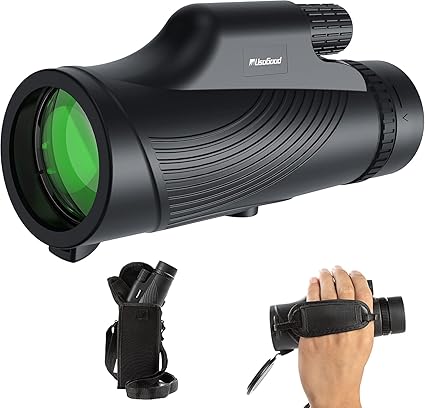
Watching birds up close demands clear vision and a steady image, which this 10×42 monocular readily provides. Perfect for outdoor enthusiasts who want strong magnification without bulky gear, it shines with clear, detailed views across wide distances, helping to spot feathered friends in both nearby gardens and open skies.
The setup is straightforward, focusing manually to lock on to the target with precision. The 42 mm objective lens gathers plenty of light, making details sharp whether you are scanning 3.3 yards away or scanning the horizon over 1200 yards distant. Its tripod mount option adds steadiness when you want to keep your hands free or reduce shake during longer observations.
Image clarity benefits from high-quality BAK4 prisms and fully multi-coated lenses, reducing glare and color blurring. The waterproof design means it handles outdoor conditions without worry. While many reviews praise the crisp, stable image and versatile focus range, some note that the manual focus requires a steady hand and occasional readjustment to maintain sharpness.
Reviews consistently highlight the sharp and detailed image quality delivered by the BAK4 prisms and FMC lenses. At the same time, many find the manual focus challenging to manage smoothly, especially without a tripod. It demands some patience to get the perfect view.
Bird watchers who value bright, crisp images and can invest time in steady focusing will find this monocular satisfying. Those who prefer quick autofocus or need a more compact, lightweight option might want to explore other models.
Pros
- Clear image with 10x magnification
- Bright view thanks to 42 mm lens
- Waterproof for all-weather use
- Tripod mount for added stability
Cons
- Manual focus can be tricky to adjust
- Image requires steady hands to avoid shake
| Specification | Details |
|---|---|
| Magnification Maximum | 10 x |
| Objective Lens Diameter | 42 millimeters |
| Focus Type | Manual Focus |
| Field of View | 360 feet |
| Water Resistance Level | Waterproof |
| Mount Type | Tripod Mount |
8. Monocular Telescope 80×100 with Smartphone Adapter

80X magnification combined with a large 100mm objective lens makes this monocular ideal for detailed bird watching trips. Suited for outdoor enthusiasts who want clear, bright views of wildlife at a distance, its standout feature is the impressive zoom power that brings distant subjects sharply into focus.
Setting it up is simple, with manual focus helping you adjust quickly to different distances. The straight-through finderscope makes aiming straightforward, and the ergonomic design fits comfortably in one hand for long periods. Attaching a smartphone via the included adapter allows easy photo-taking of birds or scenery without bulky gear.
Viewing through multi-coated lenses and a BAK4 prism provides excellent brightness and color clarity, keeping images true to life. The build feels solid yet manageable thanks to the ergonomic shape. The clearest praise highlights the sharp, bright images it produces, though some find the manual focus challenging at extreme zoom levels during fast-moving scenes.
Sharp, bright images stand out as the monocular’s best feature, especially in varied outdoor lighting conditions. Complaints mostly center on manual focusing being slow or tricky when trying to track birds swiftly moving across the sky.
Bird watchers who value image clarity and don’t mind manually adjusting focus will appreciate this monocular. Those seeking faster autofocus or easier handling at extreme zoom might look for alternatives better suited to quick action.
Pros
- Bright, high-contrast images with FMC multi-coated lens
- Comfortable ergonomic design for one-handed use
- Includes smartphone adapter for easy photography
- Large 100mm objective lens maximizes light intake
Cons
- Manual focus hard to adjust quickly at max zoom
- Finderscope requires steady hands to maintain target
| Specification | Details |
|---|---|
| Focus Type | Manual Focus |
| Finderscope | Straight-Through |
| Zoom Ratio | 80 |
| Compatible Devices | Smartphone |
9. 12×50 Monocular with Phone Adapter and Tripod
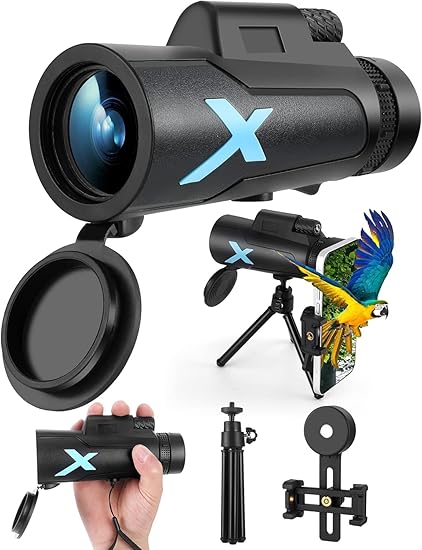
Bird watchers looking for strong magnification and clear images will appreciate this monocular designed for detailed viewing. Its key strength lies in delivering crisp, bright images with 12x magnification, making it perfect for tracking birds at a distance without strain.
Setup is simple with manual focus and a tripod-adaptable mount compatible with standard 1/4-inch threads. The included phone adapter makes capturing sightings straightforward.
Large eyepieces and a wide field of view let you comfortably scan landscapes, while the fully multi-coated lenses help prevent eye strain during long sessions.
It offers impressive clarity thanks to the BAK4 prism and multi-coating, delivering bright, color-accurate views. The solid build ensures durability during outdoor activities. Some users mention the manual focus requires a bit of patience, but it performs reliably for both close and distant targets.
The monocular is praised for delivering bright and clear images, even when used for long periods without causing dizziness. Its manual focus is often mentioned as the trickiest part, requiring time to master for perfectly sharp views.
Bird watchers who want detailed views and don’t mind adjusting focus manually will appreciate this tool. Those looking for a lighter, automatic focusing option might want to explore other models better suited for quick spotting on the move.
Pros
- Bright, high-contrast images with accurate colors
- Comfortable eye relief for extended use
- Large objective lens gathers plenty of light
- Includes phone adapter and tripod mount
Cons
- Manual focus may take practice for sharp images
- Some find it bulky for handheld use
| Specification | Details |
|---|---|
| Zoom Ratio | 12x |
| Field Of View | 6.5 degrees |
| Objective Lens Diameter | 53mm |
| Focus Type | manual focus |
| Mount | Handheld, Tripod-adaptable, 1/4-inch thread |
| Coating | Fully Multi-coated (fmc) Green Film Optical Lens |
10. 12×60 Monocular Telescope

Offering 12× magnification and a 60mm objective lens, this monocular stands out for delivering a wide, clear field of view that makes birding highly satisfying. Perfect for outdoor enthusiasts who want detailed close-ups without constantly adjusting focus or lugging heavy gear around.
Setup is simple with manual focus, and the altazimuth mount makes tracking birds easier when they move quickly. The large 21mm BAK-4 prism cuts down on glare and helps keep images bright throughout the day. It’s lightweight enough to carry on hikes and has coatings that help reduce reflections, making details sharper during long observing sessions.
It performs well in bringing distant birds into clear view with vivid colors and sharpness, thanks to the fully multi-coated optics and large lens. The build feels solid, though some users note the manual focus requires patience for perfect clarity. The reflex finderscope adds quick target acquisition, though it needs steady hands to avoid jitter.
Bright and vivid viewing without color distortion is the standout feature, but some users find focusing manually a bit slow, especially on moving birds. The built-in reflex finderscope helps aim quickly but demands steady handling to avoid a shaky view.
Those who enjoy detailed bird watching during hikes with a lightweight tool will appreciate this monocular. People wanting rapid focus adjustments or more stability might want to explore different models better suited for fast-paced action.
Pros
- Wide 6.5° field of view
- Bright, clear images with little distortion
- Compatible with smartphones for photography
- Lightweight and easy to carry
Cons
- Manual focus can be slow to adjust
- Finderscope requires steady hands
| Specification | Details |
|---|---|
| Magnification | 12× |
| Objective Lens Diameter | 60 millimeters |
| Field Of View | 6.5 degrees |
| Focus Type | Manual Focus |
| Coating | Fully Multi-Coated |
| Prism Type | 21mm BAK-4 |
11. Celestron Nature 10×25 Monocular

Celestron Nature 10×25 Monocular offers clear, detailed views suited for birding and outdoor activities where compactness matters most. Its lightweight design and sharp 10X magnification make it ideal for those who prefer easy-to-carry gear without sacrificing image quality.
Setup is straightforward thanks to manual focus and a twist-up eyecup that adjusts comfortably for eyeglass and non-eyeglass wearers. It fits well in a bag or pocket during hikes and can even attach to a smartphone, making it versatile for quick photos or extended viewing sessions.
Sharpness and contrast stand out thanks to BaK-4 prism glass and multi-coated optics that deliver vibrant, true-color images. The rubber-armored, weatherproof build protects against drops, fog, and moisture well.
Some users mention occasional manual focusing being a bit slow, but most appreciate the rugged feel and reliable clarity.
Sharp, true-color viewing and solid weather resistance make this monocular reliable outdoors. Slow manual focus adjustment is the most common drawback noted.
The product suits casual birders and travelers wanting a compact monocular with good clarity. Those needing faster focusing or wider views might look elsewhere.
Pros
- Lightweight and travel-ready design
- Multi-coated optics for crisp images
- Waterproof and fogproof construction
- Comfortable twist-up eyecup
Cons
- Manual focus can feel slow to adjust
- Limited field of view at 5.8 degrees
| Specification | Details |
|---|---|
| Magnification | 10X |
| Objective Lens Diameter | 25 millimeters |
| Focus Type | manual |
| Field Of View | 5.8 degrees |
| Waterproof | Yes |
| Coating | Multi-Coated |
12. Bushnell Legend 10×42 Monocular

Using a compact, powerful monocular like this feels like carrying a tiny window into nature. Its 10x magnification offers just the right amount of detail for birdwatching without feeling bulky or heavy. Suited for anyone wanting sharp visuals in a small package, its standout trait is the clarity it delivers, especially in lower light conditions.
Turning it on and aiming for manual focus is straightforward, making it quick to adjust as birds move around. The rubber-armored exterior provides a good grip so it won’t slip easily when out in the wild. Despite being battery powered, it remains lightweight and pocket-friendly.
Water and fog proofing mean no worries if a light rain comes up or when moving through different temperature zones.
Look through the lens, and the colors remain true and crisp thanks to the ED prime glass and special coatings. Resisting scratches or impacts is easier with the tough body shell, built for rough outdoor use. Many appreciate the sharp image even as light fades, while some mention the need to replace the 12V battery, which can interrupt longer sessions.
The monocular’s clarity with ED glass and multi-coatings makes bird details stand out, especially as light dims. Most mention the hassle of the 12V battery needing replacing, which can disrupt longer outdoor sessions.
Great for those wanting sharp images and a sturdy build in a small tool. Less ideal for anyone wanting continuous, quick focus adjustments or a fully battery-free model during extended use.
Pros
- Clear view even in low light
- Compact and easy to carry
- Waterproof and fog proof design
- Solid, grippy rubber armoring
Cons
- Requires battery replacement
- Manual focus can slow quick shots
| Specification | Details |
|---|---|
| Magnification | 10x |
| Objective Lens Diameter | 42 mm |
| Field of View | 340 feet |
| Focus Type | Manual Focus |
| Waterproof/Fog Proof | O-ring sealed optics |
| Power Source | 1 12V battery |
Best Monoculars for Birding Comparison Table
| Product | Magnification | Objective Lens Diameter | Field of View | Coating |
|---|---|---|---|---|
| Generic 8×42 Monocular | 8x | 42 mm | 360 degrees | Fully Multi-Coated |
| Vortex Solo 10×25 | 10x | 25 mm | 107.14 feet | Fully Multi-Coated |
| Gosky 12×55 with Adapter | 12x | 55 mm | 2.1 degrees | Multi-Coated |
| Nocs Provisions 8×32 | 8x | 32 mm | – | – |
| Generic 16×52 Monocular | 16x | 52 mm | 5.8 degrees | Fully Multi-Coated |
| 12×56 Monocular with Adapter | 12x | – | 391.7 yard | Fully Multi-Coated |
| Generic 10×42 Monocular | 10x | 42 mm | – | Fully Multi-Coated XLT |
| Generic 80×100 with Adapter | 80x | 100 mm | – | – |
| 12×50 Monocular with Tripod | 12x | 50 mm | – | Multi-coated |
| 12×60 Telescope | 12x | 60 mm | 6.5 degrees | Fully Multi-Coated |
| Celestron Nature 10×25 | 10x | 25 mm | 5.8 degrees | Multi-Coated |
| Bushnell Legend 10×42 | 10x | 42 mm | – | Fully Multi-Coated |
- Magnification8x
- Objective Lens Diameter42 mm
- Field of View360 degrees
- CoatingFully Multi-Coated
- Magnification10x
- Objective Lens Diameter25 mm
- Field of View107.14 feet
- CoatingFully Multi-Coated
- Magnification12x
- Objective Lens Diameter55 mm
- Field of View2.1 degrees
- CoatingMulti-Coated
- Magnification8x
- Objective Lens Diameter32 mm
- Field of View–
- Coating–
- Magnification16x
- Objective Lens Diameter52 mm
- Field of View5.8 degrees
- CoatingFully Multi-Coated
- Magnification12x
- Objective Lens Diameter–
- Field of View391.7 yard
- CoatingFully Multi-Coated
- Magnification10x
- Objective Lens Diameter42 mm
- Field of View–
- CoatingFully Multi-Coated XLT
- Magnification80x
- Objective Lens Diameter100 mm
- Field of View–
- Coating–
- Magnification12x
- Objective Lens Diameter50 mm
- Field of View–
- CoatingMulti-coated
- Magnification12x
- Objective Lens Diameter60 mm
- Field of View6.5 degrees
- CoatingFully Multi-Coated
- Magnification10x
- Objective Lens Diameter25 mm
- Field of View5.8 degrees
- CoatingMulti-Coated
- Magnification10x
- Objective Lens Diameter42 mm
- Field of View–
- CoatingFully Multi-Coated
How to Choose the Perfect Monocular for Birding
Choosing the right monocular for birding depends on factors like magnification, lens quality, and durability, which ensure clear and stable views. Selecting the right features helps avoid frustration during use and prevents unnecessary spending on unsuitable equipment.
Optical Quality and Coatings
Glare and washed-out images make it tough to identify birds, especially on sunny days or near water. Models with multicoated lenses cut down on reflections and boost image brightness, making colors and details stand out.
I’ve seen the difference firsthand when switching from older monoculars with basic coatings. The view sharpens, and you catch subtle features like feather patterns more clearly.
Glass quality deeply affects what you see. Cheaper optics can cause distortion, making birds look warped at the edges or blurry at longer distances.
Many dependable options use BAK-4 prisms and ED (extra-low dispersion) glass for crisp, distortion-free viewing. Also, built-in waterproof and fogproof features make sure the view stays clear in rain or early morning mist. Without these, moisture can fog up lenses and ruin a session quickly.
Portability and Weight
Carrying bulky equipment drains energy during long bird-watching walks. Lightweight designs make a noticeable difference when holding the device for extended periods.
Some models weigh around 200 grams, light enough to barely feel in hand, while still offering steady viewing. Bulky, heavy units get tiring fast and can cause shaky hands, making quick spotting tricky.
Compactness adds convenience. Many fit snugly into side pockets or small compartments of backpacks, so they’re always within reach. Ergonomic grips improve handling during fast bird flashes and prevent slipping, especially if your hands get sweaty or the weather turns damp.
Easy-to-grip surfaces help maintain control without fumbling.
Durability and Weather Resistance
Outdoor bird-watching often means unpredictable terrain and sudden weather changes. Monoculars made from durable materials handle bumps and accidental drops more effectively, reducing the need for replacements. Aluminum and rubberized exteriors offer solid protection without adding too much weight.
Sealing matters a lot. Waterproof models safeguard delicate internal parts from moisture, allowing use in drizzle or by lakesides without worry.
Fogproof technology keeps lenses from misting when moving between temperature differences, like leaving a warm car or approaching a cool forest. Without these protections, condensation can obscure the view and even cause damage over time.
Ease of Focus and Handling
Birds tend to move quickly, making rapid focus adjustments necessary. A smooth, responsive focusing mechanism allows locking in on a target fast, cutting down on missed sightings.
Stiff or clunky focus wheels slow you down and frustrate repeated refinements.
Adjustable eyecups play a role too. Those who wear glasses appreciate twist-up or fold-down eyecups for clear viewing without removing specs. Quiet focus adjustments also improve the experience by keeping noise low, preventing disturbance of skittish birds nearby.
Loud clicks or grinding sounds can scare birds off just as the view sharpens.
Optimal Techniques for Using Monoculars During Birdwatching
Holding a monocular steady is crucial for clear birdwatching. Using both hands, rest your elbows against your chest to reduce shaking. This position helps maintain focus on small or fast-moving birds.
Start by adjusting the focus wheel while looking at the bird to get a sharp image. Some models offer a diopter adjustment to fine-tune the view for differences between eyes.
Taking slow, deliberate breaths while watching through the monocular reduces motion blur. To locate birds faster, use the monocular first to scan, then move closer if needed. A tripod or a monopod can improve stability for longer viewing sessions, especially when spotting distant birds.
Compact monoculars fit easily into pockets, so keep them handy for quick observations. A neck strap or wrist strap prevents accidental drops in the field.
How to Properly Clean and Maintain Your Monocular for Longevity
Regular cleaning extends the life of a monocular and keeps images clear. Start by blowing off loose dust and debris from the lenses using a bulb blower or compressed air.
Avoid rubbing grit that can scratch lens coatings. Use a lens brush or soft microfiber cloth specifically designed for optics to gently remove remaining particles. When stubborn smudges persist, apply a small amount of lens cleaning solution to the cloth, not directly on the lens, and wipe in a circular motion.
Keep lens caps on when the monocular is not in use to protect from dust and scratches. Store the monocular in a dry, cool place to prevent moisture buildup that can lead to mold inside the optics. Inspect the focusing mechanism periodically and avoid forcing it if it feels stiff.
Comparing Monoculars with Binoculars: Which Is Better for Birding?
Monoculars offer a lightweight and compact alternative to binoculars, making them easier to carry during long birdwatching walks. They allow you to use one eye, which some find less tiring over extended periods. Binoculars, however, provide a three-dimensional view since they combine images from both eyes, improving depth perception.
This advantage can help in judging the distance and movement of birds. Monoculars tend to be less expensive and take up less space in a backpack.
They also make quick spotting easier but can require more effort to hold steady. Binoculars often have larger lenses and higher magnification ranges, which improve brightness and detail but with increased bulk. Choosing between the two depends on personal preference for comfort, weight, and how detailed the observation needs to be.
People Also Asked
How Do I Clean and Maintain My Birding Monocular?
Use a microfiber cloth to gently clean lenses and avoid harsh chemicals that can damage coatings. Keep the monocular in a protective case when not in use to prevent dust and scratches. Regularly check for moisture and dry it out if it gets damp to avoid mold inside the optics.
What Size Monocular Is Ideal for Long Birdwatching Sessions?
A 6x to 8x magnification with a 20mm to 25mm objective lens is ideal for long birding sessions because it balances clear images with light weight. Larger lenses matter in low light but add bulk, so a compact model helps reduce arm fatigue during extended use.
Are Monoculars Safe to Use Around Sensitive Wildlife Areas?
Monoculars themselves are safe and do not disturb wildlife if used quietly and from a distance. Avoid sudden movements or using bright lights near animals. Keeping a respectful distance reduces stress on birds and allows natural behaviors to continue unbroken.
How Long Does a Typical Birding Monocular Last with Regular Use?
A well-cared-for monocular can last several years with regular use, sometimes a decade or more. Protecting it from drops, moisture, and dirt while storing it properly can extend its life significantly. Regular lens cleaning and checking seals also help maintain performance.
What Common Problems Should I Watch for in Monoculars?
Watch for issues like fogging inside the lenses, loose focus mechanisms, or scratches on the glass. Fogging usually means the seal is compromised, which needs fixing to avoid permanent damage. Loose parts can affect image clarity and make focusing frustrating during birdwatching.
Conclusion
When choosing monoculars for birding, focus on clear image quality, a comfortable grip, and a size that feels right for carrying during walks. Good magnification helps spot details without being too shaky or hard to hold steady.
Waterproof and fog-proof features are useful for outdoor conditions.
Think about where you will use the monocular most and how often. A compact, durable model suits casual birders, while more advanced options fit those who spend a lot of time outdoors. Check the comparison table and detailed picks above to find one that fits your needs and budget.