
Top 12 Best Museum Church Sightseeing Binoculars Revealed!
Crowded museums and dimly lit churches pose a real challenge for those using regular binoculars. Cheap or poorly chosen devices often produce blurry images or cause discomfort after a few minutes of use, ruining the experience.
The best museum church sightseeing binoculars manage to avoid these issues, providing clear views of distant artwork or architectural details without straining the eyes.
Selecting effective binoculars for these settings means focusing on a few key factors. Optics with a magnification of around 8x and an objective lens diameter near 25mm strike a balance between clarity and brightness without excessive weight. Compact and lightweight builds make it easy to hold steady during long viewing sessions.
Coated lenses improve image sharpness and reduce glare, which is crucial indoors. Alongside these, adjustable eyecups and a good interpupillary distance range ensure a comfortable fit for various users.
Need a Quick Check?
| Image | Product | Price |
|---|---|---|
Our Top Picks 1  | Occer 12×25 | Check Price |
Our Top Picks 2  | ZEISS Terra ED 10×25 | Check Price |
Our Top Picks 3  | Nikon Monarch M7 10×42 | Check Price |
Our Selected Top 12 Museum Church Sightseeing Binoculars Worth Your Money
This list features carefully chosen binoculars ideal for exploring museums, churches, and sightseeing spots. Each review explains how the binocular performs, highlights its suitability for different users, and outlines its main advantages and drawbacks to help you make an informed decision.
1. Occer 12×25 Compact Binoculars
Exploring museum exhibits or church art details benefits from clear, close-up views without crowding the space. Compact and offering 12x magnification, these binoculars suit anyone wanting sharper, wider scenes from a distance. Their standout feature is the large 25mm objective lens that balances power and a wide 273ft/1000yds field of view, making them handy for detailed sightseeing.
Setup involves adjusting the center focus wheel and deciding on eyecup position. Rubber eyecups can be pulled down to fit over glasses or flipped up for an unobstructed view if not wearing any.
The manual focus lets you fine-tune details quickly. Being waterproof and fully multi-coated ensures durability and clear images regardless of outdoor conditions during travel or outdoor church visits.
Image quality holds well with BAK4 prisms and FMC Broadband coating providing bright, verisimilar views even in somewhat low light. Eyecups offer comfort, especially for those with glasses, and the long 20mm eye relief helps keep the view stable.
A common complaint is the relatively small 2.5mm exit pupil, which can make viewing dimmer in very dark conditions. The compact design keeps it portable but does not include a tripod mount, limiting steadiness on longer observations.
The binoculars deliver bright, clear images thanks to the BAK4 prism and multi-coated lenses, making details pop at 12x magnification. Most find the small exit pupil restricts vision in dim conditions, affecting usability at dusk or in shaded indoor spaces.
Anyone needing a lightweight, compact option for day trips and museum visits will appreciate the ease of use and portability. Users prioritizing darker environment viewing or steadier long-distance focus may want to explore models with larger exit pupils or tripod compatibility.
Pros
- Large 25mm objective lens for bright images
- Adjustable eyecups fit eyeglass wearers well
- Lightweight and portable design
- Waterproof for outdoor use
Cons
- Small 2.5mm exit pupil limits low-light clarity
- No tripod mount for steady long viewing
| Specification | Details |
|---|---|
| Magnification Maximum | 12 |
| Objective Lens Diameter | 25 millimeters |
| Field of View | 7.5 degrees |
| Eye Relief | 20 millimeters |
| Prism Type | BAK-4 |
| Water Resistance Level | Waterproof |
2. ZEISS Terra ED 10×25 Binoculars
10x magnification paired with a compact 25 mm objective lens makes these binoculars ideal for museum and church sightseeing. Weighing only 10.9 oz, they fit easily in a pocket or small bag. Perfect for anyone wanting detailed views without lugging heavy gear.
Setup is straightforward with a center focus dial and manual focus that responds smoothly. The folding design makes packing them away quick, and the lightweight feel means no hand strain during long sightseeing days. Eye relief of 18 mm ensures comfortable viewing even with glasses.
The diopter adjustment lets you fine-tune clarity without hassle.
Image quality is clear and bright thanks to ED glass, 88% light transmission, and LotuTec coating. The field of view extends 375 feet, letting you take in broad scenes easily.
Nitrogen-filled and waterproof, these binoculars handle outdoor conditions well, down to -4°F. Reviews highlight excellent clarity as the strongest point, with some noting the small size can feel delicate.
Excellent image clarity and brightness stand out in reviews, thanks to ED optics and coatings. Common feedback points to the petite build feeling a bit delicate, which can cause concern about handling and long-term durability.
Those who want light, pocket-friendly binoculars for detailed indoor and outdoor sightseeing will appreciate these. Anyone needing more rugged gear or easier autofocus might need to look elsewhere.
Pros
- Lightweight and easy to carry
- Clear, bright images with high contrast
- Compact folding design saves space
- Waterproof and durable for outdoor use
Cons
- Small size can feel fragile to some
- Manual focusing requires a steady hand
| Specification | Details |
|---|---|
| Magnification Maximum | 10 x |
| Objective Lens Diameter | 25 millimeters |
| Field of View | 375 feet |
| Water Resistance Level | Waterproof |
| Eye Relief | 18 millimeters |
| Weight | 10.9 oz |
3. Nikon Monarch M7 10×42 Binoculars
Birdwatchers and museum or church visitors who want detailed, clear views will appreciate these binoculars. Their biggest strength lies in delivering bright, high-resolution images even in low light, making details pop when observing artworks or architecture indoors or outdoors.
Setup is straightforward with the center focus, and the twist-up click-stop eyecups make adjustments easy, especially if you wear glasses. The waterproof and oil- and water-repellent lens coatings help keep the lenses clear in damp or dusty environments.
They feel comfortable to hold for extended periods thanks to their careful design and balanced weight.
These binoculars excel in providing sharp, vivid images at distances up to 357 feet at 1000 yards, suitable for close and long-range sightseeing. The phase-corrected dielectric-coated prisms and extra-low dispersion glass ensure color accuracy and clarity. They are sturdy and well-built for outdoor use, though some users note the field of view is a bit narrower than expected.
Users praise the vivid and lifelike color representation, which helps identify fine details in dim conditions such as inside museums or shaded churchyards. The typical complaint concerns the narrower field of view, which may require more careful aiming to locate subjects quickly.
People who prioritize image brightness and clarity for both indoor and outdoor sightseeing will find these binoculars satisfying. Those wanting a wider panoramic view or a more lightweight option might look at alternative models better suited for casual or prolonged carrying.
Pros
- Bright views in low light thanks to ED glass
- Comfortable twist-up click-stop eyecups
- Waterproof and easy to clean lenses
- Good long-range spotting ability
Cons
- Field of view narrower than some competitors
- Slightly bulky for very long carrying periods
| Specification | Details |
|---|---|
| Magnification Maximum | 10 |
| Objective Lens Diameter | 42 millimeters |
| Exit-Pupil Diameter | 4.2 millimeters |
| Eye Relief | 16.5 millimeters |
| Focus Type | Center Focus |
| Water Resistance Level | Waterproof |
4. 8×42 Binoculars

Bright optics and a wide 42mm objective lens make these 8×42 binoculars a strong choice for anyone wanting clear, detailed views during church tours or museum visits. They stand out for providing a wide field of view combined with comfortable eye relief, making long sightseeing sessions easier on your eyes.
Setting up involves using the center focus knob, which quickly sharpens details even when shifting from close objects to distant views. The 18mm eye relief means glasses wearers can comfortably use them without strain.
A tripod mount adds stability for static viewing, which is handy during longer lookouts at architectural features or exhibits.
Image clarity is excellent thanks to fully multi-coated lenses and a roof prism design, showing details crisply across the wide 6.44-degree field of view. Build quality is solid and waterproof, so occasional exposure to weather won’t harm them. Some reviews mention the focus dial could be smoother, but the overall visual performance is praised for sharpness and brightness.
Most users appreciate the sharp, clear images and broad viewing angle provided by the large objective and eyepiece lenses. A common drawback noted is the focus mechanism, which can require extra effort when making fine adjustments.
People looking for a durable, comfortable pair of binoculars for detailed sightseeing and occasional outdoor use will find these well suited. Those needing smoother focus control or very bright viewing in dusk conditions might want to explore other options.
Pros
- Wide 6.44-degree field of view
- Comfortable 18mm eye relief for glasses
- Waterproof for outdoor use
- Tripod holder for steady viewing
Cons
- Focus dial can feel stiff to turn
- Brightness level rated at 3 may limit low-light use
| Specification | Details |
|---|---|
| Magnification Maximum | 8 x |
| Objective Lens Diameter | 42 millimeters |
| Eye Relief | 18 millimeters |
| Field of View | 6.44 degrees |
| Focus Type | Center Focus |
| Water Resistance Level | Waterproof |
5. 12×32 Compact Binoculars

Bresser 12×32 Compact Binoculars focus on delivering powerful, clear views in a lightweight, compact design. Perfect for museum and church sightseeing, they offer brighter images and high magnification suited for detailed cityscape and architectural observation.
Setup is straightforward with center focus and a ±4 diopter adjustment, allowing quick clarity tweaks on the go. The 14mm eye relief suits most eyeglass wearers, making it easy to hold up for extended periods. A waterproof build means the binoculars handle outdoor conditions during walking tours without worry.
Their small size and lightweight structure make carrying them comfortable throughout a busy sightseeing day.
Vision clarity comes through the BAK4 roof prisms and fully multi-coated lenses, producing sharp and true-to-life colors even in low light. The 12x magnification combined with a 32mm objective lens offers a notably larger and brighter image than similarly sized 12×25 models. Reviews praise the bright, detailed views but mention that the exit pupil size at 2.67mm can struggle a little in very dim environments.
The binoculars feel solid, though a few note that grip could be improved.
The brightest and clearest views come from the 12x magnification and fully multi-coated BAK4 prisms, making detail stand out during daytime sightseeing. Some find the grip slippery, and the exit pupil is a bit small for the poorest lighting conditions.
Those who want powerful magnification with lightweight, waterproof design will be satisfied. Anyone looking for better low-light performance or a more secure grip might consider other models.
Pros
- Bright image with large 32mm lens
- Lightweight and easy to carry
- Waterproof for outdoor use
- Good eye relief for eyeglasses
Cons
- Exit pupil size can limit low-light use
- Grip feels a bit slippery at times
| Specification | Details |
|---|---|
| Objective Lens Diameter | 32 millimeters |
| Magnification Maximum | 12 x |
| Eye Relief | 14 millimeters |
| Prism Type | Roof Prism |
| Water Resistance Level | Waterproof |
| Focus Type | Center Focus |
6. 18×56 UHD Binoculars

Using these binoculars feels like bringing distant scenes right up close with sharp clarity. They suit anyone who needs serious magnification for museum, church, or sightseeing visits where detail matters.
The standout strength is the powerful 18x magnification that reveals fine details invisible with standard binoculars.
Setting them up is simple since they’re lightweight and easy to hold on trips. Comfortable eyecups and long eye relief make them pleasant for extended viewing sessions. The extra-wide field of view helps catch more of the scene without constantly adjusting.
Anti-slip grip adds confidence while handling, and they fit a tripod if steadiness is needed.
Performance shines through in delivering clear, bright images even at great distances with low light visibility improving viewing inside dim buildings. The binoculars’ waterproof and fogproof design keeps the optics safe in various weather conditions.
Most praise highlights the crisp image quality and powerful zoom. A common complaint is that 5 millimeters eye relief might feel tight for some eyeglass wearers.
18x magnification brings distant objects into clear focus, making details visible even far away during museum visits or sightseeing tours. Lens quality provides sharp images with good brightness. Some found the binoculars a bit heavy for long handheld use and noticed minor image shake without a tripod, which can affect steady viewing during extended periods.
Ideal for those seeking to observe intricate details in historical buildings or landscapes from a distance. Better suited to stationary use or with a tripod due to weight and magnification level. People wanting a lighter, easier-to-handle pair for casual walking tours might prefer binoculars with less zoom.
Pros
- Powerful 18x magnification for detailed views
- Clear low light vision inside dark interiors
- Lightweight and comfortable for long use
- Waterproof and fogproof for durability
Cons
- 5 mm eye relief may be too short for glasses
- High magnification requires steady hands or tripod
| Specification | Details |
|---|---|
| Magnification Maximum | 18 x |
| Objective Lens Diameter | 5.6 centimeters |
| Eye Relief | 5 millimeters |
| Relative Brightness | 25 |
| Mount Type | Handheld, Tripod Adaptable |
| Prism Type | High-quality dielectric-coated Roof Prism |
7. 25×30 Professional Binoculars

Compact and surprisingly powerful, these 25×30 Professional Binoculars suit anyone wanting detailed close-ups during museum or church visits. Their standout feature is the strong 25x magnification combined with a wide field of view, ideal for catching fine architectural details from a distance.
Unfolding the binoculars is quick, and their lightweight design makes carrying them around all day comfortable. The 20mm large eyepieces help reduce eye strain, and the waterproof build adds durability for unpredictable weather. The center focus wheel adjusts smoothly, so fine-tuning is straightforward when moving between exhibits or outdoor sightseeing spots.
Delivering clear images even from 700 feet away, they handle the main objective well. Built with BAK4 Porro prisms and fully multi-coated lenses, the optics impress with brightness and clarity. Most praise centers on the excellent value for high zoom levels, while some find the compact size a bit small for extended use without a tripod.
The binoculars stand out for delivering clear, bright images even at high magnification, making distant details in museums and churches easy to see. Common feedback notes that the small size occasionally makes hand-holding tiring, suggesting a tripod use for longer observations.
People looking for something portable yet powerful will appreciate the balance here, especially for quick sightseeing trips. Those needing a comfortable option for hours-long continuous use might want a larger model or one designed specifically for extended wear.
Pros
- Impressive 25x magnification with wide field
- Lightweight at just 0.6lb for all-day use
- Durable waterproof design for outdoor activities
- Easy center focus that adjusts quickly
Cons
- Compact size may feel cramped without tripod
- Not ideal for very prolonged viewing sessions
| Specification | Details |
|---|---|
| Objective Lens Diameter | 30 millimeters |
| Magnification Maximum | 25 x |
| Field of View | 411 feet |
| Weight | 0.6lb |
| Prism Type | Porro Prism |
| Water Resistance Level | Waterproof |
8. Vortex Triumph HD 10×42 Binoculars

Polycarbonate chassis with full rubber armor makes these binoculars shockproof and easy to grip, ideal for museum or church sightseeing. Perfect for those wanting clear, sharp views of intricate details thanks to its HD optical system and 10x magnification.
Setup involves adjusting the center focus and diopter, both straightforward with manual controls. The 17-millimeter eye relief is comfortable for extended viewing sessions.
Lightweight design and waterproof, fog-proof features mean you can carry it all day without worry about weather or moisture affecting clarity.
The optics deliver vivid colors and excellent edge-to-edge sharpness, making historic stained glass and fine sculptures stand out. Durability is solid, with a shockproof build that handles bumps well. The most common downside noted is the somewhat narrow field of view compared to other binoculars in this range.
Most appreciate the sharp and colorful images produced by the fully multi-coated lenses and HD optical system. However, some find the limited field of view restrictive when trying to take in larger sightseeing structures at once.
Those focused on detailed viewing of architectural elements and artwork will enjoy the clarity and durability. People needing a wider field for panoramic exploration may want to consider alternatives.
Pros
- Shockproof, rubber armored housing for solid handling
- Excellent image quality with minimal chromatic aberration
- Waterproof and fog proof for all weather use
- Comfortable eye relief for longer viewing
Cons
- Narrow field of view limits broader scenes
- Manual focus may feel slow for quickly moving subjects
| Specification | Details |
|---|---|
| Magnification Maximum | 10 x |
| Objective Lens Diameter | 42 millimeters |
| Eye Relief | 17 millimeters |
| Water Resistance Level | Waterproof |
| Focus Type | Center Focus |
| Coating | Fully Multi-Coated |
9. HD Mini Compact Binoculars

Small and lightweight, these binoculars suit anyone wanting clear views without bulk. The biggest strength lies in their compact size combined with solid water resistance, making them great for museum and church sightseeing where you want something easy to carry and handle.
Getting them ready only takes a quick manual focus adjustment, and the 8x magnification is powerful enough for detailed views on walks or tours. The aluminum alloy frame with rubber armor feels secure in hand, and slipping them into a pocket or bag is simple thanks to their mini size and lightweight design.
They deliver sharp images with a wide 180 apparent angle of view, letting you spot details from a distance of 1010 yards. Built to resist rain splashes and impacts, they stand up well outdoors.
Many like how comfortable the grip is, though some wish the eye relief of 2.6 millimeters was a bit longer for better viewing comfort.
Praised for its compactness and solid grip, it feels sturdy and easy to handle during tours. The common complaint centers on the short eye relief, which can be uncomfortable for some users over longer periods.
The binoculars are well-suited for people needing a portable, powerful option for sightseeing or outdoor activities. Those wanting longer eye relief or full waterproof capability might want to consider other models.
Pros
- Compact and lightweight at 5.3 ounces
- Water-resistant metal body for outdoors
- Wide apparent angle of view
- Comfortable non-slip rubber grip
Cons
- Limited eye relief of 2.6 millimeters
- Not fully waterproof, only splash-resistant
| Specification | Details |
|---|---|
| Magnification Maximum | 8 x |
| Objective Lens Diameter | 21 millimeters |
| Water Resistance Level | Water Resistant |
| Field of View | 1010 yards |
| Weight | 5.3 ounces |
10. H8 12×50 Binoculars

Ideal for museum, church, and sightseeing trips, these binoculars deliver clear and bright views thanks to their 12x magnification and 50mm lenses. They suit anyone wanting better detail from a distance without carrying bulky gear.
Their standout feature is the balance between strong zoom and light-gathering capability.
Getting them ready is straightforward with a manual center focus, which lets you quickly sharpen the view. Day-to-day use is comfortable thanks to long eye relief, making them easy on the eyes during extended viewing. The IPX7 waterproof rating and slip-resistant design mean they handle various conditions well, whether indoors around dim artifacts or outside on a wet day.
Performance is reliable with fully multi-coated lenses and BAK4 prisms enhancing color and contrast for vivid images. The build feels sturdy and shock resistant, so minor bumps won’t be a worry. Praised for low light vision and clarity, the binoculars occasionally get comments about their size being slightly bulky for some users.
Clear, detailed views in low light and waterproof durability stand out positively, while some find the size a bit on the large side for easy carrying. Manual focus works well but may require adjustment time.
Great choice for those who want a powerful, reliable binocular for detailed close-ups of distant objects in varying conditions. Users looking for ultra-compact or autofocus binoculars might prefer other options.
Pros
- Clear images with vivid color and contrast
- Waterproof and fog proof for any weather
- Slip resistant and shock resistant body
- Long eye relief for comfortable viewing
Cons
- Slightly bulky for small hands or pockets
- Manual focus may take getting used to
| Specification | Details |
|---|---|
| Objective Lens Diameter | 50 millimeters |
| Magnification Maximum | 12 x |
| Coating | Fully Multi-Coated |
| Water Resistance Level | Waterproof |
| Focus Type | Center Focus |
| Features | Fog Proof, Shock Resistant, Slip Resistant, IPX7 Waterproof, High Magnification, Long Eye Relief, Low Light Vision, Portable |
11. 20×50 High Powered Binoculars

Getting a better view inside museums or churches often means struggling with distance and lighting. These binoculars are made for anyone wanting to spot fine details far away, with a powerful 20x magnification that makes distant art and architecture clearly visible. Their strongest feature is delivering broad, sharp views even at long range, perfect for sightseeing enthusiasts.
Setting up these binoculars is straightforward thanks to their compact and portable design. The center manual focus works smoothly for day-to-day use, helping you zero in on intricate details quickly.
They’re made to be shock resistant and waterproof, so you don’t have to worry about a few bumps or light rain while exploring. A tripod mount adds stability during longer viewing sessions.
They perform well when it comes to clarity and detail at distances up to 1000 yards. The 50mm objective lens and anti-reflective coatings contribute to bright, clear images under various lighting conditions. Constructed with durability in mind, they feel solid yet comfortable.
Most praise highlights image sharpness, while the main complaint is the somewhat narrow eye relief, which may cause discomfort during extended use.
Sharp image quality and broad field of view get strong praise, making it easy to see distant details clearly. Some users find the eye relief a bit short, which can cause discomfort during long use.
Those who need high magnification for exploring distant sights will appreciate these binoculars. People looking for more relaxed eye comfort during extended viewing should consider units with longer eye relief.
Pros
- High 20x magnification for distant viewing
- Waterproof and shock resistant body
- Compact and portable for travel
- Tripod mount for stable observations
Cons
- Eye relief may feel tight for some users
- Manual focus takes practice to adjust quickly
| Specification | Details |
|---|---|
| Magnification Maximum | 20 x |
| Objective Lens Diameter | 50 millimeters |
| Field of View | 1000 yard |
| Water Resistance Level | Waterproof |
| Focus Type | Center Focus |
| Eye Relief | 26 millimeters |
12. ZEISS Terra ED 10×42 Binoculars
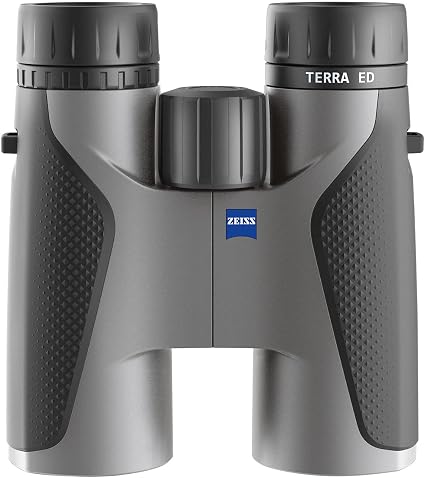
88% light transmission through Schmidt-Pechan ED glass makes these binoculars a fantastic choice for anyone who wants clear, sharp views while exploring museums or church sights. The 10×42 magnification hits a sweet spot for detailed but stable viewing, perfect for stationary sightseeing.
Set up is quick since the large, easy-to-grip focus wheel feels natural under your index finger. Manual focusing lets you adjust fast when a detail catches your eye.
The compact and lightweight design fits smoothly in a bag without feeling bulky, and the waterproof fiberglass-reinforced casing adds durability for outdoor use, even near rainy or misty locations.
Optical clarity is excellent across different lighting thanks to the hydrophobic multi-coating on the lenses. The binoculars deliver bright, true-to-life images with minimal distortion, making art and architecture stand out. Built solidly, they handle being bumped or dropped better than typical models.
A common note is that the manual focus might take some getting used to for fine adjustments.
The clarity through the Schmidt-Pechan ED glass receives strong praise for delivering crisp images, while the manual focus feature is frequently mentioned as needing some patience to master. This is especially noticeable when trying to zero in on very fine details.
Anyone looking for detailed, stable views of static sights like museum exhibits or church interiors will appreciate these binoculars. Those wanting rapid focus changes for active scenes might want to consider other options with autofocus or faster focusing mechanisms.
Pros
- High light transmission for sharp views
- Large focus wheel easy to operate
- Lightweight and compact for travel
- Waterproof, rugged fiberglass casing
Cons
- Manual focus requires practice for precision
- Not ideal for quick-moving subjects
| Specification | Details |
|---|---|
| Magnification Maximum | 10 x |
| Objective Lens Diameter | 42 millimeters |
| Water Resistance Level | Waterproof |
| Focus Type | manual |
| Eye Relief | 18 millimeters |
| Field of View | 330 feet |
Best Museum Church Sightseeing Binoculars Comparison Table
| Product | Magnification | Objective Lens Diameter | Eye Relief | Coating |
|---|---|---|---|---|
| Occer 12×25 | 12x | 25 mm | 20 mm | Fully Multi-Coated |
| ZEISS Terra ED 10×25 | 10x | 25 mm | 18 mm | Multi-Coated |
| Nikon Monarch M7 10×42 | 10x | 42 mm | – | – |
| Generic 8×42 Binoculars | 8x | 42 mm | 18 mm | – |
| Compact 12×32 Binoculars | 12x | 32 mm | 14 mm | – |
| UHD 18×56 Binoculars | 18x | 56 mm | – | – |
| Professional 25×30 Binoculars | 25x | 30 mm | – | Fully Multi-Coated |
| Vortex Triumph HD 10×42 | 10x | 42 mm | 17 mm | – |
| HD Mini Compact | 8x | 21 mm | 2.6 mm | – |
| H8 12×50 Binoculars | 12x | 50 mm | – | Fully Multi-Coated |
| 20×50 High Powered | 20x | 50 mm | 26 mm | – |
| ZEISS Terra ED 10×42 | 10x | 42 mm | 18 mm | Multi-Coated |
- Magnification12x
- Objective Lens Diameter25 mm
- Eye Relief20 mm
- CoatingFully Multi-Coated
- Magnification10x
- Objective Lens Diameter25 mm
- Eye Relief18 mm
- CoatingMulti-Coated
- Magnification10x
- Objective Lens Diameter42 mm
- Eye Relief–
- Coating–
- Magnification8x
- Objective Lens Diameter42 mm
- Eye Relief18 mm
- Coating–
- Magnification12x
- Objective Lens Diameter32 mm
- Eye Relief14 mm
- Coating–
- Magnification18x
- Objective Lens Diameter56 mm
- Eye Relief–
- Coating–
- Magnification25x
- Objective Lens Diameter30 mm
- Eye Relief–
- CoatingFully Multi-Coated
- Magnification10x
- Objective Lens Diameter42 mm
- Eye Relief17 mm
- Coating–
- Magnification8x
- Objective Lens Diameter21 mm
- Eye Relief2.6 mm
- Coating–
- Magnification12x
- Objective Lens Diameter50 mm
- Eye Relief–
- CoatingFully Multi-Coated
- Magnification20x
- Objective Lens Diameter50 mm
- Eye Relief26 mm
- Coating–
- Magnification10x
- Objective Lens Diameter42 mm
- Eye Relief18 mm
- CoatingMulti-Coated
How to Choose the Right Sightseeing Binoculars
Choosing binoculars with the right magnification, size, and weight ensures comfortable viewing and clear details in museum or church settings. Prioritizing optical quality and ease of use helps avoid eye strain and frustration, saving both money and hassle in the long run.
Magnification and Lens Diameter
Indoor settings like museums or churches often have low light, so lens diameter plays a crucial role. Larger lenses, around 30 to 42 mm, gather more light, making dim details clearer without forcing your eyes to strain. Magnification beyond 8x tends to magnify every little hand tremor, causing shaky images, especially without a tripod.
A steady image is vital when examining delicate artworks or intricate church windows. Sticking to magnifications between 7x and 8x keeps zoom power manageable and the view stable.
Balancing zoom and lens size ensures bright, sharp images without feeling like a workout for your hands. Choosing lenses with a diameter too small, say under 25 mm, often results in darker images, making it tough to see fine details.
The balance between zoom and lens diameter also impacts how much light enters the binoculars, a key factor in less-than-ideal indoor lighting. A pair with 8×42 specs delivers both brightness and enough magnification to capture close details without unnecessary shakiness.
Field of View and Focus Ease
Large artworks and vast architectural elements require a wide field of view. A field of view of 350 feet or more at 1,000 yards helps see broad scenes without constantly moving the binoculars. This reduces strain during longer observations.
Quick, smooth focusing is essential too, especially when shifting between nearby exhibits and distant details in the same room. Good focus wheels move easily but precisely, making adjustments feel natural rather than stiff or too sensitive.
Close focus distance matters as well; models focusing at 6 to 10 feet let you examine small objects or sculptures up close. Struggling with slow or jerky focus spoils the experience, so prioritizing ease here pays off in busy tours with varying viewing distances. A binocular that can quickly switch focus and offer wide visibility prevents missing anything while scanning large frescoes or stained glass.
Smooth mechanisms also reduce frustration when others wait behind you.
Size and Weight
Holding binoculars for an entire museum visit can cause wrist and hand fatigue if they’re bulky or heavy. Models weighing around 1 to 1.5 pounds are easier to carry and hold steady for long periods.
Compact sizes fit better in bags or under jackets, allowing easy transport through crowded spaces or security checkpoints. Ergonomic grips with rubberized coatings offer a comfortable, non-slip hold that reduces hand cramping and accidental drops. Without this, hands get tired quickly and images appear shaky.
Bulkier, heavier pairs tend to get set aside after a while, wasting the chance to fully enjoy viewing. In contrast, lighter, well-shaped binoculars can stay in hand comfortably and keep the view steady throughout the day.
Even small differences in weight and grip design matter in extended use. Choosing something streamlined and balanced makes a full day inside museums or churches much more enjoyable.
Optical Coating and Image Quality
Coatings on binocular lenses affect how clearly and brightly images appear indoors, especially under museum lighting that’s often dim or uneven. Fully multi-coated lenses reduce glare and reflections, delivering clearer, brighter images without washing out colors. This clarity is especially noticeable when examining paintings or textiles.
Color accuracy matters since muted or distorted hues can alter the perceived look of artworks and architectural details. Look for binoculars described as offering true-to-life color rendition.
Avoid models with visible chromatic aberration, where edges appear fringed with color, and distortion that bends straight lines unnaturally. Such issues make it harder to appreciate precise details in designs and colors accurately.
All these factors contribute to a more realistic and enjoyable viewing experience, making the binoculars feel like a natural extension of your eyes rather than a filter.
Durability and Handling
Museum visits and travel can be tough on gear. A pair built with metal or reinforced polymer frames resists knocks and general wear better than cheaper plastic models. Protective features like rubber armor help absorb shocks and provide grip.
Some offer water or fog resistance, a handy safeguard against accidental spills or humid environments. This durability ensures binoculars continue working well over time despite frequent use.
Comfortable eyecups that twist or fold adjust to different face shapes and allow use with glasses. This reduces eye strain, making longer viewing sessions less tiring.
Binoculars that fail in durability or comfort quickly become awkward to use or get set aside. Investing in a model made for handling keeps both the device and your eyes protected during every visit.
Maximizing Your Sightseeing Experience: Tips for Using Binoculars in Museums and Churches
Many museums and churches have restrictions on flash photography and touching exhibits, so binoculars can be a helpful way to see details without getting too close or causing damage. Choose binoculars with a wide field of view to easily scan large frescoes or stained glass windows.
Using your binoculars effectively:
- Adjust the focus slowly to avoid eye strain when observing intricate artwork or architectural details.
- Hold binoculars steady by resting your elbows on a solid surface like a pew or railing.
- Use a neck strap to keep your binoculars accessible but secure while walking through exhibits.
- Consider the lighting; some binoculars perform better in low light, which is common indoors.
These steps help you appreciate art and craftsmanship clearly, especially when physical distance or dim lighting restricts close-up viewing.
Proper Maintenance and Care to Extend the Life of Your Sightseeing Binoculars
Regular cleaning is essential to keep binocular lenses clear and extend their usability. Use a soft, lint-free cloth specifically designed for optics to wipe the lenses gently.
Care tips for sightseeing binoculars:
- Avoid touching the lenses with fingers to prevent smudges and oil buildup.
- Store binoculars in a protective case when not in use to prevent dust and accidental damage.
- Keep binoculars dry; if exposed to moisture, dry them thoroughly to prevent mold inside the lenses.
- Check the focusing mechanism periodically for smooth operation and avoid forcing it.
By following these guidelines, binoculars will maintain their clarity and functional performance longer, making each museum or church visit more rewarding.
Comparing Binoculars to Other Optical Devices for Museum and Church Visits
Binoculars offer a binocular, magnified view with depth perception that many compact optical devices lack. Monoculars and magnifying glasses provide magnification but only with one eye, which can cause fatigue during extended use.
Unlike cameras, binoculars let you maintain a real-time, hands-on connection with your surroundings and adjust focus quickly. Digital zoom on cameras often reduces image quality, while quality binocular lenses deliver sharper, clearer views.
Advantages of binoculars in these settings:
- Allow closer examination of distant or high-up architectural details without intruding on the space.
- Require no batteries or power, ensuring consistent performance throughout your visit.
- Enable both eyes to work together, reducing eye strain during longer observation periods.
For visitors focused on detailed observation, binoculars often provide a better balance of convenience and optical clarity compared to other tools.
People Also Asked
How Do I Clean and Maintain Sightseeing Binoculars Properly?
Use a soft microfiber cloth to clean the lenses and avoid wiping them with your shirt or paper products, which can scratch the coating. Keep binoculars in their case when not in use to protect from dust and moisture.
What Size Binoculars Are Ideal for Museum and Church Visits?
Compact binoculars with 8x to 10x magnification and 25-30mm objective lenses work well indoors. They’re light enough to carry all day while providing enough detail for distant objects.
Are Sightseeing Binoculars Safe to Use Around Delicate Artifacts?
Sightseeing binoculars do not emit light or radiation, so they are safe to use around delicate artifacts. Keep a safe distance to avoid accidentally touching items when focusing.
How Long Do Typical Sightseeing Binoculars Last with Regular Use?
With proper care, sightseeing binoculars can last many years. Clean lenses regularly, avoid dropping them, and replace eyecups or focus wheels if they become loose to extend their lifespan.
What Common Problems Should I Watch for in Sightseeing Binoculars?
Fogging inside the lenses, loose focus dials, and scratched lenses are common issues. Store binoculars in a dry place and inspect them before trips to catch any problems early.
Conclusion
Choosing binoculars for museum, church, and sightseeing visits means focusing on size, magnification, and ease of use. Compact models fit easily into bags and won’t cause fatigue during long visits. A moderate zoom offers enough detail without being hard to hold steady.
Clear image quality in indoor and low light conditions is important too, since many exhibits and chapels have dim lighting.
Consider how often you’ll carry binoculars and the kind of spaces you’ll visit. More frequent use justifies spending a bit more on durability and comfort.
Matching your choice to your budget ensures you don’t overpay for features you won’t use. You can go back to the comparison table and the picks above to find the binoculars that fit your needs best.
