
Top 12 Best Nikon Rangefinder Lens You Can’t Miss Today
Using a low-quality lens on a Nikon rangefinder camera can cause frustration with blurry images or difficulty focusing, especially in low light or fast-moving scenes. The best Nikon rangefinder lens avoids these issues by offering clear optics and precise alignment with the camera’s viewfinder.
It also maintains sharpness across the frame, which is often a problem with cheaper, poorly designed lenses.
Durability and build quality matter for these lenses since the fit must be exact to match the rangefinder mechanism. A well-constructed lens typically has a metal mount and solid glass elements to reduce distortion and chromatic aberrations. Focal length and aperture also play key roles: many professionals lean toward 35mm or 50mm lenses with a maximum aperture around f/2 to balance light gathering ability and depth of field control without adding bulk or complexity.
Need a Quick Check?
| Image | Product | Price |
|---|---|---|
Our Top Picks 1  | Nikon Laser 50 | Check Price |
Our Top Picks 2  | Nikon LaserForce 10×42 | Check Price |
Our Top Picks 3  | Nikon COOLSHOT 50i | Check Price |
Our Selected Top 12 Nikon Rangefinder Lens for Every Budget
This list features a variety of rangefinder lenses suited for different needs and budgets. Each review covers how the lens performs, the type of user it best fits, and highlights its main strengths and drawbacks to help you make an informed choice.
1. Nikon Laser 50 Rangefinder
6x magnification and a wide field of view make it easy to find distant subjects quickly, even in low light. Suited for golf players and outdoor enthusiasts looking for precise measurements, the Nikon Laser 50 Rangefinder stands out for its clear optics and multipurpose measuring capabilities.
Setup is straightforward, with included components like extra CR2 batteries, a carrying case, clip, and cleaning cloth ready right out of the box. Switching between measurement modes feels intuitive, allowing quick checks of horizontal distances, angles, and actual distances up to 2,000 yards.
The OLED red display adjusts brightness automatically, keeping readouts visible in changing light throughout the day without any extra hassle.
Measuring distances in 0.1-yard increments ensures precise readings for golf or forestry work. The multilayer coated Nikon optics deliver sharp clarity, which makes targeting easy over long distances.
Built solidly, it handles outdoor conditions well, though some users find the unit a bit bulky compared to simpler models. Its reliable response time is praised, while the main complaint centers around the occasional difficulty in aligning on very narrow or rapidly moving targets.
Many appreciate the precision and clarity provided by the 6x magnification and sharp optics, making measurements steady and reliable. The most frequent issue mentioned is difficulty locking onto very small or quickly moving subjects, which can slow down use during fast-paced activities.
Golfers or forestry workers needing detailed angle and distance data will find this rangefinder suited to their needs. Those looking for a smaller, quicker-to-handle device for simple point-and-shoot use might prefer something lighter or more compact.
Pros
- Clear multilayer coated Nikon optics
- Automatic brightness adjustment on display
- Measures horizontal distance and angle in detail
- Includes extra batteries and carrying accessories
Cons
- Somewhat bulky compared to basic models
- Challenging to align on narrow or moving targets
| Specification | Details |
|---|---|
| Magnification | 6x |
| Measurement Distance | Up to 2,000 yards |
| Display Type | Red OLED with automatic brightness adjustment |
| Measurement Increments | 0.1-yard |
| Included Components | 3 Extra CR2 Batteries, Carrying Case, Clip, Cleaning Cloth |
2. Nikon LaserForce 10×42 Rangefinder Binoculars
Hunters looking for a reliable all-in-one rangefinder and binocular combination will appreciate these Nikon LaserForce 10×42 Rangefinder Binoculars. They excel with a bright, clear red OLED display and a laser rangefinder reaching up to 1900 yards, making distance measurement quick and precise without switching devices.
Setting up is straightforward with a center manual focus that feels natural in hand. The 10x magnification and 42mm objective lens size deliver sharp, clear views, while waterproof and fog-proof construction means they perform well in various weather. Eye relief of 15.5mm offers comfortable viewing over long periods, and the binoculars can attach to tripods or mounts for added stability.
Performance is strong due to the combination of optical clarity and fast laser ranging. The 90-meter field of view ensures you can scan large areas easily.
Build quality is solid, with roof prisms and anti-reflective coatings preventing glare. Users praise the speed of the rangefinder but note that manual focusing requires some practice to master efficiently. Weight isn’t specified, so expect a sturdy, handheld feel rather than ultralight use.
The standout feature is the quick and accurate ranging ability combined with bright optics that help hunters easily spot and measure distances. A common drawback is the learning curve in using manual focus effectively, especially in fast-paced scenarios.
Those who value precise ranging combined with sturdy binoculars will find this a practical choice. People wanting ultra-lightweight gear or simpler autofocus may prefer other options.
Pros
- Bright, clear red OLED display for easy reading
- Waterproof and fog proof for all weather use
- Wide 90-meter field of view
- Compatible with tripods and mounts
Cons
- Manual focus can be tricky at first
- No weight information, possibly heavier for extended use
| Specification | Details |
|---|---|
| Magnification Maximum | 42 |
| Objective Lens Diameter | 42 millimeters |
| Eye Relief | 15.5 millimeters |
| Field of View | 90 meters |
| Water Resistance Level | Waterproof |
| Focus Type | Center Focus |
3. Nikon COOLSHOT 50i Golf Rangefinder
Accurately ranging golf shots with a clear visual and vibration cue sets this apart from other rangefinders. Best for golfers who want reliable slope compensation without hassle, it simplifies measuring distances on varied terrain.
Its single biggest strength lies in the ID Technology, which automatically factors in incline or decline angles.
Setup is straightforward, with everything included: rangefinder, battery, case, and wrist strap. The built-in magnet allows quick attachment to metal surfaces for easy storage when not in use. On the course, the red OLED display offers good contrast, and the dual locked on quake feature confirms you’re targeting the flag, not something beyond it.
When slope isn’t allowed, the device switches to a competition-approved mode signaled by the ADI LED.
Accuracy in distance measurement feels reliable, especially with the incline/decline adjustment working effortlessly. The build quality is solid, supported by a 5-year warranty.
The strongest praise highlights the reliable distance readouts and ease of use. Common critiques mention the weight and that the vibration alert can be subtle.
Reliable distance measurements with useful slope adjustments earn high marks, but the vibration cue meant to confirm flag targeting may go unnoticed at times. The device’s overall feel is solid, backed by a 5-year warranty, although some find it a bit heavier than alternatives.
Golfers who prioritize easy-to-read distance info that accounts for elevation changes will appreciate this tool. Those looking for a lighter device or a stronger vibration alert may want to explore other options.
Pros
- Accurate slope-adjusted readings with ID Technology
- Built-in magnet for convenient storage
- High visibility red OLED display
- Competition-approved actual distance indicator
Cons
- Vibration cue can be subtle and easy to miss
- Heavier compared to some other models
| Specification | Details |
|---|---|
| Brand Name | Nikon |
| Model Number | 16760 |
| Unit Count | 1 Count |
| Included Components | Rangefinder, Battery, Case, Wrist Strap |
| Warranty Description | 5 year manufacturer |
4. Nikon 70-300mm f/4.5-6.3G VR DX AF-P ED Zoom Lens

Nikon 70-300mm f/4.5-6.3G VR DX AF-P ED Zoom Lens works great for those using Nikon DX-format cameras looking for a telephoto zoom lens. It stands out in delivering a versatile focal range with image stabilization that suits wildlife and sports photography well.
Setting up the lens is straightforward with the Nikon F mount system that fits properly on compatible cameras. The zoom covers a focal length equivalent to 105-450mm on a 35mm camera, offering a wide range to capture distant subjects. The use of a pulse stepping motor means autofocus runs quietly and smoothly, and the VR stabilization helps reduce blur without needing a tripod.
This lens performs solidly in its zoom range, bringing faraway details into clear view. The build feels lightweight yet sturdy enough for everyday use, featuring a super integrated coating to reduce flare.
The biggest praise is for its sharp images and dependable VR. Some notice that the aperture range limits low-light performance, as it closes down to f/6.3 at longer zooms.
The lens is widely praised for delivering sharp images with reliable electronic image stabilization, making distant subjects easier to capture. Some users find the aperture range limiting for taking photos in darker environments or indoor settings without additional lighting.
Those needing a lightweight telephoto zoom for outdoor, daylight photography will appreciate this lens. Users planning to shoot frequently in low light or requiring faster apertures might want to consider other options with wider maximum apertures.
Pros
- Quiet and smooth autofocus with pulse stepping motor
- Effective Nikon VR image stabilization
- Wide zoom covering 105-450mm equivalent
- Super integrated coating reduces flare
Cons
- Aperture narrows to f/6.3 at maximum zoom
- Limited performance in low-light situations
| Specification | Details |
|---|---|
| Focal Length Description | 70-300 millimeters |
| Compatible Camera Mount | Nikon F |
| Maximum Aperture | 4.5 f_stop |
| Minimum Aperture | 6.3 f_stop |
| Image stabilization | Optical |
| Lens Design | Zoom |
5. Nikon COOLSHOT PROII Stabilized Golf Rangefinder

Handheld use stays surprisingly steady thanks to built-in stabilization that really cuts down on shakiness. Made for golfers aiming to get precise yardages quickly, it’s especially useful in courses with tricky slopes. The key benefit here is how steady and quick the device feels, even when you’re pacing around the course.
Setup is straightforward with the included battery, case, and wrist strap getting you ready to range fast. The stabilized view helps keep the target locked without frustration, while the Dual Locked On Echo feature confirms you’re measuring the flag, not background objects. Waterproof and fogproof design means it withstands different weather conditions without losing clarity.
You just point and shoot, the Hyper Read laser gives measurements under .3 seconds.
Accuracy doesn’t disappoint thanks to ID Technology, adjusting for uphill or downhill shots, so you get one reliable number to base your swing on. The body feels solid and built for outdoor use, standing up well to wet or humid conditions. Praise centers on the quick measurement time and reliability, while some users have noted the size carries a bit more heft than simpler rangefinders.
The fast and steady laser ranging is the strongest feature, making it easy to get accurate readings quickly while moving. The most frequent drawback mentioned is its relatively heavier feel compared to simpler, less advanced rangefinders.
Golfers who play in variable weather and want quick, reliable distance info will appreciate this device. Those looking for a lighter, simpler rangefinder without slope compensation might prefer other options better tailored to casual play.
Pros
- Built-in stabilization reduces hand shake effects
- Quick measurement response within .3 seconds
- Waterproof and fogproof for all weather
- ID Technology adjusts for slope angles
Cons
- Heavier than some other rangefinder models
- Designed primarily with hunting in mind
| Specification | Details |
|---|---|
| Model Number | 16758 |
| Sport Type | Hunting |
| Included Components | Rangefinder, Battery, Case, Wrist Strap |
| Warranty Description | 5 YEAR MANUFACTURER |
| Item Type Name | COOLSHOT PROII STABILIZED |
6. Nikon COOLSHOT 20i GIII Golf Rangefinder

Great for golfers seeking quick, precise distance readings, this rangefinder offers clear optics and reliable measuring. Its standout feature is the bright imaging combined with 6x magnification, making it easy to target flags and hazards accurately in all light conditions.
Setting it up is straightforward, comes with a case and battery ready to go. One-touch ranging lets you lock onto targets fast, whether it’s flagsticks, bunkers, or doglegs.
The multilayer-coated lenses keep the view sharp, even on cloudy days, so you can plan shots without squinting or second-guessing distances.
Distance measurement is swift and consistent up to 800 yards, helping with confident club selection. The build feels sturdy enough for regular golf rounds, and the 5-year warranty adds reassurance. It’s praised for easy use and clear visuals, though some mention it could handle rough handling better, as it’s primarily made for the course, not rugged conditions.
Users find the optics extremely clear and easy to focus on course details, which makes shot planning smoother. The most common drawback is the device’s sensitivity to rough treatment, highlighting a need for cautious handling during use.
Golfers looking for sharp visuals and reliable measuring on most course terrains will appreciate this model. Those expecting a highly rugged or waterproof device might consider alternatives better suited to tougher outdoor conditions.
Pros
- Bright, high-contrast multilayer-coated lenses
- Fast one-touch ranging for quick measurements
- Measures distances up to 800 yards accurately
- Includes case and battery for immediate use
Cons
- Not designed for harsh or rugged environments
- Could feel fragile with rough handling
| Specification | Details |
|---|---|
| Brand Name | Nikon |
| Sport Type | Golf |
| Model Number | 16780 |
| Magnification | 6X |
| Max Distance | 800 yards |
| Included Components | Case, Rangefinder battery |
7. Vortex Sonora HD 1800 Rangefinder
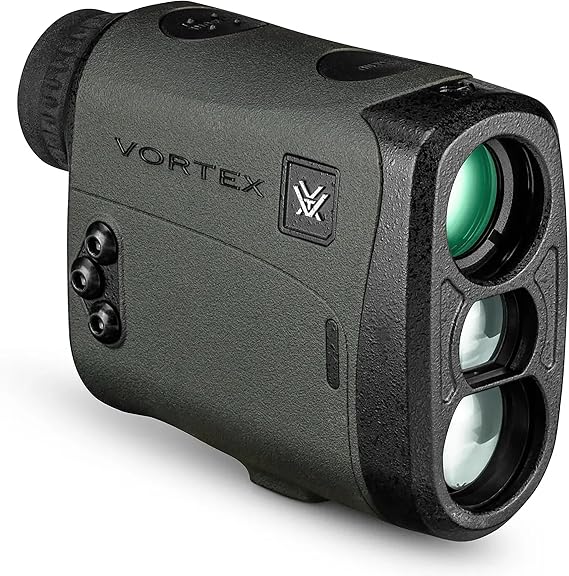
Crafted with ultra-hard ArmorTek coating on the lenses, this rangefinder is built to handle rough outdoor use while protecting against scratches, oil, and dirt. Ideal for archery and hunting enthusiasts, its standout feature is the combination of sharp HD optics and an extended 1,800-yard reflective range, giving you precise distance readings at long ranges.
Setting it up is straightforward, with a soft carry case and a utility clip included for easy transport. The 6x magnification and 21mm objective lens make spotting targets clear in various light conditions. Day-to-day operation benefits from the tripodal adaptability and an angle-compensated ranging technology that factors in horizontal distances, particularly useful for bow and rifle shooting on uneven terrain.
Distance measurements come through accurately within its maximum range, providing useful data quickly. The fully multi-coated lenses ensure bright, color-true images even in low light.
While many praise its optical clarity and build durability, some users mention the weight can feel a bit heavy for prolonged handheld use. Nonetheless, its rugged design supports tough environments without compromise.
The laser rangefinder impresses with its clear optics and precise long-distance measurements, making it reliable in challenging outdoor conditions. The most frequent criticism is that the weight can be noticeable during extended handheld use.
People needing accurate, angle-corrected ranging for both reflective and game targets will find it valuable. Those requiring a lighter device or longer game-range may want to explore other options better suited for those specific needs.
Pros
- Exceptional HD optical clarity and color fidelity
- Long maximum range up to 1,800 yards
- Angle-compensated distance for accurate ballistic data
- Durable ArmorTek coated lenses resist scratches
Cons
- Heavier than some other models for handheld use
- Effective range only 700 yards on game targets
| Specification | Details |
|---|---|
| Max Reflective Range | 1,800 Yards |
| Max Game Range | 700 Yards |
| Magnification | 6x |
| Objective Lens Diameter | 21mm |
| Sport Type | Archery, Hunting, Shooting |
| Warranty | Unlimited, unconditional, lifetime warranty |
8. Nikon COOLSHOT PROIII Stabilized Golf Rangefinder
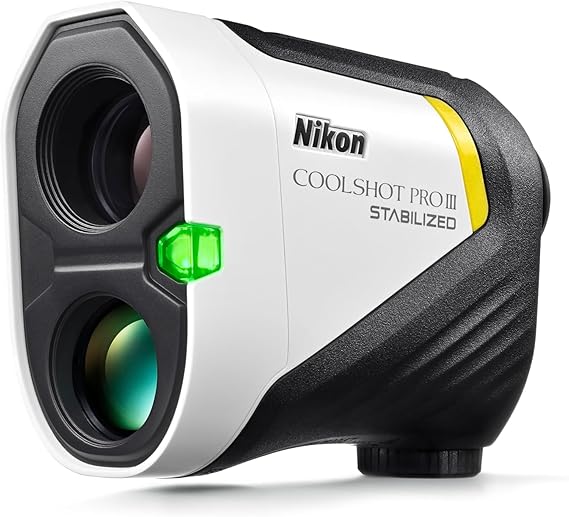
Image stabilization is the feature that really stands out, making this Nikon rangefinder ideal for serious golfers who want accurate pin readings without the usual hand shake. It’s a high-precision tool designed to deliver steady targeting even at long distances.
Setup is straightforward with the included battery and case making it ready to go quickly. The image stabilization keeps the view crystal clear while the hyper-fast measurement system gives you instant distance readings in just 0.1 seconds. That quick feedback helps you plan every shot with confidence, up to 1,200 yards away, without any noticeable lag or searching for the target.
It performs its main job of measuring distances very reliably thanks to stabilized optics that reduce hand movement effects. The build feels solid and durable, suitable for regular use on the course. Users often praise how stable and quick it is, though some find the price on the higher side.
It balances quality and precision well, despite that one concern.
Stabilized optics deliver very steady and precise measurements, making quick golf shots much easier. Some find the cost higher than expected, which might affect those who play less frequently or on a budget. The fast 0.1-second readout is consistently noted as a major benefit.
Golfers looking for fast, accurate readings with minimal hand shake will appreciate this rangefinder’s features. People wanting a more budget-friendly or basic model might want to consider alternatives without stabilization or high-end tech.
Pros
- Image stabilization for steady, clear targeting
- Instant distance readings in 0.1 seconds
- Measures accurately up to 1,200 yards
- Includes battery and protective carrying case
Cons
- Price point can be steep for casual golfers
- No detailed manufacturer part number provided
| Specification | Details |
|---|---|
| Model Number | 16788 |
| Sport Type | Golf |
| Measurement Range | Up to 1,200 yards |
| Measurement Speed | 0.1 seconds (HYPER READ technology) |
| Included Components | Battery, Case |
| Warranty Description | 5 Year Warranty |
9. Nikon AF-S NIKKOR 200-500mm f/5.6E ED VR Lens

Super telephoto zoom lenses rarely combine reach with consistent aperture, but the Nikon AF-S NIKKOR 200-500mm f/5.6E ED VR does just that, making it a solid choice for wildlife and sports photographers who need a versatile and reliable lens to capture distant action.
Setting up is straightforward, thanks to the steady f/5.6 aperture which helps maintain consistent exposure as you zoom in from 200mm to 500mm. The Silent Wave motor keeps autofocus fast and quiet, letting you track moving subjects smoothly. Vibration Reduction lets you shoot handheld with slower shutter speeds, cutting down blur from camera shake during long shots.
Image quality holds well over the entire zoom range, with special low dispersion glass reducing chromatic aberration. The build feels solid, while not overly heavy, compatible with Nikon 1 mounts.
Most users praise sharpness and focusing speed. The biggest complaint tends to be its fixed aperture, which can be limiting in low light.
Most praise goes to the lens’s sharp images and reliable autofocus, especially during fast-moving scenes like wildlife in action. The widespread complaint revolves around the f/5.6 aperture, which restricts shooting options in dim conditions or when a shallower depth of field is desired.
Photographers who mainly work outdoors in good light and require a zoom lens with long reach will find this a strong candidate. Those focused on indoor events or low-light scenarios might want to consider lenses with wider apertures or prime lenses instead.
Pros
- Flexible telephoto zoom range of 200-500mm
- Effective vibration reduction up to 4.5 stops
- Quiet, fast autofocus with manual override
- Minimizes chromatic aberration well
Cons
- Constant f/5.6 aperture limits low-light use
- Heavier than prime lenses at this range
| Specification | Details |
|---|---|
| Focal Length Description | 200-500 millimeters |
| Maximum Aperture | 5.6 millimeters |
| Image stabilization | Optical |
| Compatible Camera Mount | Nikon 1 |
| Focus Type | Auto/Manual |
| Lens Design | Zoom |
10. Sigma 50-500mm f/4.5-6.3 APO DG OS HSM Lens

Capturing distant subjects clearly often means juggling heavy gear or blurry shots. A 10x telephoto zoom lens like this is perfect for anyone wanting to capture wildlife, sports, or expansive outdoor scenes that require serious reach. Its biggest strength lies in offering both a huge zoom and image stabilization for sharper handheld shots.
Setting it up involves attaching to Nikon F (FX) mount cameras, designed especially for full frame DSLRs. Day-to-day shooting benefits from Sigma’s OS system that counters hand shake, letting you shoot in lower light without a tripod.
The HSM focus keeps autofocus quick and quiet, perfect for catching unpredictable moments without noise distraction.
Performance shines with sharpness and true color thanks to four SLD glass elements. Build quality feels solid and reliable, with 9 diaphragm blades giving smooth bokeh.
Most appreciate the huge zoom range and stabilization, while common complaints include weight and slower apertures towards the longer focal lengths, which require brighter light or higher ISO for fast shots.
Sharp images with accurate colors stand out thanks to quality glass elements and image stabilization that works well. The main complaint often revolves around its weight and the narrower aperture at long focal lengths, which can challenge slower shutter speeds in dimmer conditions.
Photographers needing a flexible telephoto zoom with stabilization will find this lens useful. Those prioritizing lighter gear or faster apertures might want to consider other options better suited for low-light action or travel ease.
Pros
- Great zoom range from 50 to 500 mm
- Effective image stabilization for handheld shooting
- Quiet and fast autofocus
- Good color correction and sharpness across zoom
Cons
- Somewhat heavy for long shoots
- Smaller aperture limits low light performance
| Specification | Details |
|---|---|
| Focal Length Description | 50-500 millimeters |
| Compatible Camera Mount | Nikon F (FX) |
| Zoom Ratio | 10x |
| Image Stabilization | 4 stops claimed normal and panning modes |
| Number of Diaphragm Blades | 9 |
11. Nikon 18-140mm f/3.5-5.6G ED VR AF-S DX Zoom Lens

Covering a versatile 18-140mm zoom range, this lens suits those looking for one lens to handle wide-angle shots and telephoto zoom without switching lenses. Its greatest strength is its flexibility for snapshots and videos across many situations without needing extra gear.
Setting up is simple with the Nikon F mount and automatic focus powered by the Silent Wave Motor. Day-to-day use benefits from the VR image stabilization, which helps keep photos sharp even in low light or at the telephoto end. Minimum focus distance stays constant at 0.45m across the zoom range, letting you capture subjects fairly close without trouble.
Image quality is solid with an Extra-low Dispersion glass element reducing color fringing and an aspherical element cutting down coma. The lens construction with 17 elements in 12 groups adds complexity but contributes to sharpness. Built with a comfortable zoom ratio of 7.8x, it handles a variety of scenes well.
Some find it a bit slow in low-light autofocus situations given the f/3.5-5.6 aperture range.
Many users appreciate how the built-in VR makes handheld shooting more forgiving and versatile, while some note that the lens’ slower maximum aperture sometimes causes challenges focusing faster in dim environments. The quiet autofocus motor is praised for being unobtrusive during video capture.
Photographers needing a versatile all-in-one zoom for travel or everyday photography will find this lens well suited to their needs, especially on DX-format bodies. Those prioritizing brighter apertures or professional-level low-light autofocus might want to consider prime lenses or faster zooms instead.
Pros
- Wide 7.8x zoom range from 18mm to 140mm
- VR image stabilization sharpens handheld shots
- Fast, quiet autofocus with Silent Wave Motor
- Extra-low Dispersion glass reduces chromatic aberration
Cons
- Maximum aperture narrows to f/5.6 at telephoto end
- Autofocus can struggle in very low-light conditions
| Specification | Details |
|---|---|
| Focal Length | 18-140 mm |
| Maximum Aperture | f/3.5-5.6 |
| Image Stabilization | VR (Vibration Reduction) |
| Minimum Focus Distance | 0.45 m (1.48 ft) |
| Lens Construction | 17 elements in 12 groups (1 ED, 1 aspherical) |
| Mount | Nikon F (DX format) |
12. Nikon AF-S NIKKOR 300mm f/4E PF ED VR Lens

Photographers who need a powerful yet lightweight telephoto lens will find the Nikon AF-S NIKKOR 300mm f/4E PF ED VR ideal. Its standout feature is the compact design combined with sharp performance, suitable for serious enthusiasts and pros shooting wildlife, sports, or distant subjects.
Setting up the lens is straightforward given its lightweight build of just 755g and short length of 147.5mm, making it easy to swap and carry for extended sessions. The Phase Fresnel element reduces bulk, so handling feels balanced even handheld.
VR (vibration reduction) helps keep shots steady, crucial for long-distance shooting without a tripod.
The 300mm f/4 prime delivers sharp images with minimal chromatic aberration and ghosting thanks to the PF lens element. It’s built solidly yet remains one of the lightest full-frame 300mm lenses available.
Most praise focuses on its compact size and optical clarity, while some note the f/4 aperture limits performance in very low light.
The sharpness and clarity achieved by the Phase Fresnel lens element stands out, with very low chromatic aberration or ghosting reported. Handling benefits greatly from the compact and lightweight design, although some users mention the f/4 aperture as a drawback when shooting in dim conditions.
Enthusiasts and pros needing a portable telephoto solution will appreciate this lens’s balance of size and performance. Those requiring faster apertures for low light or indoor shooting may want to consider alternative lenses with wider maximum apertures.
Pros
- Lightweight for a 300mm full-frame lens
- Compact size eases handheld use
- Sharp images with minimal aberrations
- Effective vibration reduction system
Cons
- Limited low light performance with f/4 aperture
- Higher price compared to similar focal lengths
| Specification | Details |
|---|---|
| Item Weight | 1.66 pounds |
| Product Dimensions | 5.83 x 3.5 x 3.5 inches |
| Focal Length | 300mm |
| Maximum Aperture | f/4 |
| Model Number | JAA342DA |
Best Nikon Rangefinder Lenses Comparison Table
| Product | Sport Type | Model Number | Included Components | Warranty |
|---|---|---|---|---|
| Nikon Laser 50 | Golf | 16754 | 3 Batteries, Case, Cloth | – |
| Nikon LaserForce 10×42 | Hunting | – | – | – |
| Nikon COOLSHOT 50i | Laser Rangefinders | 16760 | Rangefinder, Battery, Case | – |
| Nikon 70-300mm VR DX | – | – | – | – |
| Nikon COOLSHOT PROII | Hunting | 16758 | Rangefinder, Battery, Case | 5 Year Manufacturer |
| Nikon COOLSHOT 20i GIII | Golf | 16780 | Case, Rangefinder battery | 5 Year |
| Vortex Sonora HD 1800 | Archery, Hunting, Shooting | LRF-SON1800 | – | Unlimited Warranty |
| Nikon COOLSHOT PROIII | Golf | 16788 | Battery, Case | 5 Year |
| Nikon 200-500mm VR | – | – | – | – |
| Sigma 50-500mm OS | – | – | – | – |
| Nikon 18-140mm VR DX | – | – | – | – |
| Nikon 300mm PF VR | – | JAA342DA | – | – |
- Sport TypeGolf
- Model Number16754
- Included Components3 Batteries, Case, Cloth
- Warranty–
- Sport TypeHunting
- Model Number–
- Included Components–
- Warranty–
- Sport TypeLaser Rangefinders
- Model Number16760
- Included ComponentsRangefinder, Battery, Case
- Warranty–
- Sport Type–
- Model Number–
- Included Components–
- Warranty–
- Sport TypeHunting
- Model Number16758
- Included ComponentsRangefinder, Battery, Case
- Warranty5 Year Manufacturer
- Sport TypeGolf
- Model Number16780
- Included ComponentsCase, Rangefinder battery
- Warranty5 Year
- Sport TypeArchery, Hunting, Shooting
- Model NumberLRF-SON1800
- Included Components–
- WarrantyUnlimited Warranty
- Sport TypeGolf
- Model Number16788
- Included ComponentsBattery, Case
- Warranty5 Year
- Sport Type–
- Model Number–
- Included Components–
- Warranty–
- Sport Type–
- Model Number–
- Included Components–
- Warranty–
- Sport Type–
- Model Number–
- Included Components–
- Warranty–
- Sport Type–
- Model NumberJAA342DA
- Included Components–
- Warranty–
How to Choose the Right Nikon Rangefinder Lens
Choosing the right rangefinder lens involves considering focal length, aperture, and build quality to match your shooting style and conditions. Selecting carefully ensures sharp images and reliable performance, helping you avoid costly replacements and frustrating limitations in the field.
Lens Compatibility
Mount incompatibility interrupts shoots more than many realize. Attaching a lens without matching it to your camera’s mount results in a frustrating inability to focus or compose.
Using the native mount type ensures secure and accurate lens fit, critical for consistent manual focusing. Look for lenses marked specifically for your rangefinder’s mount, like Nikon’s own Type 1 or others designed for rangefinder backs.
Manual focus plays a key role with these lenses. A focus ring that turns smoothly and responsively matches the deliberate approach of rangefinder shooting.
Some lenses include electronic contacts or allow aperture control from the camera body, but many rely solely on manual aperture rings. Confirming these details upfront prevents surprises about what controls you must handle directly on the lens.
Optical Quality
Sharpness reveals itself clearly in daily use, especially when stopping down from wide apertures. A lens that stays crisp from corner to corner makes framing and cropping more flexible. Evaluating optical quality means considering how sharp the image stays at various apertures and across the entire focal length, especially for zoom lenses.
Coatings influence how much flare or ghosting appear in backlit shots. Good multi-coating keeps contrast and color fidelity high even in difficult lighting.
Bokeh quality varies widely; smooth, creamy backgrounds help portraits stand out without distracting highlights. Chromatic aberration that leads to color fringing around edges can spoil an otherwise sharp image, so its control is essential in lens selection.
Build and Materials
Metal construction offers reassurance during long shooting trips. Several lenses use all-metal barrels and mounts that resist wear better than plastic alternatives. The tactile feel and sound of metal parts also tends to be more pleasant and durable over time.
Weather sealing is important for shooting outdoors in less than ideal weather, preventing dust or moisture from infiltrating lens elements.
Weight affects how balanced the lens feels on your camera. Heavy lenses can tire the wrist and throw off handling, especially on compact rangefinder bodies.
Consider choosing a lens whose weight complements your camera so you don’t struggle holding it steady for longer exposures or street work.
Focal Length and Aperture
Focal length determines much about what you can capture easily. For street photography, 35mm or 28mm lenses offer a natural perspective with enough scene inclusion.
Portraits often benefit from 85mm or similar lengths for flattering compression and subject isolation.
Maximum aperture impacts two main areas: low-light usability and depth of field control. Fast lenses with apertures around f/1.8 or wider allow shooting indoors or at dusk without bumping ISO excessively. They also deliver a shallower depth of field for subject separation.
Deciding between prime lenses, fixed at one focal length, and zooms, which allow framing flexibility, depends on whether you prioritize optical quality and simplicity or versatility.
Focus Mechanism and Handling
Smooth manual focus rings supply confidence when trying to hit critical sharpness. The feel should neither be too stiff nor too loose, allowing precise adjustments even with small movements.
A long focus throw enables fine control, which is beneficial for close subjects or portrait work.
- Look for detailed focus distance markings for quick reference
- Check compatibility with rangefinder patch or external focusing aids
- Focus ring placement and texture affect grip quality
Handling is an everyday experience issue. Lenses that are awkward to focus or lack useful markings slow down shooting and reduce enjoyment.
Tips for Maximizing Image Quality with Nikon Rangefinder Lenses
Using a Nikon rangefinder lens effectively involves more than just attaching it to your camera. To get the sharpest shots, cleaning both the lens and the viewfinder regularly is essential.
Even small smudges can reduce clarity. Pay attention to your focusing technique; rangefinder lenses rely on precise manual focus adjustment, so take your time to align the focus patch accurately.
Lighting also has a big impact. Aperture settings influence sharpness and depth of field, so experimenting with different apertures helps find the sweet spot for image quality.
Stopping down slightly from the maximum aperture often improves edge sharpness. Shooting at lower ISO settings reduces noise, preserving detail and color accuracy.
Quick tips for better Nikon rangefinder lens performance:
- Keep the lens elements and viewfinder clean
- Use manual focus carefully and double-check alignment
- Adjust aperture to balance sharpness and background blur
- Choose appropriate lighting and keep ISO low
Common Mistakes to Avoid When Using Nikon Rangefinder Lenses
One frequent error with Nikon rangefinder lenses occurs by rushing through manual focusing. Unlike autofocus lenses, these require patience and steady hands to align the focus accurately. Over-relying on the focus patch without fine-tuning can lead to soft images.
Another common mistake involves neglecting to check for parallax, especially at close distances, since the rangefinder lens does not see through the exact lens path.
Some users forget to account for aperture diffraction by shooting at excessively small apertures, causing images to lose sharpness. Also, skipping calibration or adjustments to the lens focus mechanism can introduce front or back focusing issues over time.
Failing to protect the lens element with a filter or keeping it free from dust and fingerprints detracts from contrast and sharpness. Storing the lenses without proper casing risks damage to the coatings and glass surfaces.
Comparing Nikon Rangefinder Lenses with Alternative Brands and Models
Comparing Nikon rangefinder lenses to other brands reveals distinct differences mainly in handling and image character. Nikon lenses tend to offer solid build quality and consistent color rendition, which many photographers appreciate for portrait and street photography. Brands like Leica often provide lenses with unique optical signatures and smoother bokeh but come with much higher price tags.
Some alternative models may feature wider maximum apertures or lighter weight but might trade off mechanical reliability. Third-party lenses for rangefinders can be more affordable and versatile but sometimes require manual adjustments or exhibit inconsistent performance.
Nikon’s rangefinder lenses generally integrate well with their cameras, reducing calibration hassles. Users looking for particular focal lengths or optical qualities might find more variety from other manufacturers, so matching lens choice to shooting style is important rather than focusing solely on brand.
People Also Asked
How Do I Properly Clean and Care for My Rangefinder Lens?
Use a microfiber cloth and lens cleaning solution designed specifically for optics to clean your rangefinder lens. Avoid touching the glass with your fingers, and use a blower brush to remove dust before wiping. Store the lens with caps on in a dry place to prevent scratches and moisture buildup.
What Size Filter Fits My Rangefinder Camera Lens?
The filter size depends on the specific lens model, usually indicated on the lens barrel or manual. Check for a number followed by ‘mm’, like 49mm or 52mm. Buying filters from the exact size is essential to avoid vignetting or thread damage.
Are Rangefinder Lenses Compatible with Mirrorless Camera Bodies?
Many rangefinder lenses can be adapted for use on mirrorless cameras, but this depends on the lens mount compatibility and adapter availability. Keep in mind that some rangefinder lenses might have manual focus only, which might affect your shooting style on mirrorless bodies.
How Long Do Rangefinder Lenses Typically Last with Regular Use?
With careful handling and regular maintenance, rangefinder lenses can last for many years, often decades. The mechanical parts may require occasional servicing to maintain smooth focusing, but the optical quality usually remains intact over long periods.
What Common Problems Should I Watch for in Rangefinder Lenses?
Common issues include fungus inside the lens, focus mechanism stiffness, and dust accumulation. Watch for signs of fogging or sticky aperture blades, which can affect image quality. Regular inspection and gentle cleaning reduce these potential problems.
Conclusion
Choosing a Nikon rangefinder lens comes down to a few key factors: focal length, aperture size, and build quality. Focal length affects your framing and the kind of shots you can take, while aperture size influences depth of field and low-light performance. Build quality impacts how well the lens holds up to everyday use and how it handles in your hands.
Consider where and how often you’ll shoot before picking a lens. A bulky lens might not suit tight spaces or frequent carry, and a higher price won’t always match your needs.
Review the comparison table and the detailed picks above to find the lens that fits your shooting style and budget best.