Top 10 Best Node Radio That Will Blow Your Mind!
Many people who rely on radio communication have experienced the frustration of a poorly performing device that cuts out just when clear contact is needed most. The best node radio avoids these issues by maintaining stable connections over long distances and through interference.
Choosing the right one can make a big difference, especially in remote or crowded frequency environments.
The main factors that separate a good node radio from a poor one include transmission power, frequency stability, and build quality. Radios with output power between 10 and 50 watts typically offer reliable range without excessive energy use. A stable frequency oscillator ensures communications stay clear and consistent.
Durable construction with solid connectors and weather-resistant casing adds to longevity, particularly for outdoor use where moisture and dust are concerns.
Need a Quick Check?
| Image | Product | Price |
|---|---|---|
Our Top Picks 1  | Meshtastic LoRa Node | Check Price |
Our Top Picks 2  | ELECROW LoRa GPS Transceiver | Check Price |
Our Top Picks 3  | GAT562 High Power LoRa Node | Check Price |
Our Selected Top 10 Node Radio Worth Buying
This list features a variety of node radios ideal for different needs and skill levels. Each review covers performance details, suitability for various users, and highlights key strengths and weaknesses to help you choose the best option for your requirements.
1. LoRa Node for Meshtastic & MeshCore
Great for off-grid communication, the LoRa Node for Meshtastic & MeshCore shines in keeping you connected without cellular networks. Perfect for outdoor enthusiasts, it focuses on reliable messaging and sharing locations over long distances using LoRa technology, making it a dependable tool for hiking, camping, or emergency setups.
Setting up involves connecting the device via Bluetooth or USB to your smartphone. Once linked to Meshtastic, texting and location sharing become straightforward, even out in the wilderness.
Its GPS module integrates smoothly for tracking, and the user-friendly interface means you aren’t fumbling with complicated settings during your adventures.
The LoRa radio paired with the GNSS/GPS module delivers strong long-range mesh communication, holding up well where cell signals fail. The device’s sturdy build and quality 915MHz antenna support reliable data transmission. Praise centers on its consistent connection and accurate GPS, while some users mention a learning curve and occasional delays as drawbacks.
Consistent mesh communication and precise GPS are standout features praised by many, while setup complexity and occasional delays come up often as frustrations. The device functions well as a reliable off-grid communicator with solid hardware backing its performance.
Outdoor adventurers and emergency preppers valuing long-distance messaging and location tracking will appreciate this tool. Those seeking instant, simple communication or less technical solutions might consider alternatives better suited to casual or urban users.
Pros
- Reliable long-range communication via LoRa
- Built-in GPS for accurate location sharing
- Easy Bluetooth and USB connectivity
- High-quality 915MHz antenna with low VSWR
Cons
- Some users find setup and learning curve tricky
- Occasional message delays under heavy mesh load
| Specification | Details |
|---|---|
| Connectivity Technology | Bluetooth, USB |
| Processor Brand | Nordic |
| Wireless Compatibility | Bluetooth |
| Compatible Devices | Meshtastic, Smartphone |
| Processor Count | 1 |
2. ELECROW Meshtastic LoRa Transceiver with GPS
Reliable long-range communication combined with accurate GPS tracking makes this a solid choice for outdoor enthusiasts and team coordination. Ideal for those who need dependable off-grid messaging, it stands out by supporting multiple satellite navigation systems and offering a stable LoRa connection.
Setup involves pairing the transceiver with a smartphone or computer through an app, enabling straightforward management of messages and locations. The 1.54-inch capacitive touchscreen with buttons is simple to use even when you’re outside.
Battery life stretches up to 48 hours, keeping things active across extended trips without frequent recharging.
Meshtastic signals hold strong over long distances thanks to the nRF52840 and SX1262 modules. The E-Ink display remains clear in sunlight, while the portable handheld design suits vehicles and hikes. Most praise highlights the precise GPS with global satellite support, though some find the screen size a bit small for detailed map reading.
Users appreciate the reliable GPS positioning across various satellite systems and strong LoRa transmission for clear messaging even off-grid. Common feedback points out the screen size as a drawback, making map details harder to view during navigation.
Those spending time camping or coordinating in remote areas will benefit from its long battery life and versatile connectivity. People needing larger displays or extensive data storage might want to look at other options for better visibility and capacity.
Pros
- Accurate GPS with multiple satellite systems
- Long 48-hour battery life for extended use
- Compatible with cars, boats, and handheld use
- Easy control via smartphone or PC app
Cons
- Small 1.54-inch screen limits map detail
- Memory space only 3 MB, may fill quickly
| Specification | Details |
|---|---|
| Screen Size | 1.54 inches |
| Battery Average Life | 48 hours |
| Supported Satellite Navigation System | BeiDou, GLONASS, GPS, QZSS |
| Connectivity Technology | LoRa |
| Memory Storage Capacity | 3 MB |
3. GAT562 High Power LoRa Mesh Radio Node with GPS
Keeping reliable communication across long distances and tough environments is a challenge outdoors or across neighborhoods. Designed for those who need consistent connection over several kilometers, this node radio stands out through its powerful transmission, reaching over 10 kilometers in open terrain without breaking legal limits.
Setup is straightforward by connecting to compatible devices like Meshcore or running Meshtastic. The inclusion of Bluetooth 5.0 allows smooth interaction with your smartphone or other Bluetooth-enabled hardware. Its ultra-low power design using the Nordic nRF52840 chip means you won’t be constantly swapping batteries or charging under normal use, making it sensible for long trips or daily mesh networking.
Performance centers on the ultra-high power 30dBm LoRa capability, which delivers solid connectivity even through forests, canyons, or city blockages. The build feels solid and thoughtful for outdoor use.
Most users note the impressive range and reliability, but some mention the single USB port can be limiting for simultaneous connections or upgrades.
The strongest attribute is its reliable long-range communication through challenging environments, which greatly exceeds typical low-power nodes. The most mentioned downside remains the single USB port that can restrict connectivity options or firmware updates.
Those needing a radio for setting up expansive networks or distant outdoor group links will appreciate this node’s range and efficiency. Alternatives might be better suited for users who require multi-port connectivity or operate within much shorter distances.
Pros
- True 30dBm output for extensive range
- Bluetooth 5.0 for efficient connectivity
- Ultra-low power Nordic nRF52840 processor
- Compatible with popular mesh networks
Cons
- Only one USB port available
- High power could drain battery faster under some settings
| Specification | Details |
|---|---|
| Connectivity Technology | Bluetooth, USB |
| Compatible Devices | Meshcore, Meshtastic |
| Processor Count | 1 |
| Total USB Ports | 1 |
| Output Power | 30dBm |
4. CDSENET EWD95M-400LN22 LoRaWAN Node 433/868/915MHz

Communication distance reaching up to 5.6 kilometers stands out for anyone needing reliable long-range connectivity. Suited for projects requiring LoRaWAN compatibility, it supports multiple frequencies, making it flexible for various regions and applications.
Its biggest strength lies in adjustable transmit power and wide network protocol compatibility.
Setting up involves choosing between ABP or OTAA network access methods, which is straightforward for those familiar with LoRaWAN devices. Switching between Class A and Class C device types lets you optimize for battery life or responsiveness. Day-to-day, the software-controlled transmit power adjustment helps maintain stable communication without draining power unnecessarily.
Performance matches expectations well with a communication range up to 5.6 km under ideal conditions, offering reliable connectivity over significant distances. Its build supports global license-free ISM bands, ensuring broad applicability. Strongest praise highlights its long communication range, while a common complaint points to the ideal conditions needed for maximum coverage not always being met in practical environments.
This product is praised for its impressive long-range communication capability when in ideal surroundings, ensuring data transmission over several kilometers. The most frequent downside involves the range often falling short of the maximum in everyday use due to environmental factors.
Those needing dependable communication across large distances in open or controlled environments will find this suitable. Users requiring consistent range in difficult conditions might want to explore alternatives that better handle obstacles and interference.
Pros
- Long communication range up to 5.6 km
- Adjustable transmit power with software
- Supports multiple LoRaWAN standards globally
- Compatible with both Class A and Class C devices
Cons
- Maximum range achieved only under ideal conditions
- Signal strength may vary depending on environment
| Specification | Details |
|---|---|
| Maximum Transmit Power | 21.5dBm, adjustable by software |
| Communication Distance | Up to 5.6km (ideal conditions) |
| Supported Frequency Bands | 433/868/915 MHz |
| LoRaWAN Standard | 1.0.3 EU433/CN470 and 1.0.4 EU868/US915/AU915/AS923/IN865/KR920/RU864 |
| Device Classes Supported | Class A and Class C |
| Network Access Support | ABP and OTAA |
5. LoRa Node for Meshtastic & MeshCore with GPS
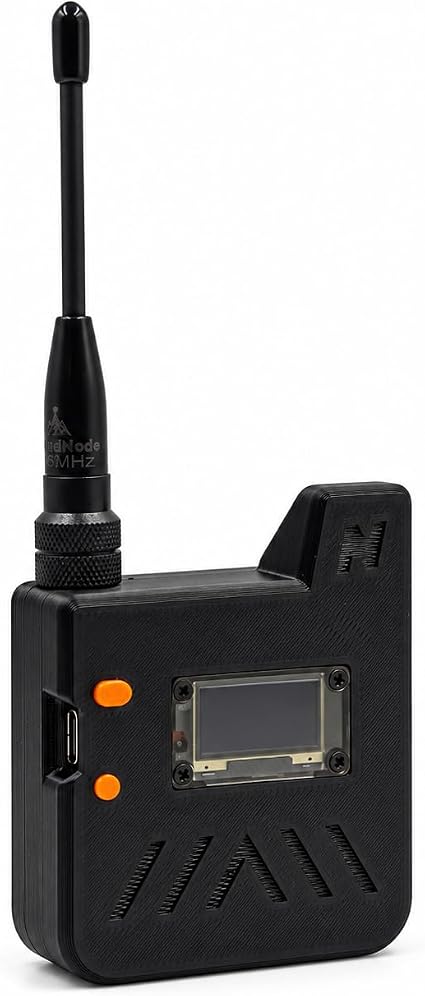
Ideal for hikers, campers, and anyone needing communication without cellular coverage, it excels at forming a self-made mesh network. Its biggest strength lies in long-range messaging paired with built-in GPS, offering reliable location sharing even in remote areas.
Setup is simple with Meshtastic preinstalled, so it’s ready to go out of the box. Daily use revolves around sending texts and tracking locations on the 915MHz channel, supported by a responsive display and integrated GPS. Battery life depends heavily on how often you transmit messages and use the GPS, but the 3000mAh battery generally suits extended outdoor trips well.
Communication over long distances is consistent thanks to the Semtech SX1262 LoRa radio and quality antenna with low VSWR. The unit’s build feels solid and compact, designed for rugged use.
Praise goes to the dependable GPS accuracy, while some users mention battery runtime varies noticeably with heavy use.
The unit provides reliable GPS tracking alongside long-range messaging, but battery runtime can fluctuate greatly depending on activity level. It stays dependable for those staying off-grid and needing steady connection.
Anyone venturing into remote areas without cellular networks will find it a solid companion. Those requiring longer continuous operation or multiple nodes for extensive mesh coverage might want to consider different options or additional units.
Pros
- Long-range LoRa communication
- Built-in GPS module for location sharing
- Good battery capacity for outdoor use
- This device comes with Meshtastic preinstalled and is ready to use.
Cons
- Battery life varies with transmit and GPS use
- Single unit count limits mesh expansion
| Specification | Details |
|---|---|
| Radio Module | Semtech SX1262 |
| Battery | 3000mAh rechargeable Li-Po |
| Antenna | High-quality 915MHz, VSWR ≤ 1.3 |
| Processor | ESP32-s3 |
| Preinstalled Software | Meshtastic |
| Warranty | 1 Year Manufacturer |
6. SenseCAP Solar Node P1-Pro LoRa Meshtastic Node

Solar power built right in makes the SenseCAP Solar Node P1-Pro stand out for anyone needing long-term outdoor communication. It’s especially well-suited to people setting up LoRa networks in remote or off-grid areas, where constant power supply is a must. The solar charging keeps it running without frequent attention.
Setting up takes just a few moments, since it integrates smoothly with Meshtastic. Once running, the built-in solar panel and rechargeable battery mean you rarely have to worry about charging.
The GPS tracking is accurate and helpful for outdoor activities or monitoring remote nodes. The device’s weather-resistant design fits well in outdoor or rugged environments.
Performance is reliable over long distances thanks to LoRa technology, making communications solid even far apart. The build quality reflects Seeed Studio’s attention to outdoor readiness, with tough casing and integrated antennas.
Praises focus on uninterrupted power from solar charging, while some have noted occasional GPS signal fluctuations in dense forests.
Reliable long-range wireless communication stands out due to the solar-powered battery that rarely needs manual charging. Some mention GPS struggles in heavily wooded environments, which can affect location tracking precision at times. This makes it excellent for exposed or lightly forested places.
Those needing dependable outdoor nodes without power hassles will appreciate this. Networks requiring many units or indoor-only use might want to look at other options better suited for close-range or multi-node situations.
Pros
- Integrated solar panel for continuous power
- Compatible with open-source Meshtastic project
- Built-in GPS for accurate location tracking
- Durable outdoor-ready design
Cons
- GPS signal can weaken in dense forest areas
- Single unit pack may limit larger network setups
| Specification | Details |
|---|---|
| Antenna Description | LoRa, GPS |
| Brand | seeed studio |
| Model Number | 114993633-FA |
| Built-In Media | SenseCAP Solar Node P1-Pro |
7. ELECROW Meshtastic LoRa Transceiver with GPS and ESP32-S3

ELECROW Meshtastic LoRa Transceiver with GPS and ESP32-S3 focuses on long-range communication and accurate GPS navigation, suitable for outdoor activities like hiking or camping. Its strongest feature is reliable LoRa communication combined with high-precision GPS across multiple satellite systems, ensuring steady connection off-grid.
Setting up involves pairing via Bluetooth with your smartphone or personal computer, which is pretty straightforward thanks to supported apps for Meshtastic protocol. The 1.54-inch E-Ink display shows clear satellite maps and location details, while battery life stretches to about 48 hours, so you won’t worry about recharging frequently during trips.
Performance is solid, with stable connections using the 915 MHz LoRa module and GPS precision supporting BeiDou, GLONASS, GPS, and QZSS. The push-button interface feels durable and easy to use in the hand, though the small 4 MB memory limits how much data can be stored locally. Most praise highlights its dependable communication range, but some find the screen size a bit small for detailed map reading.
Dependable long-range communication and accurate multi-system GPS stand out as major advantages, ensuring solid performance during off-grid adventures. The E-Ink screen’s smaller size and limited memory capacity are common drawbacks for users needing detailed map work and larger data storage.
Those focused on outdoor navigation and communication will appreciate its compact design and long battery life. People needing larger display or more local storage for data might look for alternatives with bigger screens and expanded memory.
Pros
- Supports multiple satellite navigation systems
- Long battery life suitable for extended trips
- Clear E-Ink display for outdoor visibility
- Reliable LoRa communication up to long distances
Cons
- Small 1.54-inch screen size limits map detail
- Limited 4 MB storage capacity for data
| Specification | Details |
|---|---|
| Screen Size | 1.54 inches |
| Battery Average Life | 48 hours |
| Connectivity Technology | LoRa, Bluetooth |
| Supported Satellite Navigation System | BeiDou, GLONASS, GPS, QZSS |
| Memory Storage Capacity | 4 MB |
8. MiniTrekker MKII MeshCore 915MHz LoRa GPS Node

MiniTrekker MKII MeshCore 915MHz LoRa GPS Node works great for reliable group communication and tracking in places with no cell service. It shines at connecting devices over long distances on a private mesh network without ongoing fees, ideal for outdoor enthusiasts or remote work teams.
Setting it up involves pairing through Bluetooth and placing the external high-gain antenna for optimal range. Day-to-day use centers on sharing your location and messages within your group via the MeshCore network.
No subscription or cell towers are needed, making it straightforward for extended trips where you depend on long-distance communication.
Signal strength is impressive, with the 28 dBm radio pushing messages up to 10 miles in open areas and several miles in towns. It feels sturdy and well-made, handling rough conditions fine.
The main compliment concerns its reliable range, while the common gripe is the single USB port limiting direct charging options or expandability.
Performance stands out for its long distance message sending on 915 MHz, making group communication reliable where cell networks fail. Reviews highlight the impressive reach but note the limitation of only one USB port, which can be inconvenient for device charging and accessories.
Those who require dependable communication in rural or wilderness settings will appreciate this node. It fits well for groups needing no monthly plan and decent range. People wanting multiple USB connections or consistently stable range regardless of environment may want to consider other options.
Pros
- Private mesh network without monthly fees
- High-power 28 dBm radio for strong range
- External high-gain antenna for better signals
- Simple Bluetooth pairing and setup
Cons
- Only one USB port available
- Range varies significantly with terrain
| Specification | Details |
|---|---|
| Connectivity Technology | Bluetooth, LoRa |
| Processor Brand | Espressif |
| Processor Count | 1 |
| Total Usb Ports | 1 |
9. SpecFive Trekker Kilo LoRa MeshCore Device with GPS

Great for outdoor enthusiasts seeking off-grid communication, this device shines with its powerful LoRa radio that extends range far beyond typical walkie-talkies. It suits hikers, explorers, or small groups who need a dependable way to send messages and share GPS locations without cellular coverage.
Setting up the mesh network took just a short time since the device runs on 16 channels and uses the SX1262 radio for strong signal transmission. Daily use involves portable, lightweight units that recharge easily and fit in a backpack.
Battery life tops out around 8 hours, enough for a day’s worth of communication during outdoor activities.
Signal reach stands out, covering up to 15 miles under ideal conditions. Its build is lightweight but not water resistant, so care is needed in wet environments. The clearest positive from reviews is how well it handles long distances and rocky terrain, while common complaints focus on limited battery life and lack of water protection.
The strongest feature praised is the impressive communication range supported by high transmit power and multiple channels. The device reliably keeps messages and GPS sharing active over wide areas, though shorter battery life and no water resistance cause practical issues in long trips and wet weather.
People who benefit most are those spending time in dry, remote locations needing dependable mesh networks beyond cellular reach. Anyone requiring water resistance or extended battery life might want to explore other options better suited for harsh outdoor environments.
Pros
- Long range communication up to 15 miles
- Portable and lightweight design
- Rechargeable battery for off-grid use
- Multiple channels for mesh networking
Cons
- Battery lasts about 8 hours only
- Not water resistant, careful in wet conditions
| Specification | Details |
|---|---|
| Number of Channels | 16 |
| Frequency Range | 915 MHz |
| Talking Range Maximum | 15 mile |
| Battery Average Life | 8 hours |
| Water Resistance Level | Not Water Resistant |
| Transmit Power | up to 28 dBm |
10. SpecFive Raider MeshCore LoRa Radio with GPS

Built with rugged, waterproof materials, this radio suits teams needing reliable long-range communication with GPS tracking. Its standout feature is the preflashed MeshCore firmware, ready to run right out of the box for flexible network roles. Perfect for professional use where consistent connectivity and location data are essential.
Setup is straightforward through the MeshCore Bluetooth companion app, allowing quick assignment as a Companion node, Repeater, or Room Server based on your network needs. Daily use benefits from the external 915 MHz antenna that boosts signal range, while the dual-band GPS/GLONASS antenna keeps location tracking accurate even indoors or inside vehicles. Bluetooth connectivity simplifies configuration without extra gear.
Performance excels in delivering extended LoRa mesh communication thanks to the Nordic nRF52-series SoC and powerful antenna setup. The waterproof build ensures durability in varied environments. The highest praise notes its consistent, long-distance signal and reliable GPS indoors.
Some mention a learning curve with the app interface as the most common issue encountered.
The most liked feature is the reliable long-range LoRa signal combined with GPS accuracy indoors and outdoors. Common feedback points to some difficulty navigating the Bluetooth app setup during initial use. The rugged and waterproof build also receives positive remarks for field durability.
Professionals requiring a versatile mesh radio with strong location services will find it well suited to their needs. Those needing simpler app controls or multi-interface options might want to explore alternatives that offer easier configuration or additional connectivity choices.
Pros
- Preflashed with MeshCore for instant use
- Long-range 915 MHz antenna included
- GPS with indoor and vehicle tracking
- Waterproof design for tough environments
Cons
- App interface has a noticeable learning curve
- Bluetooth-only configuration limits connectivity options
| Specification | Details |
|---|---|
| Frequency | 915 MHz |
| Connectivity Technology | Bluetooth |
| Hardware Interface | Bluetooth |
| Additional Features | Waterproof |
Best Node Radios Comparison Table
| Product | Connectivity | Battery Life | Range | Special Feature |
|---|---|---|---|---|
| Meshtastic LoRa Node | Bluetooth, USB | – | – | Smartphone Compatible |
| ELECROW LoRa GPS Transceiver | LoRa | 48 hours | – | Topographical Maps |
| GAT562 High Power LoRa Node | Bluetooth, USB | – | – | High Power |
| CDSENET EWD95M LoRaWAN Node | LoRaWAN | – | 5.6 km | Long Range |
| Meshtastic GPS LoRa Node | LoRa | 3000 mAh | – | Preinstalled Meshtastic |
| SenseCAP Solar P1-Pro Node | LoRa, GPS | – | – | Solar Powered |
| ELECROW ESP32-S3 LoRa GPS | LoRa, Bluetooth | 48 hours | – | E-Ink Display |
| MiniTrekker MKII GPS Node | Bluetooth, LoRa | – | – | Espressif Processor |
| SpecFive Trekker Kilo GPS | LoRa | 8 hours | 15 mile | Lightweight Portable |
| SpecFive Raider LoRa GPS | Bluetooth | – | – | Waterproof |
- ConnectivityBluetooth, USB
- Battery Life–
- Range–
- Special FeatureSmartphone Compatible
- ConnectivityLoRa
- Battery Life48 hours
- Range–
- Special FeatureTopographical Maps
- ConnectivityBluetooth, USB
- Battery Life–
- Range–
- Special FeatureHigh Power
- ConnectivityLoRaWAN
- Battery Life–
- Range5.6 km
- Special FeatureLong Range
- ConnectivityLoRa
- Battery Life3000 mAh
- Range–
- Special FeaturePreinstalled Meshtastic
- ConnectivityLoRa, GPS
- Battery Life–
- Range–
- Special FeatureSolar Powered
- ConnectivityLoRa, Bluetooth
- Battery Life48 hours
- Range–
- Special FeatureE-Ink Display
- ConnectivityBluetooth, LoRa
- Battery Life–
- Range–
- Special FeatureEspressif Processor
- ConnectivityLoRa
- Battery Life8 hours
- Range15 mile
- Special FeatureLightweight Portable
- ConnectivityBluetooth
- Battery Life–
- Range–
- Special FeatureWaterproof
How to Choose the Right Node Radio
Consider factors like range, signal stability, and compatibility with your existing devices to ensure reliable communication. Choosing a node radio that matches your needs prevents frequent replacements and connectivity issues, saving both time and money in the long run.
Signal Range and Connectivity
Many users find that a device advertised with a long transmission range falls short when walls or dense foliage get in the way. Daily use exposes those weak spots fast: signal drops can interrupt data flow or force constant repositioning. A good model supports multiple frequencies such as 868 MHz or 915 MHz, which helps avoid interference and improves indoor performance.
Realistically, expect effective ranges of a few hundred meters in urban settings, possibly up to several kilometers in open areas. Stability hinges on a consistent signal strength, so look for products that specify their link budget and modulation techniques.
Compatibility matters too; the radio should match frequencies of existing devices to integrate smoothly. Some radios offer dual-band support or automatic frequency selection, which can save headaches in mixed environments.
Power Source and Battery Life
Many radios rely on internal batteries, but runtime varies drastically. Devices powered through USB or external adapters often fare better for fixed setups or longer tasks.
Running out of battery mid-operation is more than inconvenient; it can mean lost data or interrupted network coverage. Some radios offer low-power modes that extend battery life significantly, which is essential if devices are deployed in remote or difficult-to-reach locations.
Standard battery life can range from a few hours to several days depending on power management. Checking if the radio allows easy battery replacement or supports charging on the go can make a practical difference.
Durability and Build Quality
Radios often live outdoors or in challenging conditions, where harsh weather and dust can wreck equipment quickly. Devices with IP ratings such as IP65 or IP67 can handle rain, dust, and occasional shocks. The casing material matters, too; tough plastics or metal housings prevent cracks and deformation.
Temperature ratings should cover the extremes expected in your location, some radios operate reliably from -20°C to over 60°C.
Following electromagnetic compatibility standards ensures the device won’t interfere with other equipment or be susceptible to external noise, which can affect signal clarity and regulatory compliance.
User Interface and Configuration
Complex setup processes often lead to frustration and misconfiguration. Radios with intuitive physical controls or well-designed apps remove guesswork and reduce deployment time.
Customizable settings for power output, channel selection, and data rates allow fine-tuning to balance range, energy consumption, and interference.
Clear LED indicators or detailed diagnostics accessible via web portals help spot issues like signal loss or hardware faults quickly. Without these, users may waste time troubleshooting guesswork or unnecessarily replacing hardware.
Compatibility and Network Integration
Interactivity with other nodes and gateways hinges on protocol support like LoRaWAN or proprietary mesh networking standards. When a radio supports multiple common protocols, it fits better into diverse network setups.
Checking product specs for compatibility lists helps avoid purchase mismatches.
Firmware update capability extends a device’s life by patching security vulnerabilities or adding features. Scalability is key as networks grow; radios designed to handle increased device counts without performance drops are more practical in ongoing deployments.
Optimizing Reception for Your Node Radio in Different Environments
Positioning plays a major role in the reception quality of a node radio. Placing it near walls or metal objects often results in signal interference or loss. Elevating the radio can reduce obstructions and extend range.
Outdoors, avoid areas with dense foliage which can absorb or scatter signals.
Tips for better reception:
- Place the node radio at least a few feet off the ground to minimize interference.
- Keep the radio away from electronic devices that emit electromagnetic noise.
- Use an external antenna if the built-in one struggles to maintain connection in your environment.
- Consider the orientation of antennas; sometimes a slight adjustment improves signal strength.
Environmental differences, like urban versus rural settings, demand different setups. Urban areas may need more careful channel selection due to crowded frequencies, while rural locations might benefit from antennas designed for longer distances.
Common Mistakes to Avoid When Setting up a Node Radio
One common mistake when setting up a node radio is ignoring firmware updates. Outdated software can cause unexpected connection drops or compatibility problems. Also, neglecting to secure your device leaves it vulnerable to interference from unauthorized nodes.
Other frequent errors include:
- Overlooking proper antenna installation, which can drastically affect performance.
- Mixing incompatible hardware versions that don’t communicate well together.
- Skipping thorough testing of signal range before finalizing placement.
- Neglecting power supply needs, leading to intermittent failures or resets.
Taking time during setup to follow manufacturer guidelines and double-check connections avoids these issues. Testing the network under realistic conditions highlights problems before deployment.
Exploring Alternatives: Other Wireless Communication Devices Compared to Node Radios
Device choices for wireless communication vary widely, depending on range, data rate, and power consumption needs. Node radios provide a balance suitable for moderate distances and mesh networking, but alternatives might be better in certain scenarios.
Comparison points with other devices:
- Wi-Fi modules: Offer higher data rates but consume more power and may be less suited for long-range mesh setups.
- LoRa radios: Provide extremely long range with very low power use but have limited bandwidth, restricting data throughput.
- Bluetooth devices: Good for short-range connections and low energy use but fall short over longer distances or in mesh networks.
Choosing the right wireless device depends on the project requirements. Node radios fit well when moderate range and robustness are priorities, especially in networked environments.
People Also Asked
How Do I Properly Set up a Node Radio for Beginners?
Connect the node radio to your computer or controller following the manufacturer’s guide. Make sure you install any required drivers or software first. It’s helpful to double-check if the firmware needs updating to ensure stable operation.
What Are the Common Compatibility Issues with Node Radios?
Many node radios have issues when paired with incompatible frequency bands or mismatched antennas. Confirm the radio’s supported frequencies and match them with your other devices to avoid communication failures.
How Long Does a Typical Node Radio Last with Regular Use?
A node radio usually lasts several years with regular indoor use, but exposure to extreme weather or moisture can shorten its life. Keeping it dry and clean will help maintain performance over time.
What Safety Precautions Should I Take When Using a Node Radio?
Avoid exposing the node radio to water or excessive heat. Handle it gently to prevent damage to internal components. Always power it down properly before making any cable connections or disconnections to avoid short circuits.
How Do I Troubleshoot Connection Problems on My Node Radio?
Restart the node radio and check all cable connections first. Interference from other electronics or wrong settings can disrupt signals, so verifying those can resolve many issues. Using a diagnostic tool from the manufacturer can help identify specific problems.
Conclusion
Choosing the right node radio depends mainly on the range it can cover, the compatibility with your existing setup, and the ease of installation and use. A device that fits well into your current system and sends a reliable signal without frequent drops will save time and frustration.
Battery life or power requirements also matter, especially if you plan to place it in a hard-to-reach spot.
Consider where the radio will be used and how often before making a purchase. A more affordable model might work fine for occasional use, but a sturdier option could be better for permanent installations. Check the comparison table and read through the different picks above to find the one that best matches your needs and space.