
Top 10 Best Paramedic Flashlight You Can’t Miss Today!
Trying to rely on a cheap flashlight during an emergency can lead to frustration when it dims quickly or the beam is too weak to see crucial details. The best paramedic flashlight shines brightly without fail, helping professionals see clearly in low-light situations.
A flashlight that falters under pressure often lacks durability or produces insufficient light, which can cost precious time and accuracy.
What sets the best paramedic flashlight apart is durability, brightness, and size. These flashlights often have bodies made from aircraft-grade aluminum or tough polymer, designed to withstand drops and rough handling.
Brightness typically ranges between 300 to 1000 lumens to cut through darkness effectively. Compact size matters for easy handling and quick access, while features like water resistance and an anti-slip grip support reliability in challenging conditions.
Need a Quick Check?
| Image | Product | Price |
|---|---|---|
Our Top Picks 1  | Streamlight MicroStream USB | Check Price |
Our Top Picks 2  | ULTRAFIRE WF-501BX | Check Price |
Our Top Picks 3  | Streamlight ProTac 2.0 HP | Check Price |
Our Selected Top 10 Paramedic Flashlight Worth Your Money
This list features high-quality paramedic flashlights designed for reliability and durability in emergency situations. Each flashlight is evaluated for performance, user suitability, and key advantages and disadvantages, helping you find the best option to meet specific professional needs.
1. Streamlight MicroStream USB Flashlight
Compact size and USB rechargeable battery make the Streamlight MicroStream ideal for paramedics needing reliable light on the go. Its standout feature is the bright 250 lumens output balanced with a slim pocket-friendly design, perfect for quick access during emergency calls.
Charging is straightforward with the included USB cable, and the internal lithium-ion battery makes swapping out cells unnecessary. The removable pocket clip doubles as a hat brim mount, allowing hands-free use during procedures.
Low and high modes extend runtime flexibility, offering enough light for detailed tasks or broader visibility on calls.
The beam can reach up to 68 meters, delivering consistent bright white light needed in dark environments. The aluminum body feels solid and durable, designed to withstand drops from one meter and resist water splashes. Most praised for its portability and brightness, some mention a preference for longer battery life in high mode.
Strong points include its bright 250-lumen LED providing reliable light and a compact size that fits easily in pockets. The main complaint is the relatively short runtime when using high brightness settings, which means it requires frequent recharging during heavy use.
Those needing a pocket-sized, tough flashlight with quick USB recharge will appreciate this model. Users who require longer-lasting light on high output might want to consider other options with extended battery life.
Pros
- USB rechargeable internal lithium-ion battery
- Compact and slim under 4 inches long
- Durable aluminum housing with water resistance
- Hands-free use with removable pocket clip
Cons
- High mode runtime limited to 1.5 hours
- No additional mounting options besides clip
| Specification | Details |
|---|---|
| Light Output Maximum | 250 lumens |
| Run Time (High mode) | 1.5 hours |
| Run Time (Low mode) | 3.5 hours |
| Beam Distance | 68 meters |
| Battery | Lithium Ion (included) |
| Water Resistance | IPX4 |
2. ULTRAFIRE WF-501BX Tactical Flashlight
ULTRAFIRE WF-501BX Tactical Flashlight shines with a powerful 1,000 lumens output, perfect for paramedics needing a bright, long-range beam during night shifts and emergencies. Its simple mode selection and durable design make it a reliable companion in demanding situations where clear visibility is critical.
Setup involves just rotating the head to access the hidden USB-C charging port, which comes with a cable for convenience. Daily use stays straightforward with just three modes: High, Low, and a hidden strobe, activated by a quick double-click. The battery charges fully in about 3.5 hours, and indicators show red while charging and green when done.
Lighting reaches nearly 820 feet, making it ideal for inspecting dark or outdoor areas. It holds up well against impact and weather, fitting comfortably in hand and pocket. Most praise concerns its brightness and reliable operation, while some note that changing battery types could be clearer since it includes Lithium Polymer but calls for 1 C battery.
The flashlight impresses with strong illumination and a durable build suited for outdoor and emergency use. Most drawbacks stem from unclear battery information and the somewhat hidden activation of the strobe mode, which might slow down quick response times.
People who need a bright, reliable light with long battery life and water resistance will appreciate this model. Those wanting clearer battery instructions or faster access to strobe might want to explore other options.
Pros
- Bright 1,000 lumens LED beam
- Hidden USB-C charging port with indicators
- Three easy-to-use lighting modes
- Impact resistant and water resistant
Cons
- Battery description and type may cause confusion
- Strobe mode requires a quick double-click to activate
| Specification | Details |
|---|---|
| Light Output Maximum | 1000 lumens |
| Beam Distance | 820 feet (250 m) |
| Battery Type | Lithium-Ion Polymer |
| Charging | Built-in USB-C port, 3.5 hours full charge |
| Water Resistance | Water Resistant |
3. Streamlight ProTac 2.0 HP Flashlight
Bright and tough, it feels like a reliable partner when working long shifts in dim or totally dark areas. Perfect for paramedics who need powerful light that lasts and handles rough outdoor use, it stands out by delivering extreme range and brightness with ease.
Setup is simple with a rechargeable power source and a USB-C cord included. The multi-function tail switch lets you switch lights on quickly with one hand, even under pressure.
Adjustable modes, from high to low and strobe, help adapt to different situations, and the removable pocket clip and nylon holster keep it accessible and secure throughout your day.
Performance is impressive with 2,000 lumens throwing a beam up to 583 meters, ensuring clear vision in critical emergencies. Built solidly to be waterproof and durable, it handles everyday bumps and weather well.
Its strongest feature is its brightness and runtime, while the most noted drawback in reviews is the one-battery design limiting some users’ backup options.
Extremely bright light and a solid, waterproof design stand out as major strengths. However, the single nonstandard lithium-ion battery means you can’t just pop in a spare quickly if it runs out.
Paramedics who need intense brightness and adaptable modes in harsh conditions will appreciate this flashlight. Those wanting longer high-setting runtimes or multiple battery options might prefer a different model.
Pros
- High output up to 2,000 lumens
- Multiple lighting modes including strobe
- Long runtime at low brightness settings
- Durable and waterproof build
Cons
- Single battery limits quick swapping
- Relatively short runtime on highest setting
| Specification | Details |
|---|---|
| White Brightness | 2000 lumens |
| Battery Type | Lithium Ion |
| Runtime on High | 2.5 hours |
| Beam Distance | 583 meters |
| Water Resistance Level | Waterproof |
4. Fenix TK21R Tactical Flashlight

Ideal for paramedics who need a bright, durable flashlight, this model stands out for its impressive brightness of 3,600 lumens. It suits emergency professionals requiring long-range visibility in various conditions, delivering powerful light and solid performance where it counts most.
Getting started is simple with dual rear switches that allow single-hand control, letting you switch between three brightness levels, Burst, and Strobe modes quietly. Charging is fast through a concealed USB-C port, taking only 1.5 hours.
The included holster and lanyard make carrying and quick access straightforward during hectic shifts.
Light travels incredibly far, up to 524 yards, making it effective in wide-open or dark environments. Its construction balances toughness and weight at just 7.81 oz, staying waterproof and impact resistant.
Reviews appreciate the long 72.5-hour runtime but mention its weight as slightly noticeable when carried all day.
Brightness and long runtime receive strong praise for practical emergency use, but some find the weight a bit much when worn all day. The quick USB-C recharge is also appreciated as it minimizes downtime between shifts.
Those needing a reliable, bright light that endures tough conditions will find it very useful. Users looking for a lighter option or preferring standard batteries may want to consider different models.
Pros
- Extremely bright with long beam distance
- Fast recharging via USB-C port
- Compact yet sturdy design
- Multiple light modes including Burst and Strobe
Cons
- Weight noticeable during extended carry
- Single battery requires specific lithium-ion type
| Specification | Details |
|---|---|
| Light Output Maximum | 3600 lumens |
| Beam Distance | 524 yards |
| Battery Life | 72.5 hours |
| Water Resistance Level | Waterproof (IP68) |
| Weight | 7.81 oz |
5. Streamlight ProTac 1L-1AA Tactical Flashlight

Crafted with durable materials and a slim, lightweight design, this flashlight fits comfortably in any pocket or gear setup. Perfect for paramedics and first responders who need a reliable light source without bulky equipment. Its standout feature is the TEN-TAP programmable operation, letting you choose the lighting modes that work best for your tasks.
Setting it up is straightforward since it comes ready to go with one CR123A lithium metal battery included. Day-to-day use benefits from its ergonomic clip-on mount and weatherproof build, making it easy to carry and tough enough to handle outdoor or busy emergency environments. You can switch between High, Low, and Strobe modes quickly using the TEN-TAP system.
The flashlight produces 350 lumens, bright enough for close work and spotting at a distance with a balanced beam that avoids harsh shadows. It’s shock-resistant and adjusts easily to different lighting needs.
Reviewers often praise its compactness and strong light output, but some note that the 1-hour runtime under certain settings could feel limiting during extended shifts.
The brightest point highlighted is a powerful, balanced beam that stays reliable in different conditions. Most common drawback mentioned is the short 1-hour runtime when using the brightest setting, which might require spare batteries during longer emergencies.
This flashlight suits those who value portability, strong output, and quick mode changes, such as paramedics arriving on varied scenes. People needing extended illumination without battery swaps might look for models with longer runtimes or rechargeable options instead.
Pros
- Compact and lightweight design
- Programmable light modes for versatility
- Waterproof and shock-resistant
- Includes battery for immediate use
Cons
- Run time limited to 1 hour on some settings
- Only one battery required, limiting prolonged use
| Specification | Details |
|---|---|
| Light Output Maximum | 350 lumens |
| Battery Type | Lithium Metal (1 CR123A) |
| Runtime | 1 hour |
| Water Resistance Level | Waterproof |
| Operation | TEN-TAP Programmable (3 modes) |
| Weight & Size | Slim, lightweight for everyday carry |
6. OLIGHT ArkPro Ultra Rechargeable Flashlight

Bright and versatile lighting stands out first with this flashlight, built for paramedics who need quick adaptability. It suits those requiring multiple beam types in one compact, rechargeable tool and shines strongest in its wide range of light options that cover flood, spotlight, UV, and green beams.
Everyday use feels practical thanks to its four independent lights and seven total configurations. Switching between a wide soft beam, powerful focused spotlight, UV for detecting hidden issues, and a green beam for presentations or marking is straightforward.
The clip and magnetic mounts keep it close, while recharging via its lithium polymer battery avoids hassle with replacements.
Performance-wise, it delivers up to 1700 lumens in pure flood mode, offering clear, broad illumination day or night. The build is waterproof and designed for frequent handling, with a sturdy feel despite being lightweight. Strong praise often mentions the combination of beam types.
The most common complaint relates to the relatively short runtime of just 14 minutes on maximum output.
The light is highly praised for its multiple beam types and strong output, especially the combination of flood, spotlight, UV, and green lights. A frequent complaint involves the short maximum runtime of 14 minutes, which users need to consider during extended use.
People needing a multi-function flashlight for various scenarios will find it very handy. Paramedics or outdoor users requiring long-lasting light might want to look for options with longer runtimes instead.
Pros
- Four independent lights for versatile use
- Rechargeable single lithium polymer battery
- Includes UV and green beam options
- Waterproof and durable construction
Cons
- Maximum runtime is only 14 minutes
- Uses one nonstandard battery included in the package
| Specification | Details |
|---|---|
| White Brightness | 1700 lumens |
| Battery Type | Lithium Polymer |
| Number Of Light Sources | 4 |
| Runtime | 14 minutes |
| Light Source Type | White LED, Green Beam, UV |
| Water Resistance Level | Waterproof |
7. Rechargeable High Lumen Flashlight 2 Pack

High brightness and a real-time battery display make this rechargeable flashlight a solid pick for paramedics needing reliable lighting on every call. Perfect for professionals who want a clear view of remaining power and adjustable light options for different situations.
Charging happens through USB-C, which works twice as fast as typical USB flashlights, so downtime is minimized. Two AA alkaline batteries come included, and the flashlight offers adjustable focus and multiple light modes to adapt to varied environments or task demands. The waterproof design also ensures it handles wet conditions during emergency responses.
At 700 lumens, the beam is strong enough for wide area illumination and detailed close-up work. The flashlight’s sturdy construction holds up to the rigors of daily medical fieldwork. Reviews point out the fast charging and battery display as major strengths, but some mention the light can feel a bit bulky in smaller pockets.
The most praised feature is the fast charging combined with an accurate battery level display, allowing confident use without unexpected power loss. Common complaints focus on the flashlight’s size, which can be cumbersome when pocketed alongside other essential gear.
Those prioritizing quick charging and clear power monitoring will appreciate this flashlight. Professionals needing something compact might want to look for a smaller alternative just to ease carry during active shifts.
Pros
- Fast USB-C charging cuts downtime in half
- Clear LCD battery level display
- Waterproof for use in all weather
- Adjustable focus to suit tasks
Cons
- Feels bulky in smaller pockets
- Requires carrying extra AA batteries
| Specification | Details |
|---|---|
| White Brightness | 700 lumens |
| Power Source | USB C Rechargeable |
| Batteries Included | 2 AA alkaline |
| Additional Features | Adjustable Focus, Adjustable Light Modes, Waterproof |
| Voltage | 3.7 volts |
8. Streamlight MicroStream Pocket Flashlight
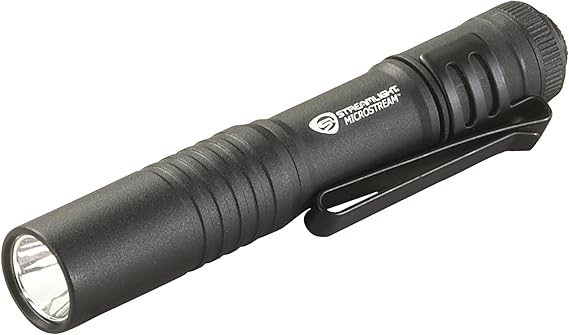
Working in low-light conditions demands a compact, reliable light that fits easily in your pocket while staying tough throughout the shift. Designed for paramedics and first responders, this flashlight’s standout feature is its ultra-compact design combined with solid construction that won’t quit on you.
Setup is as simple as popping in the included AAA battery. Its small size makes it easy to carry and the removable pocket clip doubles as a hat clip, allowing hands-free illumination during emergencies.
With momentary and constant on modes, switching between quick flashes and steady light feels natural during daily tasks.
The 45-lumen LED delivers enough brightness for close-up inspection without blinding glare. The anodized aircraft aluminum body resists scratches and corrosion, so it handles rough use without showing wear.
Strong points include durability and portability; some users note limited runtime as a downside, which means it may require frequent battery changes during extended calls.
The flashlight’s tough anodized aluminum body and compact form stand out, resisting wear and making it reliable during demanding jobs. However, battery life is short, so frequent replacements can be a hassle for longer shifts. Brightness is adequate for close tasks but falls short for distance illumination.
Anyone needing a small, durable flashlight that fits discreetly will appreciate this model. Those requiring longer runtime or stronger illumination should look for alternatives built for extended or wider-range use.
Pros
- Compact size fits comfortably in pockets
- Durable, abrasion and corrosion resistant
- Removable clip works on hats or pockets
- Momentary and constant on light modes
Cons
- Short 2-hour runtime per battery
- Only 45 lumens output may limit range
| Specification | Details |
|---|---|
| Light Output Maximum | 45 lumens |
| Battery Type | 1 AAA alkaline (included) |
| Runtime | 2 hours |
| Construction | Type II MIL-SPEC anodized aluminum |
| Lens | Unbreakable, scratch-resistant polycarbonate |
| Weight | Ultra-compact, fits in palm and pocket |
9. WUBEN C3 Rechargeable Flashlight

1200 lumens brightness makes it a strong choice for paramedics needing reliable illumination. Suited for those who want a versatile, rechargeable flashlight that adapts to different lighting needs while lasting long on a single charge.
Charging is straightforward thanks to the built-in lithium-ion polymer battery, and the pocket clip plus lanyard make it easy to carry around during shifts. Six lighting modes cover various scenarios from bright to energy-saving eco mode, with a memory function that remembers your last setting, so there’s no fumbling in urgent moments.
Light reaches nearly 588 feet clearly through a high transmittance lens that holds up well over time, even in wet conditions with IP68 waterproof rating. Sturdy yet convenient in hand, the unique lamp head helps you see if it’s turned on at a glance.
Most praise highlights how bright and durable it is; some users mention the limited battery life could be longer on highest settings.
The flashlight is consistently praised for its impressive brightness and solid build quality, capable of performing well in tough conditions. Some users find the battery life limiting when using the brightest setting frequently.
Those needing a bright, versatile, and waterproof light will appreciate this model, particularly with the memory mode feature. Alternatives should be considered by anyone who prioritizes very long battery life at full brightness or prefers flashlights without AAA battery usage.
Pros
- Six adaptable light modes for different situations
- Memory function saves last used mode
- Waterproof and durable for outdoor use
- Includes pocket clip and lanyard for easy carry
Cons
- Battery life shorter on highest brightness
- Uses AAA battery despite having built-in rechargeable battery
| Specification | Details |
|---|---|
| Light Output Maximum | 1200 lumens |
| Water Resistance Level | IP68 waterproof |
| Battery Life | 143 hours (Eco mode) |
| Battery Type | Lithium-Ion Polymer |
| Number of Batteries | 1 AAA batteries required (included) |
10. Nitecore MT2A Pro EDC Flashlight

Ideal for paramedics needing reliable illumination on the go, this flashlight stands out with its impressive 1000 lumen output in a compact design. It suits anyone who values powerful light without carrying bulky gear, offering both strong performance and portability in one unit.
Setting it up is straightforward – just grab it from your pocket with the two-way clip keeping it secure. The tail switch allows quick access to three brightness levels, and it remembers where you left off for fast use. Weighing only 3.45 oz and under 6 inches long, it fits comfortably without weighing you down during long shifts.
Rechargeable battery options add to daily convenience.
Bright and focused, the light reaches 279 yards, giving ample visibility in dark or emergency situations. The waterproof build holds up well under tough conditions. Most praise highlights the strong brightness and compactness, while a noted complaint is the relatively short runtime of about 1 hour on high.
Despite the runtime, it remains practical with rechargeable lithium-ion and alkaline battery compatibility.
The strongest praise centers on the powerful, bright beam reaching far distances, paired with a compact and lightweight build ideal for quick use. The most frequent complaint points to the short runtime of about 1 hour when using the highest brightness setting, which may require carrying extra batteries or frequent recharging.
Those who need intense illumination in a small package will appreciate this flashlight’s balance of brightness and portability. Users requiring longer-lasting light without recharge interruptions might want to consider alternative options with extended runtimes or additional batteries.
Pros
- Compact design under 6 inches
- High brightness of 1000 lumens
- Lightweight at just 3.45 oz
- Rechargeable battery with alkaline options
Cons
- Runtime limited to 1 hour on max brightness
- Single LED light source may limit beam variation
| Specification | Details |
|---|---|
| Light Output Maximum | 1000 lumens |
| Beam Distance | 279 yards |
| Battery Type | Rechargeable Lithium-Ion Polymer and 2x AA Alkaline |
| Weight | 3.45 oz |
| Runtime | 1 hour |
| Water Resistance Level | Waterproof |
Best Paramedic Flashlights Comparison Table
| Product | Brightness (lumens) | Battery Type | Water Resistance | Additional Features |
|---|---|---|---|---|
| Streamlight MicroStream USB | 250 lumens | Lithium Ion | Water Resistant | Durable |
| ULTRAFIRE WF-501BX | 1000 lumens | Lithium Polymer | Weatherproof | High Lumens, Impact Resistant |
| Streamlight ProTac 2.0 HP | 2000 lumens | Lithium Ion | Weatherproof | Adjustable Light Modes |
| Fenix TK21R Tactical | 3600 lumens | Lithium Polymer | – | Adjustable Light Modes, Long Range |
| Streamlight ProTac 1L-1AA | 350 lumens | Lithium Metal | Weatherproof | Adjustable Light Modes, Mountable |
| OLIGHT ArkPro Ultra | 1700 lumens | Lithium Polymer | Waterproof | EDC, Green Beam, UV |
| Dual Rechargeable High Lumen | 700 lumens | AA Batteries | Waterproof | Adjustable Focus, Rechargeable |
| Streamlight MicroStream Pocket | 45 lumens | Alkaline | Water Resistant | Non-Rechargeable |
| WUBEN C3 Rechargeable | 1200 lumens | – | IP68 Waterproof | 6 Lighting Modes, Mode Memory |
| Nitecore MT2A Pro EDC | 1000 lumens | Lithium Polymer | Waterproof | Rechargeable |
- Brightness (lumens)250 lumens
- Battery TypeLithium Ion
- Water ResistanceWater Resistant
- Additional FeaturesDurable
- Brightness (lumens)1000 lumens
- Battery TypeLithium Polymer
- Water ResistanceWeatherproof
- Additional FeaturesHigh Lumens, Impact Resistant
- Brightness (lumens)2000 lumens
- Battery TypeLithium Ion
- Water ResistanceWeatherproof
- Additional FeaturesAdjustable Light Modes
- Brightness (lumens)3600 lumens
- Battery TypeLithium Polymer
- Water Resistance–
- Additional FeaturesAdjustable Light Modes, Long Range
- Brightness (lumens)350 lumens
- Battery TypeLithium Metal
- Water ResistanceWeatherproof
- Additional FeaturesAdjustable Light Modes, Mountable
- Brightness (lumens)1700 lumens
- Battery TypeLithium Polymer
- Water ResistanceWaterproof
- Additional FeaturesEDC, Green Beam, UV
- Brightness (lumens)700 lumens
- Battery TypeAA Batteries
- Water ResistanceWaterproof
- Additional FeaturesAdjustable Focus, Rechargeable
- Brightness (lumens)45 lumens
- Battery TypeAlkaline
- Water ResistanceWater Resistant
- Additional FeaturesNon-Rechargeable
- Brightness (lumens)1200 lumens
- Battery Type–
- Water ResistanceIP68 Waterproof
- Additional Features6 Lighting Modes, Mode Memory
- Brightness (lumens)1000 lumens
- Battery TypeLithium Polymer
- Water ResistanceWaterproof
- Additional FeaturesRechargeable
How to Choose the Best Paramedic Flashlight
Choosing a good paramedic flashlight means focusing on brightness, durability, battery life, and ease of use to ensure reliable performance in emergencies. Selecting the right features prevents frequent replacements and failures, saving time, money, and frustration during critical moments.
Brightness and Beam Quality
Some flashlights barely cut it when trying to illuminate a dark stairway, while others throw light far enough to spot hazards at a distance. For daily use, lumens output matters a lot; too low and you strain your eyes, too high and battery drains fast.
A practical range is usually around 200 to 800 lumens with adjustable brightness levels to switch between close-up tasks and long-range scans. Beam focus options help too. A tight spotlight aids distance viewing while a wider floodlight covers immediate surroundings.
Color temperature affects how true colors appear under the light. Accurate color rendering matters in emergency scenes for identifying injuries or reading medication labels clearly.
Choosing a flashlight with a neutral white or daylight range, approximately 5000 to 6500 Kelvin, helps get a natural view of the environment without distortion. That means better judgment in stressful situations.
Durability and Build Quality
Every drop, bump, or scrape can damage a flashlight not built for conditions paramedics face daily. Flashlights made of aircraft-grade aluminum or reinforced polymer tend to hold up well.
Impact resistance usually comes rated in meters – a drop resistance of at least 1.5 to 2 meters covers most accidental falls. For water resistance, look for an IPX7 or higher rating so the light stays on through heavy rain or accidental submersion.
Holding a bulky, heavy flashlight for hours causes fatigue fast. Lightweight construction around 5 to 7 ounces keeps the tool manageable. The balance between durability and weight is key.
A solid grip texture or a rubber coating prevents slipping when hands are sweaty or wet.
Battery Life and Power Source
Battery life can make or break a shift. On high brightness peaks, runtimes often drop below an hour, but many models offer lower modes extending hours to even a full day of use. Rechargeable lithium-ion batteries are common, offering good capacity and fewer replacements, but disposable AA or CR123 batteries can be a lifesaver when charging options are limited.
Swapping batteries quickly in the field without fumbling is crucial. Flashlights with twist-off compartments or magnetic charging ports save time.
Also, carrying spare batteries or a portable charger ensures the light stays reliable beyond initial runtime. Aim for models that specify runtimes at different brightness levels so you know what to expect.
Ergonomics and Handling
Handling a flashlight while wearing gloves or with wet hands changes the game. Smooth, narrow bodies tend to slip, so a well-designed grip with ridges or raised patterns matters to keep a secure hold under stressful conditions. The size should fit comfortably in one hand without being too bulky for quick stowing.
Weight balance affects wrist fatigue. Flashlights heavier at the head or tail create strain. Balanced models let you hold them steady longer.
Controls matter too. Buttons placed within thumb reach and with tactile feedback make adjustments quicker without losing focus.
Some models feature simple one-button designs to cycle modes efficiently.
Safety and Additional Features
Signaling features like strobe or SOS modes come handy in emergencies for attracting attention or warning others. Some lights integrate these patterns triggered by long-press or specific button sequences. Heat buildup during extended use can reduce comfort and performance.
Good heat dissipation through aluminum bodies or cooling fins helps maintain steady output.
Attachment points for lanyards or clips let you free up hands without setting the light down. Some models support accessory mounts compatible with helmets or belts. These extras add flexibility in challenging situations.
Effective Maintenance Practices to Prolong Your Paramedic Flashlight’s Lifespan
Regular cleaning of the lens and body is important to keep a paramedic flashlight working at peak brightness. Dirt and grime can reduce the light’s output and make the beam less clear.
Use a soft cloth dampened with a mild soap solution for the exterior, and avoid harsh chemicals that could damage seals or finishes.
Battery care directly influences how long the flashlight will last between replacements or recharges. Remove batteries if the flashlight won’t be used for an extended period to avoid corrosion.
Check battery contacts periodically and clean them with a pencil eraser or contact cleaner if necessary.
Simple maintenance steps include:
- Wiping off dirt and debris after each use
- Checking the O-rings and seals to maintain water resistance
- Replacing batteries before they reach a low level to prevent damage
- Testing the flashlight regularly to confirm functionality
Routine care can prevent unexpected failures and keep the flashlight ready for demanding emergency situations.
Safety Precautions When Using High-Intensity Flashlights in Emergency Situations
High-intensity paramedic flashlights produce bright beams that can temporarily impair night vision or cause discomfort if shined directly into the eyes. Always avoid pointing the light at yourself or bystanders to prevent disorientation during critical moments.
Using the flashlight in strobe or high brightness settings may be helpful for signaling but can be distracting if overused. Control the beam intensity to match the environment and the task to keep the scene safe for everyone involved.
Key safety tips include:
- Using lower brightness settings when possible to conserve battery and reduce glare
- Aiming the beam downward or toward hazards rather than individuals
- Wearing gloves to maintain grip, especially in wet or slippery conditions
- Ensuring the flashlight is secured to your gear to prevent dropping it during movement
These practices help maintain situational awareness and protect both the paramedic and patients during emergencies.
Comparing Traditional and Rechargeable Paramedic Flashlights: Pros and Cons
Traditional paramedic flashlights generally run on replaceable batteries, such as AA or CR123 types, which are easy to swap out in the field. This offers flexibility when batteries run low, but it requires carrying spares and frequent replacement to avoid outages.
Rechargeable flashlights save money over time and reduce waste by using built-in lithium-ion or similar batteries. They often include USB charging ports, which can be practical for quick recharges during downtime. However, they rely on access to power sources and may not be ideal for long shifts without charging breaks.
Advantages of traditional models:
- Immediate battery swaps in the field
- Lower initial cost
- Less dependence on electricity for recharging
Advantages of rechargeable models:
- Lower long-term battery costs
- Built-in features like battery level indicators
- Reduced environmental impact
The choice depends on your work environment and access to power. Many paramedics keep both types available to cover different scenarios.
People Also Asked
How Long Does a Paramedic Flashlight Battery Typically Last?
Paramedic flashlight batteries typically last between 3 to 8 hours depending on the brightness setting. Using lower settings conserves battery life for longer shifts. Carrying spare batteries ensures you won’t run out of light unexpectedly during an emergency.
Can Paramedic Flashlights Safely Be Used in Wet Conditions?
Most paramedic flashlights are designed to be water resistant and can handle wet conditions safely. Check for an IPX rating to confirm water resistance, which also helps during rain or accidental splashes. Avoid submerging the flashlight unless it’s fully waterproof.
What Size Paramedic Flashlight Is Easiest to Carry on Duty?
A 5 to 6-inch flashlight is easiest to carry on duty, offering a good balance of brightness and portability. This size fits well into a pocket or belt holder without being bulky. Larger flashlights may provide more light but are harder to carry comfortably.
How Do I Properly Clean and Maintain a Paramedic Flashlight?
Clean the flashlight with a soft cloth and mild soap, avoiding harsh chemicals on lenses and switches. Regularly inspect O-rings and battery contacts for corrosion or damage. Keeping it dry and storing with batteries removed for long periods prevents corrosion.
What Are Common Problems with Paramedic Flashlights and Solutions?
Common problems include battery drain, loose switches, and dim light output from dirty lenses. Replacing batteries promptly and cleaning lenses with a microfiber cloth usually solves brightness issues. Tightening any loose components can prevent electrical contact problems.
Conclusion
Choosing a paramedic flashlight means focusing on brightness, durability, and battery life. A bright light ensures you can see clearly in dark or smoky environments.
Durability matters since it needs to withstand rough conditions. Long battery life reduces the chance of the light going out during critical moments.
Consider how often you will use the flashlight and your budget to find the right balance. Some lights are built for heavy daily use, while others work well for occasional needs. Check the comparison table and the picks above to find one that fits your specific situation.