
Top 12 Best Pocket Spotting Scope You Must Own Today!
Struggling with a bulky, low-quality scope that fogs up or weighs you down is a common frustration for anyone searching for the best pocket spotting scope. Many end up with glass that distorts or a device too large to carry comfortably on a trail, making quick observation more of a chore than a pleasure.
The appeal of a small, portable scope lies in its convenience, but not all models manage to balance size and image clarity.
A good pocket spotting scope typically weighs under a pound and fits easily in a jacket pocket or small bag, making it truly portable. Optics quality is crucial; look for scopes with 8x to 12x magnification paired with a wide, clear field of view to spot wildlife or distant objects without excessive image shaking. Water-resistant or fog-proof construction also matters for real-world use, along with durable materials that withstand occasional bumps and easy-to-clean lenses to keep the view sharp.
Need a Quick Check?
| Image | Product | Price |
|---|---|---|
Our Top Picks 1  | 40×60 Monocular Telescope | Check Price |
Our Top Picks 2  | 15×54 Monoculars | Check Price |
Our Top Picks 3  | 8×25 Monocular Telescope | Check Price |
Our Selected Top 12 Pocket Spotting Scope Picks for Every Need
This list features compact spotting scopes designed for convenience and portability. Each review covers performance details, ideal users, and key strengths and weaknesses to help you find a suitable option for your outdoor or birdwatching needs.
1. 40X60 Monocular Telescope
Compact and powerful, the 40X60 Monocular Telescope suits anyone wanting a clear, detailed long-distance view in a pocket-friendly size. Its standout feature is the 40x magnification combined with a 40mm objective lens, making it perfect for birdwatching, hiking, or casual stargazing without bulk.
Setting it up is straightforward with the included tripod that adjusts for length and angle. Using manual focus helps dial in details quickly, while the included smartphone holder makes capturing what you see easy.
Its lightweight design and nitrogen filling resist fogging and make it reliable during outdoor use.
Image clarity benefits a lot from the FMC fully multi-coated lenses and BAK-4 prism, delivering sharp and bright views with minimal glare. The build feels sturdy with its tripod and smartphone compatibility. Most praise centers on its sharp optics and wide field of view.
Some users mention manual focusing can take a moment to get used to.
Strong optics provide very clear images with minimized reflection thanks to quality coatings and prism, though manual focus adjustment requires patience for sharp views. Tripod stability is appreciated, but the reflex finderscope is occasionally criticized for accuracy under certain lighting.
Anyone looking for detailed long-distance observations in a portable, affordable monocular will appreciate this scope. Those wanting quicker autofocus or a digital zoom might consider alternatives instead.
Pros
- Clear and sharp images with BAK-4 prism and FMC lens
- Adjustable tripod offers steady support and flexible positioning
- Includes smartphone holder for easy photo capture
- Nitrogen-filled body prevents fogging in humid conditions
Cons
- manual focus takes time to master
- Reflex finderscope may be less precise in bright light
| Specification | Details |
|---|---|
| Zoom Ratio | 40x |
| Objective Lens Diameter | 40mm |
| Field Of View | 9.1 degrees |
| Focus Type | manual focus |
| Mount | Sturdy tripod adjustable in angle and length |
| Coating | Fully Multi-Coated (FMC) |
2. 15×54 Monoculars
Compact design and premium optics define these 15×54 Monoculars, crafted to balance power and clarity for nature lovers and outdoor explorers. Its standout feature is the 15x magnification coupled with a wide 54mm lens, making it easy to spot fine details without losing brightness or stability.
Setting up is straightforward with the manual focus and smooth focus wheel that quickly locks onto targets. The twist-up eyecup adjusts for comfortable viewing, even for those wearing glasses. Portability is strong because it stays handy for hikes or birdwatching, plus the built-in tripod mount adds stability when needed.
Smartphone compatibility makes capturing what you see simple.
Performance delivers bright, clear views thanks to the fully multi-coated FMC lenses and the BAK4 prism, which keeps colors vivid and contrasts sharp. The balance between magnification and field of view lets the eye take in a broad 354ft area at 1000yds, making tracking easier.
The body feels solid and ergonomic. Some find the manual focus slower under quick movements, but most praise how steady the image remains in hand.
Vivid clarity and wide views make outdoor spotting enjoyable with steady images thanks to quality optics and a solid build. However, some experience a slightly slower manual focus that can challenge quick target changes in the field.
Ideal for those prioritizing bright visuals and comfortable long viewing; best for steady observation rather than fast-paced tracking where quick focus is essential. Users wanting automatic or quicker focus might look elsewhere.
Pros
- Bright, vivid images with FMC lenses
- Comfortable long eye relief eyecup
- Wide field of view for easy tracking
- Tripod mount for added stability
Cons
- Manual focus can be slow to adjust
- Battery powered but battery details unclear
| Specification | Details |
|---|---|
| Magnification | 15X |
| Objective Lens Diameter | 54mm |
| Field Of View | 354 feet @ 1000yds |
| Focus Type | Manual Focus |
| Coating | Fully Multi-Coated |
3. 8×25 Monocular Telescope
Lightweight and compact, the 8×25 Monocular Telescope suits anyone wanting a portable scope for outdoor use. Its clearest strength lies in delivering sharp images with an 8x magnification, balancing zoom and stability well for quick viewing sessions on the go.
Setting up is straightforward with manual focus and a straight-through finderscope. The small size fits comfortably in a pocket, making it easy to grab during hikes or birdwatching.
Close focus at just 0.3 meters lets you inspect nearby details without hassle. Designed for handheld use, it pairs well with a smartphone for photos despite its minimal setup.
Optics include fully multi-coated ED lenses and BAK-4 prisms, which produce crisp, color-accurate views. The aluminum body feels durable without adding weight, and its IPX7 waterproof rating means it handles wet conditions with ease.
Reviews mostly praise image clarity but sometimes note manual focusing can take a moment to adjust precisely.
Clarity and color reproduction stand out as the best features, appreciated for both distant and nearby viewing. The need to manually adjust focus can slow down quickly spotting moving subjects, which some find tricky.
Those valuing lightweight, sharp optics will enjoy this monocular on outdoor adventures. Users preferring fast autofocus or a more stabilized hold may want to consider larger models instead.
Pros
- Compact size fits easily in pockets
- Bright, clear images with good color accuracy
- Close focus allows detailed viewing nearby
- Waterproof build for outdoor durability
Cons
- Manual focus requires careful adjustment
- Small size may challenge steady handheld use
| Specification | Details |
|---|---|
| Power | 8x |
| Field Of View | 358 feet |
| Weight | 5.8oz |
| Close Focus Distance | 0.3m |
| Waterproof | IPX7 |
| Lens Coating | Fully Multi-Coated XLT Coated |
4. 12×60 Monocular Telescope

Perfect for anyone needing clear, bright views on the go, the 12×60 Monocular gives strong 12× magnification with a wide 6.5° field of view. It suits hikers, bird watchers, and travelers looking for compact gear that still delivers detailed images at a distance.
Setting it up takes just manual focus adjustment and mounting on the included altazimuth mount, which makes aiming easy. The 21mm BAK-4 prism and fully multi-coated lenses help keep the picture bright and sharp. It works well for casual use at concerts or sports events, and it connects with smartphones for capturing shots through the scope.
Image clarity stands out with minimal distortion or dark edges, which makes spotting distant subjects enjoyable. The build feels solid without being heavy, but some mention the manual focus isn’t the fastest in changing scenes. Battery power supports long sessions, though relying on batteries can be tricky if you forget spares.
Many users appreciate the clear, vivid images without color distortion thanks to the large BAK-4 prism and good light transmission. The most common drawback mentioned is the slower manual focus, which can be tricky when switching targets quickly.
People who spend time watching nature or events from fixed spots will enjoy this monocular’s detailed views and ease of use. Those needing faster focusing or prefer battery-free operation might want to look at alternatives.
Pros
- High 12× magnification with wide viewing angle
- Bright images with BAK-4 prism quality
- Compact design suits outdoor activities
- Compatible with smartphones for photos
Cons
- Manual focus can be slow to adjust
- Battery powered, requiring spares for long use
| Specification | Details |
|---|---|
| Magnification | 12× |
| Objective Lens Diameter | 60mm |
| Field Of View | 6.5 degrees (325 ft/1000 yards) |
| Prism Type | BAK-4, 21mm |
| Focus Type | manual |
| Mount | Altazimuth |
5. 8×42 Monocular Scope
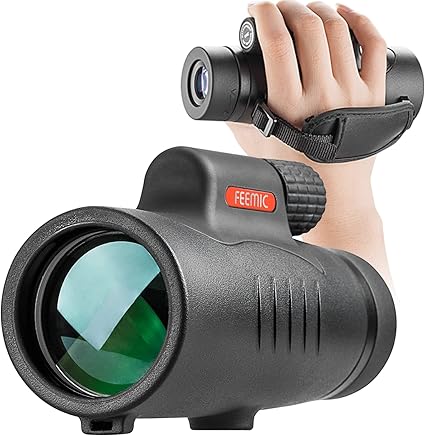
Spotting distant wildlife or landmarks can be tricky without the right tool, especially when you want something portable. Designed for outdoor enthusiasts who want clarity without bulk, the 8×42 Monocular Scope delivers sharp detail with its wide field of view.
Its standout feature is the combination of 8X magnification and a 42mm lens for clear, broad visuals on the go.
Setting up the monocular is straightforward since it uses manual focus and power, no batteries needed or complicated adjustments. It fits comfortably in hand thanks to its rubberized protective finish, helping with grip and shock resistance during active use. The built-in dust cover protects the lens from weather and debris, making it practical for repeated use in different environments without worrying about cleaning all the time.
The optics provide impressive HD views with fully multi-coated lenses and BAK-4 green film prisms that keep images bright and sharp. The wide 360 feet at 1000 yards field of view means you can scan large areas without moving the scope much.
While most praise its durability and clear images, some find the manual focusing a bit slow in fast-paced spotting situations.
The 8×42 Monocular Scope offers bright, sharp images across a wide field thanks to high-quality optics and a large objective lens. Built tough with waterproofing, it handles rough outdoor conditions well, but manual focusing may not keep up with fast-moving subjects.
Adventurers and nature observers who want a portable scope with strong image quality will enjoy this model. Those needing speedy autofocus or video recording features would want to consider other options.
Pros
- Clear HD images with wide-angle view
- Waterproof and fogproof for all-weather use
- Durable rubber finish for shock resistance
- Lightweight and easy to carry
Cons
- Manual focus can be slow in quick spotting
- No built-in tripod mount
| Specification | Details |
|---|---|
| Magnification | 8X |
| Objective Diameter | 42 mm |
| Field Of View | 360 ft/1000 yards |
| Coating | Fully Multi-Coated |
| Focus Type | Manual Focus |
| Waterproof | Yes, nitrogen-filled |
6. Vortex Solo 10×25 Monocular

10x magnification with a 25mm objective lens makes this monocular a great pick for anyone wanting a compact and clear spotting scope for day trips or casual wildlife watching. Its small size and light weight suit those needing portability without sacrificing image sharpness.
Setup is straightforward since it has a fixed focus and manual winding power source, meaning no batteries or complex adjustments. The fully multi-coated lenses help deliver bright and crisp images in various lighting conditions.
The adjustable eyecup ensures comfortable use whether you wear glasses or not, while the rubber armor offers a secure grip in hand.
Image clarity is consistently good, showing fine details at 10x zoom with a field of view of 107.14 feet at 1000 yards. The build is tough, thanks to nitrogen purging and o-ring sealing that make it waterproof and fogproof. The monocular feels solid in hand due to its rubber armored design, but some find the small lens limits low-light performance compared to bigger scopes.
The clarity and brightness from the fully multi-coated lenses receive praise for producing sharp images despite the small size. The consistent mention as a downside is the limited low-light capability due to the 25mm objective lens.
Anyone looking for a lightweight, durable monocular with good daytime performance will appreciate this option. Users needing a larger lens for dusk or dawn spotting may want to look elsewhere for better light gathering.
Pros
- Compact design easy to carry anywhere
- Bright, clear images with fully multi-coated lenses
- Comfortable eyecup suits glasses wearers
- Durable rubber armored exterior
Cons
- Small 25mm lens limits low-light use
- No zoom adjustment beyond fixed 10x
| Specification | Details |
|---|---|
| Magnification | 10x |
| Objective Lens | 25mm |
| Field of View | 107.14 feet |
| Focus Type | Fixed Focus |
| Eyecup Adjustment | Yes |
| Waterproof / Fogproof | Yes |
7. RIX Pocket K3 Thermal Monocular

People who spend time outdoors at dawn, dusk, or night will find the RIX Pocket K3 Thermal Monocular ideal for quick spotting and identifying heat signatures. Its standout feature is the thermal imaging capability in a compact, pocket-sized device that fits easily into outdoor gear without weighing you down.
Setting it up is straightforward with a 1/4-20 tripod interface for steady use during long observations. The small size and light weight make it easy to carry around in a pocket or hand, perfect for quick glances or extended scans.
The Wi-Fi connectivity adds convenience for sharing images or remote viewing, adding to its versatility on the go.
Thermal imaging delivers clear images with a 384×288 sensor and a 17.5-degree field of view, helping you spot heat sources up to 853 yards away in good conditions. The build is compact but sturdy, designed to handle outdoor environments. Common praise highlights the clarity of the thermal views, while a usual complaint is that actual detection range can vary with weather and terrain.
The thermal imaging delivers sharp images that help differentiate heat sources well, though actual detection distances depend heavily on outside conditions like humidity and terrain. Many appreciate how portable and easy to carry it is, but some warn the effective spotting range isn’t always as far as the best-case specs suggest.
Anyone needing a lightweight, pocketable thermal scope for quick spotting will be satisfied. Those requiring high magnification or consistent maximum range in varied environments might want to look at different models with stronger zoom or more powerful sensors.
Pros
- Compact and fits easily into a pocket
- Clear thermal images with good resolution
- Tripod mount for stable long viewing
- Wi-Fi connectivity for image sharing
Cons
- Detection range affected by environment
- Only 2x base magnification
| Specification | Details |
|---|---|
| Field Of View | 17.5 degrees |
| Zoom Ratio | 2× |
| Mount | 1/4″-20 tripod interface |
| Thermal Sensor | 384×288 |
| Objective Lens | 15mm |
8. 30×25 Mini Monocular Telescope
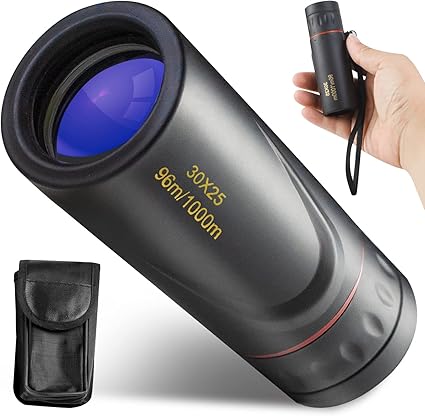
Compact size and waterproof design make the 30×25 Mini Monocular Telescope perfect for anyone needing a lightweight, pocket-friendly scope. Its biggest advantage is fitting easily in your pocket while offering high magnification for outdoor activities like hiking or bird watching.
Setup is straightforward due to the manual focus and built-in reflex finderscope. It feels solid with its metal barrel and rubber exterior, making it easy to carry around without worrying about damage.
Using it day to day means you can quickly grab it from your pocket for concerts or scenic views, and the smartphone compatibility adds convenience for snapping distant shots.
Performance delivers a clear image with its fully coated Galilean lens and 30x magnification. The build is durable, combining metal and rubber materials that handle moisture well thanks to an airtight fuselage. Praise often highlights how sturdy and waterproof it is, while some mention the manual focus requires a bit of patience to get things just right.
Users appreciate how tough and weather-resistant the scope is, making it reliable outdoors. The most frequent complaint revolves around getting the focus right quickly, which requires some practice especially in changing conditions.
Ideal for outdoor enthusiasts who want something small and durable for occasional use. Those needing wider views or easier focusing might want to look for a different model.
Pros
- Compact and lightweight enough to fit in a pocket
- Waterproof for use in wet weather
- High magnification with clear optics
- Durable metal and rubber construction
Cons
- Manual focus can be tricky for beginners
- Field of view is limited to 6 degrees
| Specification | Details |
|---|---|
| Zoom Ratio | 10:1 |
| Focal Length Description | 40 millimeters |
| Field Of View | 6 degrees |
| Focus Type | manual focus |
| Waterproof | Yes |
9. 10×42 Monocular Telescope
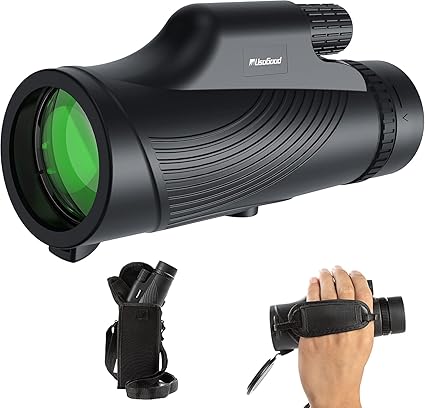
Usogood 10×42 Monocular Telescope is built for those who want clear, detailed views on the go. Its biggest strength lies in providing sharp, high-definition images with 10x magnification while staying portable enough to carry around easily. Ideal for bird watchers and outdoor enthusiasts needing quick, handheld use without fuss.
Getting started involves a simple manual focus that adjusts smoothly for viewing subjects near or far. Its waterproof design means you don’t have to worry about unexpected weather during hikes or travels.
The wide field of view, 360 feet at 1000 yards, makes spotting moving animals or scanning landscapes easier, while the tripod mount option offers stable viewing whenever needed.
The built-in BAK4 prisms and fully multi-coated FMC lenses deliver bright and clear images, reducing glare and distortion nicely. Handling light is where it truly shines, transmitting up to 99.9% of it for crisp visuals.
On the downside, manual focusing demands patience at times, especially when shifting between close and distant targets. The construction feels solid and water-resistant, ready for outdoor challenges.
Reviews highlight excellent image clarity thanks to premium BAK4 prisms, yet many note the manual focus can be tricky when quickly switching from near to far objects. Handling close details demands steady hands and some patience.
Those enjoying bird watching and hiking in varied conditions will likely value the waterproof, durable build and clear vision. Casual users seeking fast autofocus might find this scope less convenient and may want to explore other options.
Pros
- High 10x magnification with sharp, clear images
- Waterproof for use in all weather conditions
- Compact size with tripod mounting option
- Wide 360 feet field of view at 1000 yards
Cons
- Manual focus requires frequent adjustment
- Close and distant view shifts take practice
| Specification | Details |
|---|---|
| Magnification Maximum | 10 x |
| Objective Lens Diameter | 42 millimeters |
| Field of View | 360 feet |
| Focus Type | manual focus |
| Water Resistance Level | waterproof |
| Prism Type | roof prism |
10. Barska Blackhawk Monocular
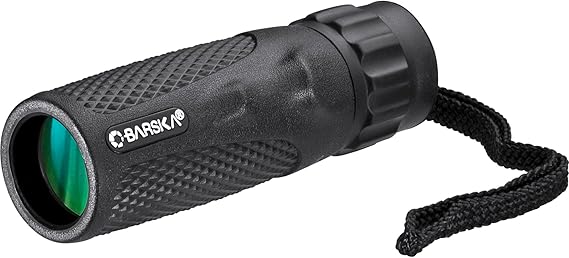
Using it feels straightforward and reliable, perfect for outdoor enthusiasts needing a compact spotting scope. It suits anyone wanting bright, clear images on the go, especially in challenging weather. Its biggest strength lies in being fully waterproof and fog proof, thanks to nitrogen purging and O-ring sealing.
Setup takes just moments, with center focus making adjustments easy during activities like hiking or bird watching. The diamond textured grip ensures it stays secure in hand, even while moving. Included accessories like a wrist strap and carrying case keep things organized, while lens covers and cloth help maintain clarity without fuss.
It delivers sharp and bright views with its multi-coated BAK-4 roof prism lens, maintaining image quality across distances. Built for durability, shock-absorbing rubber guards against impacts and provides a non-slip hold. Most appreciate the clarity in all weather, though some mention the use of nonstandard batteries as a minor inconvenience.
Clear and bright images come from multi-coated BAK-4 lenses, even in wet or foggy conditions thanks to nitrogen purging and sealing. The main inconvenience mentioned involves needing nonstandard batteries, which can be tricky to replace quickly during use.
People who spend time outdoors in unpredictable weather will appreciate this scope’s durability and clarity. Those looking for a device with standard power options or built-in mounting might want to explore other choices.
Pros
- 100% waterproof and fog proof
- Stunning multi-coated lenses for bright images
- Comfortable diamond textured grip
- Includes case, strap, lens covers, and cloth
Cons
- Requires nonstandard batteries
- No included mount
| Specification | Details |
|---|---|
| Eye Piece Lens Description | BAK-4 Roof Prism |
| Focus Type | Center |
| Field Of View | 303 feet |
| Zoom Ratio | 10 |
| Waterproof and Fog Proof | Yes, Nitrogen Purged and O-Ring Sealed |
11. Bushnell Legend 10×42 Monocular

Compact and powerful, Bushnell Legend 10×42 Monocular fits easily in a pocket and offers clear 10x magnification. Ideal for birdwatchers or hunters wanting sharp images on the go, its standout feature is ultra-clear optics that perform well even in low light.
Using it daily is straightforward since it features manual focus, which lets you quickly sharpen images. It’s lightweight enough to carry in a backpack without feeling bulky. The rubber-armored body feels secure in hand, and waterproof, fog-proof sealing ensures it works well outdoors in various weather.
Setup is minimal, just pop in the battery to power the reflex finderscope and start observing.
This monocular delivers excellent clarity thanks to ED Prime glass with Ultra Wide Band Coating. Colors and details stay crisp across the 340 feet field of view. Its durable build resists rough handling and wet conditions, which users appreciate most.
A common gripe is the manual focus requiring practice for fast adjustments.
Users praise its sharp, bright image quality in various light conditions and rugged build. The need to manually focus quickly stands out as a common challenge during fast-moving outdoor activities.
Birders and hunters who value portability and clear visuals will find this monocular fitting. Those seeking instant autofocus might prefer a different model with auto adjustments.
Pros
- Clear images using ED Prime glass
- Compact and pocket-friendly size
- Waterproof and fog proof design
- Comfortable, rubber-armored grip
Cons
- Manual focus can take time to master
- Requires a 12V battery for operation
| Specification | Details |
|---|---|
| Magnification | 10x |
| Objective Lens Diameter | 42 mm |
| Field Of View | 340 feet |
| Coating | Fully Multi-coated |
| Power Source | 1 12V battery required |
| Focus Type | Manual Focus |
12. Celestron C70 Mini Maksutov Spotting Scope

Maksutov-Cassegrain design defines the C70 Mini Mak, making it a compact and lightweight spotting scope suited for nature observers and bird watchers who value portability without sacrificing clarity. Its ability to deliver sharp views at long distances stands out as the key strength.
Setting up is simple thanks to the included tabletop tripod with slow motion controls, allowing precise manual focusing. The built-in zoom eyepiece offers a 3x zoom that’s practical for adjusting views on the fly. Weighing just 2 pounds and measuring 11 inches, it slides easily into a backpack, and the multi-coated optics improve brightness and contrast during outdoor excursions.
Views remain bright and detailed across its 700mm focal length and f/10 focal ratio, making spotting small distant targets like birds or shooting range markers quite effective. The compact body feels sturdy yet easy to handle.
Praise often centers on the sharp clarity and lightweight feel. Some users note the manual focus may take a moment to dial in precisely, which can be tricky when tracking moving subjects.
The spotting scope receives strong praise for delivering clear and bright images despite its small size, thanks to the Maksutov-Cassegrain design and multi-coated lenses. A frequent complaint revolves around the manual focus, which may require patience when tracking fast-moving birds or targets.
People who prioritize portability and sharp distant viewing will appreciate its light weight and compact dimensions. Users seeking faster or automated focusing might want to consider a different model, particularly for fast action or wildlife observation in dynamic environments.
Pros
- Compact and lightweight at 2 pounds
- Multi-coated optics for bright, sharp views
- Built-in 3x zoom eyepiece included
- Tabletop tripod with slow motion controls
Cons
- Manual focus can be slow on moving targets
- Limited field of view at 1.55 degrees
| Specification | Details |
|---|---|
| Aperture | 70MM |
| Focal Length | 700 millimeters |
| Zoom Ratio | 3x |
| Focus Type | Manual Focus |
| Weight | 2 pounds |
| Mount | Equatorial Mount |
Best Pocket Spotting Scopes Side by Side Comparison
| Product | Magnification | Mount Type | Coating | Compatible Devices |
|---|---|---|---|---|
| 40×60 Monocular Telescope | 40x | Sturdy tripod adjustable | Fully Multi-Coated | Smartphone |
| 15×54 Monoculars | 15x | Tripod mount | Fully Multi-Coated | Smartphone |
| 8×25 Monocular Telescope | 8x | Handheld mount | Fully Multi-Coated XLT | Smartphone |
| 12×60 Monocular Telescope | 12x | Altazimuth mount | Fully Multi-Coated | Smartphone |
| 8×42 Monocular Scope | 8x | Altazimuth mount | Fully Multi-Coated | Camera, Headphone, Smartphone |
| Vortex Solo 10×25 | 10x | Altazimuth mount | Fully Multi-Coated | – |
| RIX Pocket K3 Thermal | 2x | 1/4″-20 tripod interface | – | Tripod, Hunting Equipment |
| 30×25 Mini Monocular | 10x | Altazimuth mount | Fully Coated | Smartphone |
| 10×42 Monocular Telescope | 10x | Tripod mount | Fully Multi-Coated XLT | – |
| Barska Blackhawk Monocular | – | No mount | Multi-Coated | Tripod |
| Bushnell Legend 10×42 | 10x | Tripod mount | Fully Multi-coated | Camera |
| Celestron C70 Mini Maksutov | 3x | Equatorial mount | Multi-Coated | Smartphone |
- Magnification40x
- Mount TypeSturdy tripod adjustable
- CoatingFully Multi-Coated
- Compatible DevicesSmartphone
- Magnification15x
- Mount TypeTripod mount
- CoatingFully Multi-Coated
- Compatible DevicesSmartphone
- Magnification8x
- Mount TypeHandheld mount
- CoatingFully Multi-Coated XLT
- Compatible DevicesSmartphone
- Magnification12x
- Mount TypeAltazimuth mount
- CoatingFully Multi-Coated
- Compatible DevicesSmartphone
- Magnification8x
- Mount TypeAltazimuth mount
- CoatingFully Multi-Coated
- Compatible DevicesCamera, Headphone, Smartphone
- Magnification10x
- Mount TypeAltazimuth mount
- CoatingFully Multi-Coated
- Compatible Devices–
- Magnification2x
- Mount Type1/4″-20 tripod interface
- Coating–
- Compatible DevicesTripod, Hunting Equipment
- Magnification10x
- Mount TypeAltazimuth mount
- CoatingFully Coated
- Compatible DevicesSmartphone
- Magnification10x
- Mount TypeTripod mount
- CoatingFully Multi-Coated XLT
- Compatible Devices–
- Magnification–
- Mount TypeNo mount
- CoatingMulti-Coated
- Compatible DevicesTripod
- Magnification10x
- Mount TypeTripod mount
- CoatingFully Multi-coated
- Compatible DevicesCamera
- Magnification3x
- Mount TypeEquatorial mount
- CoatingMulti-Coated
- Compatible DevicesSmartphone
How to Choose the Right Pocket Spotting Scope
Choosing the right pocket spotting scope depends on factors like size, weight, optical clarity, and durability. Prioritizing these ensures better performance and ease of use, saving money and frustration by avoiding products that are bulky, hard to focus, or fragile in the field.
Portability and Size
Carrying a bulky scope can turn a planned hike into a struggle. Devices that fit comfortably in a pocket or small bag make it far easier to bring optical gear along on any outing.
Compact scopes that fold down or have retractable parts shrink considerably, fitting into tighter spaces without needing extra packing room.
Durability in a portable package matters because a lightweight scope often faces rough handling. Look for models with a rubberized or armored casing that protects the optics while keeping weight low.
Most pocket-sized options weigh under 400 grams and measure around 10 to 15 centimeters folded, striking a good balance between size, durability, and ease of carrying.
Build Materials and Durability
Using a scope outdoors subjects it to rain, dust, and occasional knocks. Scopes built with weather-resistant seals or waterproof ratings prevent moisture from damaging internal parts.
Shockproof designs add a layer of shock absorption, critical if the device slips or bumps against hard surfaces.
Elements like brass or stainless steel for moving parts help prevent corrosion after exposure to humidity or salt air. A fully sealed aluminum body will also resist rust and keep the scope functioning reliably for years.
Such build features mean less worry about repairs or replacements during adventures.
Ease of Use and Ergonomics
Adjusting focus quickly can mean the difference between spotting a target and losing it. Smooth, well-damped focus knobs that respond predictably are easier to use in the field. Ergonomic grips made from textured rubber or molded plastic improve handling and reduce slipping, especially in cold or wet conditions.
Controls located within thumb reach support one-handed use, freeing the other hand for stabilization or note-taking. Eye relief clearly marked on the eyepiece helps users, particularly those with glasses, position their eyes comfortably for sharp images without straining.
Image Stability and Brightness
At higher zoom levels, any hand jitter makes the image bounce around, complicating viewing. Some scopes feature built-in stabilization systems or are designed to be steady enough handheld without support.
This reduces frustration and helps maintain a clear view.
Brightness and image clarity rely on quality lenses and coatings that control reflections and boost light transmission. Scopes that perform well in dusk or cloudy weather let users see details more easily despite conditions. Models described as fog-proof or water-resistant help maintain clear optics when temperature or weather changes unexpectedly.
Maximizing Clarity: Tips for Using Pocket Spotting Scopes in Various Environments
Pocket spotting scopes are designed to offer clear views even in challenging conditions. Achieving sharp images starts with adjusting the focus slowly rather than rushing, allowing for precise clarity, especially when observing objects at varying distances.
In low light, the wider aperture models perform better, but reducing hand movement is crucial to maintain image stability. Using a small tabletop tripod or resting the scope on a solid surface can stabilize the view without carrying bulky gear.
Weather often affects viewing quality:
- In foggy or misty conditions, wiping the lens gently with a microfiber cloth helps keep the view clear.
- Bright sunlight may require using a sunshade attachment to minimize glare.
- Temperature changes can cause fogging inside the lens, so storing the scope in a dry case when not in use is important.
Knowing how to adapt the scope’s settings to the environment ensures better results in any outing.
Proper Maintenance Practices to Extend the Lifespan of Your Pocket Spotting Scope
Keeping a pocket spotting scope in good condition starts with protecting the lenses. Always use lens caps when not viewing to prevent scratches and dust buildup. Using a clean, soft cloth designed for optics removes smudges without damaging the coating.
Storage plays a big role in maintaining the scope’s performance. Avoid leaving it in damp places since moisture can promote internal fogging or mold growth. A hard case with foam padding prevents physical damage from drops or impacts during transport.
Regularly check and tighten any loose parts, such as focus knobs or eyepieces. This prevents misalignment that affects image quality.
Lubricating moving parts sparingly with recommended products can keep the adjustments smooth.
Routine care reduces the chances of costly repairs and extends how long the scope stays dependable in the field.
Comparing Pocket Spotting Scopes with Compact Binoculars: Which Is Right for You?
Pocket spotting scopes and compact binoculars both serve the purpose of portable magnification but apply strengths differently. Spotting scopes usually provide higher magnification levels, making them better suited for detailed observation of distant objects like birds or wildlife.
Binoculars, on the other hand, offer a wider field of view and are easier to hold steady because they use both eyes. This can make it easier to track moving subjects or scan broad areas quickly.
Compact binoculars tend to be quicker to use since they don’t require constant refocusing between distances, unlike many spotting scopes.
Considering weight and size is important too. Spotting scopes may be bulkier despite being labeled as “pocket” models, while compact binoculars often fit more comfortably in a pocket or small bag.
Choosing between them depends on the type of viewing experience preferred and the balance between magnification, convenience, and portability.
People Also Asked
How Do I Clean and Maintain a Pocket Spotting Scope?
Use a soft microfiber cloth and gentle lens cleaner to clean lenses, avoiding harsh chemicals. Store the scope in its case to protect from dust and moisture. Regularly check seals and moving parts for any dirt or damage to keep the scope functioning properly.
What Size Pocket Spotting Scope Is Ideal for Hiking Trips?
A pocket spotting scope around 8 to 10 inches folded size is good for hiking because it balances portability and optical quality. This size can easily fit in a backpack or large pocket and still provides decent magnification without being too bulky.
Are Pocket Spotting Scopes Safe to Use Around Children?
Pocket spotting scopes are generally safe for children but should be supervised during use. Small parts and delicate lenses require careful handling to prevent damage or injury. Teaching kids how to use and clean the scope properly helps avoid accidents.
How Long Does a Typical Pocket Spotting Scope Last with Regular Use?
With regular use and proper care, a pocket spotting scope can last anywhere from 5 to 10 years or more. Keeping it dry, clean, and stored well protects internal components and maintains lens clarity over time.
What Are Common Problems People Face with Pocket Spotting Scopes?
Common issues include fogging inside lenses, difficulty focusing, and occasional mechanical loosening of parts. Using a lens cover, avoiding rapid temperature changes, and gentle handling can reduce these problems.
Conclusion
Size, optical clarity, and durability matter most when choosing a pocket spotting scope. It should fit comfortably in your pocket or pack, provide clear views with minimal distortion, and hold up to outdoor use without issue.
Weight also plays a part since you might carry it for hours during trips or hikes.
Consider how often you’ll use the scope and where you’ll take it before making a choice. Balancing cost with features helps avoid overspending on extras you don’t need. Check the comparison table and product summaries above to find the best match for your priorities and budget.