
Top 10 Best Prepper Radio That Will Save Your Life Today
Many people find their connection to the outside world cut off when using a cheap or poorly made radio during emergencies. Static, dead batteries, and fragile designs make a basic unit useless just when reliable communication matters most.
The best prepper radio avoids these problems by providing consistent reception and durable construction that withstands rough handling and bad weather.
The key features that separate a good prepper radio include power options, build quality, and ease of use. Radios with multiple power sources, like solar, hand crank, and battery, offer flexibility when electricity is unavailable. Sturdy materials such as reinforced plastic or metal housings help prevent damage from drops or moisture.
Finally, controls that can be operated easily, even in darkness or wearing gloves, ensure quick access to vital information during an emergency.
Need a Quick Check?
| Image | Product | Price |
|---|---|---|
Our Top Picks 1  | DreamSky Portable Radio | Check Price |
Our Top Picks 2  | Hand Crank Weather Radio | Check Price |
Our Top Picks 3  | Cobra 29LX CB Radio | Check Price |
Our Selected Top 10 Prepper Radio Worth Buying
This list features reliable emergency radios designed for prepping and outdoor use. Each review covers performance, key features, and suitability for different situations, highlighting strengths and limitations to help you choose the best radio for your needs.
1. DreamSky AM FM Portable Radio
People looking for a reliable radio that works well in rural areas will appreciate this model. It suits seniors or anyone wanting simple controls and strong signal reception. The standout feature is its ability to pull in both AM and FM signals clearly, even in remote locations.
Setting it up is straightforward since it runs on both AC power and four AA batteries. The large analog dial makes tuning in favorite stations quick and easy. An earphone jack allows private listening, which keeps distractions away.
Since it’s portable, you can move it around without hassle, perfect for daily listening whether indoors or outside.
The sound comes through loudly and clearly, with almost no static or cross-talk. It’s built with a sturdy plastic body and a big speaker that delivers crisp sound quality.
Most praise focuses on its excellent reception and user-friendly dial. The main complaint is that it requires manual tuning, which may feel outdated to some.
The radio delivers impressive sound clarity and excellent reception without static, praised by listeners especially in rural locations. Most find manual tuning a bit old-fashioned compared to digital models, making precise station selection a hands-on process.
Anyone who values straightforward operation and dependable signal strength will enjoy this radio. It fits seniors and those wanting a basic, durable set. People who want digital tuning or presets might want to look for a different option.
Pros
- Strong AM/FM reception in remote areas
- Clear loud sound without static
- Easy-to-use large analog tuning dial
- Works on both AC and battery power
Cons
- Manual tuning only, no digital presets
- Requires four AA batteries for portability
| Specification | Details |
|---|---|
| Power Source | AC Plug & Battery Powered |
| Number of Batteries | 4 AA batteries required |
| Radio Bands Supported | AM/FM |
| Frequency Range FM | 87 -108.00 MHz |
| Frequency Range AM | 520-1710 KHz |
| Hardware Interface | 3.5mm Audio (earphone jack) |
2. Hand Crank AM/FM/NOAA Weather Radio
Hand Crank AM/FM/NOAA Weather Radio is designed for preppers who need a reliable radio with multiple power options during emergencies. Its standout feature is the ability to charge via hand crank, solar panel, or USB Type-C, making sure the radio stays operational even when other power sources fail.
Setting up the radio is straightforward, with solar and USB charging as simple as placing it in sunlight or plugging it in. The hand crank is handy when no power is available, but requires some effort. You can also listen to AM, FM, or NOAA weather channels with a clear LED display for tuning.
An upgraded 3-LED flashlight brightens your surroundings, and an SOS siren signals for help if needed.
Reception on AM, FM, and NOAA bands is solid, making it a dependable source of information during power outages or severe weather. The build feels sturdy enough for outdoor conditions, with a bright flashlight that shows clear improvement over older models.
A frequent downside is that the hand crank needs quite a bit of turning to generate enough charge for prolonged use.
Many users appreciate how versatile the charging options are, especially the solar panel and the powerful LED flashlight. The most common complaint notes that cranking by hand for a charge takes considerable effort and can be tiring during extended use.
Those who prioritize durable, off-grid power choices and bright emergency lighting will find this radio a good match. Users needing louder audio or easier manual charging might want to look for alternatives with higher speaker power or less strenuous hand-cranking.
Pros
- Multiple charging options: hand crank, solar, USB Type-C
- Upgraded 3W 3 LED flashlight with 140 lumens brightness
- SOS alarm produces loud siren over 80 decibels
- Supports AM, FM, and NOAA weather channels
Cons
- Hand crank requires significant effort to charge
- Speaker output power limited to 1 watt
| Specification | Details |
|---|---|
| Radio Bands Supported | 3-Band (AM/FM/NOAA) |
| Power Source | Battery Powered (1 Lithium Ion battery required) |
| Connectivity Technology | USB |
| Speaker Maximum Output Power | 1 watts |
| Additional Features | Built-In Flashlight |
3. Cobra 29LX AM/FM CB Radio
Cobra 29LX AM/FM CB Radio is a solid choice for reliable communication without relying on cell networks. Ideal for preppers who want strong AM/FM signal options and weather alerts during emergencies. Its main strength lies in dependable long-range communication up to 10 miles with clear sound.
Setting it up involves plugging into a 12-volt power source and calibrating the SWR to optimize performance. The dual-mode AM/FM allows switching between channels, making it easy to stay connected with more users.
Weather alert scanning automatically tunes to NOAA channels, ensuring timely updates without manual input. Connectivity supports various devices like headsets and speakers, boosting usability during daily checks or emergency drills.
Communication over 10 miles works well with clear audio, thanks to the 100 db audible noise rating. The radio’s moisture-resistant build handles rough environments, though some note occasional sensitivity issues with weaker signals.
The digital display is intuitive but can feel a bit small in low light. Most appreciate its long-range reach and weather features, while a few mention the need for frequent tuning adjustments under certain conditions.
Most praise centers on the radio’s long-range communication and automatic weather alert scanning as dependable emergency features. The most common issue mentioned is the need for tuning adjustments, which can be inconvenient in low signal zones. The moisture-resistant case helps maintain durability in varied weather conditions during field use.
Someone needing consistent communication in remote or emergency settings will appreciate this radio’s capabilities. Those requiring a simpler setup or more advanced digital features might want to explore other options. The Cobra 29LX suits users comfortable with occasional fine-tuning for optimal performance.
Pros
- Dual-mode AM/FM for more communication options
- Automatic weather and alert scanning
- Supports headset and external speakers
- Moisture resistant for outdoor use
Cons
- Display can be small and hard to read in low light
- Requires frequent tuning in weak signal areas
| Specification | Details |
|---|---|
| Number of Channels | 40 |
| Talking Range Maximum | 10 mile |
| Voltage | 12 volts |
| Audible Noise | 100 db |
| Water Resistance Level | Moisture Resistant |
4. ATS MINI V4 SI4732 Portable Shortwave Radio

Compact and easy to carry, this radio suits anyone needing reliable shortwave and all-band reception on the go. Its clearest strength lies in delivering various bands with good signal clarity despite its small size, making it a versatile choice for ham radio enthusiasts or daily listeners who want a portable option.
Setting up takes just a moment, powered by a single lithium-ion battery included with the unit. The digital tuner and display help quickly lock onto AM, FM, LSB, or USB signals. A built-in donut loop antenna covers a wide frequency range, supporting quick transitions between broadcasts or ham signals.
Controls are straightforward enough for daily shifts in band or frequency without fuss.
Reception quality stands out due to the SI4732 shielded circuit and Hi-Z front-end design that cuts interference effectively. The build feels solid, balancing compactness with durability.
Most praise highlights consistent clear audio output, though some mention the 0.5 watts speaker power limits volume in noisy environments. The radio is praised for firmware upgrade compatibility but also noted for its modest speaker output.
Many users value how the shielded SI4732 circuit and front-end Hi-Z design deliver clear signals with minimal interference. The common drawback noticed is the low speaker output power, which can struggle in louder settings.
This radio is well suited for those wanting portable, reliable shortwave and multi-band reception in a small form factor. Anyone needing louder volume or stereo sound might want to look for a different model.
Pros
- Supports LSB, USB, AM, FM bands
- Compact, pocket-sized design
- Digital display for frequency tuning
- Minimal interference with shielded SI4732 circuit
Cons
- Speaker output limited to 0.5 watts
- Mono audio may be less rich
| Specification | Details |
|---|---|
| Tuner Type | Digital |
| Power Source | Battery Powered (1 Lithium Ion battery included) |
| Radio Bands Supported | AM, FM, LSB |
| Frequency | 180 MHz |
| Audio Output Mode | Mono |
5. Emergency Weather Radio with Solar and Hand Crank

Reliable and versatile, this emergency weather radio suits anyone needing dependable info during power outages or outdoor trips. Its best feature is the powerful solar panel combined with a fast hand crank, ensuring you always have energy when it matters most.
Setting up involves charging the built-in battery with sunlight or by crank power. Daily use is simple: tuning into AM, FM, or 7 NOAA bands delivers weather updates and news.
The USB port lets you connect an MP3 player or flash drive, adding some entertainment to long waits. The radio is portable and waterproof, making it practical for outdoor adventures and emergency kits.
It performs well receiving stations clearly across multiple bands and charges quickly from solar or hand crank. The sturdy build includes a reinforced crank arm that stands up to regular use. Many appreciate the efficient power conversion, while some find the size slightly bulkier than smaller radios but worth it for the features included.
The solar panel provides fast charging, and the hand crank is twice as quick as standard models, making power supply dependable during emergencies. The most common downside mentioned is the size, which some find less compact compared to minimalist radios.
People looking for a multi-power source, weather-focused radio that can double as a portable music player will appreciate this model. Those looking for the most compact design might prefer smaller alternatives.
Pros
- Large solar panel charges efficiently
- Hand crank powers devices quickly
- Waterproof for outdoor reliability
- Supports multiple radio bands
Cons
- Somewhat bulky for carry
- Uses 3 AAA batteries besides other power options
| Specification | Details |
|---|---|
| Solar Panel | 8500mm² monocrystalline panel |
| Power Sources | Built-in Battery, Type-C Corded, Solar Panel, Hand Crank, AAA Batteries |
| Radio Bands Supported | AM/FM/7 NOAA Bands |
| Connectivity Technology | USB |
| Water Resistance Level | Waterproof |
6. Emergency Crank AM/FM/WB Weather Radio

Durable and lightweight, the Emergency Crank AM/FM/WB Weather Radio suits anyone looking to stay informed during blackouts or storms. Its biggest strength lies in its versatile power options, letting you charge it through a hand crank, solar panel, or USB-C, making it reliable when other power sources fail.
Setting it up involves extending the telescoping antenna to catch local AM/FM stations and NOAA weather alerts. Daily use is straightforward; you can keep it in a bag with your emergency supplies and charge it via hand crank or solar as needed.
The built-in flashlight and SOS alarm add extra value when visibility and signaling are crucial.
The radio picks up AM 520-1710 kHz, FM 87-108 MHz, and weather bands clearly, helping you stay updated on changing conditions. It’s shockproof and dust resistant, built to withstand tough environments, which reassures in emergencies.
Most praise highlights its dependable power options, while some note the hand crank can require effort for extended use.
Reliable power sources make it indispensable during power outages, with many praising its crank and solar charging options. The hand crank’s physical effort can be a downside for prolonged charging sessions. Its sturdy build and useful extras like the flashlight have strong appeal for emergency preparedness.
Those prioritizing dependable power and weather alerts will appreciate this radio’s features. People needing advanced functions or easier cranking might want to explore other options better suited for longer active use or extra convenience.
Pros
- Multiple power options including crank, solar, USB
- Weather band reception for NOAA updates
- Built-in flashlight and SOS alarm for emergencies
- Dust resistant and shockproof design
Cons
- Hand crank can be tiring with extended use
- Limited to basic AM/FM/WB radio functions
| Specification | Details |
|---|---|
| Power Source | Hand Crank Powered, Solar Powered, USB |
| Tuner Type | AM FM WB |
| Additional Features | Built-In Flashlight, SOS Alarm, Dust Resistant, Shockproof |
| Frequency | 87 MHz – 1710 kHz |
| Connectivity | USB |
| Audio Output Mode | Stereo |
7. NOAA Weather Radio with S.A.M.E. Alerts

Compact design and a bright 2.4-inch color screen stand out at first glance, ideal for anyone serious about staying informed during emergencies. Its single biggest strength lies in tailored alerts, with the ability to monitor up to 25 counties using S.A.M.E. technology, making weather warnings highly specific and relevant.
Setting it up takes only a few easy steps on the clear screen, letting you select NOAA channels and save your preferred counties quickly. Day-to-day use is convenient as the radio continuously monitors alerts while you listen to FM or NOAA broadcasts in the background. The option to receive alerts via voice, tone, or display ensures you won’t miss important updates regardless of your environment.
Performance in picking up NOAA channels and alerts is solid, with high-sensitivity reception that ensures reliable updates. The product is built tough enough for outdoor or indoor use with multiple power options including hand crank, solar panel, and a sizeable 12,000mAh rechargeable battery.
The strongest commendation praises its county-specific alerts; the most common drawback mentioned is the somewhat tricky fine-tuning of saved counties during setup.
The radio receives NOAA alerts accurately and tailors warnings to specific counties, helping users stay updated on the precise areas they care about most. The primary difficulty lies in sorting and fine-tuning multiple county selections during the initial setup process. Once configured, daily use runs smoothly with continuous background monitoring.
Those looking for county-specific, highly customizable alerts will value this radio’s features and power versatility. People wanting a smaller, more pocket-friendly device or a simpler alert system may want to consider alternatives more focused on portability over detailed alert customization.
Pros
- Supports alerts for up to 25 specific counties
- Multiple power options including solar and hand crank
- 7 NOAA channels plus FM radio support
- Clear, easy 3-step setup on color screen
Cons
- Fine-tuning saved counties can be challenging
- Bigger size may reduce portability slightly
| Specification | Details |
|---|---|
| Power Source | Solar Panel | Hand Crank | 12000mAh Lithium Battery | Type-C Input 5V/2A | 3 AAA Batteries |
| Radio Bands Supported | NOAA Weather Band(1=162.400/2=162.425/3=162.450/4=162.475/5=162.500/6=162.525/7=162.550); FM(87.5MHz – 108.00MHz) |
| Display | 2.4-Inch Color Display |
| Alert Modes | VOICE, DISPLAY and TONE |
| S.A.M.E. Alerts | County-Specific with up to 25 counties saved |
8. NOAA Weather Radio with Hand Crank and Solar
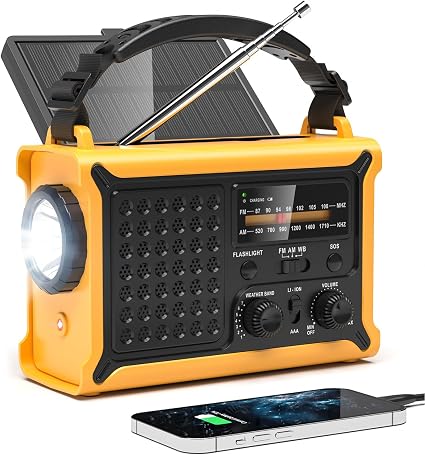
Reliable NOAA weather and AM/FM reception combined with an emergency power supply make this radio an essential tool for anyone serious about staying informed and powered during outages. It suits outdoor enthusiasts and preppers who want a dependable source for weather alerts and phone charging without relying on traditional power.
Setup is straightforward with multiple power options including hand crank, solar panel, USB Type-C input, and replaceable AAA batteries. Daily use involves tuning easily between seven NOAA weather channels and standard AM/FM bands.
The built-in flashlight and SOS alarm add to its utility around camp or during power failures. Charging a phone or tablet via USB feels reassuring when the grid is down, thanks to its 12,000mAh battery capacity.
The radio delivers clear sound aided by noise reduction and a high-sensitivity chip, making broadcasts easy to hear indoors or outside. It’s solidly built for emergency use, with a rechargeable battery that lasts up to 60 hours at moderate volume. High marks go to the reliable NOAA reception, while some find the NOAA alert feature demands the radio be turned on and tuned to a specific channel to activate.
Clear reception of NOAA weather alerts stands out as the strongest feature, while requiring the radio to be powered on and tuned specifically to WB channel for alerts is a common drawback. The large battery capacity gives genuine power backup that users rely on during extended outages or outdoor trips.
Those prioritizing dependable emergency power and access to weather updates will appreciate this radio’s design and features. Individuals wanting a more compact, lightweight option or automatic alert activation may want to explore alternatives better suited to those needs.
Pros
- Long-lasting 12000mAh rechargeable battery
- Multiple charging options including hand crank and solar
- Clear NOAA weather alerts with noise reduction
- Includes handy built-in flashlight and SOS alarm
Cons
- NOAA alerts require radio to be on and tuned to WB
- Some find device a bit bulky for everyday carry
| Specification | Details |
|---|---|
| Power Source | Hand Crank | Solar Panel | Type-C Input 5V/2A | 12000mAh Rechargeable Battery | 3*AAA Battery |
| Tuner Type | AM/FM/NOAA Weather Radio |
| Radio Bands Supported | FM:87.5-108 MHz / AM:520-1710 KHz / 7 NOAA Bands |
| Speaker Maximum Output Power | 5 watts |
| Additional Features | Built-In AM Antenna, Flashlight, SOS Alarm, USB Phone Charging |
9. MOICO 22 Channel FRS Two-Way Radios

Staying connected in places without cell service can be tough, especially during outdoor trips or crowded events. MOICO 22 Channel FRS Two-Way Radios suit anyone looking for reliable communication up to 3 miles away. Their biggest strength is the privacy codes that block out other chatter, making your conversations clear.
Setting up the radios is straightforward, pop in 4 AAA batteries and you’re ready to go. Selecting from 22 channels and 99 privacy codes lets you avoid interference. The VOX hands-free feature is handy during hikes or when commuting through busy spots because it activates by voice, allowing you to keep your hands free.
Their lightweight design makes carrying them easy throughout the day.
Conversation clarity holds up well within the 3-mile range, even with minor obstructions. The casing handles bumps and weather with its shockproof and water-resistant build, which is useful outdoors. Many praise the strong signal and privacy code system.
Some users find battery life averages only around 12 hours, requiring frequent replacements during long outings.
Clear communication secured by numerous privacy codes is a standout feature, keeping chats free from interference. Most common drawback relates to battery longevity, requiring 4 AAA batteries that last around half a day during continuous use.
Great choice for campers, hikers, and families wanting reliable short-range talk. Those needing longer battery life or extended range may want to explore other options with higher power or rechargeable batteries.
Pros
- Up to 2178 privacy code combinations
- VOX hands-free operation with 3 sensitivity levels
- Shockproof and water-resistant design
- Lightweight for easy carrying
Cons
- Battery life averages only 12 hours
- Maximum range limited to 3 miles
| Specification | Details |
|---|---|
| Number of Channels | 22 |
| Talking Range Maximum | 3 miles |
| Water Resistance Level | Water Resistant |
| Battery Average Life | 12 hours |
| Voltage | 1.5 volts |
| Additional Features | Digital Display, Keypad Lock, Lightweight, Shockproof |
10. Hand Crank AM/FM NOAA Weather Radio

Hand Crank AM/FM NOAA Weather Radio suits anyone needing reliable access to AM, FM, and NOAA weather channels, especially during emergencies. Its strongest feature is the four power options, including hand crank and solar panel, which ensure you stay connected without worrying about batteries or outlets.
Setting it up is straightforward with the adjustable tuning knob and telescopic antenna. Day-to-day use is simple, just crank or place in sunlight to recharge.
Volume control lets you adjust sound comfortably during camping or emergency situations. The built-in 5000mAh battery also powers the device’s lighting, which comes in handy at night or in power outages.
Reception quality is solid across AM, FM, and NOAA bands, making critical updates easy to catch. The radio’s build feels sturdy enough for outdoor use yet portable.
Many appreciate its charging versatility, but a few mention the hand crank can be tiring after extended use. The radio performs well on its main functions but can be a bit bulky for some.
Hand crank AM/FM NOAA weather radio offers reliable access to local stations and weather alerts through its AM, FM, and NOAA bands. The telescopic antenna and adjustable knobs make tuning straightforward. Power options include solar, hand crank, USB Type-C charging, and AAA batteries. Rechargeable battery holds charge well but some find hand crank effort tiring after extended use.
Ideal for those who want a compact emergency radio with multiple charging options for camping or prepping. Minimal need for constant hand cranking fits well with solar or USB charging preference. Not the best pick if frequent manual operation is expected or a simpler, lighter device with fewer power options is preferred.
Pros
- Four power options including hand crank and solar
- Includes AM, FM, NOAA weather bands
- Built-in 5000mAh rechargeable battery
- Adjustable tuning knob and volume control
Cons
- Hand crank can feel tiring after long use
- Radio may be bulky for some users
| Specification | Details |
|---|---|
| Radio Bands Supported | ALL |
| Power Source | Hand Crank Powered |
| Built-in Battery Capacity | 5000mAh rechargeable battery |
| Additional Features | Hand Crank |
| Connectivity Technology | ALL |
| Hardware Interface | Radio Frequency |
Comparison of Top Prepper Radios Side by Side
| Product | Power Source | Radio Bands Supported | Additional Features | Connectivity Technology |
|---|---|---|---|---|
| DreamSky Portable Radio | Battery Operated | AM/FM | Strong reception, large dial | AM FM |
| Hand Crank Weather Radio | Battery Powered | AM/FM/NOAA | Built-in flashlight, USB | USB |
| Cobra 29LX CB Radio | 12 volts | CB Radio (40 ch) | Weather alert, moisture resistant | – |
| ATS MINI V4 Shortwave | Battery Powered | AM/FM/LSB | Digital display, agc | Antenna, Wired |
| Solar Hand Crank Radio | Built-in Battery/Solar | AM/FM/NOAA (7 bands) | Rechargeable, portable | USB |
| Emergency Crank Weather Radio | Rechargeable, Hand Crank | AM/FM/WB | Flashlight, shockproof, SOS | USB |
| NOAA S.A.M.E. Radio | Rechargeable (Multi Power) | NOAA/FM (Digital) | S.A.M.E alerts, color display | USB |
| NOAA Solar Hand Crank | Hand Crank, Solar, Battery | AM/FM/NOAA | SOS alarm, flashlight | Auxiliary, USB |
| MOICO 22 Channel FRS | 1.5 volts | FRS (22 ch) | Keypad lock, shockproof | – |
| Hand Crank NOAA Radio | Hand Crank Powered | AM/FM/NOAA | Compatible smartphone | ALL |
- Power SourceBattery Operated
- Radio Bands SupportedAM/FM
- Additional FeaturesStrong reception, large dial
- Connectivity TechnologyAM FM
- Power SourceBattery Powered
- Radio Bands SupportedAM/FM/NOAA
- Additional FeaturesBuilt-in flashlight, USB
- Connectivity TechnologyUSB
- Power Source12 volts
- Radio Bands SupportedCB Radio (40 ch)
- Additional FeaturesWeather alert, moisture resistant
- Connectivity Technology–
- Power SourceBattery Powered
- Radio Bands SupportedAM/FM/LSB
- Additional FeaturesDigital display, agc
- Connectivity TechnologyAntenna, Wired
- Power SourceBuilt-in Battery/Solar
- Radio Bands SupportedAM/FM/NOAA (7 bands)
- Additional FeaturesRechargeable, portable
- Connectivity TechnologyUSB
- Power SourceRechargeable, Hand Crank
- Radio Bands SupportedAM/FM/WB
- Additional FeaturesFlashlight, shockproof, SOS
- Connectivity TechnologyUSB
- Power SourceRechargeable (Multi Power)
- Radio Bands SupportedNOAA/FM (Digital)
- Additional FeaturesS.A.M.E alerts, color display
- Connectivity TechnologyUSB
- Power SourceHand Crank, Solar, Battery
- Radio Bands SupportedAM/FM/NOAA
- Additional FeaturesSOS alarm, flashlight
- Connectivity TechnologyAuxiliary, USB
- Power Source1.5 volts
- Radio Bands SupportedFRS (22 ch)
- Additional FeaturesKeypad lock, shockproof
- Connectivity Technology–
- Power SourceHand Crank Powered
- Radio Bands SupportedAM/FM/NOAA
- Additional FeaturesCompatible smartphone
- Connectivity TechnologyALL
How to Choose the Right Prepper Radio
Choosing a good prepper radio depends on factors like durability, battery life, and signal range, ensuring reliable communication during emergencies. Prioritizing these features helps avoid costly replacements and frustration, making your investment more effective and dependable when it matters most.
Power Source and Battery Life
Many radios rely on several power sources to ensure they work when other options fail. Common power inputs include solar panels, hand cranks, replaceable batteries, and sometimes an AC adapter.
Sunlight availability and hand-crank speed affect how quickly you can recharge the device without external power. Radios with built-in solar panels typically need several hours of sunlight to charge fully, which means they may not provide long-term use during extended cloudy days or at night.
Battery capacity often determines how long the radio runs on a single charge. Look for models that specify runtime in hours on different modes, like AM/FM or weather bands, since some functions consume more power. Ease of swapping in fresh batteries or quick recharging is crucial for continuous use.
Prioritize radios with common battery types (AA or AAA) and fast recharging options over proprietary batteries that can leave you stranded.
Signal Reception and Range
Reception quality changes how useful a radio is in various conditions. Radios that cover AM, FM, shortwave, and NOAA weather bands provide flexibility for different signal types. Antenna length and quality have a big impact on clear reception; external or extendable antennas usually improve signal clarity, especially for weak or distant transmissions.
Signal strength tends to drop indoors or in urban areas with lots of interference, so radios designed for difficult environments have features like telescoping antennas or built-in signal boosters. In remote areas, shortwave coverage allows picking up international stations or emergency broadcasts, which can be lifesaving.
Testing different locations will reveal the reception limits for the particular radio.
Durability and Build Quality
Durability matters most when a radio has to survive rough handling or harsh weather. Many models have water and dust resistance rated by IP codes; at least IPX4 or higher helps against rain and splashes.
Rugged plastic or rubberized exteriors protect against accidental drops or impacts encountered during hiking or emergencies.
The materials chosen for buttons and casing affect how long the radio lasts under tough conditions. Compact and lightweight designs make it easier to carry without adding bulk, but sometimes slightly heavier units feel sturdier. A good balance between robustness and portability ensures the radio stays functional when you most need it.
User Interface and Features
Controls and displays should be straightforward and visible in low light or darkness. Larger buttons with tactile feedback prevent fumbling, while backlit displays assist reading frequencies or battery levels at night.
Some radios combine basic features with emergency alert systems and multiple bands for comprehensive monitoring.
Additional functions such as built-in flashlights, SOS signals, or USB charging ports add practical value. Flashlights help during power outages, and USB ports can recharge phones or other devices without extra gear. Avoid radios overloaded with complicated menus or tiny buttons that become a hassle during stressful situations.
Compatibility and Connectivity
Connection options extend a radio’s usefulness beyond standalone listening. Ability to attach external antennas is valuable in weak signal areas, allowing improved reception that internal antennas cannot achieve. Also, connection to external power methods like car chargers or power banks increases reliability.
Audio outputs such as headphone jacks or Bluetooth help maintain privacy or share signals without disturbing others. Compatibility with official emergency alert systems ensures the radio picks up government warnings promptly.
Units that integrate well with other preparedness gear make coordination and communication easier during emergencies.
Maximizing Emergency Communication with Your Prepper Radio
Emergency communication depends heavily on clear reception and reliable power sources. Many prepper radios come with multiple ways to receive signals, including AM, FM, NOAA weather channels, and shortwave bands, which can cover a variety of emergencies.
Choosing a radio that supports multiple frequency bands increases the chances of picking up critical information.
Look for radios that include several power options, such as solar panels, hand cranks, and standard batteries. These features ensure the radio stays functional without relying solely on scarce resources during disasters. A good antenna extends reception range and helps capture weak signals.
- Multi-band reception: Access more emergency broadcasts.
- Multiple power sources: Reliable operation when electricity is out.
- Durable build: Survives rough handling and environmental stress.
Having a prepper radio set up with these features gives a dependable way to stay informed and connected amid unpredictable situations.
Proper Maintenance and Battery Care for Longevity
Long-lasting performance from a prepper radio relies on regular upkeep and mindful battery management. Batteries drain over time, even when not in use, so swap them out periodically to keep the device ready.
Storing spare batteries in a cool, dry place also helps preserve their charge.
Cleaning the radio’s contacts and antenna keeps reception clear and prevents corrosion. Avoid exposing the radio to extreme temperatures and moisture, which can damage electronic components. When the radio has a rechargeable battery, make sure to fully recharge it before storing and avoid leaving it plugged in all the time, as this can reduce battery life.
- Rotate batteries: Prevent unexpected failures.
- Clean connections: Maintain signal quality.
- Proper storage: Avoid temperature extremes and moisture.
Following these basics ensures the radio remains functional for years, ready to work when needed most.
Comparing Analog and Digital Prepper Radios: Pros and Cons
Analog prepper radios provide simplicity and ease of use; tuning in involves manually adjusting the dial to find stations. They typically consume less power and have fewer components that could degrade over time.
However, analog radios may suffer from weaker signal clarity and interference compared to digital models.
Digital radios convert signals into data, which results in clearer audio quality and often added features like digital displays and automatic tuning. They tend to have better noise reduction, making weak or distant signals easier to hear. The tradeoff is slightly higher battery consumption and more complex electronics that might be more sensitive to damage.
- Analog: Reliable, simple, lower power use, but prone to static.
- Digital: Clear sound, extra features, more power needed, can be fragile.
Choosing between analog or digital comes down to priorities such as battery life, signal clarity, and ease of operation in emergency scenarios.
People Also Asked
How Do I Properly Maintain a Prepper Radio for Long-Term Use?
Regularly clean the radio and its contacts, keep it in a dry place, and test it periodically to ensure clear reception. Changing the batteries every six months prevents corrosion and helps maintain readiness.
What Size Antenna Is Best for a Prepper Radio Range?
A longer antenna generally improves the range and reception of a prepper radio. A 20 to 30-inch telescoping antenna often balances portability and performance well.
Are Prepper Radios Safe to Operate During Emergencies?
Prepper radios are safe to operate during emergencies as long as you avoid places with explosive gases or flammable materials. Handheld radios usually have low power output that poses no electrical hazard.
How Long Does a Typical Prepper Radio Battery Last on Standby?
Standby battery life varies, but small handheld radios often last about 24 to 48 hours on standby. Using rechargeable batteries and turning off the radio when not needed extends this time further.
What Common Problems Should I Expect with a Prepper Radio?
Common problems include weak signal reception, battery drain, and physical damage to buttons or screens. Keeping spare batteries and a basic repair kit improves your chances of staying connected.
Conclusion
Choosing a prepper radio comes down to reliable reception, power options, and durability. Radios that pick up multiple bands, including NOAA weather alerts, keep you informed. Battery life and the ability to use alternative power sources like hand crank or solar are crucial during outages.
The radio should withstand rough conditions since it might be used outdoors or in emergencies.
Consider how much space you have and how often you will carry or use the radio. A compact model might suit daily use, while a larger one with more features fits better in a bug-out bag.
Check the comparison table and detailed reviews above to match a radio with your specific needs and budget. Practical choices work best when they fit your routine and environment.


