Top 12 Best Rangefinder Scope You Can’t Miss Today!
Finding the right range with a cheap or poorly made rangefinder scope can be frustrating. The image might blur, the readings can be inconsistent, and during critical moments, that indecision can cost a shot. A reliable best rangefinder scope cuts through these issues by delivering fast and accurate distance measurements without fuss.
The key factors that separate a good rangefinder scope from a poor one are optical clarity, measuring range, and durability. High-quality lenses with multi-coating reduce glare and give a sharp view even in low light.
Most effective scopes measure distances between 800 and 1,200 yards clearly, which covers most hunting or shooting needs. Rugged construction with waterproof and fog-proof features keeps the scope functional in changing weather. Easy-to-clean lenses and a lightweight design also make a difference when using the scope in the field.
Need a Quick Check?
| Image | Product | Price |
|---|---|---|
Our Top Picks 1  | BURRIS Oracle X Scope | Check Price |
Our Top Picks 2  | REVASRI Laser Rangefinder | Check Price |
Our Top Picks 3 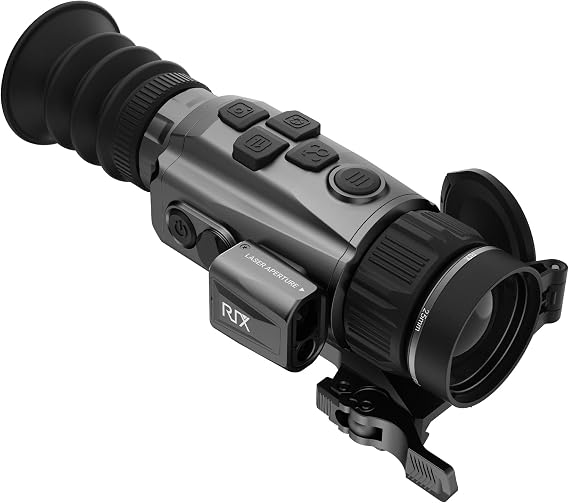 | RIX StormS2R Thermal Scope | Check Price |
Our Selected Top 12 Rangefinder Scope Worth Your Money
This list features twelve carefully chosen rangefinder scopes ideal for various outdoor and shooting activities. Each review covers performance details, suitability for different users, and highlights strengths and weaknesses to help you find the best match for your needs.
1. BURRIS Oracle X Crossbow Rangefinding Scope
Crafted with a lightweight design specifically for crossbows, this scope suits hunters who want precise rangefinding without added bulk. Its single biggest strength lies in the built-in laser rangefinder, which simplifies aiming by providing accurate distance measurements straight through the scope.
Setup involves attaching the integrated mount directly to a crossbow, making it stable and compact. Day-to-day use is straightforward with a wireless remote control or a range button on the scope to activate the laser. The magnification varies from 2x to 7x, letting you adjust your view depending on the distance and environment, while the 47-foot field of view offers enough clarity for target acquisition.
Performance shines with its reliable laser rangefinder that quickly calculates distances, helping deliver confident shots. The build quality feels solid and practical, focused on utility rather than unnecessary extras. Common praise highlights its accuracy and ease of use.
Complaints mainly revolve around the maximum 7x magnification, which some find limiting for longer-range targets.
The scope delivers accurate and fast ranging thanks to its built-in laser, which helps many users trust their shot distances immediately. A recurring note is that the 7x magnification ceiling can feel tight for some hunting scenarios requiring longer-range detail.
Anyone focused on medium-range crossbow hunting will appreciate this scope’s balance of features and simplicity. People needing higher magnification or versatile long-range options might want to explore other scopes designed for those demands.
Pros
- Built-in laser rangefinder for quick distance checks
- Wireless remote control makes the product much easier to use
- Lightweight design suited for crossbows
- Adjustable magnification from 2x to 7x
Cons
- Maximum magnification of 7x may feel limited
- Field of view narrows at higher zoom levels
| Specification | Details |
|---|---|
| Magnification Minimum | 2 x |
| Magnification Maximum | 7 x |
| Objective Lens Diameter | 32 |
| Field Of View | 47 feet |
| Reticle Type | Mil-dot |
| Compatible Devices | Cross Bow |
2. REVASRI Hunting Laser Rangefinder
Accurate measurement and multiple modes stand out in REVASRI Hunting Laser Rangefinder. Great for hunters, archers, and golfers who want a versatile device that remembers settings and handles a variety of distance and height measurements with ease.
Setup is straightforward with included battery and intuitive controls. Daily use highlights the memory function that opens the last used mode automatically, saving time on adjustments.
Continuous scan mode helps quickly check multiple targets, and golf mode locks onto specific points like pins or game for focused readings.
It excels at providing distance, height, and speed measurements with flexible modes for different situations. Built to handle outdoor conditions, it feels solid but not too bulky. The top feature praised is the mode memory convenience, while some find it a bit complex navigating all functions initially.
The memory feature is highly praised for saving time during use, making repeated measurements faster and more convenient. The main issue reported is the initial learning curve with the many modes and buttons, which can feel overwhelming.
Those who want versatile measuring options and quick switching between functions will appreciate this device. Users preferring simplicity and fewer settings might look for a more basic rangefinder that’s easier to pick up immediately.
Pros
- Memory function recalls last mode used
- Multiple measurement modes for various needs
- Continuous scan allows measuring multiple targets quickly
- Compact and sturdy design for outdoor use
Cons
- Many features can be confusing at first
- Controls take time to master fully
| Specification | Details |
|---|---|
| Sport Type | Hunting, Archery, Golf |
| Unit Count | 1 Count |
| Manufacturer | Tianjin Lookout Photoelectric Technology Co., Ltd. |
| Warranty Description | 1 Year |
| Included Components | Battery |
3. RIX StormS2R Thermal Rifle Scope
RIX StormS2R Thermal Rifle Scope is best for those needing precise targeting in low-visibility conditions with the benefit of thermal imaging and laser rangefinding in a compact unit. Its strongest point is a lightweight, well-balanced design that packs high-resolution thermal detection and a built-in laser rangefinder.
Setting it up on a Picatinny mount is straightforward, fitting securely on most rifles. Navigation through the UI is clear, thanks to buttons aligned with the on-screen functions and a four-directional layout that’s easy to feel and use when wearing gloves. The magnification ranges from 3.5x to 14x, allowing simple adjustments when scanning targets at different distances.
It excels in detecting heat signatures clearly at distances up to 1422 yards with a 256×192 resolution sensor and a 25mm lens. The lightweight 0.9lb design reduces fatigue during long outings.
Reports praise its ease of use and sharp thermal imaging. Some find the detection and ranging distances limiting when compared to larger, more expensive models.
Users appreciate the lightweight design combined with simple controls that make long use comfortable and straightforward, while some find the detection and ranging distances restrictive for extreme long-distance needs. The sensor resolution delivers clear images but doesn’t capture the fine details of bigger scopes.
Ideal for those who want an all-in-one thermal and rangefinding scope that won’t weigh them down or complicate use. Users needing maximum range and finest thermal detail might look toward heavier, more advanced models instead.
Pros
- Lightweight at just 0.9 pounds
- Easy button layout for gloved hands
- Clear thermal detection up to 1422 yards
- Built-in laser rangefinder up to 1312 yards
Cons
- Detection range limited compared to larger scopes
- Resolution of 256×192 may lack fine detail
| Specification | Details |
|---|---|
| Magnification Minimum | 3.5x |
| Magnification Maximum | 14.0x |
| Objective Lens Diameter | 25mm |
| Detection Distance | 1422 YDS |
| Built-in Laser Rangefinder | 1312 YDS |
| Weight | 0.9lb |
4. SIG SAUER Buckmasters Riflescope with Rangefinder

Hunting at various distances demands quick, reliable tools to estimate range and adjust your aim. Ideal for shooters wanting both a riflescope and rangefinder in one setup, this model’s biggest strength is combining those tools into a single kit that suits mid-range hunting scenarios.
Getting started involves mounting the scope with the included medium-height aluminum Picatinny rings, designed to fit most rifles without extra fuss. Day-to-day use benefits from the 3-12×44 variable magnification that allows clear targeting at different distances.
The Buckmasters 1500 laser rangefinder lets you measure distance on the spot, syncing well with the BDC reticle for holdover adjustments up to 500 yards.
Performance is solid for hunting uses, with the non-illuminated SFP BDC reticle giving reliable holdover dots and clear ballistic guidance linked to the rangefinder measurements. Built with a 1-inch waterproof, shockproof aluminum main tube, it handles the outdoor elements well. Reviews often mention sharp accuracy but some users wish the reticle were illuminated for low light conditions.
Sharp accuracy and the combination of scope, rangefinder, and rings in one package is the strongest praise, while the most common complaint is the lack of reticle illumination, which limits ease of use during dawn or dusk.
Shooting at varied ranges needing compact setup will benefit from this kit. Those prioritizing nighttime or low-light shots should consider scopes with an illuminated reticle instead.
Pros
- Integrated rangefinder with ballistic holdover guidance
- Durable waterproof and shockproof aluminum body
- Variable 3-12x magnification suits multiple distances
- Includes mounting rings for easy installation
Cons
- Reticle is not illuminated, tough in low light
- Rangefinder monocular size may feel compact for some
| Specification | Details |
|---|---|
| Magnification | 3-12x |
| Objective Lens Diameter | 44mm |
| Main Tube | 1in Waterproof Shockproof Aluminum |
| Reticle Type | SFP BDC Reticle with 500-Yard Holdover Dots |
| Rangefinder | 6x22mm Laser Rangefinding Monocular |
| Mounting | Medium-Height Aluminum Picatinny Rings |
5. Acer Golf Rangefinder

With an 800-yard range and 6x magnification, the Acer Golf Rangefinder is great for golfers and hunters who need accurate distance measurements. Its anti-shake technology stands out, helping steady shaky hands for pin-point precision.
Anyone focused on precise readings and quick targeting will appreciate what it offers.
Setup is straightforward since it comes with just the rangefinder in one pack. Day-to-day using it feels reliable thanks to its anti-shake feature, which keeps the reading stable even when your hands aren’t perfectly steady.
The device easily locks onto your target to give clear distance measurements, making yardage checks or target tracking consistent every time.
Performance-wise, the laser rangefinder hits accurate distances within its 800-yard capability with impressive speed. The build feels solid, made by HK Linghan Technology Co.
, Limited, providing a dependable tool on the course or in the field. Most praise highlights the steady readings from anti-shake tech, while a frequent downside is that the scope can feel bulky to carry around during long use.
The strongest point is how well the anti-shake technology works, giving steady and clear readings that are easy to trust. The most common drawback is the bulkiness, which can become noticeable when carrying it over long periods. These two features define much of the daily experience using this rangefinder.
People who want a reliable and accurate rangefinder with solid anti-shake support will be happy with this product. Those needing something lightweight and more compact might want to look at other options better suited for extended carrying comfort.
Pros
- Anti-shake technology for steady readings
- Fast and precise distance measurements
- Long-range capability suitable for golf and hunting
- Simple one-item package for ease of use
Cons
- Can feel bulky during prolonged carrying
- No extra accessories included in the pack
| Specification | Details |
|---|---|
| Brand Name | Acer |
| Sport Type | Golf |
| Model Number | SW-RF700 |
| Range | 800 yards |
| Magnification | 6x |
| Included Components | Acer Range Finder |
6. Leupold RX-1400I TBR/W Rangefinder

Hunters and archers looking for precise long-range measurements will appreciate the Leupold RX-1400I TBR/W. Its standout feature is True Ballistic Range / Wind technology, which provides spot-on, angle-compensated distances, making shots over varied terrain much easier to judge accurately.
Setting up is straightforward with selectable Bow mode and Flightpath technology that helps spot arrow obstructions. The adjustable brightness in the TOLED display ensures clear visibility in different lighting conditions. Daily use benefits from quick ranging up to 1,400 yards on reflective objects and 1,200 yards on trees, making it reliable out in the field.
Performance is strong with accurate ballistic calculations, even including wind hold points for consistent shooting. The build quality feels solid and durable, backed by a lifetime warranty without registration hassles. Most users praise its accuracy at distance, while some find the wind hold feature complex to adjust initially.
Accuracy at extended range and angle compensation stand out as the RX-1400I’s strongest features, especially for hunting or archery on varied terrain. Reviews often point out the wind hold feature requires some practice to use effectively, but it does offer a valuable edge once mastered.
This rangefinder suits those aiming for precise shots over long distances with a reliable display in changing light. People needing simpler settings or who focus mainly on shorter distances might consider other options with less technical data.
Pros
- Accurate angle-compensated ranges for long shots
- Bow mode with obstruction detection included
- Adjustable brightness for clear readings anytime
- Lifetime warranty without registration needed
Cons
- Wind hold feature can be tricky to adjust initially
- Ranging slightly shorter on non-reflective targets
| Specification | Details |
|---|---|
| Model Number | 183727 |
| Ranging Distance | 1,400 yards on reflective objects |
| Wind Hold Capability | Hold point for 10-mph wind at 90-degree angle |
| Display Type | Selectable TOLED with adjustable brightness |
| Warranty | Lifetime, no proof of ownership required |
7. SVBONY SV28 Spotting Scope

Offering a wide 25-75x zoom and a 70mm objective lens, this spotting scope suits beginners and novices who want easy focusing and good light gathering. Its standout feature is the large lens paired with zoom flexibility, making it ideal for bird watching and scenic views without complicated adjustments.
Setting up takes minimal effort thanks to the manual focus and zoom eyepiece. Adjusting magnification feels smooth and quick, while the extendable sunshade helps reduce glare on bright days. The non-slip finish offers confidence when handling in damp or wet conditions, and the waterproof design means sudden weather changes won’t stop outdoor use.
The performance delivers a clear, bright image at different zoom levels with a generous 64-foot field of view at close range. Its build includes an equatorial mount compatible with tripods and cameras, making it versatile for various setups. Most praise centers on ease of use and solid image quality; occasional mentions point out manual focus as less convenient for quick shots.
Many find the combination of zoom range and light gathering impressive, providing detailed views during birdwatching or scenic observations. The manual focus method can be a bit slow when trying to quickly lock onto moving subjects or targets, making rapid adjustments less convenient.
People new to spotting scopes who prioritize easy setup and reliable optics will appreciate this model. Those needing fast autofocus or a more compact option for frequent travel may want to look at other choices better suited to quick or mobile use.
Pros
- Wide 25-75x zoom for versatile viewing
- Large 70mm lens gathers plenty of light
- Waterproof body handles sudden weather changes
- Non-slip finish offers secure grip
Cons
- Manual focus can slow down quick target acquisition
- Bigger size may feel bulky for travel
| Specification | Details |
|---|---|
| Zoom Ratio | 3:1 |
| Objective Lens Diameter | 70mm |
| Focal Length | 380 millimeters |
| Field Of View | 64 feet |
| Mount | Equatorial Mount |
| Focus Type | manual |
8. TenPoint Vision HD Digital Rangefinding Crossbow Scope

TenPoint Vision HD Digital Rangefinding Crossbow Scope stands out by combining high magnification and digital rangefinding to offer superb accuracy for crossbow shooters. It suits hunters and target shooters wanting precise distance measurement with quick ballistic adjustments.
Its biggest strength lies in the instant ballistic calculation tailored to specific arrow profiles.
Setup is straightforward with one-shot zeroing at 30 yards, getting you dialed in quickly. Daily use feels intuitive as the integrated laser rangefinder measures distances from 5 to 1100 yards, instantly adjusting for drop compensation based on five pre-loaded arrow profiles.
Zooming between 3 and 12 times lets you adapt to various shooting conditions easily, and the integral mount keeps it solid on your crossbow without additional fuss.
Performance is crisp thanks to crystal clear imaging and accurate ranging that make tight shots much easier at range. The build quality feels durable with an integral mount, while the duplex reticle provides clear aiming points.
Common feedback highlights how reliably it pairs ballistic data with distance readings. Some users mention the digital interface might take a moment to get used to during quick shots.
Accurate distance measurement combined with tailored ballistic compensation is praised for making longer shots predictable and consistent. The digital interface offers advanced features but can slow down response time when adjusting quickly in the field.
Hunters and precision shooters wanting quick range data with automatic drop adjustments will benefit most. Those preferring simple, manual scopes or who use arrows not matching TenPoint profiles might want to consider other options.
Pros
- Instant ballistic calculation based on arrow profiles
- One-shot zeroing simplifies setup
- Wide zoom range from 3 to 12 times
- Integral mount adds stability
Cons
- Digital interface takes practice during fast shots
- Limited to specific TenPoint arrow ballistic profiles
| Specification | Details |
|---|---|
| Magnification Minimum | 3 x |
| Magnification Maximum | 12 x |
| Mounting Type | Integral Mount |
| Compatible Devices | Cross Bow |
| Reticle Type | Duplex |
| Thread Type | 1/2″-20 UNC |
9. BURRIS Eliminator 6 Riflescope

Feeling confident at long distances comes easy with a rangefinder scope like the BURRIS Eliminator 6. It’s aimed at shooters who want quick, accurate distance measurements combined with traditional scope features. Its biggest strength lies in the built-in rangefinder that works up to 2,000 yards without needing to shift focus.
Setting up involves syncing the scope with the BurrisConnect app through Bluetooth, letting you fine-tune ballistic profiles or adjust what data appears in the heads-up display. Daily use benefits from the integral mount options and the remote control, making it straightforward to operate without breaking your shooting position. Swapping distance and wind hold values on the HUD adds practical flexibility depending on the shot.
Performance shines with easy ranging of reflective targets out to 2,000 yards and a clear heads-up display showing up to 10 data points. The build feels solid with a 5.2 centimeter objective lens paired with magnification from 4x to 20x. Most praise highlights the precision and convenience of the rangefinder, while the main complaint centers on the complexity of initial app setup and feature toggling.
The scope performs well in providing precise ranging and detailed HUD information, making long-range shooting more manageable. Many find the initial configuration through the app a bit confusing, which can slow down getting all features aligned exactly how you want them.
Hunters and target shooters seeking integrated ballistic data and rangefinding will appreciate the technology packed into this scope. Those who prefer simple, ready-to-use optics without app dependency might look for a more straightforward model.
Pros
- Accurately ranges targets up to 2,000 yards
- Customizable heads-up display with app control
- Bluetooth connectivity with remote control
- Multiple mounting options included
Cons
- App setup can be complicated for first-time users
- Heads-up display features may need frequent adjustment
| Specification | Details |
|---|---|
| Magnification Minimum | 4 x |
| Magnification Maximum | 20 |
| Objective Lens Diameter | 5.2 centimeters |
| Field Of View | 30.5 feet |
| Reticle Type | X177 |
| Mounting Type | Integral Mount or Dovetail Mount or Weaver Mount |
10. Vortex Impact 4000 Rail-Mounted Rangefinder

Perfect for hunters and long-range shooters, the Vortex Impact 4000 Rail-Mounted Rangefinder stands out for its precise ballistic corrections right from your shooting position. Its main strength is the integrated GeoBallistics solver that simplifies complex environmental calculations, making long-distance shots more reliable.
Setting it up is straightforward thanks to the easy zeroing tools included. The Bluetooth connectivity pairs smoothly with your phone using the GeoBallistics app, allowing quick access to personalized range cards and weather data. The rangefinder’s rail-mounted design keeps it steady and within easy reach during every shot, while onboard sensors measure compass direction, humidity, barometric pressure, and temperature for real-time adjustments.
The Impact 4000 performs consistently with accurate distance readings and detailed ballistic info right on the display. Its rugged construction suits outdoor conditions well. Most praise mentions the clear display and convenient wind bearing capture mode.
The common drawback noted is its complexity for users not familiar with ballistic solvers.
The clear in-display ballistic data combined with detailed environmental sensors is highly praised for aiding in precise shots. However, the unit’s complexity in setup and usage is a frequent challenge, especially for those new to advanced rangefinders.
Those who value detailed ballistics and environmental measures will appreciate its capabilities and durability. Users seeking a simpler, more straightforward rangefinder might consider a different model with fewer features.
Pros
- Accurate ballistic corrections with environmental data
- Bluetooth connection with GeoBallistics app
- Rugged and reliable rail-mounted design
- Includes comprehensive mounting and zeroing tools
Cons
- Complex setup for users unfamiliar with ballistics
- Display may require adjustment in bright light
| Specification | Details |
|---|---|
| Model Number | LRF-IMP4000 |
| Sport Type | Hunting, Shooting |
| Built-in Sensors | Compass, Humidity, Barometric Pressure, Temperature |
| Included Components | Bluetooth Remote, Mounting Kit, Zero Tool Kit, Batteries |
| Ballistics Solver | On-Board GeoBallistics with Range Card Generator |
| Manufacturer | Vortex Optics |
11. TIDEWE Hunting Laser Rangefinder

Built with a solid design focused on practical hunting needs, this rangefinder suits hunters who want quick, reliable distance measurements. Its biggest strength lies in combining 6.5x magnification with multiple measuring modes, helping you get clear distance and speed data quickly before taking a shot.
Setting up involves charging the built-in battery and familiarizing yourself with its various modes like straight-line, vertical, horizontal distances, and speed. The quick 0.46-second reading time means you can scan and confirm distances without delay, whether standing in a tree stand or moving through the woods.
Carrying it around is easy since it comes with a case, and switching between scan and measurement modes works smoothly during use.
Accuracy sits at ±1 yard across a range from 3 to 700 yards, making it reliable for most hunting scenarios. The sturdy build reflects its outdoor purpose, though some users note the menu takes a moment to get used to. Its strength is how fast it delivers measurements, but complaints mention the interface can feel a bit clunky at first.
Quick readings under a second provide useful speed and distance info, although the interface may slow down initial use. Its durability and performance in different modes make it practical for hunting situations but require time to learn the controls well.
Hunters who prioritize speed and versatility in distance measurement will find this well-suited. Those seeking a simpler or more intuitive menu system might consider other options better tailored for straightforward use.
Pros
- Fast measurement in 0.46 seconds
- Multiple measurement modes available
- Rechargeable battery included
- 6.5x magnification for clear view
Cons
- Interface can be tricky at first
- Menu navigation feels slightly clunky
| Specification | Details |
|---|---|
| Magnification | 6.5X |
| Measuring Range | 3 to 700 yards |
| Reading Time | 0.46 seconds |
| Measurement Modes | Distance, Angle, Speed, Continuous Scan |
| Battery | Rechargeable |
| Included Accessories | Carry case |
12. Garmin Xero X1i Crossbow Scope

Auto-ranging combined with 3.5X magnification makes this crossbow scope ideal for hunters wanting accurate distance readings without extra equipment. Its biggest strength is the ease of aiming with a precise illuminated reticle that adjusts brightness on its own.
Setup involves mounting with a Picatinny thread and syncing the scope with a wired trigger or device range button for quick distance readings. You can create custom bolt profiles to match different setups, while laser waypoint projection connects with a Garmin GPS to mark exact target locations.
Range accuracy works well to 250 yards for game and 500 yards for reflective targets, providing reliable aim points every time. The build is solid for bow mounting, and the open reticle keeps views clear.
Most praise focuses on the automatic brightness adjustment, while the common complaint is limited range for black targets at only 125 yards.
Automatic brightness adjustment is highly valued for clear aiming in changing light, while users often note the shorter range to black targets as a limitation. The GPS-linked waypoint projection improves tracking but requires owning an additional device.
Hunters using crossbows who want accurate automatic ranging and easy aiming will appreciate this scope. Those needing longer-range capability for less reflective targets might consider other scopes. The GPS feature suits those already invested in Garmin ecosystems.
Pros
- Auto-ranging distance measurement up to 250 yards on game
- Illuminated aim point with automatic brightness adjustment
- Custom bolt profiles support multiple crossbow setups
- Laser Locate waypoint projects target location via Garmin GPS
Cons
- Max range for black targets limited to 125 yards
- Requires compatible Garmin GPS device for waypoint feature
| Specification | Details |
|---|---|
| Magnification Maximum | 3.5 |
| Magnification Minimum | 3.5 x |
| Compatible Devices | Cross Bow |
| Mounting Type | Bow Mount |
| Thread Type | Picatinny |
| Reticle Type | Open Reticle |
Best Rangefinder Scopes Comparison Table
| Product | Max Magnification | Compatible Device | Mounting Type | Reticle Type |
|---|---|---|---|---|
| BURRIS Oracle X Scope | 7x | Cross Bow | Integrated or Crossbow Mount | Mil-dot |
| REVASRI Laser Rangefinder | – | – | – | – |
| RIX StormS2R Thermal Scope | 14x | Rifle | Picatinny Mount | – |
| SIG SAUER Buckmasters Scope | – | – | – | SFP BDC |
| Acer Golf Rangefinder | – | Golf | – | – |
| Leupold RX-1400I Rangefinder | – | – | – | – |
| SVBONY SV28 Spotting Scope | 3x Zoom | Camera, Tripod | Equatorial Mount | – |
| TenPoint Vision HD Scope | 12x | Cross Bow | Integral Mount | Duplex |
| BURRIS Eliminator 6 Scope | 20x | Rifle | Integral, Dovetail, Weaver | X177 |
| Vortex Impact 4000 Rangefinder | – | – | – | – |
| TIDEWE Laser Rangefinder | 6.5x | – | – | – |
| Garmin Xero X1i Scope | 3.5x | Cross Bow | Bow Mount | Open Reticle |
- Max Magnification7x
- Compatible DeviceCross Bow
- Mounting TypeIntegrated or Crossbow Mount
- Reticle TypeMil-dot
- Max Magnification–
- Compatible Device–
- Mounting Type–
- Reticle Type–
- Max Magnification14x
- Compatible DeviceRifle
- Mounting TypePicatinny Mount
- Reticle Type–
- Max Magnification–
- Compatible Device–
- Mounting Type–
- Reticle TypeSFP BDC
- Max Magnification–
- Compatible DeviceGolf
- Mounting Type–
- Reticle Type–
- Max Magnification–
- Compatible Device–
- Mounting Type–
- Reticle Type–
- Max Magnification3x Zoom
- Compatible DeviceCamera, Tripod
- Mounting TypeEquatorial Mount
- Reticle Type–
- Max Magnification12x
- Compatible DeviceCross Bow
- Mounting TypeIntegral Mount
- Reticle TypeDuplex
- Max Magnification20x
- Compatible DeviceRifle
- Mounting TypeIntegral, Dovetail, Weaver
- Reticle TypeX177
- Max Magnification–
- Compatible Device–
- Mounting Type–
- Reticle Type–
- Max Magnification6.5x
- Compatible Device–
- Mounting Type–
- Reticle Type–
- Max Magnification3.5x
- Compatible DeviceCross Bow
- Mounting TypeBow Mount
- Reticle TypeOpen Reticle
How to Choose the Right Rangefinder Scope
Consider accuracy, range, and ease of use when selecting a rangefinder scope, as these factors directly impact performance and reliability. Choosing the right features tailored to your needs helps avoid unnecessary expenses and ensures a smoother experience during use.
Accuracy and Range
Hunting from a steep hillside or measuring a distant target on a foggy morning reveals the real differences in measurement precision. Devices often claim long maximum distances, but reliable readings usually happen within a specific range, often around 800 to 1,200 yards for most models suitable for outdoor activities. Precision to the nearest yard or meter matters a lot, especially at longer distances where small errors can become big problems.
Environmental conditions like light fog, rain, or dust can interfere, causing false readings or requiring multiple attempts. Models with advanced sensor technology tend to perform better under these conditions. Paying attention to specs like maximum effective distance and accuracy ratings (usually ±1 yard/meter) ensures the device won’t leave you guessing when time and accuracy count most.
Optical Quality
Clear visibility through the scope’s lens makes a big difference in quickly spotting the target. Entry-level optics may appear dim or blurry, especially in low light, while better ones deliver bright, sharp images. Magnification commonly sits between 4x and 8x, balancing zoom and a wide enough field of view to track moving objects or scan terrain.
Lens coatings aren’t just marketing buzzwords; multi-coated lenses greatly reduce glare and improve contrast, keeping your view clear even against bright skies or reflections. Without these coatings, glare can wash out the image, which becomes frustrating in actual use. Checking for anti-reflective coatings should be a priority for those expecting varied lighting conditions.
Durability and Build
Outdoor gear often gets dropped, banged, or soaked. Devices built with sturdy materials like aluminum alloy casings last longer and continue functioning after impacts.
Cheap plastic builds may crack or misalign after a few rough trips. Good models are also sealed to be waterproof and fogproof, so you don’t end up with condensation inside the lens or ruined electronics during unexpected weather.
Portability matters when hiking all day. Bulkier, heavier units tire you out or require extra bag space. A compact design around 5-7 inches long and weighing under 14 ounces strikes a good balance between ruggedness and easy carrying, preventing fatigue during long fieldwork.
Battery Life and Power Source
Standard models generally use common AAA or CR2 lithium batteries, which are easy to find at many stores during a trip. Battery life varies a lot based on use, but good devices can last around 3,000 continuous shots or a week of casual intermittent use without needing replacement.
Some newer versions offer USB charging, but many still rely on swapping batteries, so having spares is practical. A battery compartment designed for quick access without tools saves time and frustration in cold or wet conditions.
Running out of power mid-use without a simple replacement method quickly ruins the experience.
User Interface and Features
Operating controls that work smoothly while wearing gloves can save the day during cold-weather hunts. Buttons with clear tactile feedback and a simple layout prevent fumbling.
Bright, high-contrast displays with adjustable brightness help with readability both in bright daylight and nighttime.
Extra features like angle compensation calibrate readings when shooting uphill or downhill, improving shot accuracy. Target lock functionality holds the measured distance on a moving target, letting you focus on aiming without repeated clicks. However, these features should be easy to turn on or off without digging through complicated menus.
A user interface that stays intuitive under pressure makes a real difference in the field.
Tips for Maximizing Accuracy with Your Rangefinder Scope
Consistent positioning plays a big role in getting accurate readings from a rangefinder scope. Holding it steady and aligning the reticle directly on the target prevents errors caused by slight shifts.
Using a tripod or a stable rest can eliminate hand movement and make measurement easier.
Distance readings are more reliable when you target flat, reflective surfaces like a metal plate or marked target boards instead of uneven terrain or brush. Reflective targets return laser signals more clearly, reducing misreadings.
- Make sure the lens is clean and free of smudges before measuring.
- Wait for the display to stabilize before recording the distance.
- Use the correct mode for the environment, some rangefinders have specific settings for hunting, golfing, or general use.
Regular calibration checks and comparing readings with known distances can help spot any irregularities early. These steps together improve distance accuracy and ensure reliable use in the field.
Essential Maintenance Practices to Prolong Your Rangefinder Scope’s Lifespan
Keeping the optics clean is a basic yet vital maintenance task. Use lens cleaning solutions and microfiber cloths to avoid scratching the lenses.
Dirt or smudges can interfere with the laser’s path and reduce measurement accuracy.
Store the rangefinder in a protective case when not in use to guard against dust, moisture, and impact. Leaving it exposed in harsh environments can cause internal components to degrade prematurely.
- Remove batteries if the device will sit unused for long periods to prevent corrosion.
- Check battery contacts for signs of corrosion or debris and clean them if needed.
- Inspect moving parts like focus dials and buttons for smooth operation and address stiffness promptly.
Regularly updating firmware, if applicable, can improve device functionality and fix bugs. These small efforts extend the lifespan of the rangefinder scope and keep it reliable over time.
Comparing Rangefinder Scopes with Traditional Spotting Scopes for Outdoor Use
Rangefinder scopes directly measure the distance to a target using laser technology, providing quick numerical feedback, while traditional spotting scopes rely on optical zoom for detailed viewing without distance measurement.
Spotting scopes are useful for identifying targets at long distances with high magnification, but they require separate tools or estimation for range information. Rangefinder scopes combine viewing and distance measurement in one unit, which is practical for activities like hunting or golfing.
- Rangefinder scopes are generally more compact and lighter than many high-power spotting scopes.
- Spotting scopes offer greater clarity and detail when examining objects but lack built-in distance measurement.
- Some hybrid models include both features, but these tend to be more expensive.
Choosing between them depends on your specific needs: precision distance readings versus detailed visual observation without distance data.
People Also Asked
How Do I Properly Clean and Maintain My Rangefinder Scope?
Clean the lenses with a microfiber cloth and use a lens cleaner designed for optics to avoid scratches. Keep the body free of dust and moisture by storing it in a dry place; regularly check that all adjustment knobs work smoothly.
What Size Rangefinder Scope Is Suitable for Long-Distance Shooting?
For long-distance shooting, choose a rangefinder with at least 6x magnification and a larger objective lens around 40mm or more. This helps gather enough light for a clear image on distant targets, especially in low-light conditions.
Are Rangefinder Scopes Safe to Use Without Eye Protection?
Rangefinder scopes emit laser beams that are generally low power and safe for short exposures, but bright eye protection is recommended to avoid accidental direct eye exposure. It’s wise to never look directly into the lens or the laser point without protection.
How Do I Mount a Rangefinder Scope on Different Rifle Models?
Use mounting rings or a suitable rail adapter that fits your rifle’s scope base; most modern rifles use Picatinny or Weaver rails. Double-check that the scope is level and securely tightened to prevent shifting during recoil or transport.
What Are Common Issues with Rangefinder Scopes and How to Fix Them?
Common issues include fogging, inaccurate readings, and loose mounts. To fix fogging, store the scope in a sealed bag with silica gel packs; recalibrate the scope to correct range errors; tighten mounting screws to resolve stability problems.
Conclusion
Accuracy, ease of use, and durability stand out as the most important factors when choosing a rangefinder scope. Being able to quickly get a precise reading matters more than extra features. The scope also needs to hold up under typical conditions where you’ll use it, so materials and weather resistance are worth considering.
Pick a rangefinder scope that fits the space you’ll be using it in and your budget. Frequent use calls for a more comfortable and reliable model, while occasional use might allow for something simpler.
Check the comparison table and the detailed reviews above to find the right balance for your needs.