
Top 12 Best Recording Binoculars That Will Blow Your Mind!
Trying to capture clear footage through binoculars only to end up with shaky, blurry recordings is a common frustration for those who rely on the best recording binoculars. Cheap models often fail to provide stable image quality or have poor sound pickup, spoiling important moments whether spotting wildlife or recording distant events. The lack of durability and inadequate zoom power are other frequent issues that can leave you with unusable clips.
A good recording binocular balances magnification with image stabilization and recording resolution. Typically, 8x to 10x zoom reaches a useful distance without too much shake, while optical image stabilization helps keep videos steady.
Build quality matters, with rubberized, water-resistant bodies lasting longer outdoors. Comfortable eye relief and adjustable focus are important for extended use, alongside straightforward controls for starting and stopping recordings quickly.
Need a Quick Check?
| Image | Product | Price |
|---|---|---|
Our Top Picks 1  | S555 Digital Binoculars | Check Price |
Our Top Picks 2  | Sony DEV-3 Binoculars | Check Price |
Our Top Picks 3  | SIG SAUER ZULU6 HDX PRO | Check Price |
Our Selected Top 12 Recording Binoculars Worth Your Money
This list features carefully chosen recording binoculars that combine optical clarity with video capture capabilities. Each review explains how well the binoculars perform, identifies the ideal user, and highlights their strengths and drawbacks to help you make an informed choice.
1. Digital Binoculars S555
Watching wildlife or catching distant views often means missing the finer details. Designed for nature lovers and casual explorers, these digital binoculars bring faraway scenes into clear focus with an easy-to-see screen and decent zoom, making moments easy to capture and enjoy immediately.
Setting up is straightforward thanks to the lightweight design that lets you hang them around your neck comfortably during long outings. The included portable bag keeps them safe when hiking or traveling. The 2-inch screen makes framing your shot simple, and the 8x digital zoom allows for capturing detailed images without constantly adjusting your position.
Image quality impresses with up to 40MP clarity and 2.5K video resolution, presenting vibrant visuals on the 2-inch display. The binoculars feel solid yet light at 200 grams, easily handled without tiring your arms. People often praise their portability and clarity, but some mention the digital zoom cannot match optical zoom sharpness perfectly.
The binoculars provide excellent image clarity for a digital device, making it easy to capture memorable scenes with vivid detail. The most notable drawback is the digital zoom, which doesn’t quite reach the crispness of traditional optical zoom, leading to some loss in sharpness at higher zoom levels.
People wanting lightweight gear with good digital recording abilities will appreciate this model. Those needing sharper zoom and larger viewing screens might want to look elsewhere for more specialized binoculars with optical zoom and bigger displays.
Pros
- Lightweight and easy to carry all day
- Captures high-resolution 40MP images
- 2.5K video for clear, sharp recordings
- Portable storage bag included for protection
Cons
- Digital zoom less sharp than optical zoom
- Small 2-inch screen limits view size
| Specification | Details |
|---|---|
| Magnification Maximum | 8 x |
| Objective Lens Diameter | 25 millimeters |
| Zoom Ratio | 8x |
| Mount Type | Tripod Mount |
| Weight | 200g |
2. Sony DEV-3 Digital Recording Binoculars
1920×1080 Full HD video recording and 10x smooth zoom make these binoculars perfect for bird watching and outdoor recording fans. Perfect for capturing clear images and videos in high definition while observing distant subjects.
Setting up recording is straightforward, with an auto focus that adjusts smoothly during use. A lightweight 35mm objective lens and tripod mount add to convenience during extended use. The optical SteadyShot image stabilization helps reduce shake, especially in active settings.
No need for 3D glasses to enjoy 3D viewing through the EVF, simplifying the experience.
Video and photo quality is impressive at 7MP for stills, with steady and sharp footage thanks to active mode stabilization. Construction feels solid with anti-reflective coated lenses for clearer images. The main drawback is its lack of water resistance, limiting use in damp conditions.
The focus system works well but can sometimes hunt slightly in low light.
Clear praise focuses on the high-quality HD video capture paired with 10x zoom and effective image stabilization. The most frequent complaint highlights the binoculars’ lack of water resistance, which can restrict outdoor use during wet conditions or rain.
Those who prioritize detailed video recording of birds or landscapes in clear weather will appreciate this model. People looking for tough, weatherproof gear built for rough outdoor use might find better options elsewhere.
Pros
- Full HD 60p/24p video recording quality
- 10x smooth zoom with auto focus
- Optical SteadyShot image stabilization
- 3D viewing without glasses via EVF
Cons
- Not water resistant
- Auto focus can struggle in low light
| Specification | Details |
|---|---|
| Magnification Maximum | 10 |
| Objective Lens Diameter | 35 millimeters |
| Image Stabilization | Optical SteadyShot with Active Mode |
| Recording Resolution | 1920×1080 Full HD 60p/24p |
| Focus Type | Auto Focus, Manual Focus |
| Water Resistance Level | Not Water Resistant |
3. SIG SAUER ZULU6 HDX PRO 18x50mm Binoculars
People into hunting, shooting, or sports viewing will find these binoculars well-suited, especially when sharp visuals and stability matter most. Their standout feature is the strong 18x magnification paired with a wide field of view and large 50mm lenses for better light gathering.
Setting up involves attaching the tripod mount for steady viewing during extended sessions. They come with a neck strap and carrying case for easy transport. The fixed focus means you don’t have to constantly adjust focus, making quick glances easier.
The fog-proof and waterproof design ensures usability in varied weather.
The binoculars deliver clear, bright images even in lower light, thanks to improved lens coatings and advanced optics. They feel sturdy in the hand but do rely on a tripod for stability at max zoom.
Most praise centers on the optical clarity, while some users mention the weight can be tiring without tripod support.
Many appreciate the sharp, clear visuals even in low light and wet conditions, thanks to its waterproof and fog-proof features. The large lenses pull in ample light, but some find the binoculars heavy for long handheld periods, highlighting the need for the tripod mount.
Those looking for powerful optics with reliable image stability will appreciate these binoculars. Users requiring lightweight or fully adjustable focus optics might want to consider other options better suited for long carries or custom focusing.
Pros
- Excellent image clarity with multi-coated lenses
- Fog proof and waterproof for outdoor use
- Generous field of view at 6 degrees
- Tripod mount included for stability
Cons
- Weight can be tiring during handheld use
- Fixed focus limits adjustment for diverse eyesight needs
| Specification | Details |
|---|---|
| Magnification Maximum | 18 x |
| Objective Lens Diameter | 50 millimeters |
| Field of View | 6 degrees |
| Focus Type | Fixed Focus |
| Water Resistance Level | Waterproof |
| Eye Relief | 15.3 millimeters |
4. Sony DEV-5 Digital Recording Binoculars

Sony DEV-5 combines powerful 20x zoom binoculars with Full HD video recording, making it ideal for nature lovers and outdoor adventurers wanting to capture clear, steady footage on the go. Its unique feature is the ability to shoot 3D video footage without the need for glasses, setting it apart from typical recording binoculars.
Setting up is straightforward thanks to the autofocus that keeps images sharp with minimal effort. The compact design and waterproof build mean it can handle outdoor conditions well.
Zooming in is smooth with the 20x zoom, and the Anti-Reflective coating keeps views clear even in bright daylight. Low light technology also ensures usable images as the sun sets.
Performance-wise, the HD 1920×1080 recording at 60p/24p delivers crisp video, and 7MP still images come out impressively detailed. The Optical SteadyShot with Active Mode makes hand-holding easier by reducing shake noticeably. The most frequent praise highlights its image stabilization and sharp focus, while the common gripe is that the exit-pupil diameter of 0.5 millimeters can make viewing a bit challenging over extended periods.
The Optical SteadyShot image stabilization really helps keep videos clear and steady, which is praised across the board. Many notice the small 0.5 millimeter exit-pupil diameter can make long viewing sessions tiring for the eyes. It handles zoom and focus reliably but requires occasional breaks when used extensively.
Those wanting to record high-quality wildlife footage or outdoor events will find this a solid fit thanks to its video and zoom features. People needing longer comfortable viewing periods might want to explore binoculars with a larger exit-pupil diameter for easier eye comfort.
Pros
- HD video recording with 3D viewing
- 20x zoom with smooth autofocus
- Optical image stabilization effectively reduces shake
- Waterproof compact design
Cons
- Small exit-pupil diameter can cause eye strain
- Limited low-light performance despite technology
| Specification | Details |
|---|---|
| Magnification Maximum | 20 |
| Objective Lens Diameter | 10 |
| Recording Resolution | 1920×1080 Full HD 60p/24p |
| Image Stabilization | Optical SteadyShot with Active Mode |
| Water Resistance Level | Waterproof |
| Focus Type | Autofocus |
5. Minolta MN1232A 12×32 Roof Prism Digital Binoculars

Minolta MN1232A 12×32 Roof Prism Digital Binoculars deliver sharp 12x magnification combined with a built-in 4K UHD camera. They suit outdoor enthusiasts who want to view distant details clearly and capture photos and videos without carrying separate equipment. Their biggest strength lies in blending strong optical performance with high-resolution digital recording capabilities.
Setting up involves attaching them to a tripod mount for steady use, especially when recording. Manual focus and a diopter adjustment of +/-4 allow fine-tuning the image for your eyesight. The portable design and fog-resistant coating make regular use comfortable, even in changing weather or lighting situations, where the 32mm lens diameter ensures views remain bright.
The binoculars deliver clear, bright images through a 12x to 8x zoom range, with a wide enough 5.0-degree field of view to track movement smoothly. The build is water-resistant, offering some durability in damp conditions. The main praise highlights the impressive 48-megapixel photos and smooth 4K video recording.
Frequent critique points to manual focusing being less convenient when trying to capture fast-moving subjects.
Clear, detailed images combined with high-quality digital capture stand out as the major advantage of these binoculars. Users mention the manual focus system as a common nuisance, especially when trying to track fast or erratic movement. The combination offers impressive recording capability alongside strong optical clarity.
People who want detailed recordings and photos while watching distant wildlife or sports will find it a solid companion. Anyone needing quick autofocus or a wider scene to scan quickly should consider alternatives better suited for fast-paced action.
Pros
- High-resolution 4K video and 48MP photos
- Bright images with 32mm objective lens
- Diopter adjustment for personalized focus
- Water-resistant build for outdoor use
Cons
- Manual focus can be tricky on moving subjects
- Limited field of view at 1.4 degrees
| Specification | Details |
|---|---|
| Magnification Maximum | 12 |
| Objective Lens Diameter | 32 millimeters |
| Field of View | 1.4 degrees |
| Recording Resolution | 4K UHD at 30 FPS |
| Photo Resolution | 48 megapixels |
| Focus Type | Manual Focus |
6. 4K Night Vision Binoculars

Using these binoculars feels practical for anyone needing clear vision at night or day without eye strain. They suit hunters, campers, or anyone watching wildlife from a distance.
The biggest strength lies in the built-in 3-inch HD screen, offering bright, sharp images without needing to hold them up to your eyes.
Setup is straightforward thanks to manual focus and 5X digital zoom allowing quick adjustments to sharpen the view. The 25mm objective lens catches enough light during the day, while the 850nm infrared illuminator brings clarity after dark.
The rechargeable 5000mAh battery means you don’t have to worry about swapping disposables during outdoor trips, and the tripod mount gives added stability when needed.
Performance-wise, the binoculars deliver clear black-and-white images in complete darkness, making night observation effective. Construction feels lightweight yet sturdy, designed for portable use in rough outdoor settings.
High praise highlights the strong battery life, while the most frequent complaint mentions a lack of color in night vision mode, limiting some viewing experiences.
The binoculars receive praise for extended battery life allowing long outdoor sessions without interruptions. Their night vision clarity is effective, but lacks color imaging, which some find limiting for nighttime detail. Users often mention the need to manually refocus after zooming in or out, which takes some getting used to.
Those wanting reliable night and day viewing with a bright, built-in screen will appreciate this model. Hunters and campers comfortable with manual focus will find it suited to rugged use. People seeking full-color night vision or automatic focus may want to look at other options instead.
Pros
- Clear black-and-white night vision with Infrared
- Large HD screen for easy daytime viewing
- Long-lasting 5000mAh rechargeable battery
- Lightweight and tripod mount compatible
Cons
- Night vision limited to black-and-white images
- Manual focus requires adjustment with zoom changes
| Specification | Details |
|---|---|
| Objective Lens Diameter | 25 millimeters |
| Magnification Maximum | 5 x |
| Low Light Technology | Yes |
| Battery Capacity | 5000mAh rechargeable |
| Screen Size | 3-inch HD |
| Mount Type | Tripod Mount |
7. 4K Night Vision Binoculars

Perfect for anyone needing clear night vision with recording capabilities, these binoculars stand out with their ability to see up to 1,968 feet in complete darkness. Ideal for camping, hunting, or backyard monitoring, they offer long-distance viewing combined with video and audio capture in a compact package.
Setup involves charging the 5000mAh battery and inserting the included 32GB TF card. The 3-inch HD screen makes real-time viewing straightforward, while backlit buttons help adjust settings in low light. Manual focus and 8X digital zoom bring distant subjects closer, and adjustable infrared levels adapt to various night environments without cumbersome controls.
Performance at night is sharp thanks to the 850nm infrared illuminator, making it easy to identify wildlife or check property conditions far away. The binoculars feel solid with water resistance and tripod compatibility.
Strong points include excellent night vision range and audio recording. Some mention the manual focus can take a moment to dial in perfectly.
Effective night vision range impresses many, allowing detailed observation in darkness supported by adjustable infrared levels. Some find manual focusing takes some time to get precise, making quick autofocus impossible.
Ideal for outdoor enthusiasts prioritizing long-range night surveillance with audio and video recording. Those needing fast autofocus or higher zoom clarity might look at other options.
Pros
- Clear night vision up to 1,968 feet
- Includes 32GB TF card for recordings
- Audio recording capability
- Water resistant with tripod mount
Cons
- Manual focus can be tricky to adjust
- 8X digital zoom reduces image clarity
| Specification | Details |
|---|---|
| Objective Lens Diameter | 25 millimeters |
| Magnification Maximum | 8X |
| Zoom Ratio | 8x |
| Battery Capacity | 5000mAh Rechargeable Battery |
| IR Illuminator | 850nm Adjustable IR |
| Screen Size | 3-inch HD screen |
8. 4K Night Vision Binoculars

Constructed with a sturdy roof prism design and fully multi-coated lenses, these 4K Night Vision Binoculars are ideal for outdoor enthusiasts who need clear vision in darkness. Their biggest strength lies in combining extreme low-light capability with 4K UHD video and photo capture, suited for wildlife watchers and nighttime adventurers.
Setup is straightforward with manual focus and a 3.0-inch LCD screen giving a clear view during use. The 16x digital zoom helps monitor distant subjects, while the nine-level infrared night vision adapts well to changing light. Adjusting the diopter by +/-5 allows personal customization, making everyday observation sharp and convenient in all conditions.
Performance excels in total darkness thanks to a powerful infrared illuminator, producing crisp 36MP photos. The build feels rugged and water resistant, suitable for rugged outdoor use without worry.
Commonly mentioned drawback is the manual focus requiring steady hands at higher zoom, but many appreciate how well it handles nighttime imaging without extra gear.
Clear 4K image quality and strong infrared illumination make nighttime viewing impressive, although the manual focus requires steady adjustments especially at high zoom levels. The water-resistant build supports outdoor use but the narrow field of view limits wider tracking.
Those needing detailed observation and recording in low light will be satisfied, especially outdoors. Individuals seeking wider perspectives or easier automatic focusing might prefer other models tailored for broad or quick scanning needs.
Pros
- Clear night vision with powerful infrared illuminator
- High-resolution 4K video and 36MP photo capture
- 16x digital zoom with manual focus for detail
- Water-resistant for outdoor durability
Cons
- Manual focus can be tricky at higher magnifications
- Field of view limited to 6.5 degrees
| Specification | Details |
|---|---|
| Objective Lens Diameter | 50 millimeters |
| Magnification Maximum | 16 x |
| Low Light Technology | Infrared |
| Focus Type | manual |
| Water Resistance Level | Water Resistant |
| Screen Size | 3.0 inches |
9. Canon 12×36 Image Stabilization III Binoculars
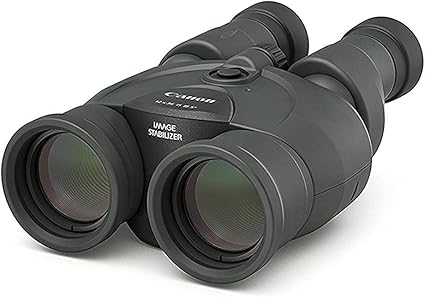
Image stabilization stands out instantly with these Canon binoculars, making them a solid choice for hunters and birdwatchers. Their 12x magnification combined with a compact design offers a unique balance of power and portability, especially useful when scanning for distant objects without shakiness.
Setup is straightforward, requiring just a quick center focus adjustment and diopter tuning to suit individual eyesight. The 14.5mm eye relief adds comfort during extended use, even for people wearing glasses. Power efficiency keeps battery use low, so you can rely on them for longer outdoor sessions without frequent interruptions.
Image quality shines, delivering sharp and bright views thanks to Porro II prisms and doublet field-flattener lenses that reduce distortion across the entire field of view. The build feels solid yet lightweight enough to carry easily.
Most find the image stabilization superb. A common downside is limited exit pupil size, which can impact brightness in low light.
Canon 12×36 Image Stabilization III Binoculars provide steady views even at high 12x magnification thanks to advanced image stabilization technology similar to Canon EF lenses. The 36mm objective lens and Porro II prisms deliver sharp, bright, and clear images with minimal distortion. Common criticism involves the size, as some find the binoculars bulkier compared to non-stabilized models, which may affect.
People who want detailed, stable views for birdwatching or surveillance will appreciate this binocular’s performance and image clarity. Those needing lightweight, pocket-friendly options might explore smaller models without image stabilization since power efficiency is improved but the binoculars require batteries to function properly. Glasses wearers will like the long eye relief for comfortable use.
Pros
- Superb image stabilization reduces shaking
- Long eye relief suits glasses wearers
- Sharp, bright images with minimal distortion
- Compact and portable design
Cons
- Exit pupil diameter of 3mm limits low-light brightness
- Battery dependence for stabilization
| Specification | Details |
|---|---|
| Magnification Maximum | 12 |
| Objective Lens Diameter | 36 millimeters |
| Eye Relief | 14 millimeters |
| Prism Type | Porro Prism |
| Focus Type | Center Focus |
| Field of View | 55.3 degrees |
10. Canon 18×50 IS Image Stabilized Binoculars

Powerful 18x magnification paired with image stabilization makes these binoculars well-suited for spotting detail at sports events, shorelines, and wildlife observation. The biggest strength lies in the built-in image stabilizer, which keeps shaking under control, making it easier to hold steady without extra equipment.
Unboxing includes a binocular harness strap, travel bag, AA batteries with a charger, and a cleaning kit, so it’s ready to go. Autofocus keeps things sharp without much fiddling, while water resistance offers some protection outdoors. The 15-millimeter eye relief makes viewing comfortable for extended periods.
The tripod mount is handy for longer sessions, and multi-coated lenses improve light transmission for clearer images.
Its image stabilization really delivers on reducing hand tremors across all directions, letting you keep a clear view at 18x zoom without constant adjustments. The build feels solid yet still practical for handheld use.
The most common complaint is the narrow 3-degree field of view, which means you have to move the binoculars frequently to follow fast action. The high magnification combined with stabilization is what sets it apart.
Image stabilization is praised for keeping the view steady without constant shake, making handheld spotting comfortable even at 18x zoom. However, the narrow 3-degree field of view requires frequent movements to track subjects, which can be tiring over time.
Those looking for long-range detail with steady images will appreciate its capabilities. People needing a wider view to follow fast action might prefer binoculars with a broader field of view instead. It works best handheld or mounted on a tripod for stability.
Pros
- Strong 18x magnification with effective stabilization
- Autofocus for hassle-free sharp images
- Includes batteries, charger, and cleaning kit
- Water resistant for outdoor use
Cons
- Field of view is limited to 3 degrees
- Exit-pupil diameter is small at 2.78 mm
| Specification | Details |
|---|---|
| Magnification Maximum | 18 x |
| Objective Lens Diameter | 50 |
| Image Stabilization | Built-in, ±0.7° correction |
| Eye Relief | 15 millimeters |
| Focus Type | Autofocus |
| Water Resistance Level | Water Resistant |
11. Canon 10×20 IS Binoculars

Watching wildlife or birds far away can be frustrating when the image shakes and isn’t clear. Great for bird watchers and nature lovers, these binoculars deliver powerful 10x magnification combined with image stabilization that keeps views steady even when holding them by hand.
Setting up is straightforward, as the manual focus and diopter adjustment help tailor the view to your eyes. The compact and lightweight design makes carrying them on long walks easy, and the tripod mount adds stability for prolonged viewing sessions. Super Spectra Coating improves clarity in various lighting conditions, enhancing the experience day to day.
Performance-wise, the image stabilization system is highly effective in reducing shake, making distant subjects appear crisp. The build is solid but lacks water resistance, so extra care is needed in wet environments. Many praise the clear steady view, while some note that handling in rainy weather requires caution due to its lack of water resistance.
Image stabilization provides a stable and clear view even with hand movements, praised frequently for bird watching. The main drawback is the lack of water resistance, which makes it less suitable in rainy or damp situations.
People focused on handheld viewing and requiring sharp images will appreciate these binoculars. Those planning to use them in wet or harsh weather may want to explore water-resistant options instead.
Pros
- Lightweight and compact for easy carrying
- Image Stabilizer reduces hand shake effectively
- Manual focus with diopter adjustment for clarity
- Super Spectra Coating improves image brightness
Cons
- Not water resistant, needs care in wet conditions
- Manual focus might need frequent adjustment
| Specification | Details |
|---|---|
| Magnification Maximum | 20 |
| Objective Lens Diameter | 20 |
| Field of View | 5.3 degrees |
| Focus Type | Manual |
| Image Stabilization | Yes |
| Water Resistance Level | Not Water Resistant |
12. Canon 10×42 L IS WP Image Stabilized Binoculars

Image stabilization stands out as the key feature of these binoculars, making them perfect for bird watchers and nature lovers who want clear, steady views. Their 10x magnification allows for detailed observation even at a distance, helping maintain clarity without hand shake being a distraction.
Putting these binoculars into daily use involves just popping in two AA batteries and adjusting the center focusing knob, which is large enough for easy use outdoors. The eyepiece rainguard and waterproof design offer reliability in all kinds of weather.
Long eye relief helps when wearing glasses, and the neoprene strap and padded case keep them safe and easy to carry around.
Image stabilization works well to reduce shake, making spotting moving subjects easier and less tiring. The build is solid with ultralow-dispersion lead-free glass and fully super spectra coatings adding sharpness and brightness. A common drawback is battery reliance, which requires carrying spares for long trips and adds a bit of weight.
The waterproof and fog-proof features make it dependable in varying conditions.
Image stabilization consistently earns praise for keeping views steady even during hand movement, while the need for AA batteries often comes up as a less convenient aspect for users who prefer lighter gear. The binoculars perform visibly better with power but demand battery management.
Those who want clear, stable views when bird watching or observing wildlife will appreciate these binoculars. People looking for lightweight, battery-free options might want to consider different models. The waterproof and fog-proof construction is especially suitable for outdoor use in various weather conditions.
Pros
- Image Stabilization reduces hand shake effectively
- Waterproof and fog-proof for all-weather use
- Long 16mm eye relief suits eyeglass wearers
- Large center focusing knob for easy adjustments
Cons
- Requires two AA batteries, adding bulk
- Tripod mount needed for extended steady use
| Specification | Details |
|---|---|
| Magnification Maximum | 10 x |
| Objective Lens Diameter | 42 millimeters |
| Eye Relief | 16 millimeters |
| Water Resistance Level | Waterproof |
| Focus Type | Center Focus |
| Field of View | 341.2 degrees |
Comparison of Best Recording Binoculars Reviewed
| Product | Magnification Max | Objective Lens Diameter | Image/Stabilization | Specific Uses |
|---|---|---|---|---|
| S555 Digital Binoculars | 8x | 25 mm | – | – |
| Sony DEV-3 Binoculars | 10x | 35 mm | Image Stabilization, Auto Focus | Bird Watching |
| SIG SAUER ZULU6 HDX PRO | 18x | 50 mm | – | Hunting, Shooting, Sports |
| Sony DEV-5 Binoculars | 20x | 10 mm | – | – |
| Minolta MN1232A Binoculars | 12x | 32 mm | – | – |
| 4K Night Vision Model A | 5x | 25 mm | – | Camping, Hunting, Outdoors |
| 4K Night Vision Model B | 8x | 25 mm | – | Camping, Hunting, Outdoors |
| 4K Night Vision Model C | 16x | 50 mm | – | Bird Watching, Camping |
| Canon 12×36 IS III | 12x | 36 mm | – | Hunting |
| Canon 18×50 IS Binoculars | 18x | 50 mm | Image Stabilization | – |
| Canon 10×20 IS | 20x | 20 mm | Image Stabilization | Bird Watching |
| Canon 10×42 L IS WP | 10x | 42 mm | Image Stabilization | Bird Watching |
- Magnification Max8x
- Objective Lens Diameter25 mm
- Image/Stabilization–
- Specific Uses–
- Magnification Max10x
- Objective Lens Diameter35 mm
- Image/StabilizationImage Stabilization, Auto Focus
- Specific UsesBird Watching
- Magnification Max18x
- Objective Lens Diameter50 mm
- Image/Stabilization–
- Specific UsesHunting, Shooting, Sports
- Magnification Max20x
- Objective Lens Diameter10 mm
- Image/Stabilization–
- Specific Uses–
- Magnification Max12x
- Objective Lens Diameter32 mm
- Image/Stabilization–
- Specific Uses–
- Magnification Max5x
- Objective Lens Diameter25 mm
- Image/Stabilization–
- Specific UsesCamping, Hunting, Outdoors
- Magnification Max8x
- Objective Lens Diameter25 mm
- Image/Stabilization–
- Specific UsesCamping, Hunting, Outdoors
- Magnification Max16x
- Objective Lens Diameter50 mm
- Image/Stabilization–
- Specific UsesBird Watching, Camping
- Magnification Max12x
- Objective Lens Diameter36 mm
- Image/Stabilization–
- Specific UsesHunting
- Magnification Max18x
- Objective Lens Diameter50 mm
- Image/StabilizationImage Stabilization
- Specific Uses–
- Magnification Max20x
- Objective Lens Diameter20 mm
- Image/StabilizationImage Stabilization
- Specific UsesBird Watching
- Magnification Max10x
- Objective Lens Diameter42 mm
- Image/StabilizationImage Stabilization
- Specific UsesBird Watching
How to Choose the Right Recording Binoculars
Choosing recording binoculars with clear optics, stable image stabilization, and easy-to-use recording features ensures better video quality and user experience. Prioritizing these factors helps avoid unnecessary expenses on poor performance or complicated devices, saving both money and frustration over time.
Video Recording Quality
Trying to watch blurry or choppy footage after a long day of recording can be frustrating and make reviewing your work difficult. Resolution and frame rates directly affect how clear and smooth the video appears. Standard devices often offer 1080p at 30fps, but 60fps provides noticeably smoother motion.
Look for at least Full HD quality to avoid pixelated zoom-ins.
Storage options matter because videos, especially high-res ones, take up a lot of space quickly. Some models come with limited internal memory, around 16-32GB, which fills up fast. Having a slot for an external SD card is handy for longer shoots, letting you swap or add storage without deleting files.
Good audio quality depends on the microphone; cheap built-in mics tend to pick up noise and distort sound. A clear audio recording usually means a dedicated mic input or improved internal microphones designed to reduce wind and background noise.
Ergonomics and Handling
Holding a bulky pair for hours makes the whole experience tiring and uncomfortable. Lightweight models around 600-800 grams strike a good balance between durability and ease of use.
Size matters too; compact designs fit better in hands and bags, allowing longer use without achy wrists. Quick, precise focusing mechanisms with well-placed knobs make adjustments simple even on the fly.
Outdoor use demands ruggedness because exposure to elements like dust or rain can ruin equipment. Devices with weather-resistant coatings or rubber armor hold up better in rough conditions. This means fewer worries about sudden showers or accidental drops.
Controls should be intuitive and within easy reach to avoid fumbling during critical moments.
Battery Life and Power
Recording sessions often last several hours, and having a battery that dies early can cut valuable footage short. A good duration is around 6 to 8 hours on a single charge, enough to cover a full day outdoors. Rechargeable batteries are convenient but bring backup replaceable options on longer trips where charging isn’t possible.
Some models feature power-saving modes that dim displays and limit processing when idle, helping extend battery life noticeably. These features can add an extra hour or two, reducing the risk of unexpected shutdowns mid-recording.
Knowing the exact battery specs and available power management options is essential to avoid being caught off guard.
Connectivity and Compatibility
Transferring videos quickly to a laptop or phone makes a big difference in workflow, especially if editing or sharing is planned right after shooting. USB ports with USB 3.0 speeds or direct Wi-Fi connectivity simplify this task.
Some devices also offer HDMI outputs for connecting external monitors, providing better viewing in real-time.
Compatibility with common video formats like MP4 or MOV ensures the files open on most computers and editing programs without conversion headaches. The ability to live stream footage directly or support apps that facilitate streaming can be useful for some users.
Paying attention to these connectivity options makes using the footage after recording smoother and saves time.
Tips for Capturing Clear and Steady Footage with Recording Binoculars
Holding recording binoculars steady is key to clear footage. Use both hands to grip the binoculars firmly, resting your elbows against your body for support. Standing with feet shoulder-width apart creates a solid stance.
Avoid zooming in too much, as higher zoom levels tend to exaggerate hand shake.
Many recording binoculars come with built-in stabilization features. Activating electronic or optical image stabilization helps reduce blur from small movements. Using a tripod or monopod designed for binoculars adds the most stability for extended recording sessions.
Focusing properly also affects footage clarity. Manually adjust focus to the subject distance rather than relying on autofocus, which can struggle in low light or cluttered backgrounds.
Finally, try to record in well-lit conditions to improve image sharpness and reduce noise.
Essential Maintenance Practices to Prolong the Life of Your Recording Binoculars
Keeping recording binoculars clean protects lens quality and internal components. Use a soft microfiber cloth and lens cleaner for the optical surfaces. Avoid wiping lenses if they have dirt or sand particles on them, as this could cause scratches.
Store them in a padded case away from extreme temperatures and moisture to prevent fogging and corrosion. Check battery compartments regularly for corrosion and remove batteries if storing for long periods.
Inspect the external housing and buttons for signs of wear or damage. Tighten any loose screws and keep moving parts like zoom rings and focus dials free of dust and debris. Following these simple steps extends the reliability of your binoculars.
Comparing Recording Binoculars with Alternative Wildlife Observation Devices
Recording binoculars offer the combined function of magnification and video capture, unlike standard binoculars that only provide a view. This means you can document wildlife activity without carrying separate cameras.
However, recording binoculars are heavier and may have shorter battery life compared to dedicated cameras or spotting scopes.
Compact digital cameras with telephoto lenses are lighter but generally lack the hands-free magnification binoculars provide. Spotting scopes deliver higher zoom and sharper details but usually require a tripod for recording and are less portable.
Action cameras mounted on headgear offer video recording but no magnification. Each device suits different priorities, so the choice depends on balancing portability, zoom capability, and recording needs during wildlife observation.
People Also Asked
How Do I Clean and Maintain Recording Binoculars Properly?
Use a soft microfiber cloth to clean the lenses gently and avoid scratching. Keep the binoculars in a protective case when not in use to prevent dust buildup and damage to both the optics and recording components. Avoid touching the lenses with fingers to prevent smudges.
What Size Recording Binoculars Are Easiest to Carry on Hikes?
Models with 8x or 10x magnification and a compact design usually weigh less and fit easily in a daypack or large pocket. Consider the balance between lens size and weight; larger lenses mean better low-light recording but more bulk.
Are Recording Binoculars Safe to Use for Long Periods?
Short to moderate use is generally safe, but extended viewing sessions can cause eye strain or headaches. Taking breaks every 20-30 minutes helps reduce fatigue. Adjusting interpupillary distance and focus properly also improves comfort.
How Compatible Are Recording Binoculars with Different Smartphone Models?
Most recording binoculars connect via Bluetooth or USB and support popular smartphone operating systems like iOS and Android. Check the manufacturer’s compatibility list before buying, as some models may require specific apps or firmware versions.
What Common Problems Do Recording Binoculars Usually Have?
Recording binoculars often have issues with battery life and weight, making them cumbersome for some users. Another common problem is difficulty syncing or app connectivity with phones, which can interrupt recording sessions unexpectedly.
Conclusion
Choosing the best recording binoculars comes down to a few key points: clear image quality, reliable video recording capabilities, and easy controls. A good balance between optical zoom and digital zoom is also important for capturing details without losing clarity.
Battery life matters too, especially if you plan to record for long stretches.
Consider where and how often you’ll use the binoculars before making a purchase. Matching your choice to your budget ensures you don’t overspend on features you won’t need.
Take another look at the comparison table and the detailed picks above to find the model that fits your specific needs and shooting environment.