
Top 10 Best Reloder You Can’t Afford to Miss Today
Reloading ammunition with a cheap or unsuitable tool often leads to inconsistent rounds that can affect performance and safety. The best reloder delivers precise powder charges every time, avoiding the common problem of over- or under-loading that can cause jams or misfires.
It’s frustrating to waste time adjusting or to deal with poorly packed cartridges that don’t fit the chamber properly.
Key factors that set a reliable reloder apart include accurate powder measurement, sturdy construction, and compatibility with common cartridge sizes. Materials like heavy-duty steel or thick aluminum withstand repeated use and reduce wear, while a dosing system that can consistently measure down to a tenth of a grain improves shot accuracy. The reloder should also offer easy calibration and cleaning to keep it functioning smoothly without powder buildup interfering with measurement.
Need a Quick Check?
| Image | Product | Price |
|---|---|---|
Our Top Picks 1  | Glock 9mm/.40 Speed Loader | Check Price |
Our Top Picks 2  | Frankford X-10 Press | Check Price |
Our Top Picks 3  | MEC 9000GN 12Ga Press | Check Price |
Our Selected Top 10 Reloder for Every Budget
This list features a range of reloaders suited for different needs and budgets, covering various performance levels and features. Each review highlights the strengths, weaknesses, and ideal users, helping you understand which option best matches your specific reloading requirements.
1. 9mm/.40 Mag Speed Loader for Glock
Simplifying magazine loading with just two steps is what makes this loader stand out, especially for Glock users with 9mm or .40 SW calibers. Its biggest strength lies in easing the thumb strain that usually comes with filling mags, perfect for those who reload often or want to save some finger fatigue.
Setup requires simply inserting the magazine into the loader, which feels sturdy and fits well without fuss. Everyday use is straightforward, push and feed rounds quickly without awkward hand positions. The loader’s polymer build handles daily wear nicely and resists scratches and heat, making it reliable for frequent handling.
Loading speed is impressive, allowing every round to slide in smoothly with minimal effort, cutting down on time and soreness. Built from tough polymer, it’s durable enough for consistent use and holds up well to rough handling.
Some have noted it only fits specified Glock models and compatible mags, which limits options but ensures precise fitment.
Loading with minimal effort and zero thumb pain is a consistent praise across users, making the task faster and more comfortable. The biggest limitation comes from its compatibility, as it only fits certain Glock models chambered in 9mm and .40 SW, so it won’t work with every magazine out there.
People who regularly reload Glock magazines in these calibers will find it a great helper for saving time and hand discomfort. Anyone using other handgun brands or calibers should look for an option with broader compatibility to avoid fitting issues.
Pros
- Loads magazine quickly in just two steps
- Reduces thumb strain while loading
- Durable polymer resists heat and scratches
- Fits multiple Glock models and compatible mags
Cons
- Works only with specific Glock models and calibers
- Plastic build may feel less premium to some users
| Specification | Details |
|---|---|
| Item Package Dimensions L x W x H | 3.43 x 3.19 x 1.85 inches |
| Package Weight | 0.11 kg |
| Item Dimensions L x W x H | 2.94 x 2.87 x 1.61 inches |
| Material | Plastic |
| Suitable Models | Glock 17,18,19,22,23,24,26,27,34,35,45,47 (9mm/.40 SW) |
2. Frankford Arsenal X-10 Progressive Reloading Press
Anyone looking for a versatile and precise progressive reloading press will appreciate the Frankford Arsenal X-10. It suits reloaders who want a smooth workflow and consistent results, with its standout feature being the automatic, 10-station design that handles measuring, priming, feeding, and indexing efficiently.
Setting up involves attaching the tool head and shell plate, which is straightforward thanks to the intuitive design. Day-to-day use focuses on smooth operation powered by integrated ball bearings and a roller handle that makes cycling the press easy.
The included powder measure reduces mess, and the built-in LED lights keep the workspace bright, so you can focus on your work even in low-light conditions.
The press delivers consistent shell processing thanks to its precision engineering and solid metal frame. It feels durable but is still manageable given its 42.92 kg weight.
Strong points include the smooth action and clean powder handling. A frequent downside noted is the bulky size, which can be a challenge for smaller work areas.
Most praised is the smooth, precise operation from the built-in ball bearings and powder measure that cuts down on mess during reloading. The main complaint centers on the hefty weight and large footprint, which might not suit everyone’s workspace.
People who value efficiency and consistent results during reloading will enjoy the X-10, especially in a well-equipped shop. Reloaders with limited space or those needing something lighter should look for a smaller press option.
Pros
- Automatic 10-station setup for versatility
- Integrated LED lighting for better visibility
- Included powder measure limits spillage
- Smooth action thanks to ball bearings
Cons
- Heavy at 42.92 kg, needs sturdy bench
- Size can be cumbersome in small workspaces
| Specification | Details |
|---|---|
| Item Package Dimensions L x W x H | 30 x 18 x 17.5 inches |
| Package Weight | 42.92 kg |
| Item Dimensions LxWxH | 10 x 10 x 10 inches |
| Color | Black and Gray |
| Included Components | 1 Frankford Arsenal Progressive Reloading Press |
3. MEC 9000GN 12 Gauge Press
Reloading 12 gauge shotgun shells can be fiddly and time-consuming, especially when precision and consistency matter most. The MEC 9000GN 12 Gauge Press suits anyone who wants a progressive system that handles shotshell reloading efficiently. Its biggest strength is a solid, durable design crafted to deliver reliable shell handling shot after shot.
Setting up the press takes some initial effort to fit everything correctly, but once tuned, daily use flows smoothly. The progressive mechanism feeds shells through each stage, making the process more continuous compared to single-stage presses.
Key features like the grabber system help hold cases firmly, reducing mishandling during loading and resizing. Maintenance mostly involves cleaning spent primers and occasional lubrication to keep smooth operation.
The main job of resizing, priming, and loading comes through with consistent results and fewer jams than cheaper models. The build quality reflects heavy-duty metal construction, which adds weight and stability during use but also means the press isn’t light or very portable.
One strong praise by users highlights its efficiency and rugged feel. The most common complaint centers on the complexity of the setup process, which can be daunting at first.
Efficiency in reloading and solid build quality stand out as major advantages, with many appreciating how it handles shotshells securely. Users often mention that the setup process requires patience and some trial before everything runs smoothly.
This press will satisfy those focused on productivity and durability in a fixed location. People wanting a lighter, simpler model for occasional use may want to explore alternatives better suited for portability and easy setup.
Pros
- Durable heavy-duty metal construction
- Progressive press speeds up reloading
- Grabber system holds cases securely
- Consistent shell sizing and priming
Cons
- Initial setup can be complicated
- Heavy and not easily portable
| Specification | Details |
|---|---|
| Type | Shot shell reloading press |
| Model | 9000GN12 |
| Series | 9000N grabber shot shell reloaded |
| Brand Name | MEC |
| Included Components | Presses |
4. Lee Precision II Shotshell Reloading Press 12 GA

Having a compact design with dimensions of 10.08 x 8.23 x 9.09 inches makes it ideal for reloaders who need a reliable 12 gauge shotshell press without taking up much space. It’s especially suitable for those focused on hunting and sporting goods, offering precise handling for 12 gauge reloading tasks.
Setting up and using the press daily feels straightforward, thanks to its manageable size and weight of just 0.17 kg. The Load-All II system simplifies reloading by keeping components organized within the press, so you spend less time fumbling. The multi-colored parts help identify functions quickly, making repetitive tasks smoother and less error-prone in a typical home workshop setting.
The main job of reliably resizing, priming, and loading shells gets done consistently with a feel of solid engineering backing the operation. Its build material, although not metal, holds firm under normal use but the lightweight design might make it less sturdy compared to heavier options. Praised for keeping everything compact and easy to handle, it occasionally draws comments about modest durability over extended heavy use.
Strong points include the compact, organized design that works well in limited spaces and keeps the process straightforward. The most frequent drawback noticed is the lighter build material, which might not endure long sessions as well as more solidly constructed presses.
Those who reload occasionally and appreciate a smaller setup will find it a practical choice. Anyone planning intense, daily use or looking for a heavy-duty workhorse might consider a more rugged model instead. It suits hobbyists better than professional-grade demands.
Pros
- Compact size saves workspace
- Multi-colored parts aid quick tool identification
- Lightweight for easy handling
- Keeps components organized during reloading
Cons
- Build material feels less heavy-duty
- May wear faster with frequent use
| Specification | Details |
|---|---|
| Item Dimensions LxWxH | 10.08 x 8.23 x 9.09 inches |
| Item Weight | 0.17 kg |
| Package Dimensions L x W x H | 19 x 8.35 x 3.5 inches |
| Package Weight | 1.95 kg |
| Model Name | Lee Precision 90011: 12G Load-All Ii |
5. Speed Loader for Glock Magazines 9mm/.40 SW CAM Gen II
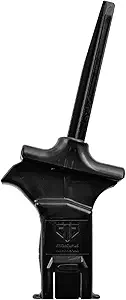
Anyone with Glock or Springfield Armory XD magazines in 9mm or .40 SW will find this speed loader handy. It simplifies loading rounds quickly and with less effort, making it great for regular range sessions or training days. Its biggest strength lies in compatibility with multiple magazine types.
Setup involves matching the loader to your magazine, which takes seconds. Day-to-day use is straightforward since the composite build is lightweight and comfortable to hold.
The loader consistently fits various Glock magazines alongside many other brands, letting users load rounds with reduced thumb strain. It’s compact enough to fit into a gear bag or range kit without adding bulk.
Performance is reliable, speeding up loading without jamming or requiring excessive force. The composite construction keeps it light at just over 3 ounces but strong enough for repeated use. The most praised point is how much it eases the loading process.
Not every 9mm or .40 SW magazine fits, which is the main downside noted by some.
Many users note the simplicity and efficiency of loading rounds without manual struggle as the product’s strongest advantage. At the same time, complaints arise around compatibility gaps with some popular magazine models like SIG 365 and Taurus G2C, which won’t work with this loader.
People regularly using Glock or Springfield magazines in 9mm or .40 SW will appreciate this loader for practice or range work. Those with different brands or calibers need to look for an alternative that supports their specific magazines to avoid compatibility issues.
Pros
- Compatible with many Glock and Springfield magazines
- Lightweight and easy to handle during loading
- Reduces thumb strain when loading rounds
- Includes a lifetime manufacturer warranty
Cons
- Does not fit certain popular magazine brands
- Limited to 9mm and .40 SW calibers only
| Specification | Details |
|---|---|
| Item Dimensions LxWxH | 13.5 x 1.5 x 6.25 inches |
| Item Weight | 3.04 ounces |
| Compatible Magazines | Glock 19, 43, 26, 27, 17, 22, 23 and Springfield XD/XD(M) |
| Material | Composite |
| Color | Black |
6. 38 Special/357 Magnum 6-Shot Speed Loader

Designed for .38 Special and .357 Magnum revolvers, this speed loader stands out by holding three full reloads, 18 rounds, at once. Ideal for those who want quick access to multiple reloads without fumbling around, it offers a clear advantage in situations where speed and capacity matter most.
Setup features a convertible design that smoothly switches between triple-stack and single-stack modes by attaching or removing a few screws. This flexibility means carrying only six or up to eighteen rounds, depending on your needs. The push-button release makes every reload fast and secure, simplifying the process on range days or elsewhere without slowing you down.
Reloading feels smooth, with the loader built from sturdy ABS plastic, stainless steel, and zinc parts that hold up well. It handles frequent use and tough conditions.
Praise often highlights the quick, reliable push-button release, while some note the conversion screws can require care when switching between setups due to their small size.
The loader consistently delivers fast, reliable reloads thanks to its secure push-button mechanism, which users appreciate for efficiency and convenience. Meanwhile, the conversion process involving small screws can be tricky and demands patience, potentially slowing changes between capacities.
This speed loader suits people who need quick multiple reloads and want the option to switch between 6 and 18 rounds. Those who prefer single-stack loading only or who dislike fiddling with small hardware might look for a simpler design without convertible stacks.
Pros
- Holds up to 18 rounds for extended reloads
- Quick push-button release for fast reloads
- Convertible between triple and single stack
- Durably built to withstand heavy use
Cons
- Small screws require careful handling during conversion
- Limited to 6-shot revolvers only
| Specification | Details |
|---|---|
| Capacity | 18 rounds (triple stack), 6 rounds (single stack) |
| Dimensions (LxWxH) | 1.38 x 1.38 x 4.63 inches |
| Package Weight | 0.07 kg |
| Material | ABS plastic, stainless steel, zinc |
| Warranty | 1 year |
7. Dillon Precision RL550C Manual Progressive Reloading Press

Dillon Precision RL550C Manual Progressive Reloading Press specializes in combining the accuracy of precision reloading with the speed of a progressive press. It suits hobbyists who want control over each step while keeping reloads consistent, especially for 9mm calibers. Its biggest strength lies in offering repeatable results without sacrificing manual oversight.
Setting up involves mounting the press and attaching the removable toolhead for quick caliber changes while keeping all die and powder adjustments locked in. The manual indexing ensures you move the shell plate yourself, so every stage gets your full attention.
The case-activated powder measure only dispenses powder when a case is in place, reducing waste and mess during daily use.
Reliability is impressive, with a smooth operation aided by a greaseable lower pivot pin that supports long-term use. The build is sturdy, made from aluminum and designed to last, backed by a lifetime warranty.
Praise often highlights its precision and efficiency, while some note that manual indexing might slow you down compared to fully automated presses.
Repeatable precision and the greaseable pivot earn praise for smooth, long-lasting use. Manual indexing ensures full control but can reduce efficiency compared to fully automated presses, which is a common note among users.
Reloaders valuing control and quality feel satisfied with this press. Those prioritizing speed above all might want to explore fully automated options instead.
Pros
- Manual control over shell plate indexing
- Case-activated powder measure reduces waste
- Removable toolhead for fast caliber changes
- Durable aluminum build with greaseable pivot
Cons
- Manual indexing can slow down reloading speed
- Dies not included, must be purchased separately
| Specification | Details |
|---|---|
| Model Name | RL550C – 9mm |
| Material | Aluminium |
| Package Weight | 27 pounds |
| Manual Indexing | Yes |
| Color | Blue |
| Included Components | 9mm Caliber Conversion, Reloading Machine |
8. Hornady Lock-N-Load Classic Reloading Press Kit

Reloading rounds becomes straightforward and reliable with the Hornady Lock-N-Load Classic Reloading Press Kit. Ideal for hunters and shooting enthusiasts who want a solid, dependable setup without extra complications, its biggest strength lies in sturdy construction and practical features like the primer catcher and interchangeable die bushings.
Setting up involves attaching one of the three lock-n-load die bushings that come with the kit, allowing quick changes between calibers. Daily use is comfortable thanks to its steel build and manageable size.
The primer catcher keeps work areas cleaner, reducing frequent cleanup. Its moderate weight and size make it stable while pressing but still possible to fit comfortably in a personal reloading bench.
Pressing brass into shape and seating bullets happens smoothly with consistent, repeatable results. Made from steel, this unit feels solid and durable, offering a lifetime warranty for confidence in longevity. The strongest praise revolves around its dependable performance and straightforward design, while the most common complaint involves the total weight, which some find a bit heavy to move around.
Reliable performance and solid steel construction are the strongest positives appreciated in daily reload tasks. At the same time, the press’s weight is frequently mentioned as a drawback, making it less portable than lighter alternatives.
People who plan to reload frequently and want a long-lasting, sturdy press will appreciate this kit. Those needing something lighter or more compact for occasional use might look for a smaller, less heavy reloading press.
Pros
- Sturdy steel construction for durability
- Includes primer catcher to reduce mess
- Comes with three lock-n-load die bushings
- Lifetime warranty for long-term use
Cons
- Relatively heavy at 14 pounds
- Size may require dedicated bench space
| Specification | Details |
|---|---|
| Package Weight | 6.35 kg |
| Item Weight | 14 pounds |
| Item Dimensions (LxWxH) | 21 x 17 x 12 inches |
| Included Components | LNL Classic Loader, primer catcher, three lock-n-load DIE Bushings |
| Material | Steel |
| Warranty Description | No-Risk, Lifetime Warranty |
9. MEC 600 Jr Mark V 28 Gauge Press
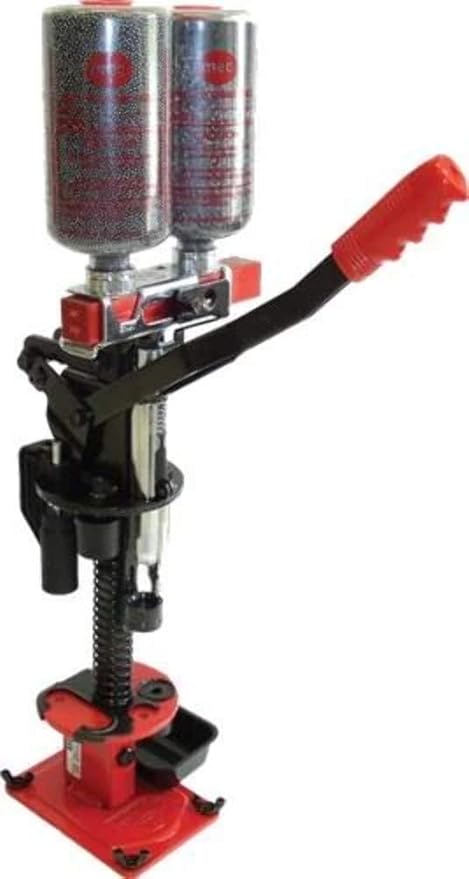
Strong and reliable for anyone focused on 28 gauge shotshell reloading. Suits reloaders who need solid performance without fuss. Its biggest strength lies in consistent operation and durability for repeated use.
Setup is straightforward, with a single-piece press design making alignment easy. Daily use involves handling typical shotshell components, and the press gives a stable platform for smooth reloading. Its parts fit tightly and safely, ensuring reliable shotshell assembly every time.
Performance on 28 gauge loads is steady and accurate, handling shells with precision. Built from quality materials, it offers a sturdy feel that supports frequent work. Strongest praise highlights the press’s solid construction.
Most common complaint points to some weight making it less portable than lighter units.
Consistent and reliable operation is the most praised feature, with users appreciating how solidly it handles each shotshell. The press feels substantial and built to last. The weight is noted as a drawback, making it less convenient to move around frequently or take to distant locations.
Reloaders dedicated to 28 gauge shotshells looking for a steady and long-lasting press will find this model suitable. Those needing a lightweight, portable option for fast or on-the-go reloading might want to consider other models better suited for travel.
Pros
- Strong and steady press design
- Fits 28 gauge shotshells perfectly
- Durable construction for long-term use
- Simple setup and consistent operation
Cons
- Heavier than some other reloaders
- Lacks portability for field use
| Specification | Details |
|---|---|
| Brand Name | MAYVILLE ENGINEERING |
| Part Number | 844728 |
| Item Type Name | MAYVILLE ENGINEERING CO 600 jr mark v shotshell reloader |
| Type | shot shell reloading press |
| Model | 844728 |
10. MEC 9000GN .410 Press

Built with solid engineering and a sturdy metal frame, the MEC 9000GN .410 Press is designed for anyone serious about shotshell reloading. Its progressive setup stands out as the key feature, letting you reload shells quickly and efficiently without constant manual intervention.
Setting up the press involves straightforward assembly thanks to its clear mechanical design. Day-to-day use is focused on smooth cycling through each stage of the reloading process.
The press holds firm during operation, and the size and weight make it stable on a workbench without being overly bulky. The grabber mechanism helps in feeding cases efficiently, making repetitive tasks much easier to handle.
Reloading performance matches the durable build with consistent shell output that meets the expectations for a shotshell press. The metal construction handles repeated use without loosening.
Common praise centers on how reliable and straightforward the progressive steps are. On the flip side, some users note it’s a bit heavy at 26.5 pounds, which can limit portability, and occasional cleaning is necessary to keep it operating smoothly.
Reliability and efficiency stand out for the MEC 9000GN .410 Press in everyday use, with progressive loading making reloads fast and consistent. The primary drawback presents itself in the form of its considerable weight and periodic maintenance needs, which may slow down tasks if neglected.
The press suits those looking for a dependable, mechanically straightforward shotshell reloader with a stable setup. Anyone needing a lighter or more portable option might want to explore other models that offer easier transport and less upkeep.
Pros
- Sturdy metal frame resists wear and tear
- Progressive design speeds up shell reloading
- Grabber mechanism feeds cases reliably
- Stable weight for steady operation
Cons
- Heavy at 26.5 pounds, less portable
- Requires regular cleaning for smooth function
| Specification | Details |
|---|---|
| Item Weight | 26.5 pounds |
| Package Dimensions L x W x H | 22.7 x 17 x 9.3 inches |
| Model Name | MEC progressive 9000N grabber shotshell reloader |
| Part Number | 9000GN410 |
| Included Components | Presses |
Best Reloaders Comparison Table Side by Side
| Product | Size (LxWxH) | Weight | Material | Warranty |
|---|---|---|---|---|
| Glock 9mm/.40 Speed Loader | 2.94 x 2.87 x 1.61 in | 0.11 kg | Plastic | 1 year manufacturer |
| Frankford X-10 Press | 10 x 10 x 10 in | 42.92 kg | Metal | 1 year manufacturer |
| MEC 9000GN 12Ga Press | – | – | – | – |
| Lee Precision II 12Ga Press | 10.08 x 8.23 x 9.09 in | 0.17 kg | Other | – |
| CAM Gen II Glock Speed | 13.5 x 1.5 x 6.25 in | 3.04 oz | Composite | Lifetime manufacturer warranty |
| 38 Special 6-Shot Loader | 1.38 x 1.38 x 4.63 in | 0.07 kg | Plastic | 1 year |
| Dillon RL550C Press | – | 27 pounds | Aluminium | Lifetime warranty |
| Hornady Lock-N-Load Kit | 21 x 17 x 12 in | 14 pounds | Steel | No-Risk, lifetime warranty |
| MEC 600 Jr 28Ga Press | – | – | – | – |
| MEC 9000GN .410 Press | – | 26.5 pounds | – | – |
- Size (LxWxH)2.94 x 2.87 x 1.61 in
- Weight0.11 kg
- MaterialPlastic
- Warranty1 year manufacturer
- Size (LxWxH)10 x 10 x 10 in
- Weight42.92 kg
- MaterialMetal
- Warranty1 year manufacturer
- Size (LxWxH)–
- Weight–
- Material–
- Warranty–
- Size (LxWxH)10.08 x 8.23 x 9.09 in
- Weight0.17 kg
- MaterialOther
- Warranty–
- Size (LxWxH)13.5 x 1.5 x 6.25 in
- Weight3.04 oz
- MaterialComposite
- WarrantyLifetime manufacturer warranty
- Size (LxWxH)1.38 x 1.38 x 4.63 in
- Weight0.07 kg
- MaterialPlastic
- Warranty1 year
- Size (LxWxH)–
- Weight27 pounds
- MaterialAluminium
- WarrantyLifetime warranty
- Size (LxWxH)21 x 17 x 12 in
- Weight14 pounds
- MaterialSteel
- WarrantyNo-Risk, lifetime warranty
- Size (LxWxH)–
- Weight–
- Material–
- Warranty–
- Size (LxWxH)–
- Weight26.5 pounds
- Material–
- Warranty–
How to Choose the Best Reloder for You
Choosing the right reloder depends on factors like compatibility, ease of use, and material quality. These aspects ensure reliable performance and durability, helping to avoid damage or costly replacements. Picking the right one saves time and prevents frustration during use.
Reloading Type Compatibility
Reloading gear often comes with specific limits on how wide a range of calibers it can handle. Early on, I learned that using a tool designed strictly for .223 or .308 can cause frustration when shifting to larger or smaller rounds. The real difference shows up when switching between single-stage and progressive presses; compatibility here affects workflow speed and versatility.
Most devices specify their supported calibers explicitly, usually covering common rifle and handgun rounds between .22 and .45 caliber. A model compatible with both single-stage and turret presses offers flexibility, especially if you reload various bullet types and case sizes.
Look for versatility in case and bullet sizing, plus the ability to adapt dies and shell holders. This adaptability saves money and effort in the long run.
Build Quality and Materials
Metal components in reloading equipment tend to outlast plastic parts, especially in areas under frequent stress like the ram, powder measure, and shell plates. Early attempts with plastic-based gear often ended with parts wearing out or breaking, which slowed down the process and raised replacement costs.
Durability also means resistance to corrosion, which can be an issue if powder residue or moisture is left on exposed metals. A solid steel or sturdy aluminum frame feels stable during operation, preventing wobble that affects measurement accuracy.
Stability and weight contribute directly to smooth, reliable reloads over thousands of cycles.
Userfriendliness
Setting up a press can take longer than anticipated, especially with complicated models. Ones with clear, well-marked scales and numbered dial adjustments make setting powder charges and bullet seating depths much quicker. Less guesswork reduces frustration when changing load recipes.
Intuitive controls, such as easy-to-turn knobs and quick-change shell holders, simplify daily use. Access to common replacement parts like springs and primers also matters, as some brands might need long shipping times for such basics.
Having local availability supports faster maintenance and less downtime.
Precision and Consistency
Accurate powder measurement and bullet seating directly influence the consistency of every cartridge produced. The difference between a good and a mediocre system is repeatability; some powder measures fluctuate grain weights noticeably, resulting in varied velocities downrange.
Strong, precision-machined dies help seat bullets at consistent depths, crucial for reliable chambering and peak performance. Presses that offer dependable, nearly identical outputs cycle after cycle contribute to safer shooting and more predictable ballistics.
Safety Features
Loaders with built-in overload prevention reduce the risk of accidental double charges, which can cause dangerous pressure spikes. Misfeed detection mechanisms also prevent jams that damage components or slow the reloading process.
Clear error indicators, whether visual or tactile, let users know when something isn’t aligned or measured correctly. Compliance with industry safety standards reflects in features like primer guards and sturdy primer feed systems, helping avoid accidental primer detonation during operation.
Proper Maintenance and Cleaning Tips for Long-Lasting Reloaders
Regular maintenance is essential to keep a reloading press working smoothly over time. Residue from lubricants, metal shavings, and powder dust can build up and cause parts to stick or wear unevenly. Cleaning the die and shell holder surfaces after each session with a soft cloth and appropriate solvent prevents grit from affecting the brass or bullets.
Lubrication points should not be overlooked. Applying a small amount of light oil to moving joints reduces friction, but avoid excess oil that attracts dirt. Also, check screws and bolts periodically to ensure they remain tight as vibrations can loosen them.
A thorough inspection every few months can catch worn components before they cause malfunctions. Replace any parts showing cracking or deformities promptly to maintain consistent performance and safety.
- Use a non-abrasive cloth and mild cleaner
- Keep dies and shell holders dry when not in use
- Store the press in a dust-free environment
Common Mistakes to Avoid When Using a Reloading Press
A few mistakes repeatedly cause problems or damage when using a reloading press. Inaccurate powder measurement is one of the biggest and can lead to dangerous pressure variations. Always use a reliable scale and double-check powder charges.
Failing to inspect brass thoroughly also results in issues. Small cracks, dents, or excessively stretched cases can cause malfunctions or unsafe loads.
Sorting and resizing cases properly prevents many headaches down the line.
Another common error is rushing the process. Skipping steps like priming carefully or seating bullets at the correct depth affects accuracy and reliability.
The press should be operated deliberately without forcing parts, as applying too much pressure risks damaging dies or the cartridge itself.
- Maintain cleanliness to avoid debris interference
- Use recommended components matching caliber specifications
- Read press and die instructions closely before starting
Comparing Handheld Reloaders to Bench-Top Models for Different Needs
Handheld reloaders are compact and simple, making them suitable for shooters who reload occasionally or only a few rounds at a time. They are easy to transport and require minimal setup. However, they demand more manual effort and take longer per cartridge compared to bench-top models.
Bench-top reloading presses, on the other hand, provide enhanced stability and power. They accommodate a wider range of calibers and allow faster production of consistent rounds, making them a better fit for serious reloaders or those producing large quantities. These units also often have additional features like powder measuring arms or priming assist tools.
Consider physical space and budget as well. A bench-top press requires a dedicated work area and more investment but delivers efficiency. Handheld options suit mobile use or tight spaces but sacrifice speed and comfort for volume.
- Handheld: portable, slower, less precise
- Bench-top: stable, fast, versatile
- Choose based on frequency and scale of reloading needs
People Also Asked
How Do I Properly Size a Reloder for My Needs?
Match the reloder size to the specific caliber and type of ammunition you are reloading. Check the recommended powder charge for your cartridge to ensure the reloder can handle the volume safely and efficiently. Avoid oversizing as it may cause inconsistent loads or feeding problems.
What Safety Precautions Should I Follow When Using a Reloder?
Always wear safety glasses and keep powder away from open flames or sparks. Work in a well-ventilated area and measure powder charges carefully to avoid overpressure. Double-check powder type and charge weight before filling to prevent dangerous accidents.
How Do I Maintain and Care for My Reloder over Time?
Regularly clean the reloder to prevent powder residue buildup that can affect performance. Lubricate moving parts as recommended to avoid sticking or wear. Store it in a dry place to prevent rust and check for loose screws or components to maintain reliable operation.
Are There Common Problems with Reloders I Should Watch Out For?
Watch for powder spills and jamming during the loading process, which are common issues. Incorrect powder type or improper charging can cause misfires or inconsistent loads. Keep the reloder clean and properly calibrated to reduce these problems.
How Long Does a Typical Reloder Usually Last Under Regular Use?
With proper care, a reloder can last many years under regular use. The lifespan mainly depends on how often it is used and how well it is maintained. Replacing worn parts and cleaning regularly helps extend its service life.
Conclusion
Choosing the right reloder depends largely on the type of firearm you are working with, the powder charges you plan to use, and how precise the tool needs to be for your reloads. Consistency and ease of adjustment should also weight into your decision. These factors directly affect the quality and safety of your reloading process.
Consider the space you have available and how often you expect to reload. Some models take up more room or require more maintenance, so pick one that fits your workshop and reloading frequency. Check back to the comparison table and detailed reviews above to see which options align with your needs and budget.
