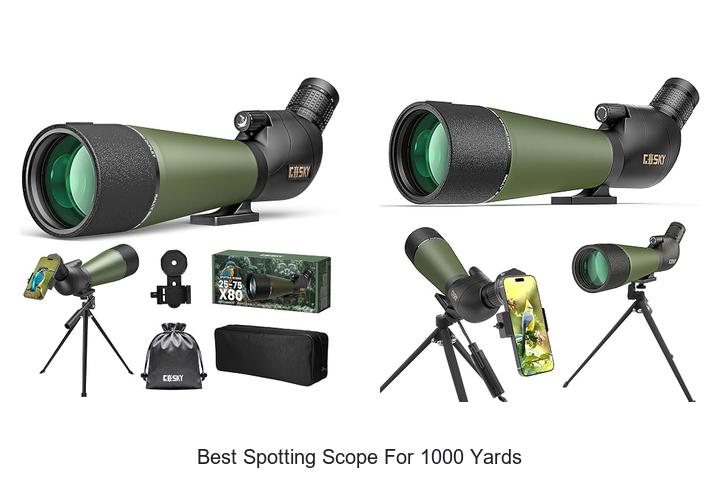
Top 12 Best Spotting Scope for Birding Under 500 Revealed!
People who spend time birding know that a poorly made spotting scope can frustrate more than help. A common issue is blurry or distorted views when trying to focus on small birds at a distance, which is why finding the best spotting scope for birding under 500 matters. Lower-end models often have cheap lenses or uncomfortable eye cups that make long observation sessions a strain instead of a pleasure.
Quality spotting scopes in this price range usually stand out by having fully multi-coated lenses that improve light transmission and clarity. Magnification between 15x and 20x is typical for birding, offering enough detail without excessive shake.
Also important is a compact, weather-resistant body so the scope holds up outdoors and is easy to carry. A smooth focusing mechanism and good eye relief, around 15mm or more, help reduce eye strain during extended use.
Need a Quick Check?
| Image | Product | Price |
|---|---|---|
Our Top Picks 1  | SVBONY SV28 Spotting Scope | Check Price |
Our Top Picks 2  | Premium 25-75×85 Spotting Scope | Check Price |
Our Top Picks 3  | Celestron C70 Mini Maksutov | Check Price |
Our Selected Top 12 Spotting Scope for Birding Under 500 for Every Budget
These 12 spotting scopes offer reliable performance for birding across various budgets, providing clear views and portability. Each review outlines key features, suitability for different users, strengths, and potential drawbacks to help you choose the best option for your birdwatching needs.
1. SVBONY SV28 Spotting Scope
Built with a non-slip, waterproof finish and a 70mm large objective lens, this scope suits those new to birding seeking a clear, bright view. Its biggest strength is the smooth 25-75x zoom, making it easy to adjust magnification while spotting birds or scenery without fuss.
Setup is straightforward thanks to the equatorial mount and compatibility with standard tripods and cameras. Manual focus lets you fine-tune the view quickly. The extendable sunshade helps cut down glare during sunny days, and the non-slip material ensures a firm grip even in wet conditions, making daily use reliable in various environments.
Performance delivers a sharp image with a decent 64 feet field of view at 1000 yards, and the FMC coating helps reduce reflections. Its build quality stands up well to weather changes, though some might find manual focusing a bit slow.
Most users appreciate the bright image, while a few note the zoom can be tricky to stabilize at higher magnifications.
The scope provides bright, clear images and handles outdoor conditions well thanks to its waterproof design. On the downside, manual focusing takes some effort, and zooming in too far may cause some shakiness in the view.
Anyone new to birding or seeking an affordable spotting scope with solid light gathering will find this scope a good fit. Those requiring fast autofocus or extremely stable high magnification might want to explore other options.
Pros
- Large 70mm lens for better light gathering
- Easy zoom from 25 to 75x magnification
- Waterproof with non-slip finish
- Integrated sunshade reduces glare
Cons
- Manual focus can be slow to adjust
- Higher zoom settings may be unstable
| Specification | Details |
|---|---|
| Zoom Ratio | 3:1 (25-75x) |
| Objective Lens Diameter | 70 millimeters |
| Focal Length | 380 millimeters |
| Field Of View | 64 feet |
| Mount | Equatorial |
| Waterproof | Yes |
2. Premium Spotting Scope 25-75×85
High magnification and a large 85mm objective lens make the Premium Spotting Scope 25-75×85 ideal for detailed birdwatching. It suits anyone who wants clear, far-reaching views without spending over $500, with its standout feature being the powerful 25-75x zoom range.
Handling the scope is straightforward with a manual dual-focus system that lets you quickly lock onto birds and adjust sharpness smoothly. Setting it up on the standard tripod mount is simple and stable. The retractable sunshade helps reduce glare during bright days, and a handy 360° rotating tripod with a smartphone holder lets you capture moments easily.
The view quality stands out thanks to BAK4 prisms and FMC coatings, offering good light transmission and true color. Build quality feels solid for the price, with reliable optics and steady mounting. Strong points include crisp image detail at distance.
Some complaints mention the manual focus requiring patience and the tripod’s rotation sometimes feeling a bit loose.
Clear optics combined with the powerful zoom deliver impressive distant views, praised for accurate color and sharp details. The manual dual-focus system helps lock in targets, but it sometimes demands patience to find perfect focus. The tripod facilitates smooth panning but can wobble slightly when fully rotated.
Birdwatchers who prioritize high magnification and light gathering will appreciate this scope’s features and portability on a budget. Beginners who prefer faster autofocus might look for other options. Those wanting solid build and smartphone compatibility in a mid-range price will find it fits well.
Pros
- High 25-75x zoom range for detailed viewing
- Large 85mm lens lets in ample light
- Dual-focus system for quick and precise adjustments
- Tripod includes smartphone holder and rotates 360°
Cons
- Manual focus needs steady handling for sharp images
- Tripod rotation can feel a bit loose over time
| Specification | Details |
|---|---|
| Magnification | 25-75x |
| Objective Lens | 85mm |
| Focus Type | manual focus, dual-focus system |
| Mount | standard tripod mount thread |
| Additional Features | Dual Focus, Retractable Sunshade, 360° Rotating Tripod with Smartphone Holder |
3. Celestron C70 Mini Maksutov Spotting Scope
Great for bird watchers who want a compact, lightweight spotting scope under $500, the Celestron C70 Mini Maksutov stands out for its balance of portability and clear, sharp views. Its small size and brightness make it easy to carry on hikes without sacrificing quality when spotting distant birds.
Setting it up takes only a moment thanks to the included tabletop tripod with slow-motion controls, which helps in fine-tuning the view. Manual focus lets you zero in on the smallest details. The built-in zoom eyepiece offers a straightforward 3x magnification change.
It’s a handy device to keep ready for nature observation without the bulk of larger scopes.
Optical performance is strong given the 700mm focal length and f/10 ratio, delivering sharp images at long distances. The multi-coated lenses improve brightness and clarity.
The scope feels well made but light enough to carry easily. Most praise centers on its sharp, bright image quality, while some mention that manual focusing requires patience and steadiness.
The strongest praise is for the bright and sharp views at long distances, aided by the multi-coated lenses and long focal length. The most common complaint is that manual focusing is not as quick or smooth compared to some other scopes, requiring some steadiness and care.
People who want a portable, high-quality spotting scope under 500 will appreciate the compact size and image clarity. Those needing faster autofocus or higher zoom options might want to explore other models with electronic focusing or greater zoom ratios.
Pros
- Compact and lightweight design at 2 pounds
- Bright, sharp views with multi-coated lenses
- Comes with tabletop tripod and slow-motion controls
- Manual focus allows precise adjustments
Cons
- Manual focusing can require patience
- Limited zoom ratio of 3x
| Specification | Details |
|---|---|
| Aperture | 70MM |
| Focal Length | 700 millimeters |
| Focal Ratio | f/10 |
| Zoom Ratio | 3x |
| Weight | 2 pounds |
| Length | 11 inches |
4. Barska Colorado 30-90×90 Spotting Scope

Spotting distant birds clearly can be a challenge, especially in low light or bright sun. Perfect for birders wanting sharp images without spending a fortune, the Barska Colorado 30-90×90 offers a big 90mm lens that brings in plenty of light for clearer views. Its wide zoom range helps you get close without losing focus.
Setup is straightforward with the included tripod mount making it steady on a stand, great for long observation sessions. The angled eyepiece feels natural for spotting at various heights, and the built-in sunshade helps cut glare during bright mornings or afternoons.
Eye relief of 1.78 means it’s comfortable for most glasses wearers, and focusing is controlled individually for precise adjustments.
Image brightness stands out thanks to the large ocular lens and fully coated optics, especially in dim conditions. The body feels solid, resisting water and keeping the scope reliable outdoors.
Most users appreciate the sharpness and clarity at both low and high magnifications, though some find eye relief a bit tight at maximum zoom levels. A common gripe is that it’s on the taller side at full extension, which can affect portability.
Clear and bright views stand out due to the large fully coated optical system and solid waterproof build. The scope’s bulk at full height often surprises those expecting a lighter, more compact design. Most praise the detailed images even at long distances, while some struggle with eye relief and handling the taller setup.
Ideal for birders who want bright, detailed views during varied light and have a tripod handy. Less suitable for those needing a compact, lightweight scope for frequent travel or quick handheld use in the field.
Pros
- Bright images with large 90mm objective lens
- Wide zoom range from 30x to 90x magnification
- Built-in sunshade reduces glare effectively
- Comfortable angled eyepiece design
Cons
- Eye relief can be tight at highest magnification
- Maximum height of 63.4″ reduces portability
| Specification | Details |
|---|---|
| Field of View (ft at 1000yds/m at 1000m) | 78 / 26-40.2 / 13 |
| Exit Pupil (mm) | 3.6 at 30x, 1.2 at 90x |
| Eye relief | 1.78″ |
| Close Focus (feet/meter) | 32.8 / 10 |
| Mount | Includes a tripod mount |
| Focus Type | Individual Focus |
5. Falcon 20-60×85 Spotting Scope

Powerful 20-60x magnification makes the Falcon 20-60×85 Spotting Scope great for bird watching and wildlife viewing. It suits anyone looking for detailed views across wide landscapes, thanks to its wide field of view that captures every moment clearly.
Setup is straightforward with the adjustable tripod that ranges from 13.3in to 63in, allowing comfortable positioning on uneven ground. The manual focus helps fine-tune the view, and the reflex finderscope speeds up target acquisition.
Using it outdoors is easy because the high-quality BAK4 prism and FMC coating keep images bright, even in low light, plus it’s compatible with smartphones for taking photos.
The lens and prism deliver vivid, sharp images that bring out color details well. The spotting scope feels solid and weatherproof, which is handy for outdoor use.
Most people praise its clarity and focusing power. One downside noted sometimes is the manual focus takes a bit to get used to and isn’t as quick as autofocus.
The scope provides bright, sharp images that many find impressive, especially for the price range. Most users appreciate the image quality and zoom range, while some find the manual focus a slow process when tracking moving birds.
Bird watchers who want detailed views and the ability to capture images with their phones will enjoy what it offers. Those needing fast autofocus or ultra-portable gear might want to explore other options.
Pros
- Wide field of view captures large areas
- Bright, clear images in low light conditions
- Adjustable tripod suits various viewing angles
- Compatible with smartphones for easy photo capture
Cons
- Manual focus can be slow to adjust
- Tripod may feel bulky for quick hikes
| Specification | Details |
|---|---|
| Magnification | 20-60x |
| Objective Lens | 85mm with BAK4 Prism and FMC Coating |
| Field Of View | 101 feet at 1000 yards |
| Focus Type | Manual Focus |
| Mount | Tripod Mount |
| Tripod Height | Adjustable from 13.3in to 63in |
6. DiamondEdge 25-75×80 Spotting Scope

Birdwatchers looking for a powerful spotting scope without breaking the bank will find the DiamondEdge 25-75×80 a solid choice. Its standout feature is the large 80mm objective lens combined with a wide 25-75x zoom range, delivering clear, bright images that suit detailed wildlife observation.
Setting up the scope is straightforward thanks to its tripod mount compatibility and manual focus system. The inclusion of a larger 23mm eyepiece makes for a comfortable viewing experience, while the integrated phone holder means snapping pictures is convenient.
No batteries are needed, keeping usage simple and reliable outdoors.
The scope performs well with excellent color accuracy and a wide 98-foot field of view at significant magnifications. The multi-coated BAK4 prism improves clarity and brightness.
Constructed for durability, it handles outdoor use adequately. Some users mention manual focusing can take practice, but the high-quality optics usually win praise for clear images.
Many praise the bright, detailed views and clear colors delivered by the large objective lens and quality optics. Some find the manual focusing system less intuitive at first, requiring patience to achieve sharp images. The included phone holder adds practical value for photography enthusiasts.
Those who want a reliable, powerful scope for birding and wildlife viewing under $500 will appreciate this model. Users preferring automatic focusing or lightweight, no-maintenance optics might consider other options better suited for quick, casual viewing sessions.
Pros
- Wide zoom range from 25 to 75x magnification
- Large 80mm objective lens for bright images
- Multi-coated BAK4 prism for color accuracy
- Integrated phone holder for easy photography
Cons
- Manual focus can feel tricky initially
- Lacks built-in power; manual adjustments required
| Specification | Details |
|---|---|
| Eye Piece Lens Description | Bak4 Prism System |
| Power Source | Unpowered |
| Magnification | 25-75x |
| Objective Lens Diameter | 80mm |
| Field Of View | 98 feet |
| Additional Features | Integrated Phone Holder |
7. Vortex Crossfire HD 20-60×80 Spotting Scope

Designed for birders who want solid optical performance without breaking the bank, the Vortex Crossfire HD 20-60×80 Spotting Scope stands out for delivering sharp, clear images with high magnification options. Its biggest strength lies in balancing value and quality, making it an excellent choice for day-long wildlife watching.
Setup is straightforward thanks to the Arca-Swiss compatible foot, allowing quick attachment to most tripods. The manual helical focus feels smooth and precise, letting you lock in clear views with ease. Its built-in sunshade helps reduce glare on bright days.
The rubber armor gives a comfortable grip while protecting the scope. The nitrogen purge and waterproof design mean it handles dew and light rain confidently during outings.
Optical quality is impressive, offering edge-to-edge sharpness and excellent color fidelity thanks to the fully multi-coated lenses and select glass elements. The zoom range from 20x to 60x offers flexibility for birding at various distances, though higher magnifications can be slightly tricky to stabilize without a sturdy tripod.
The scope’s build is rugged with shockproof armor. The most frequent praise highlights its clear, bright images, while some note the weight and manual focus as less convenient for quick adjustments.
Clear, bright views with a wide zoom range are the strongest praise. Common complaints focus on the manual focus being less suited for rapid changes and the scope’s relatively heavy feel during long sessions.
Those wanting sharp, detailed views with a dependable build will appreciate this scope, especially when paired with a tripod. Users looking for quicker focusing or a lighter model may want to explore other options.
Pros
- Sharp images with excellent color fidelity
- Wide 20-60x zoom range
- Waterproof and fogproof construction
- Arca-Swiss compatible for easy tripod mounting
Cons
- Manual focus can be slow for fast-moving birds
- Heavier weight makes handheld use tiring
| Specification | Details |
|---|---|
| Objective Lens Diameter | 8 centimeters |
| Magnification Maximum | 60 x |
| Exit Pupil Diameter | 2.67 millimeters |
| Focus Type | Manual Focus |
| Coating | Fully Multi-Coated |
| Additional Features | Arca-Swiss foot, Nitrogen purged, Waterproof, Fogproof |
8. 20-60×60 Angled Spotting Scope

20-60×60 Angled Spotting Scope suits outdoor enthusiasts and bird watchers looking for detailed views without carrying heavy gear. Its standout feature is the lightweight design combined with high-definition optics, making it perfect for travel and extended viewing sessions.
Setup is straightforward with the included 14-inch tabletop tripod that offers stable support on uneven ground. The soft shoulder-strap carrying case makes it easy to carry around, and the scope itself is light at just 1.31lbs, fitting comfortably into a backpack. The angled eyepiece helps reduce neck strain during long birding hours.
The spotting scope delivers sharp images at magnifications up to 60x, offering a wide field of view of over 3,200 feet, ideal for tracking moving birds. Its build feels solid with wider tripod legs that hold steady on grass or gravel.
Praise often mentions the clarity of the HD optics, while some note the limited eye relief of 17 millimeters can be uncomfortable for those wearing glasses.
Sharp and clear image quality stands out as a major plus, backed by a stable tripod that performs well outside on uneven surfaces. The most common drawback involves the shorter eye relief, which can be an issue for birders who use glasses, limiting comfortable viewing time.
Ideal for those wanting portability and strong optics without a heavy setup, especially during travel or short outings. Anyone needing longer eye relief or taller tripod height for extended sessions might want to consider alternative models.
Pros
- Lightweight design for easy carrying
- Stable tripod with wider legs
- High-definition optics for clear details
- Angled eyepiece reduces neck fatigue
Cons
- Eye relief of 17mm may not suit glasses wearers
- Tripod height limited to 14 inches
| Specification | Details |
|---|---|
| Magnification Maximum | 60x |
| Magnification Minimum | 20x |
| Objective Lens Diameter | 6 centimeters |
| Eye Relief | 17 millimeters |
| Field Of View | 3280.84 feet |
| Weight | 1.31 lbs |
9. 20-60×80 HD Spotting Scope

Using this spotting scope feels surprisingly sturdy and straightforward, fitting well for anyone who spends time birding or outdoor observing on a budget. It stands out for its wide zoom range, letting you see far-off details clearly whether you’re tracking birds at a distance or enjoying mountain views.
Setting it up is pretty simple, especially since it includes a tripod and a phone adapter ready to go. The dual focus knobs make changing views quick and accurate, which matters when you’re trying to catch fast-moving birds or scan changing scenes. The carrying case keeps everything organized, so it’s easy to bring along on hikes or quiet mornings in wetlands.
Zooming between 20x to 60x really pulls in the action without losing sharpness. The body feels solid with its aluminum build, giving a good balance of durability and manageable weight at 2.6 pounds. The biggest praise is how smooth and precise the focusing feels, while a common complaint is that the scope can get a bit heavy over long walks.
Users appreciate the smooth and accurate dual focus system that makes tracking distant birds and landscapes easy. The main drawback stems from its 2.6-pound weight, which can feel tiring when carried on long hikes without breaks.
This scope suits bird watchers and outdoor observers looking for strong magnification and precise focusing at a reasonable price. Those prioritizing ultra-lightweight gear or highly compact scopes might want to explore other options.
Pros
- Wide 20-60x zoom range for detailed distant views
- Dual focus knobs for quick and precise adjustments
- Comes with tripod and phone adapter for convenience
- Durable aluminum body without excessive weight
Cons
- Relatively heavy for extended carrying
- Not the most compact for tight storage spaces
| Specification | Details |
|---|---|
| Magnification | 20-60x |
| Objective Lens Diameter | 80 mm |
| Item Weight | 2.6 pounds |
| Item Dimensions (LxWxH) | 14.96 x 3.54 x 6.5 inches |
| Material | Aluminum |
| Included Components | Spotting Scope, carrying case, tripod, phone adapter |
10. High Power 8×42 Monocular Telescope
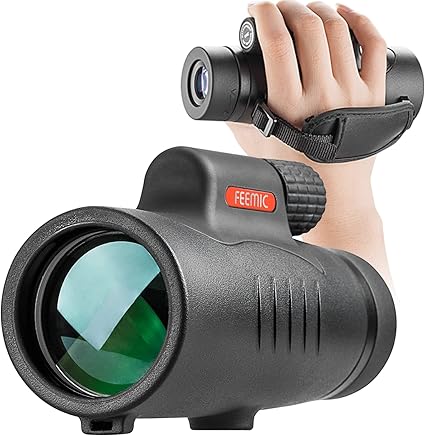
Great value for birding under 500, offering clear optics and solid durability. Suits outdoor enthusiasts who want a reliable spotting scope for extended viewing sessions without spending a fortune. Its wide-angle view stands out as the single best feature, giving a broad and sharp perspective on distant wildlife.
Setup is straightforward with manual focus and an altazimuth mount that makes adjusting angles simple. The built-in lens dust cover protects the optics during outdoor use, while the rubber finish feels sturdy in hand and offers shock resistance. Fully multi-coated lenses help maintain clarity, and compatibility with cameras and smartphones lets you capture moments easily.
Performance excels in delivering an 8X magnification with a 42mm objective lens, resulting in a sharp 360ft/1000yards field of view. The waterproof, fogproof, dustproof, and shockproof design holds up well in various weather conditions.
Most praise highlights the clarity and durability. Common complaints revolve around manual focusing being a bit tricky for quick changes.
The optical clarity and wide field of view receive consistent praise, making spotting distant birds enjoyable and immersive. Commonly mentioned drawback is the manual focus system, which may require patience and precision during fast-paced viewing. The sturdy build and protection against dust and water protect optics well.
Bird watchers valuing ruggedness and a broad view at reasonable cost will appreciate this scope. Those needing rapid focusing or zoom flexibility might consider models with powered focus or variable zoom options instead.
Pros
- Wide 360ft/1000yards field of view
- Waterproof and shockproof design
- Compatibility with cameras and smartphones
- Durable rubber exterior for rough use
Cons
- Manual focus can be slow for moving targets
- No built-in zoom adjustment beyond 8X
| Specification | Details |
|---|---|
| Power Source | Manual Power |
| Focus Type | Manual Focus |
| Field Of View | 360 degrees |
| Zoom Ratio | 8 multiplier x |
| Coating | Fully Multi-Coated |
| Mount | Altazimuth Mount |
11. SVBONY SV406P 20-60×80 Angled ED Spotting Scope

Constructed with ED glass, the SVBONY SV406P 20-60×80 Angled Spotting Scope suits birders needing clear images at variable magnifications under $500. Its main strength is reducing chromatic aberration, ensuring colors stay true even at high zoom levels, perfect for detailed bird observation.
Setup is straightforward thanks to the 1.25-inch removable eyepiece with a focal length between 7 and 21mm. The dual focus system helps in achieving sharp views quickly, while the altazimuth mount makes it easy to track moving subjects.
It pairs directly with a compatible camera using the SC001 WIFI spotting scope camera connection, eliminating the need for extra adapters.
The 20-60x zoom range handles both wide views and detailed close-ups efficiently. The fully multi-coated XLT lenses improve brightness and clarity. Its waterproof and fog-proof IPX7 rating offers reliability in varied weather.
The build feels sturdy, though some mention occasional challenges in image clarity at the highest magnifications. It performs well for birding demands in its price range.
The spotting scope is widely praised for its clear color rendering due to ED glass, making bird colors vivid and natural. However, some users notice the image sharpness softens when zoomed all the way in, which can be limiting for very distant subjects.
Bird watchers who want a versatile zoom and sturdy weather protection will appreciate this model. Those prioritizing the absolute sharpest image at the highest zoom or requiring very stable long viewing might consider a scope with a different mount or higher-end optics.
Pros
- Extra-low dispersion glass reduces color fringing
- Detachable 1.25-inch eyepiece allows camera connection
- Dual focus offers precise control
- Waterproof and fog-proof for outdoor use
Cons
- Image clarity dips slightly at maximum zoom
- Altazimuth mount less stable for steady long viewing
| Specification | Details |
|---|---|
| Eye Piece Lens | 20-60×80 ED lens |
| Mount | Altazimuth Mount |
| Focus Type | Dual Focus |
| Coating | Fully Multi-Coated XLT Coated |
| Focal Length (Eyepiece) | 7-21mm |
| Waterproof Rating | IPX7 |
12. Barska Blackhawk 20-60×60 Waterproof Spotting Scope

Impressive magnification and durability stand out right away with this spotting scope, making it ideal for birders who want close-up views without spending a fortune. Its 20-60x zoom paired with a 60mm objective lens offers versatility for detailed observations in the field.
Setting up involves mounting the scope on the included panhead lever tripod, which makes adjustments smooth and steady. The angled eyepiece design helps ease neck strain during long watching sessions.
The extendable sunshade cuts down glare, and the waterproof, fogproof housing means the scope can handle damp mornings without worry.
Performance is reliable with sharp, clear images even in lower light thanks to the multicoated optics. The build feels tough with shock-absorbing armor protecting it from knocks. People often praise its image quality and waterproof design.
A common downside is its weight at 2.86 pounds, which can feel a bit much on longer hikes.
The standout feature is its crisp and clear image quality, even when light is fading. The waterproof and fogproof build also protects the scope in rough conditions, but the scope feels on the heavy side for carrying all day.
Birders prioritizing durability and image clarity in wet weather will like this scope. Those seeking something lighter or with a wider zoom range might want to explore different options.
Pros
- Multicoated optics for clear low-light views
- 100% waterproof and fogproof design
- Includes panhead lever tripod for smooth aiming
- Comes with both soft and hard carrying cases
Cons
- Heavier weight can be tiring on long walks
- Limited zoom range compared to some competitors
| Specification | Details |
|---|---|
| Objective Lens Diameter | 6 centimeters |
| Magnification Maximum | 60 x |
| Lowest Useful Magnification | 20 x |
| Zoom Ratio | 3:1 |
| Power Source | hand powered |
Best Spotting Scopes for Birding Under 500 Compared
| Product | Magnification Range | Objective Lens Diameter | Coating | Mount Type |
|---|---|---|---|---|
| SVBONY SV28 Spotting Scope | 3:1 zoom (unspecified) | – | FMC | Equatorial Mount |
| Premium 25-75×85 Spotting Scope | 25-75x | 85mm | Multi-coated | Standard Tripod Mount |
| Celestron C70 Mini Maksutov | 3x | – | Multi-Coated | Equatorial Mount |
| Barska Colorado 30-90×90 Scope | 30-90x | 90mm | Fully Coated | Tripod Mount |
| Falcon 20-60×85 Scope | 20-60x | 85mm | – | Tripod Mount |
| DiamondEdge 25-75×80 Scope | 25-75x | 80mm | Multi-coated Bak4 Prism | Tripod Mount Compatible |
| Vortex Crossfire HD 20-60×80 | 20-60x | 80mm | Fully Multi-Coated | – |
| Angled 20-60×60 Spotting Scope | 20-60x | 60mm | – | Tripod Mount |
| HD 20-60×80 Spotting Scope | 20-60x | 80mm | – | – |
| High Power 8×42 Monocular | 8x | 42mm | Fully Multi-Coated | Altazimuth Mount |
| SVBONY SV406P Angled ED | 20-60x | 80mm | Fully Multi-Coated XLT | Altazimuth Mount |
| Barska Blackhawk 20-60×60 | 20-60x | 60mm | – | Hand powered |
- Magnification Range3:1 zoom (unspecified)
- Objective Lens Diameter–
- CoatingFMC
- Mount TypeEquatorial Mount
- Magnification Range25-75x
- Objective Lens Diameter85mm
- CoatingMulti-coated
- Mount TypeStandard Tripod Mount
- Magnification Range3x
- Objective Lens Diameter–
- CoatingMulti-Coated
- Mount TypeEquatorial Mount
- Magnification Range30-90x
- Objective Lens Diameter90mm
- CoatingFully Coated
- Mount TypeTripod Mount
- Magnification Range20-60x
- Objective Lens Diameter85mm
- Coating–
- Mount TypeTripod Mount
- Magnification Range25-75x
- Objective Lens Diameter80mm
- CoatingMulti-coated Bak4 Prism
- Mount TypeTripod Mount Compatible
- Magnification Range20-60x
- Objective Lens Diameter80mm
- CoatingFully Multi-Coated
- Mount Type–
- Magnification Range20-60x
- Objective Lens Diameter60mm
- Coating–
- Mount TypeTripod Mount
- Magnification Range20-60x
- Objective Lens Diameter80mm
- Coating–
- Mount Type–
- Magnification Range8x
- Objective Lens Diameter42mm
- CoatingFully Multi-Coated
- Mount TypeAltazimuth Mount
- Magnification Range20-60x
- Objective Lens Diameter80mm
- CoatingFully Multi-Coated XLT
- Mount TypeAltazimuth Mount
- Magnification Range20-60x
- Objective Lens Diameter60mm
- Coating–
- Mount TypeHand powered
How to Choose the Right Spotting Scope
Choosing the right spotting scope for birding involves balancing factors like magnification, lens quality, and portability to ensure clear views and ease of use. Getting these aspects right helps avoid frustration and costly replacements, making your birdwatching experience more enjoyable and efficient.
Optical Quality
Birdwatching often means spotting tiny, fast-moving details that reveal a species, like plumage patterns or subtle color shifts. A clear, sharp image makes this possible by showing crisp edges and fine details, especially at higher magnifications. Low-quality optics can blur these elements or make colors look dull, which frustrates every serious observer.
Look for multi-coated lenses as these help cut down glare and boost brightness, making bird colors stand out even in dim light like dawn or overcast days. Contrast matters here too; higher contrast separates a bird from foliage, helping the eye focus quickly.
Optics with coatings and good glass deliver more accurate colors and better clarity, essential for identifying birds correctly.
Build and Durability
Spending hours outdoors exposes gear to moisture and temperature changes. Scopes that are waterproof and fog proof avoid internal condensation and damage, which is critical for reliability in wet or humid environments.
Aluminum or magnesium bodies strike a balance between light weight and strength, enduring rough handling without easily denting or bending.
Comfort shows up in how the scope feels during long sessions. Rubber armor adds grip and shock protection, while ergonomic shapes prevent hand cramps.
Rigid, reliable construction means it stays intact season after season, and these features combined keep fatigue down so focus can stay on the birds.
Ease of Use and Portability
Carrying equipment on trails demands careful weight and volume choices. Heavy or bulky scopes can become a burden and reduce time spent actually watching. Compact models weighing under 2.5 pounds are easier to carry for extended birding trips.
Smooth, precise focusing is vital; jerky or stiff focus mechanisms delay getting a clear view when spotting a moving bird.
Tripod compatibility should not be overlooked. Using a tripod stabilizes the image, especially at high magnification, reducing arm strain and improving detail visibility.
A scope with a standard mount interface increases options for stable setups outdoors.
Field of View and Eye Relief
The field of view affects how easy it is to find and follow birds, particularly small or fast-flitting ones. Wider views let you track movement without constantly readjusting the scope’s aim.
However, this must come with consistent sharpness across the entire image, blurred edges make it harder to identify details near the frame’s perimeter.
Eye relief is also key, especially for those who wear glasses. Longer eye relief (around 15mm or more) allows observers to see the full field of view comfortably without removing glasses. This reduces eye strain and keeps observation sessions more enjoyable and longer-lasting.
Maximizing Your Birding Experience with a Spotting Scope
Using a spotting scope can reveal details about birds that binoculars often miss, especially at longer distances. Magnifications between 20x and 60x offer clear views of plumage patterns and subtle movements without disturbing the birds.
A stable tripod is crucial to avoid shaking, which becomes more noticeable as magnification increases. Consider scopes with adjustable eyepieces or angled viewing tubes for comfort during extended sessions. The objective lens size, typically around 60mm to 80mm in affordable models, balances brightness and portability.
Compact models make it easier to carry during hikes without sacrificing much optical quality. Focusing mechanisms that move smoothly help quickly adjust to birds in motion or at varying distances. Weather-sealed scopes will hold up better outside in dew or light rain, keeping the image clear throughout the day.
Take note of the field of view too; wider views allow faster bird location and tracking.
Essential Maintenance Tips to Prolong Your Spotting Scope’s Life
A spotting scope requires regular upkeep to maintain optical clarity and mechanical reliability. Always clean lenses gently with a microfiber cloth designed for optics, and avoid household cleaners that risk damaging lens coatings.
After outdoor use, check for any dirt or moisture inside the lens housing and wipe external parts with a damp cloth. Store the scope in a dry, padded case to prevent dust buildup and protect it during transport. Periodically inspect the focus knob and tripod mount for looseness and tighten any connections to maintain stability.
Avoid exposing the scope to extreme temperatures or direct sunlight for long periods since this can degrade seals and internal lubrication. Applying a small amount of silicone-based lubricant on moving parts can keep mechanisms operating smoothly, but follow the manufacturer’s recommendations.
These simple steps extend a spotting scope’s lifespan and ensure sharp views season after season.
Comparing Spotting Scopes and Binoculars: Which Is Better for Birding?
Spotting scopes and binoculars each have strengths when used for birding. Binoculars are lightweight and quick to bring up for scanning nearby birds, making them more convenient for casual or mobile use. They typically offer magnification around 8x to 12x, giving a broad field of view and good depth perception.
Spotting scopes provide much higher magnification, which is valuable for observing distant or small species with more detail. However, they require a tripod and take more time to set up.
This makes scopes better suited for stationary birdwatching in open areas or when focusing on a particular subject. Both tools complement each other, but for long-range clarity and detailed observation, a spotting scope under 500 dollars can deliver impressive performance without excessive weight or complexity.
People Also Asked
How Do I Properly Clean My Spotting Scope After Birding?
Use a soft brush or air blower to remove dust before wiping the lens gently with a microfiber cloth. Avoid household cleaners and always dry the scope thoroughly after cleaning to prevent moisture build-up inside.
What Size Spotting Scope Is Ideal for Birdwatching Under 500?
A 20-60x zoom spotting scope with a 60mm objective lens balances magnification and brightness well under $500. It offers enough detail for birdwatching without being too heavy or bulky for field use.
Are Spotting Scopes Safe to Use in Rainy Weather?
Many spotting scopes labeled as water-resistant can handle light rain, but avoid heavy downpours to protect internal components. Use a rain cover or keep it in a waterproof bag when not actively viewing outdoors.
How Long Does a Typical Spotting Scope Last with Regular Use?
With regular care, a spotting scope can last 5 to 10 years before performance issues appear. Dust and moisture exposure reduce lifespan, so storing it in a cool, dry place helps maintain clarity and function.
What Common Problems Should I Watch for in Spotting Scopes?
Fogging inside the scope, loose eyepieces, and difficulty focusing are common problems. Regular cleaning and checking for proper seals can prevent fogging and keep focus smooth during extended birdwatching sessions.
Conclusion
Choosing a spotting scope for birding under $500 mainly comes down to clear image quality, easy focusing, and durable construction. Make sure the scope offers good magnification and a wide field of view to help spot birds quickly. Weight also matters since you may carry it around for hours.
Look for waterproof or fog-proof features if you’ll be outside in varying weather.
Keep in mind how often and where you plan to use the scope. A lighter, compact model works better for hikes, while something sturdier fits longer viewing sessions from a fixed spot.
Check the comparison table and above picks to see which scopes fit your needs and budget best before making a choice.