
Top 12 Best Spotting Scope Under 100.00 You Can’t Miss!
Spotting scopes can be tricky to get right, especially when shopping on a budget. The best spotting scope under 100.00 makes a real difference during activities like birdwatching or hunting, where a blurry or poorly focused image can ruin the experience. Many scopes in this price range suffer from shaky mounts, cloudy lenses, or limited zoom, making it hard to see fine details or distant objects clearly.
Durability and optical quality stand out when comparing scopes near this price. Look for fully coated lenses that boost light transmission and deliver brighter images. Magnification around 20x to 60x works well for most viewing needs, though higher power often means more image shake without a solid tripod.
A compact, water-resistant design helps for outdoor use and easier handling. Adjustments should be smooth enough to find focus quickly without forcing the mechanism.
Need a Quick Check?
| Image | Product | Price |
|---|---|---|
Our Top Picks 1  | SVBONY SV28 Spotting Scope | Check Price |
Our Top Picks 2  | Generic 25-75×60 Scope | Check Price |
Our Top Picks 3  | SVBONY SV28 Plus Scope | Check Price |
Our Selected Top 12 Spotting Scope Under 100.00 Picks for Every Need
This list features a variety of compact and affordable spotting scopes suitable for different activities and skill levels. Each review discusses how well the scope performs, who it is best suited for, and highlights its key advantages and potential drawbacks.
1. SVBONY SV28 Angled Spotting Scope 25-75×70
Great for beginners, the SVBONY SV28 Angled Spotting Scope offers clear views with adjustable zoom from 25 to 75x. Its biggest draw is the large 70mm lens that brings in plenty of light for detailed birdwatching or scenery spotting without breaking the bank.
Setting up involves mounting it on a tripod and adjusting the focus manually. Changing magnification is simple and smooth, thanks to the zoom eyepiece. The built-in sunshade helps reduce glare on sunny days, and the non-slip finish feels secure in your hand, even when it’s damp outside.
The scope performs well in daylight with a decent 64-foot field of view at 1000 yards. It’s waterproof, so unexpected weather won’t spoil your session.
Most praise goes to the bright, clear images and easy-to-use zoom, while some mention the manual focus needs a steady hand for sharp results.
Visitors highlight the bright and clear views at varying zoom levels as this tool’s best feature. Users often note the manual focus can be tricky to adjust quickly when tracking moving wildlife.
Ideal for newcomers wanting an affordable introduction to spotting scopes with solid image quality. More experienced users seeking faster focus or advanced mounts might look for a higher-end option.
Pros
- Wide zoom range from 25x to 75x
- Large 70mm lens for good light gathering
- Waterproof with non-slip finish
- Built-in sunshade reduces glare
Cons
- Manual focus requires patience
- Equatorial mount less common for spotting scopes
| Specification | Details |
|---|---|
| Zoom Ratio | 3:1 |
| Focal Length | 380 millimeters |
| Lens Diameter | 70mm |
| Field of View | 64 feet |
| Focus Type | manual |
| Mount | Equatorial Mount |
2. 25-75×60 Spotting Scope
Designed with a fully multi-coated 60mm lens and a BAK4 roof prism, the spotting scope delivers bright and clear images. It suits outdoor enthusiasts looking for powerful magnification without breaking the bank.
Its biggest strength is the ability to zoom from 25x to 75x for detailed viewing at long distances.
Setting up involves mounting the scope on a tripod, which fits securely thanks to its tripod mount. Daily adjustments are straightforward with the dynamic lens focusing system, allowing you to quickly lock onto targets.
The field of view at 123 feet per 1000 yards helps track moving objects like birds or wildlife with ease. Compatible with smartphones, it’s easy to capture what you see through the lens.
The scope performs solidly in delivering crisp images, even in low-light conditions. Built with a 60mm objective lens, it offers a good balance of brightness and magnification. Most users appreciate the clear optics and strong zoom, while some mention the fine focus can require patience to get perfect.
The crosshair reticle helps with precision during target shooting.
Bright and sharp images stand out, especially in low light thanks to the fully multi-coated lens and BAK4 prism. A common downside is the challenging fine focus, which requires patience to lock onto targets accurately.
Ideal for bird watchers, hikers, and archery enthusiasts wanting detailed views on a budget. Users needing faster focusing or a wider field of view at high magnification might want to explore other options.
Pros
- Wide zoom range from 25x to 75x magnification
- Bright images with fully multi-coated 60mm lens
- Crosshair reticle for precise aiming
- Tripod mount offers stable setup
Cons
- Fine focus adjustments can be tricky
- Field of view narrows significantly at highest zoom
| Specification | Details |
|---|---|
| Magnification Minimum | 25 x |
| Magnification Maximum | 75 x |
| Objective Lens Diameter | 6 centimeters |
| Field Of View | 123 feet |
| Reticle Type | Crosshair |
| Mounting Type | Tripod Mount |
3. SVBONY SV28 Plus Spotting Scope 25-75×70
Zoom range stands out immediately with a flexible 25x to 75x magnification, making this spotting scope ideal for anyone into bird watching, archery, or outdoor sports. Its broad use and ability to zoom with ease make it a great pick under $100, especially for viewing distant targets or scenery.
Setting it up is straightforward thanks to the included standard tripod and manual focus system. Twisting the lens adjusts the zoom smoothly between 25x and 75x, while the fully multi-coated optics help deliver clearer images in various light conditions.
It also includes a universal phone adapter, which makes snapping photos or videos of your target area very convenient during outings.
Images come out sharp and detailed, particularly at medium zoom levels. The build is solid with a waterproof and fog-proof design rated IP65, ready to handle rainy or snowy weather without fogging up.
Most people praise its image clarity and versatility, but some notice that manual focusing can be a bit fiddly when trying to lock on very distant objects quickly.
People appreciate the clarity of the images and the range of zoom available, especially outdoors where the waterproof and fog-proof design proves reliable. Though, some find the manual focus a bit tricky when trying to get sharp images quickly at higher zoom levels.
Great fit for hobbyists and casual observers who want a decent spotting scope without spending a lot. Best avoided by those wanting fast autofocus or ultra-wide fields of view at maximum magnification.
Pros
- Wide 25x to 75x magnification for versatile viewing
- IP65 waterproof and fog-proof design
- Includes standard tripod and phone adapter
- Fully multi-coated lenses for clearer images
Cons
- Manual focus can be challenging on distant objects
- Field of view narrows noticeably at higher magnifications
| Specification | Details |
|---|---|
| Zoom Ratio | 25x to 75x |
| Field Of View | 19.5 meters |
| Coating | Fully Multi-Coated |
| Mount | Tripod |
| Power Source | Spotting Scope |
| Eye Piece Lens Description | Prism |
4. 20-60×60 Angled Spotting Scope

Ideal for outdoor enthusiasts and target shooters wanting clear views without lugging heavy gear, this angled spotting scope stands out because of its strong 20-60x magnification paired with a very lightweight design. It’s the kind of scope that fits easily into active outdoor use at a reasonable price.
Setting up is simple thanks to the 14 inch tabletop tripod with wider legs, which holds steady on rough ground like grass or gravel. Its ultra-light weight of just 1.31lbs makes it easy to carry around in the soft shoulder-strap case. You can sling it over your shoulder or pack it neatly into a backpack, making travel stress-free while keeping it ready for quick spotting.
Optical performance clearly shines as the main strength, delivering high-definition views up to 60x magnification. The build feels solid, with a tripod designed for stable positioning, though some users note occasional image-shake at maximum zoom.
The scope offers reliable clarity and portability, but image steadiness might vary depending on conditions.
The strongest praise focuses on the clear, high-definition view and portability which suits quick trips well. The most common issue mentioned is image shake when using the highest magnification, making steady viewing a challenge without perfect conditions.
Anyone needing a lightweight, easy-to-transport spotting scope for moderate magnifications will appreciate this model. Users wanting absolute stability or longer eye relief may want to consider scopes that focus more on those features at a higher price.
Pros
- Lightweight design at 1.31lbs
- Wide and stable tripod legs
- High-definition optics from 20-60x
- Comes with soft shoulder-strap carrying case
Cons
- Image can shake at maximum magnification
- Limited eye relief compared to higher-end models
| Specification | Details |
|---|---|
| Magnification Maximum | 60 |
| Objective Lens Diameter | 6 centimeters |
| Magnification Minimum | 20 x |
| Eye Relief | 17 millimeters |
| Field Of View | 3280.84 feet |
5. 25-75×80 Spotting Scope with Tripod

Watching birds or wildlife clearly in the field can be a challenge without the right gear. Designed for outdoor enthusiasts, this spotting scope offers a broad 25–75x magnification range paired with an 80mm lens, making distant subjects easier to spot in impressive detail. Its strongest feature is the large objective lens that brightens images even in less than ideal lighting conditions.
Getting it ready involves mounting on a tripod, which it supports steadily. The manual focus takes a bit of practice but arms you with precise control.
A 23mm eyepiece feels generous and comfortable to look through for extended periods. Switching from one spot to another stays smooth thanks to the reflex finderscope helping locate the target quickly. The integrated phone holder allows capturing photos with ease.
The quality of the optics stands out with bright and crisp image results, well-suited for birdwatching and other outdoor activities. The build feels solid and dependable with multi-coated BAK4 prisms enhancing color accuracy. Occasional reports mention a learning curve on manual focusing.
Most praise how clear and vibrant the viewing experience is, though some wish the unit had powered options.
Clear, vibrant images and solid optics stand out as the scope’s biggest strengths. Manual focusing receives the most criticism for being difficult to master at first.
This spotting scope suits people who want strong optical clarity and don’t mind adjusting focus manually. Those looking for motorized or automatic features might want to consider other options.
Pros
- Wide magnification range from 25 to 75x
- Large 80mm objective lens for bright images
- Multi-coated BAK4 prisms for better color accuracy
- Integrated phone holder for easy photography
Cons
- Manual focus can be tricky for some users
- No powered focusing options available
| Specification | Details |
|---|---|
| Magnification | 25-75x |
| Objective Lens | 80mm |
| Prism System | BAK4 Prism |
| Eyepiece Lens | 23mm |
| Focus Type | Manual Focus |
| Zoom Ratio | 25-75x |
6. 20-60×80 Spotting Scope with Tripod

Zooming from 20x to 60x magnification makes this spotting scope a solid pick for serious outdoor watchers who want detailed views without breaking the bank. Its strength lies in the powerful zoom combined with an 80mm fully multi-coated green lens, ideal for birdwatching, wildlife, or stargazing.
Setting up involves mounting it on the included tripod, which keeps the view steady during long sessions. The altazimuth mount provides smooth tilting and panning, while the manual focus lets you quickly lock in sharp images at any magnification.
Connecting a smartphone to capture what you see is straightforward with the compatible adapter, adding another layer of usability.
Visual clarity comes from the BAK4 Porro prism, enhancing light transmission and delivering bright, sharp images across the zoom range. Water resistance keeps it functional in damp conditions. Most people praise its sharpness and zoom capability, though some note focusing can require a bit of patience.
The build is solid for its price, with durable lens coatings resisting glare and scratches effectively.
The highest praise relates to the clear and sharp images thanks to the BAK4 prism and well-coated optics. A common complaint is that the manual focus system takes time to get right, especially at high zoom levels.
Those who need detailed long-range views and don’t mind manually tuning focus will find this scope worthwhile. People looking for a compact, quick-focus model might want to explore other options.
Pros
- Variable zoom from 20x to 60x
- Bright images with fully multi-coated lens
- Water resistant design
- Includes tripod for steady viewing
Cons
- Manual focus can be slow to adjust
- Bulkier than smaller scopes
| Specification | Details |
|---|---|
| Magnification | 20-60x |
| Objective Lens Diameter | 80mm |
| Field Of View | 82.9–48 ft/1000 yards |
| Prism Type | BAK4 Porro |
| Mount Type | Altazimuth Mount |
| Focus Type | Manual |
7. 80×100 High Powered Monocular

Birdwatchers and outdoor enthusiasts looking for a powerful yet affordable monocular will appreciate this 80×100 High Powered Monocular. Its standout feature is the premium multi-layer optical coating, which ensures clear, bright views even when light is low, making it a solid choice for early morning or late afternoon spotting.
Setting it up involves attaching the included tabletop tripod with a ball head, which keeps the monocular stable for extended viewing. Manual focusing is straightforward and precise, though it requires a bit of patience to get just right.
The compact, lightweight design makes it easy to carry one-handed, and the smartphone adapter adds convenience for capturing shots through the lens without extra gear.
This monocular offers bright, sharp images with its optical coating and stands out in damp or foggy conditions thanks to its waterproof and fogproof design. The body feels solid without weighing you down. Some find the manual focus tricky to master and note that image clarity at full zoom can occasionally falter, but it’s generally impressive for the price.
Bright and clear images stand out, even in low light, making observation enjoyable in various conditions. Manual focusing requires some adjustment, and full zoom images are not always perfectly sharp according to feedback.
Those needing a portable, weather-resistant monocular with smartphone compatibility will find this a good match. Users seeking the sharpest image at maximum magnification might want to explore other options.
Pros
- Bright views with premium multi-layer optical coating
- Waterproof and fogproof for all weather
- Lightweight and compact for easy carrying
- Includes smartphone adapter for photography
Cons
- Manual focus can be challenging at times
- Image quality can suffer at maximum zoom
| Specification | Details |
|---|---|
| Mount | Tabletop tripod with ball head |
| Focus Type | Manual Focus |
| Power Source | Manual |
| Finderscope | Straight-Through |
| Compatible Devices | Smartphone |
| Additional Features | Smartphone Adapter |
8. Gosky FalconPro Elite Spotting Scope 25-75×85

Offering a powerful 25-75x magnification at an affordable price, the Gosky FalconPro Elite is ideal for bird watchers, shooters, and outdoor enthusiasts who want serious zoom without spending a lot. Its standout feature is the high-quality optics usually seen in much pricier scopes.
Setup involves mounting the scope securely on a tripod for steady viewing since the high magnification demands stability. Daily use feels practical as adjustments between 25x and 75x magnification are smooth, making it easy to focus on both nearby objects and distant details like wildlife or target points.
The large 85mm objective lens gathers plenty of light for clearer images in varied lighting.
Image clarity holds up well across magnifications, rendering distant subjects crisp and detailed for spotting tasks. The build feels sturdy enough but can be slightly bulky, so carrying it around requires some care. One praised aspect is the powerful zoom capacity at a low cost, while the most common critique involves the weight and size making it less portable.
The most appreciated feature is the exceptional zoom range at an accessible cost, providing clear views from far away. The size and weight are often seen as a drawback, requiring a stable tripod setup for the best experience.
Those focused on serious long-distance spotting who don’t mind some extra weight will find this scope a solid choice. Casual users wanting something compact and lightweight might want to look into smaller scopes.
Pros
- High-powered 25-75x magnification
- Large 85mm objective lens for bright images
- Professional-grade optics at low price
- Easy to adjust zoom smoothly
Cons
- Heavier and bulkier than some alternatives
- Requires tripod for steady viewing at higher zoom
| Specification | Details |
|---|---|
| Magnification Minimum | 25x |
| Magnification Maximum | 75x |
| Objective Lens Diameter | 85mm |
9. 20-60×80 HD Spotting Scope
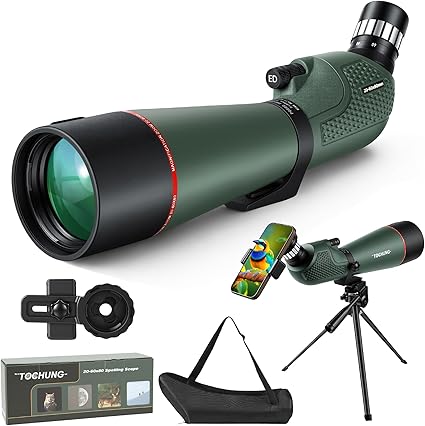
20-60×80 HD Spotting Scope offers impressive clarity and zoom range, perfect for birdwatchers and shooting enthusiasts on a budget. Its large 80mm lens and continuous 20x to 60x zoom make long-distance observation straightforward and detailed.
Setting up involves attaching it to a tripod mount, which holds the scope steady for clear views. Manual focus lets you dial in sharp details, while the fully multi-coated optics keep images bright even in low light. A universal smartphone adapter adds convenience for capturing what you see.
Performance shines with crisp, bright images thanks to the large aperture and coating system. Waterproof and fogproof design means it handles rougher conditions well.
Most praise surrounds the high magnification range, suited for different observation needs. Some users find manual focus a bit demanding during quick spotting sessions.
Users often highlight how bright and sharp the images stay across the zoom range, helped by multi-coated optics and a large lens. Challenges come with manual focus, which needs careful adjustment sometimes, especially on quick or moving subjects.
Anyone into detailed birdwatching or target spotting will appreciate the powerful zoom and clarity. People wanting fast autofocus or a lighter setup might want to look elsewhere for easier mobility and speed.
Pros
- Large 80mm aperture for bright images
- Continuous 20x-60x zoom range
- Waterproof and fogproof for outdoor use
- Universal smartphone adapter included
Cons
- Manual focus can be slow for fast-moving targets
- Tripod mount required for stable viewing
| Specification | Details |
|---|---|
| Mount | Tripod Mount |
| Focus Type | Manual Focus |
| Compatible Devices | Smartphone |
| Zoom Ratio | 20x-60x |
| Field Of View | 1000 yard |
10. 20-60×80 HD Spotting Scope with Tripod

Strong magnification and solid optics make this spotting scope a reliable choice for outdoor observation enthusiasts on a budget. Ideal for birdwatchers, hikers, or nature admirers who want detailed views without a high price tag, its greatest strength lies in the clear image quality from 20x to 60x zoom.
Setting up is straightforward with the included tripod, which adds stability for better viewing. The dual focusing knobs allow precise adjustments quickly, which helps when switching between subjects at different distances.
Carrying the scope isn’t cumbersome thanks to a handy carrying case, and the attached phone adapter makes it simple to capture what you see through the lens.
Performance-wise, the spotting scope delivers sharp images with good clarity across its zoom range. The aluminum build feels sturdy and withstands outdoor conditions well.
Its biggest praise is the effective dual focusing system, while the most common complaint is the slight bulkiness at just over 1 kg, which may feel heavy for long hikes.
The sharp and clear images through the dual focusing knobs receive high praise, especially for detailed wildlife observation. Users often mention the weight and size as the main drawbacks, making it less convenient to carry for extended trips.
People wanting detailed views with stable mounting and photo opportunities will appreciate this scope. Those prioritizing lightweight gear for long-distance carrying may want to look for more compact options.
Pros
- Powerful zoom adjustable from 20x to 60x
- Includes tripod for steady viewing
- Phone adapter for easy photo capture
- Durable aluminum body
Cons
- Relatively heavy at 1.18 kg
- Size can feel bulky in tight spaces
| Specification | Details |
|---|---|
| Magnification | 20-60x |
| Objective Lens Diameter | 80 mm |
| Item Weight | 1.18 kg |
| Material | Aluminum |
| Package Dimensions | 16.57 x 7.05 x 4.69 inches |
| Warranty | 2 years |
11. BIBIRE 25-75×60 Spotting Scope

Great value comes with a flexible zoom range from 25x to 75x and a comfortable angled eyepiece, making it ideal for bird watchers and wildlife observers on a budget. Its ability to switch from wide to high magnification suits varied outdoor activities well.
Setup is straightforward with a 360° rotatable tripod that lets you quickly find and follow subjects without awkward adjustments. Manual focus takes a bit of practice but works fine for stable objects. The 45° angled eyepiece means your neck won’t get stiff during long viewing sessions.
Using a smartphone adapter adds convenience for capturing images through the scope.
Optical quality stands out thanks to a 60mm fully multi-coated lens and BAK4 prism, providing clear, sharp images with good color fidelity. The scope feels solid and well-built, but some might find manual focusing a little fiddly. The nitrogen-filled, fogproof design keeps the view clear in damp conditions, though the weight can be noticeable on longer trips.
Sharp, high-contrast images stand out as the strongest feature thanks to the fully multi-coated lens and quality prism. Most often, users mention the manual focus requires patience and can slow down quick spotting moments.
Ideal for those needing a flexible zoom scope without breaking the bank, especially for casual birdwatching or wildlife observation. Users wanting faster or automatic focusing might prefer to look for higher-priced options.
Pros
- Wide zoom range from 25x to 75x
- Comfortable 45° angled eyepiece
- Good light transmission with FMC and BAK4 prism
- Fogproof and nitrogen-filled for weather resistance
Cons
- Manual focus can be difficult to fine-tune
- Heavier weight may tire users on long outings
| Specification | Details |
|---|---|
| Eye Piece Lens Description | 45° angled eyepiece |
| Mount | 360° rotatable tripod |
| Focus Type | manual focus |
| Finderscope | Straight-Through |
| Zoom Ratio | 25-75x |
| Field Of View | 105 meters |
12. M.A.K 20-75×60 Angled Spotting Scope

Crafted with a large 60mm objective lens and a 22mm oversized eyepiece, this spotting scope suits anyone needing flexible zoom options without stretching the budget. Its variable 20-75X magnification stands out for shifting smoothly between scanning landscapes and close-up views.
Setting up involves mounting it on a tripod, which comes included, making stability easy during use. Manual focusing keeps things straightforward, though it demands some attention to get sharp images. The multi-coated optics and BAK4 Porro prism help reduce glare and improve clarity, whether you’re bird watching or spotting targets at a distance.
Phone adapter support adds convenience for capturing what you see.
Performance offers a clear view over long distances up to 2000 meters, with a wide field of view reaching 131 feet at 1000 yards. The build feels solid with waterproof IP4 protection, suitable for outdoor use. Positive feedback praises optical quality and zoom flexibility.
Downside mainly revolves around manual focus being tricky for some users.
The product impresses with its solid optical quality and the flexibility of continuous zoom from wide to detailed views. Several users found focusing manually a bit challenging, especially at higher magnifications, requiring steady hands or tripod use to avoid blurry images.
Ideal for those who need a versatile spotting scope for bird watching or target spotting without splurging. Someone wanting quicker autofocus or lighter gear for hiking might want to explore other models instead.
Pros
- Wide zoom range from 20x to 75x magnification
- Large 60mm objective lens collects ample light
- Includes tripod and phone adapter for convenience
- Waterproof design for outdoor reliability
Cons
- Manual focus can be difficult to fine-tune
- Weight may feel bulky for handheld use
| Specification | Details |
|---|---|
| Zoom Ratio | 20-75 |
| Eye Piece Lens | 22mm oversized eyepiece |
| Field Of View | 131 feet |
| Focus Type | Manual Focus |
| Mount | Tripod mount |
| Coating | Multi-Coated |
Best Spotting Scopes Under 100 Reviewed Comparison
| Product | Magnification Range | Objective Lens Diameter | Coating Type | Mount Type |
|---|---|---|---|---|
| SVBONY SV28 Spotting Scope | 3:1 zoom | – | FMC | Equatorial Mount |
| Generic 25-75×60 Scope | 25-75x | 60 mm | – | Tripod Mount |
| SVBONY SV28 Plus Scope | 25-75x | – | Fully Multi-Coated | Tripod |
| Generic 20-60×60 Scope | 20-60x | 60 mm | – | Tripod Mount |
| Generic 25-75×80 with Tripod | 25-75x | 80 mm | Multi-coated Bak4 Prism | Tripod Mount |
| Generic 20-60×80 with Tripod | 20-60x | 80 mm | Fully Multi-Coated | Altazimuth Mount |
| Generic 80×100 Monocular | 80x | – | – | Tabletop Tripod |
| Gosky FalconPro Elite Scope | 25-75x | 85 mm | – | – |
| Generic 20-60×80 HD Scope | 20-60x | 80 mm | Fully Multi-Coated | Tripod Mount |
| Generic 20-60×80 HD Tripod Scope | 20-60x | 80 mm | – | Tripod Mount |
| BIBIRE 25-75×60 Scope | 25-75x | 60 mm | – | 360° Rotatable Tripod |
| M.A.K 20-75×60 Angled Scope | 20-75x | 60 mm | Multi-Coated | Tripod Mount |
- Magnification Range3:1 zoom
- Objective Lens Diameter–
- Coating TypeFMC
- Mount TypeEquatorial Mount
- Magnification Range25-75x
- Objective Lens Diameter60 mm
- Coating Type–
- Mount TypeTripod Mount
- Magnification Range25-75x
- Objective Lens Diameter–
- Coating TypeFully Multi-Coated
- Mount TypeTripod
- Magnification Range20-60x
- Objective Lens Diameter60 mm
- Coating Type–
- Mount TypeTripod Mount
- Magnification Range25-75x
- Objective Lens Diameter80 mm
- Coating TypeMulti-coated Bak4 Prism
- Mount TypeTripod Mount
- Magnification Range20-60x
- Objective Lens Diameter80 mm
- Coating TypeFully Multi-Coated
- Mount TypeAltazimuth Mount
- Magnification Range80x
- Objective Lens Diameter–
- Coating Type–
- Mount TypeTabletop Tripod
- Magnification Range25-75x
- Objective Lens Diameter85 mm
- Coating Type–
- Mount Type–
- Magnification Range20-60x
- Objective Lens Diameter80 mm
- Coating TypeFully Multi-Coated
- Mount TypeTripod Mount
- Magnification Range20-60x
- Objective Lens Diameter80 mm
- Coating Type–
- Mount TypeTripod Mount
- Magnification Range25-75x
- Objective Lens Diameter60 mm
- Coating Type–
- Mount Type360° Rotatable Tripod
- Magnification Range20-75x
- Objective Lens Diameter60 mm
- Coating TypeMulti-Coated
- Mount TypeTripod Mount
How to Choose the Right Spotting Scope
Choosing a good spotting scope involves focusing on factors like magnification, lens quality, and durability to ensure clear views and long-lasting use. Prioritizing these features helps avoid frequent replacements or unsatisfactory performance, ultimately saving money and frustration.
Magnification and Lens Quality
A spotting scope with too much magnification often jitters in hand, making it tough to spot details clearly. Higher magnification narrows the field of view, which means you see less area at once, so tracking moving subjects or scanning landscapes becomes frustrating.
Scopes under 100 dollars usually balance between 20x and 60x magnification, with 20x to 30x offering a steadier and wider view. Lens quality plays a big role in clarity; look for multi-coated lenses that reduce glare and improve light transmission for brighter images. Glass type matters, too, some scopes use BK-7 glass, which is common at this price and offers decent clarity, while extra-low dispersion glass usually appears in pricier models.
Balanced magnification and quality coatings make spotting easier in dimmer lighting conditions and prevent colors from looking washed out or distorted.
Build and Durability
Scouting gear that feels flimsy or fails after a minor drop wastes time and money. Many models under $100 feature bodies made of plastic or rubber armor, which help resist impacts and provide a slight grip. Metal components are rare but add long-term durability.
Weatherproofing, like sealed O-rings and nitrogen purging, protects the optics from dust and moisture; without this, lenses fog up or get dirty quickly during outdoor use. Weight and size make a difference when trekking; scopes around 1 to 2 pounds stay manageable and fit in backpacks without making the load uncomfortable.
Compactness often trades off with lens diameter, so finding a scope that balances sturdy construction with portability is key for real outdoor conditions.
Eye Relief and Comfort
Using a spotting scope that irritates your eyes gets old fast, especially during long viewing sessions. Eye relief defining how far your eye can be from the eyepiece while still seeing the full image is critical. About 15mm or more is ideal, particularly for those wearing glasses.
Adjustable eyecups help position your eye comfortably and reduce stray light, while smooth, precise focus knobs let you zero in on targets quickly without overshooting. Some models have stiff controls, which can be frustrating in the field.
Ergonomically designed scopes fit nicely in one hand and align naturally with your line of sight, reducing strain on the neck and eyes over time.
Portability and Size
Taking a bulky scope on a hike can slow you down and make packing a headache. A lightweight model under 2 pounds and roughly 10 inches long fits better in a daypack or larger backpack.
Tripod compatibility is a big plus; hand-holding at higher magnifications causes shaking, which ruins the view. Many scopes under $100 include a standard tripod mount or come with a simple tripod, but some require separate purchases. Hard or soft carrying cases protect the scope during transport and keep dust or scratches off lenses.
A compact case also helps organize accessories and encourages you to bring the scope more often rather than leaving it at home.
Price Versus Performance
Managing expectations against a budget means accepting some tradeoffs in optics and build quality. Generally, scopes under $100 won’t have premium glass or top-end coatings but can still provide decent clarity and brightness for casual use. You might notice some edge softness or less vibrant colors compared to higher-priced models.
Features like zoom eyepieces, tripod mounts, or waterproofing may become limited or less reliable. Focus on what matters most based on your use, sharp image quality and smooth focusing usually make the biggest difference.
Prioritize models that offer multi-coated lenses and a solid warranty to get the best value for your money without overspending.
Tips for Maximizing Image Clarity When Using Budget Spotting Scopes
Image clarity often depends on how steady the spotting scope is held. Using a tripod or stable surface reduces shaking and helps produce sharper views. Budget spotting scopes can suffer from distortions around the edges of the lens; focusing on objects in the center of the field of view improves detail.
Cleaning the lenses carefully with a microfiber cloth removes dust and smudges that interfere with clarity, but avoid touching the glass directly with fingers. Adjusting the eyepiece to match your eyesight reduces strain and makes edges crisper.
Check the zoom settings as higher magnification tends to reduce overall sharpness, balance zoom levels for both size and detail. Weather conditions like heat waves or humidity impact what you see, so wait for calmer and clearer days when possible.
Using these practical steps can help you get the most out of spotting scopes that fall under a budget.
Essential Maintenance Practices to Extend the Lifespan of Your Spotting Scope
Cleaning the lenses after every outing prevents dirt buildup that degrades viewing quality over time. Use a soft brush or air blower to remove loose particles before gently wiping with lens cleaning cloths or solutions designed for optics.
Store your spotting scope in a padded case to protect it from scratches and dust when not in use. Keep it in a dry environment to avoid moisture accumulation inside lenses or around seals. Regularly check for loose screws or parts and tighten them carefully to maintain alignment.
Avoid exposing the scope to extreme temperatures for prolonged periods, which can damage internal components. Occasionally lubricate moving parts like focus knobs with manufacturer-recommended products to keep motions smooth.
Consistent, simple maintenance practices help prevent expensive repairs and keep your spotting scope functioning well for years.
Comparing Spotting Scopes to Binoculars: Which Is Better for Your Needs?
Spotting scopes generally offer greater magnification than binoculars, making them better for observing details at long distances. They usually require a tripod due to size and weight, while binoculars can be handheld more comfortably for quick scans. Binoculars provide a wider field of view, which helps when tracking moving subjects like birds in flight.
Spotting scopes tend to produce a narrower view but with more precise focus on small targets. Both options can vary widely in price and optical quality.
Choose binoculars if portability and ease of use are priorities for shorter trips. Pick spotting scopes when you need to observe distant objects clearly and are willing to manage extra gear. Assess the types of activities you plan to do and the environment you’ll be in to decide which tool fits your needs.
People Also Asked
How Do I Clean and Maintain a Spotting Scope Under $100?
Use a soft brush or lens cloth to gently clean lenses and avoid harsh chemicals that can damage coatings. Store the spotting scope in a dry place to prevent moisture buildup and wipe off dust regularly to keep the image clear.
What Size Spotting Scope Is Suitable for Beginner Bird Watchers?
A 20-60x zoom spotting scope with a 50mm to 60mm objective lens works well for beginners. It provides enough magnification to see birds clearly without being too bulky or complicated to handle.
Are Budget Spotting Scopes Safe to Use for Long Periods?
Budget spotting scopes can be used for long sessions, but they may lack advanced eye relief or coatings, which can cause eye strain or image fatigue. Take breaks and use them in well-lit conditions to reduce discomfort.
Can I Use a Spotting Scope Under $100 with Phone Adapters?
Many spotting scopes under $100 can be fitted with phone adapters, but alignment might require patience and practice to get a clear photo. Check the adapter’s compatibility with your model before buying.
What Common Problems Should I Expect with Inexpensive Spotting Scopes?
Inexpensive spotting scopes often have lower-quality lens coatings, less durable construction, and limited waterproofing. Expect image distortion at high magnification and be prepared for occasional focus issues or loose components.
Conclusion
Choosing a spotting scope under $100 mostly comes down to clear optics, sturdy build, and ease of use. The lens quality affects how sharply you see details. Durability matters since scopes can get banged around outdoors.
A simple design or easy adjustments will help make quick focusing less frustrating.
Think about how you plan to use the scope and where you’ll carry it. A compact model might be better for hiking, while something larger could suit backyard use. Check the comparison table and review the picks above to find which fits your needs and budget best before making your decision.

